Let’s admit it: foodies can be bad cooks, and in the case of Chinese food, this shortcoming is painfully apparent. Chinese cuisine, often to a fault, prides itself on skillful and overly complex preparation. You can wax philosophical about the care you put into your Chinese dishes, but there’s no easy way to turn a greenhorn into a skilled Chinese chef overnight—unless you’re talking Dongbei, or Northeastern, cuisine.
The Dongbei style of cooking has a rough and wild reputation for heavy tastes, large quantities, and liberal use of meat. For new cooks, Dongbei cooking is pretty easy: set the fire, pour the oil, chuck the ingredients into a wok, stir, add water, season, and wait. Though not one of the famed eight major Chinese cuisines, Dongbei cuisine is popular among diners. Considering the cold extremes of weather in Northeast China, one might easily understand the Dongbei obsession with stew. What better way to battle the cold than with hardy cooked meat and piping hot soup? In this spirit, nothing comes to mind quite like stewed chicken with mushroom.
As always, good food begins at the market. Rather than beetling away over cutting techniques, to get the authentic savory flavor of Dongbei chicken stew you have to find the right chicken. Forget factory farms. However, some insist that the real essence lies with the mushrooms. Hazel mushrooms are a famous mountain delicacy in the Northeast and can be found in most supermarkets. But in practice, you can choose any kind of mushroom as you like. Tea tree mushrooms are highly recommended.
You can also add some starch noodles (粉条 fěntiáo ) if you want. Interestingly, this part of the dish is said to serve as a sort of test for newlyweds. According to Dongbei custom, a newly-married couple should visit the bride’s parents on the third day after the wedding. On that day, a northeastern family will treat their son-in-law to this famously delectable dish as a sign of a sincere welcome.
However, in-laws in China, or anywhere in the cosmos for that matter, can be cruel. Since starch noodles are long and slippery, they’re difficult to hold with chopsticks—let alone swallow with any semblance of elegance. It’s not so much a meal as a test of mettle in a formal environment; either he is a master of the chopstick or wise enough to leave them in the bowl.
Every household has their own Dongbei chicken stew. Some prefer thick stock and long stewed chicken, others like it watery and light.
Chicken soup is believed to have health benefits. Just like in the West, providing chicken soup for the ill is tradition. In some areas like the Hakka regions in the south, women after childbirth drink chicken soup every day for a month.
The rough-and-tumble style of Dongbei food makes for an adaptable recipe. While the chicken and mushrooms are indispensible, some use potatoes to replace starch noodles and others mix and match as they please. Potatoes are a great replacement because the potato cubes absorb the flavor perfectly.
But ultimately, who cares about the style or health benefits? Just look out the window at the cold skies of winter and realize that the thing you need most in the world is a bit of stomach-warming, meat-heavy, savory stew.
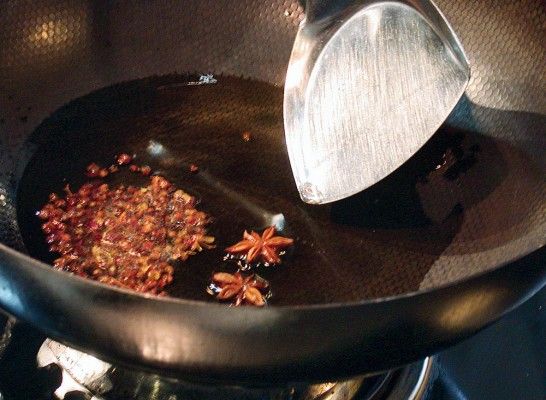
Heat cooking oil on a high heat; add peppercorns and star anise when it’s heated. Lightly stir-fry for ten seconds and remove.
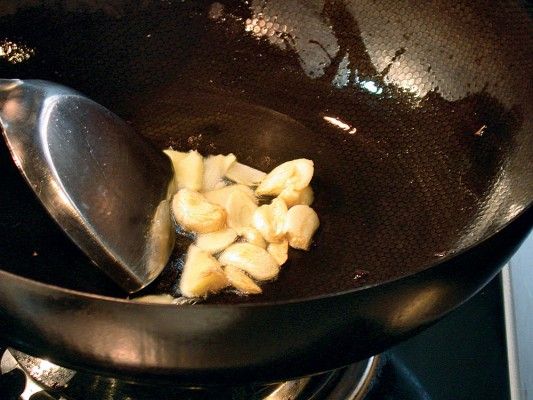
Put the ginger and garlic slices into the oil, stir-fry until fragrant, then remove and set aside.
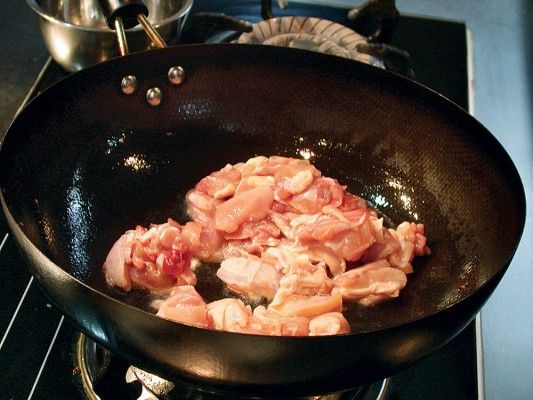
Add the chicken to the wok. Stir-fry on a high heat until the meat is golden.
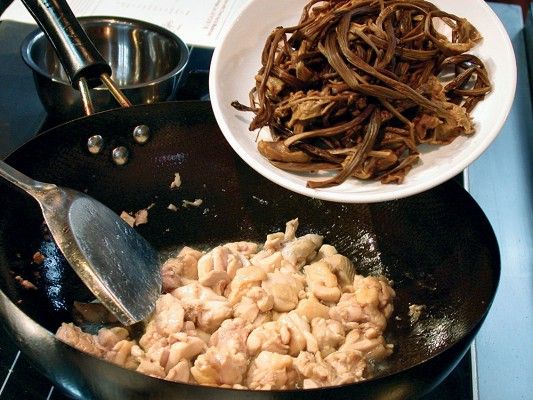
Add the mushroom, put the ginger and garlic slices back, and stir-fry it all together.
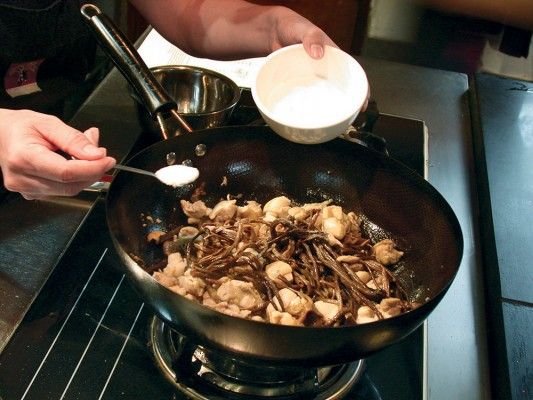
Add the cooking wine, soy sauce, salt, and sugar to taste. Then pour water as needed, usually just enough to cover the ingredients.
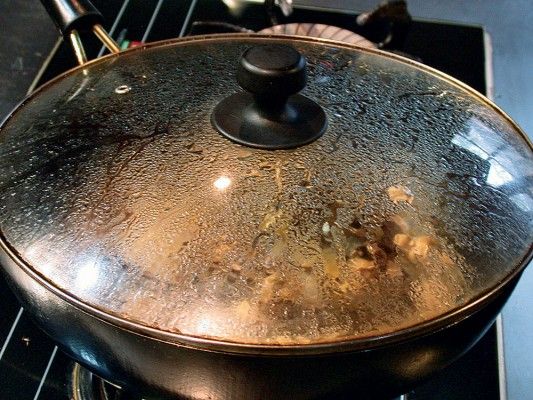
Cover the lid and stew for half an hour.
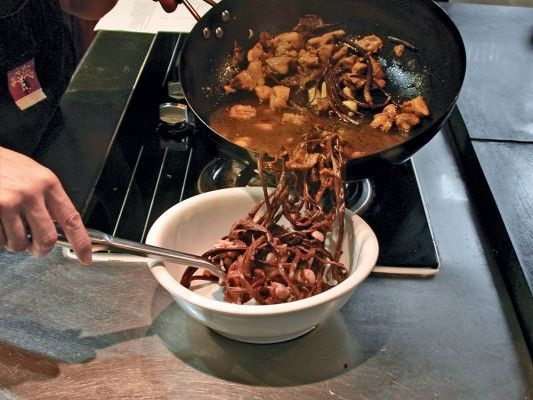
Place the dish into a big bowl and enjoy!
“Keep warm with Dongbei stew” is a story from our newest issue, “Mental Health”. To read the entire issue, become a subscriber and receive the full magazine. Alternatively, you can purchase the digital version from the iTunes Store.
Related Articles