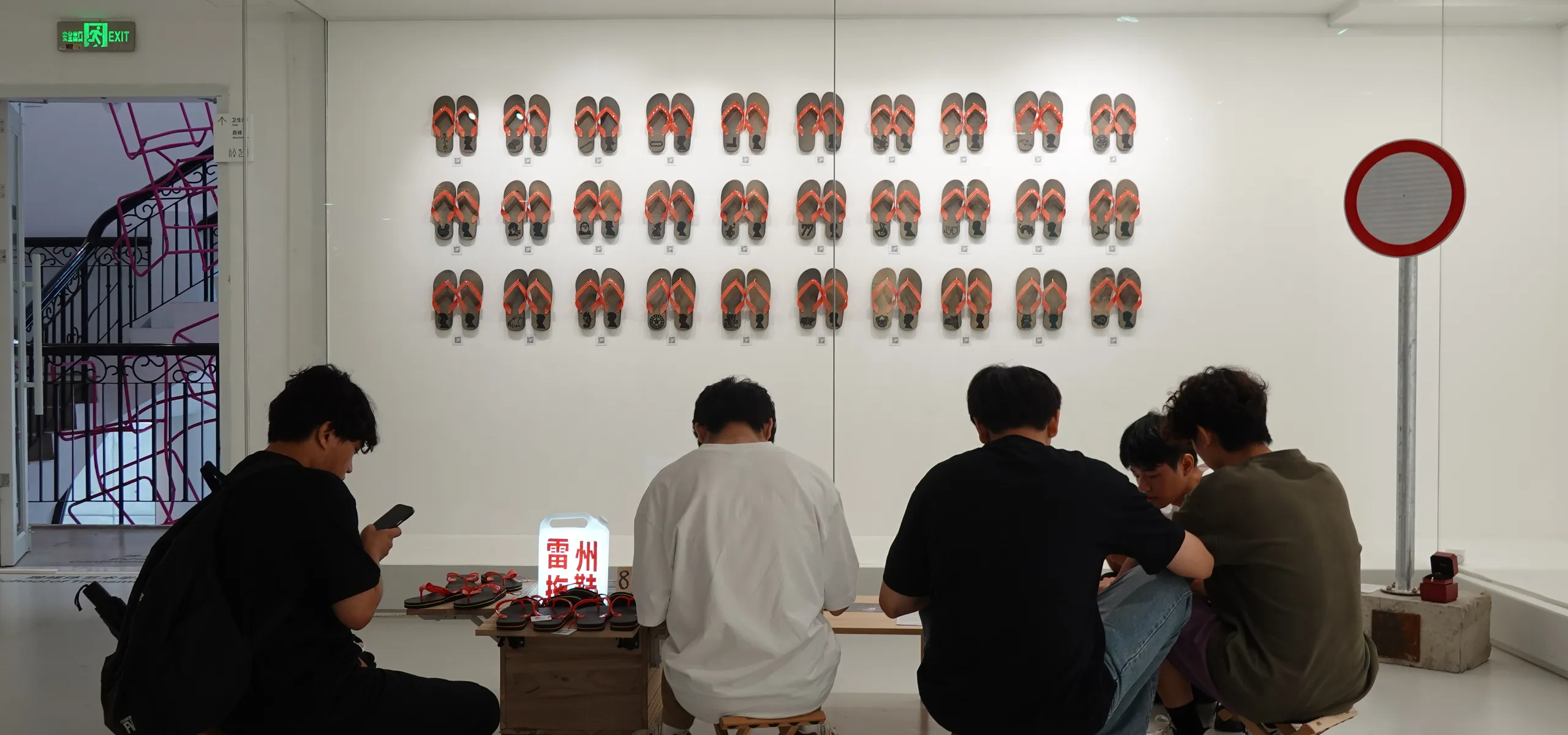

Young artist Guo “Slipper King” Dingfen is rebranding a maligned footwear from his hometown into a collective memory of a generation
The competition is fierce at China’s inaugural Slipper King Championship in Guangzhou, a southern provincial capital known for its laid-back spirit. This reputation is reflected by its year-round devotion to slippers, or tuoxie (拖鞋): an unpretentious footwear suited for all occasions in this temperate city, whether work or play.
Contestants take the stage as they show off their favorite slippers and share slipper-related tales—everything from staying put during a sprint to easing menstrual cramps. Then Contestant No. 4, Guo Dingfen, takes the stage, holding a worn pair of black flip-flops with a bright red thong strap known locally as “Leizhou slippers.” Between February and March 2025, narrates the 30-year-old artist, he walked 574 kilometers in these slippers from Guangzhou back to his hometown of Leizhou, a trek of over 28 days.
Before he can finish, the crowd erupts. “Champion! Champion!” they chant. As expected, Guo is officially crowned the “Slipper King.”
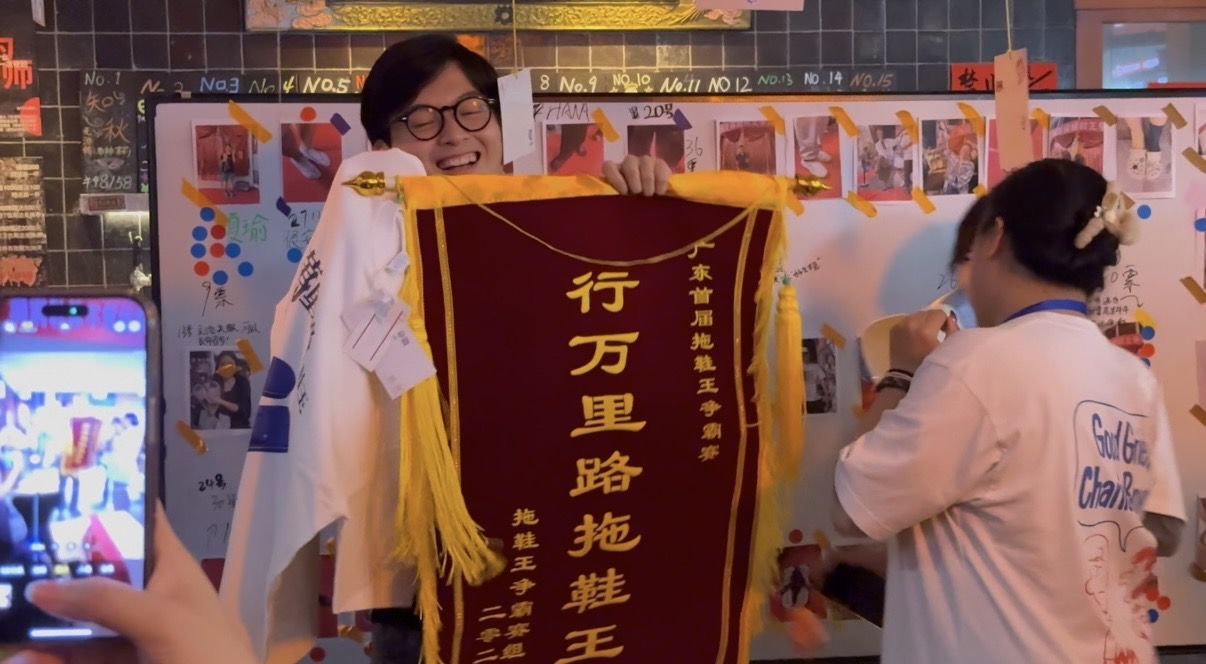
Guo Dingfen was crowned the “Slipper King” at Guangdong’s inaugural contest and awarded a jinqi—a pennant inscribed with “The Slipper King Who Walked Tens of Thousands of Miles”
“[The title] ‘Slipper King’ might carry a bit of a stigma locally, like you’re someone who loafs around in slippers all day,” Guo tells TWOC. “But winning the contest gave the title a certain charm.”
Read more about contemporary art in China:
- When Art Meets the Authenticity of Labor
- Beyond Generative: Wang Xin’s AI Art of Connection and Evolution
- Beyond the Frame: Shuare Shizhu’s World in Wide Strokes
The month-long trek was part of Guo’s master’s graduation project at the Guangzhou Academy of Fine Arts. Winning the contest in March 2026 brought renewed attention to his installation “Leizhou Slippers,” a wall displaying 30 sand-dusted Leizhou slippers with clean soles forming the silhouettes of 30 locals he interviewed, accompanied by a video and a booklet documenting the journey.
Roots
“You can’t always tell where someone is from, but if they’re wearing these slippers, there’s a 99 percent chance they’re from Zhanjiang,” says Guo, referring to the prefecture governing the Leizhou Peninsula. “Nine out of ten boys wore it when I was little.”
Born in 1995 to a family of construction workers in Leizhou, Guo began studying experimental art in 2017. Money was tight, so he took on various part-time jobs—on construction sites and assembly lines, and making courier deliveries in Shenzhen. Those lived experiences inspired earlier installations such as “Life on the Scaffolding,” “Assembly Line Workers in Electronics Factories,” “Courier Collectors,” and “Globalization: A Visual Study of Export Garments.”
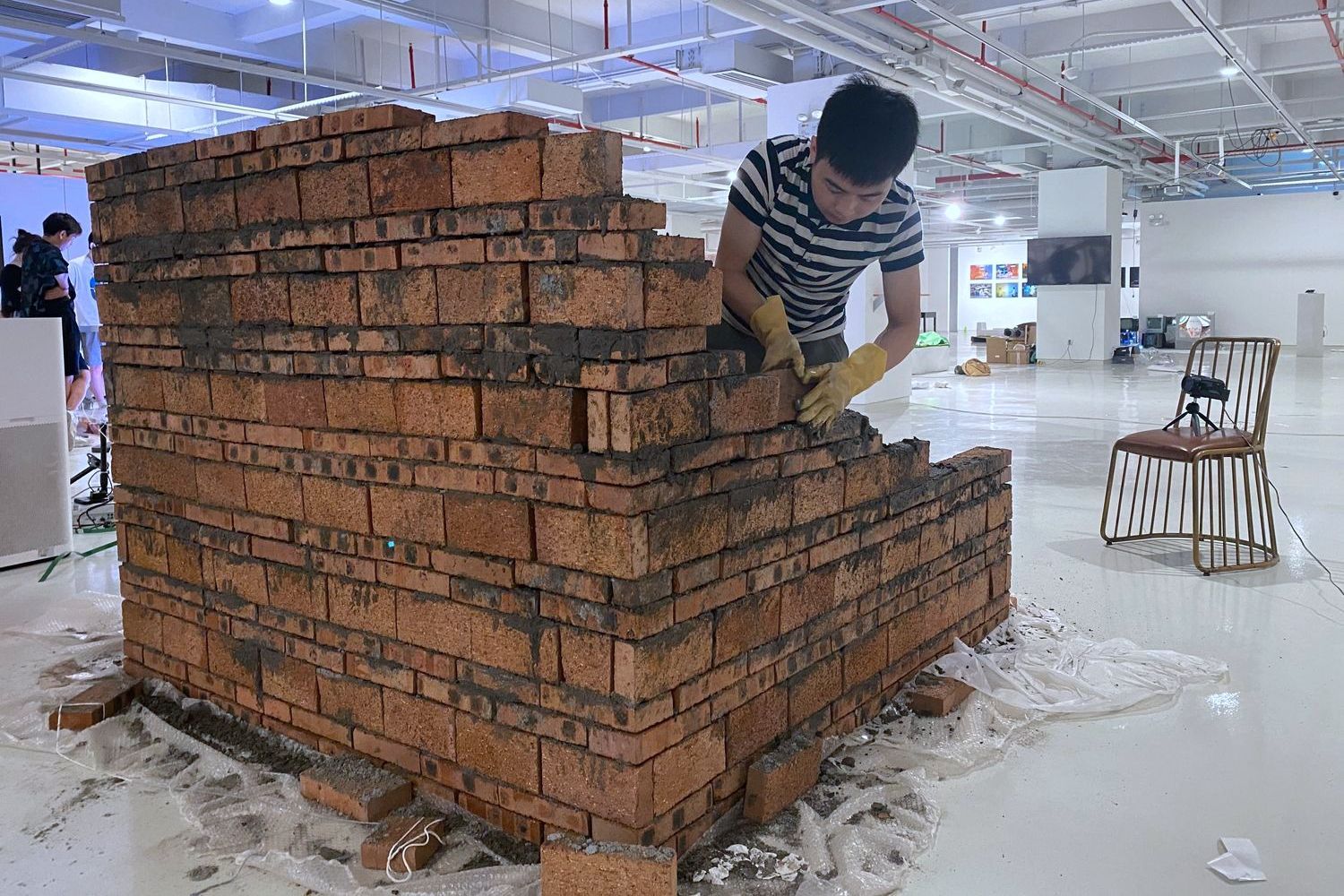
In 2021, Guo Dingfen spent three and a half days building a cube out of bricks in his university art museum as part of the “Life on the Scaffolding” project
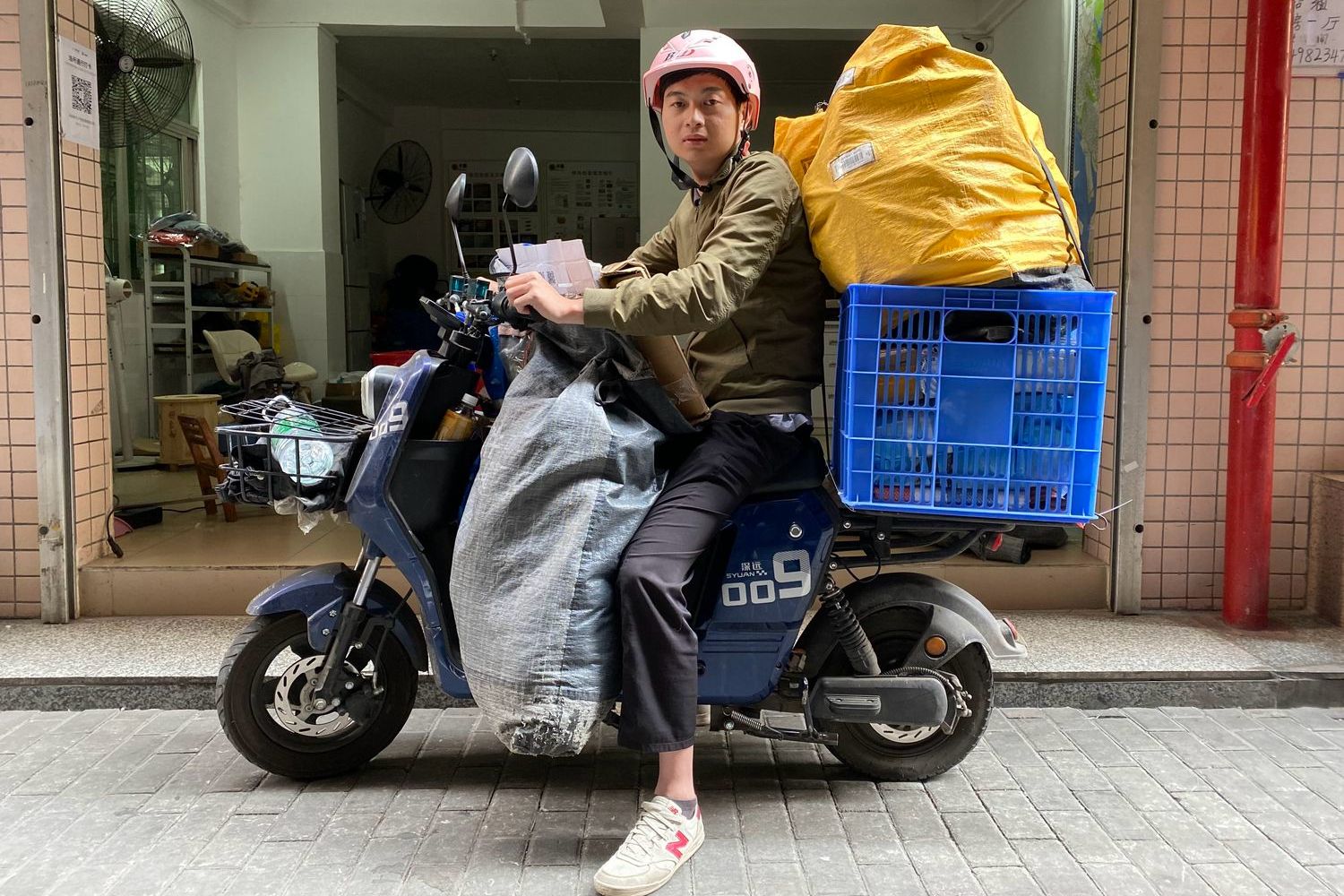
Guo once spent a month delivering packages in Shenzhen, earning an impressive 8,000 yuan
“I believe that as long as you sincerely immerse yourself in real places and everyday life, the possibilities for the work will gradually reveal themselves. Inspiration always comes from lived experience,” Guo said during an interview last September with the New Star Art Awards, where he was named Artist of the Year in 2025.
“Leizhou Slippers” was also born out of everyday observations. In college, Guo began noticing that the locally made flip-flops he grew up wearing were gradually disappearing. Some people even felt embarrassed to wear them.
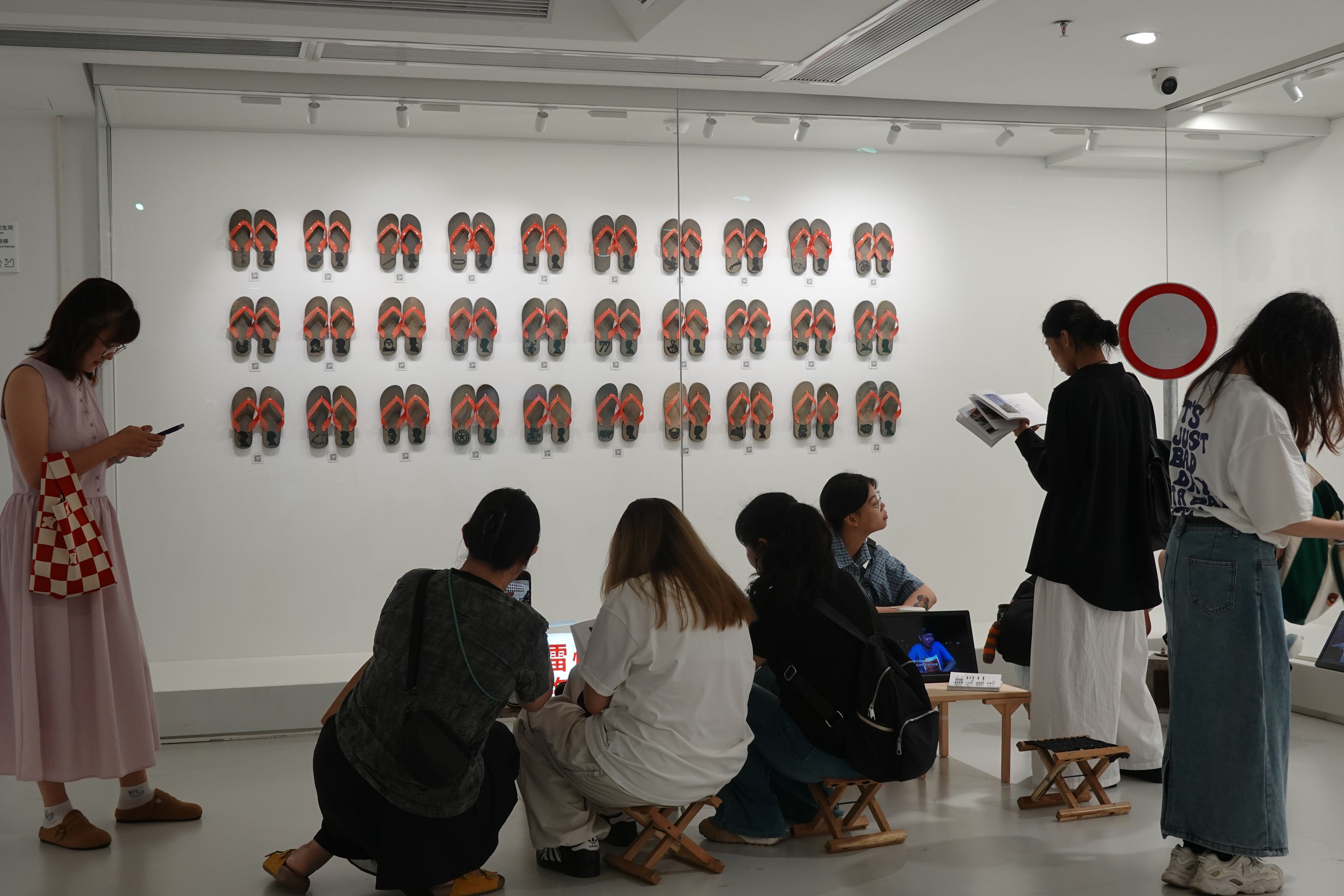
Audiences lingered, taking time to carefully explore every element of Guo’s multimedia installation
In the 1990s, Leizhou locals brought the slipper to the cities where they migrated for jobs. However, the slipper’s reputation soon soured as some migrant workers were photographed behaving badly in public. Slippers became a symbol of low morals and poor taste, prompting many people to stop wearing them.
“One interviewee told me the first time he wore them in Shenzhen, the police stopped him to check his ID. Apparently, many Leizhou locals had gained a bad reputation for fighting while wearing slippers,” says Guo. “In some factories, wearing Leizhou slippers could get you denied a job.”
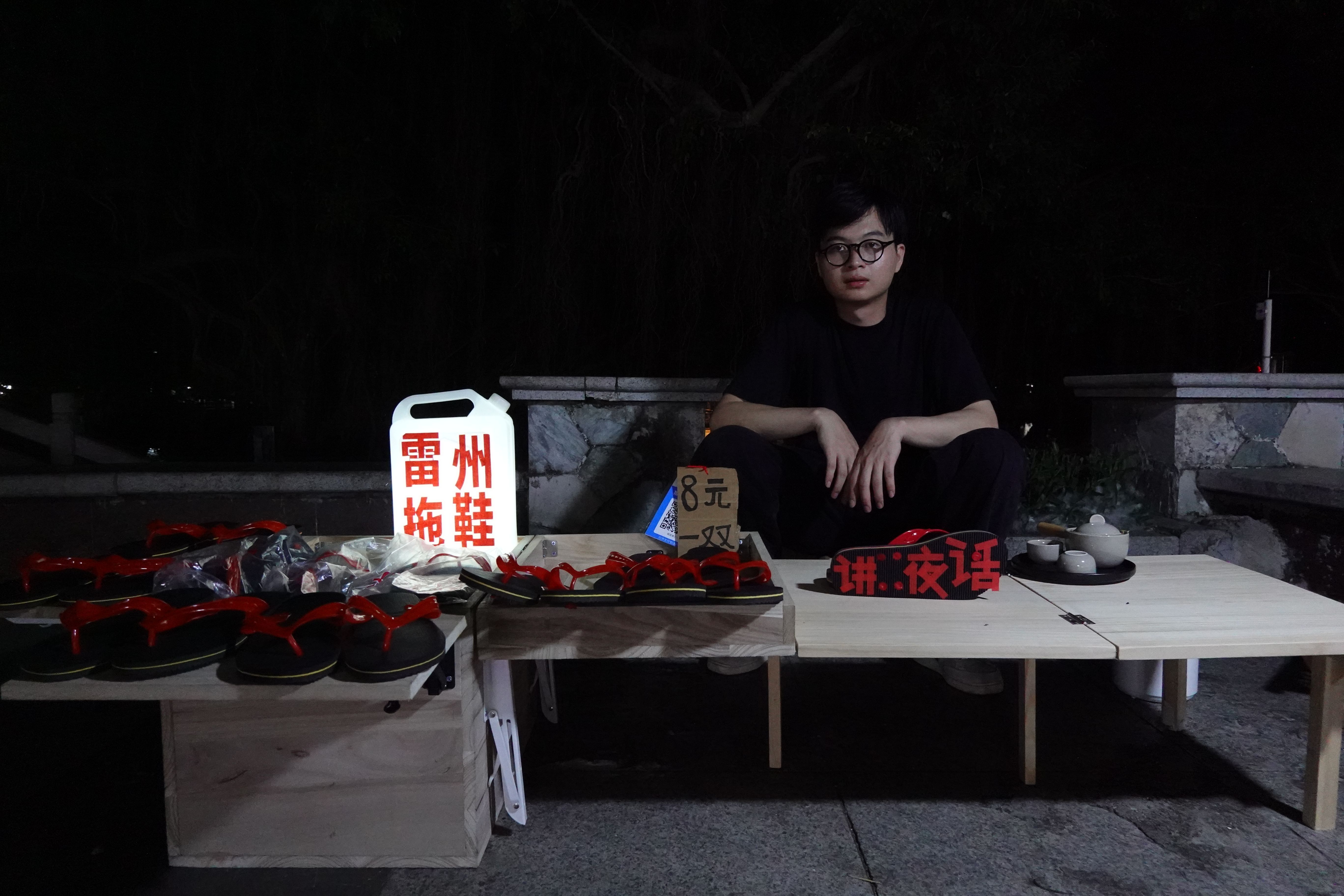
Guo set up a Leizhou slipper stall for several days, with slippers on display and tea on hand
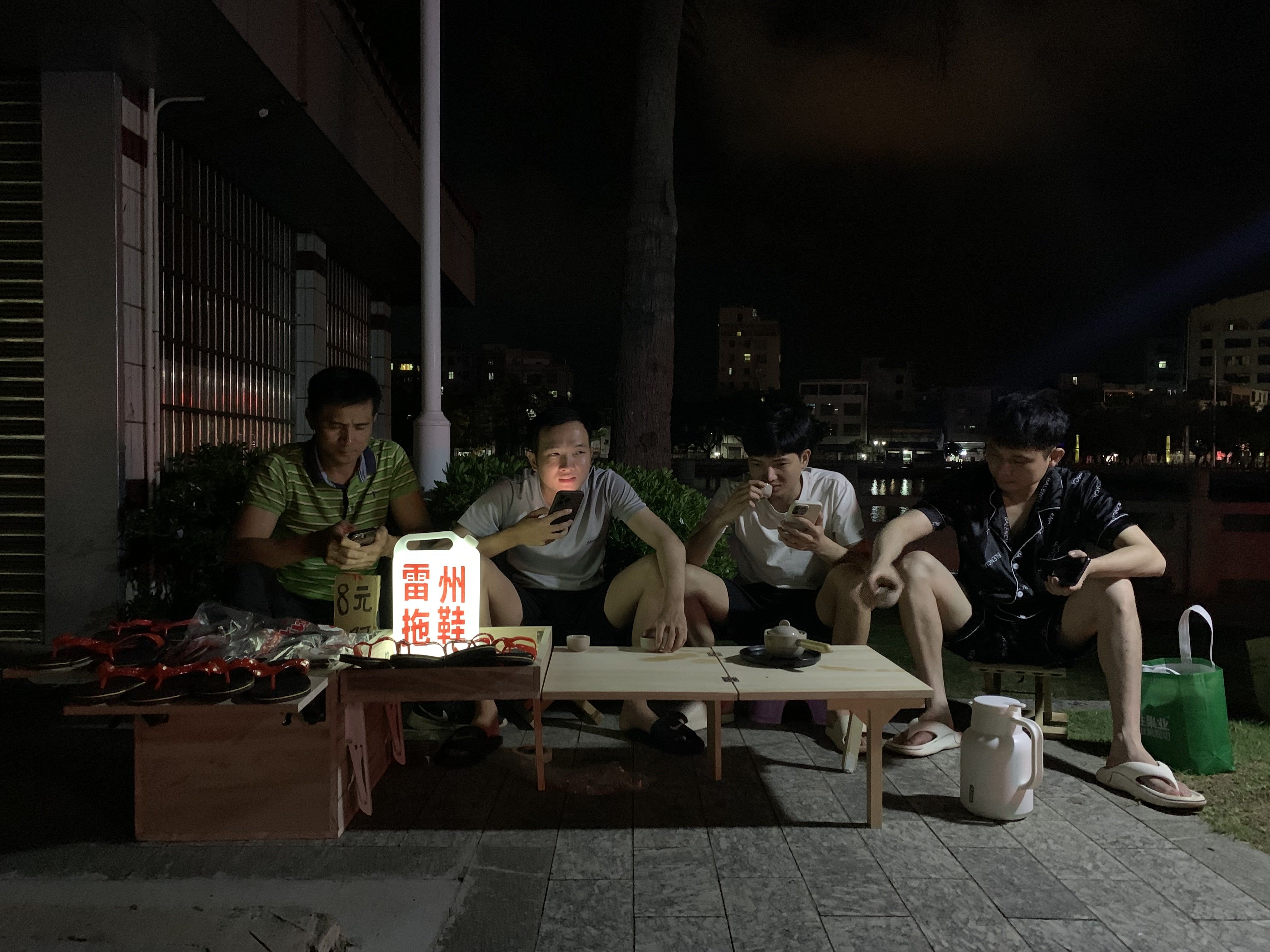
Some interviewees told Guo that they still wear Leizhou slippers in public and don’t really care what others think
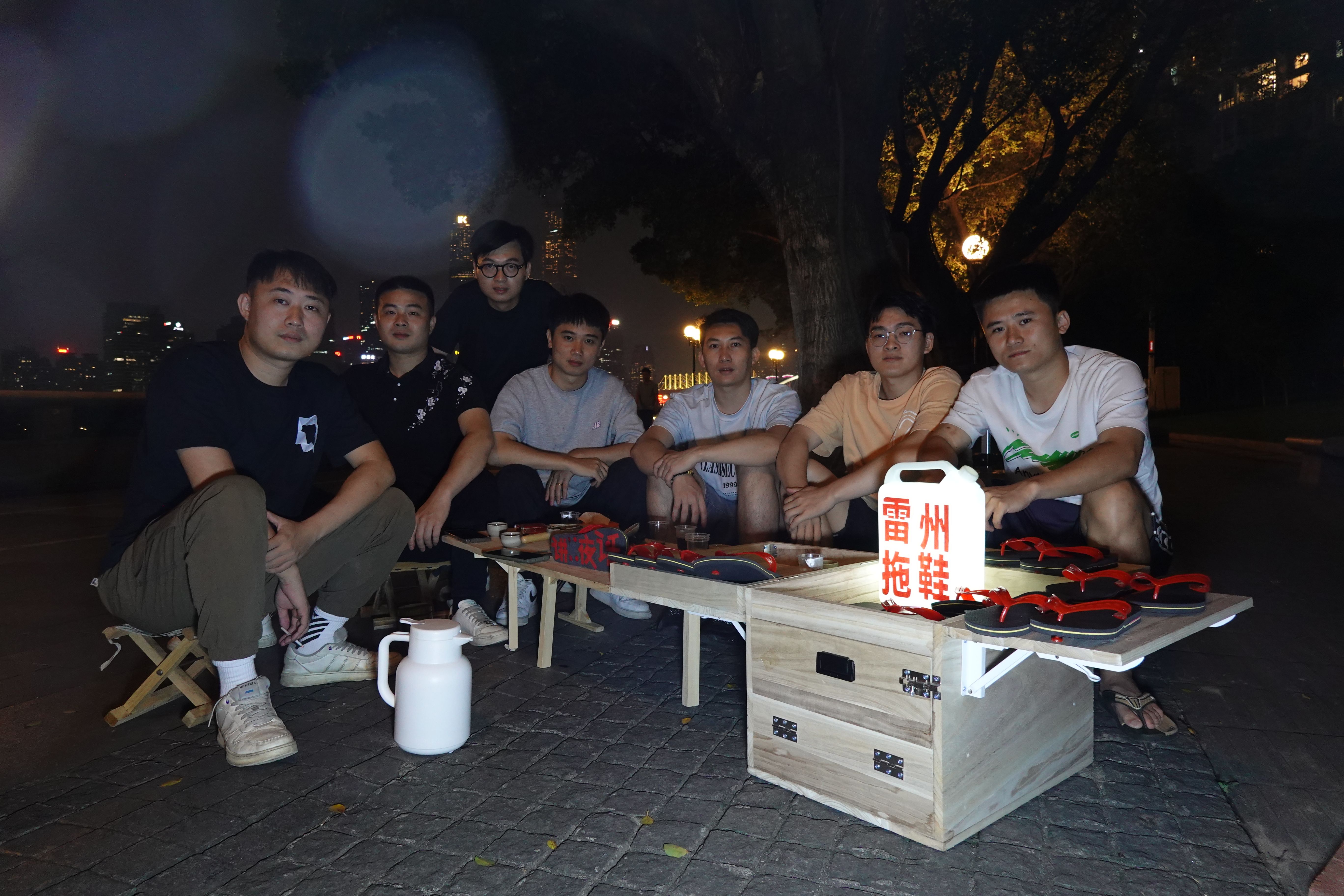
Guo once encountered a child wearing Leizhou slippers (not pictured) near his stall who borrowed 50 yuan from him—and never paid it back
But to Guo, slippers are part of a generation’s cultural memory. It would be a shame for that to disappear, so he made it the theme of his graduation project.
At first, he tried to join a factory producing these slippers, only to find that none were hiring due to low demand and stricter environmental regulations on cheap plastics. He then envisioned a slipper-vending stall, and, while planning a trip home to take promotional photos for the business, inspiration struck.
“Slippers are for walking, so I decided to walk from my campus to my hometown,” Guo explains. Like the workers who originally left home in slippers, the young artist doesn’t have a lot of money to spend on his art: “But I do have my body and my energy.”
Walk
Guo originally planned to reach home in just 23 days, an estimated pace of 35 kilometers a day. He set out on the morning of February 26, 2025, with four dumplings in his stomach and a 19-kilogram backpack filled with a few basic necessities, plus hard drives, a camera, and a laptop for uploading his work and writing his thesis along the way. On his feet were brand-new Leizhou slippers bought the day before.
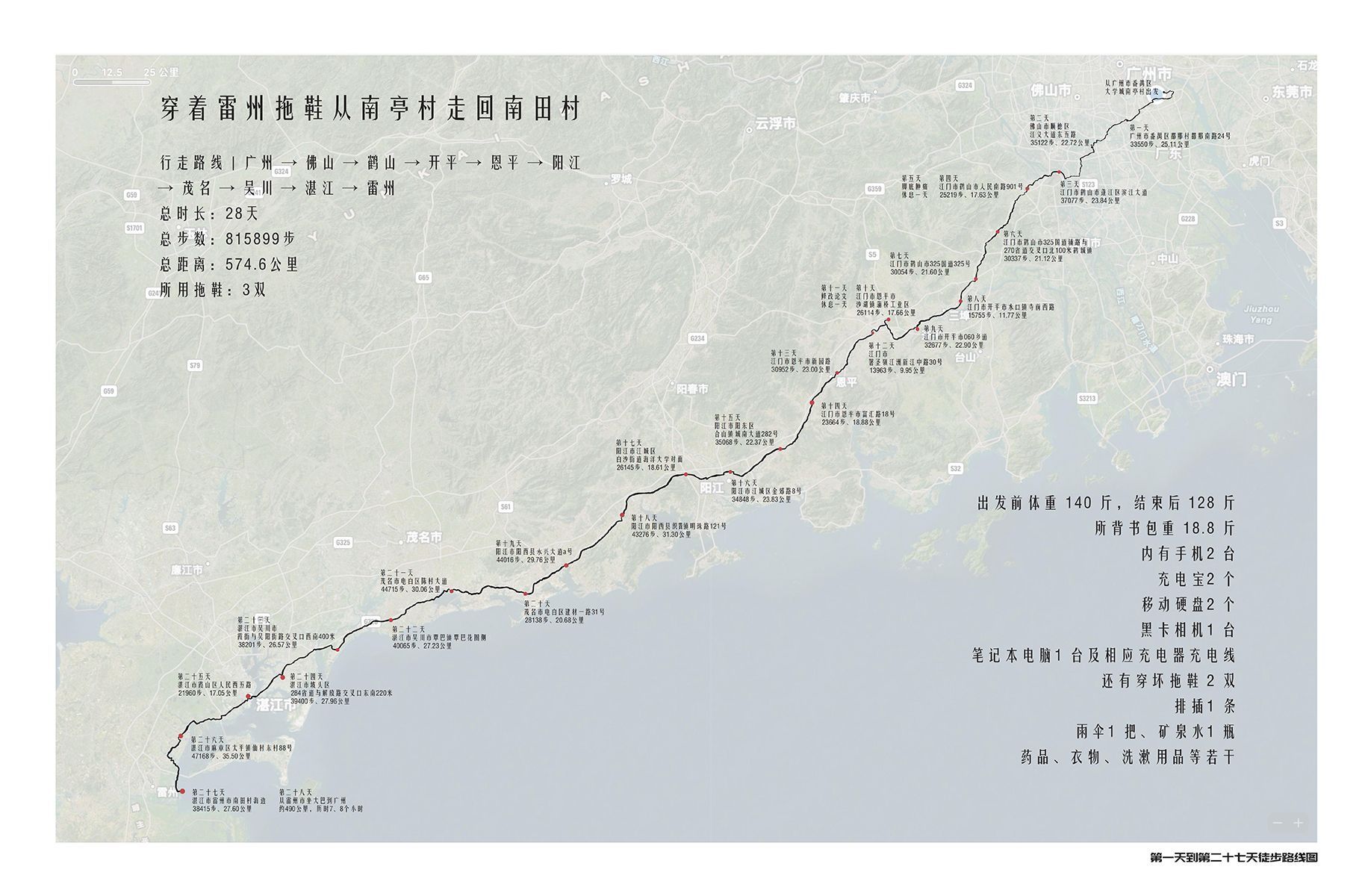
Guo Dingfen’s trekking route from his college campus in Guangzhou to his home village in Leizhou
By noon, blisters had already formed on his feet. He managed only 25 kilometers on the first day, and pain soon became a constant theme of his project. On Day Five, the agony forced him to stop and rest for a day.
“The soles of my feet staged a protest, the pain too sharp to take another step. My slippers were in tatters. So I stopped—resting where I stood, like a stone, like a harmonica folded closed,” he wrote that day.
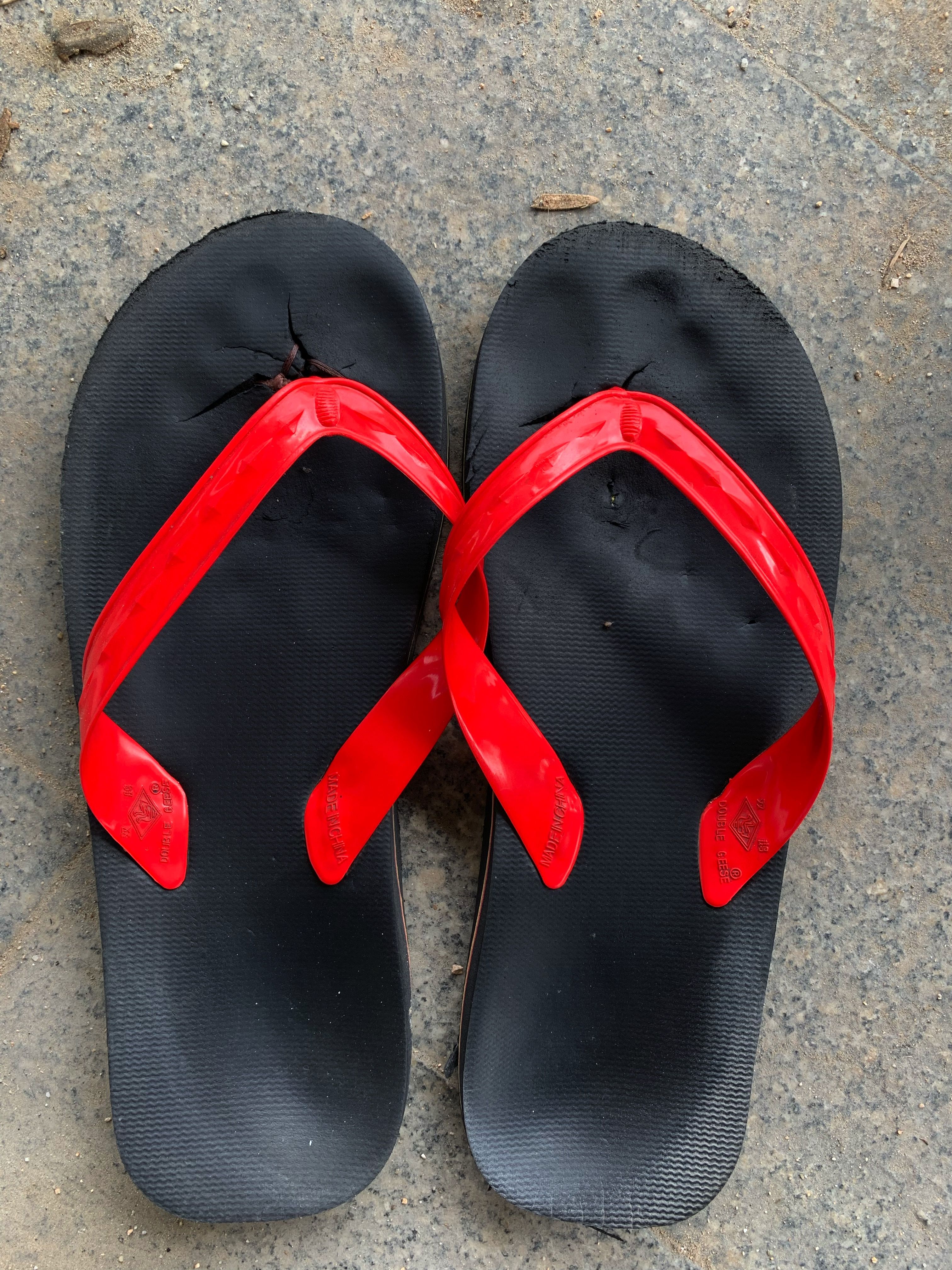
After days of trekking, Guo’s footprints were etched deeply into the soles of the slippers
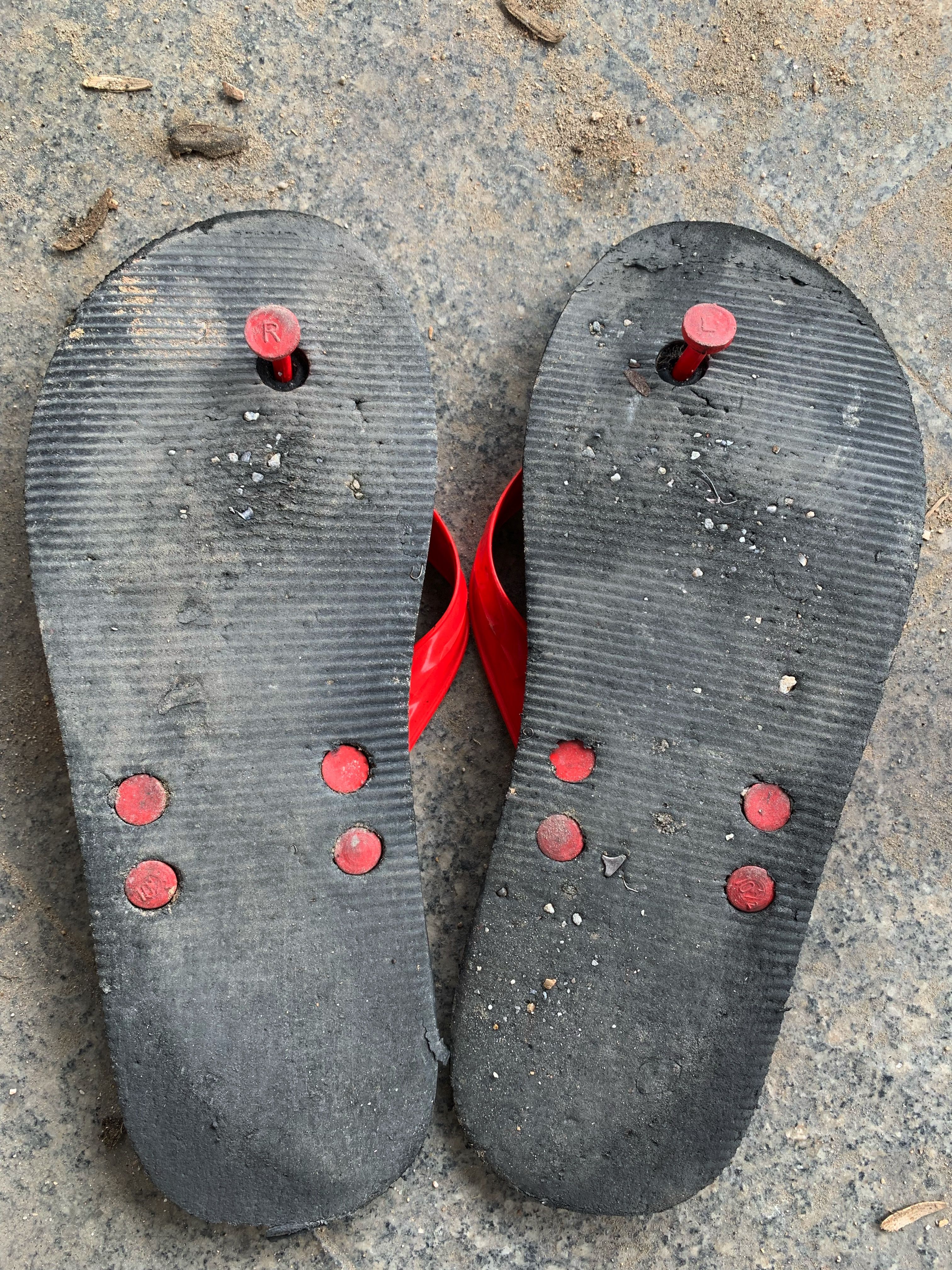
Along the way, gravel and bits of wire became embedded in the slipper soles
A week into the journey, Guo wore through his first pair of flip-flops. The same afternoon, a man in a BMW pulled up alongside him, claiming to be a Hong Kong businessman without a working mainland SIM card, asking to borrow Guo’s personal mobile hotspot.
After two hours of conversation, the man demanded a 2,000 yuan loan, promising to repay it the next morning—and handed over a Cartier ring, supposedly worth tens of thousands of yuan, as collateral. Skeptical, Guo gave 400 yuan.
“If he scammed me, so be it…I like to believe that people are inherently good,” recounts Guo.
The man drove off, and only then did Guo notice the car had no license plate. He was never seen again.
Guo later enfolded the encounter into his artwork: he concealed a photo he had accidentally captured of the man’s face within a road sign in the installation, and transformed the fake Cartier ring into a magnifying glass for visitors to use to search for the scammer’s hidden face.
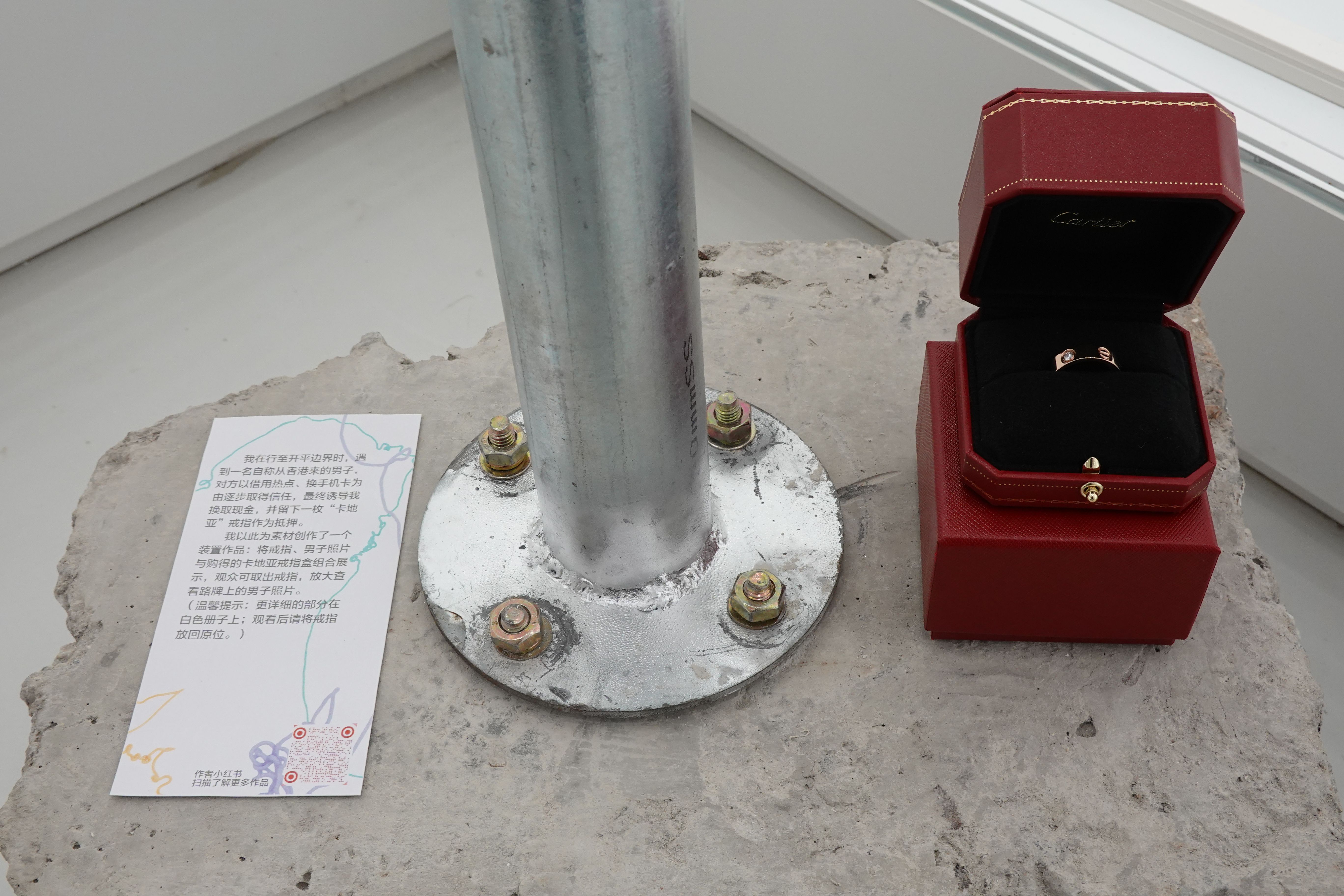
Guo Dingfen later found out that the “Catier” ring is only worth a few yuan on e-commerce platform Taobao
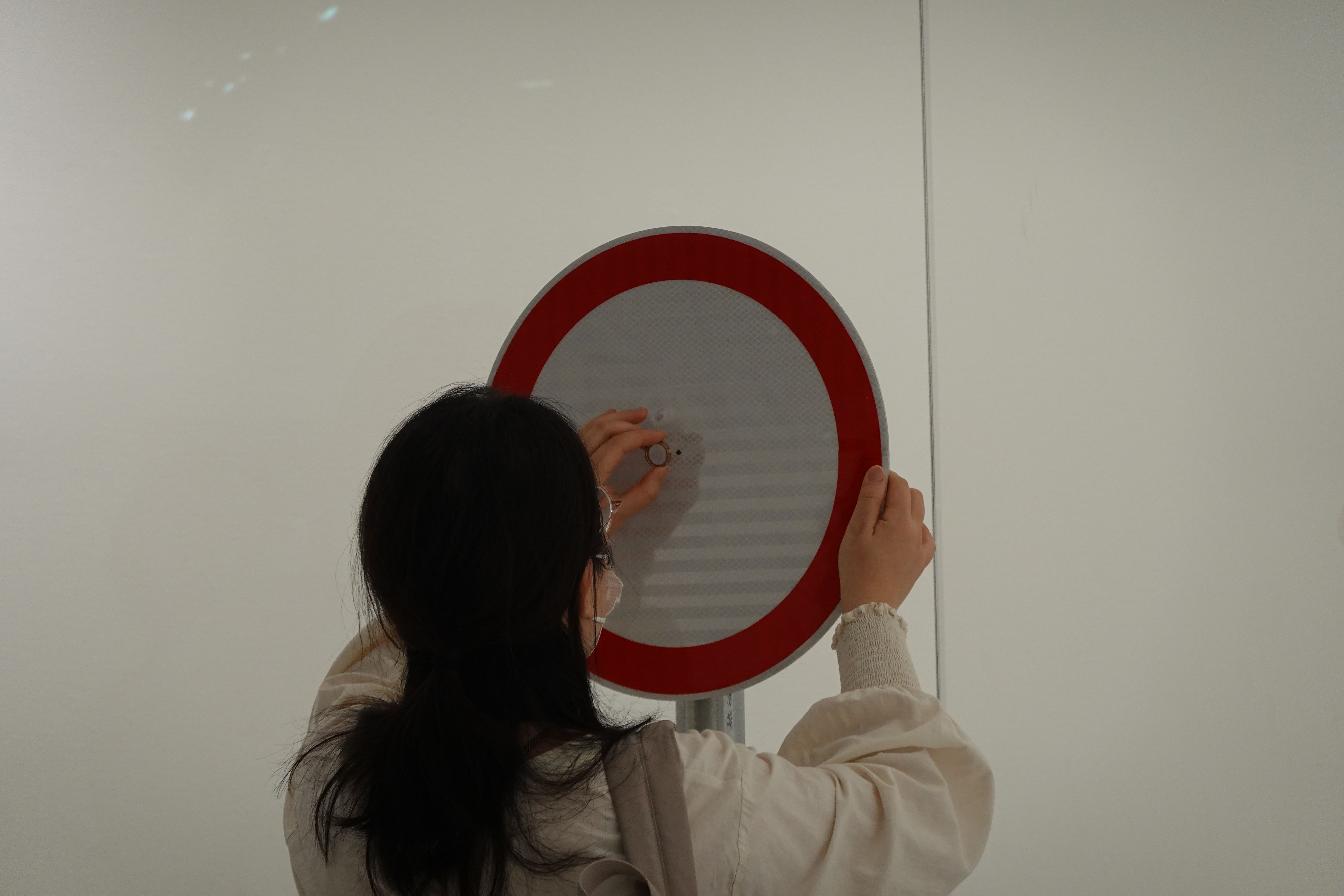
Visitors using the ring-turned-magnifying glass to find the hidden scammer
“I can’t say I lost out—it ended up becoming inspiration,” he says. “The journey became a crash course in the real world, right as I was about to leave school.”
But he became less trusting of strangers. On Day 17, he walked away from a man who staggered toward him, begging him to call the police but refusing to explain why.
Still, the road brought moments of kindness. One day, when the pain in Guo’s feet became too intense, a young man offered him a short lift on his motorbike. The stranger, who had never left his home province, praised Guo for his creativity and daring, comparing him to the bold characters he had seen in “foreign films” who “walked the talk.”
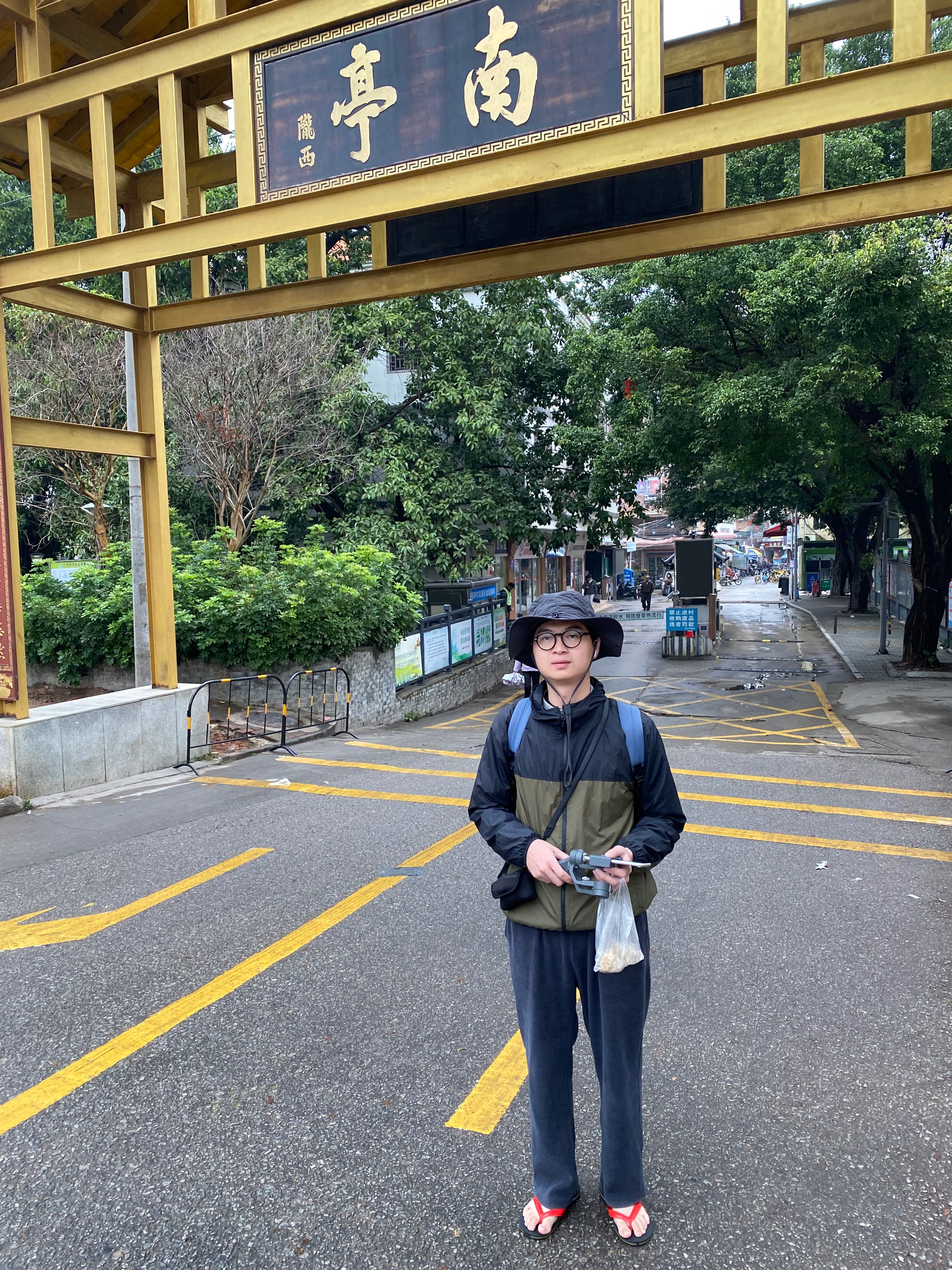
Guo, on February 26, 2025, set off from Nanting village near his college dorm in Guangzhou
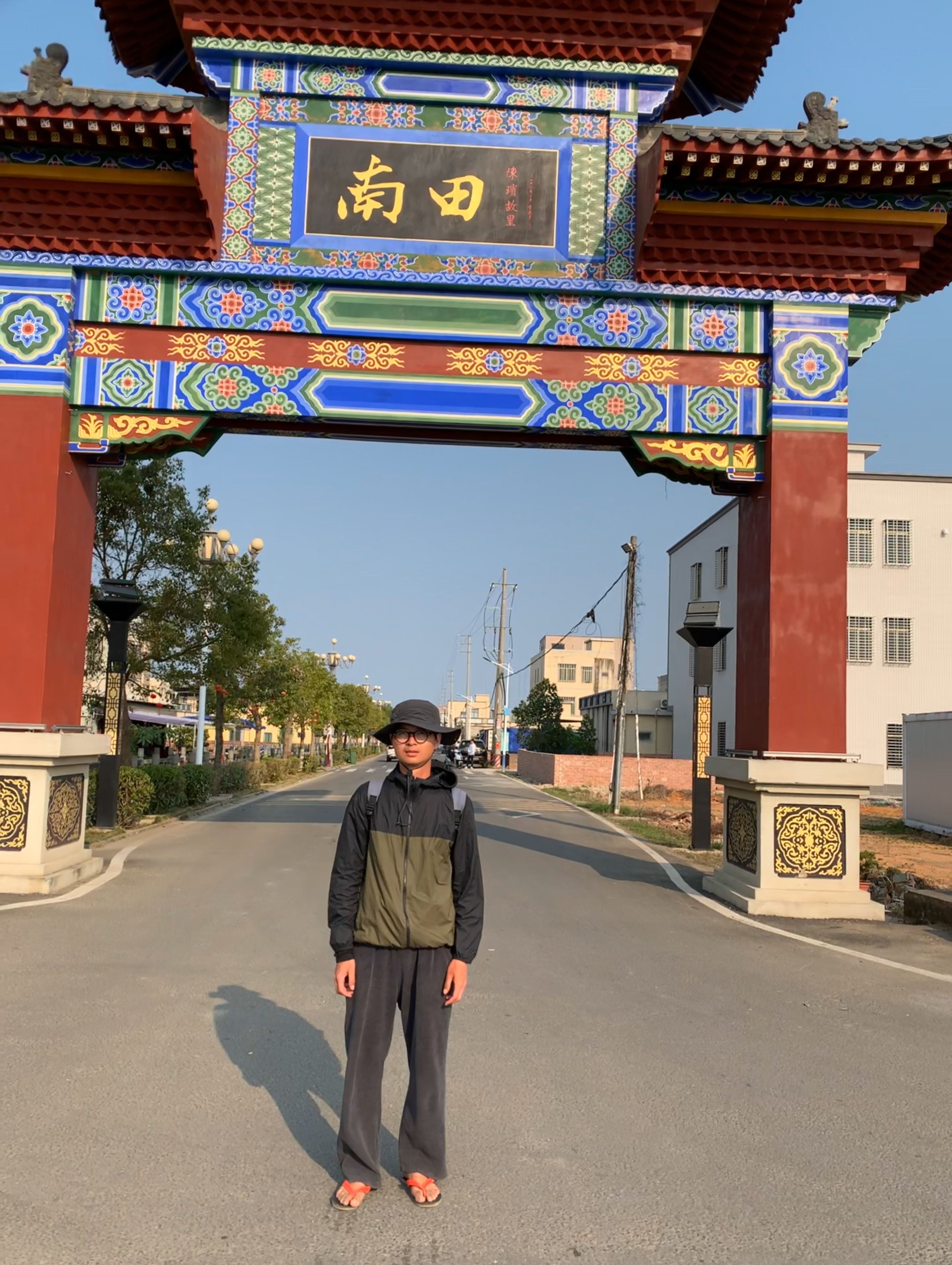
Guo arrived at his home in Nantian village on March 24
After 28 days, three pairs of Leizhou slippers, and more than 4,000 yuan spent mostly on accommodation, Guo finally reached home, 6 kilograms lighter in body weight and with a clearer vision for his final project.
Art
During Guo’s trek, his girlfriend helped document the journey daily with photos and posts shared on Xiaohongshu (RedNote). Afterward, he set up booths in local parks and spent three days interviewing 30 Leizhou residents of all ages about their memories of the slippers.
“One told me that at least 10 of the 12 people in their [high school] dorm wore Leizhou slippers. To tell them apart, some would heat the soles with a lighter and brand them; or heat a wire to brand a number onto the shoe. That’s when I realized I could draw on my slippers too,” says Guo.
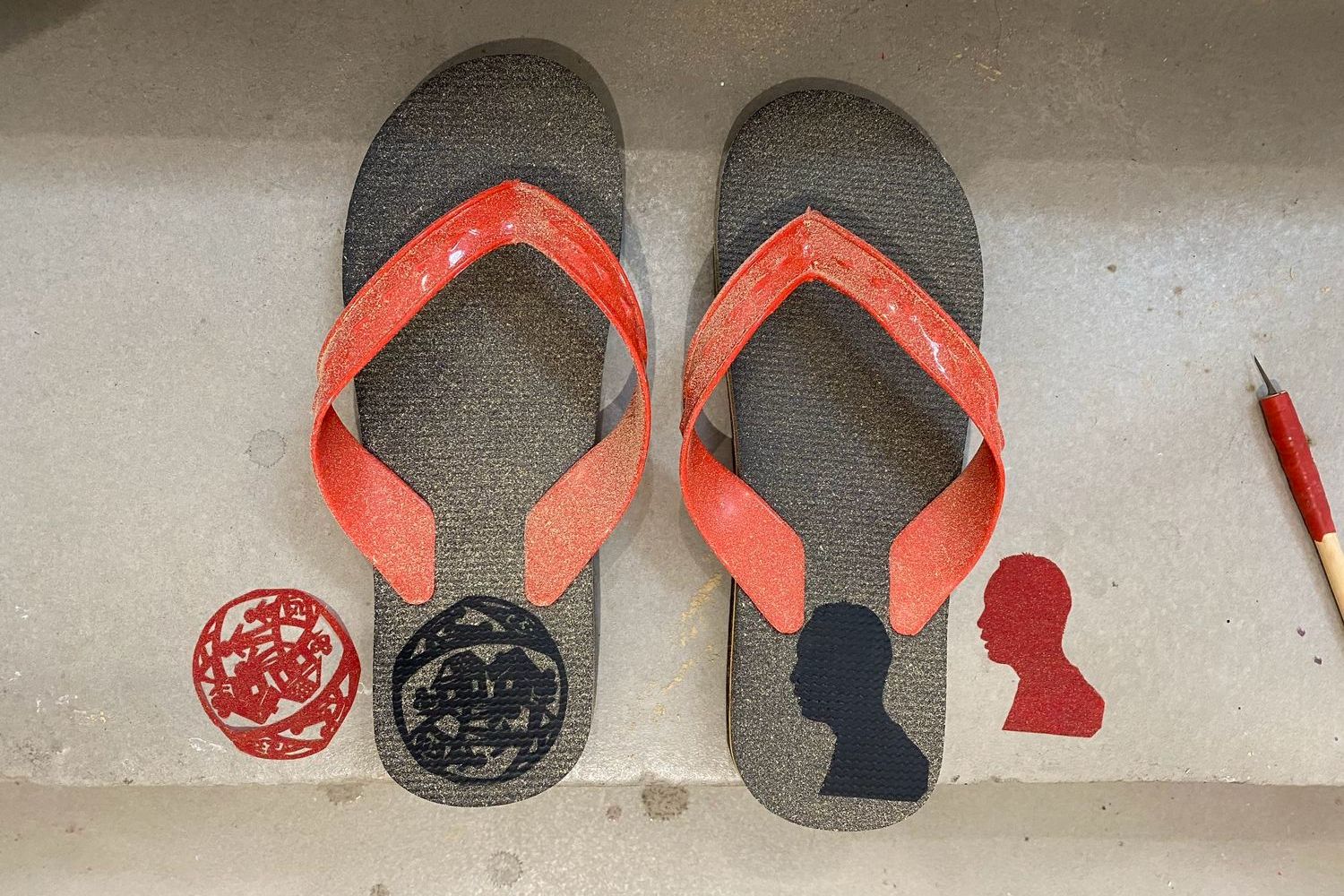
Guo first carved the desired shape from red paper, placed it on the sole, and blew dust over it to create the silhouette effect before carefully removing the paper
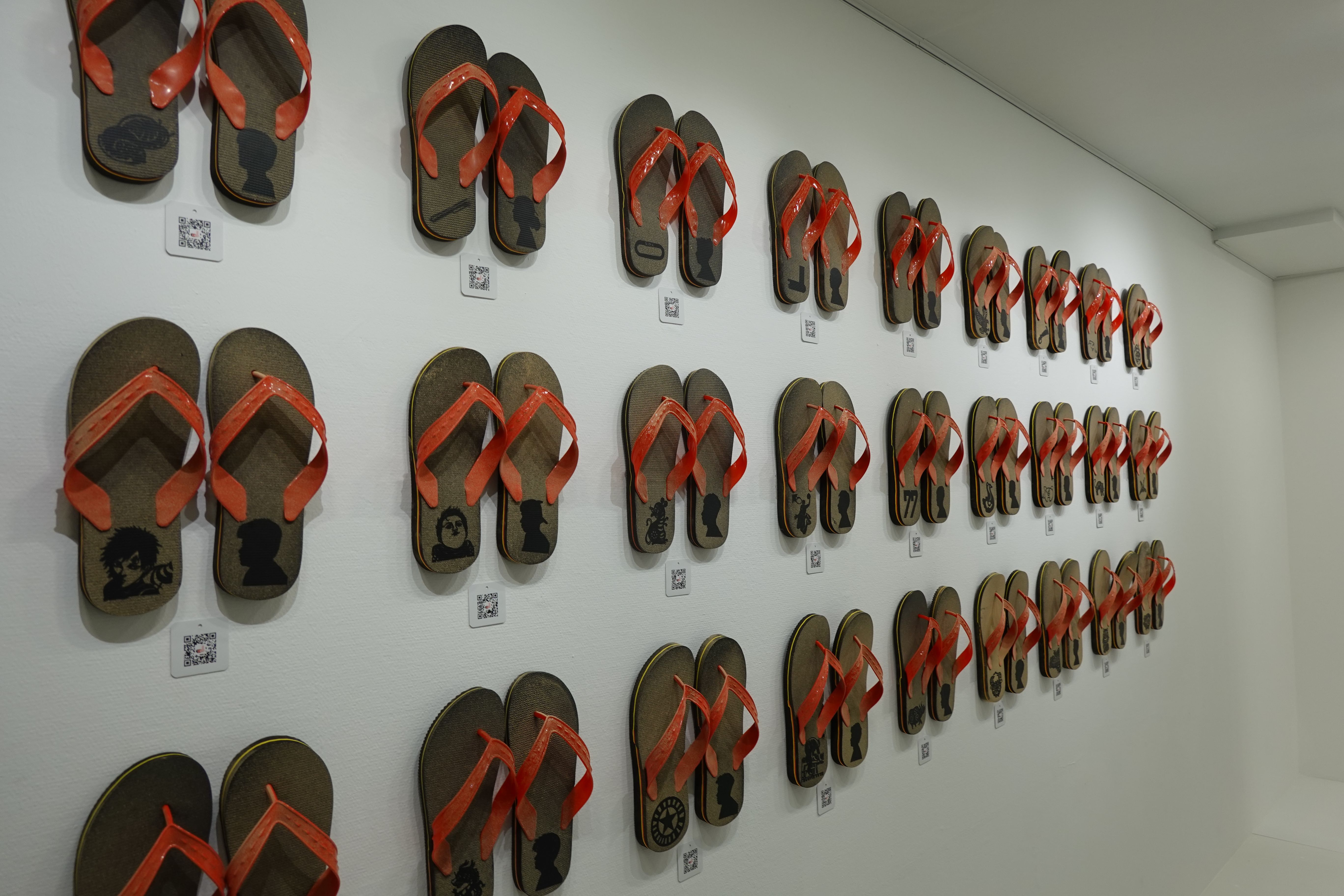
Visitors can scan the code under every pair of slippers to watch an edited video of the interviewee and their story with Leizhou slippers
Every night of his own journey, Guo noticed his feet made a clear silhouette on the soles of his dust-covered slippers. He translated this idea for his installation: carving the silhouettes of the people he interviewed, along with objects meaningful to them, onto paper that he stuck onto the soles. When he blew dust over the rest of the shoe, the silhouettes stayed clean.
In his booklet, Guo quotes from Rachel Joyce’s novel The Unlikely Pilgrimage of Harold Fry, about an old man who walks 87 days in search of salvation: “The world was made up of people putting one foot in front of the other; and a life might appear ordinary simply because the person living it had done so for a long time.”
Life
The “Leizhou Slippers” installation resonated with many, becoming especially popular on social media. The booklet even went missing a few times, taken by captivated viewers.
Building on the momentum, Guo plans to use his New Star Art Awards money to print 30 copies of the booklet and sell them on Xiaohongshu at a modest price—then deliver them to the buyers himself, to see what might unfold along the way.
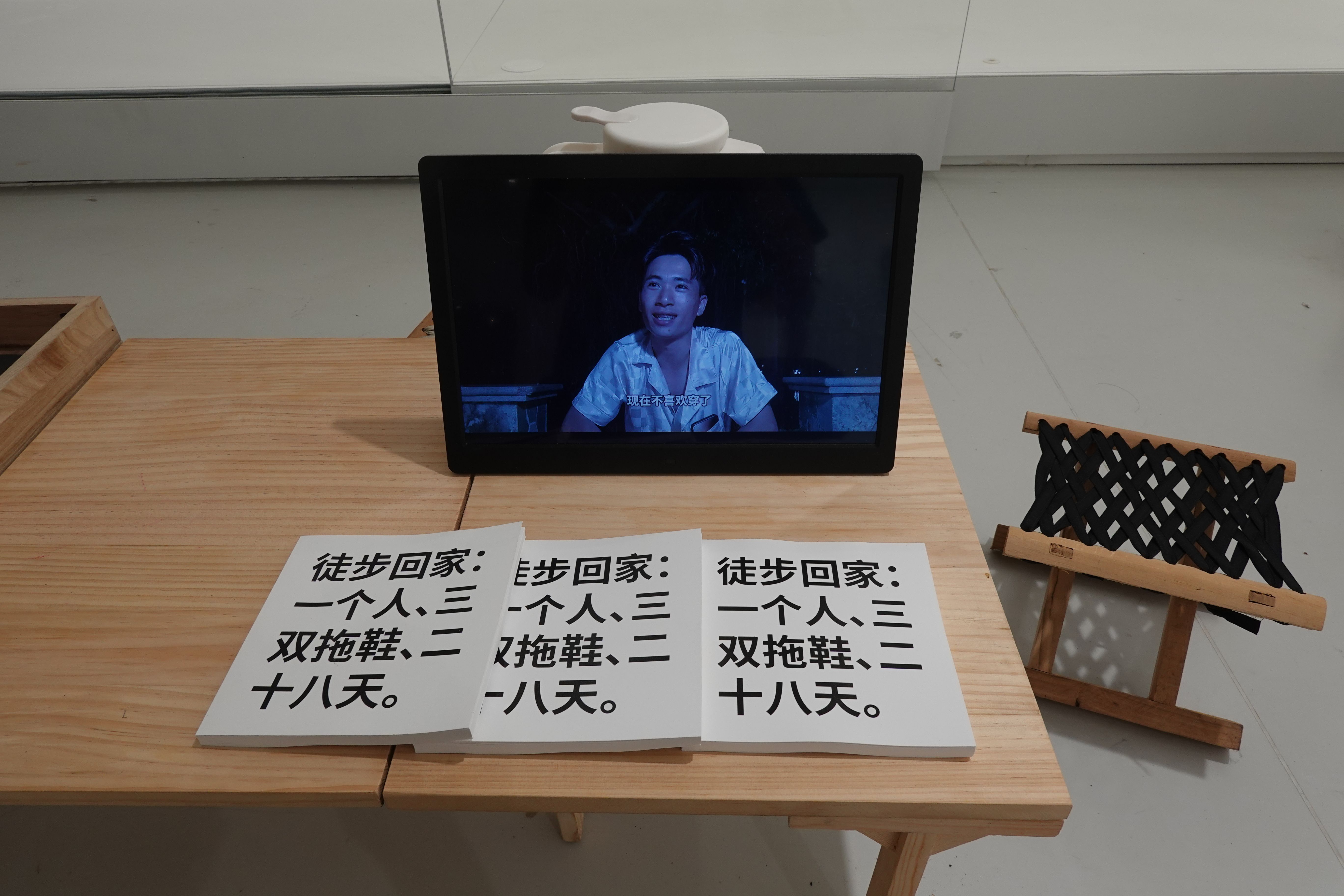
Guo has received multiple messages online, asking where they could buy the booklet about his journey
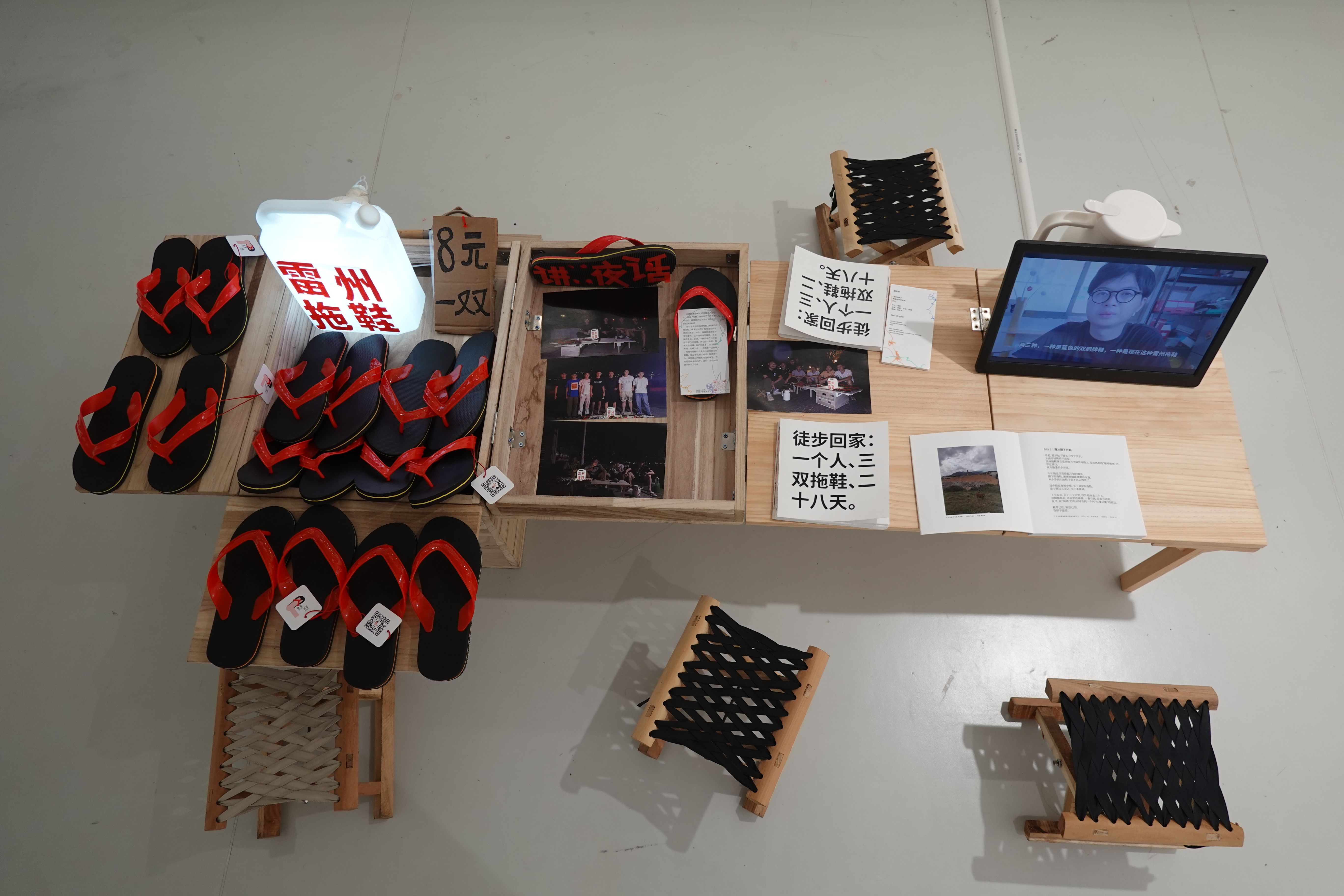
“Leizhou Slippers” is a multimedia project that combines installation and video with photography and textual storytelling
But fans may have to wait a bit longer for the finished work. After graduating last July, Guo took a full-time job in culture planning in Foshan.
“I’m turning 31 soon. It’s probably time to start a family. I feel like my focus should be on work and life now. I can still love art and keep doing it slowly over time,” says Guo.
While the recent slipper contest raised his profile, Guo has yet to make financial gains from his virality. “I don’t think it has affected my life at all. The next day, I just went back to work as usual,” he says. “The only benefit is that I gained a few hundred followers.”
Still, he is happy with the broad appeal of “Leizhou Slippers” beyond the art world. Though no longer wearing the slippers himself, he’s glad that more people are discovering them beyond their once-negative reputation.
Guo’s friends and mentor have kept pushing him not to give up on art. Though he has no new exhibitions planned, he continues to share his projects on Xiaohongshu.
“Doing that while having a full-time job certainly adds some challenges and sets certain limits, but if I overcome them, I think others would see [the effort] as more genuine or sincere,” he says.
All images courtesy of Guo Dingfen
Related Articles