

Gold is extraordinary—forged in the death throes of a colossal star and shot across the void of deep space over millions of years to land on earth to be mined, sold, and fought over. There are very few things on this planet that produce such a raw sense of both greed and ambition, and China has become the world’s premier producer and consumer of this oh-so precious metal.
It would be easy to put China’s gold demand down to sheer self-indulgence, but China has an insatiable, cultural desire for gold as well. To some, gold simply means money, but for many Chinese, the element means weddings, Lunar New Year, and even Mother’s Day. Everyone from China’s dama (“big mothers”) to the tuhao (vulgar rich) seem obsessed with this stunning metal. China went nuts for the gold iPhone 5s, the gold market itself was almost turned on its ear by old Chinese ladies bulk buying, and even the new People’s Daily building is gilded with “the color”. To China, gold is revered, but the story of where it comes from, the changes it is making to China’s economy, and the damage done to the planet is less well known.
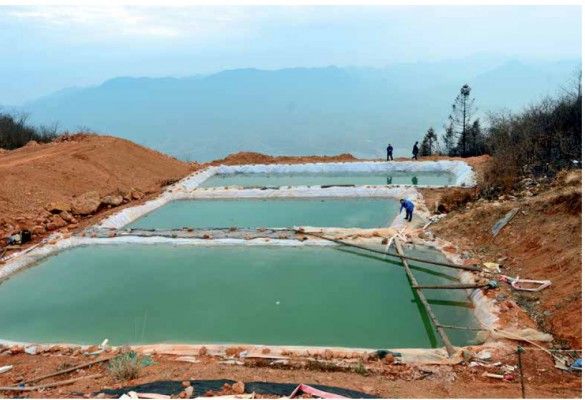
From the steamy heaven of Beiya (北衙) in Yunnan Province where the locals suffer through gold mine pollution to China’s border with Kyrgyzstan in Xinjiang where a gold rush is imminent, mines around the nation are trying to bring this metal to the surface to sell for record prices. And, it is China’s middle class that is driving the domestic demand. Gold jewelry demand in China has increased 344 percent in the past decade and investment demand is up well over 5,000 percent over the same period according to statistics from the World Gold Council. A press release from that organization stated, “China is now at the center of the global gold market—the engine driving the shift from West-to-East in terms of wealth creation, economic growth, and gold production and consumption.”
Much like everything else in China, the gold mining industry experienced an incredible boost over the past decade, with yields more than doubling. In 2004, China pulled up 6,287,000 ounces of gold from mines around the country; that number rocketed up to 14.5 million ounces in 2014—an over 100 billion dollar industry—putting the nation into the midst of a modern day gold rush of national significance.
With China’s explosion in the gold market has come market reforms, including new regulations allowing foreign investors to buy into China’s gold reserves as of September this year, and while this may sound like little more than chest thumping, in actuality it strengthens the RMB as a global currency and gives the entire nation more stable purchasing power. So, while China’s economy booms and expands into what sometimes looks like a bubble ready to burst, the ever-increasing gold markets have the power to safely gild that bubble to keep it, and the currency, stable.
So, in China, gold means more than money: it’s stability, it’s a spearhead for reforms in resource mining, it’s a sustainable source of revenue, and it’s a culture icon without equal. But, there are costs to doing business with Mother Nature—costs even more dear than 7,600 RMB an ounce.
Related Articles