


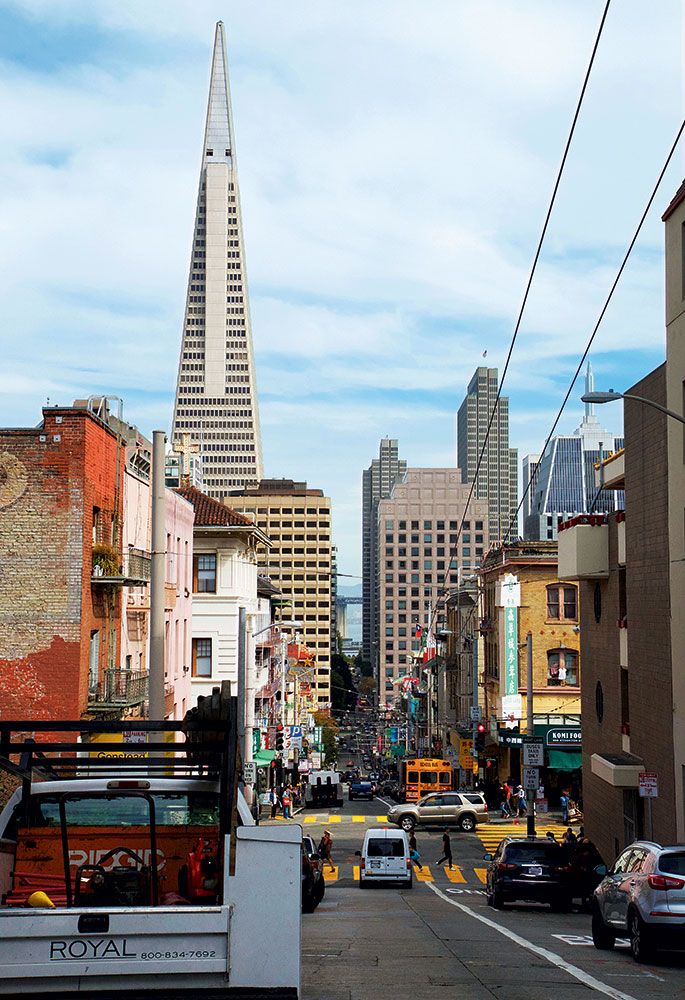
San Francisco’s Chinatown may well be the largest outside of Asia, its success fueled in part by a particularly active community of Chinese diaspora. Since the first Chinese arrived there in 1848, its story has been one weaving between gold rush fever, vibrant church communities, and tales of sex and vice, all set against periods of xenophobia, embodied by the 61-year-long Chinese Exclusion Act of 1882.
It’s possible to pick and choose historical narratives that surround the city. For a more uplifting tale, one might focus on how in 1885 a San Francisco legal case managed to overturn the exclusion of two Chinese students. Alternatively, one could look at how the San Francisco city government, that same year and in a climate of anti-Chinese sentiment and fear, formed a committee to quite literally map (and probably exaggerate) the extent of vice throughout Chinatown. The map came complete with a color key and delicate handwriting laying bare the spread of “gambling houses” and “opium resorts” as well as “Chinese prostitution” and “white prostitution” (which was also blamed on increased demand from Chinese immigrants).
But although the map may have been formed with anti-Chinese sentiments in mind, it wasn’t as if it was entirely fabricated—far from it. San Francisco’s reputation for vice had long been solidified as the backdrop for the exploits of Ah Toy, arguably the most famous femme fatale of the Wild West—a gorgeous Chinese prostitute and widow who worked her way up to owning a string of brothels, resisting the overtures of the ruthless Tong gangs, only to be laid low by racist laws. In 1852, she boldly challenged a Chinese gang leader in court who was attempting to extort her. By 1854 however, the federal government introduced a law that prevented Chinese from testifying in court, removing any legal protections she may have had in an era when Chinese women were often trafficked in the sex trade (with Ah Toy a perpetrator as well, allegedly involved in trafficking girls as young as 11). Her tale later became the focus of a semi-fictional book entitled Daughter of Joy.
Given this narrative of vice, it is perhaps also wise to keep in mind that San Francisco was also the site of the first church catering to an Asian community in North America, now known as the Old St. Mary’s Church (its proximity to streets of vice led the church to be moved, with a new St. Mary’s opening in 1891). The very stones that made the foundation of the Old St. Mary’s church were cut and shaped in China before being shipped to the US, where it was built through the sweat and toil of Chinese laborers, despite the fact that it wasn’t originally intended to cater to Chinese immigrants.
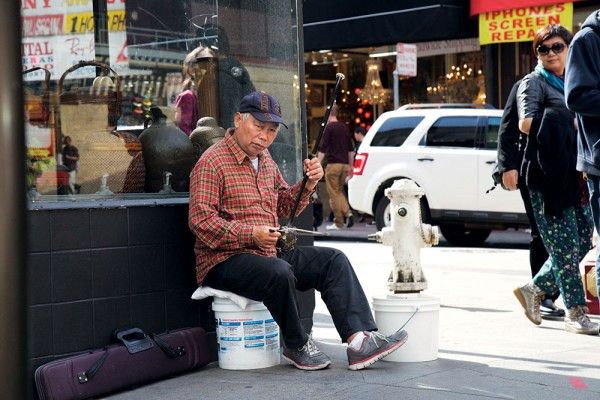
The first Chinese in the US tended to go to Baltimore, but gold rush fever drew them to California and toward San Francisco. In 1906 the Chinatown community burned to the ground and attempts were made to move it to a less desirable location; however a spirited campaign allowed it to remain near the heart of the city.
Today’s narrative of the Chinese community in San Francisco is no less nuanced and generally much less xenophobic, and the headlines tend to belong to its success stories. These success stories for the past few decades are personified most in a single name: Fang.
In 1949, at the age of 23, John Fang fled Shanghai for Taiwan as the Communist Party took control of China. He later emigrated to the US but returned to Taiwan for a time, where he met and married Florence Fang. The pair would later become powerbrokers in the US, with John Fang working his way up through the media publishing industry in San Francisco, eventually founding the Asian Weekly news.
Along the way the controversial acquisition of The San Francisco Examiner—a paper known for cultivating journalistic talent including Mark Twain, Jack London, and Hunter S. Thompson—in 2000 netted the family scathing coverage in competing papers, as one of their sons, Ted Fang, ran it amid a rapid and acrimonious staff churn. The paper was bought at a time of tumultuous finances with the help of government subsidies to keep it running and while the Fang family was at the helm until early 2004.
But it wasn’t just in San Francisco where their influence was felt. Prior to their acquisition of The Examiner, they had a presence on both sides of the political aisle at the federal level, but primarily supporting Democrats. John Fang at one point became an aide to Democrat Nancy Pelosi, now the minority leader of the US House of Representatives, and Florence served on a White House small business advisory panel during George W. Bush’s term.
The family’s ties to China also remained strong. Their other son, James Fang, wed the daughter of a former mayor of Shanghai, and in August of 2015, Florence Fang demonstrated how her influence remained even after many years in the limelight, appearing in a gushing spread in the China Daily, photographed alongside the Deputy Director of the Overseas Affairs division of China’s State Council to commemorate the opening of a WWII Pacific War Memorial Hall in San Francisco.
Aside from commemorating the often tragic history of China’s role in WWII, the museum will no doubt stand as a testament to the role of Chinese in the US, with San Francisco standing out as one of the key locations where they have made their presence felt.
“Fear and Loathing in San Francisco” is a story from our newest issue, “Mental Health”. To read the whole piece, become a subscriber and receive the full magazine. Alternatively, you can purchase the digital version from the iTunes Store.
Images by Sheryl Shi (史天娇)
Related Articles



