
From a tower made of colorful steamed buns to the annual pork feast, here are some of the traditional new year celebration rituals that’s still alive across China
The Spring Festival doesn’t wait for New Year’s Day to begin. Weeks before the official start of the year, celebrations are already in full swing across China. Here are five folk traditions that bring the Chinese New Year to life with color, energy, and rich cultural heritage. Wishing you a very happy Chinese New Year!
Dragon lantern dance
The dragon lantern dance, a symbol of good fortune, is a must-see folk custom during the Chinese New Year. Originating from ancient dragon worship, this centuries-old tradition carries wishes for abundant harvests, favorable weather, and prosperity.
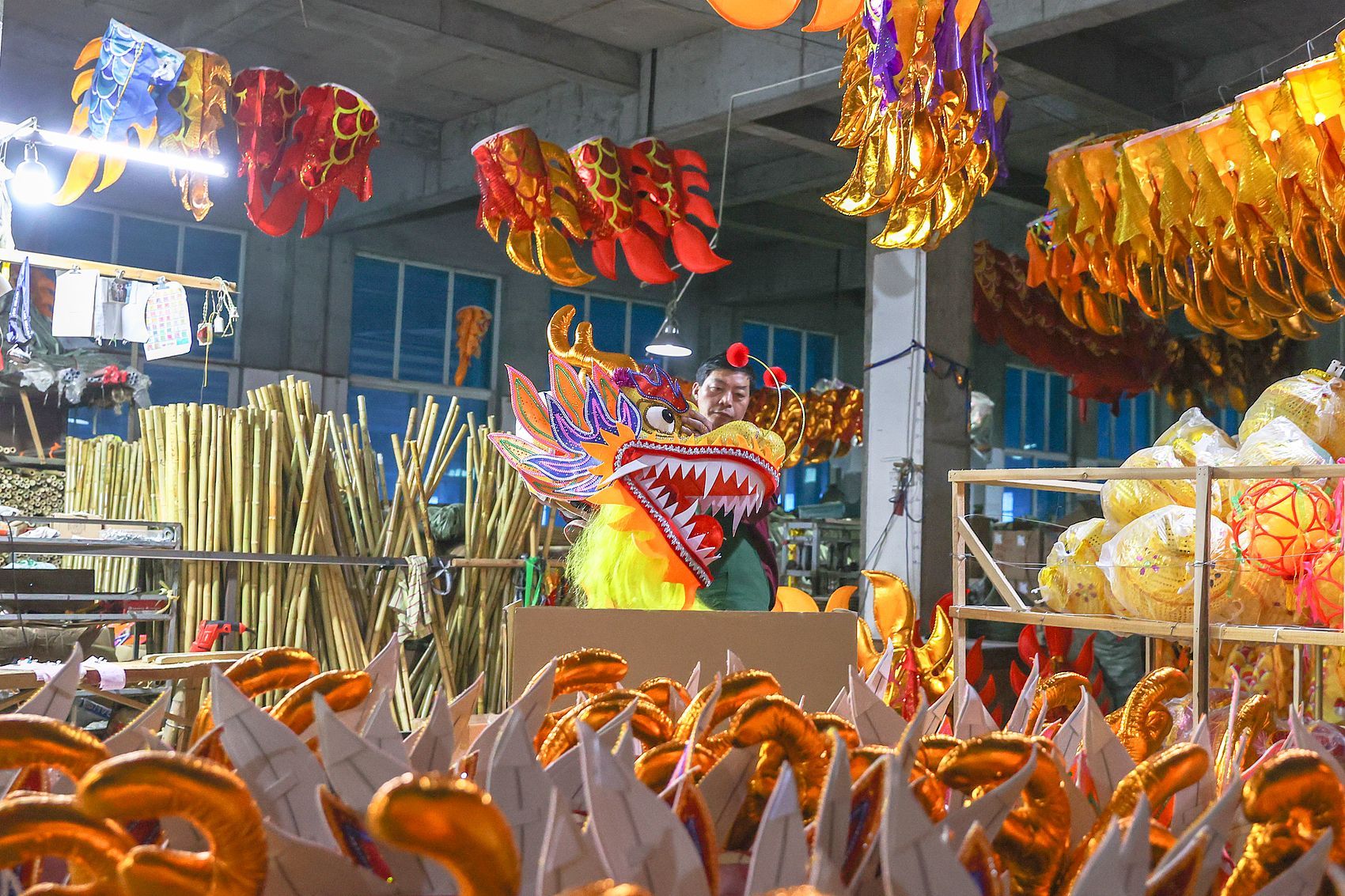
Many of the dragon lanterns used in southern China are manufactured in Chengnan village, Jiangxi, which even supplies overseas markets (VCG)
From Jiangxi and Jiangsu to Guangdong, cities come alive with the vibrant dance of massive bamboo dragon lanterns. Carried by dozens of performers, “the dragon” can stretch for meters, winding through the crowds like a fiery serpent. Each household joins the celebration by lighting lanterns, beating gongs and drums, and fully immersing themselves in the festivities. Wherever the dragon goes, firecrackers erupt in unison, their sound carrying for miles and creating a spectacular spectacle.
Colored steamed buns
In Shanxi, the festive spirit comes from fermenting dough. In Wenxi county, known as the “hometown of colored buns,” every household engages in the millennium-old tradition of making colorful steamed buns, transforming simple dough into vivid works of art.
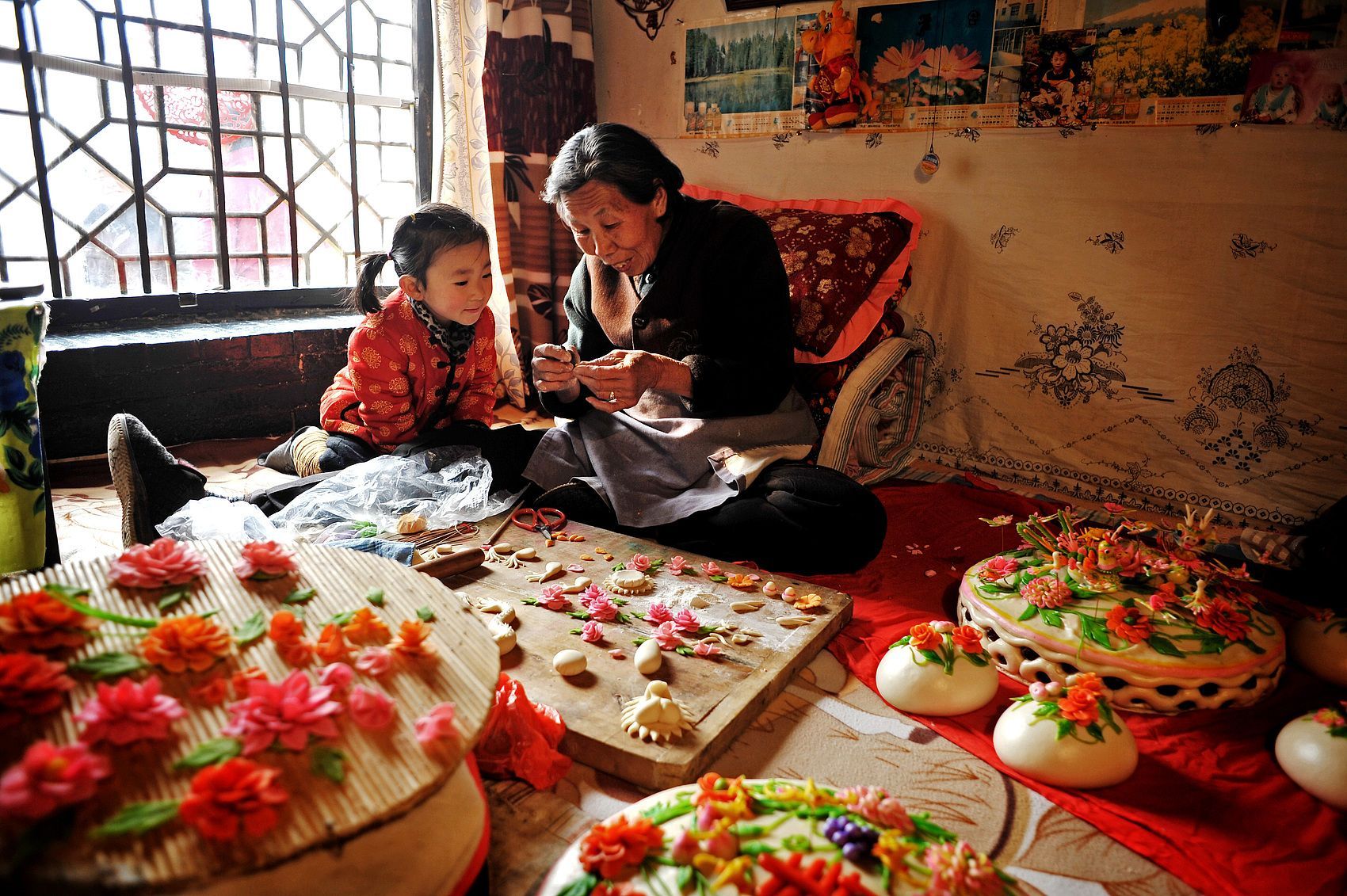
Techniques for making creative steamed buns are often passed down among the women in the family (VCG)
After days of meticulous work with tools like scissors, these buns take on intricate shapes like persimmons, lotus flowers, and phoenix, each representing a different blessing. For example, eating date-shaped buns symbolizes a sweet and happy year ahead.
Inspired by folk painting techniques, these ceremonial buns play an essential role in seasonal festivals, rituals, family visits, and even birthdays, often being offered as gifts or sacrifices. For the people of Wenxi, as long as the flower buns are present, the true spirit and rich taste of the New Year will always endure.
New Year pig feast
In rural China, it’s a time-honored tradition to butcher a pig and turn it into a lavish feast for the holiday family reunion.
Recently, a young woman in rural Chongqing sought help online to assist her elderly father in slaughtering their two pigs, promising to treat them to a traditional pork-and-offal stew (刨猪汤), a dish customarily shared with family and neighbors after a pig is slaughtered. Her short video went unexpectedly viral, amassing millions of views. On the day of the event, thousands of visitors showed up at her doorstep. Her entire village, along with the local tourism authority, rushed to provide extra supplies, turning the gathering into an extended party that lasted late into the night. Since then, her village has become a viral tourist destination.
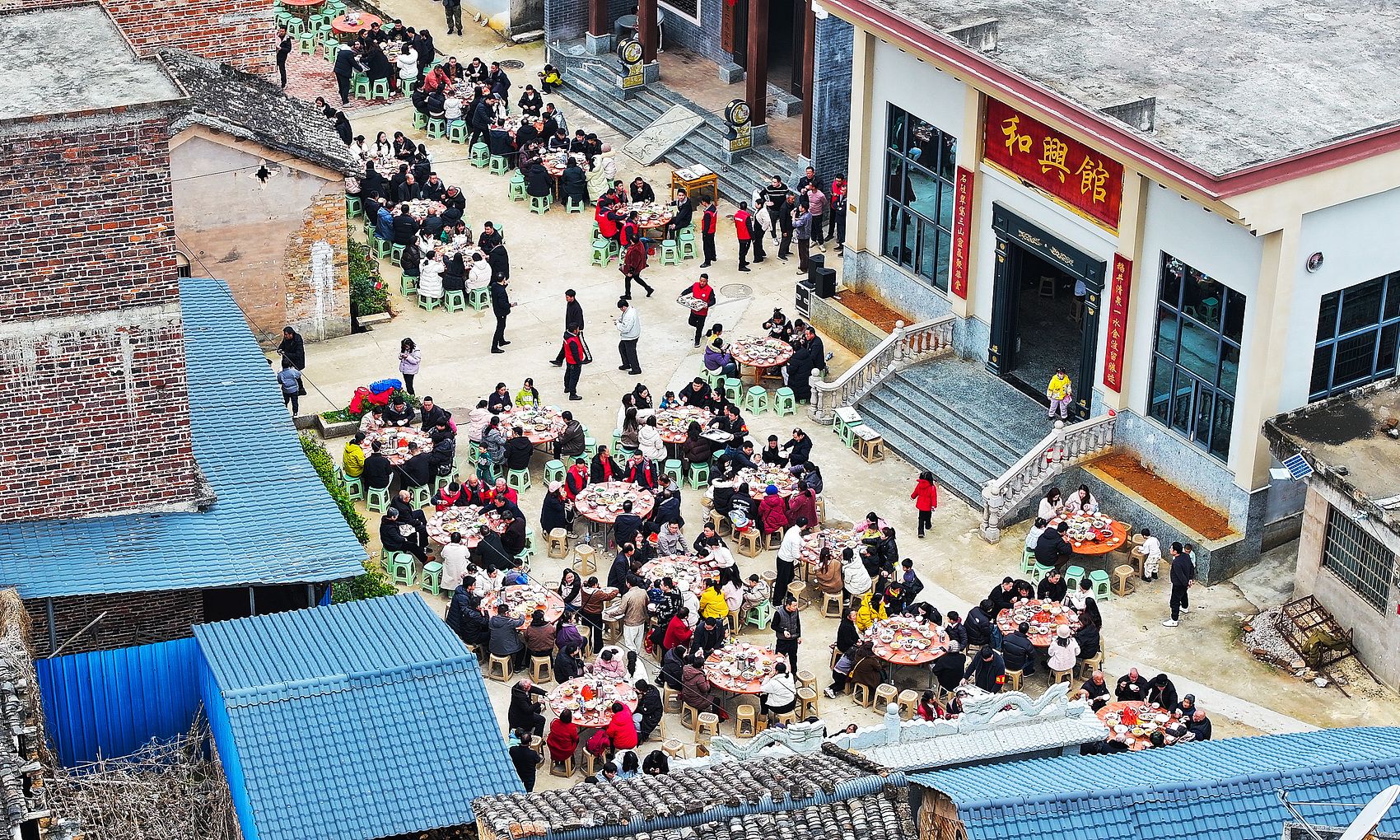
Tourists and villagers are enjoying a local New Year pig feast in Yongzhou, Hunan (VCG)
Rural feasts have become a new trend, attracting urbanites with their down-to-earth charm, the cheerful company of locals, and comforting homemade flavors. A rural feast in Jiangxi drew 40,000 visitors alone, while another event in Chengdu, Sichuan, saw over 10,000 sign-ups. However, not all villages are prepared to handle such crowds, and food safety can be a concern. It’s best to attend events overseen by local tourism authorities. Some cities have also started hosting similar gatherings. For example, a commercial street in Kunming recently held a New Year pig feast (年猪宴)—a street banquet with more than 60 tables serving pork stew and other local dishes, attended by both local merchants and visitors.
Village galas
The annual Spring Festival Gala hosted by China Central Television has long been one of the most anticipated events of New Year’s Eve for many families. Each year, hundreds of millions of viewers still tune in at 8 p.m., exchanging New Year’s greetings as they count down in front of the TV alongside the show. Performances from the gala often go on to dominate conversations on Chinese social media for weeks afterward.
However, the gala doesn’t cater to everyone’s tastes. Many families, especially in the southern parts of the country, have long treated it as little more than background noise to their heated mahjong battles, or simply skipped it altogether. Instead, villages across China have now opted to stage their own Spring Festival celebrations, affectionately nicknamed cunwan (村晚), or village galas, and livestreaming it on social media platforms like Douyin and Kuaishou.
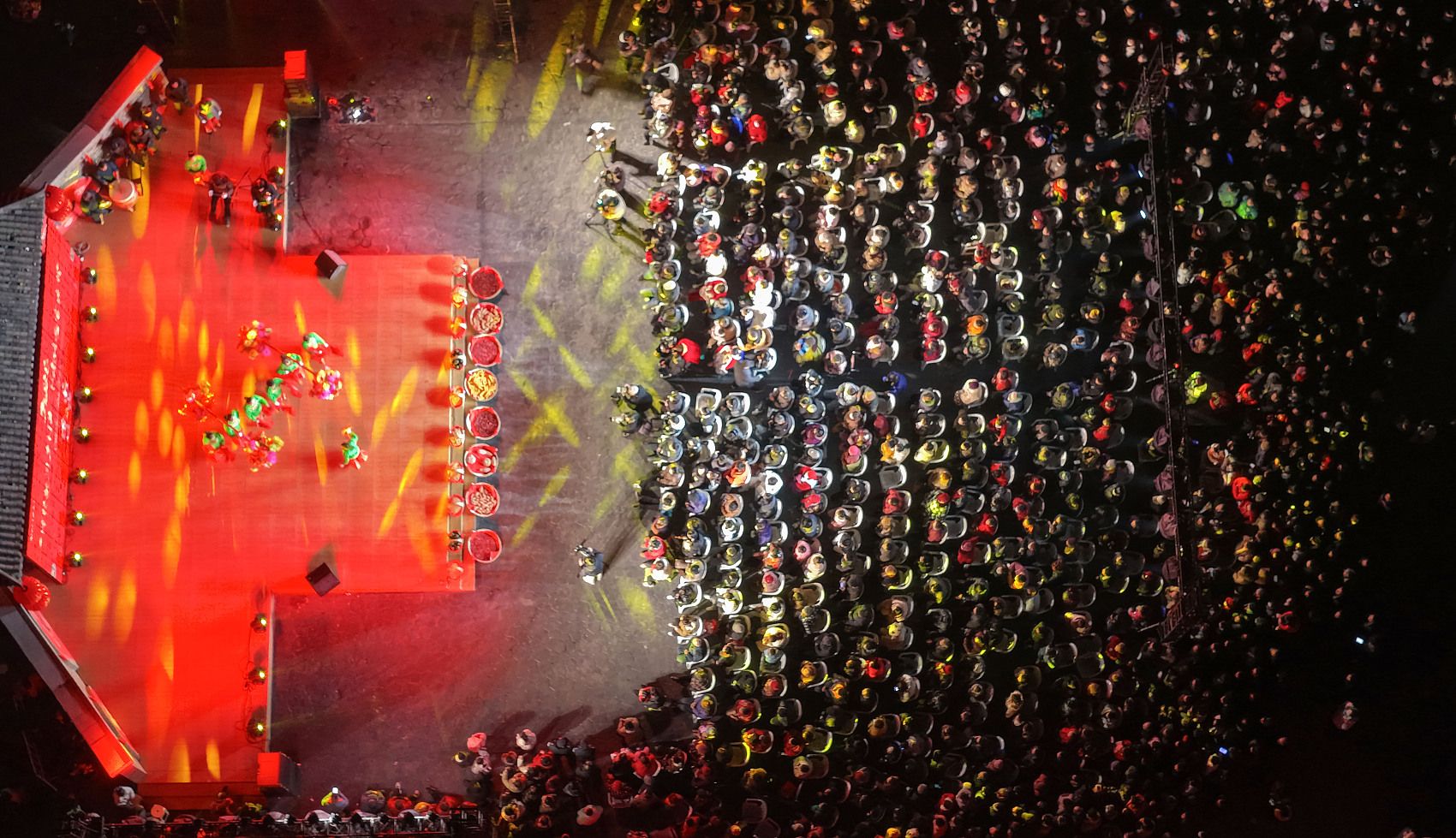
A New Year’s village gala is underway in Guantang Village, Jiangsu, where local villagers are performing 20 self-produced acts, ranging from traditional arts to modern, trendy performances, earning rounds of applause and laughter from the audience (VCG)
Hosted and performed by villagers themselves, these galas offer a chance to showcase everyday rural life, and the kinds of activities locals genuinely find fun and festive. They have also proven to be popular far beyond their home communities. A livestream of the gala from Jiangxin’s Sanwan and Longyuan villages, for example, drew more than 300,000 views online.
In Guizhou, the local government, tourism bureau, and television station organized a larger-scale village gala, inviting performers directly from villages across the province, including recognized inheritors of intangible cultural heritage, local arts leaders, returning young people, and ordinary residents.
Shehuo fairs
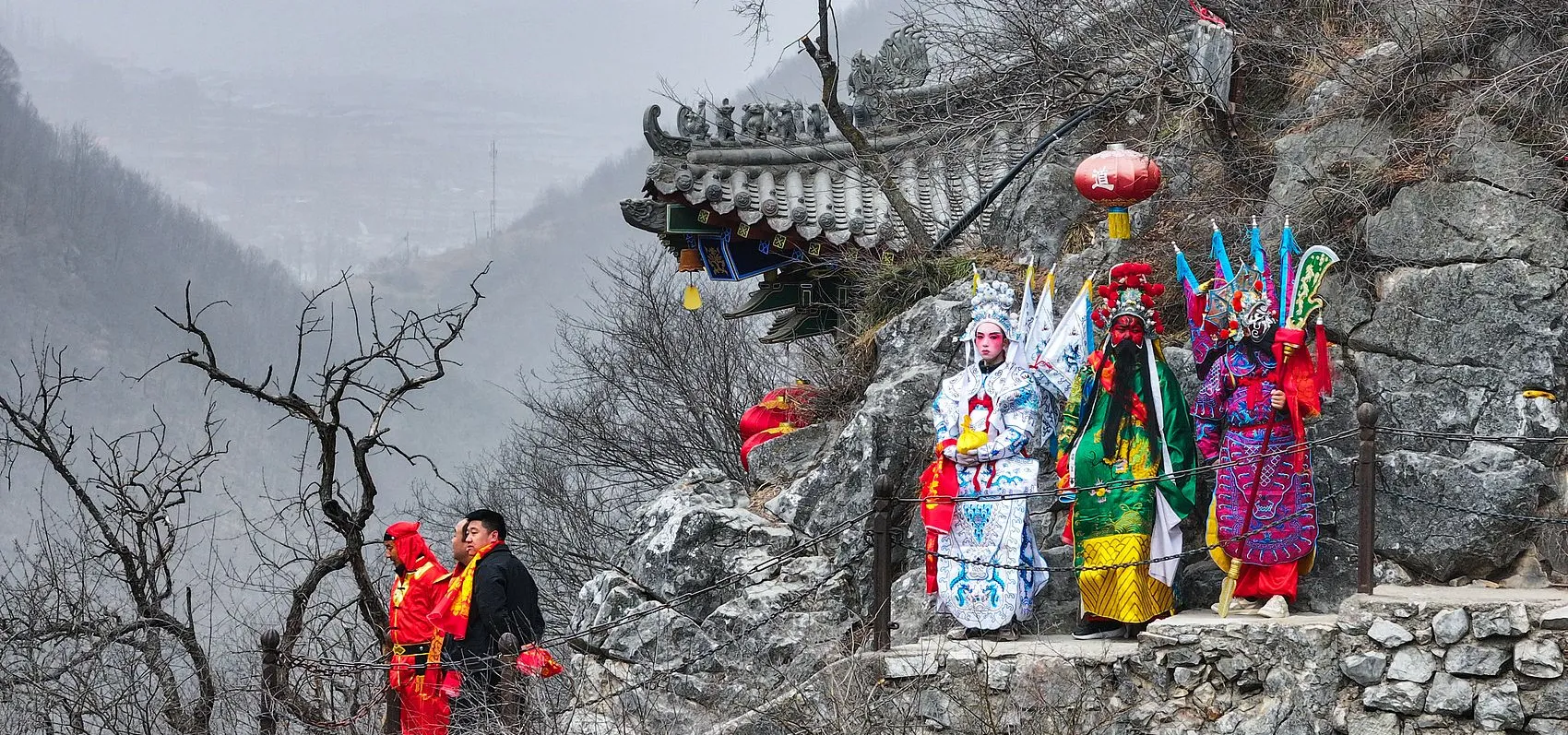
One of the oldest folk celebrations in northern China, Shehuo is the collective name for a series of performances including traditional opera, dance, drama, acrobatics, and more. Originating in ritual offerings to the gods of earth (社, she) and fire (火, huo), these fairs are often held during the Chinese New Year and the Lantern Festival. Once banned in the 1960s and 70s as a legacy of feudal society, Shehuo fairs made a triumphant return in the 1980s as a lively stage for all kinds of folk entertainment.
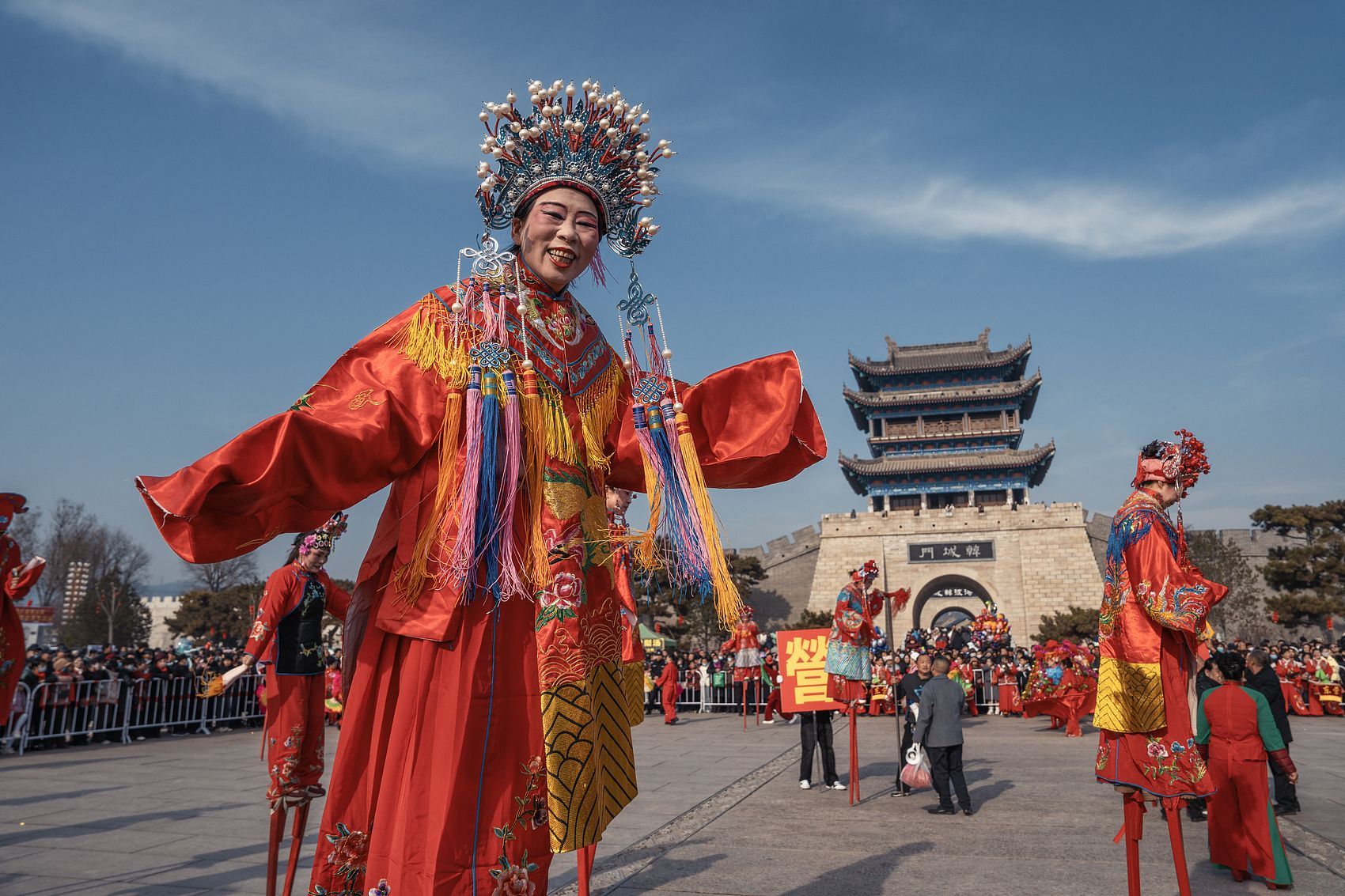
A stilt dance during a Shehuo fair in Weinan, Shaanxi (VCG)
The main attraction is a costumed parade often performed on stilts, depicting characters ranging from mythical rulers such as the Yellow Emperor to folk heroes like General Guan Yu from the Three Kingdoms legends.
Longxian county in Shaanxi is dubbed the “Home of Shehuo Culture” due to its long history, which dates back some 2,000 years, and its vibrant folk performing industry. The county hosts over 300 different Shehuo societies, which travel to various villages and towns during the holiday season to provide folk entertainment.
Related Articles