It’s 1988, and the sky is still bright over the open-air platform of the Beijing Ancient Observatory. The occasion is an art exhibition, “Modern Chinese Paintings,” and one of the organizers, Brian Wallace, is making small talk with attendees.
Despite the artistic and cultural ferment of the time, few places exist for the city’s artists to exhibit, and even fewer locals are willing to spend money on their work. Instead, artists hustle in an informal ecosystem of hotel lobbies, embassies, and sometimes diplomats’ sofas—relying on the support of art-savvy foreigners.
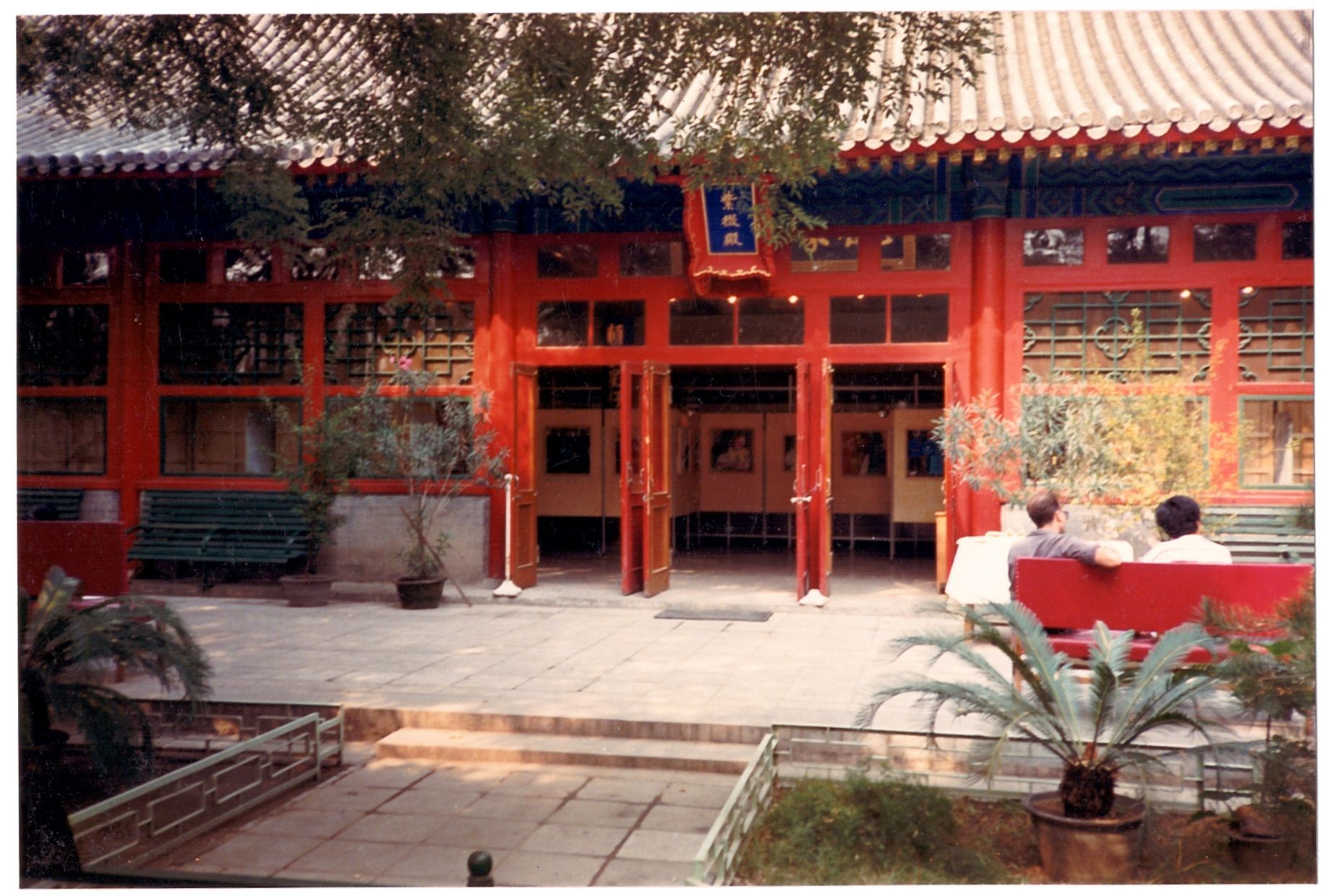
Brian Wallace began organizing exhibitions at the Beijing Ancient Observatory in 1988
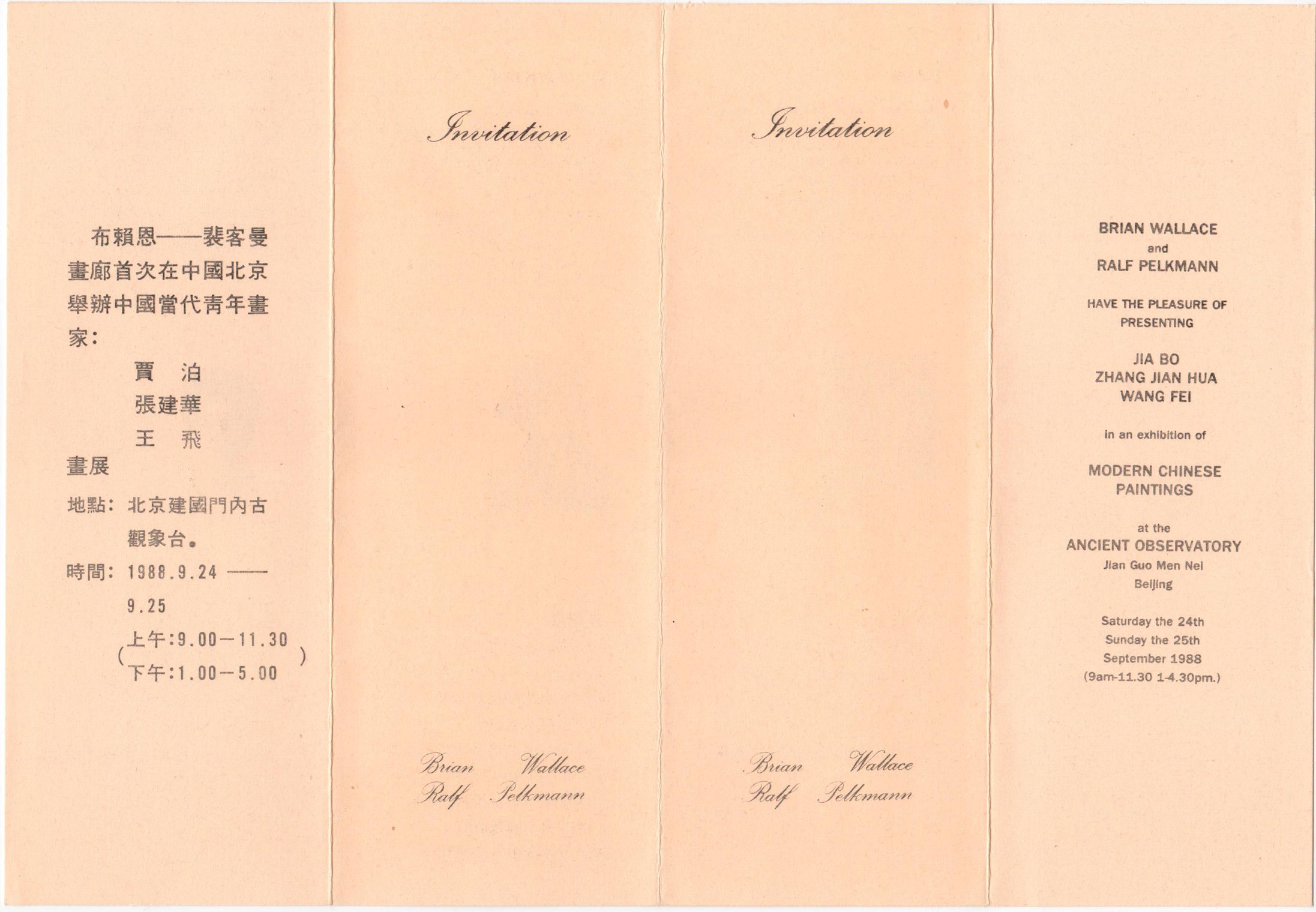
An invitation card to the exhibition Wallace hosted at the Beijing Ancient Observatory in 1998, featuring artists Jia Bo, Zhang Jianhua, and Wang Fei (image courtesy of Red Gate Gallery)
“My Chinese friends were artists [so I helped] them organize exhibitions in different places around Beijing,” Wallace tells TWOC.
The Australian man had originally hoped to open a permanent gallery at the observatory, but they turned him down. Instead, he was introduced to a restored watchtower amid what remained of the Ming dynasty (1368 – 1644) city walls at Dongbianmen, not far from the Beijing Railway Station. Just as the Jesuit astronomers of the 17th century had ushered in an era of exchange by modernizing the Ancient Observatory, centuries later Wallace would open the gate on art between China and the world by founding the country’s first private commercial gallery, Red Gate, at Dongbianmen in 1991.
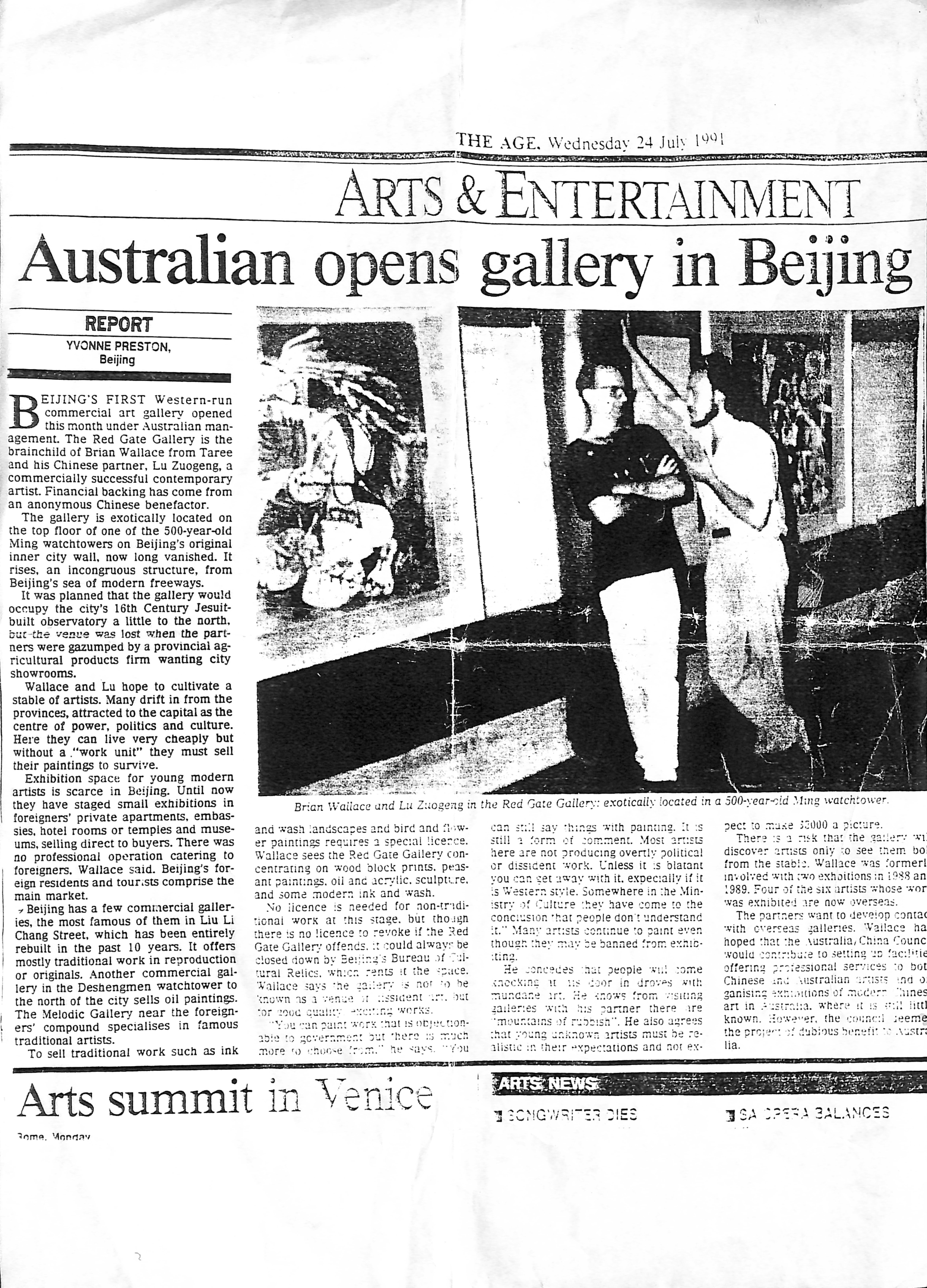
The Australian newspaper The Age reported on the opening of Red Gate Gallery on July 24, 1991 (image courtesy of Red Gate Gallery)
The gallery took its name from the large vermilion doors of its new watchtower home. Fittingly, both the color of the gates—zhuhong (朱红) in Chinese—and the ancient Chinese term for paintings—danqing (丹⻘)—are connected to cinnabar, a red mineral pigment as iconic to China as the dusty red soil plains are to Wallace’s native Australia.
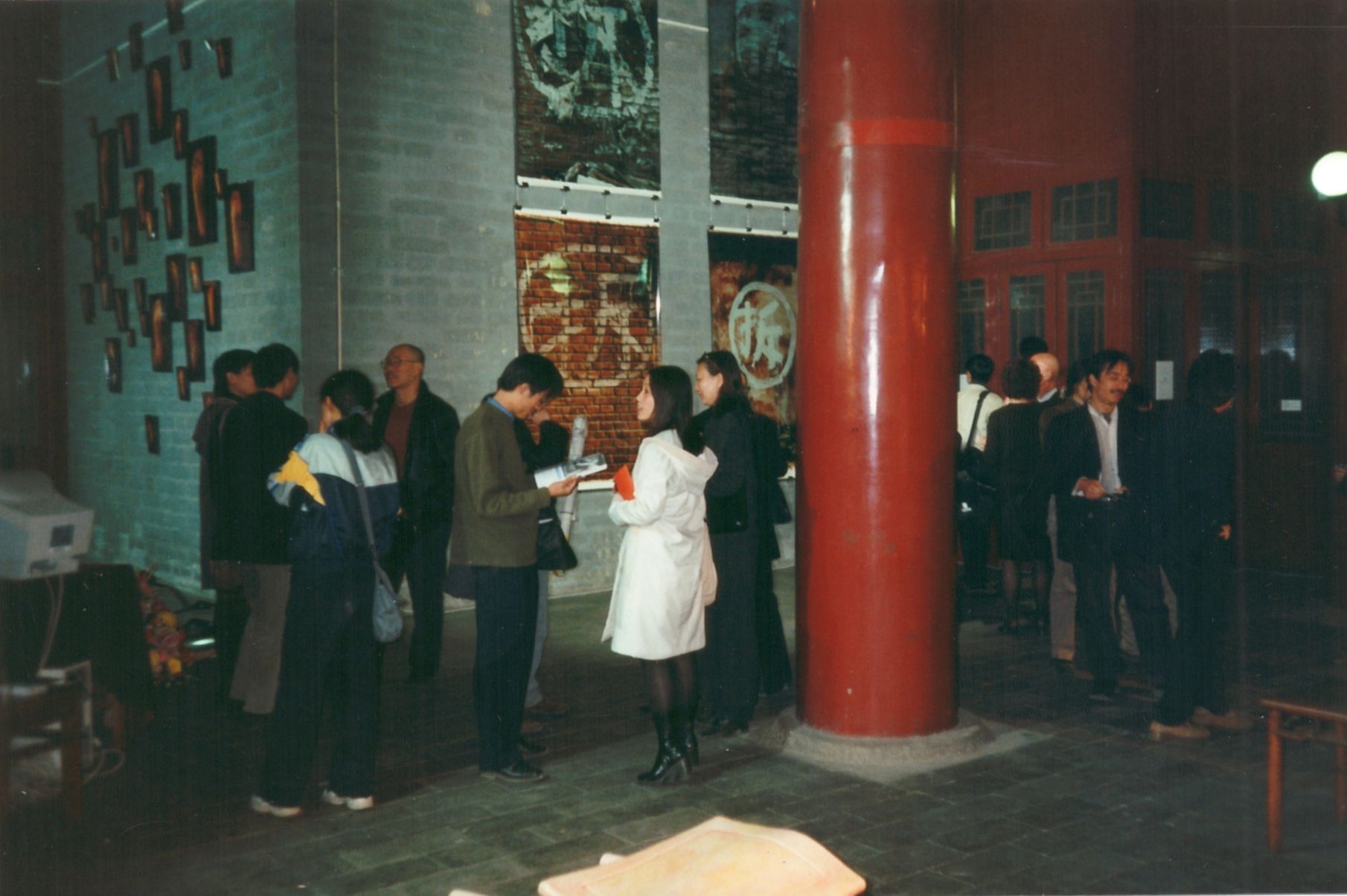
An exhibition at Red Gate’s Dongbianmen location in 2000 (image courtesy of Red Gate Gallery)
Red Gate moved to the 798 Art District permanently in 2017, but retained the name inspired by its original location. This year, between October 11 and November 1, the gallery celebrated its 35th anniversary with an exhibition foregrounding the long legacy of artist residencies in China. The show, co-curated by Wallace and art historian Hu Chao, told an overlooked story that places community and mutual exchange at the center of the country’s contemporary art history.
“It never occurred to me that people didn’t know about [the] residency programs. I guess I was so involved,” says Wallace. “But then when Dr. Hu came to us, he said, ‘I’ve been doing all this research, and no one is talking about [them].’”
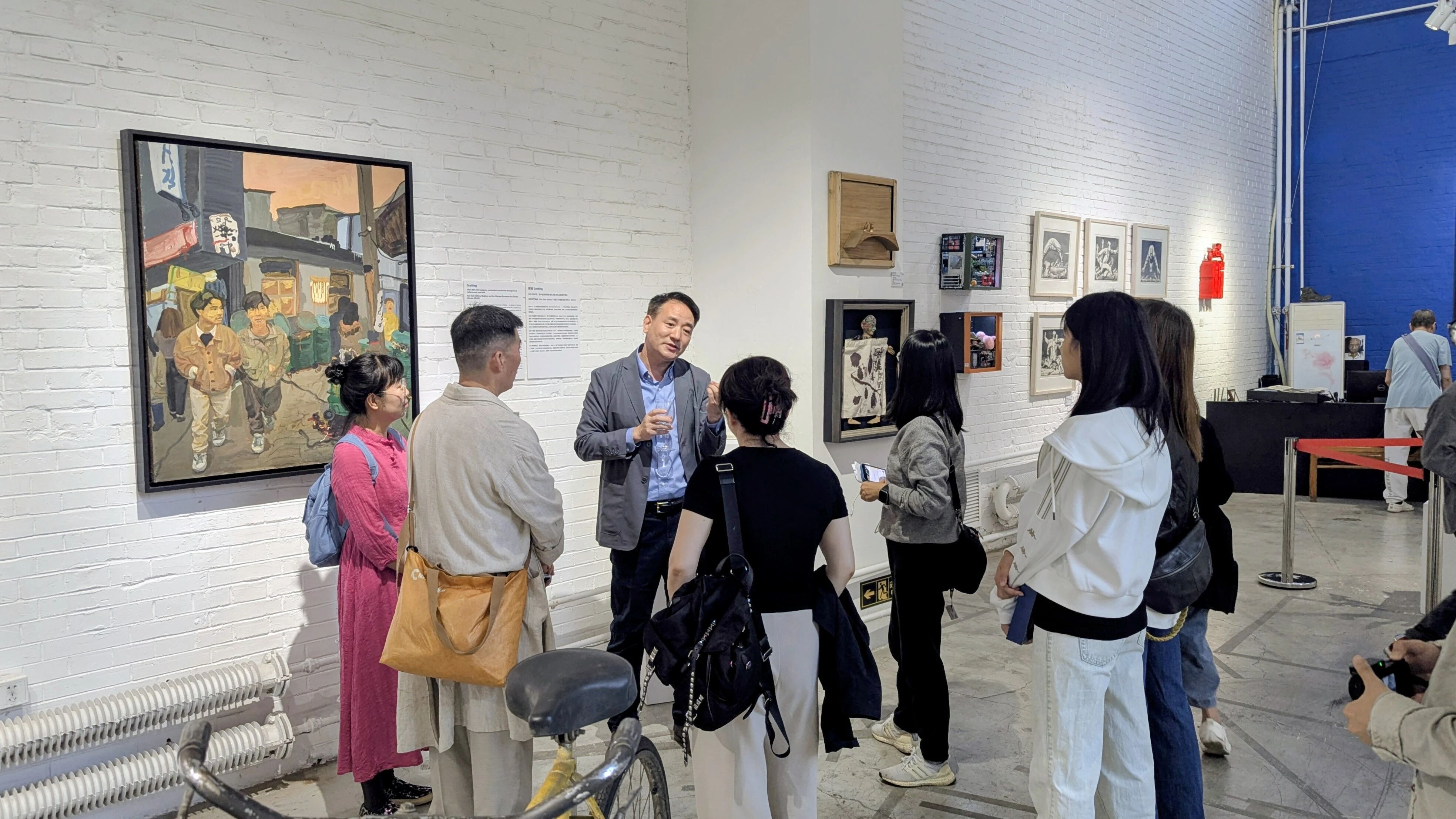
Dr. Hu Chao, associate professor at Guangzhou Academy of Fine Arts and co-curator of the exhibition, speaks to visitors about art residency programs in China during the opening ceremony (image courtesy of Red Gate Gallery)
An era of exchange
Wallace spoke with TWOC this October during a tour of the exhibit, held at Red Gate’s 798 gallery and titled “Origins of Artist Residencies in China: Another Pathway to Contemporary Chinese Art.” Wallace’s own pathway to China began with a backpacking trip in 1984. While studying Mandarin at Renmin University two years later, in 1986, an exhibition on ink painting planted the seeds for another year studying Chinese art history at the Central Academy of Fine Arts.
By the late 1980s, Chinese artists had begun going abroad and vice versa, but these exchanges relied on personal arrangements and scattered networks, with no organized structures to support them long enough to make work. After founding Red Gate, Wallace became unofficially involved with China’s earliest international artist residencies. The Australia Council and Asialink, an institution attached to Melbourne University, organized these programs, with Wallace handling the logistics on the ground in Beijing, often unpaid and at his own expense.
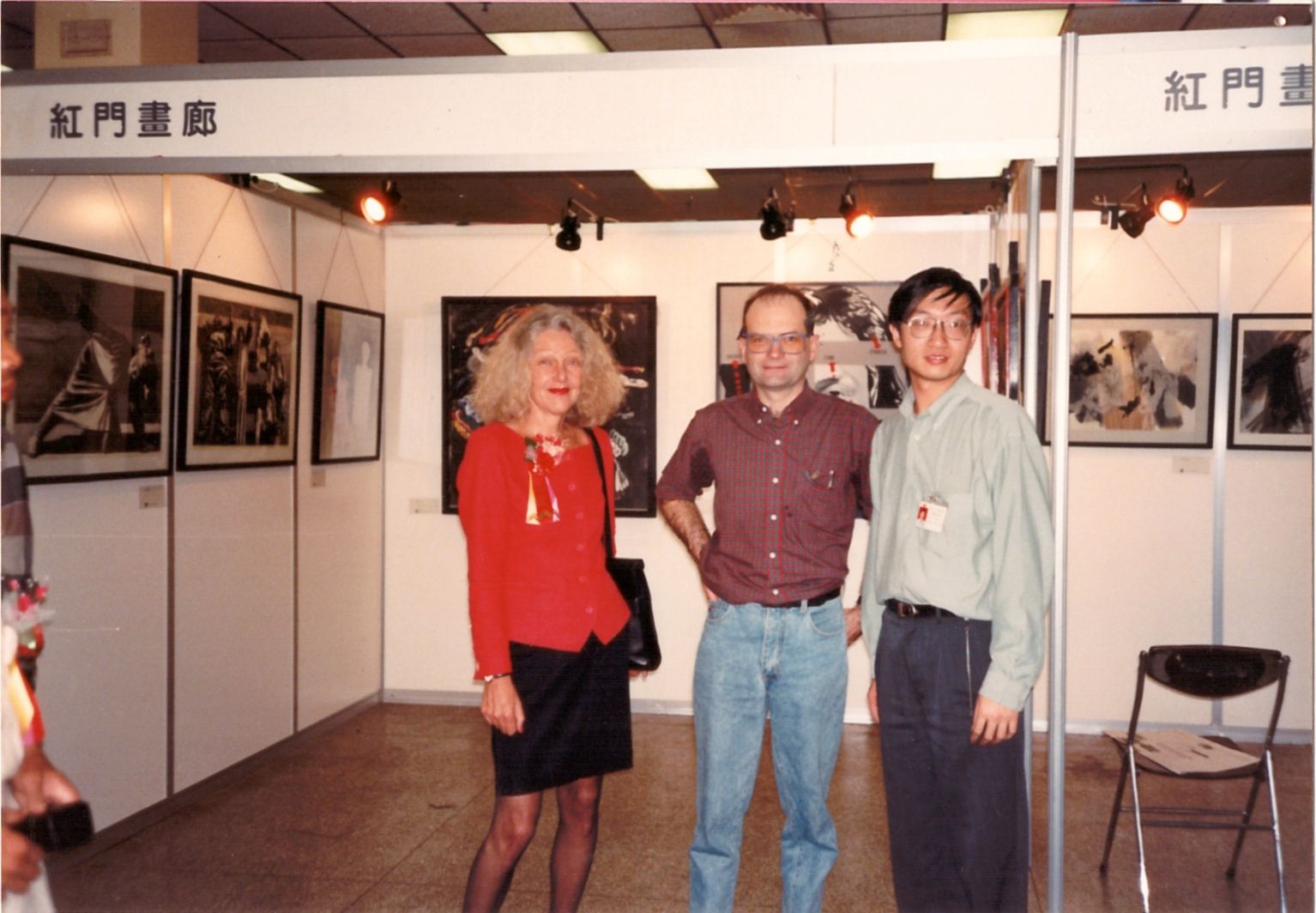
Brian Wallace (middle) attending the Guangzhou International Art Fair in 1993 (image courtesy of Red Gate Gallery)
Painter Rodney Pople and mixed-media artist Lindy Lee were among the first artists Asialink sent to Beijing, where Beijing Art Academy hosted them, and the Central Academy of Arts and Design provided housing. The circumstances were less than ideal. Wallace recalls in Red Gate’s 15th Anniversary Book that “in the sense of inspiration: there was not much communication between the resident and other artists, and therefore little exchange.”
Finding accommodation and studio space posed an ongoing challenge, even though housing restrictions on foreigners in China had begun to ease. “By the time they were settling in, it was time for them to go home,” Wallace recalled in a 2013 interview. “We thought that was a little frustrating, year in and year out.” Red Gate solved this by sourcing and renting spaces itself, launching its own residency program that ran from 2001 to 2020, when it ended because of the pandemic.
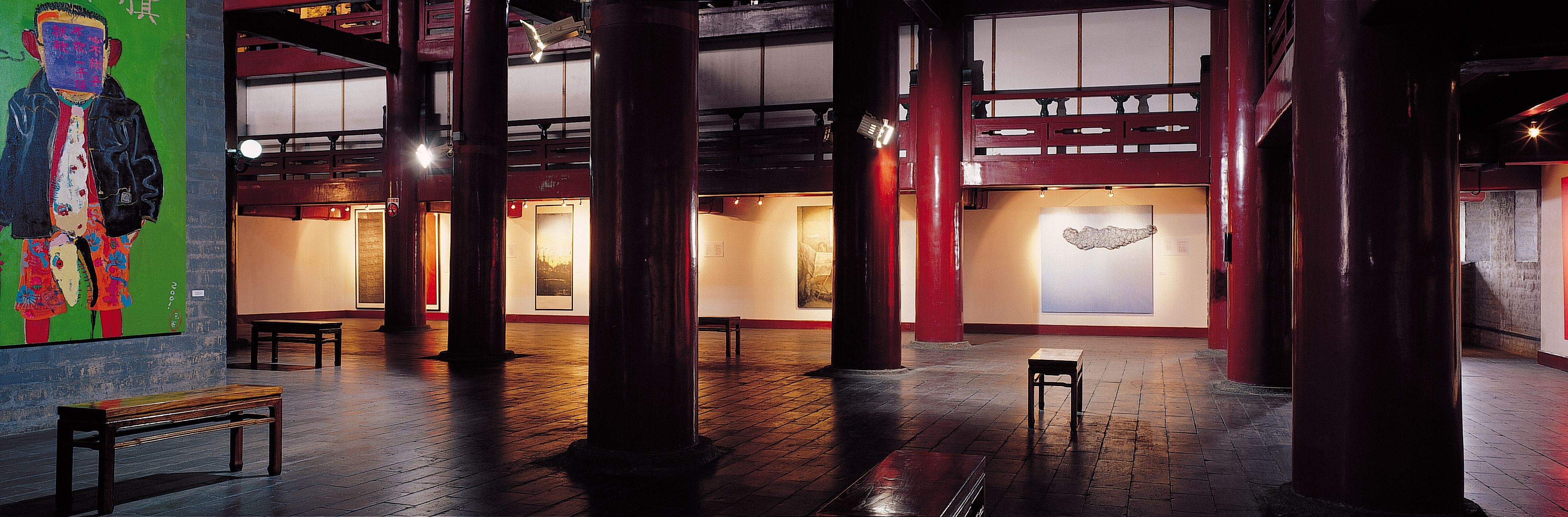
Red Gate Gallery regularly exhibits work by artists in its residency program
Artist Han Qing, who was featured in the recent exhibition, recalls the period fondly. “Every time Red Gate’s residency studio opened, it was a gathering of Chinese and foreign cultures in Beijing,” he told Beijing Youth Daily in 2021. “I and other artists pushed open the red gate and saw a brand-new world.”
At its peak, over 70 artists participated in Red Gate residencies each year. They lived and worked across nine studios split between an artist community near 798 and other residential parts of the city. Spots were reserved for Chinese artists living outside of Beijing too, from places lacking their own vibrant art scenes. Among these beneficiaries was Fujianese artist Chen Wenling, whose words adorned one of the gallery’s walls during the exhibition. Recalling his experience in 2004, he wrote: “The depth of Beijing is like its haze and sandstorms—you can never see to the bottom. This city may not nurture the body as Xiamen does, but it nurtures dreams.”
The artists often held group exhibitions and upheld an ethos of human connection, accessibility, and inclusion for the 1,200 people involved over the program’s lifetime. “Some people may be leaving, [others] just arriving, but [regardless] we’d have a barbecue in Beijing,” says Wallace. “We had musicians, but we also had dancers. We had writers. Sometimes we had inquiries from engineers [and] chefs.”
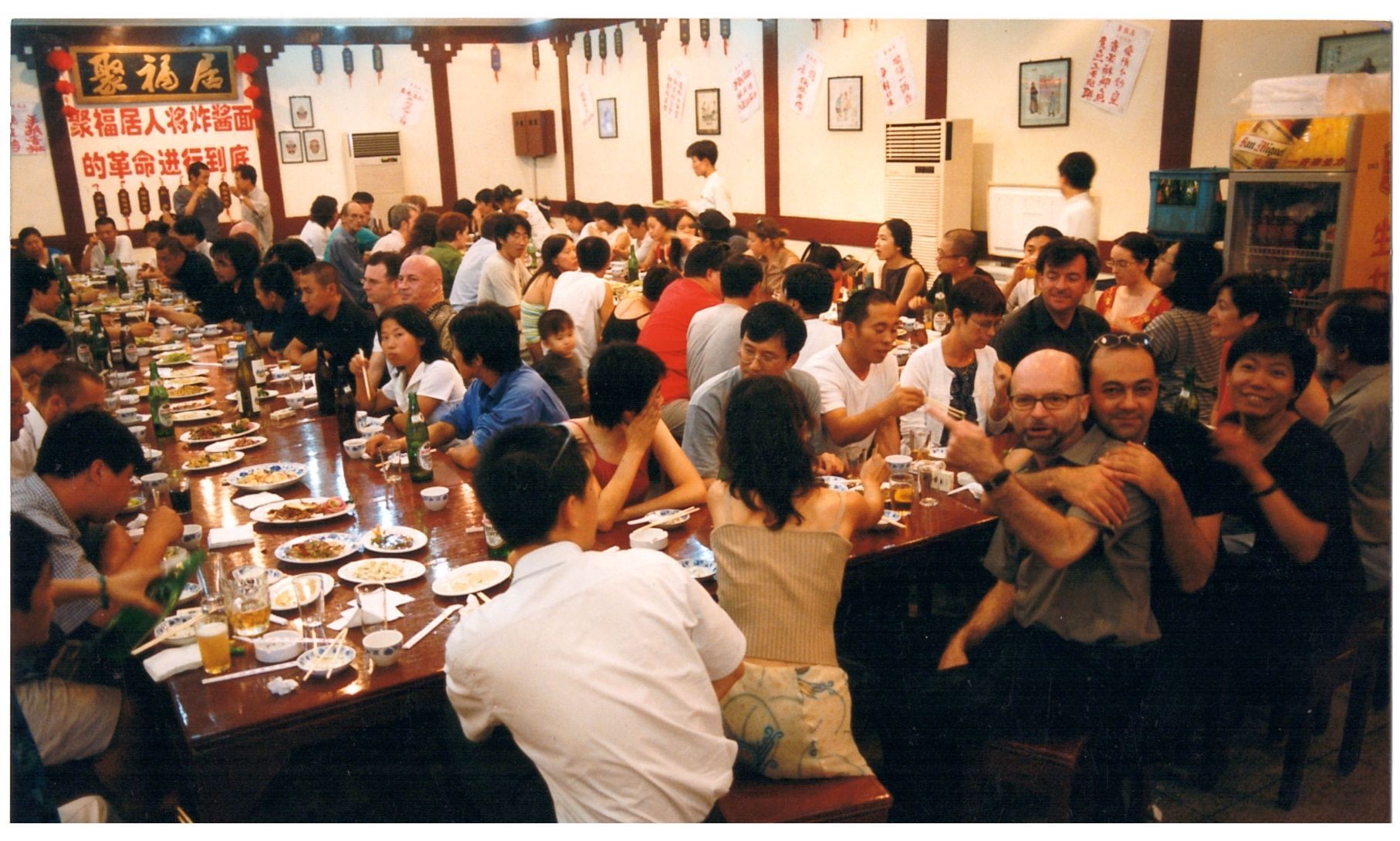
Brian Wallace having dinner with artists he’s hosting in 2003
Such openness is central to Red Gate, an enterprise in which commercial considerations have never come first. Instead, the gallery’s emphasis rests on decades-long relationships, collaborations, and the fostering of new artists, measuring success through its impact on lives and the resilience of its networks rather than auction sale values. The Chinese title for the anniversary exhibition, Jieke (借壳), literally “borrowing a shell,” speaks to the power of collaboration—a metaphor borrowed from finance and biology to explain how artists use existing spaces, institutions, and resources to develop their own work.
The same philosophy has infused other Red Gate projects. For their 20th anniversary exhibition, Two Generations, established names were tasked with nominating up-and-coming artists, an idea they embraced to great effect. Meanwhile, an art vending machine was installed earlier this year in partnership with artist Li Gang, offering original paintings, prints, sculptures, and other artworks with a maximum price of 999 yuan. The gallery has also long held affordable art fairs.
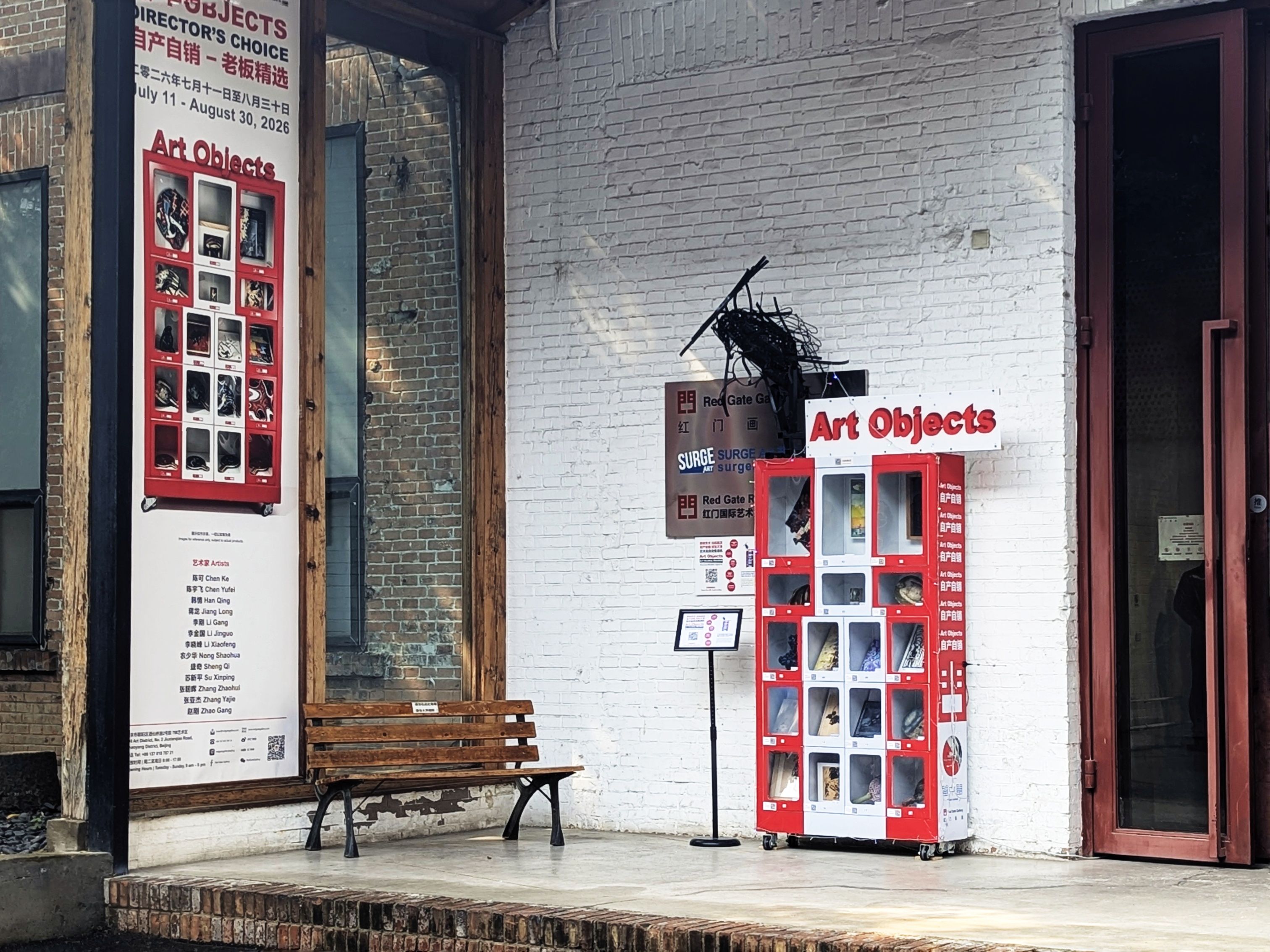
Art pieces in the vending machine, located just outside the gallery’s main entrance, can be purchased by scanning a QR code to unlock the corresponding compartment. According to Wallace, the machine has sold more than 30 pieces so far.
Enduring connections
Red Gate’s current home in 798 lacks pretension. It is simple, with high ceilings and white walls. The imperial red of the watchtower gates is gone, but on the far side of the room, a lone feature wall lends a different color—blue—the product of Jamaican-American artist Peter Wayne Lewis, another former residency holder.
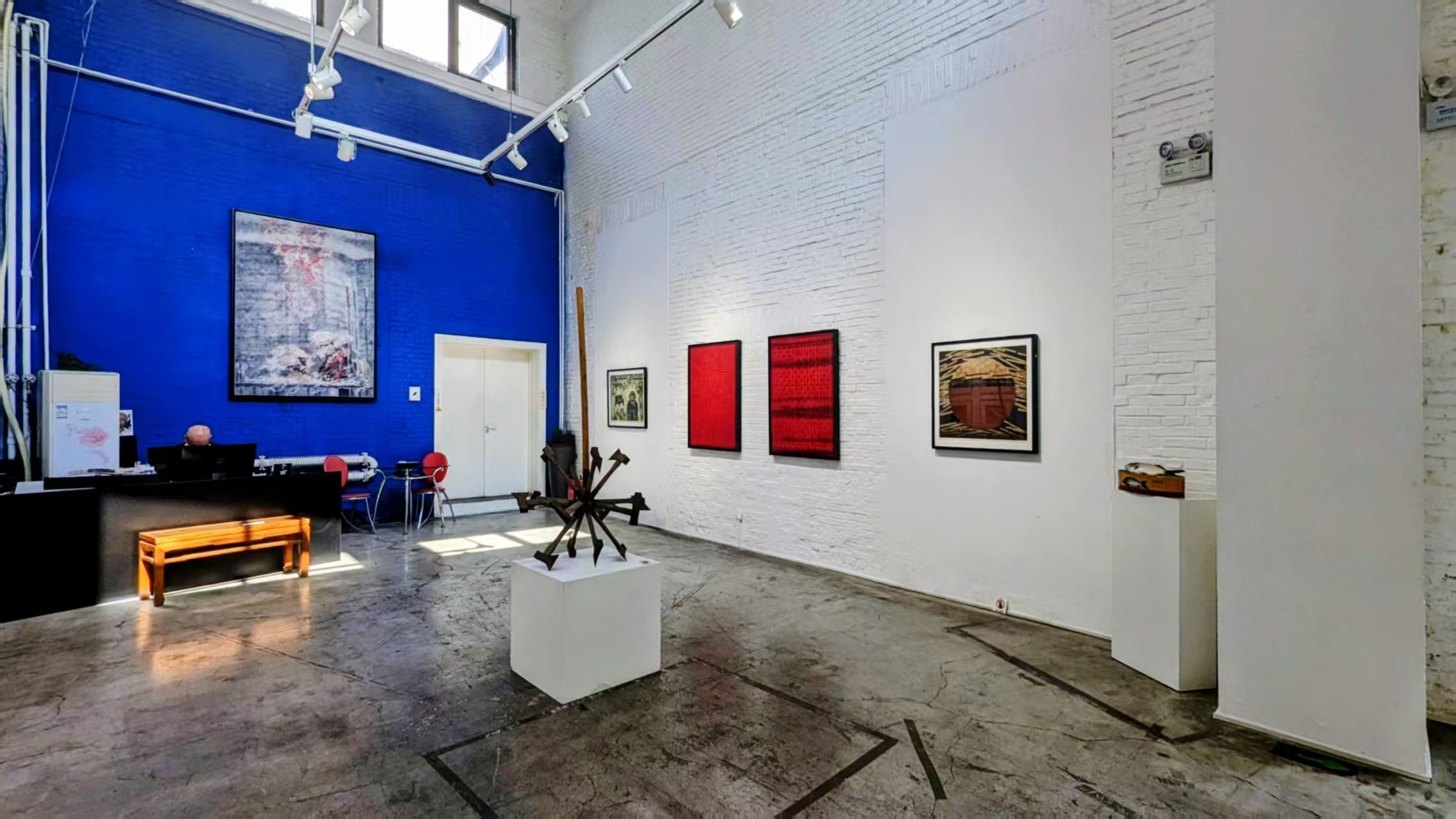
Red Gate’s 798 location, while vastly different from its decor at Dongbianmen, retains its commitment to fostering community and connecting artists and institutions across China and the world
Throughout TWOC’s visit to the exhibition, Wallace is there, offering a cup of coffee and a chat, pointing out that he doesn’t care to hide away from the public like many gallery owners. He displays an earnest joy in activating the two flopping silicone mechanical carp, part of artist Shen Shaomin’s “Chinese Carp” installation, every time someone enters. A symbol of good fortune in China, the fish is considered an invasive species elsewhere.
Tracing the threads of the Red Gate network across the gallery is easy enough. Shen traveled to Australia through Asialink, later returning the favor by hosting Australian artists at his Beijing studio from 2012. Zheng Xuewu, another artist featured in the exhibit, has been with Red Gate since the 90s and took advantage of early overseas residencies before founding the Hudson Art Center in the United States.
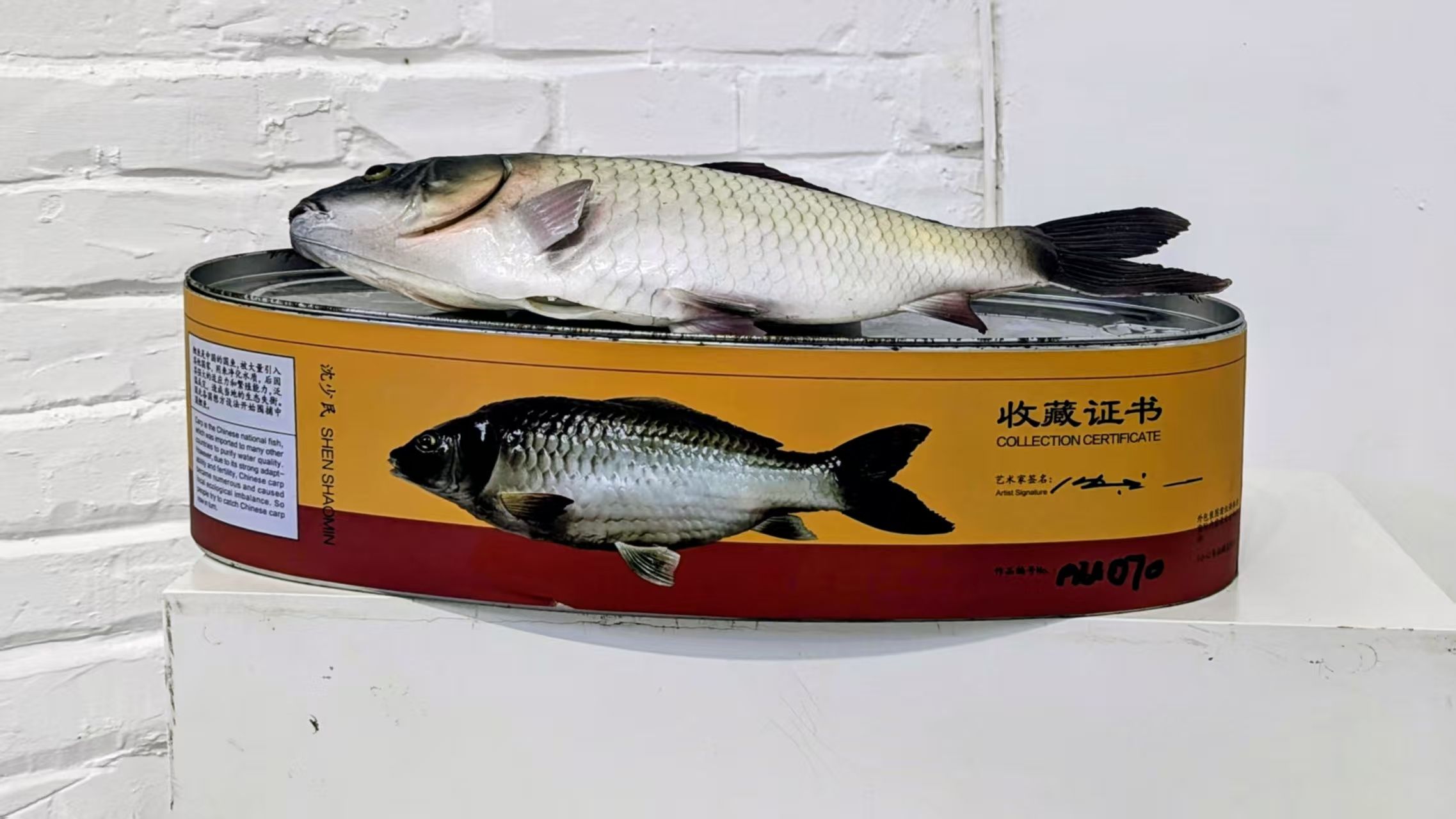
Shen Shaomin’s “Chinese Carp” installation features silicone fish fitted with electronic pacemakers. When visitors approach, the fish appear to breathe and struggle like real carp. (image courtesy of Red Gate Gallery)
The gallery’s mycelial legacy is perhaps best represented in the work of Crystal Ruth Bell and Kira Simon-Kennedy. The pair met around 2009 while working at Red Gate residencies, and went on to launch the bilingual platform China Residencies in 2013. The site tracks and shares the dispersed landscape of artist residency programs across the country, and published annual reports from 2014 to 2021 to connect artists and institutions across China and the world.
From this perspective, Red Gate has continually paid its mission forward, creating a self-perpetuating arts ecology. “We’ve discovered that there are 60 artist-in-residence programs operating right now [in China],” says Wallace. “That’s so surprising to me, actually. They’re all over the place. They’re not just in the big cities.”
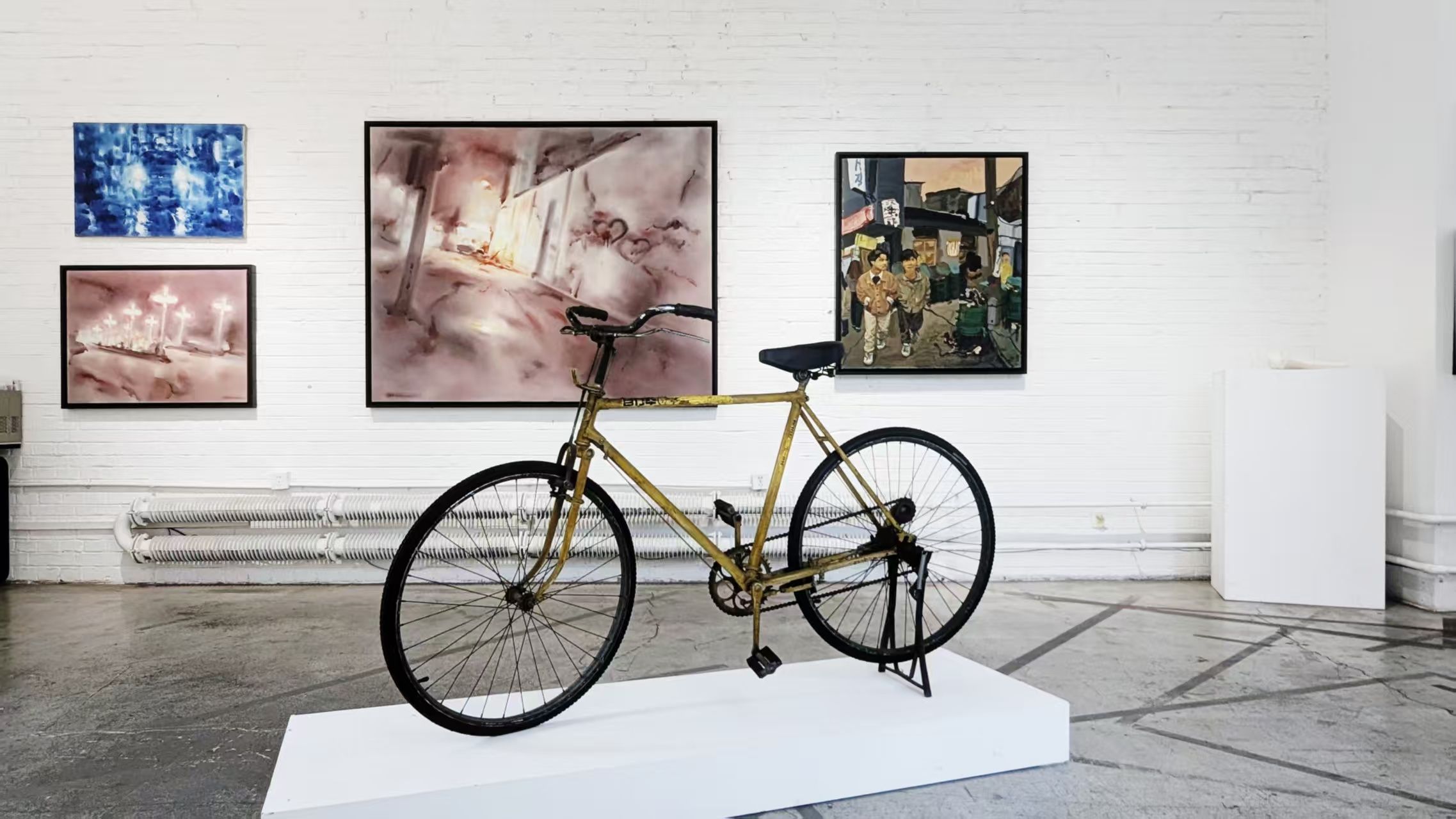
Wang Luyan’s 1996 bicycle installation takes center stage during the exhibition (image courtesy of Red Gate Gallery)
Red Gate’s residencies may have ended in 2020, but other longstanding programs, including Xiamen’s Chinese European Art Center and the Shangyuan Art Museum outside Beijing, survived the pandemic. They share the same ethos—a fluid, human-centered approach to connection and exchange that may prove uniquely well-placed to answer some of the emergent questions around technology and art that are being supercharged by AI.
Shen, associated with Red Gate almost since its inception, is among those exploring this new frontier. He is now the art director at Shenzhen’s Science & Art Joint Lab and co-curated Boundless Questions, an exhibition at the Shanghai Science and Technology Museum described as a fusion of art and science, where all things intermingle and there are no fixed boundaries.
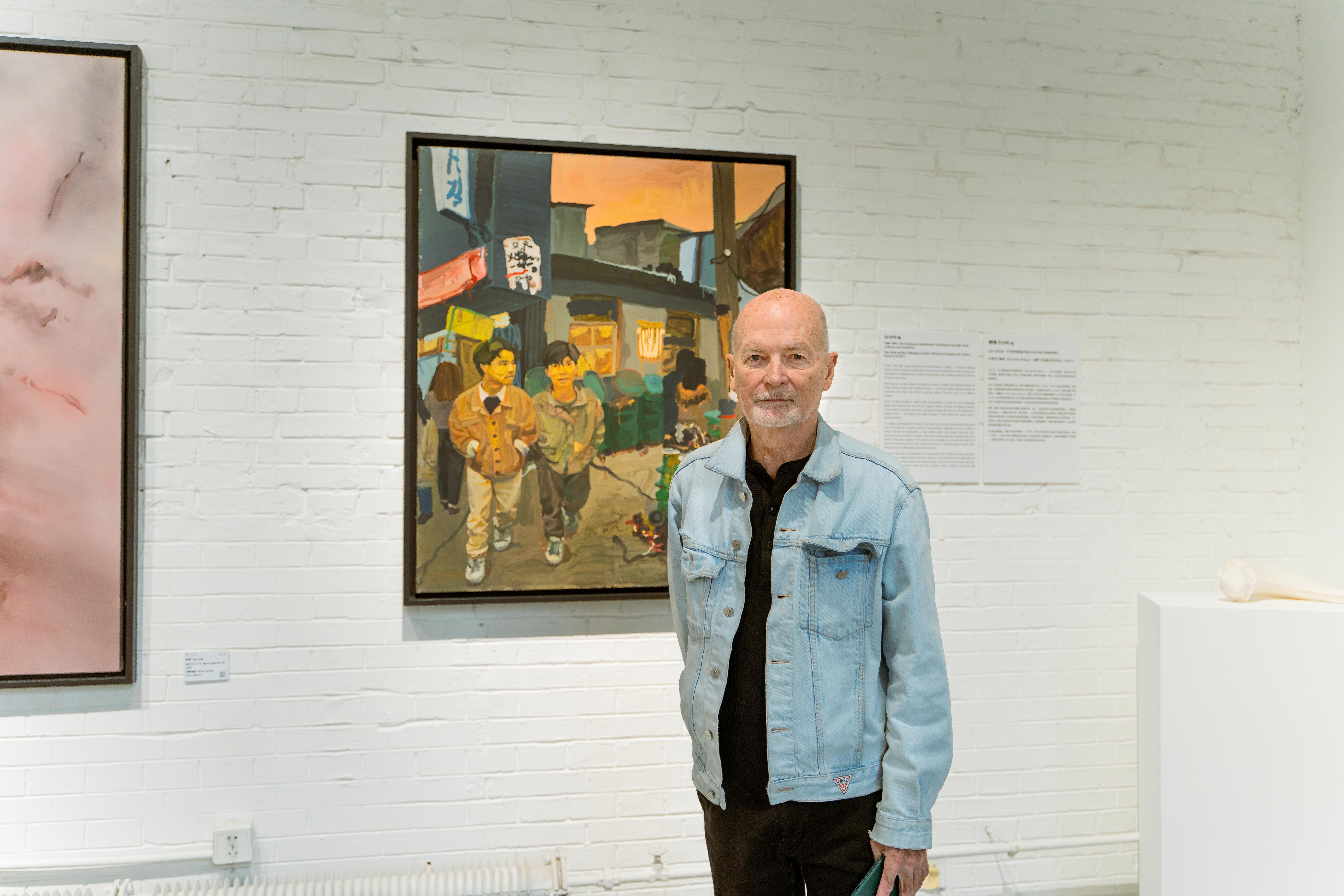
Brian Wallace in front of Zhang Yajie’s 1992 oil painting “Crossing” (Jiayu Zhang)
In 2024, Xu Bing, a giant of Chinese contemporary art, debuted a project allowing artists to beam digital artworks to a satellite orbiting in space, where they are photographed against Earth’s backdrop. Xu calls it the Space Art Residency Program, and while the artists themselves remain firmly on Earth, it is evidence that China’s artistic exchanges have traveled a long way from the lobbies and couches of 80s Beijing.
Red Gate’s present ambitions are less futuristic. The gallery is running more solo shows this year and into 2027, while the anniversary exhibition has generated renewed interest in their former residencies. “I’m still getting inquiries about our program,” Wallace says. “I think it’ll be a good catalyst.” He’s not ready to close the gate quite yet.
All images courtesy of Red Gate Gallery
Related Articles