

You may know Sichuan cuisine via its signature dish—the universally adored—Kung Pao Chicken, but there is so much more to explore in this unique culinary style. Rich in flavors and plenty of oil, it is one of the most beloved folk cuisines in China. From high-end restaurants to your neighborhood diners, there’s no lack of Sichuan flavor in China. When ordering a Sichuan dish, you will often be asked the question: “Can you hold your spice?” (能吃辣吗?Néng chī là ma?), because some Sichuan dishes are reserved for the strong of heart. Don’t be afraid to say yes; you don’t want to miss out on these unique flavors.
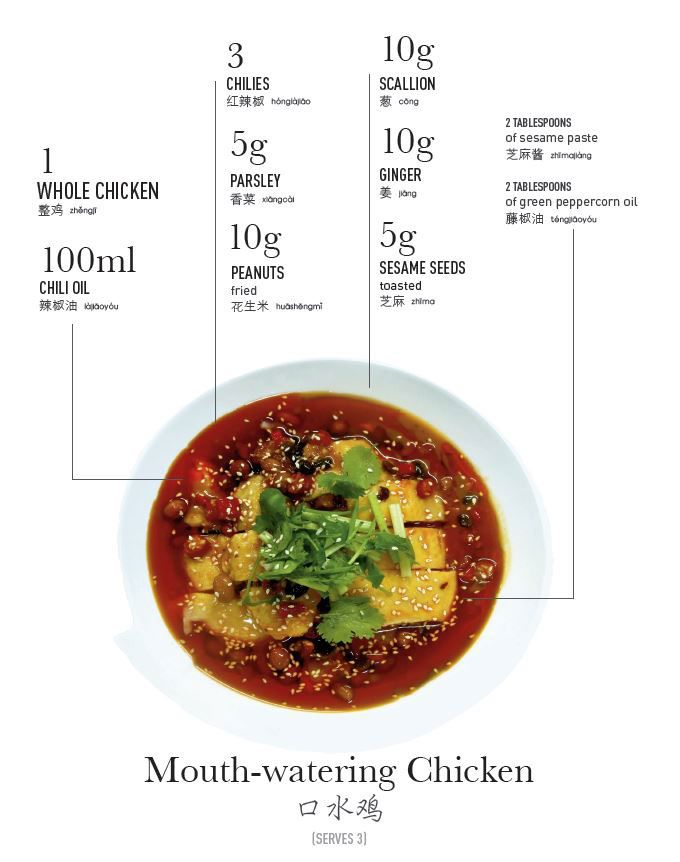
“Mouth-watering chicken” or 口水鸡 (Kǒushuǐ jī) is a must-have on any Sichuan restaurant menu and a regular cold dish on the dining tables of almost every family in Sichuan. Infused with the spirit of Sichuan cuisine with its use of chili and peppercorn, its relatively simple preparation will enable you to bring these complex flavors into your own kitchen.
The 27-year-old chef at the 1949 restaurant, Fan Gang, recommends the “three-yellow chicken” or 三黄鸡 (Sānhuángjī) for the main ingredient. You don’t have to look far for this particular type of chicken. With its yellow beak, feet, and feathers, they are the most common type of chicken in China. Raised free-range on hillsides, the three-yellow chicken is famous for its tenderness, fresh flavor, and nutritional value. Though the leg meat is the most flavorful part, Chef Fan suggests the chicken be kept intact while cooking to lock the moisture inside.
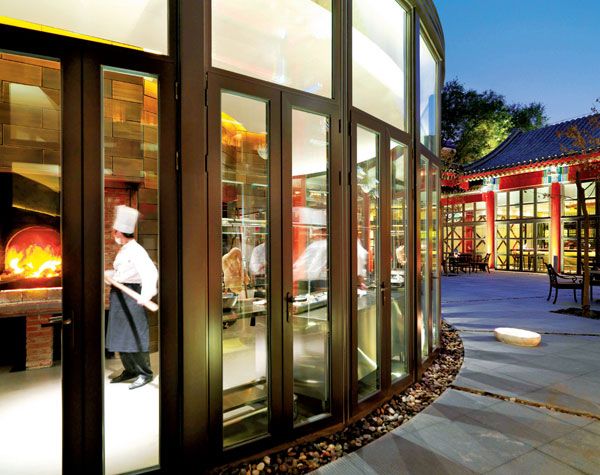
1949
全鸭季
98 Jinbao Street, Dongcheng District, Beijing
The heavy use of chili oil, made by frying chili in rapeseed oil, gives the dish a savory and spicy taste. You can also grab a bottle of such oil from any supermarket shelf in China. Chili was only recently introduced to China from South America the late 16th century. Slowly working its way inland from the southeast coast along the Yangtze River, the spice was welcomed by people in Sichuan, Hunan, Hubei, and Guizhou. By 1800, chili was widely planted in those areas, incorporated as an essential part of the local diet.
However, Sichuan people, in particular, have a long tradition of enjoying strong flavors. According to the Chronicles of Huayang (《华阳国志》Huá yáng guózhì), the fourth century gazetteer focusing on the southwest areas of ancient China, early residents of Sichuan “celebrated flavors and loved pungent tastes” (尚滋味,好辛香 Shàng zīwèi, hǎo xīn xiāng). During that time, these pungent tastes referred to the tastes of scallion and onion. The later arrival of chili seemed to fit right in with this long-standing tradition. Today, in Sichuan, chili is called 海椒 (Hǎijiāo, pepper from overseas), instead of 辣椒 (Làjiāo, hot pepper), used everywhere else in China.
The success of “mouth-watering chicken” relies on another critical ingredient—prickly ash seeds, or Sichuan peppercorns (花椒 Huājiāo). The combined taste from chili and peppercorns is known as 麻 辣 (Málà, tingling spicy). Normally, the peppercorn seeds are collected and baked to brownish-red. When kept green, the peppercorn seeds are referred to as 藤椒 (Téng jiāo) which can be made into another flavored oil: green peppercorn oil. Again, you can find a bottle in Chinese supermarkets.
The heavy use of chili and peppercorns in Sichuan cuisine is a result of the unique local environment, where the moisture is retained in the basin areas of the province. TCM maintains that the moisture also seeps into the human body, resulting in dampness and coldness.
As much as you might enjoy the idea of “authentic” Sichuan food, in dry areas, too much spicy food can actually hurt your health. This recipe for mouth-watering chicken recommended by Chef Fan strives to balance overall taste and the essence of Sichuan cuisine. Pair this spicy cold chicken dish with cold tea or beer; it might be just the thing on a scorching summer day.
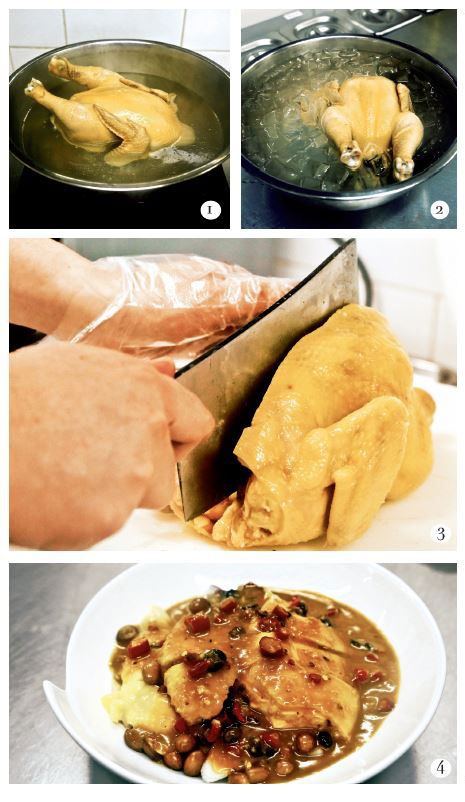
1. Choose a fresh, whole chicken and clean throughly. Boil enough water to completely submerge the chicken. When the water is boiling, switch to a low heat, place the chicken in the hot water, and keep the pot uncovered. Add scallions and ginger slices for a base flavour and to remove the smell of the raw meat. Boil for 30 minutes.
2. Fill a large container with ice-water. Set the boiled chicken in the water for three hours to firm it up. This will keep its texture tender and smooth, whilst also keep the chicken crisp and chewy.
3. Slit the chicken along one side of its spine and cut the spine out. Seperate the wings and legs first and then cut the chicken in half and into smaller slices. Get rid of any congealed fat and small bones in the process.
4. To prepare the sauce, mix the chili oil, green peppercorn oil, sesame paste and chopped chilies. Stir until even. Place the cold chicken slices in a large bowl. Sprinkle fried peanuts and then pour the chili sauce. Add a few drizzles of toasted sesame seeds. Place parsley slices on top of the dish for decoration. Serve cold.
Cover Image from Flickr
Related Articles