Newsletter
Popular

  • Society
  • Life
  • Business
  • Language
  • History
  • Arts
  • Literature
Podcast
Video
Magazine

  • China
  • International

  • About Us
  • Our Team
  • Join Us
  • Contact Us
  • Pitch to Us
Follow Us
Newsletter
The World of Chinese logo
Sign In SUBSCRIBE
Popular
Topics
  • Society
  • Life
  • Business
  • Language
  • History
  • Arts
  • Literature
Podcast
Video
Magazine
Shop
  • China
  • International
About TWOC
  • About Us
  • Our Team
  • Join Us
  • Contact Us
  • Pitch to Us
Subscribe
Cart
TRADITIONAL CULTURE

Dragon on the Water

Three generations of artisans ride the waves on dragon boats

    author Sun Jiahui (孙佳慧)
Sun Jiahui (孙佳慧)
June 22, 2023
Dragon-on-the-Water_1200.jpg
Photo Credit: Meng Qingchun (孟庆春)

In Sanshui (三水), a district of Foshan city in Guangdong province, three generations of a family have been riding the waves for more than 15 years. The patriarch, Guan Qunsu, 65, is a second-generation builder of “dragon boats,” the watercraft traditionally raced on China’s Duanwu (“Dragon Boat”) Festival in June of each year; Guan’s father, Guan Dui, used to work at the local shipyard, but started his own factory with his son after he retired. Not long after, Guan Qunsu’s twin sons also joined the family business, which they named “Guan Yongqiang Factory” after the youngest son.
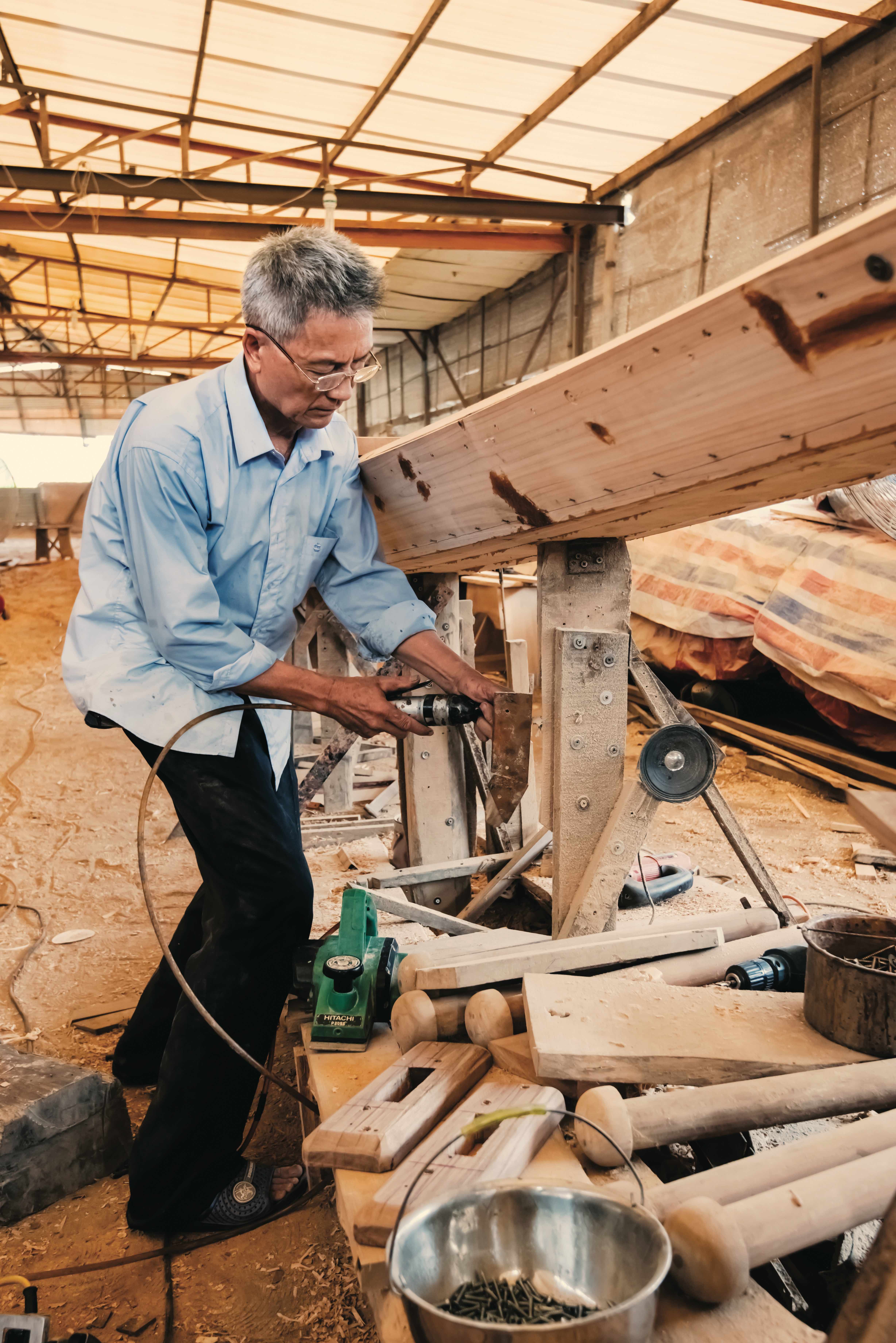
Guan Qunsu assembles some of the smaller parts for the dragon boat

Guan Qunsu assembles some of the smaller parts for the dragon boat

Dragon boat-racing remains relatively popular in this area of China, so the demand for large boats is still growing. Still, it’s hard work, and the profits are slim. Small dragon boats can hold about five people, but the large racing boats can hold 40 to 80 rowers. The larger the boat is, the more complicated it is to manufacture. The largest boat the Guan family ever made was 46.9 meters long and required 90 rowers. The Guan family business is a big name in local dragon boat circles, known for careful workmanship.
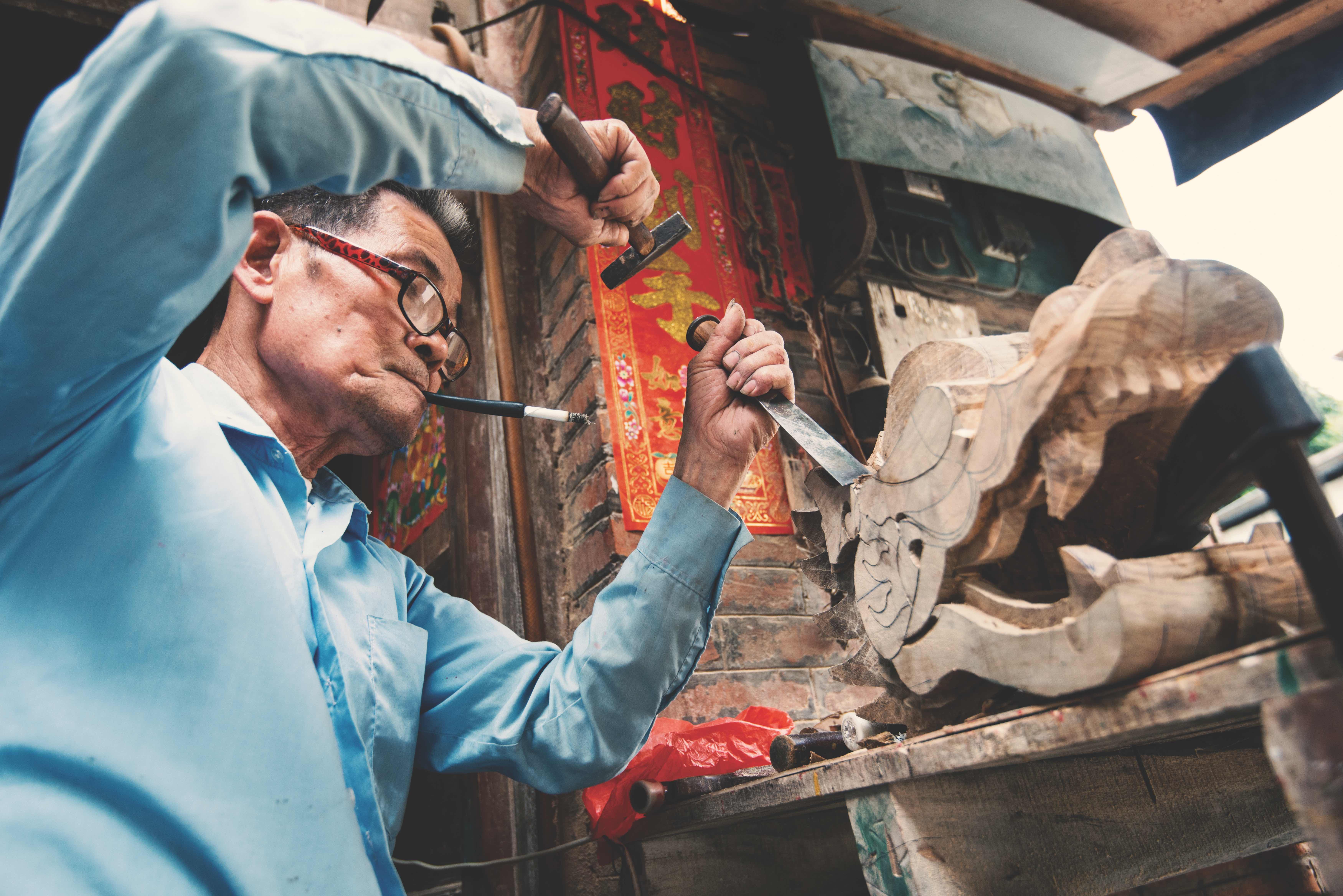
Carving is the first step in making the distinctive dragon figurehead

Carving is the first step in making the distinctive dragon figurehead

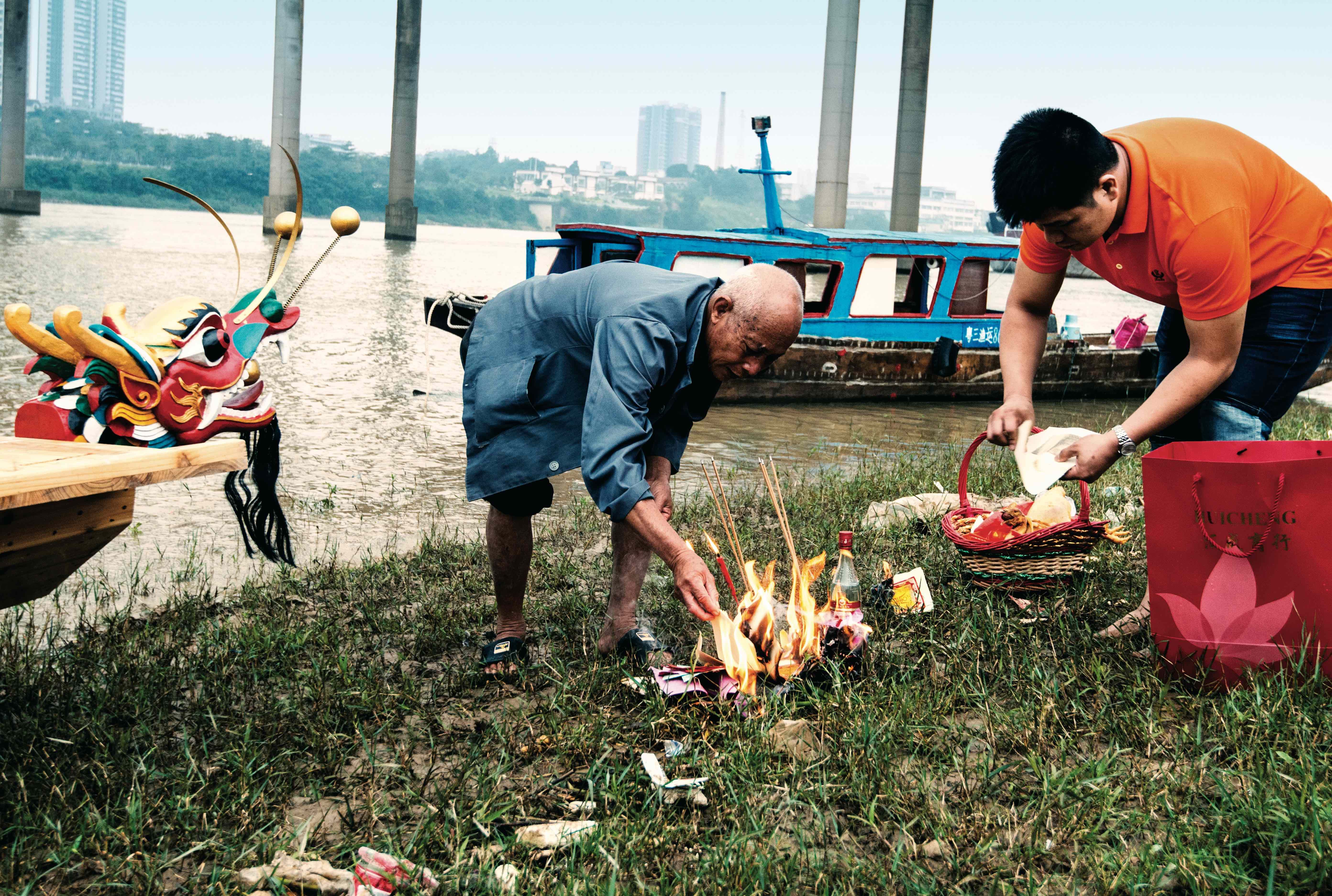
With the convenient waterways in Guangdong province, boats used to be a major form of transportation, and the dragon decoration was meant to show the owner’s noble lineage. The launching of a dragon boat involved tremendous care; there would be a worship ceremony, prayers at ancestral temples, and a ritual inviting the mythical dragons themselves to attend the races. The modern customs are somewhat simpler—usually involving sacrifices to gods (usually chicken or pork), incense burning, and sometimes the sacrifice of a rooster, whose blood is then sprinkled from bow to stern in an earnest prayer for safety.
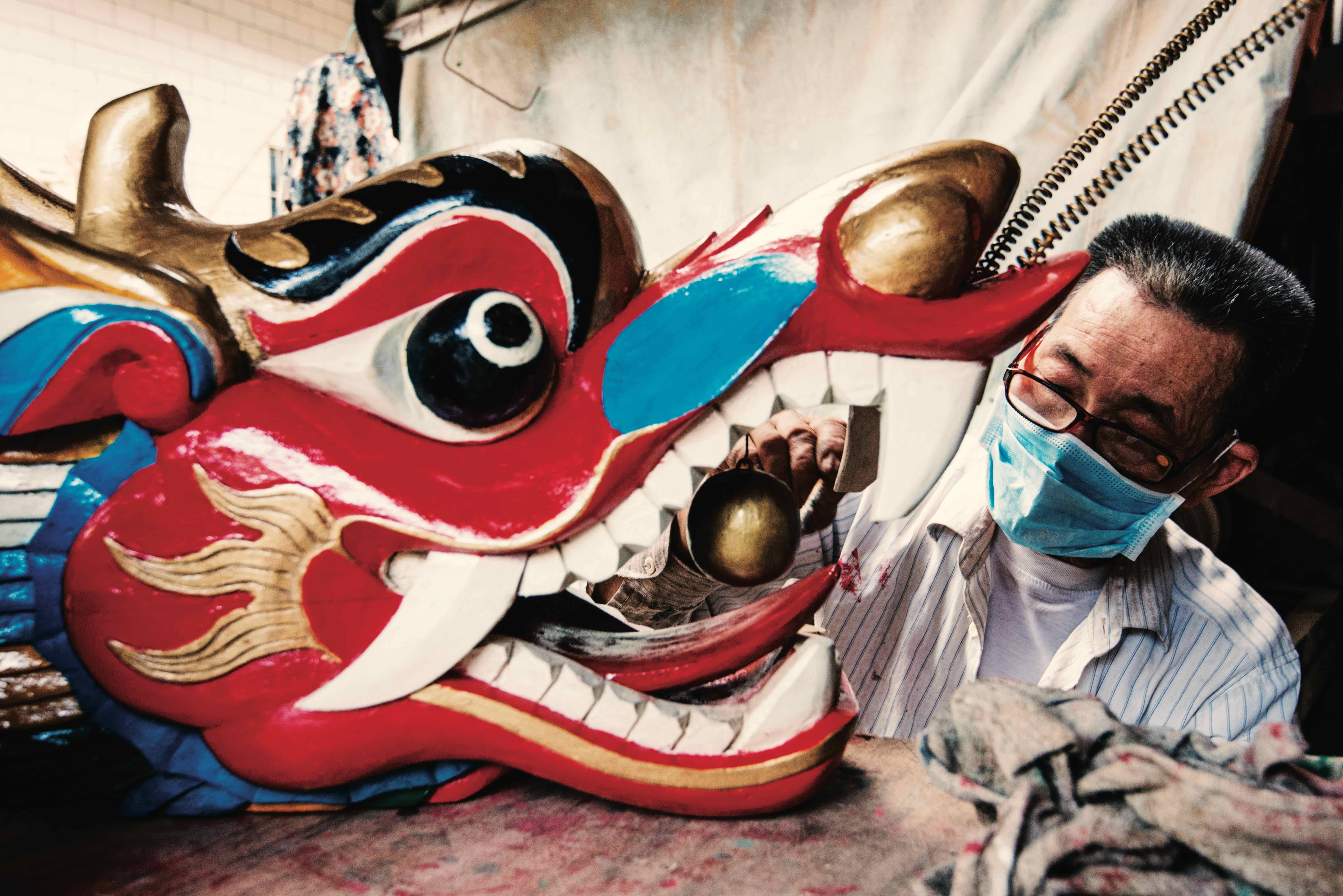
Detail is carefully added to the finely carved figurehead
Detail is carefully added to the finely carved figurehead

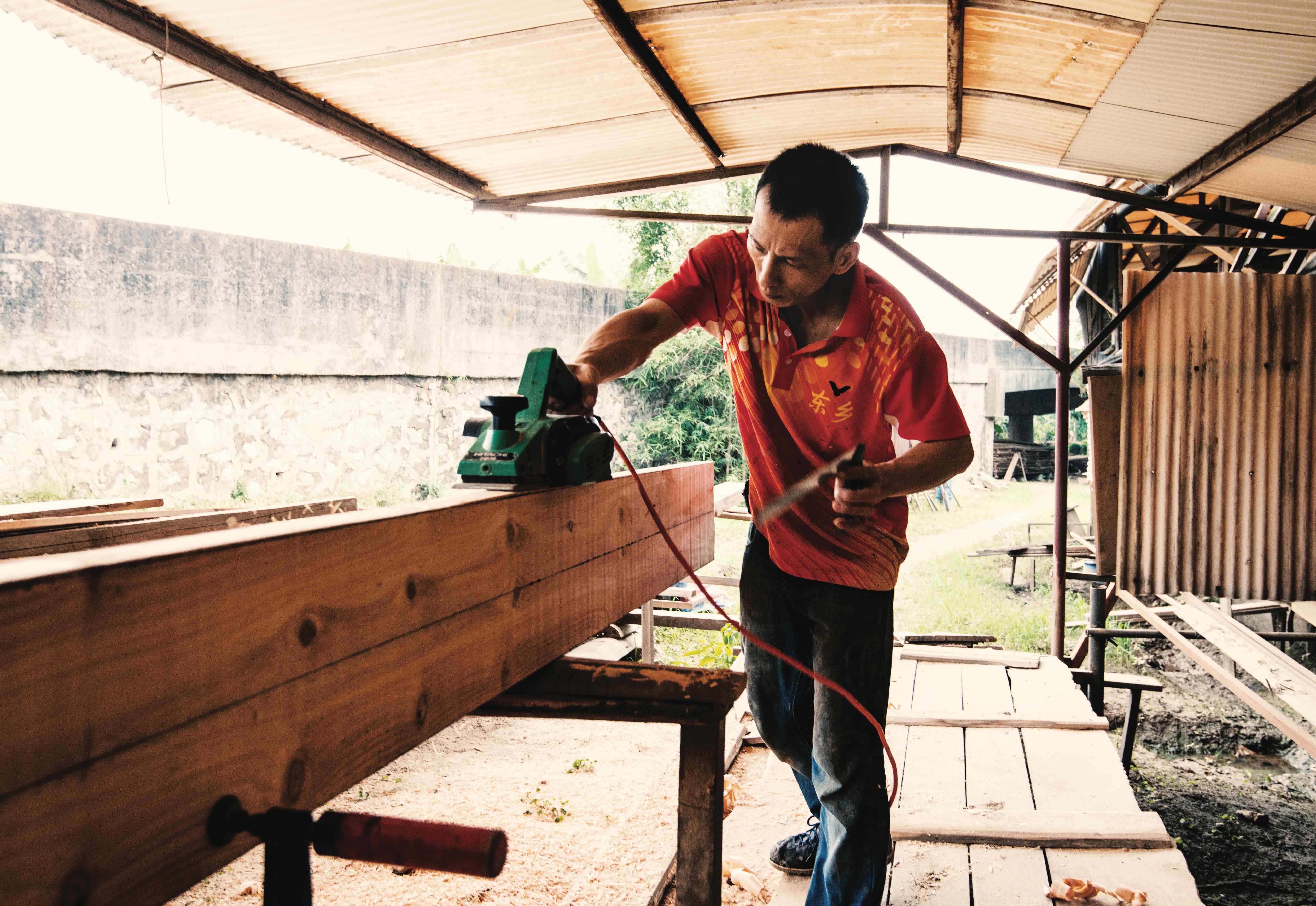
Guan Yongqiang cuts long strips of timber
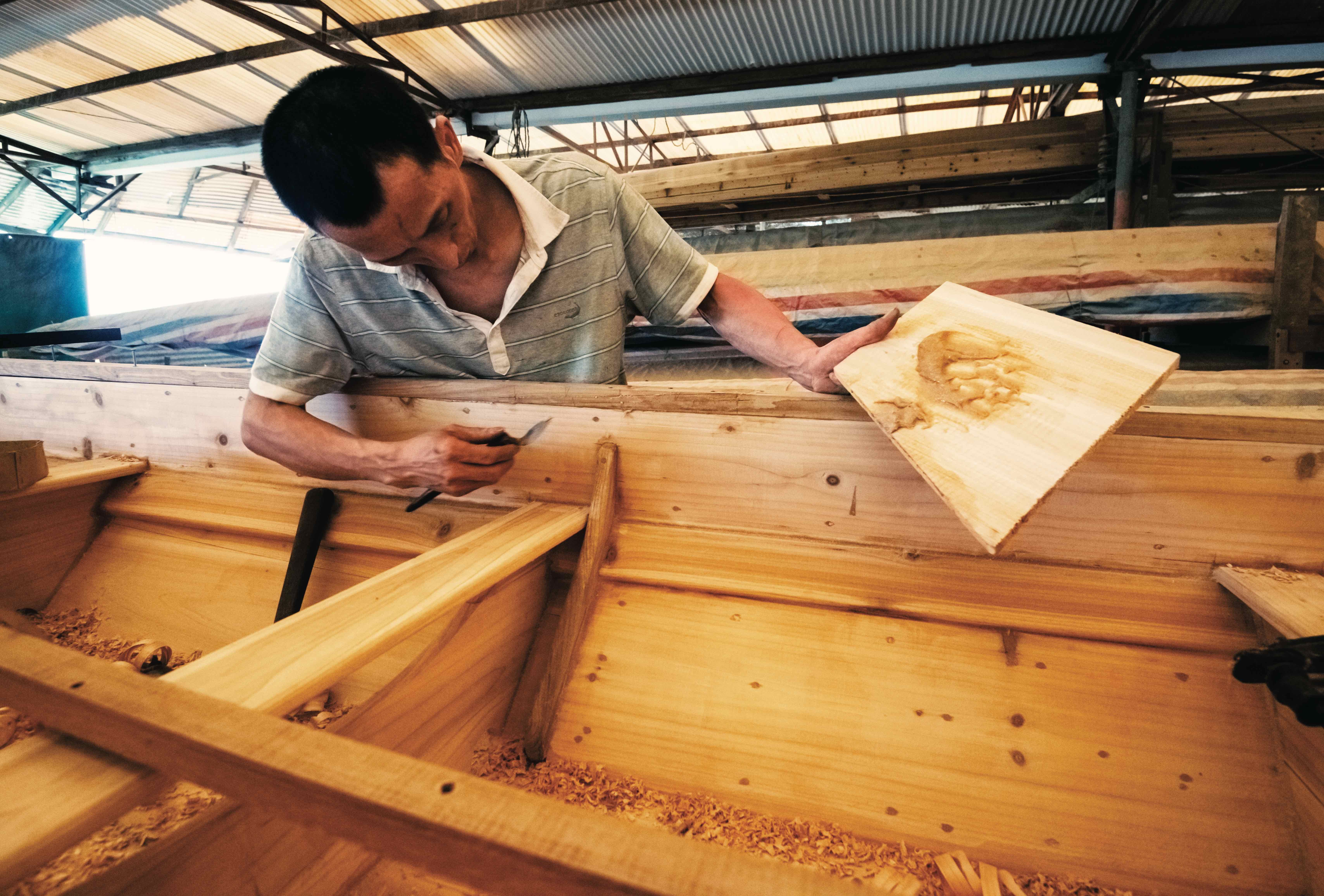
Guan Yongqiang cuts long strips of timber

While joinery holds the bulk of the boat together, glue is also used in the production process
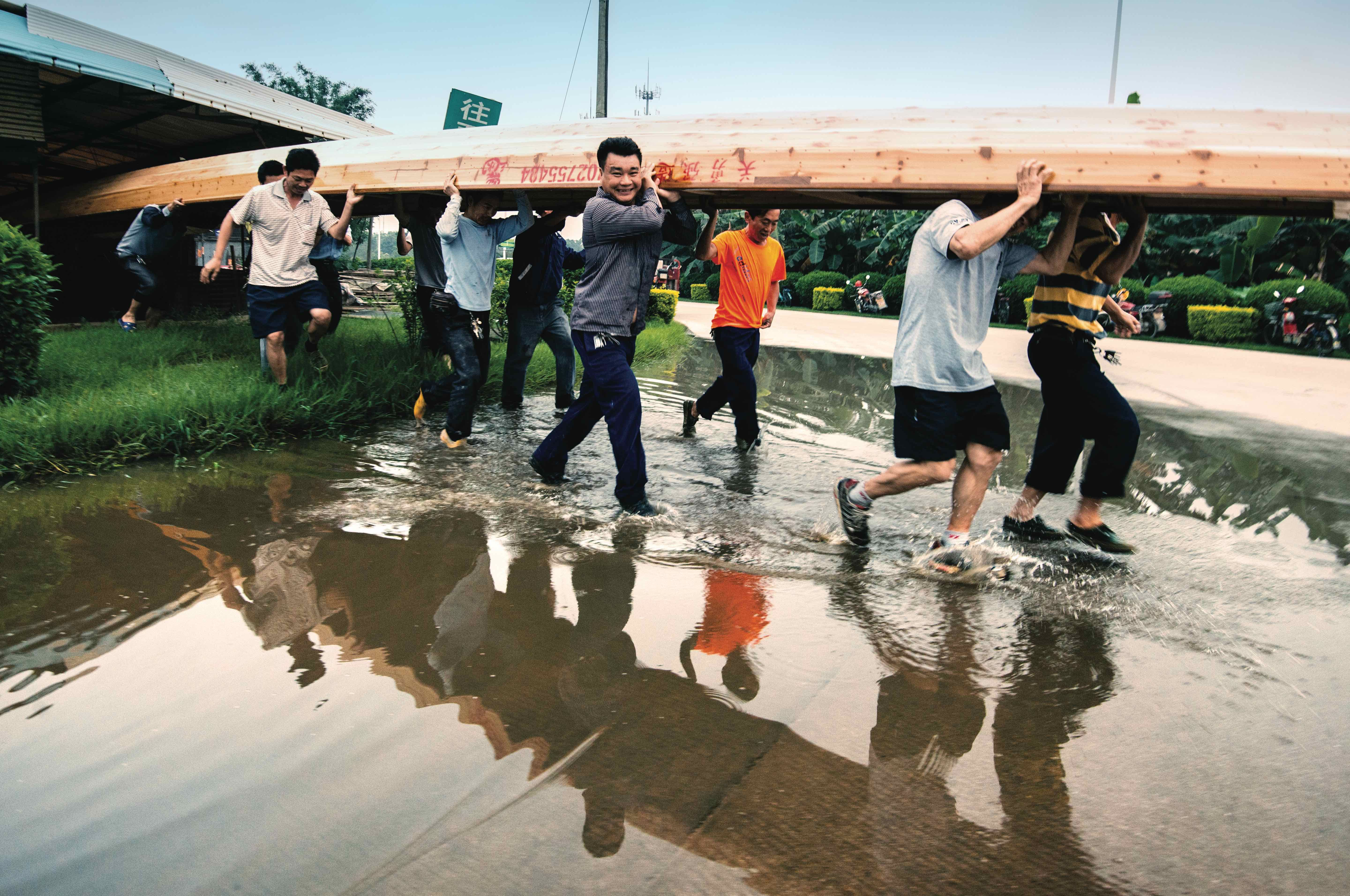
While joinery holds the bulk of the boat together, glue is also used in the production process

The new dragon boat owners carry their purchase to the riverside

The new dragon boat owners carry their purchase to the riverside

After the boat is put in the water, the figurehead is fixed to the bow, then it is turned upright

After the boat is put in the water on its side, the figurehead is fixed to the bow, then it is turned upright
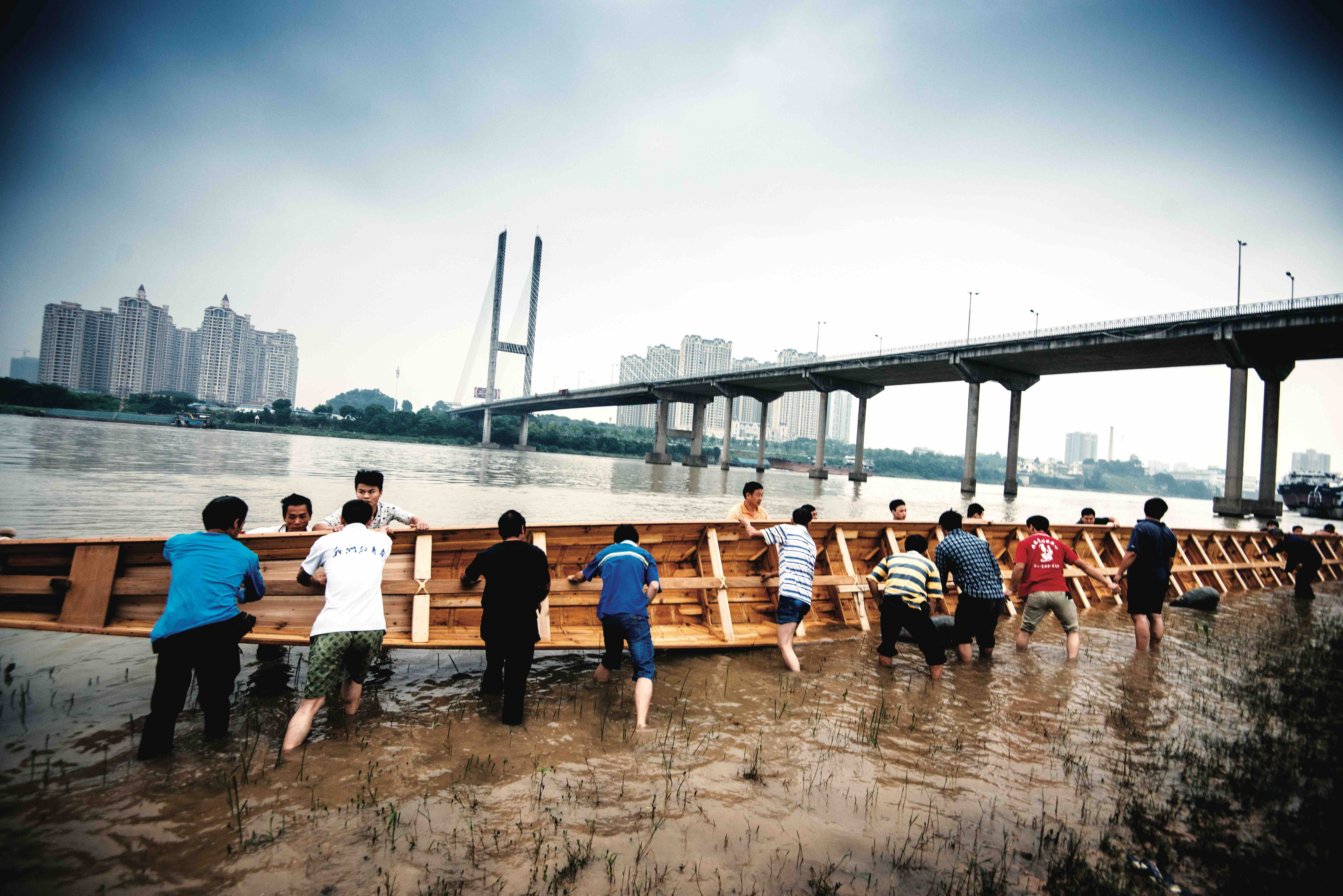
The new owners work together to put one side of the boat into water first and then roll it upright
The new owners work together to put one side of the boat into water first and then roll it upright

An elder from the village hosts the worship ceremony, lighting incense and offering sacrifices to pray for safety and peace

An elder from the village hosts the worship ceremony, lighting incense and offering sacrifices to pray for safety and peace

Today, most people think of dragon boat races only in conjunction with the Dragon Boat Festival, but in southern China, the races are held on many occasions, such as Labor Day and National Day—often between different villages in a spirit neighborly competition. Dragon boats are indelibly etched on the local cultural landscape as a pastime, an art form, and an industry. As Guan Qunsu puts it, “As long as I still have strength, I will carry on making dragon boats.”

Photography by Meng Qingchun (孟庆春)


This is a story from our archives. It was published originally published in 2016 and has been edited and republished in honor of the Dragon Boat Festival and TWOC’s upcoming 100th issue celebrations. Check out our subscription plans and discounts that will give you access to more great stories!

Tags:
DRAGON GUANGDONG FESTIVAL ART KALEIDOSCOPE

Related Articles

Hani children eating at Long Street Banquet
TRADITIONAL CULTURE

Celebrate the Hani New Year with the World’s Longest Feast

garment workers in Kanglu
BUSINESS

In Southern China’s Once-Thriving “Garment Kingdom,” Business Fades Amid Urban Renewal

58597431-ecc8-4325-a015-d00917af88b7
TRADITIONAL CULTURE

The Fast and Furious Dragon Boat Racers of Foshan

kanglu 2
SOCIETY

Glimpse Inside China’s Vanishing Garment Hub

Related Articles

Hani children eating at Long Street Banquet
TRADITIONAL CULTURE

Celebrate the Hani New Year with the World’s Longest Feast

Despite being a relatively new tradition, Lüchun’s Long Street Banquet has, in just 20 years, attracted world-record numbers of tourists and become a major event on the Hani ethnic calendar

garment workers in Kanglu
BUSINESS

In Southern China’s Once-Thriving “Garment Kingdom,” Business Fades Amid Urban Renewal

Once a major hub for clothes manufacturing, Guangzhou’s Kanglu district has in recent years been beset by difficulties, including Covid-19, competition fueled by the rise of e-commerce, and a protracted facelift

58597431-ecc8-4325-a015-d00917af88b7
TRADITIONAL CULTURE

The Fast and Furious Dragon Boat Racers of Foshan

In Foshan, the Ming-dynasty tradition of dragon boat racing continues to draw daring local competitors and big crowds

kanglu 2
SOCIETY

Glimpse Inside China’s Vanishing Garment Hub

As the garment industry of Guangzhou’s Kanglu area winds down to its last days, TWOC captures life in for the 100,000 workers and factory bosses in its urban villages

Subscribe to our newsletter

Scan to follow us on WeChat

Or add: Theworldofchinese

Topics

  • Society
  • Life
  • Business
  • Language
  • History
  • Arts
  • Literature
  • Photo Stories

Media

  • Magazines
  • Books
  • Podcasts
  • Videos

News and Events

  • Announcements
  • Events

About TWOC

  • About Us
  • Our Team
  • Join Us
  • Pitch to Us
  • Contact Us

PARTNERS

© THE WORLD OF CHINESE | 京ICP备05007371号-7