

Discoveries regarding Song porcelain are among the most exciting Chinese archeological finds in recent years. Representing the peak of the ancient Chinese art, Southern Song porcelain excelled in both aesthetics and techniques.
Especially well known was Southern Song celadon, also known as “green ware” (青瓷), meaning porcelain glazed in a transparent jade green. Light green, gray, or yellow glazed plates, vases and other vessels with simple and elegant style—exquisite Southern Song ceramics were the empire’s major exports at the time via the maritime Silk Road to Southeast Asia, the Indian subcontinent, Persia, Europe, and as far as Africa.
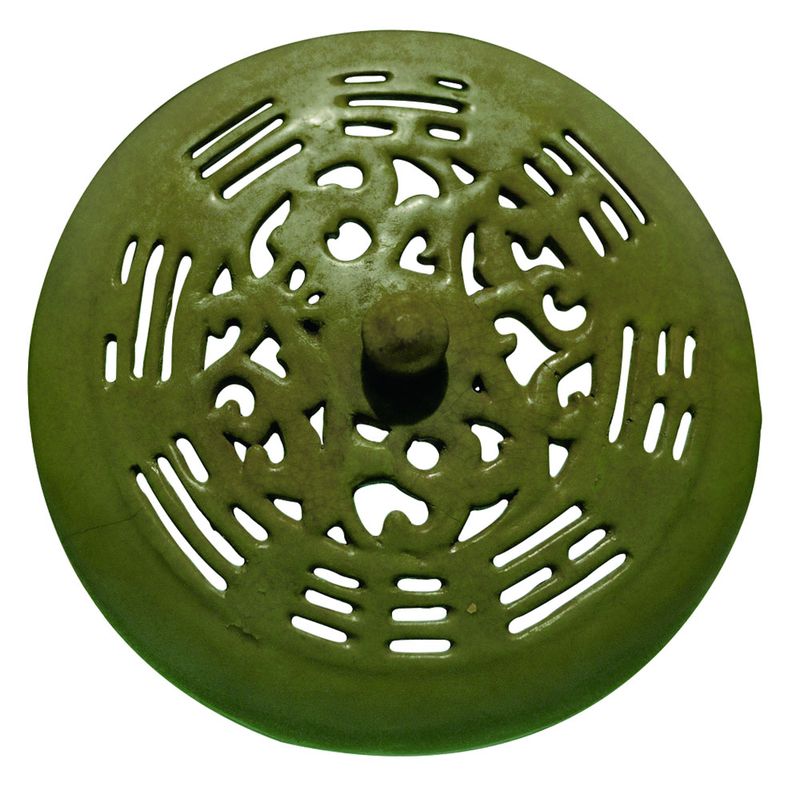
This lid, from an incense burner, is on display at the Southern Song Guan Kiln Museum
Most recently, studies from a shipwreck dated to late Southern Song named Nanhai One (南海一号), salvaged off the coast of Guangdong in 2007, revealed more than 60,000 pieces of porcelain as its main cargo. Though they never made it aboard, these pieces provided key insights into the ceramic industry and international trade at that time. Most interestingly, some of the wares were clearly designed for a foreign market, featuring Arabic and other exotic styles, many of which had never been seen by Chinese porcelain experts before. All pieces were found to have been produced in private kilns in Fujian, Jiangxi, and Zhejiang.
At the Song capital, official porcelain production was at an even higher level, produced exclusively for the rich and powerful. References of two official kilns, or guan kilns, could be found in the historical records of Lin’an. The relatively newer Altar of Heaven Kiln (郊坛下官窑) is easier to identify, excavated as early as the 1950s and can be found today at the Southern Song Dynasty Guan Kiln Museum (南宋官窑博物馆). Reminiscent of Southern Song architecture, the museum features an original kiln site, exhibition hall of uncovered ceramic treasures, and a traditional workshop display. Visitors can live history itself when they meet the master potters there today who replicate this ancient skill.

Ye Guozhen and his replicated porcelain artifacts from the Southern Song Dynasty
The older kiln, or Department of Palace Supply Kiln (修内司官窑), is more mysterious. For decades, no one was able to locate it despite relatively detailed historical records. Some even claim that it didn’t exist at all. It wasn’t until 1996 that a kiln located between the Phoenix and Jiuhua hills was excavated, known as the “Tiger Cave Kiln” (老虎洞窑). Here, archaeologists discovered shards of powdered blue and crackled glaze that were believed to have been made for the royal family and high officials; today these pieces can also be seen at the Southern Song Dynasty Guan Kiln Museum.
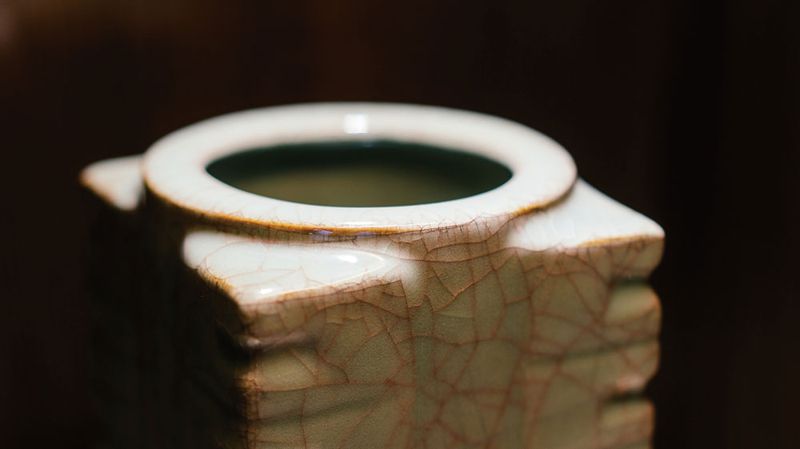
It’s not just archeologists who are interested. Modern collectors are obsessed with the Song kilns, tripping over one another for a chance to acquire wares from the five famous kilns. And while the guan kiln of the Northern Song has yet to be discovered, there’s plenty to see in Hangzhou for lovers of porcelain history.
The Guan Kiln Reborn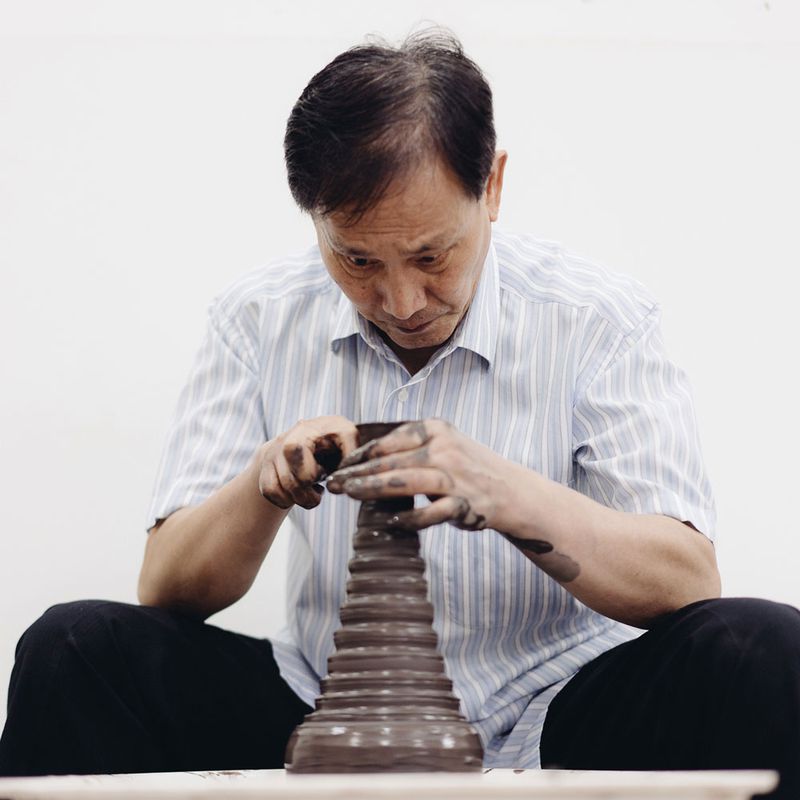
The porcelain-making techniques of the Southern Song guan kiln were once thought lost to history, but after four decades of research, guan kiln scholar Ye Guozhen (叶国珍) has brought back many of the ancient methods. The key ingredient, he discovered, is purple soil rich in iron found around the original kiln sites, and he developed a recipe that involved skillful molding and carefully controlled temperatures—capable of replicating the high aesthetic values of Southern Song guan kiln porcelain. His technique has been recognized as Intangible Cultural Heritage of Zhejiang Province.
Excerpt taken from Hangzhou At A Glance by TWOC. You can pick up a copy from our store or grab the digital version on our China Dispatch app. Go get your copy now.
Related Articles