


Far from the bright lights and exclusive front-row seats of fashion weeks in Paris and Milan, a very different kind of runway has taken shape in the mountains of Kaili, Guizhou. Every weekend and on national holidays, a 50-meter canopied wooden corridor turns into a stage—not for supermodels in haute couture, but for locals of all ages, from young children to elders in their 80s.
From 7 to 9:30 at night, participants, mainly locals but sometimes interested tourists, take turns walking, singing, and dancing beneath warm lights in traditional Miao and Dong costumes—woven, embroidered, and adorned by hand, with silver jewelry that shimmers as they move. Farm tools, looms, instruments, food, and other household items all become props in this unconventional but no less earnest showcase that is livestreamed on social media.
Known as Guizhou’s “Village Runway Show (村T),” this small-town event debuted last July in Kaili’s Miao and Dong Ethnic Costumes Park, and to date has attracted more than 400,000 visits, featured more than 40,000 participants, and made headlines both domestically and internationally. Millions of people have watched online. During the five-day Labor Day holiday last month, more than 1,000 participants from regions near and far, from Guangxi to Xinjiang, took part in the spectacle. Some of Kaili’s runway “models” have even taken their costumes to national and international stages, making appearances at China Fashion Week, London Fashion Week, and the World Expo in Osaka, Japan.
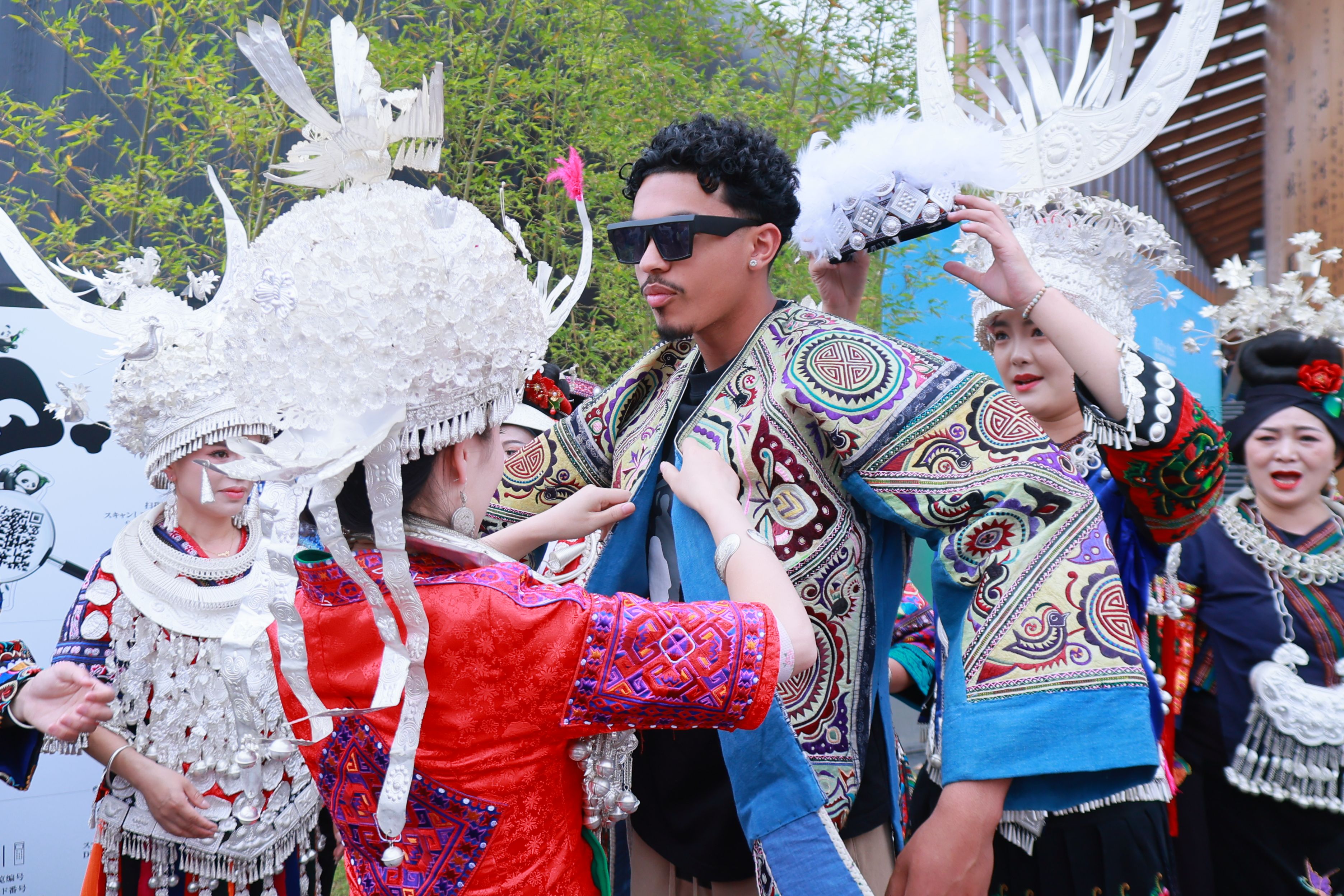
Villagers from Kaili help interested audience try on traditional Miao ethnic costumes at this year’s World Expo
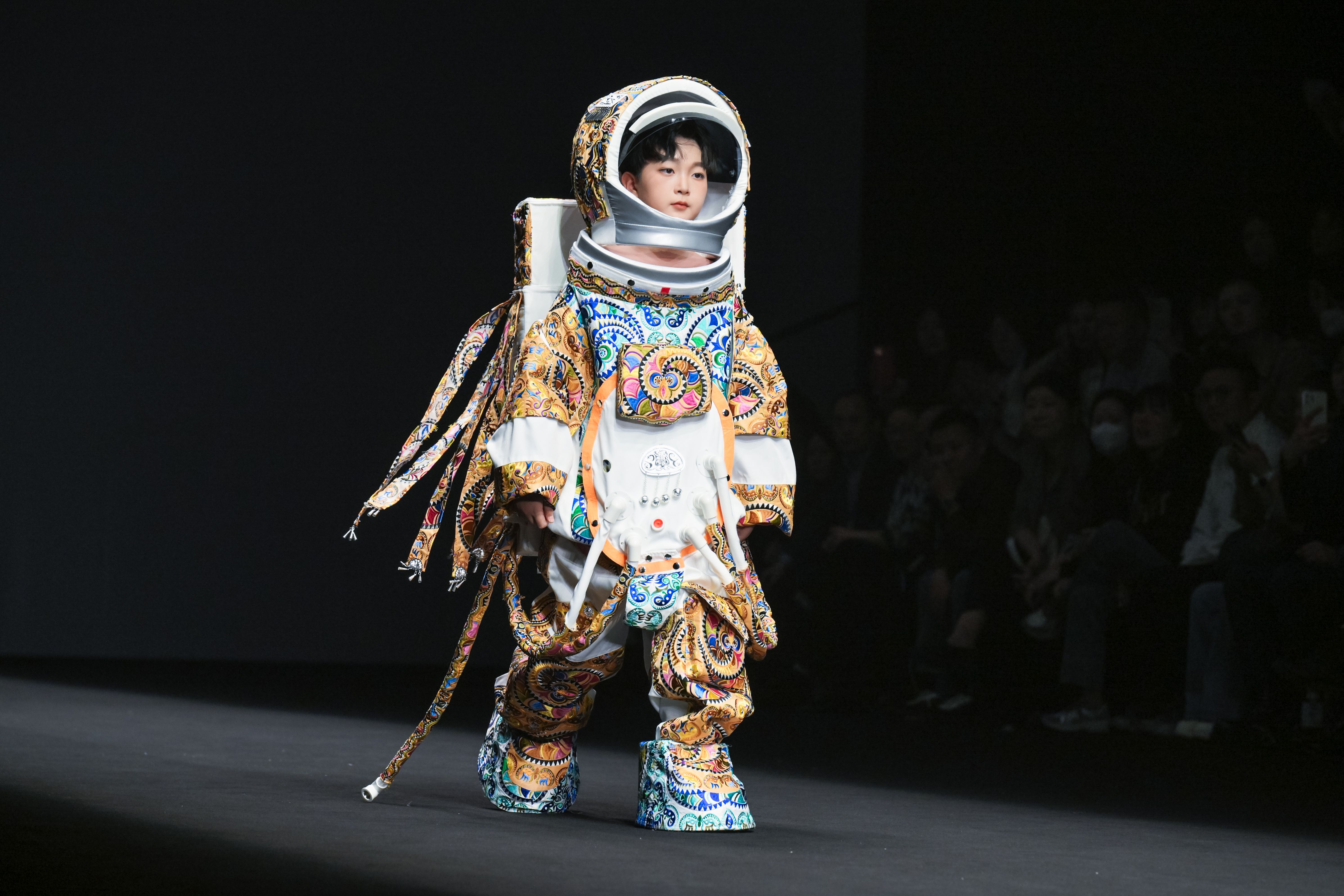
“Little T,” an astronaut-themed mascot adorned with Miao ethnic embroidery, walked on the stage of China Fashion Week this March
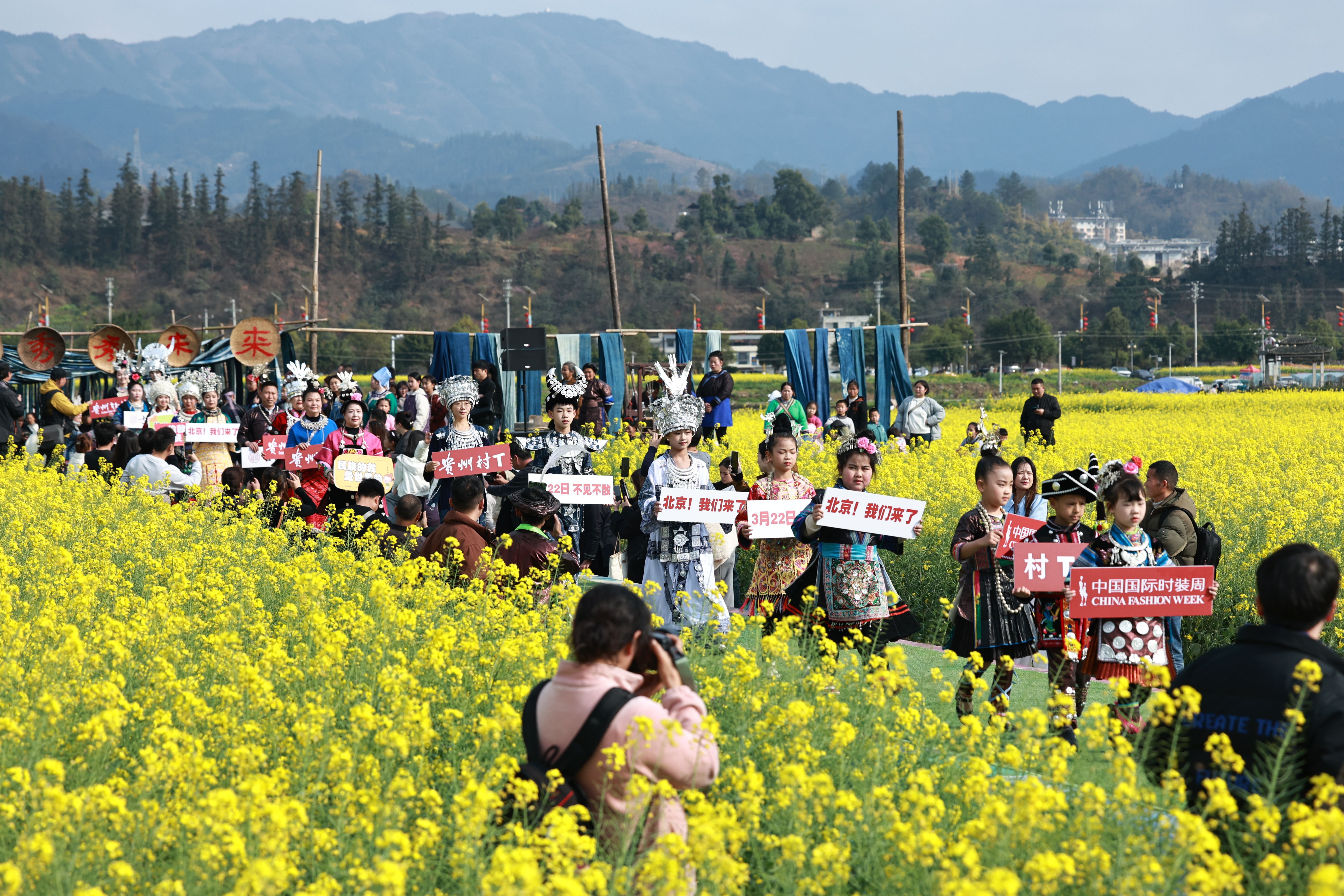
Kaili village models appeared at another show in the nearby Rongjiang county this March to promote local tourism
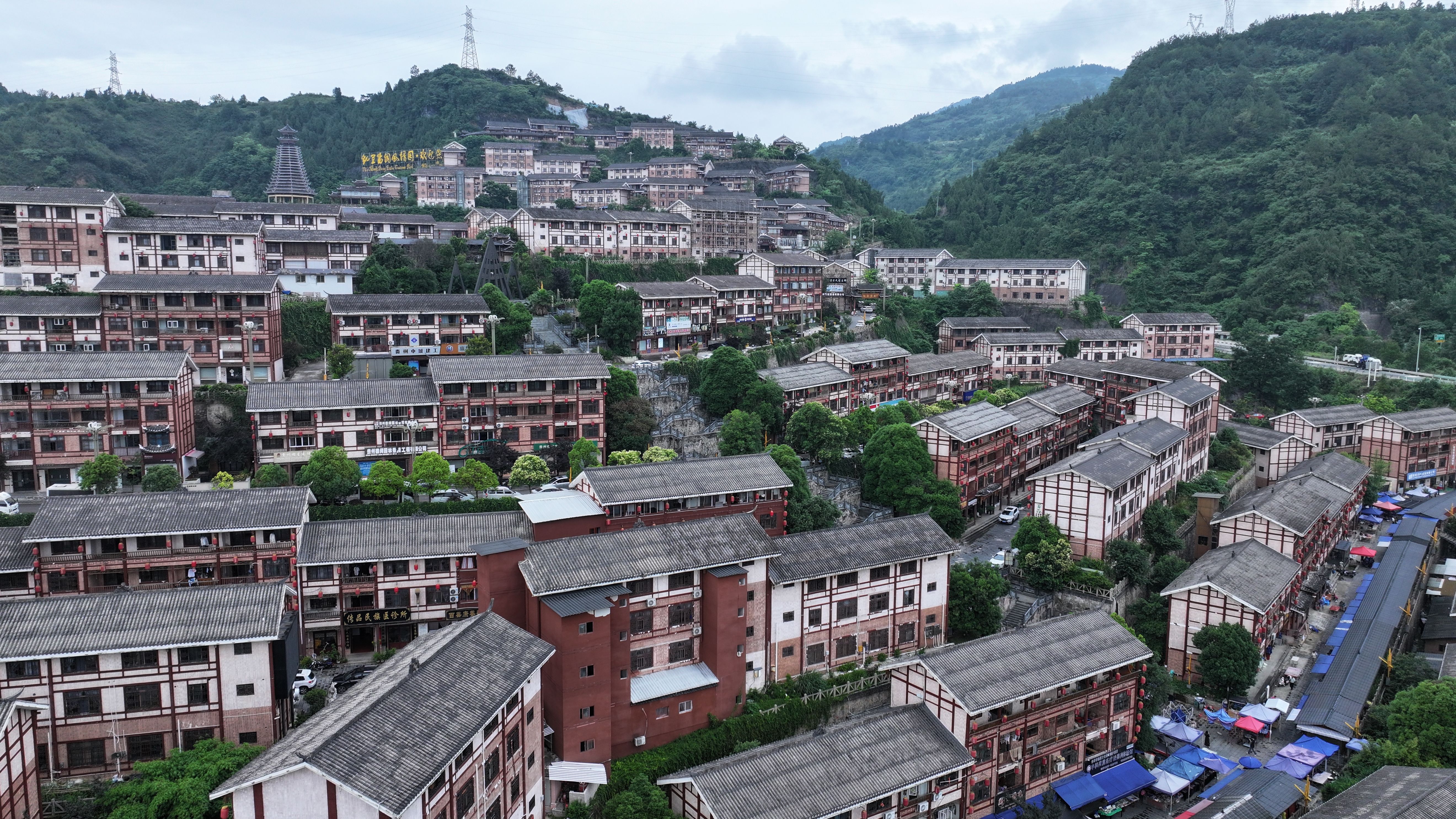
The abundant mountains of Guizhou, while making areas like Kaili difficult to access, are believed to have helped preserve its ethnic costumes and other traditional culture
Yang Chunlin, the show’s initiator and director, attributes its popularity to the sincere display of local culture and the active participation of everyday people. “The protagonists [of the show] are ordinary villagers…with wrinkles, freckles, and an unprofessional catwalk, but their smile is sincere and their eyes sparkle when showcasing their costumes that carry generations of memories, from the joy of weddings to blessings of festivals,” the 36-year-old local Miao ethnic fashion designer tells TWOC. “Tourists can not only watch and take photos closely, but also join and experience.”
Notable participants have included Paralympics athletes, including Yang Hong, who won gold at the 2024 Paris Paralympics. He walked the runway in May alongside Chen Jie, a local swimmer with a prosthetic leg, and swimmer Yang Guanglong.
Guizhou is no stranger to viral village activities. In the past few years, it has garnered international attention for its “Village Super League,” or cunchao (村超), a soccer tournament in Rongjiang county, and a basketball tournament in Taijiang county affectionately known as the 村BA (村 meaning “village,” and “BA” standing for “basketball association”). These events have also showcased the area’s ethnic diversity, with singing and dancing displays during halftime shows. Kaili’s fashion show places more focus on the costumes than the performance.
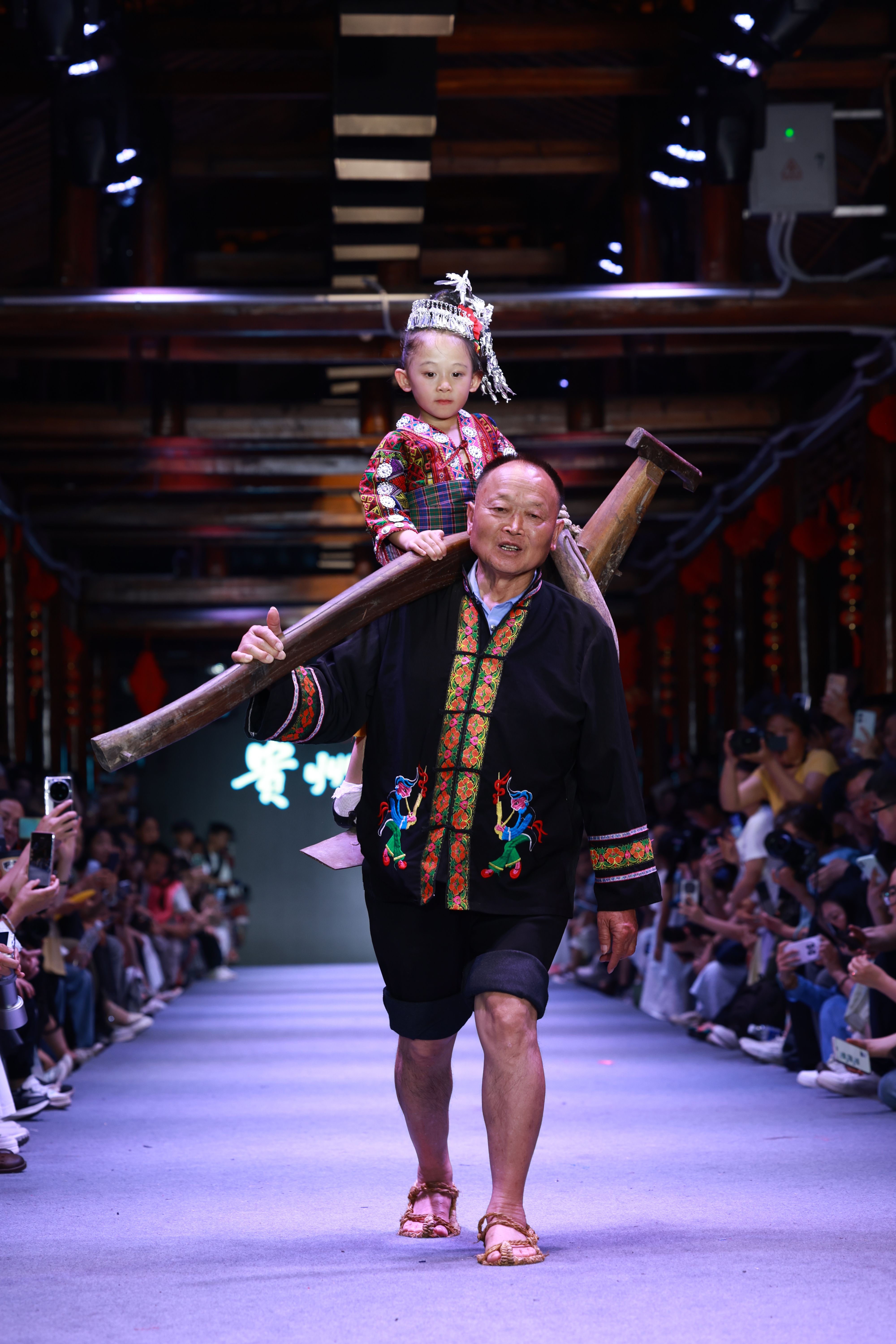
The 70-year-old Gu Biao, also known as the “village show grandpa,” has become an online celebrity after his appearance with his farm tool and granddaughter at this year’s China Fashion Week
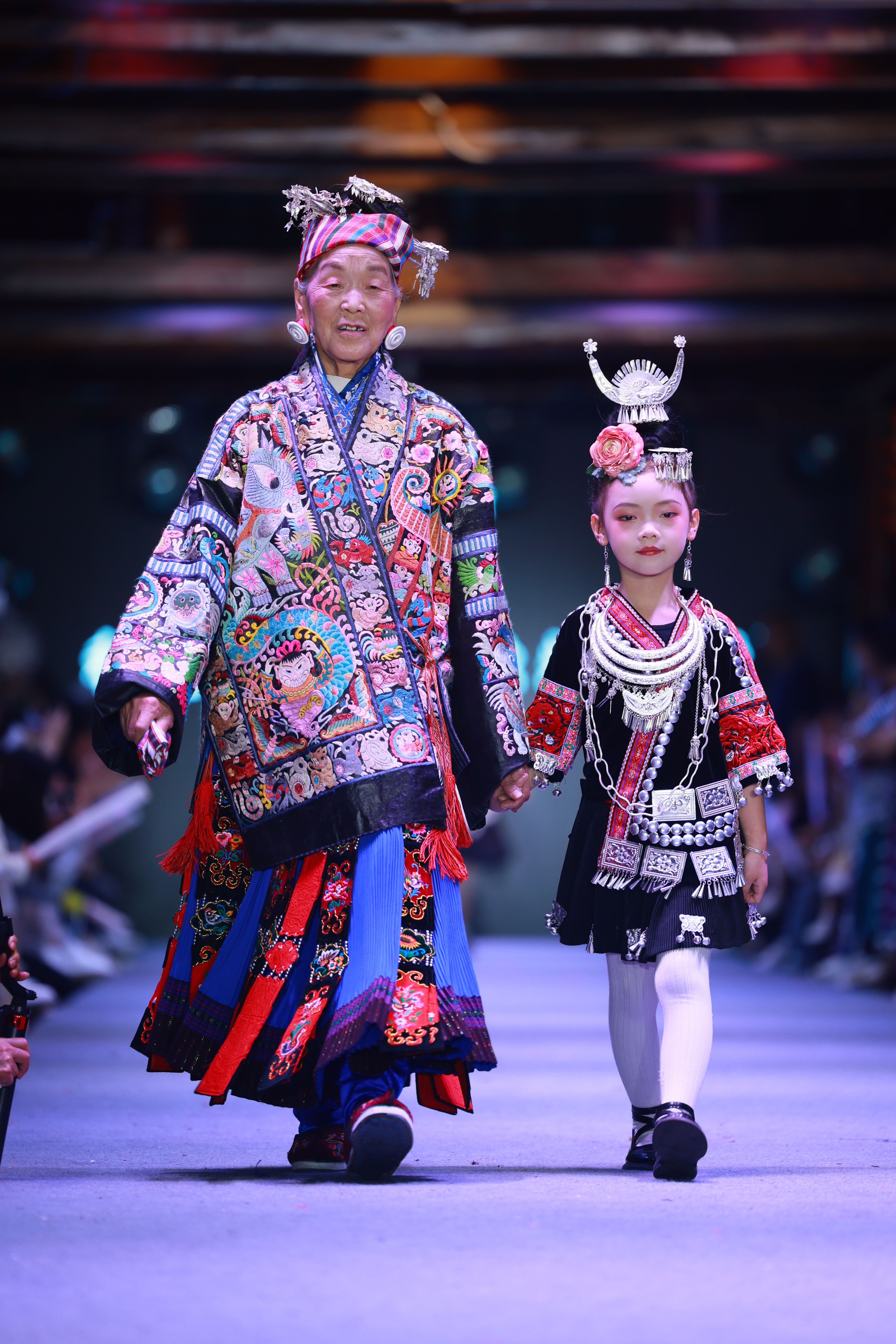
Participants of the show range from young children to elders in their 80s. Pan Yuzhen (left), an 80-year-old local embroiderer, is a regular on the show.
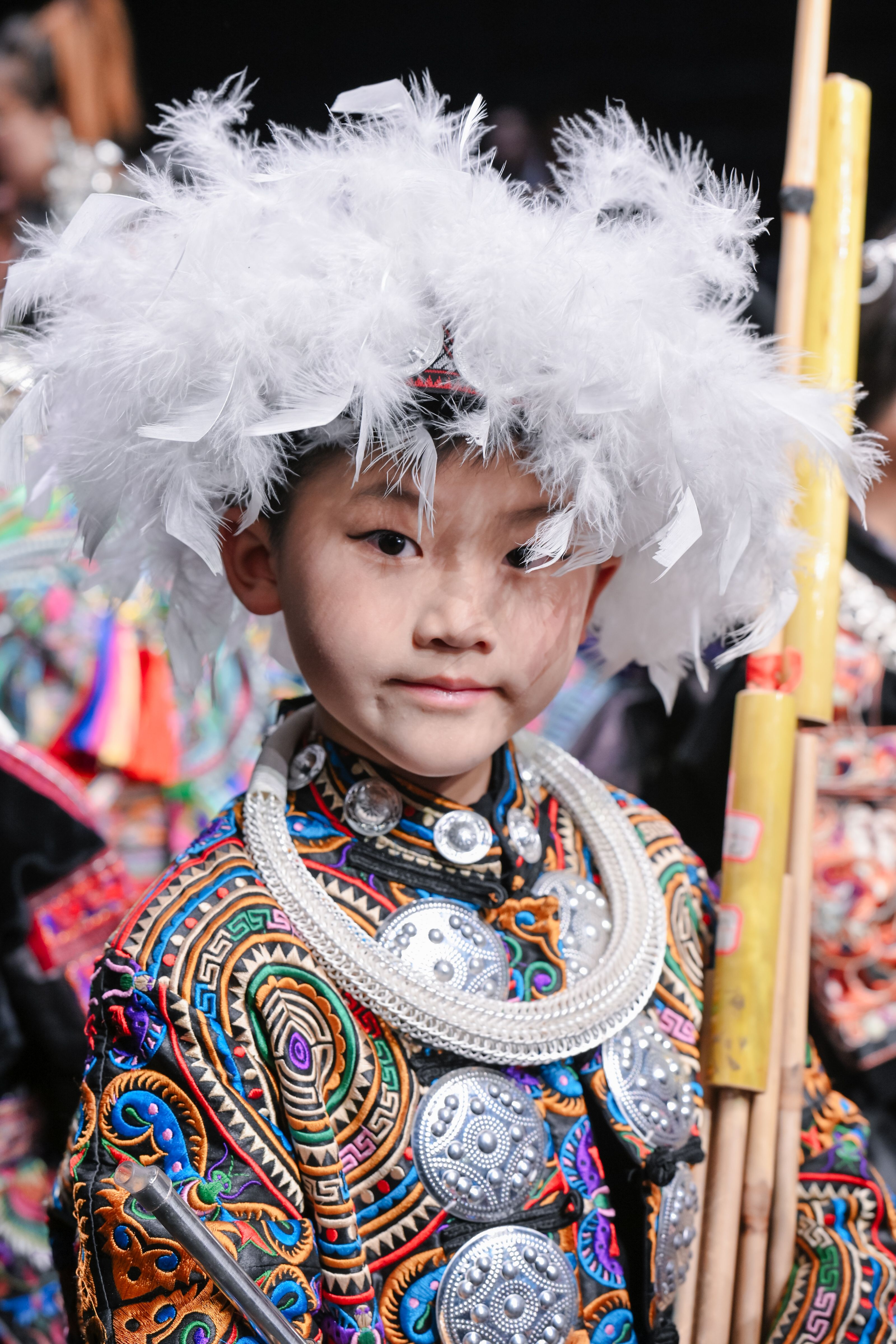
“Hundred-bird cloth,” a traditional festive dress, is dubbed “a Miao epic worn on the body” for its elaborate embroidery and imagery depicting the group’s mythical origins from butterflies and birds
Having grown up wearing ethnic costumes and watching his mother and other elders make them, Yang first realized their popularity among outsiders over a decade ago, when he sold handicrafts like silver accessories and embroidery during his spare time in college in Xi’an, Shaanxi province. Later, the journalism graduate entered the fashion industry and established his own brand, Gu’axin, after his Miao ethnic name, which features traditional elements like embroidery and now boasts over 20 stores around the country. During his first time attending London Craft Week last May, he found that his then-62-year-old mother drew more attention from the audience than professional models. This inspired him to start the Village Runway Show.
According to local newspaper Guizhou Daily, Kaili’s ethnic costumes park saw a three-quarters increase in the number of merchants and a doubling of revenue from costume rental and accessories sales in the past year, resulting in more than 200 million yuan in tourism revenue.
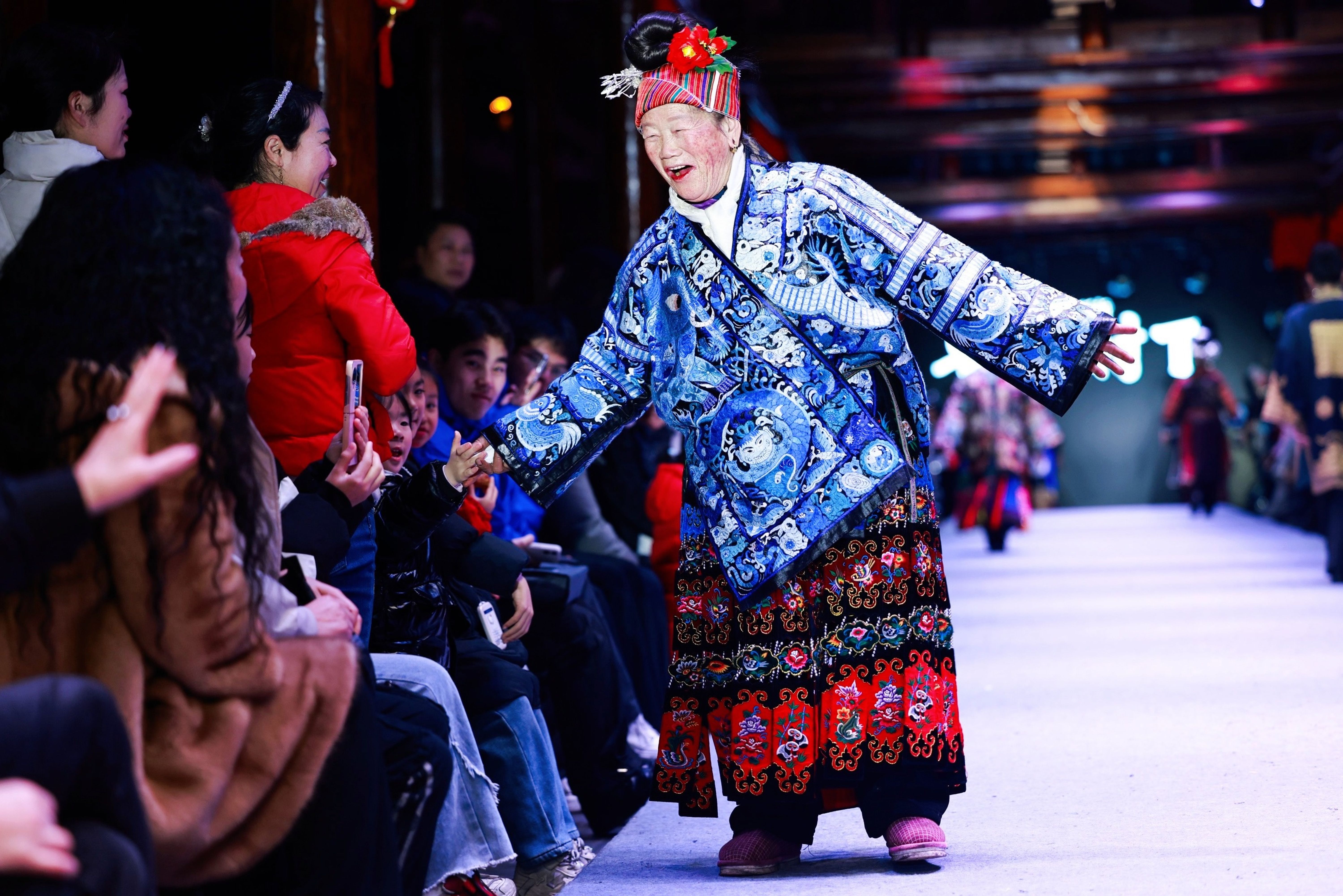
Instead of a professional catwalk, the ethnic fashion show invites villagers to present their traditional attire with natural confidence and interact with the audience
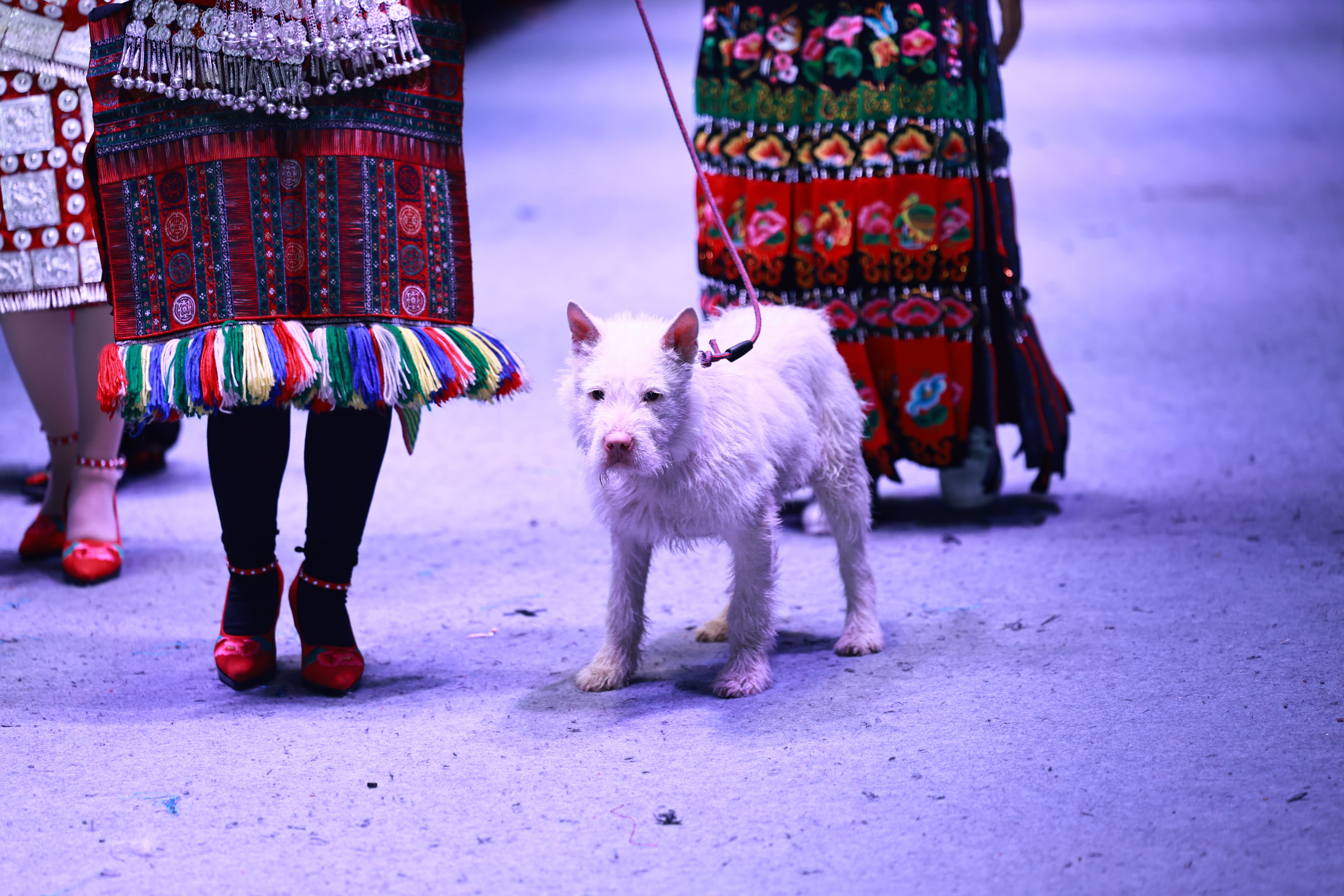
Some sessions of the show get creative with themes, costumes, and props—sometimes even featuring pets—depending on the date or festival
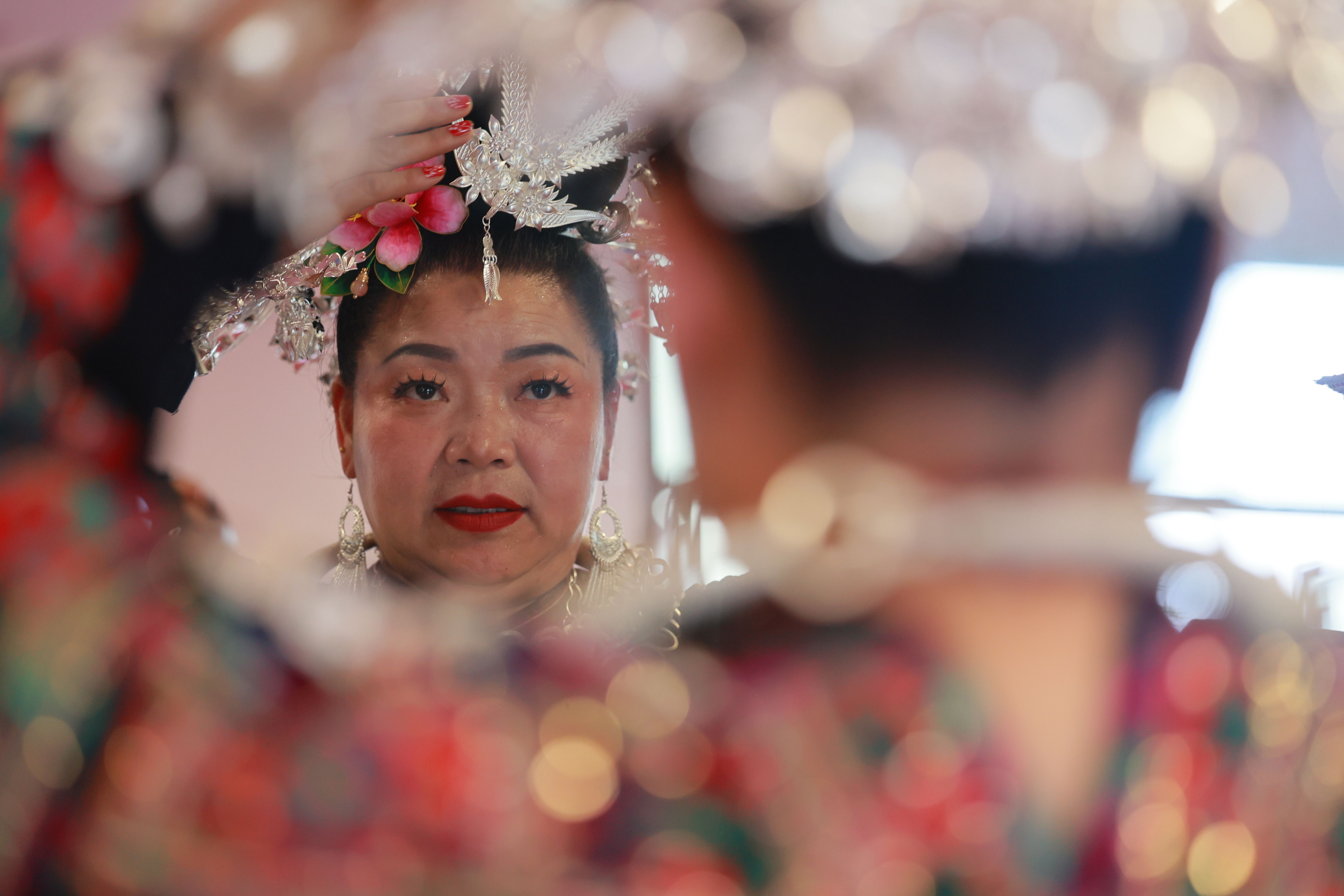
A villager prepares her makeup and accessories before going on stage
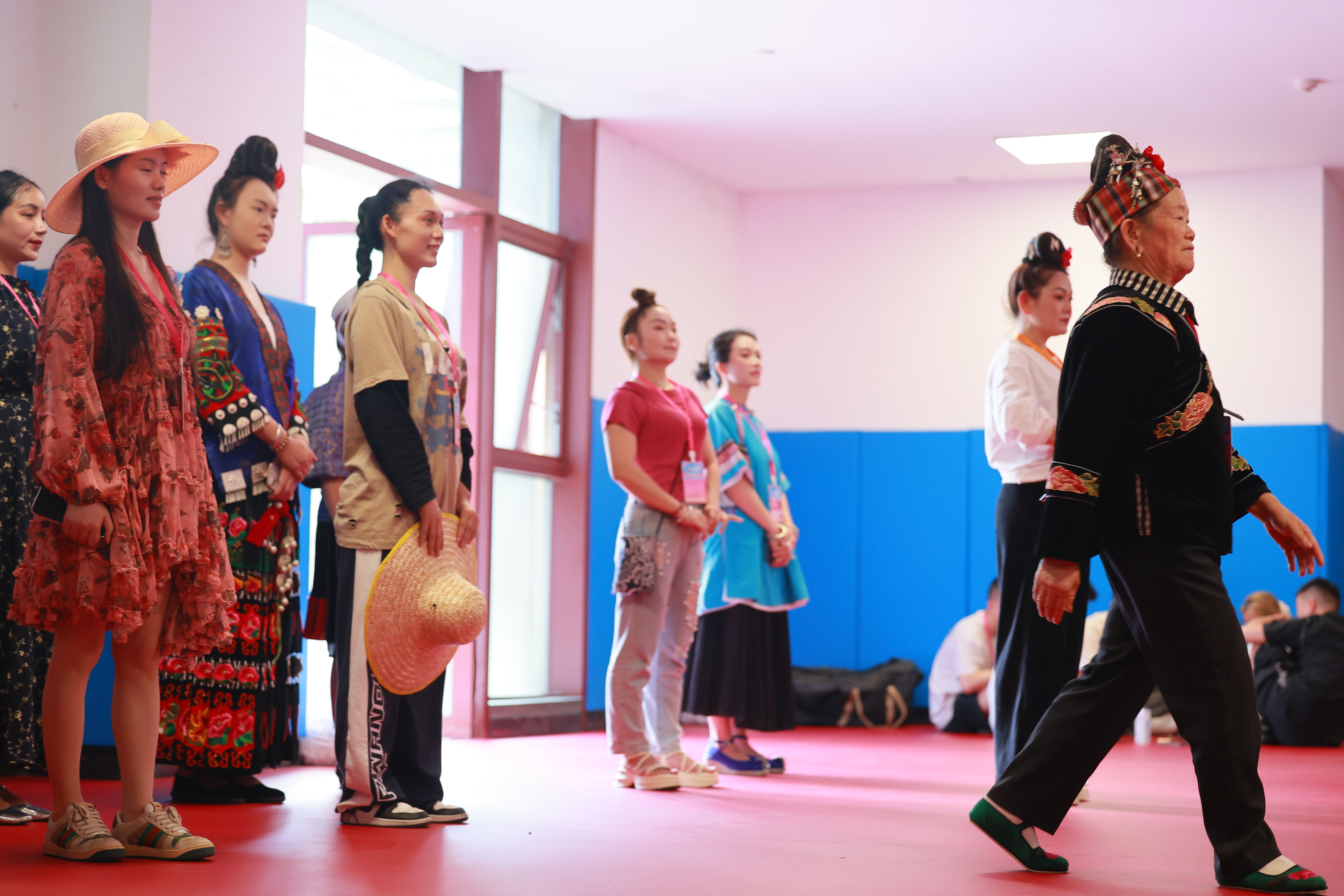
Models do take training sessions before major events
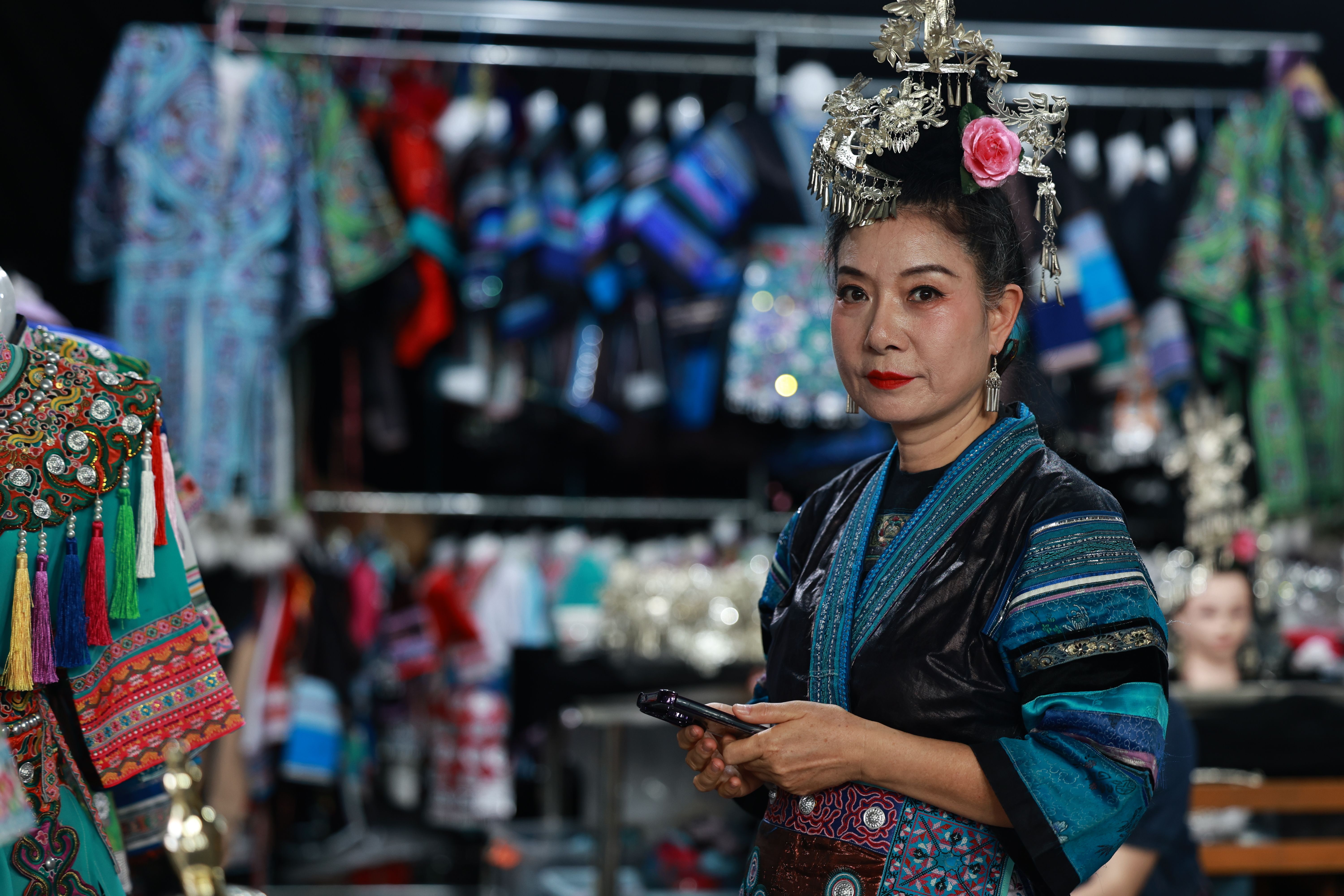
Many models also run shops selling costumes and handicrafts at the market near the runway stage
Beyond boosting the local economy, the show’s greatest impact, Yang says, has been the growing confidence and pride villagers now have in their own traditional culture. “Young generations have realized the value and charm of the traditional techniques [such as making embroidery and silverwork], and are more willing to learn from senior craftspeople now,” says Yang. Some college graduates, rather than seeking jobs in big cities, have returned to work in Kaili. Young entrepreneurs have also joined the organizing committee of the non-profit fashion show, working alongside the “mom models” to help run the event.
Kaili is now planning to launch its own ethnic fashion week this autumn, welcoming designers from all 56 of China’s ethnic groups to participate. “Traditional culture isn’t something to be enshrined on an altar—it’s a wild, living force that can be dragged through the mud and thrown onto the runway…The more we engage with it, the more lively it will become,” Yang says.
Images by Li Jing, photographer of Guizhou’s Village Runway Show
A Village Fashion Show Brings Ethnic Clothing into the Spotlight is a story from our issue, “Urban Renewal.” To read the entire issue, become a subscriber and receive the full magazine.
Related Articles



