

From bustling traditional costume parades and lively bamboo pole dances to cheerful folk song contests and the solemn coming-of-age rituals for young adults, this past Sunday, the third day of the third lunar month, saw a variety of celebrations across China. In southwestern regions like Guangxi, Guizhou, and Hainan, the day is known as Sanyuesan (三月三), a joyful carnival of markets, singing, dancing, and feasts. In recent years, many cities have also started celebrating this day under the name Shangsi Festival (上巳节), a forgotten ancient holiday centered around spring outing and celebrating young adults.
Though the two festivals occur on the same day, the celebrations differ by region, with each having its own unique myths and traditions. These celebrations range from ancestral worship and the welcoming of spring to a day of singing and dancing for young lovers.
Scholars view this holiday as a prime example of how China’s diverse ethnic cultures influence and evolve with one another. Agriculture plays a major role in many celebrations. For example, the She ethnic group in southeastern China regards Sanyuesan as the birthday of grain and marks the day by making steamed black glutinous rice. The Dong ethnic group, meanwhile, refers to it as the “Planting Festival,” with their folk celebrations serving as a reminder to family and friends to tend to the fields in time.
In Han legends, the date is often linked to the mythical birthday of the Yellow Emperor, regarded as the common ancestor of the Han people. On this day, ceremonies of ancestral worship are common. Similarly, in Zhuang mythology, Sanyuesan is the day to honor their ancestral mother goddess, Yapu (娅浦).
One additional origin of Sanyuesan could be a prehistoric shamanistic ritual, designated to pray for health, matrimony, and fertility. This is recorded in ancient texts, such as the third-century BCE historical record Master Lü’s Spring and Autumn Annals(《吕氏春秋》). Modern scholars, such as Zhang Jijiao at the University of Chinese Academy of Social Sciences, suggest that these ancient practices evolved into the current-day traditions of activities for young couples.
History and imagination aside, Sanyuesan remains a joyful day for everyone to embrace the fun of spring. Here are some highlights from the past Sanyuesan, or Shangsi Festival, whichever tradition you choose to celebrate and enjoy:
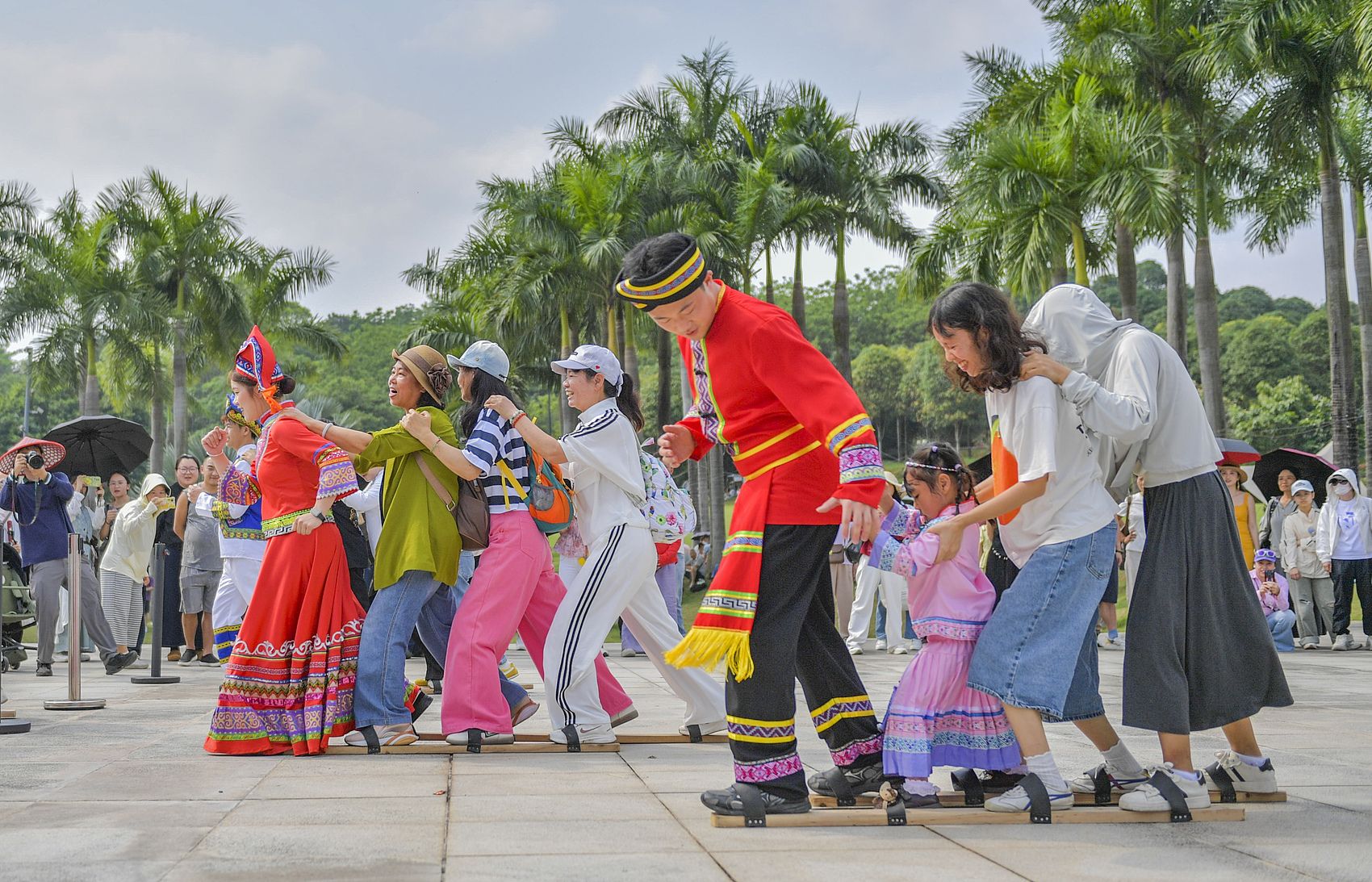
Visitors join a board-shoe racing contest, a traditional Zhuang ethnic sport, during this year’s Sanyuesan event in Nanning, Guangxi (VCG)
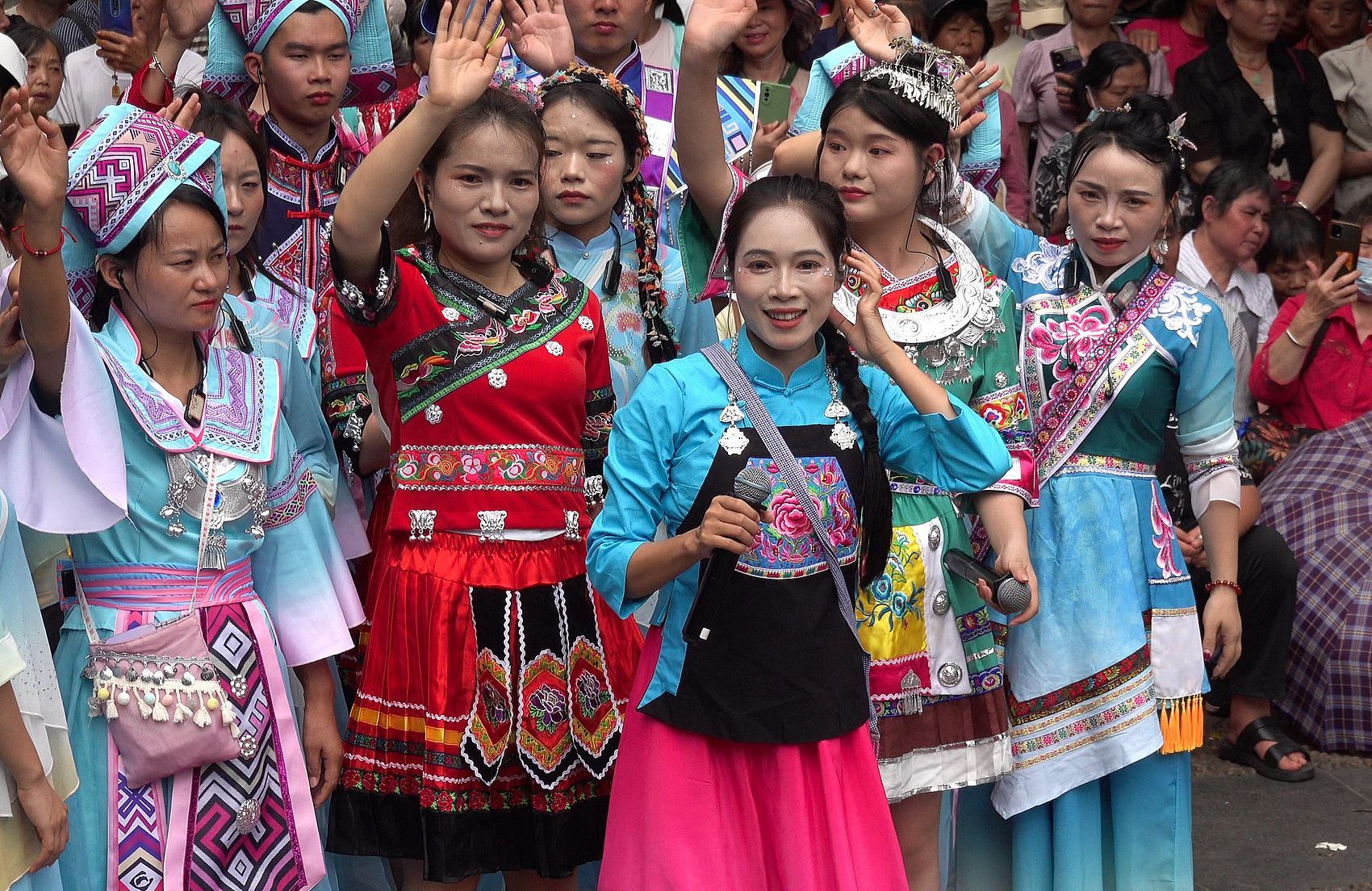
A singer dressed as Liu Sanjie, the “Goddess of Singing” from the Zhuang ethnic legend in Guangxi, is performing in the crowd. Folk song contests are a major part of the Sanyuesan celebration, with open stages set up across the region. (VCG)
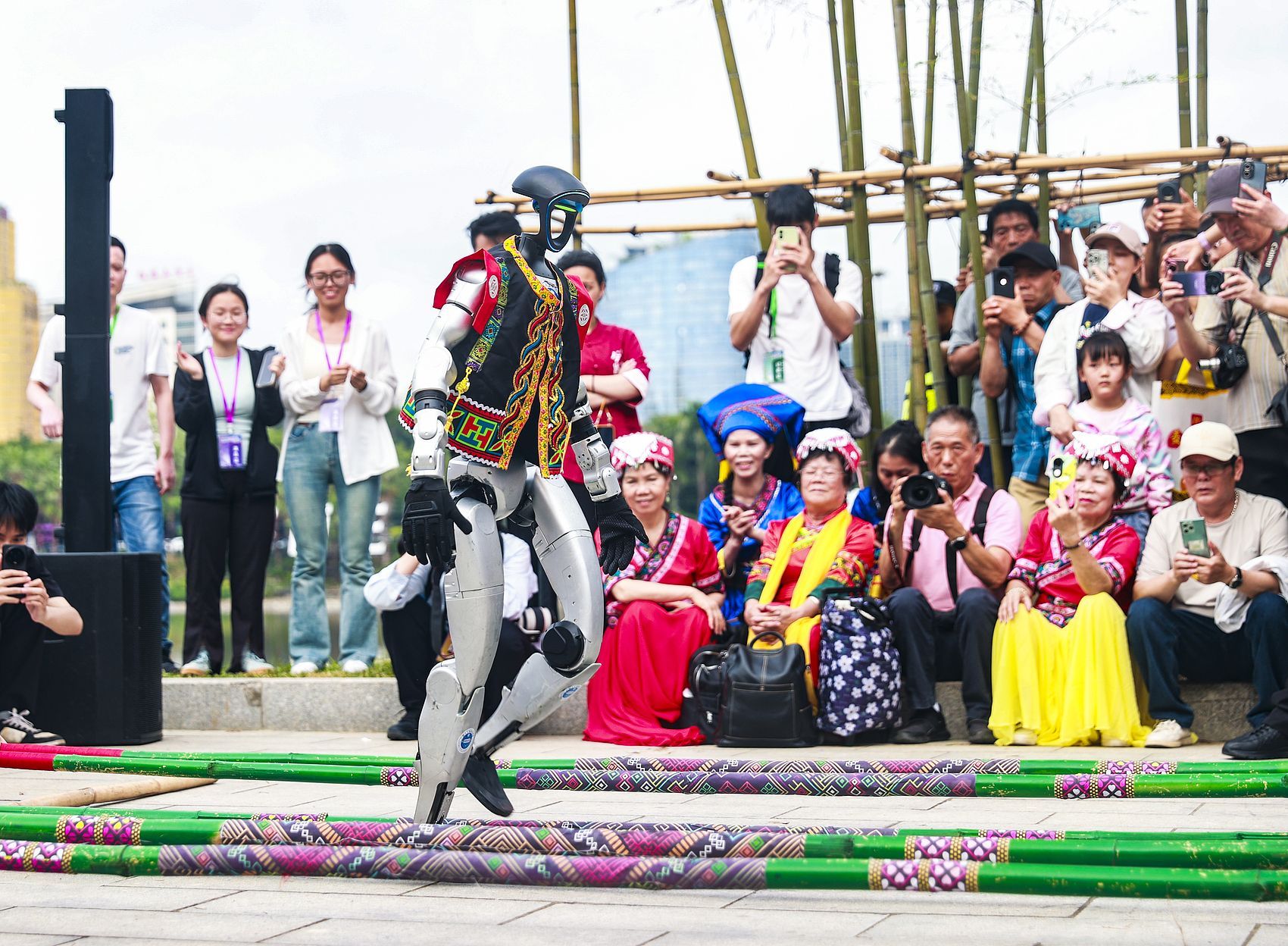
A Unitree robot joins the bamboo pole dance crowd at the Sanyuesan celebration in Nanning, Guangxi, this year, adding a touch of the future to the centuries-old festival (VCG)
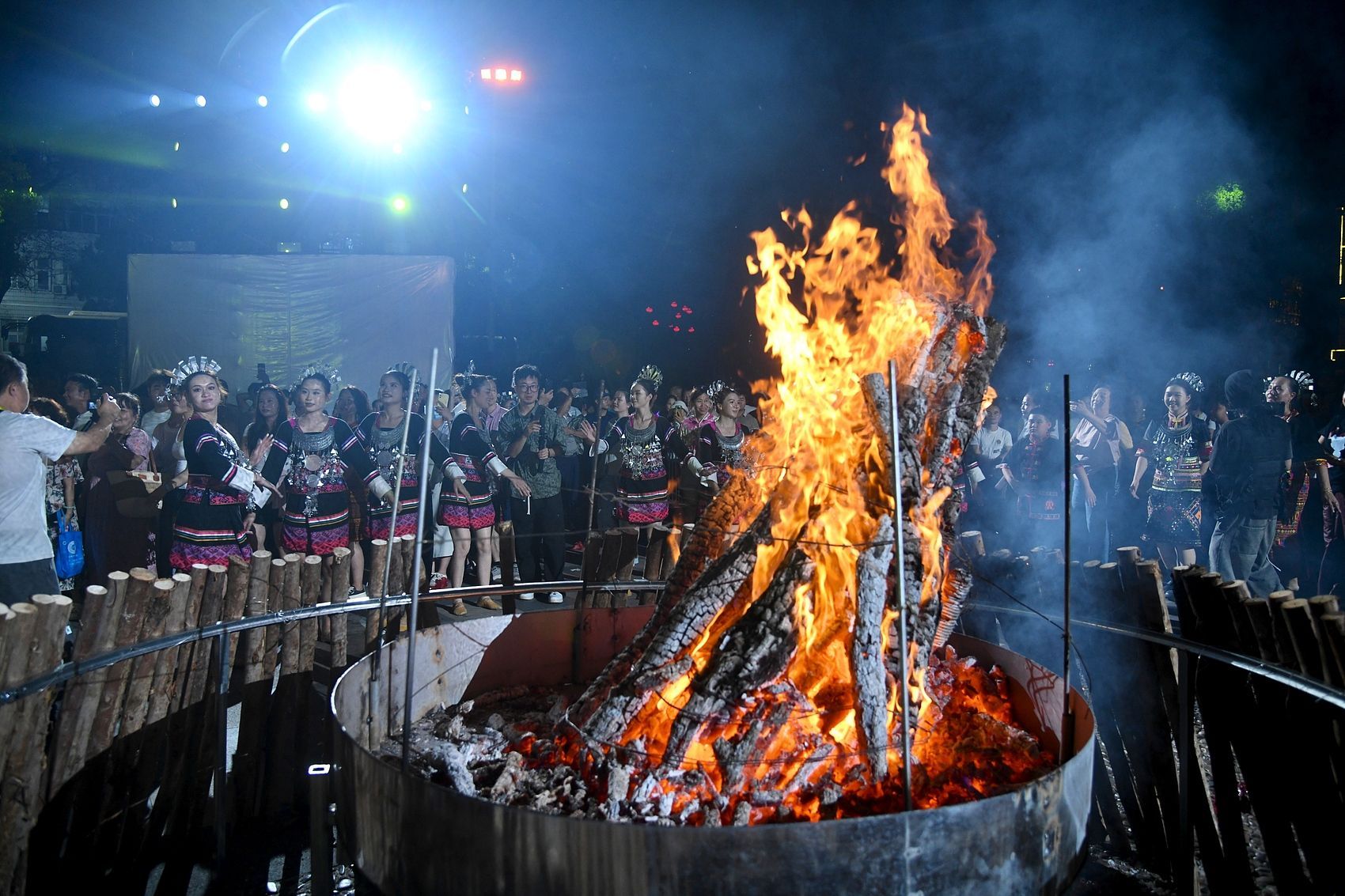
Both the Li and Miao ethnic groups celebrate Sanyuesan in Hainan. An event in Wuzhishan, located in the island’s central region, attracted over 10,000 people and featured dance and a parade that lasted into the night. (VCG)
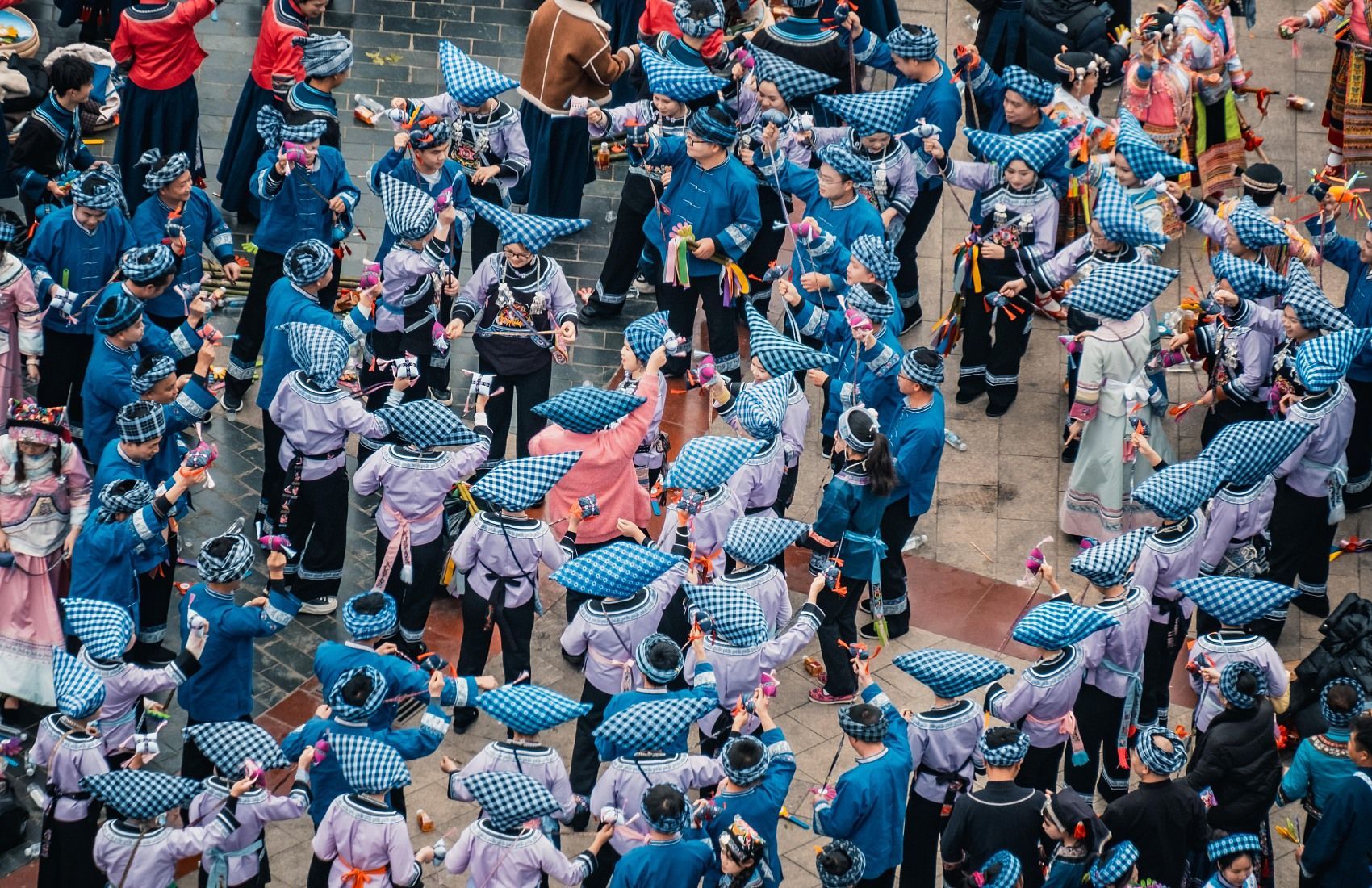
The chaff bag dance (or flower bag dance) is a traditional celebration of the Bouyei ethnic group, where dancers toss and catch colorful small chaff bags in a lively and coordinated display (VCG)
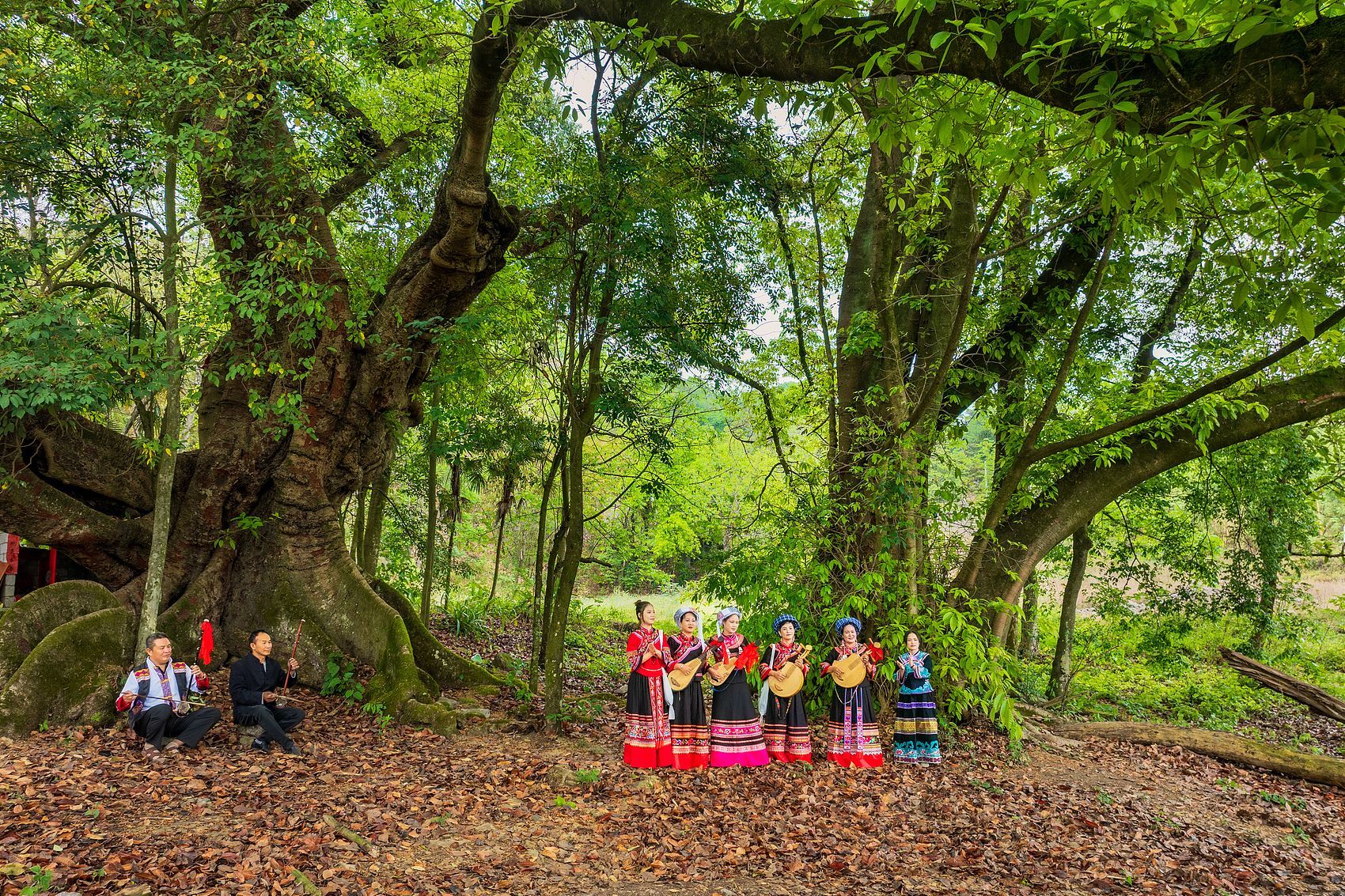
A band of Bouyei musicians performing folk songs beneath towering banyan trees in Guizhou during the Sanyuesan Festival celebration (VCG)
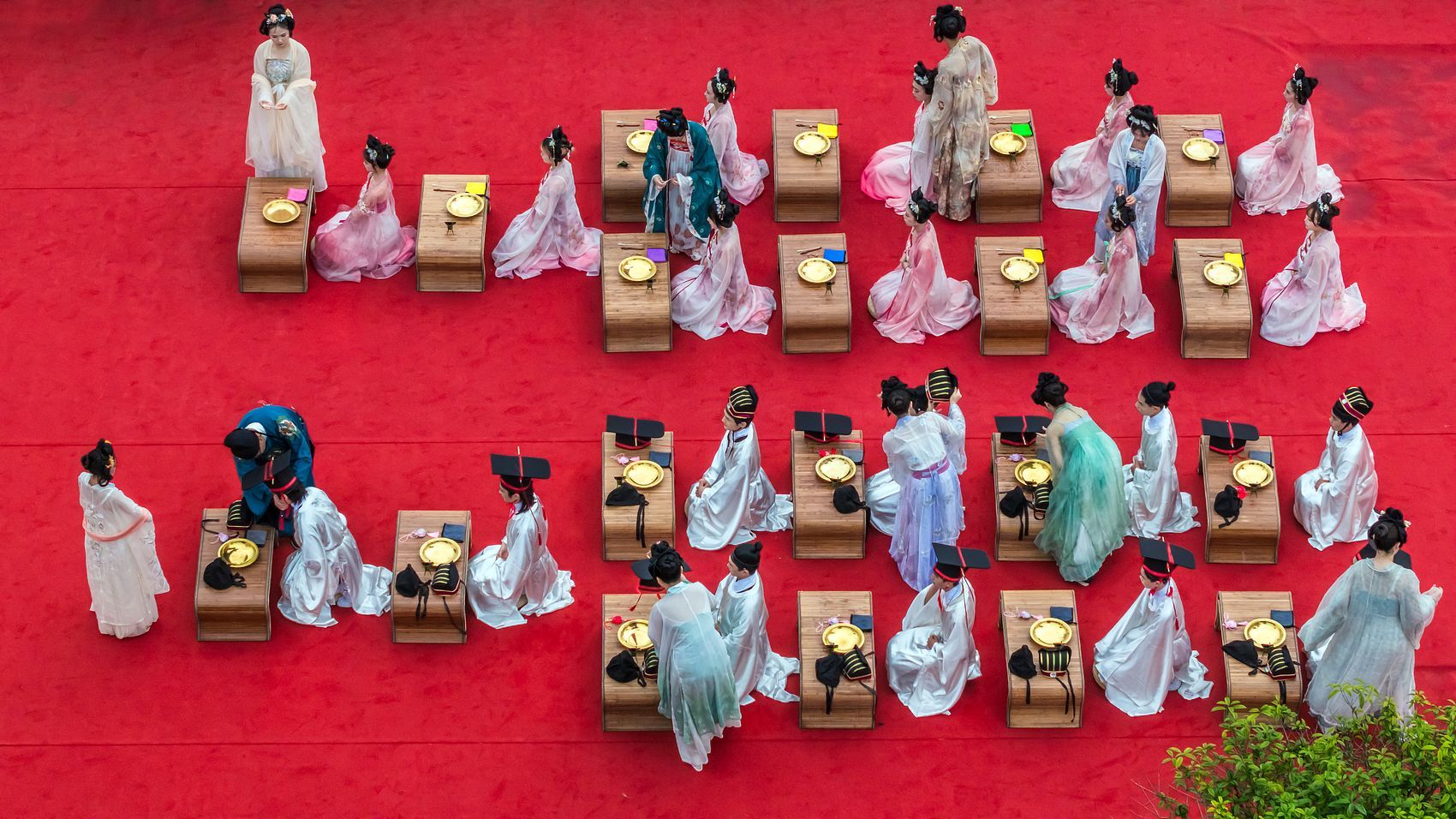
In Anyue, Sichuan, a traditional Tang-style coming-of-age ritual was held in the tradition of the ancient Shangsi Festival, where young men wore crowns and young women wore hairpins to symbolize their entrance into adulthood (VCG)
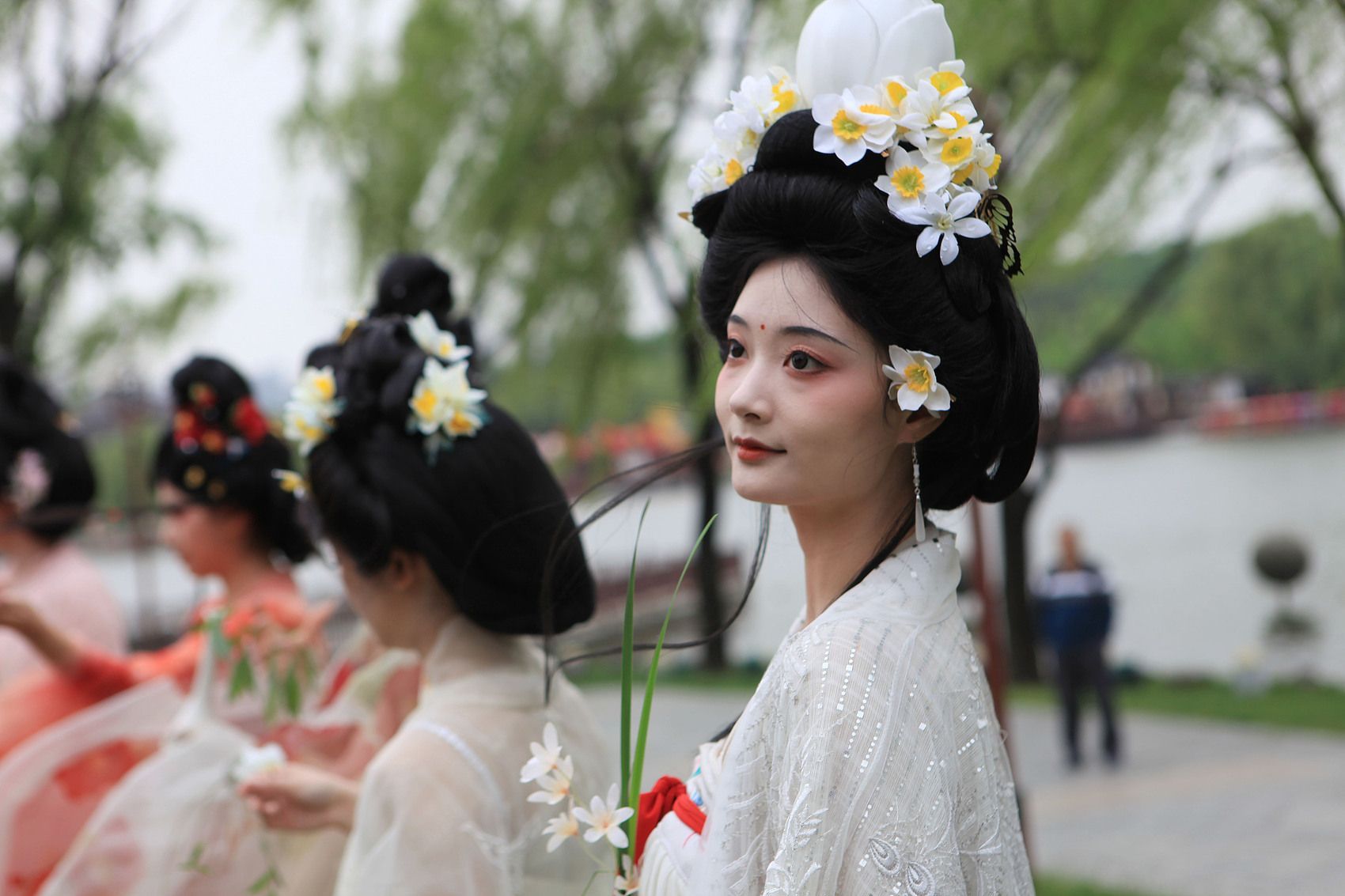
Twelve “floral deities” paraded through the Tang Paradise, a traditional Tang-style garden in Xi’an. Performers in elegant attire recreated ancient rituals, such as purification and blessing ceremonies, offering visitors a chance to learn about the ancient Shangsi Festival. (VCG)
Related Articles