

Global luxury giant Louis Vuitton’s (LV) fashion show at Shanghai’s West Bund on July 25 seemed quieter and more secretive than usual. Last June, the brand’s biggest annual event in China was star-studded, with dozens of spokespersons and ambassadors in attendance, and related news, announcements, and images appearing all over the internet. This year, the event schedule was kept under wraps, with little mention of it on social media. The few photos that circulated online on the day of the event, taken by ordinary show-goers, confirmed the presence of just three known actors, leaving curious outsiders to guess who else attended.
Read more about Chinese consumer trends:
- How China Turns Intangible Heritage Into Tangible Returns
- How Women in Small Towns Got a Taste For Gold
- Emotional Economics: Why China’s Adults are Playing With Plushies Again
In fact, the company’s official accounts on Chinese social media platforms, including Weibo and Xiaohongshu (RedNote), barely posted anything in July, following news of its trademark dispute with Chinese milk tea chain Molly Tea over the similarity between the chain’s emblem—a four-petaled jasmine flower, according to the tea brand—and the flower pattern in Louis Vuitton’s monogram. While LV won the case and Molly Tea was ordered to pay 10.3 million yuan in damages for trademark infringement and legal fees, the ruling drew widespread criticism of the luxury brand and support for the tea chain, as many traced the logo’s origin to a traditional Chinese motif. “How can the brand appropriate our traditional patterns and then sue our companies?” one Weibo user commented under a news report about the case, receiving more than 22,000 likes.
The event soon sparked a public discussion, with individuals and media outlets chiming in. Some raised concerns about cultural appropriation, while others focused on the legal questions surrounding trademark protection, bringing to the surface the tensions that can arise when cultural heritage meets international commercial interests.
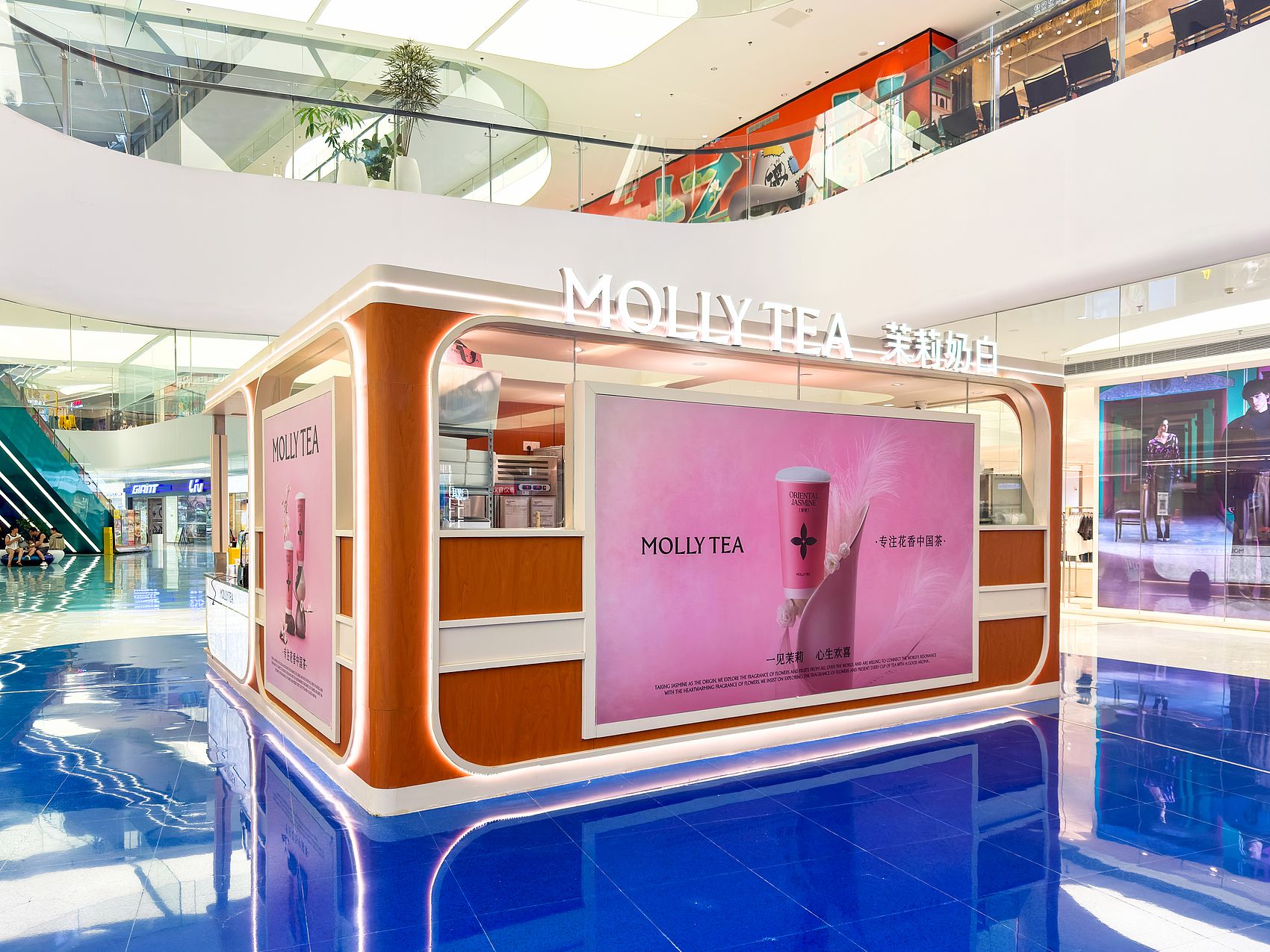
Molly Tea first gained popularity for its modern take on jasmine milk tea and has since become one of China’s most popular milk tea brands (VCG)
Founded in 2020, Molly Tea specializes in tea and fruit drinks and now has around 2,600 shops, most of them in China, with dozens in the US, Britain, and other countries. Its current black-and-white logo was introduced in 2024, replacing an earlier design featuring a plump white jasmine flower with two green leaves at the bottom. The new logo bears an unmistakable resemblance to the four-petal flower in Louis Vuitton’s signature monogram, created in 1896 by George Vuitton, the luxury brand’s second-generation head. According to the brand’s official history, the famous “Louis Vuitton Monogram,” combining a four-petal flower, a four-pointed star, a diamond, and the founder’s initials, drew inspiration from Japonism, a cultural and artistic movement influenced by traditional Japanese aesthetics that emerged in late 19th-century Europe. Patented in 1897, the monogram was created both as a tribute to the founder and as a way to prevent counterfeiting. Since the 1980s, the company has registered over 1,400 trademarks in China, including its name and monogram, covering categories ranging from clothing, bags, and suitcases to restaurants.
While some point to the resemblance between the two logos in question, others argue that such flower patterns are common traditional motifs in Chinese and East Asian art. Chen Tong, a senior engineer in the Department of Ancient Architecture at the Palace Museum, told People’s Daily that symmetrical patterns built around a cross-shaped axis, similar to LV’s floral emblems, have been widely used in Chinese textiles, clothing, pastries, and architecture for thousands of years. He also noted an uncanny resemblance between LV’s monogram-patterned leather and a Tang-dynasty red sandalwood pipa with shell inlay, a gift from Emperor Xuanzong that is now housed at Japan’s Shosoin Repository.

Since opening last June at Shanghai’s HKRI Taikoo Hui, “The Louis,” Louis Vuitton’s giant ship-shaped building featuring a free exhibition, cafe, and store, has become a popular destination for domestic and international tourists (VCG)
Netizens have taken the initiative to collect similar examples from traditional art and even everyday life, posting side-by-side comparisons on social media, from traditional Chinese windows and stone carvings to pebble-mosaic paths in parks, questioning how LV was able to trademark the patterns in the first place.
The outrage also taps a growing awareness of cultural appropriation. In July 2022, Dior, LV’s sister brand, described a new skirt as a “hallmark Dior silhouette” without mentioning its Chinese origins: the mamian (horse-face) skirt, a traditional Chinese garment with pleated panels at the front and back. The incident sparked online outrage and prompted overseas Chinese students and the local diaspora to protest outside the brand’s Paris stores. Dior simply removed the skirt from its Chinese mainland website without offering an explanation.
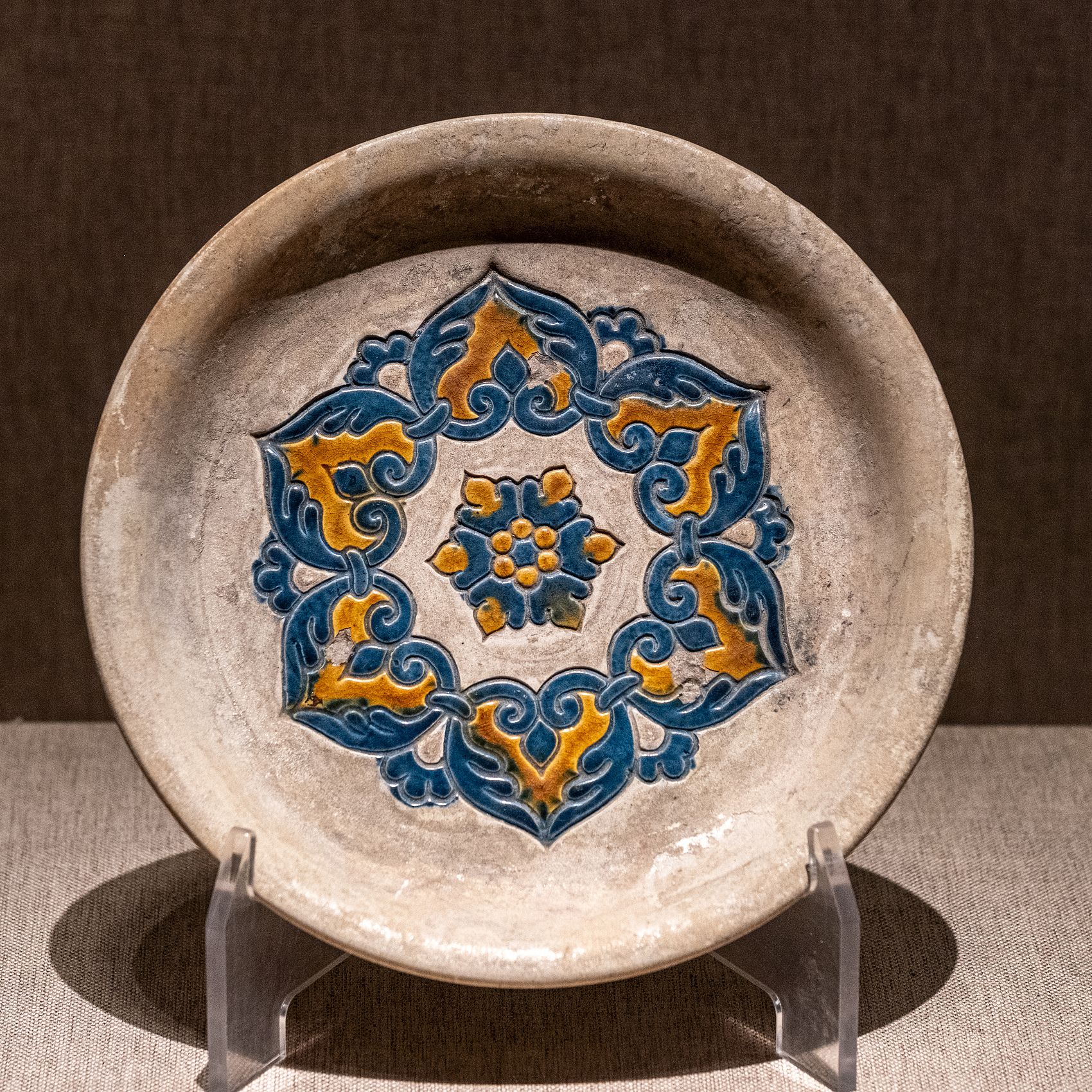
Netizens have also cited the traditional baoxiang flower motif, a symmetrical floral pattern commonly seen in traditional Chinese art, as an example of how such design elements are deeply rooted in Chinese culture (VCG)
Online sentiment aside, legal professionals say the case was clear-cut and sets a precedent for trademark protection, particularly in light of the Trademark Law revised this year, which will take effect in 2027. The new law added several clauses to strengthen the protection of “well-known trademarks,” an official status granted to brands that enjoy a strong reputation among the public in China, which LV has held since 1986.
Beijing lawyer Li Weimin told Southern Metropolis Daily that the ruling is based on the Trademark Law’s cross-category protection of well-known trademarks. Though the two companies don’t compete in the same market, the similar-looking logos could lead consumers to assume a connection between them, such as a collaboration. The court has made it clear that the law cares about whether trademarks are likely to be confused, not their supposed “cultural origin.”
Although it has not been confirmed, the high amount in damages Molly Tea was ordered to pay, roughly twice the cap on statutory damages in ordinary trademark cases, may also have been punitive. The tea brand had previously failed to register the four-petal flower emblem as a trademark, as it was deemed too similar to existing trademarks.
However, in this cultural and trademark war, no party emerged a complete winner. Triggered by the controversy surrounding the lawsuit, LV’s sales in China fell by 20 to 30 percent in July and August, according to financial research firm JL Warren Capital. When asked about the case’s impact in a meeting on the brand’s first-half 2026 results, Cecile Cabanist, chief financial officer of LV’s parent company, LVMH, emphasized that intellectual property “is an absolute key asset for us, and we diligently protect our brands.”
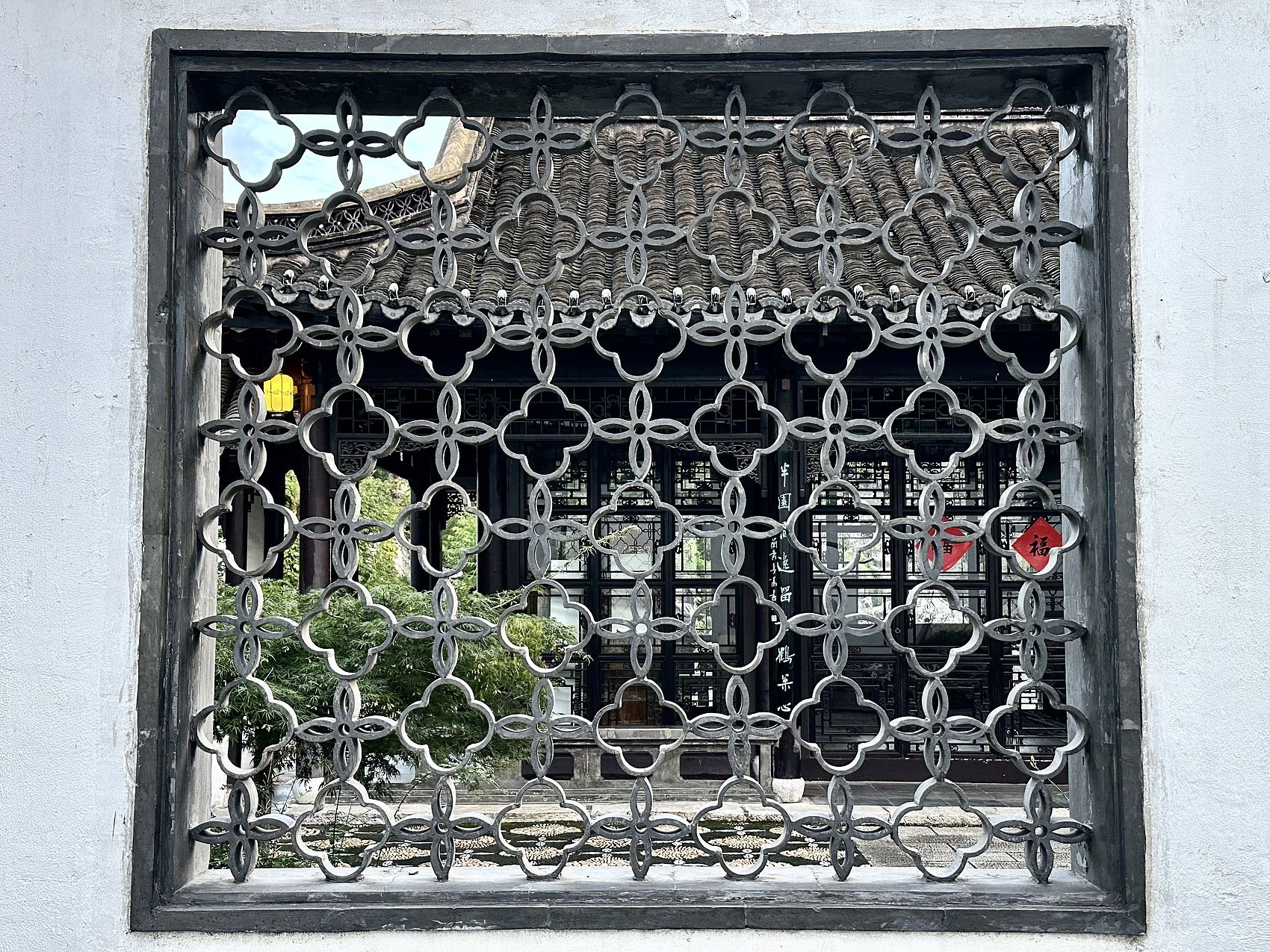
To a modern consumer, a traditional window in a Chinese garden may resemble Louis Vuitton’s monogram (VCG)
A quick search on the corporate data platform Qichacha turns up more than 800 trademark infringement judgments brought by LV between 2014 and 2025, against defendants ranging from department stores and leather goods makers to liquor makers and street-side clothing stores. Dozens more hearing notices had been posted this year by mid-July.
Online pushback persists over cultural ownership. As commentary published by People’s Daily on July 10 asks: “If a company draws inspiration from traditional Chinese patterns, turns them into a distinctive trademark through the modern trademark system, and then prevents Chinese companies from using those same traditional motifs, is that fair, reasonable, or lawful?”
In the meantime, Molly Tea switched the logo on its WeChat mini program to a colored version and announced plans to appeal, despite the slim chance of overturning the ruling. In its latest PR move, the brand announced a 1-million-yuan donation to the China Cultural Heritage Protection Foundation to support the preservation of traditional Chinese gardens, writing on its official Weibo account on September 28: “It is Chinese gardens that inspire our visual origins and spiritual roots.”
Related Articles