

When ancient Chinese rulers wanted to quietly get rid of an enemy, they often turned to toxic concoctions to do the deed. Such was ancient China’s medical prowess, that all manner of poisonous substances found in nature were used for assassinations. In Chinese mythology, even the toxic feathers of mystical birds could be used to make the perfect poisoned beverage.
Behind every poison are stories of hatred, regret, betrayal, and treachery. Discover four of them below:
Wine poisoned by the feathers of a mythical bird
One ancient story of involves a mythical bird known as a zhen (鸩), and wine poisoned by its feathers. According to scholar Luo Yuan (罗愿) in a commentary on the Erya (《尔雅》), China’s earliest surviving dictionary, in 1174, the zhen was a goose-like, dark purple bird with a scarlet beak, black eyes, and a neck of 7 to 8 cun (around 27 centimeters) long.
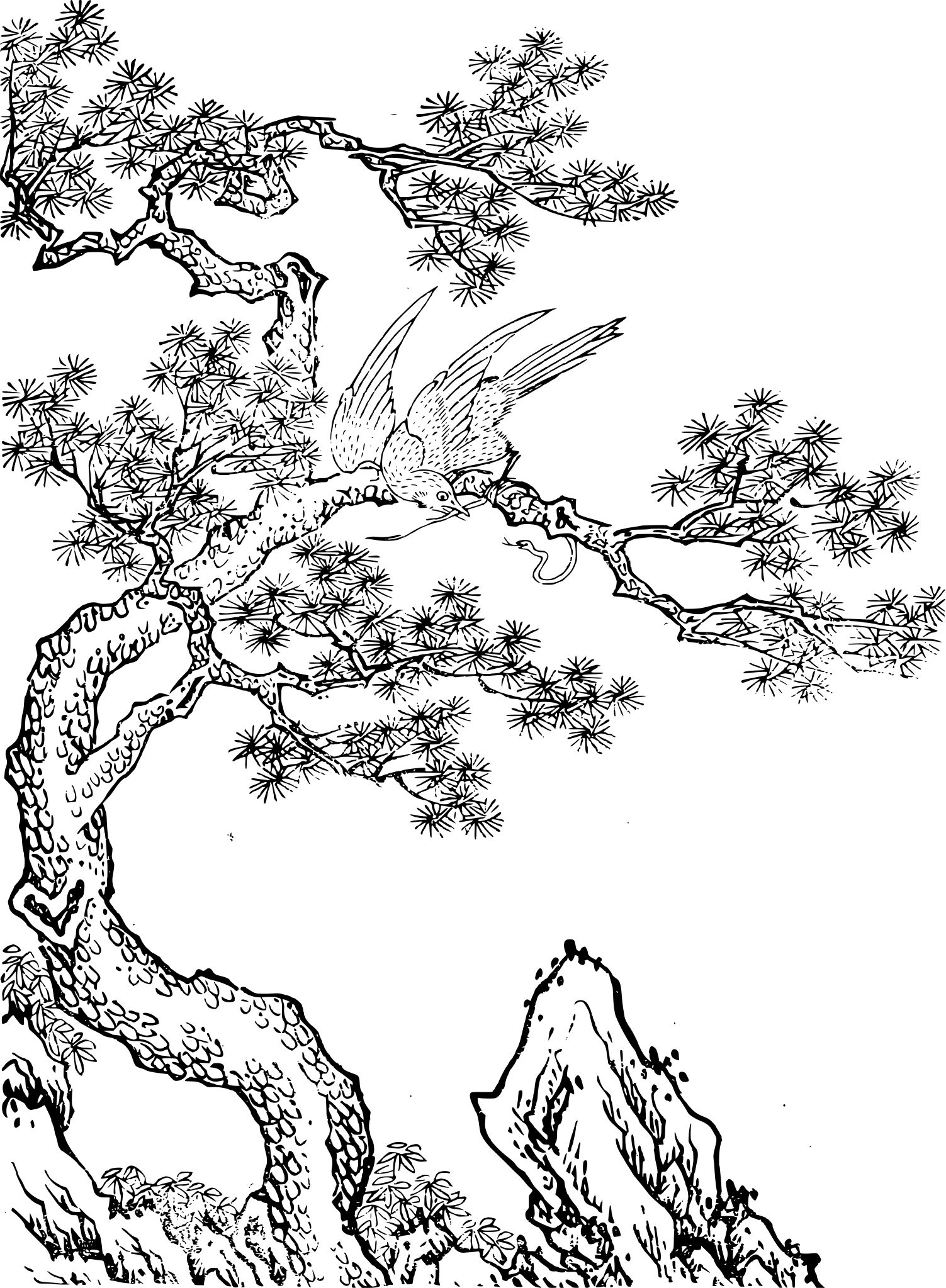
The mythical zhen (鸩) bird (Wikimedia Commons)
Luo wrote that the ferocious bird ate vipers, that its excrement could dissolve stone, and that all insects would die around pools where the bird has drunk. The bird’s feathers were toxic, and could be dipped in liquor to make a poisonous draft for assassinations. The only effective antidote was rhinoceros horn.
The Records of the Grand Historian (《史记》), written during the Han dynasty (206 BCE – 220 CE), describes how Empress Lü used allegedly used this feather-poisoned wine to kill her son’s half-brother in 194 BCE. When Emperor Gaozu of Han died, the throne passed to Empress Lü’s son Liu Ying (刘盈). But before his death, Emperor Gaozu had attempted to give the crown to instead Liu Ruyi (刘如意), his son by another consort.
A power struggle ensued between the Empress and Liu Ruyi, with Lü eventually deciding to murder him. Her son Liu Ying, however, liked his half-brother, and wanted to keep him alive, so he summoned Liu Ruyi to the capital to live with him. To protect his brother, Liu Ying kept Liu Ruyi by his side at all times, and they even ate all their meals together. But one morning, when Liu Ying went out hunting, Liu Ruyi protested that he was too tired, so Liu Ying left him to sleep in the palace. The empress sneaked in and forced the poisoned wine down Liu Ruyi’s throat, killing him.
Shocked by his mother’s cruelty and grieved by his brother’s death, Liu Ying refused to be involved in any matters of governance ever again, and died just a few years later.
Poisonous seeds to remove a rival emperor
In 978, Li Yu (李煜), the last ruler of the Southern Tang state, who was also a famous poet and writer during his time, had been captured by the advancing forces of the Song empire. In captivity in the Song capital Bianjing (present-day Kaifeng in Henan province), Li hosted his own somber birthday party, at which he asked one of concubines to recite a poem he had just finished, The Lady Yu (《虞美人》). The poem contained the line: “I cannot bear recalling my native land in the moonlight,” a thinly veiled lament at the demise of his own state and his desire for freedom.
Hearing about the poem, Emperor Taizong of Song was alarmed by Li’s apparent longing to restore his own state. Nervous, the emperor arranged for a dose of powder from the poisonous seeds of the strychnine tree to be put in a goblet of wine, which he sent to Li as a birthday gift. Li gulped down the emperor’s gift, which caused him searing abdominal pain. He collapsed on the floor, curled into a ball, and died.
A hallucinogenic with a misleading name
This toxic plant has a sweet Chinese name, 天仙子, which literally translates to “sky fairy.” But the name actually comes from its ability to make those who consume it lose their minds and hallucinate supernatural beings.
In Li Shizhen’s (李时珍) Compendium of Materia Medica (《本草纲目》), written during the Ming dynasty (1368 – 1644), henbane, also known as stinking nightshade, is introduced via a harrowing story of a rogue monk who used the poison for murder and rape. Li wrote that in 1564, the monk Wu Ruxiang was staying with a hospitable family on his travels. He added henbane to their meals at dinner, sending them into a coma, before raping the mother of the family.
Before they woke, Wu blew more henbane powder into the ear of his host Zhang Zhu, sending him into a frenzy of hallucinations where he believed his family members were all demons and ghosts. Zhang killed all 16 members of his family that night, and was soon arrested. When the effects of the poison wore off, Zhang was horrified to learn he had killed his own parents, brothers, and sisters. Eventually Wu was also arrested and sentenced to death, along with Zhang.
Li noted that licorice root, black cohosh, and rhino horn could relieve the toxins.
Deadly wolf’s bane no match for Guan Yu
Aconite (乌头), or wolf’s bane, is a tall, leafy plant with hooded blue or blue-violet flowers. It contains poisonous toxins which were often used to coat arrows for hunting or warfare.
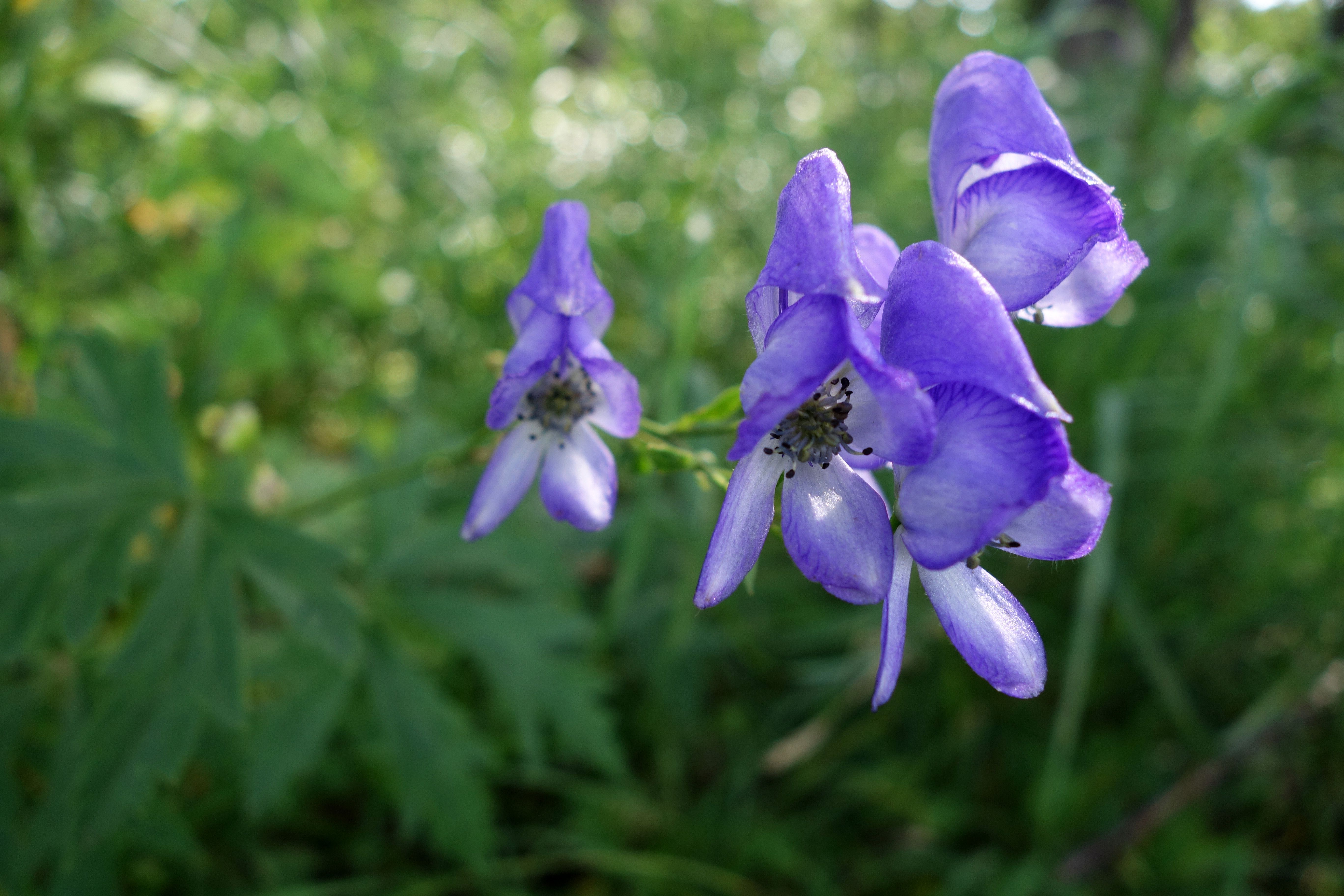
Aconite (乌头), also known as Wolf’s Bane ( VCG)
In Luo Guanzhong’s (罗贯中) 14th century novel Romance of the Three Kingdoms (《三国演义》), the general Guan Yu (关羽) is hit in the right arm by a arrow dipped in wolf’s bane poison. Hua Tuo (华佗), Guan Yu’s physician, worried the toxins would penetrate into the bones. Hua decided to scrape the bones with a knife to remove the toxins directly. During the operation, conducted while Guan Yu was fully conscious, Guan Yu sat at a banquet table with his guests and drank and chatted as calmly as ever, showing his courage, strength, and heroism.
Zhang Zhongjing (张仲景), a pharmacologist from the Eastern Jin dynasty (317 – 420), noted in his Handbook of Prescriptions for Emergencies (《肘后备急方》) that one should drink salt water and bean juice straight after eating game killed with poisoned arrows. For poisoned humans, Tang dynasty physician Sun Simiao (孙思邈) suggested drinking an antidote of ground herbaceous peony with liquor or rice water in his Essential Formulas for Emergencies Worth a Thousand Pieces of Gold (《千金要方》).
Related Articles