


In many parts of China, with temperatures hovering around 40 degrees, late August still feels like summer. However, not even the sweltering heat can delay one of the most important events for students across the country—the start of the new academic year, which typically falls on September 1.
For many incoming first-graders, especially in southern China, September 1 is not only symbolic but ceremonial, marked by the First Writing Ceremony (开笔礼, literally “Opening Brush Ceremony”). Also known as the “Enlightenment Ceremony (破蒙),” it is usually held a few days before school starts. Students don hanfu, the traditional clothing of the Han ethnic group, and participate in activities such as worshiping Confucius or other ancient scholars and practicing calligraphy with a writing brush.
Though often seen as an ancient tradition, this ceremony is actually a recent creation. “Our current semester system was introduced from the West; China did not have the concept of semesters or academic years in the past, so this is clearly not a traditional Chinese practice,” Peking University history professor Zhao Shiyu told state media Chinanews.com in 2016. According to Peng Lin, a professor of history at Tsinghua University, ancient students practiced a simple but solemn ritual to honor teachers in the spring and summer called the “Vegetable Offering Ceremony (释菜礼).” The ceremony mainly involved offering vegetables or other food to Confucius.
According to a report by news outlet The Paper, the Foshan Museum in southern China’s Guangdong province organized a First Writing Ceremony at a local Confucian temple in 2001, and it quickly spread to neighboring cities and provinces. On August 19 of this year, Panyu Academic Palace, the site of a Confucian temple during the Ming (1368–1644) and Qing (1616–1911) dynasties in Guangzhou, celebrated the 20th anniversary of its First Writing Ceremony. It has drawn over 88,000 participants since its first celebration in 2004.
Many schools, villages, and other education or cultural organizations around the country have also adopted this “tradition.” The ceremony rituals vary from place to place. While students write the character 人 (people), which signifies “learning to be a good person,” in many regions, other locations may use the character 正 (upright, righteous) or 恩 (kindness, grace). Other than schools, Confucius temples, Wenchang pavilions (shrines dedicated to Wenchang, the deity of scholarly honor and official rank), and ancestral halls are all popular locations for these ceremonies. For many local schools in Foshan, Cangju temples (also called Zizu temples), where people enshrine Cang Jie (仓颉) and Ju Song (沮诵), the legendary creators of Chinese characters, are the go-to location to host their annual First Writing Ceremony.
Huanglian village in Foshan’s Shunde district is home to one of several remaining Zizu temples in the country, attracting many nearby residents looking to pray for their children to gain wisdom. Photographer Huang Ruide recorded the First Writing Ceremony and worshipers at Huanglian village’s Zizu temple in 2023.

A Zizu temple in Foshan features a typical four-eyed statue of Cang Jie (right)
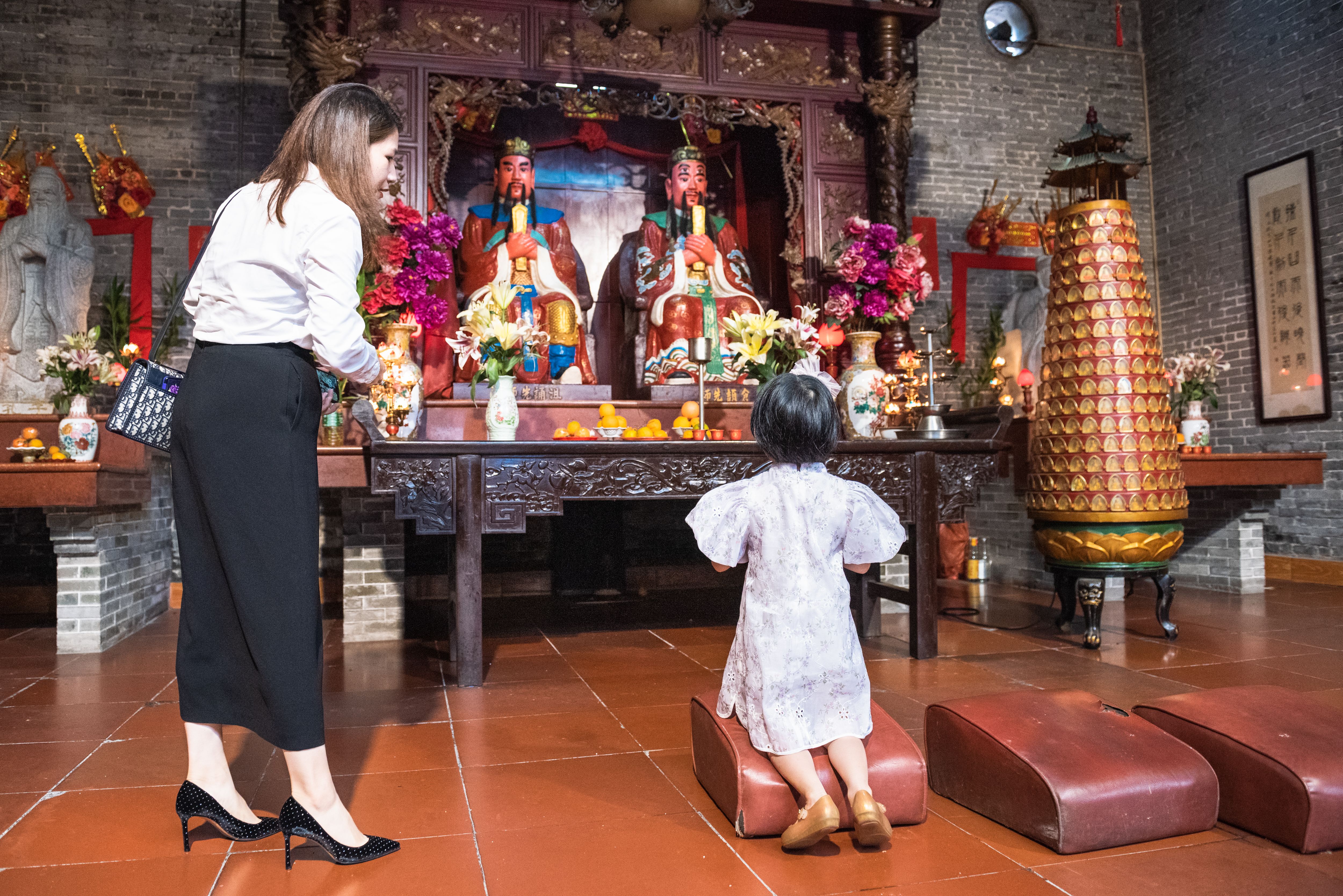
Parents in Huanglian village often bring their children to the temple to pray for smarts and quick-wittedness
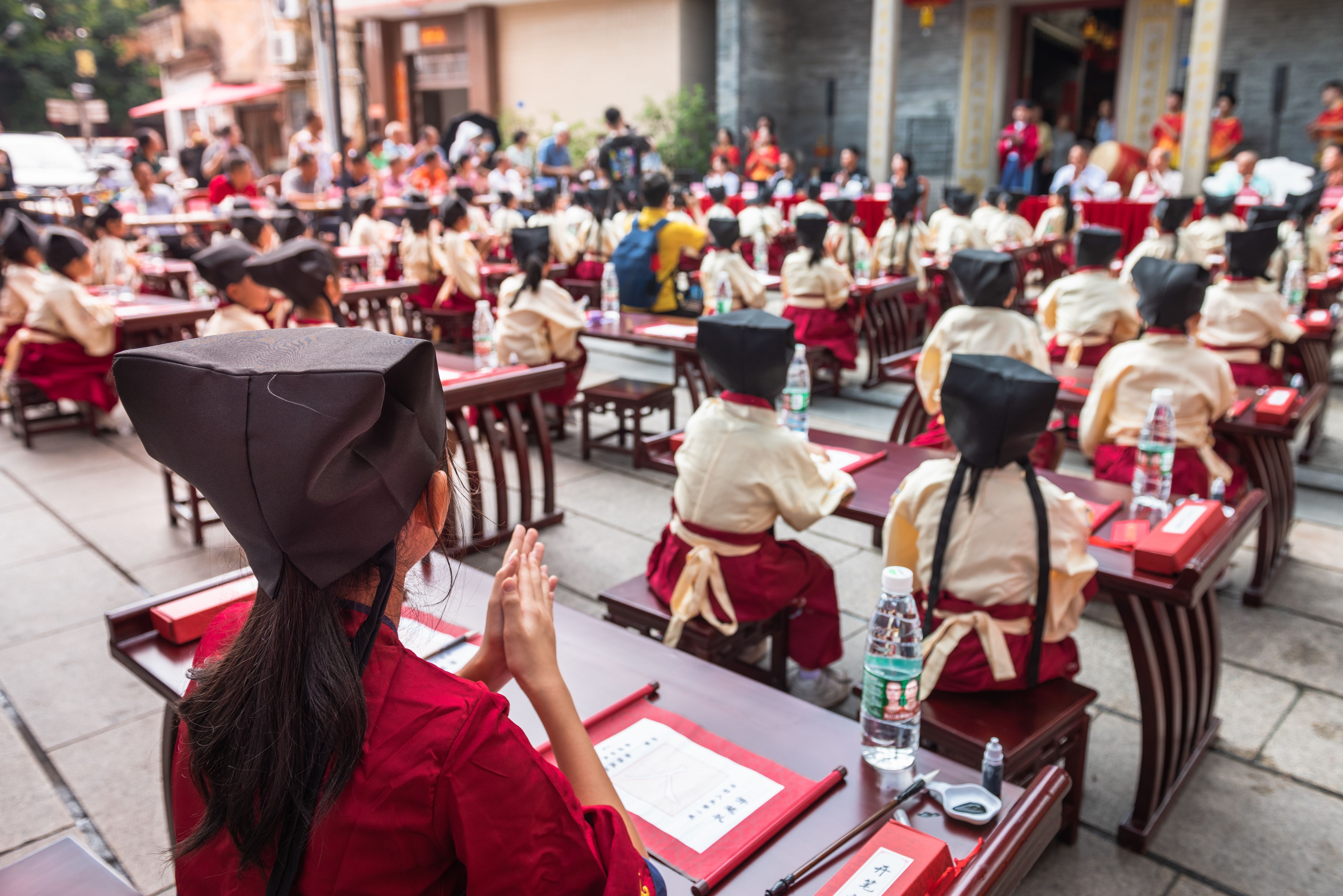
Students in hanfu wait patiently for the First Writing Ceremony to begin
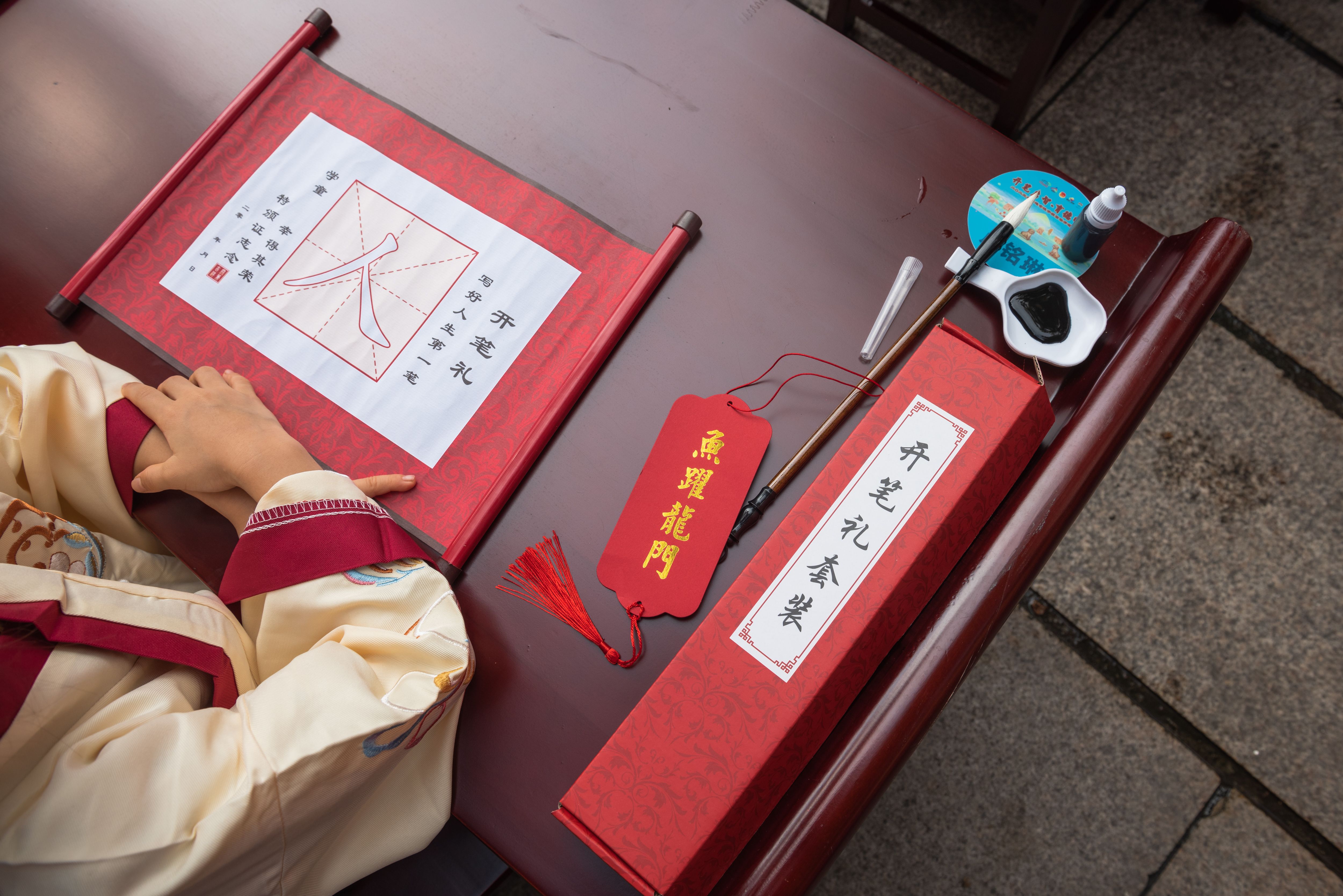
The ceremony typically requires a Chinese writing brush, paper, ink, and a pendant featuring an auspicious phrase. The pendant here is inscribed with the Chinese idiom “fish leaping over the dragon gate (鱼跃龙门),” conveying best wishes for passing an exam or achieving career success.
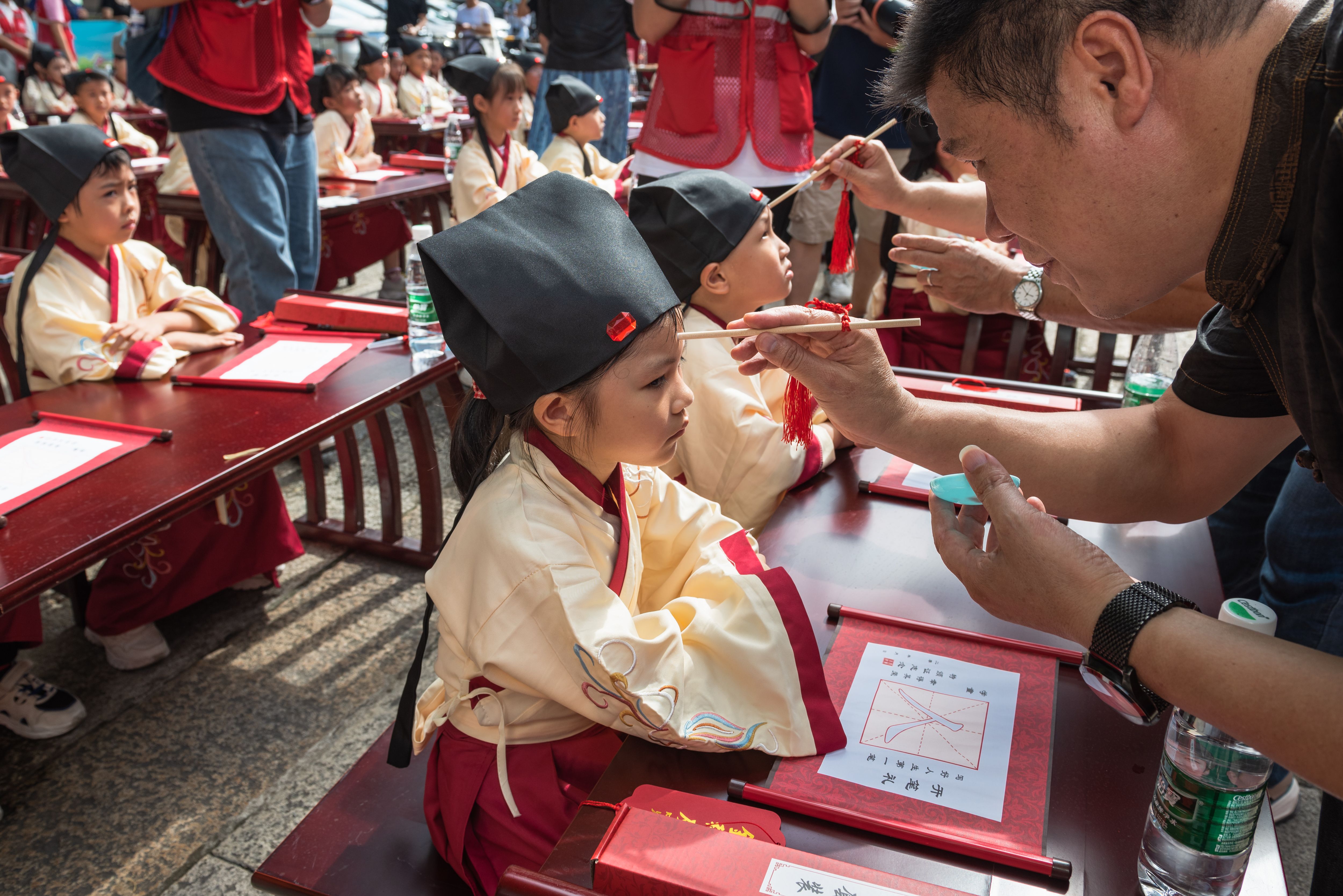
According to folk beliefs, painting a red dot on the children’s foreheads can “enlighten” them as the word for “mole (痣)” sounds similar to “wisdom (智)”
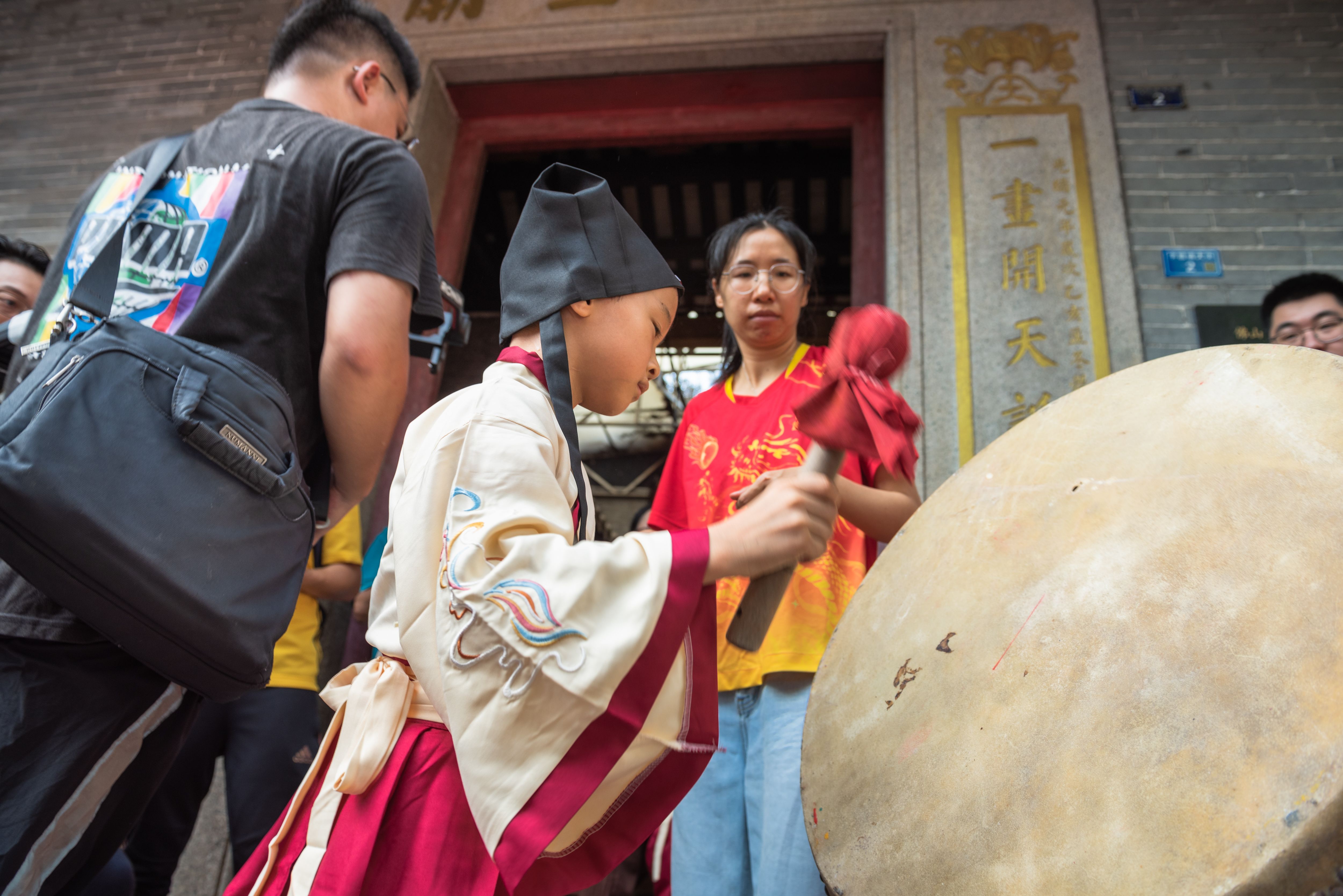
Students beat a drum at the gate of the temple to show their determination to study hard
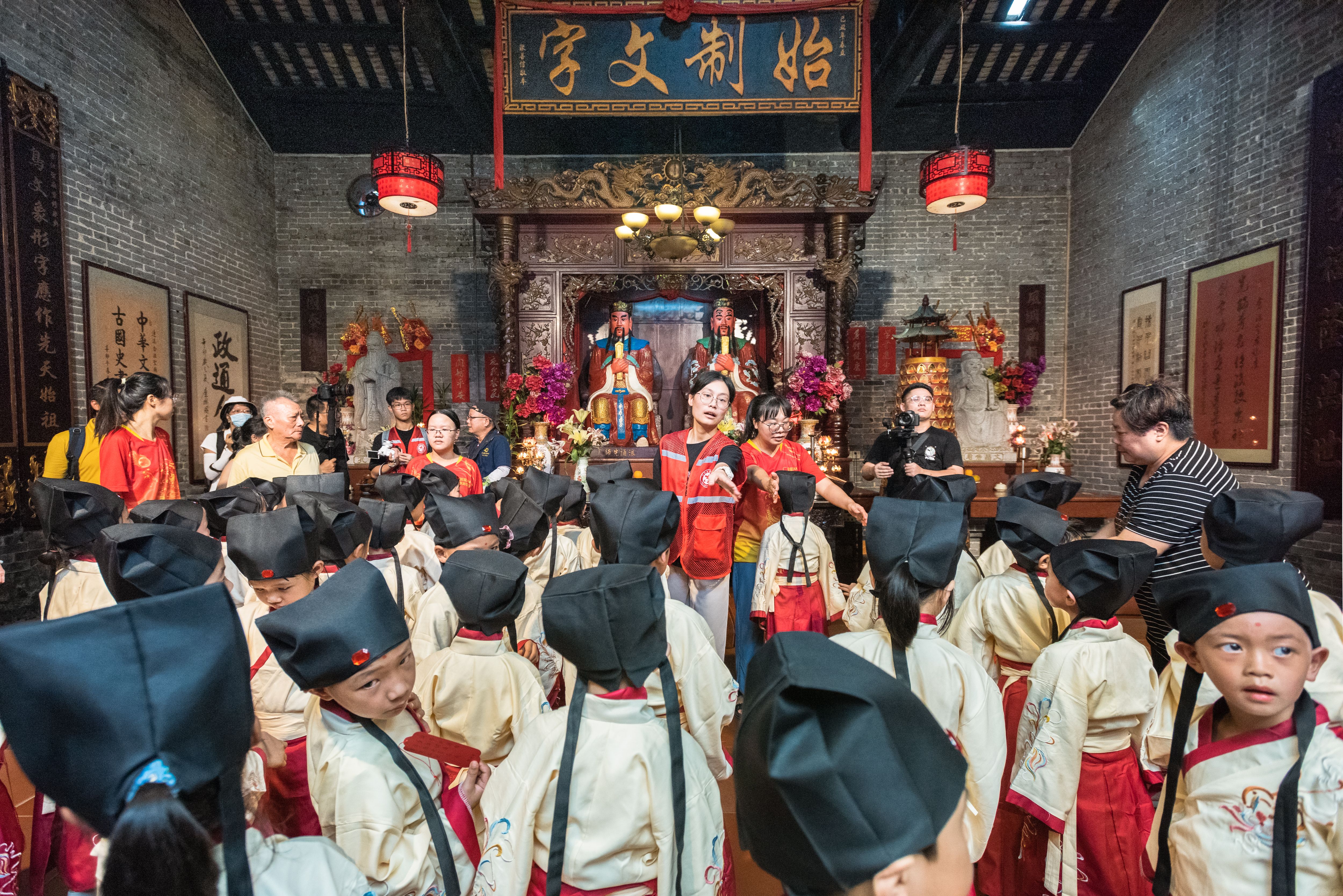
Students bow to the deities Cang Jie and Ju Song and pray for wisdom
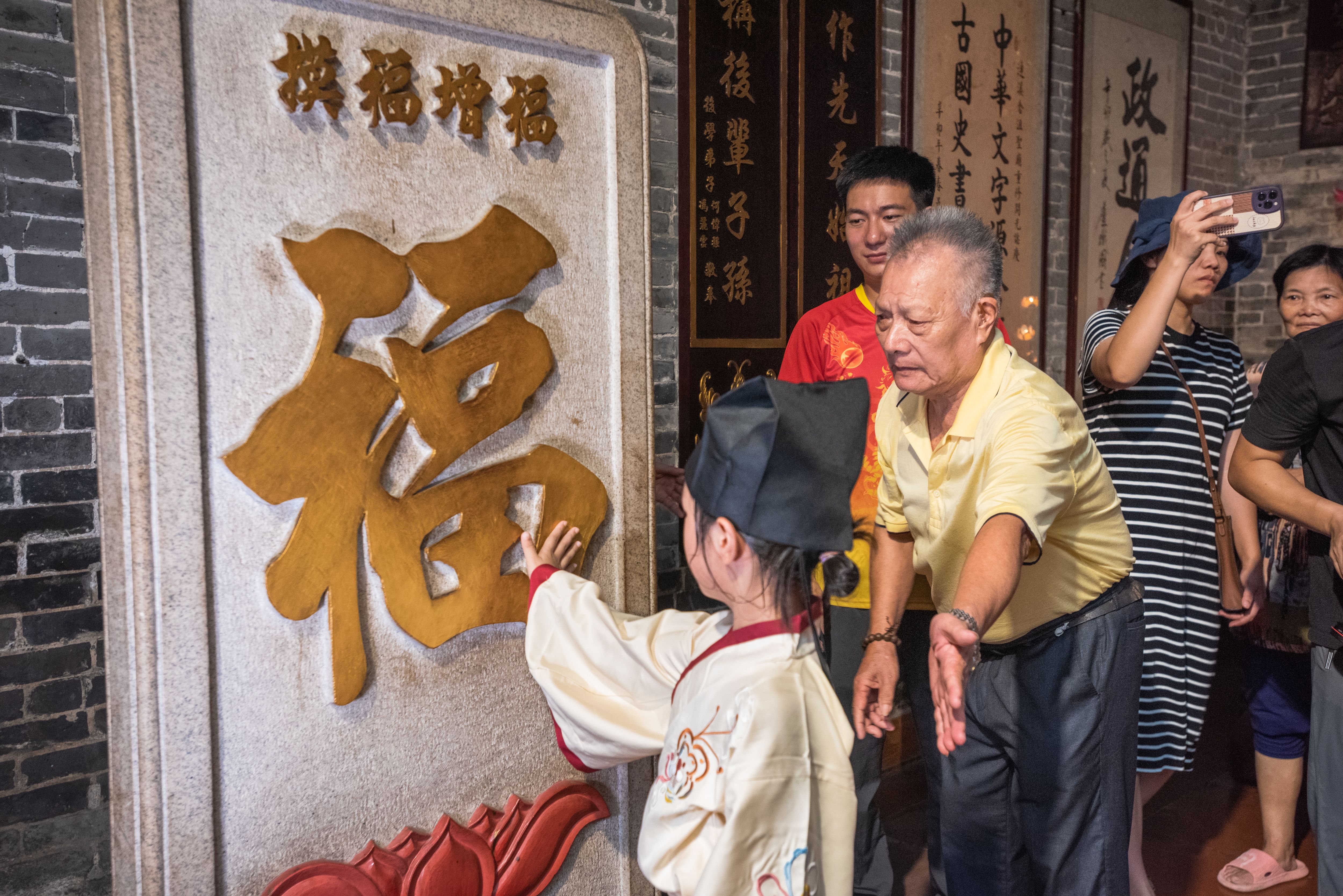
Touching the character “福 (fortune)” is believed to bring good luck
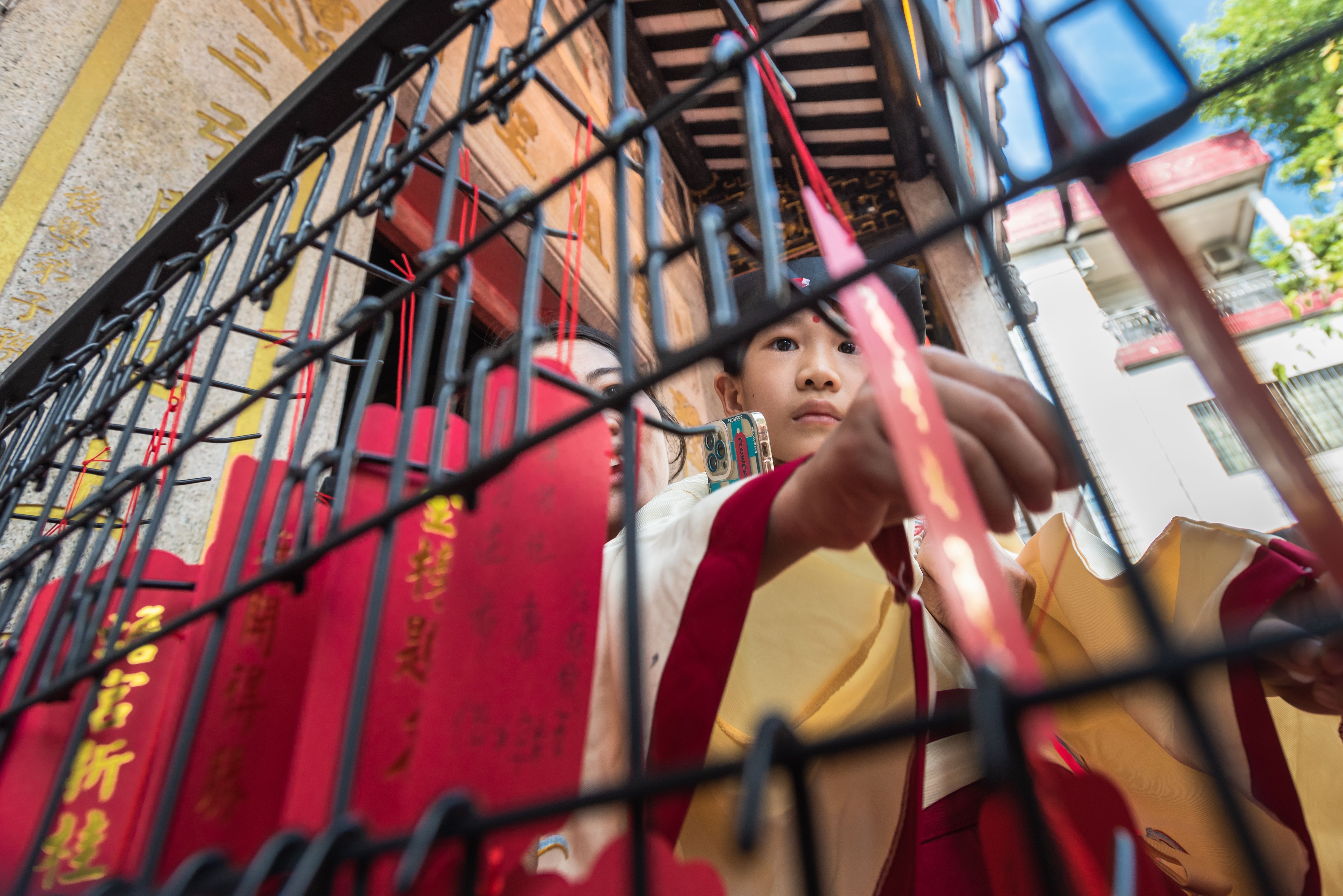
Students also write their wishes on pendants and hang them in the temple
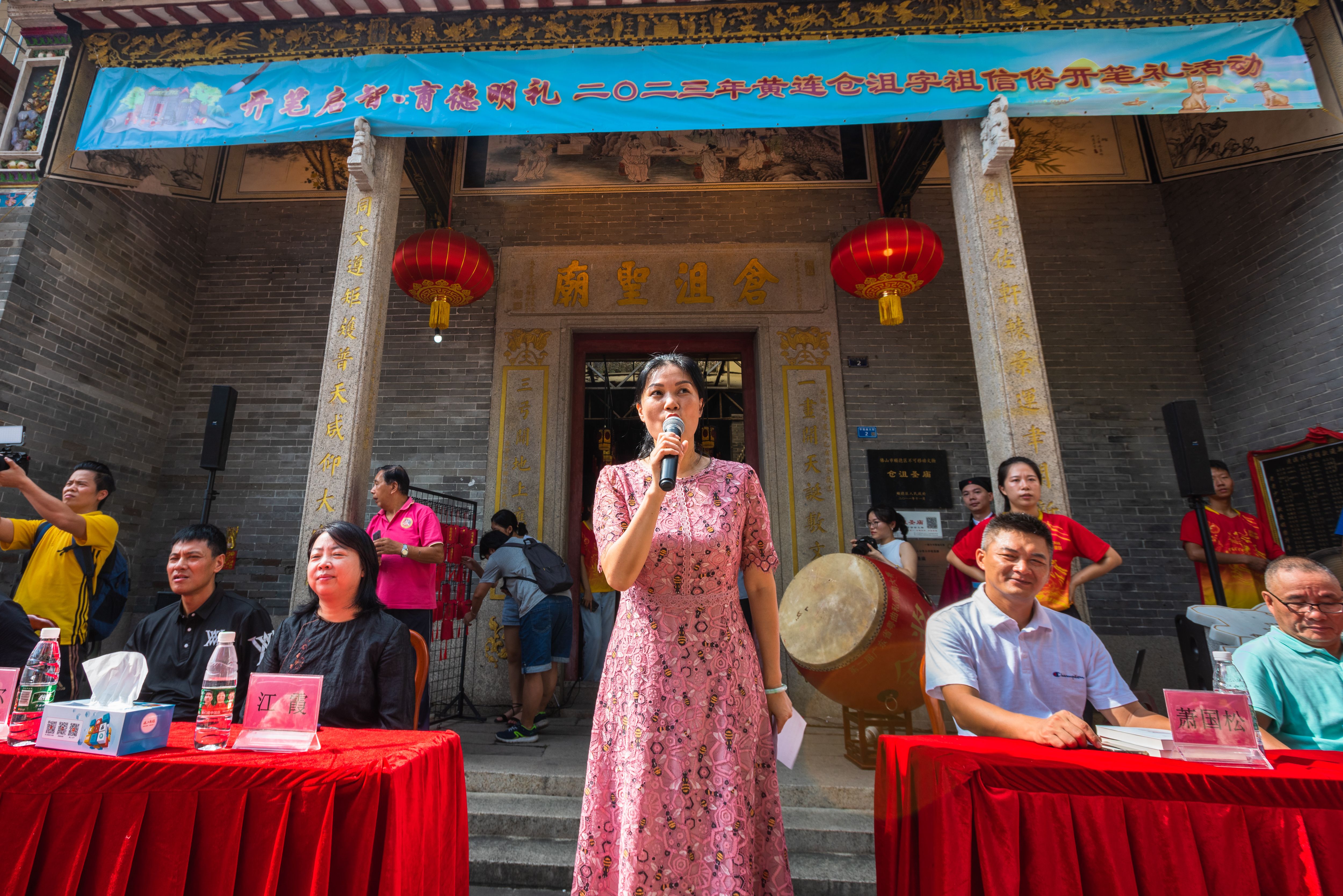
The school’s headteacher leads students in reading the Three Character Classic (《三字经》), which outlines the basic principles of respecting teachers and how to behave in school
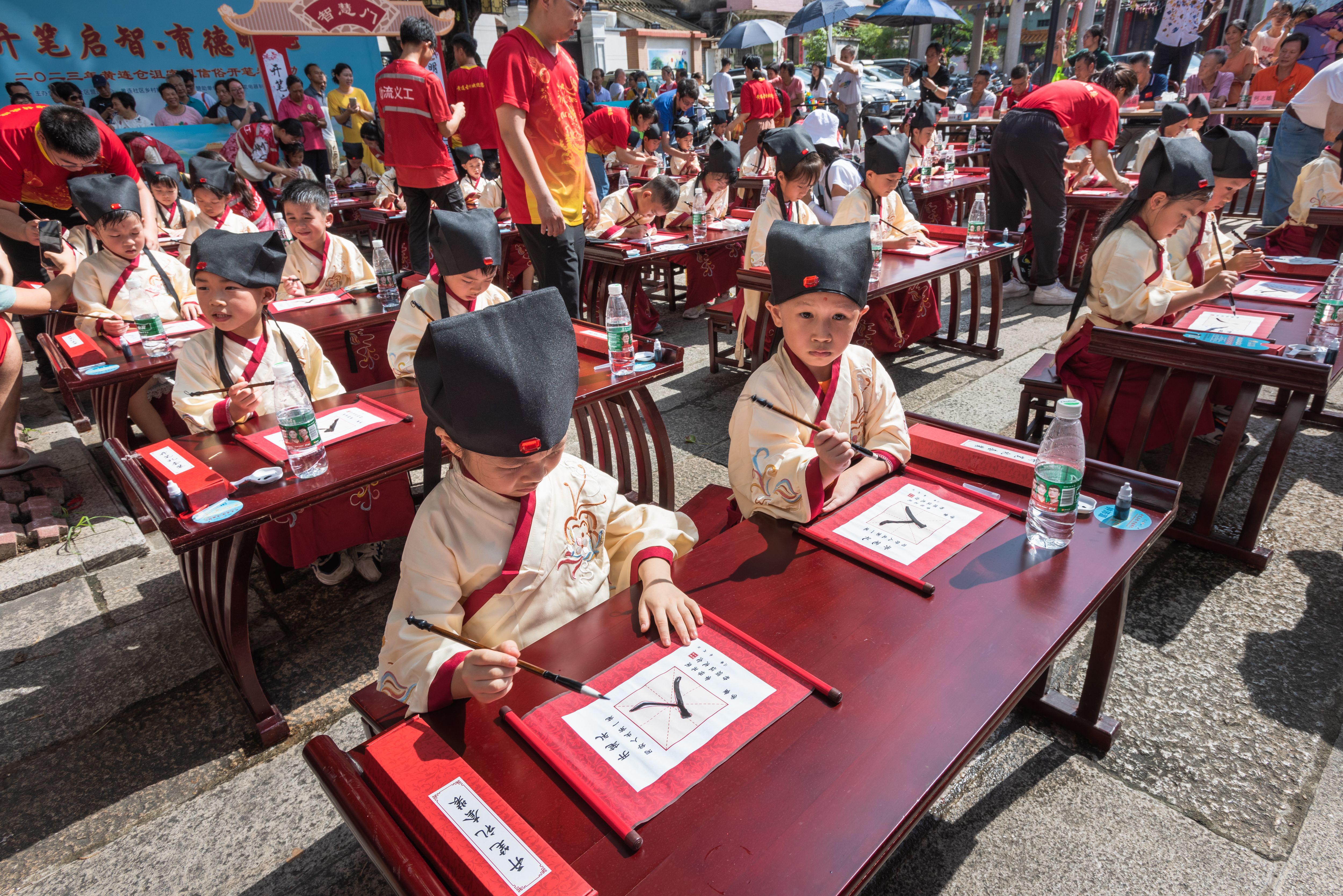
The Chinese character 人, with its two strokes supporting each other, signifies an upright person
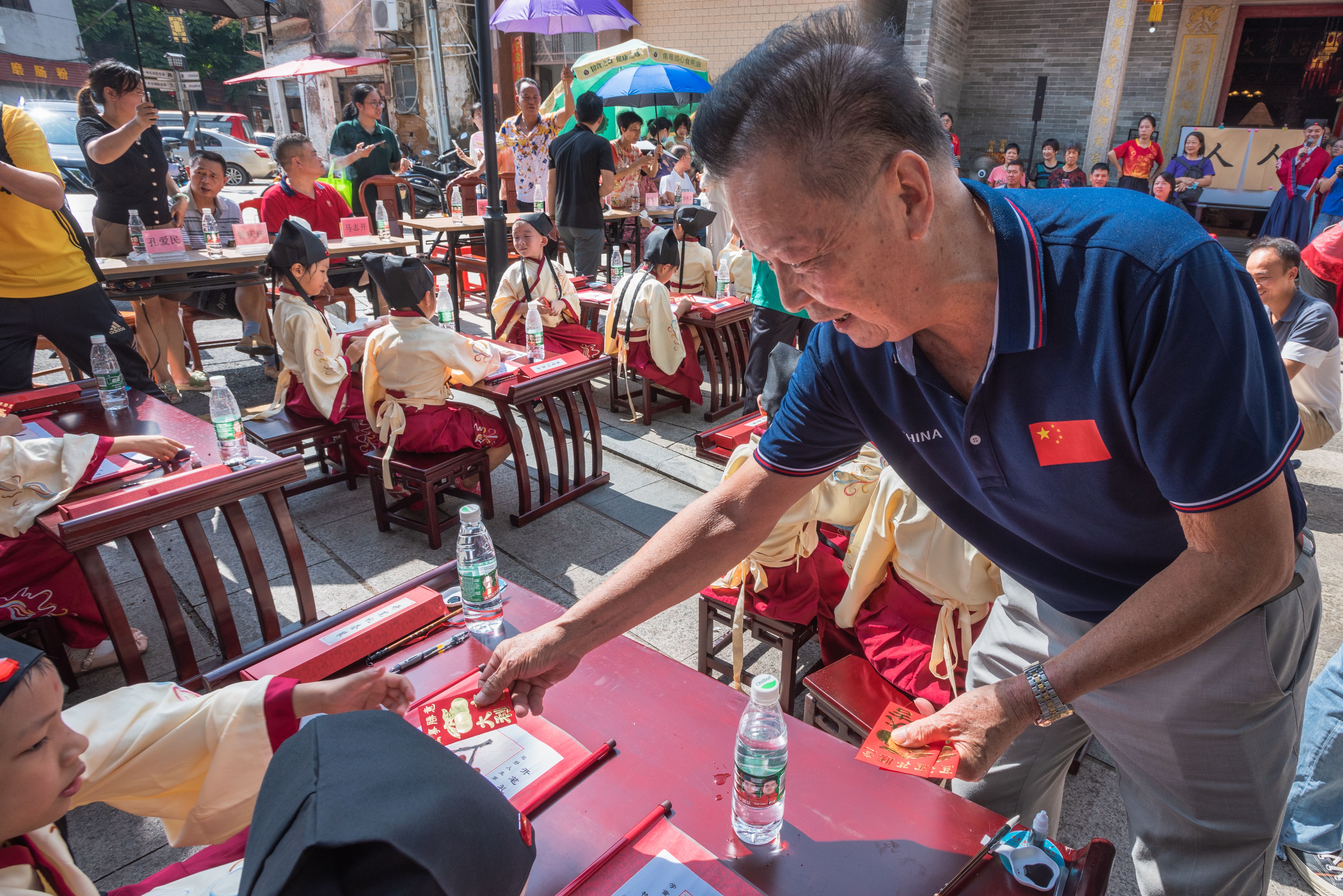
Seniors in the village give students hongbao, or red envelopes, to celebrate their successful “first writing”
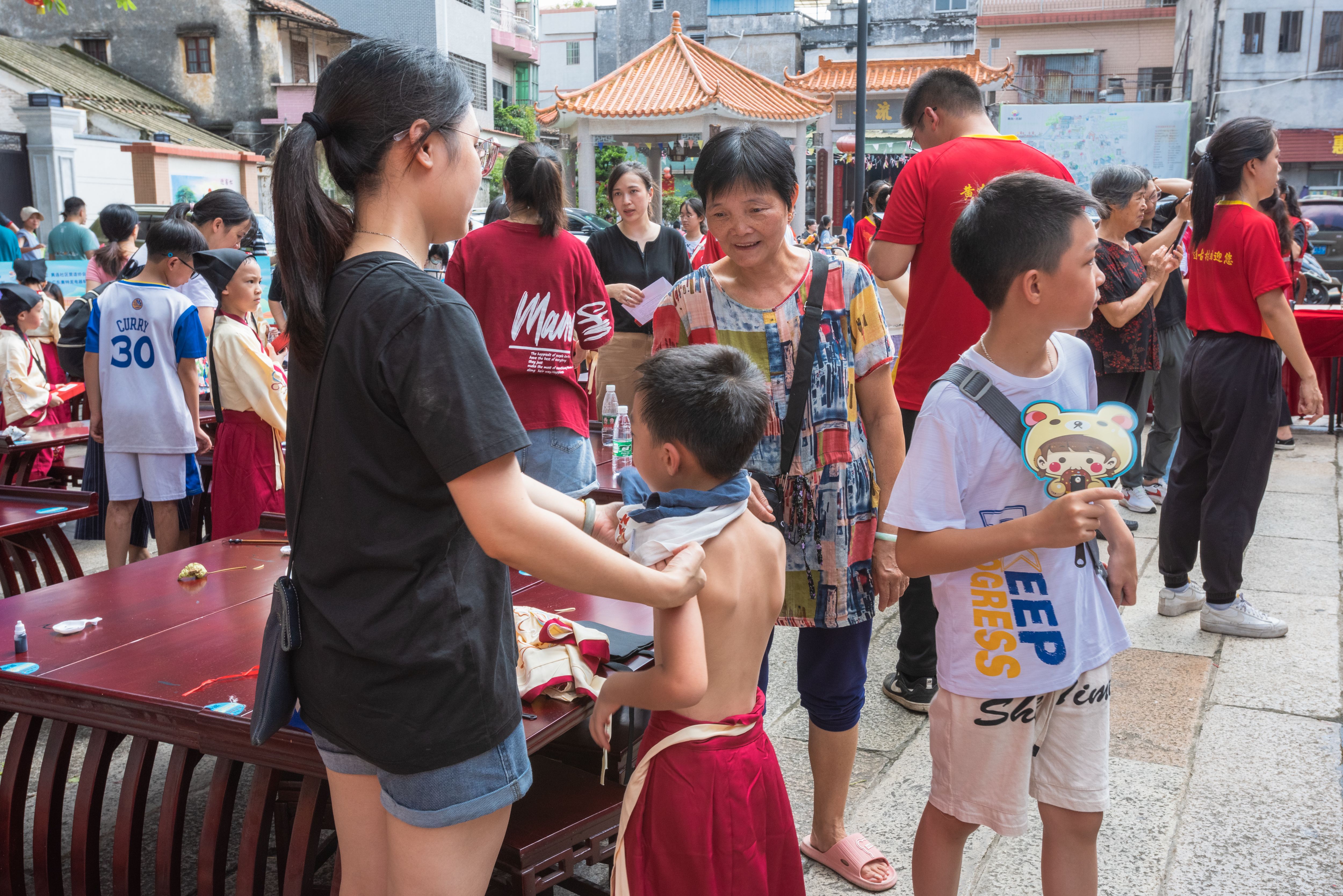
After the event, many families will return home for a banquet
Photography by Huang Ruide (黄瑞德)
Related Articles