In the lead-up to state broadcaster CCTV’s annual 3·15 Consumer Rights Gala, now in its 35th year, you can’t blame brands for being on edge. The ratings champion of the evening exposes everything from food safety violations to artificial intelligence-driven harassment calls, and has the power to cripple once-beloved companies unlucky enough to find themselves in the watchdog’s crosshair.
So when a Hubei branch of Mixue Ice Cream & Tea—China’s top player in the tea and beverage industry (茶饮圈第一顶流 cháyǐnquān dì yī dǐngliú), was accused of storing lemon and orange slices overnight in a non-refrigerated area, some feared the worst. However, instead of suffering a 塌房 (tāfáng, “house collapse”), the brand, better known as Mixue Bingcheng, found itself at the center of an unexpected wave of public support.
Read more about China’s beverage industry
- How Small-Town Budget Brands Conquered China’s Biggest Cities
- The Beverage Company That Made China’s Richest Man
- How Baijiu Reinvented Itself for Chinese Youth
Rather than condemning the “mighty beacon of affordable milk tea (平价奶茶的正道之光 píngjià nǎichá de zhèngdào zhī guāng),” netizens demonstrated surprising tolerance and strong “public favorability (路人缘 lùrényuán),” eagerly defending the streetside beverage brand and stepping in as its “spontaneous, unofficial PR (自来水公关 zìláishuǐ gōngguān).”
Comparing Mixue to its competitors, some of which charge around 20 yuan or more for tea beverages, netizens humorously exclaimed, “They even put fresh lemons in a 4-yuan lemonade—what more could you ask for (四块钱的柠檬水用新鲜的柠檬,还要什么自行车 Sì kuài qián de níngméngshuǐ yòng xīnxiān de níngméng, hái yào shénme zìxíngchē)?”
Some even expressed satisfaction with the visible fruit in the ingredients: “It’s not mixed from concentrate—it really has fruit! If it’s not fresh, it’s my fault for being late to purchase! (不是勾兑的,真的有水果!是我来晚了,不是它不新鲜!Bú shì gōuduì de, zhēnde yǒu shuǐguǒ! Shì wǒ lái wǎn le, bú shì tā bù xīnxiān!)”
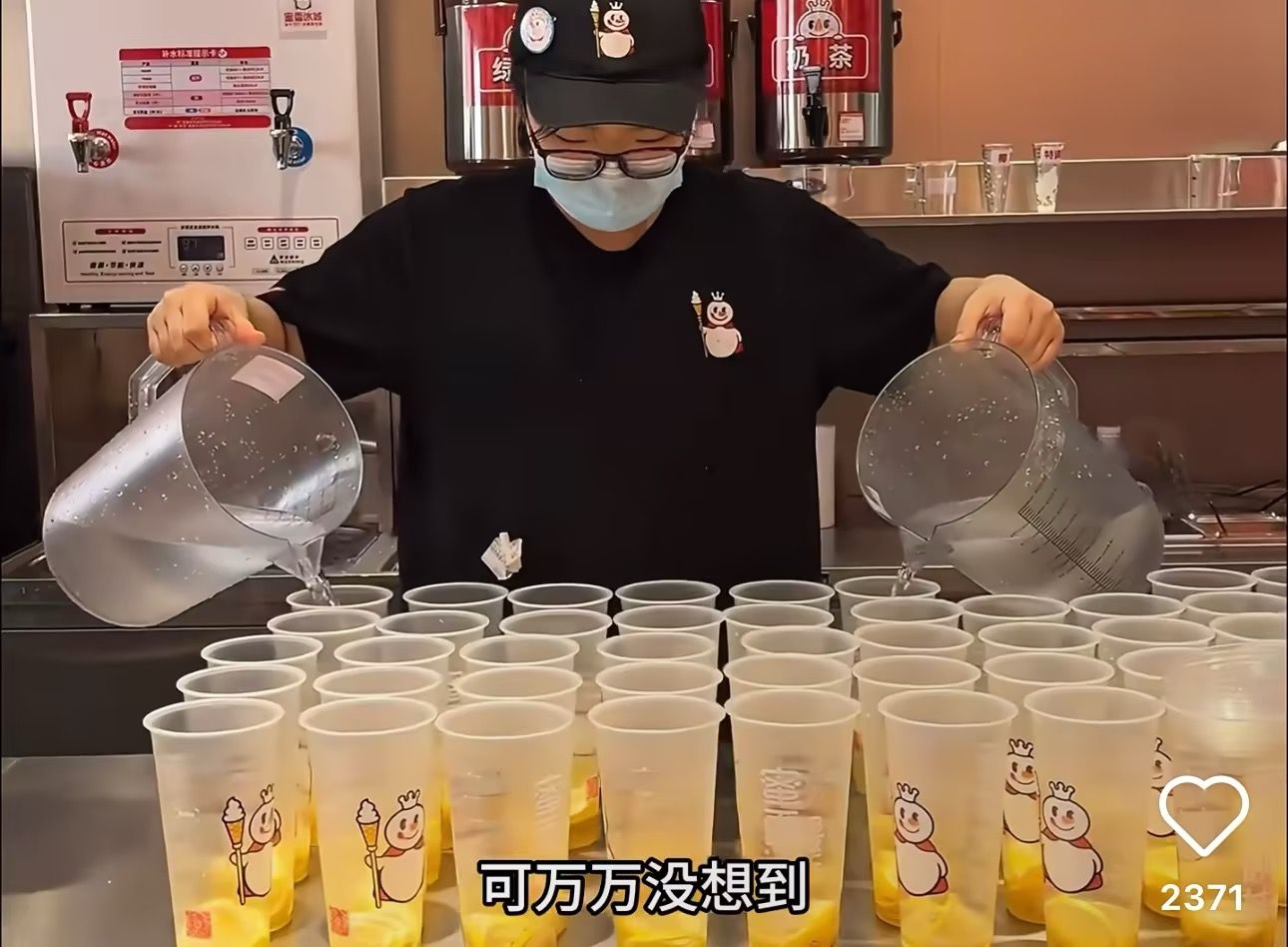
Mixue Bingcheng typically operates small storefronts with no seating and only a few staff members at each location (Screenshot from Xiaohongshu)
As the country’s economy faces challenges, affordable comforts like Mixue have become a source of joy for many. Its low price, paired with consumers’ tightening budgets, has fostered a genuine brand-consumer connection. As one netizen cheekily proclaimed: “If you don’t mind my poverty and misfortune, how could I possibly mind an overnight lemon (你都不嫌我穷,我怎会嫌弃隔夜柠檬 Nǐ dōu bù xián wǒ qióng, wǒ zěnhuì xiánqì géyè níngméng)?”
Aside from its low price, its catchy jingle—“I love you, you love me, Mixue Bingcheng is sweet like honey (你爱我,我爱你,蜜雪冰城甜蜜蜜 Nǐ ài wǒ, wǒ ài nǐ, Mìxuě Bīngchéng tiánmìmì)”—and its crudely animated mascot the Snow King, a plump, smiley, no-frills snowman sometimes framed as a “grassroots hero,” have all contributed to its identity as a brand of the masses.
The allegations came only two weeks after Mixue successfully went public on the Hong Kong Stock Exchange on March 3. When the Snow King, rather than a suited founder or CEO, rang the bell at the IPO ceremony, the brand transcended its role as just a beverage provider in the eyes of its supporters, emerging as a symbol of “grassroots success.”
While Mixue emotionally aligns itself with “the people,” netizens, in turn, associate their dignity with the brand: “Is Xiaoxue (“Little Snow”) selling milk tea? No—it’s selling dignity for the broke! (小雪卖的是奶茶吗?不,是穷鬼的尊严!Xiǎoxuě mài de shì nǎichá ma? Bù, shì qióngguǐ de zūnyán!)” Some even lambasted the media and authorities for neglecting other serious problems and fixating solely on their few sources of affordable happiness, with one exclaiming: “I told you to investigate the traitors, and you ended up arresting my imperial consort (叫你查奸臣,你居然绑了朕的皇贵妃 Jiào nǐ chá jiānchén, nǐ jūrán bǎngle zhèn de huángguìfēi)!”
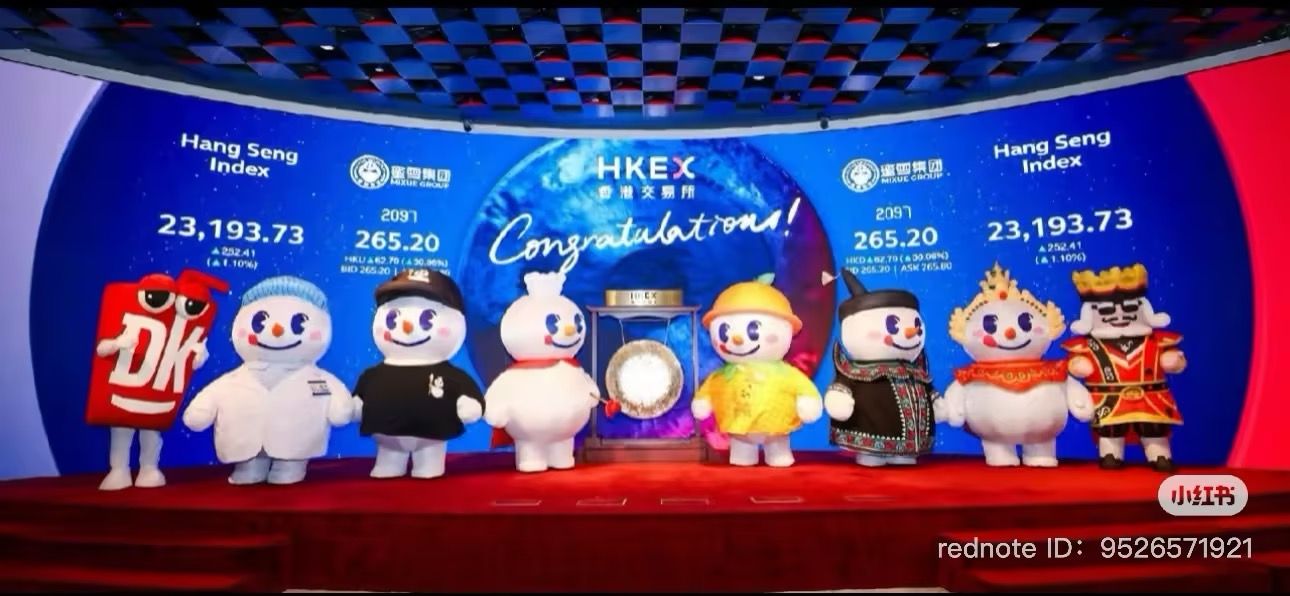
Mixue Bingcheng’s mascot, the Snow King, appeared in various outfits during its Hong Kong Stock Exchange listing (screenshot from Xiaohongshu)
Their anger seems somewhat justified. Compared to other products exposed in this year’s 3·15 Consumer Rights Gala—such as baby diapers and sanitary pads made from waste materials, and unsterilized disposable underwear—the health risks posed by a slice of day-old lemon seem relatively minor. As one netizen put it: “After seeing the other 3·15 exposés, I forgive you, Mixue (看完其他3·15,蜜雪我原谅你 Kànwán qítā 3·15, Mìxuě wǒ yuánliàng nǐ).”
Fans would rather view the mistake made by one branch of Mixue as something they might encounter in “a friend’s slightly messy kitchen.” Some even brought their mothers into the conversation: “Maybe they should investigate my mom—she’s been reheating the same dish for three days (查查我妈吧,一个菜热三天了 Cháchá wǒ mā ba, yí gè cài rè sān tiān le)!”
Determined to demonstrate their unwavering loyalty to the brand, some consumers even visited Mixue stores the day after the “expired fruit scandal,” leading to a 3 percent increase in its stock price. Witnessing this, people quipped online: “The tolerance netizens have shown for Mixue Bingcheng is even higher than their tolerance for the amount of sugar in its milk tea (这届网友对蜜雪冰城的包容度,简直比奶茶里的糖分还高 Zhè jiè wǎngyǒu duì Mìxuě Bīngchéng de bāoróngdù, jiǎnzhí bǐ nǎichá li de tángfèn hái gāo).”
However, some also questioned such tolerance and argued that it should not give the Snow King carte blanche to take advantage of his people:“I don’t think it’s worth giving up my principles for it (我觉得还没有便宜到可以为它放弃底线 Wǒ juéde hái méiyǒu piányi dào kěyǐ wèi tā fàngqì dǐxiàn).”
Others pointed out that Mixue Bingcheng has a poor track record in food safety management from tampering with expiration labels, using expired ingredients, cutting corners on ingredient amounts, hiring without contracts, ID checks, and health certificates for food service workers.
In 2023, an investigation by the Beijing Consumer Association revealed Mixue Bingcheng to be the most problematic food and drink brand in the city, with three times as many food safety issues as the second brand on the list. Unaddressed complaints by Mixue Bingcheng are also a frequent topic of discussion on social media platforms like Xiaohongshu, with unhappy customers expressing sentiments:“I feel like you don’t love me as much as you say (感觉你并没有嘴上说得那么爱 Gǎnjué nǐ bìng méiyǒu zuǐshang shuō de nàme ài wǒ).”
Since the scandal, Mixue’s headquarters has issued directives to individual stores, stating that lemons cannot be kept overnight, and a photo must be taken along with a disposal record every day before closing the store.
As the Chinese proverb goes, “Food is the foundation of the people’s livelihood (民以食为天 Mín yǐ shí wéi tiān).” With increasing regulations on food safety issues, people hope that one day, there won’t be a food-related scandal at the gala—even if it’s just a slice of overnight lemon.
Related Articles