Once upon a time, an English speaker may have pointed at a steamer basket and asked for a stuffed bun. Today, they are more likely to ask for a bao. If they are waiting for a drink with chewy pearls, they may well call it boba, though some still refer to it as bubble tea. These words moved from restaurant menus into everyday speech, and now they have arrived where English keeps its official records: the dictionary.
Both “bao” and “boba” were recently included in the September update to the Oxford Advanced Learner’s Dictionary (OALD), alongside more than 160 other contemporary words and phrases in the English language, including “nepo baby” and “to-go.” Bao is described as a steamed bread roll stuffed with meat and/or vegetables, with “baozi” listed as an alternative form. Boba, meanwhile, appears both as a name for bubble tea and for the chewy tapioca pearls inside it.
More on Chinese words and expressions in English:
- Gung Ho: How a Linguistic Misunderstanding Became an American Catchphrase
- “Shanghai” Beyond the Map: The Story of an English Verb
- Parallel Idioms that Cross Language Barriers
For learners of English, this matters. The OALD does not record every word that happens to appear in print; it selects words that aspiring users are likely to encounter, and their appearance on that list suggests they have become part of the vocabulary that English speakers can reasonably be expected to know.
On the record
The Oxford English Dictionary (OED) itself, preeminent custodian of the English language, already included bao and boba prior to the OALD update, although both words underwent a lexical evolution to get there.
The form “pao-tzu” was initially added to the OED in 1982, which traces its first known appearance in print to American writer Genevieve Wimsatt’s 1927 travel book A Griffin in China, in which she described the food as “a sort of steamed tart, filled not with sweets but with chopped meat and green vegetables.”
The peculiar spelling followed the Wade-Giles romanization system used throughout much of the 20th century to transcribe Chinese. As pinyin became more widespread following its development in the 1950s, the spelling gradually shifted from “pao-tzu” to “bao-zi,” recorded by the OED in a 1997 citation, before the now-familiar “baozi” became commonplace. The shortened form “bao” entered the OED in 2016 as the version most English speakers now recognize.
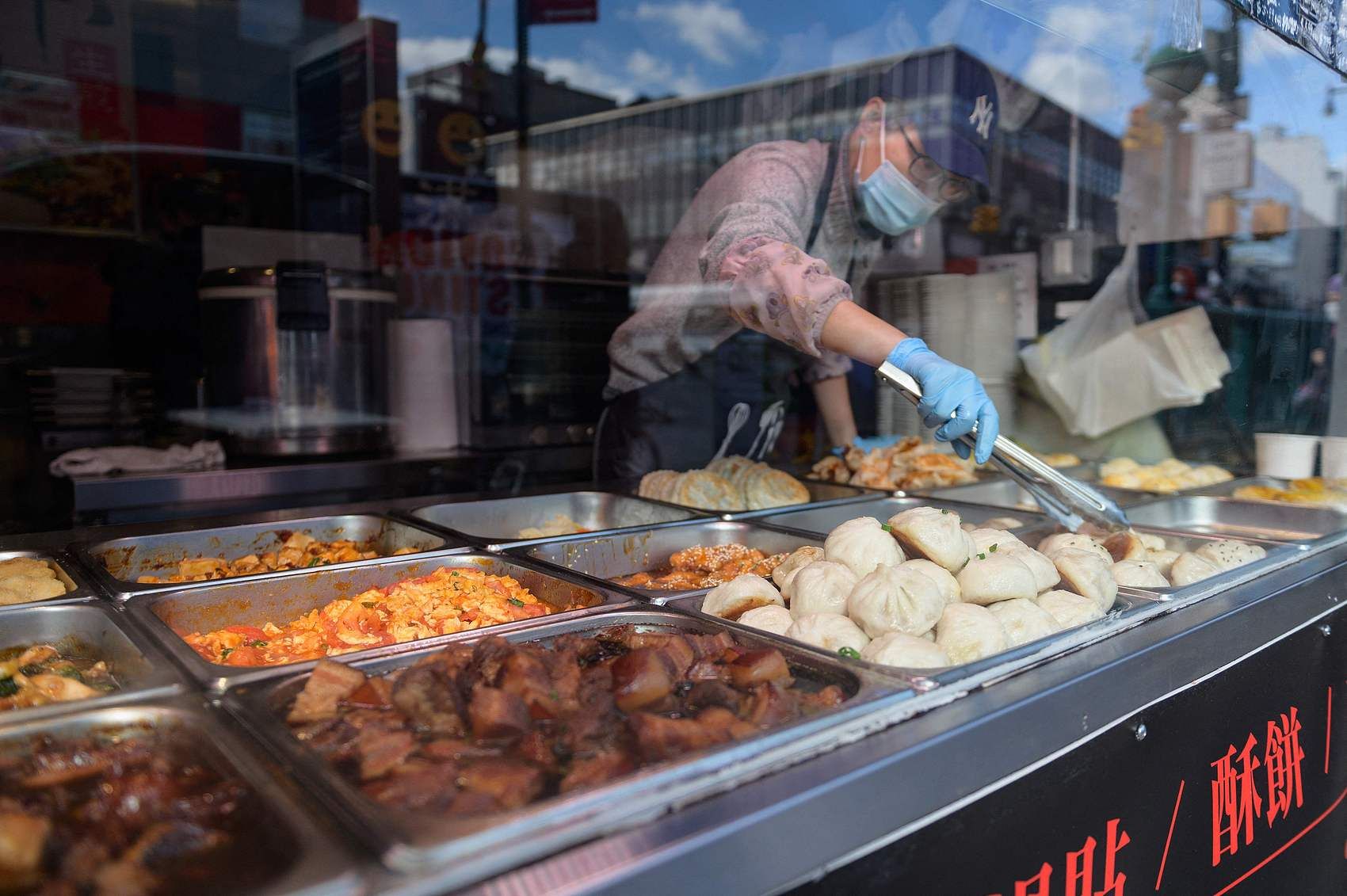
A vendor offering baos and other Chinese foods at a restaurant in Queens, New York City (VCG)
Boba, now used interchangeably with bubble tea or pearl milk tea, was added to the OED in 2018. Bubble tea itself was first included in 2005, after this new style of beverage arrived in North America in the 1990s and gained a foothold among Asian-American communities. Originally a term for the large tapioca pearls in the iconic drink, boba reached a broader audience as it became used more frequently in tea shops, on campuses, and across social media.
The journey of these loanwords illustrates the way English typically absorbs vocabulary from other languages. Sushi, tofu, kimchi, and ketchup all began as foreign names for things people could not easily translate before becoming English words in their own right. Bao and boba followed this same path, but with a distinctly modern trajectory: rather than being carried in by long histories of trade, they arrived instead through malls, campuses, food courts, and late-night snack runs.
On the menu
The word bao (包) has a long history in China, and the food itself has many forms. From soup-filled xiaolongbao (小笼包) to pan-fried shengjianbao (生煎包), there are countless regional variations. In some places they are breakfast; in others, late-night comfort food. The name may change slightly across dialects, but the idea remains familiar: soft dough, warm filling—something eaten with hands or chopsticks and easily shared.
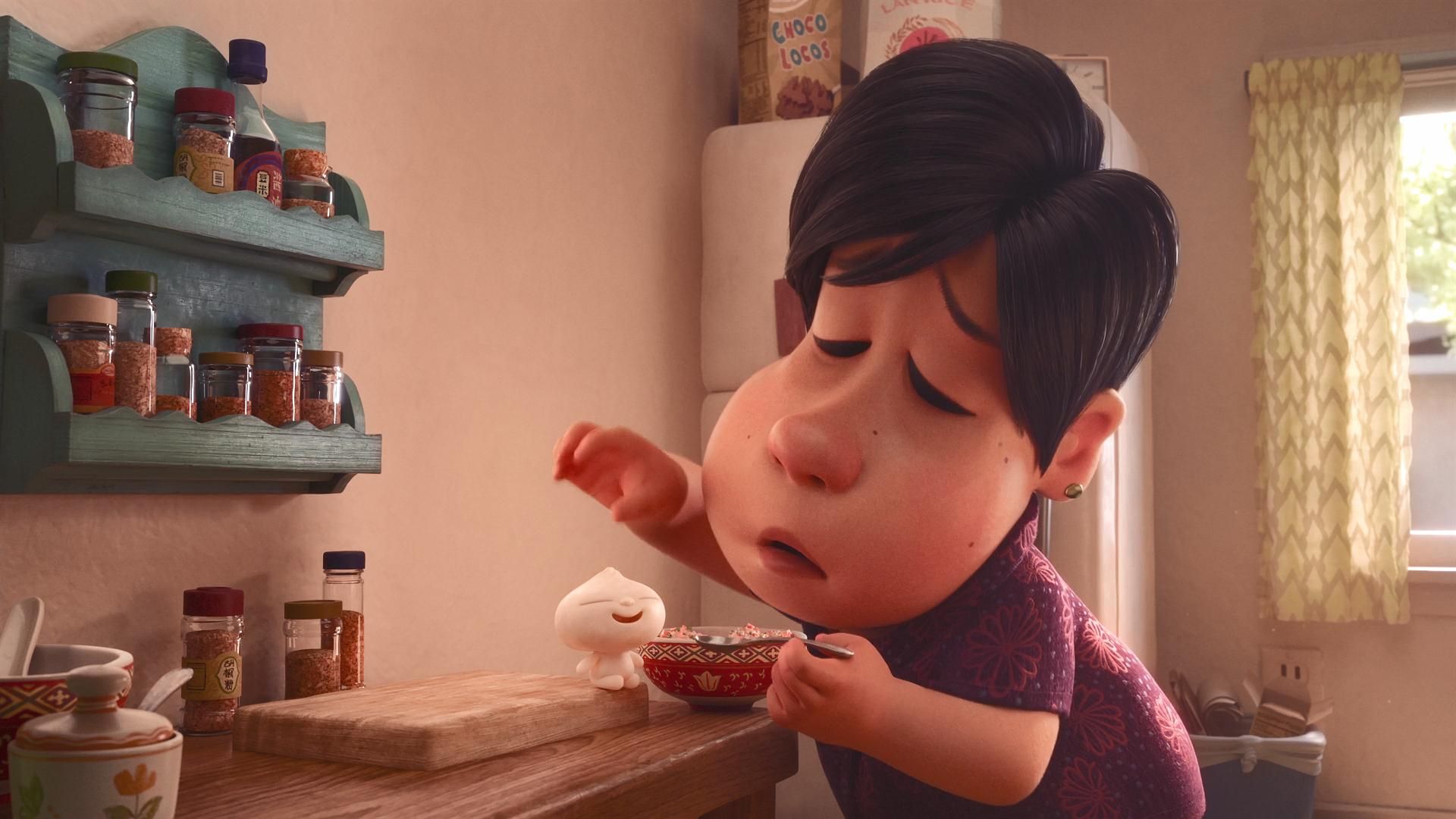
The 2018 short animated film Bao centers around an aging and lonely Chinese-Canadian mother, who receives an unexpected second chance at motherhood when a bao she is making comes to life as a boy (via Douban)
As Chinese communities settled abroad, bao traveled with them and the word changed shape along the way as it found a new audience in Europe and North America. Nowadays, bao, or bao buns, have entered the Western mainstream, widely available in supermarkets and on the fusion menus of major restaurant chains. In 2018, just two years after bao’s entry into the OED, a Pixar short by the same name directed by Domee Shi was released in theaters alongside The Incredibles 2. Bao cast an anthropomorphic bun in an allegory of the parent-child relationship, and left a lasting mark on popular culture.
Boba’s story, meanwhile, is more recent and centers on a decade-long dispute of two tea shops in 1980s Taiwan. Chun Shui Tang, in the city of Taichung, and Hanlin Tea Room, 150 kilometers south in Tainan, both claim to have invented the drink by adding tapioca pearls to milk tea. Neither shop, however, secured a patent, and so the recipe freely spread. By the late 1980s, a vendor on Hai’an Road in Tainan began calling the beverage “boba tea,” borrowing a vulgar Hong Kong slang term for a well-endowed woman to promote the large tapioca pearls in his shop’s milk tea.
Despite its bawdy origins, the name stuck and traveled overseas with immigrants arriving in North America at the end of the decade. Tea houses with names like “Boba Tea House” and “Boba Planet” sprang up across California, and non-Chinese customers began ordering common drinks like lattes with boba in. The word itself is easy to say, easy to remember, and hard to replace with longer, more technical descriptions like “tapioca tea.” Having shed its earlier vulgar connotations, in English boba now refers exclusively to the tapioca pearls or the milk tea that contains them. Interestingly, the term boba never caught on as the go-to name for the beverage in the Chinese mainland, where it is more commonly called “zhenzhu naicha (珍珠奶茶),” literally pearl milk tea.
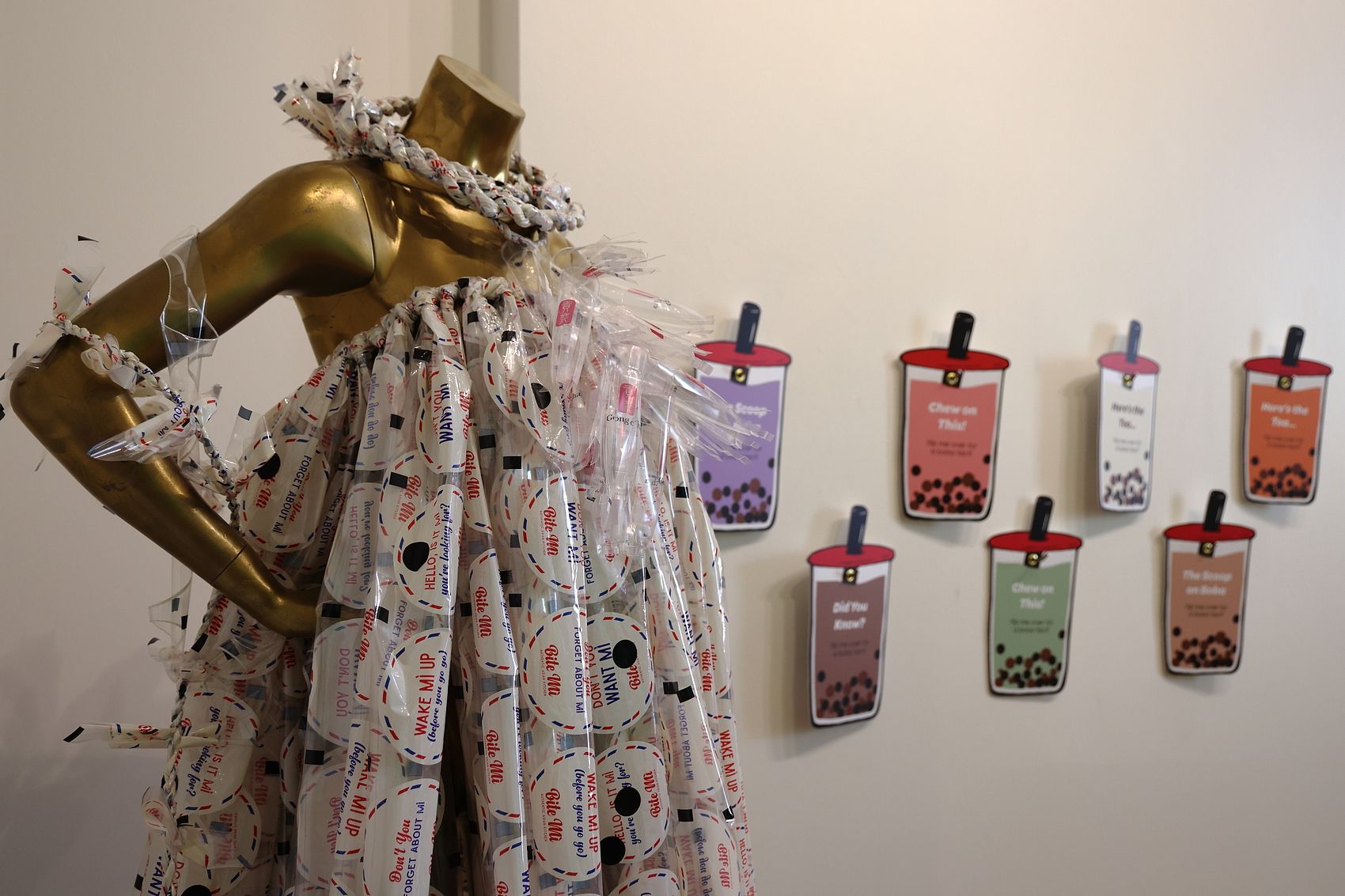
An exhibition at the Chinese American Museum in Los Angeles in 2023, explores the history of boba tea through works of local artists (VCG)
Language changes when people share meals, study abroad, move cities, fall in love with flavor, or simply want to describe a new and exciting thing they ate. When bao replaces “stuffed bun,” something small but meaningful happens: the food keeps its name and the culture behind it becomes harder to ignore. Dictionaries are often treated as guardians of correctness, but they are also mirrors reflecting which words people actually use. Bao and boba have entered English not because scholars decided they should, but because ordinary speakers found them useful, delicious, and hard to replace.
The next time someone says “let’s get boba,” it may sound casual. Yet it is an invitation that carries a longer history: from a steamer basket in Shanghai to a tea shop in Tainan, via decades of migration and a language that keeps making room for new tastes. The dictionary may have recorded the words, but the flavor speaks for itself.
Related Articles