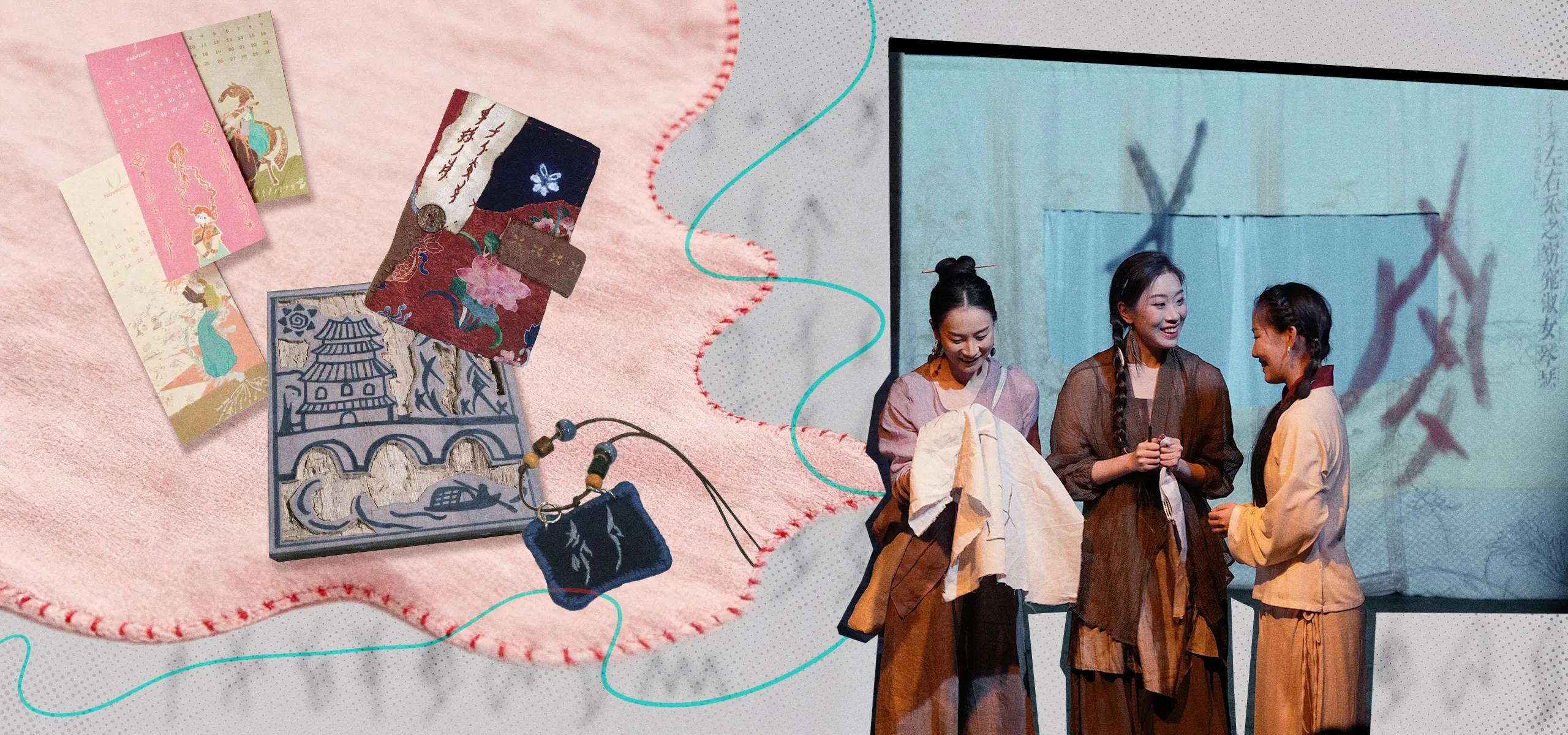

Once a secret script shared among women in Jiangyong, Hunan, Nüshu now inspires young female creators to reimagine its origins, create new works, and carry its culture and spirit forward
Centuries ago, a small village in southern China gave birth to something the world has rarely seen: Nüshu, a writing system used exclusively by women.
In January, in a small theatre tucked inside Beijing’s ancient alleyways, a packed audience of around 60 are watching a fictionalized retelling of Nüshu’s birth. Onstage, three young actresses portrayed an embroiderer, an herbalist, and a shaman, three women from different walks of life in ancient China. In a time when women were barred from formal education, they made up characters to write out what they needed—symbols to embroider, medicine to prescribe, divinations to record—which over time formed a script of their own.
The play, Women’s Script: Unsilenced, was directed by Zhong Yiren, a 26-year-old master’s student at the Central Academy of Drama in Beijing. “I imagine Nüshu as something that grew organically out of women’s daily lives,” she said. “And no culture is created by one individual. It must have come from collective female wisdom.”
Nüshu—literally “women’s script”—originated in Jiangyong county in Southern China’s Hunan province, and was passed down only among women for centuries before being noticed by scholars in the 1980s. UNESCO considers it the world’s only writing system created and used exclusively by women. Phonetic in nature and based on the local Jiangyong dialect, the script consists of nearly 400 characters. Unlike standard hanzi, or Chinese characters, Nüshu characters are slender and elongated, resembling the shape of willow leaves.
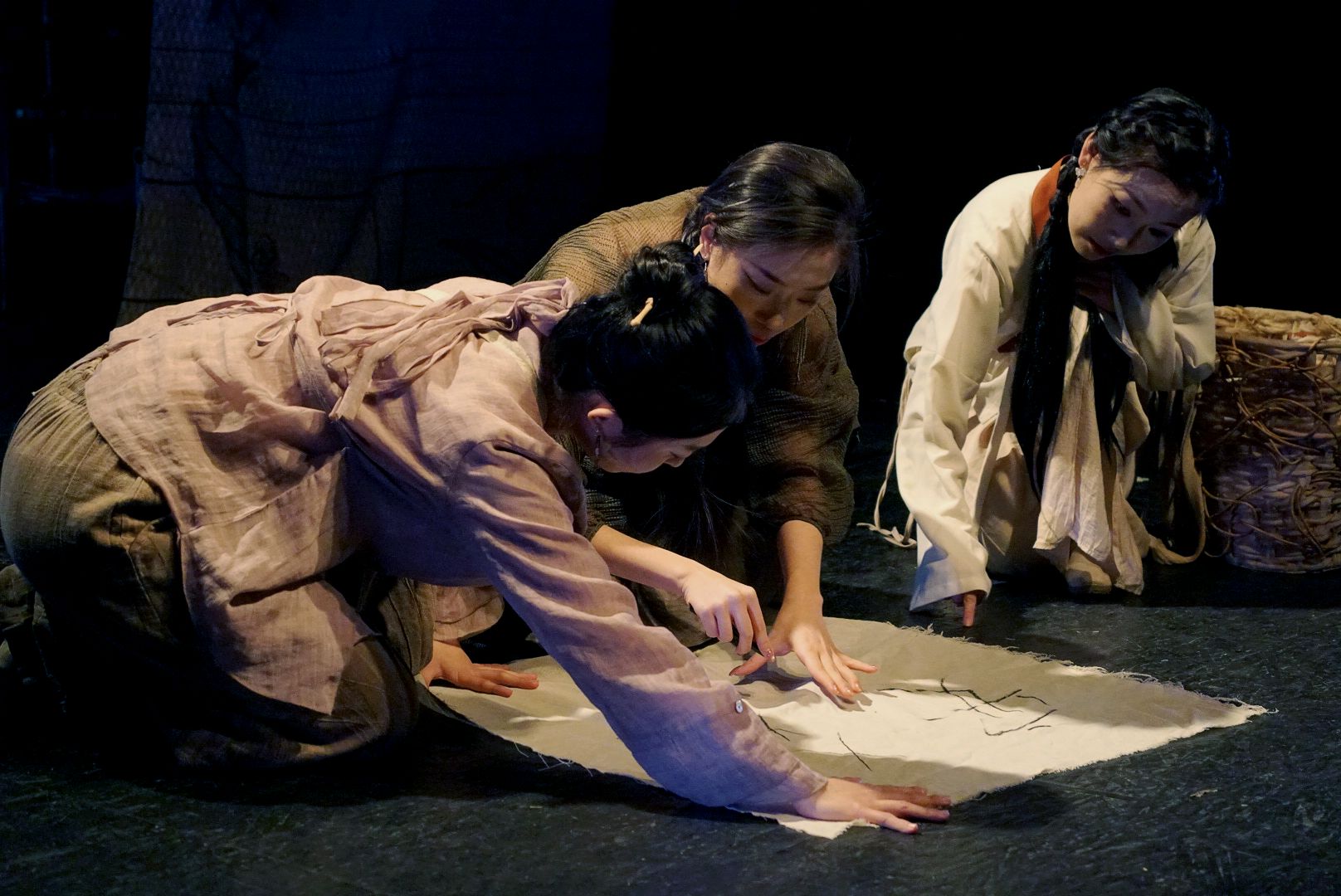
Zhong Yiren’s play reimagines Nüshu’s origin: three women in ancient China, facing hardship and restricted expression, drew inspiration from nature to transform Chinese characters, creating the elegant, secretive script (courtesy of Zhong Yiren)
While its precise origins remain debated, scholars generally agree that Nüshu emerged at least several hundred years ago. The widely adopted view holds that, in an era when women were forbidden from learning to read and write, they created their own system of expression and communication. In the past, women used it to write songs about everyday life, to correspond with their “sworn sisters”—close female friends who form a lifelong bond—and to express emotions that could not be spoken aloud.
What was once a secret script confined to one rural county has, over the past two or three years, begun to capture the attention and reimagination of a new generation in China. Like Zhong, these young enthusiasts fell in love with the script and began creating derivative works and sharing the culture on their own initiative.
Passion projects
Chen Yulu, now also 26, was among the earliest promoters of Nüshu on Chinese social media. Chen grew up in Hunan’s Yongzhou, just a few hours’ drive from Jiangyong, but knew little about the script beyond vague childhood mentions by family members. It was not until 2022, when she decided to make a documentary and came across Nüshu during university, that she began researching it seriously.
“At the time, I could hardly find any information or promotion about Nüshu online,” she recalls.
Three years later, the landscape has changed dramatically. Chinese social media platforms and offline cultural spaces are now filled with Nüshu-themed exhibitions, illustrations, and cultural products, varying from bookmarks, postcards, and calendars to tattoos and T-shirts. New theatrical productions, like Zhong’s, are also being staged.
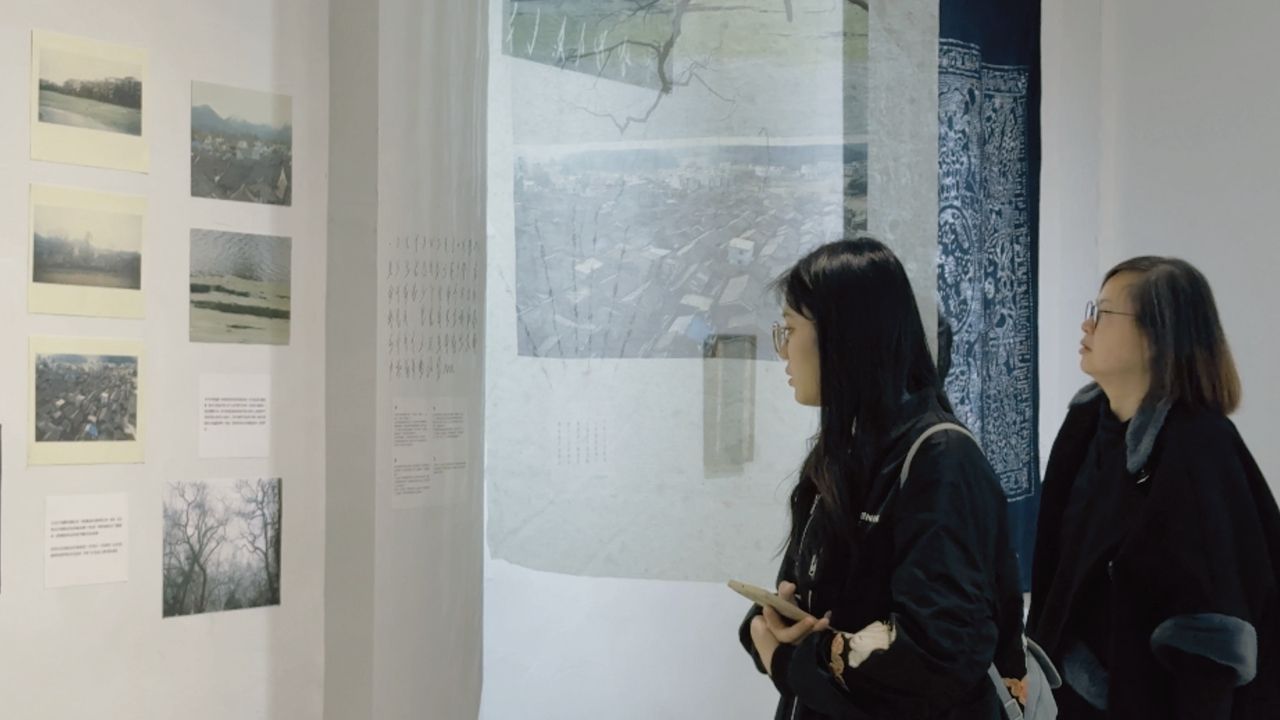
Co-created and co-curated by Chen Yulu, the exhibition “The Lingering Ripples of the Xiang River,” running from January to March 2026 in Xiamen, showcases Nüshu’s unique role in the daily lives of women in Jiangyong (courtesy of Chen Yulu)
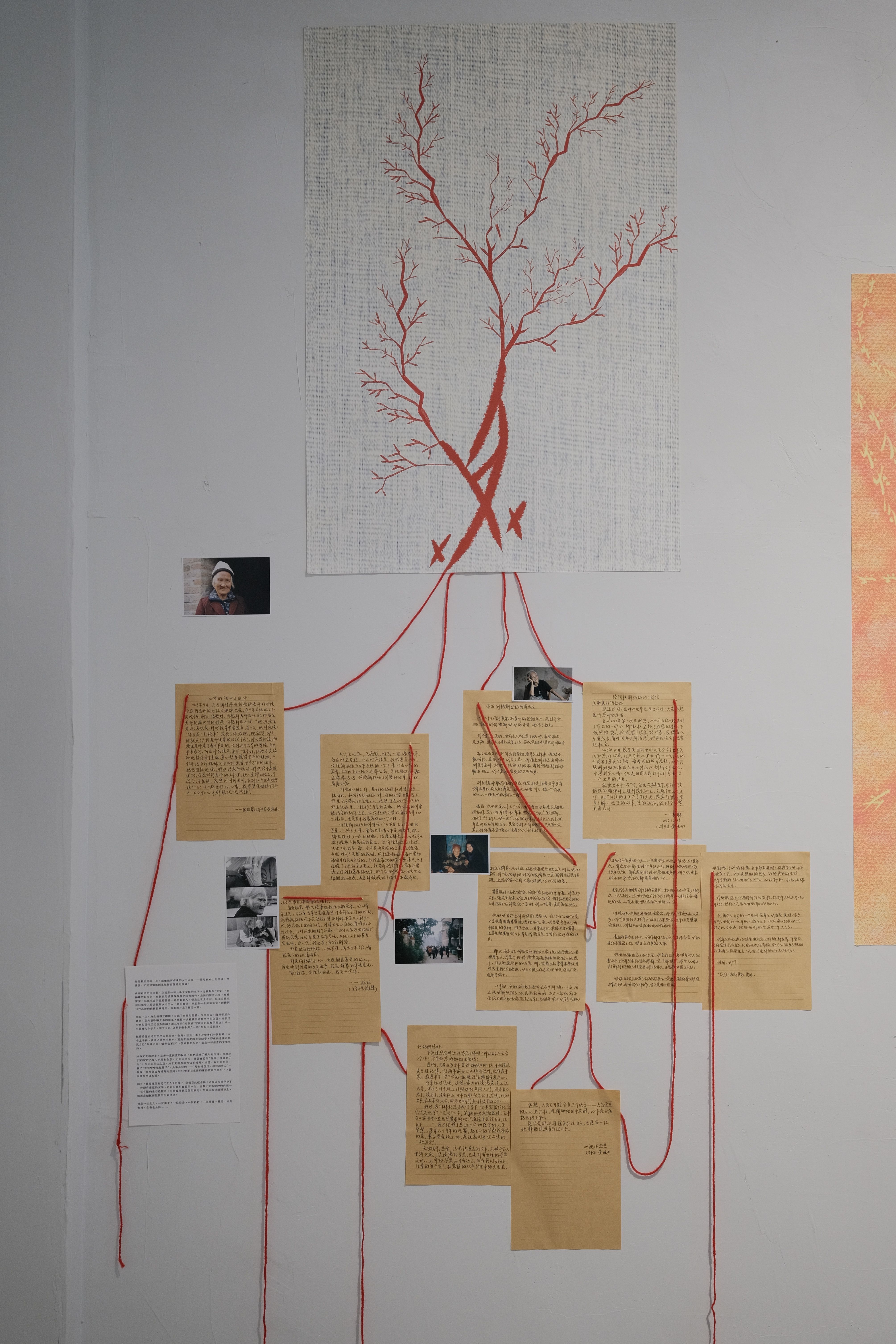
The exhibition honors the late Nüshu inheritor He Yanxin with a tree of remembrance notes, over which a river is painted using the Nüshu character for “water” as its base (courtesy of Chen Yulu)
Many enthusiasts of Nüshu are promoting the script purely out of passion, often funding their projects themselves. Zhong, for example, has spent more than 50,000 yuan so far of her own money staging her play. “I did it because I love it,” she said. “I hope my play can get more people to know about Nüshu. Whether I make the money back doesn’t really matter.”
After finishing her documentary, Chen started to organize exhibitions to introduce Nüshu across China and even abroad. Calling herself an “ambassador” of Nüshu, Chen used her savings from her previous job as a photographer to fund the exhibits. Her most recent show, held in southeastern China’s Xiamen, cost her at least 20,000 yuan out-of-pocket.
Dialogue across time
Many of today’s enthusiasts say they were drawn to the centuries-old script because it gave them a great sense of strength. Even during the most unfavorable periods in history, when women were barred from formal literacy and had only primitive writing tools, such as wooden sticks dipped in kitchen soot, they persisted in creating and expressing themselves.
Duan Mengying, a 31-year-old freelance illustrator in Taiyuan, northern China’s Shanxi province, first encountered Nüshu in early 2023. When she first saw Nüshu, she felt that the willow-shaped characters looked deceptively gentle, yet sharp. This is the exact feeling Nüshu evokes in her—strength beneath softness.
Inspired by the script’s quiet power and its spirit of defying convention, Duan began reimagining Nüshu through illustration, giving the characters new visual life. She has since produced four series of Nüshu-themed works and switched to Nüshu-focused illustration drawing.
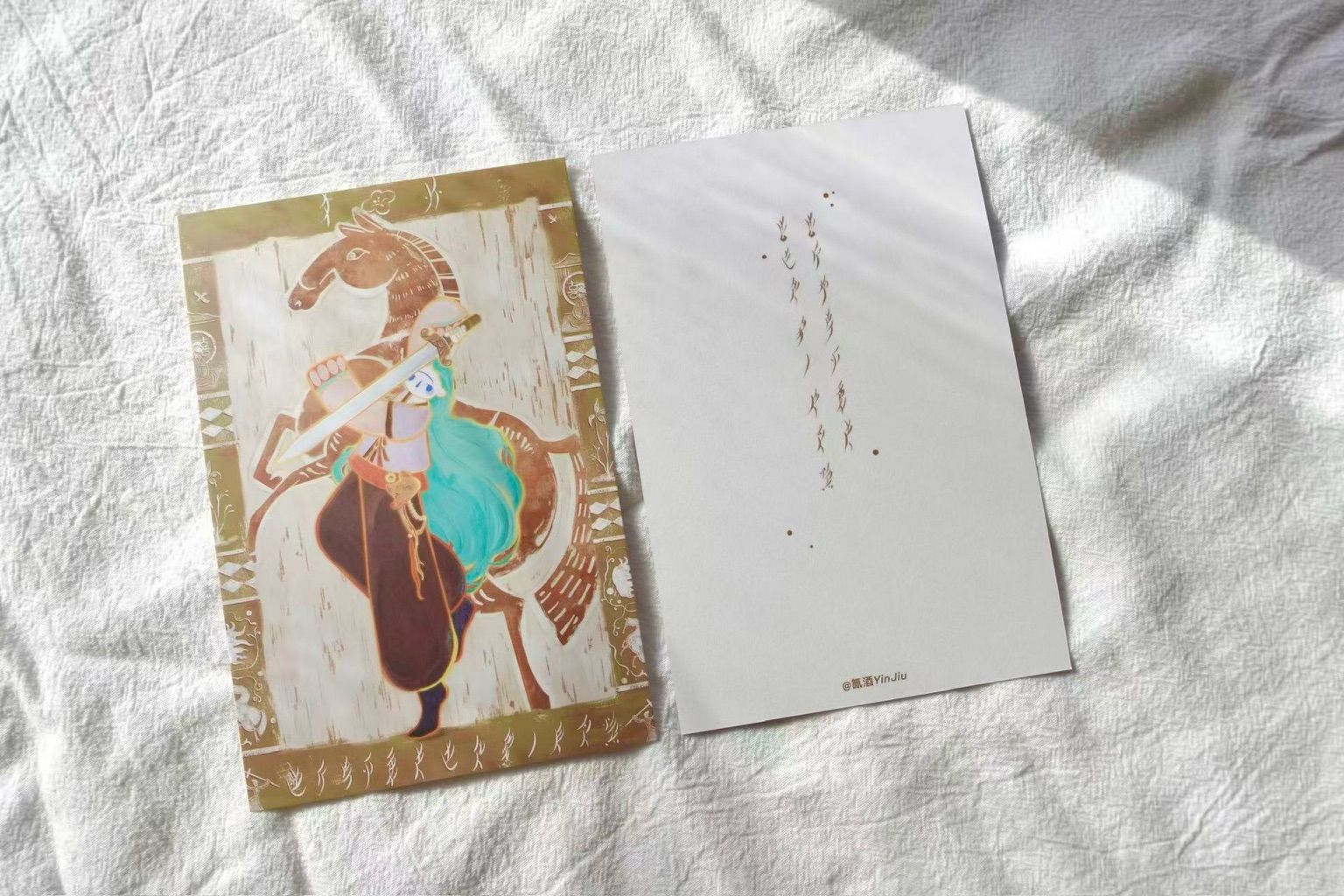
A postcard featuring Duan Mengying’s illustration of a “knight,” with Nüshu script on the back reading: “She wasn’t waiting for a knight. She was looking for a sword” (courtesy of Duan Mengying)
The revival of Nüshu also resonates with a broader rise in feminist consciousness in China in recent years. Discussions about women’s rights and public awareness on issues such as gender-based violence, workplace sexual discrimination, and trafficking of mentally impaired women have become increasingly visible on the Chinese internet. In media, online spaces, and even stand-up comedy, women have also come forward to publicly discuss bodily experiences like menstruation and body image, the societal pressure to marry, and the unequal burden of housework.
For many young creators, Nüshu feels like an echo from their own pasts.
Zhong recalls being told in high school that girls were better suited to studying the humanities. During university internships, she became more acutely aware of gender biases in the workplace. “Women often have to be exceptional to be chosen,” she says, “while men may be selected simply because they are men.” For Zhong, the story of Nüshu offers a form of empowerment that transcends time.
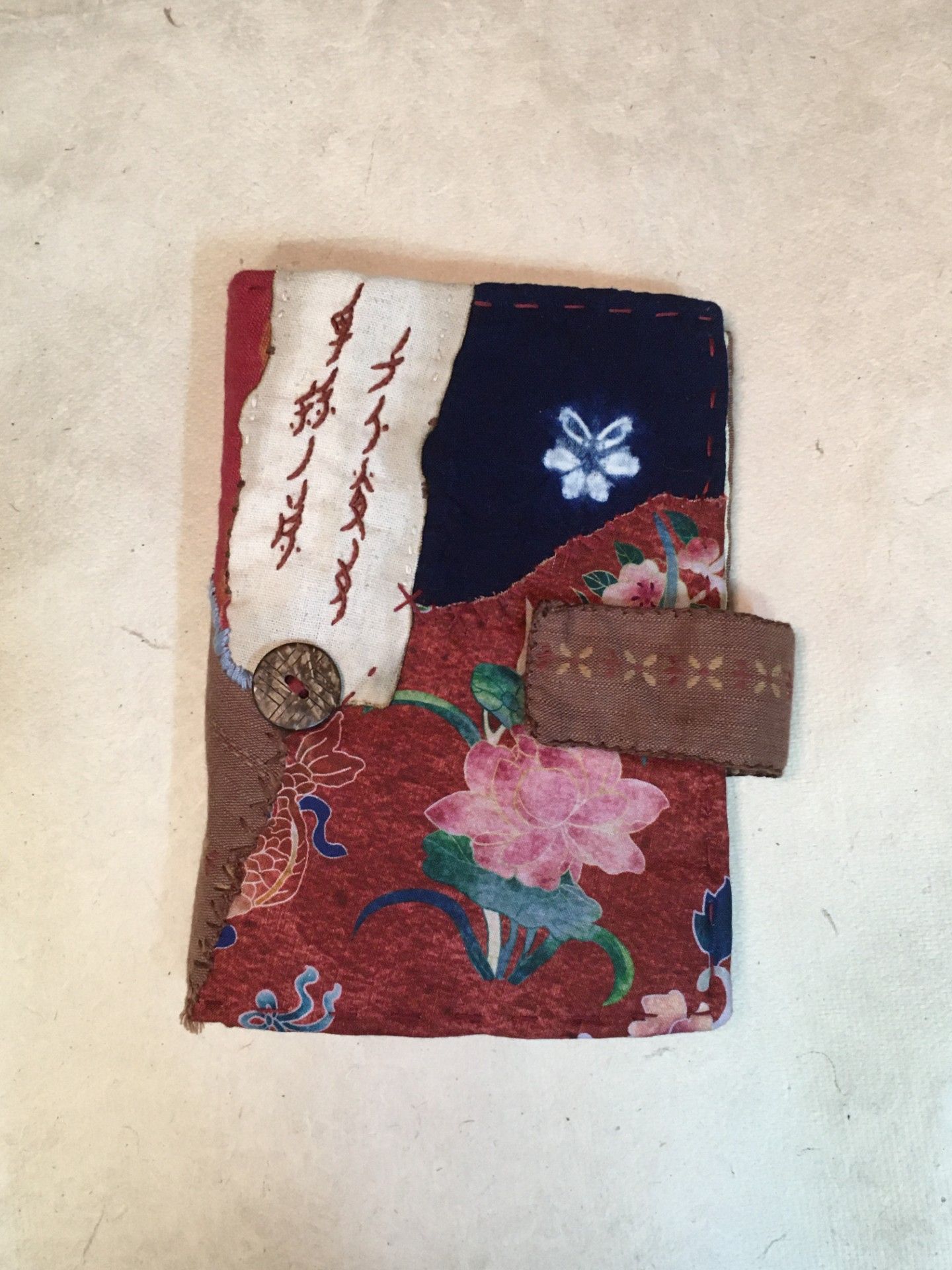
Zhou Yuyue’s crafted booklet, with Nüshu script embroidered on the cover, reads: “Women across the world are sisters of one family” (courtesy of Zhou Yuyue)
Zhou Yuyue, a 21-year-old art student at a teacher-training college, grew up in rural Yongzhou in Hunan. She recalls that, in remote and poorly resourced schools like the ones she attended as a child, students circulated underground booklets filled with crude sexual content. After encountering Nüshu, Zhou began to think of creating her own version of hand-embroidered “little books” that could replace the negative experiences she had when she was young.
Zhou’s books combine Nüshu characters with respectful depictions of female body parts, from uteruses to breasts. They aim to offer herself and her friends a healthier, more positive sense of affirmation of their bodies.
One character she often embroiders in her books is Nüshu’s character for “love.” She, like many other enthusiasts, noticed that a component of the pronoun “I” is actually hidden in the Nüshu’s character for “love.” To her, it feels like a message passed down by earlier generations of women: loving begins with self-love.
Chen has kept learning Nüshu characters since she began putting on exhibitions. “When I write Nüshu,” Chen says, “it feels like I’m in dialogue with women from the past. Knowing that someone hundreds of years ago faced similar struggles and held similar mindsets as I do—that’s incredibly empowering.”
Recreating Nüshu the Gen-Z way
Hu Yanyu, a 48-year-old Nüshu inheritor in Jiangyong, has worked at the local Nüshu museum for more than two decades, teaching and promoting the script.
She recalls that in earlier generations, Nüshu was passed down orally and informally. As a child, she would follow her grandmother and watch older women gather to sing songs and recite verses that had been recorded in Nüshu. Back then, the script lived in daily interactions among women.
By the time her own generation came of age, however, modern education had already taken root, and Nüshu was no longer used in everyday life. When Hu returned to her hometown in her 20s to relearn the script, the method of transmission had changed. Instead of absorbing it naturally in communal settings, she studied it in a classroom-like environment, with teachers using hanzi to help with learning.
In recent years, Hu says that how Nüshu is passed down and promoted has again evolved significantly. In the past, she primarily offered classes or summer training programs to teach the script. Today, as more visitors know Nüshu and travel to Jiangyong, she and her colleagues will also organize cultural activities such as traditional costume photography, embroidery workshops, and heritage festivals connected to Nüshu.
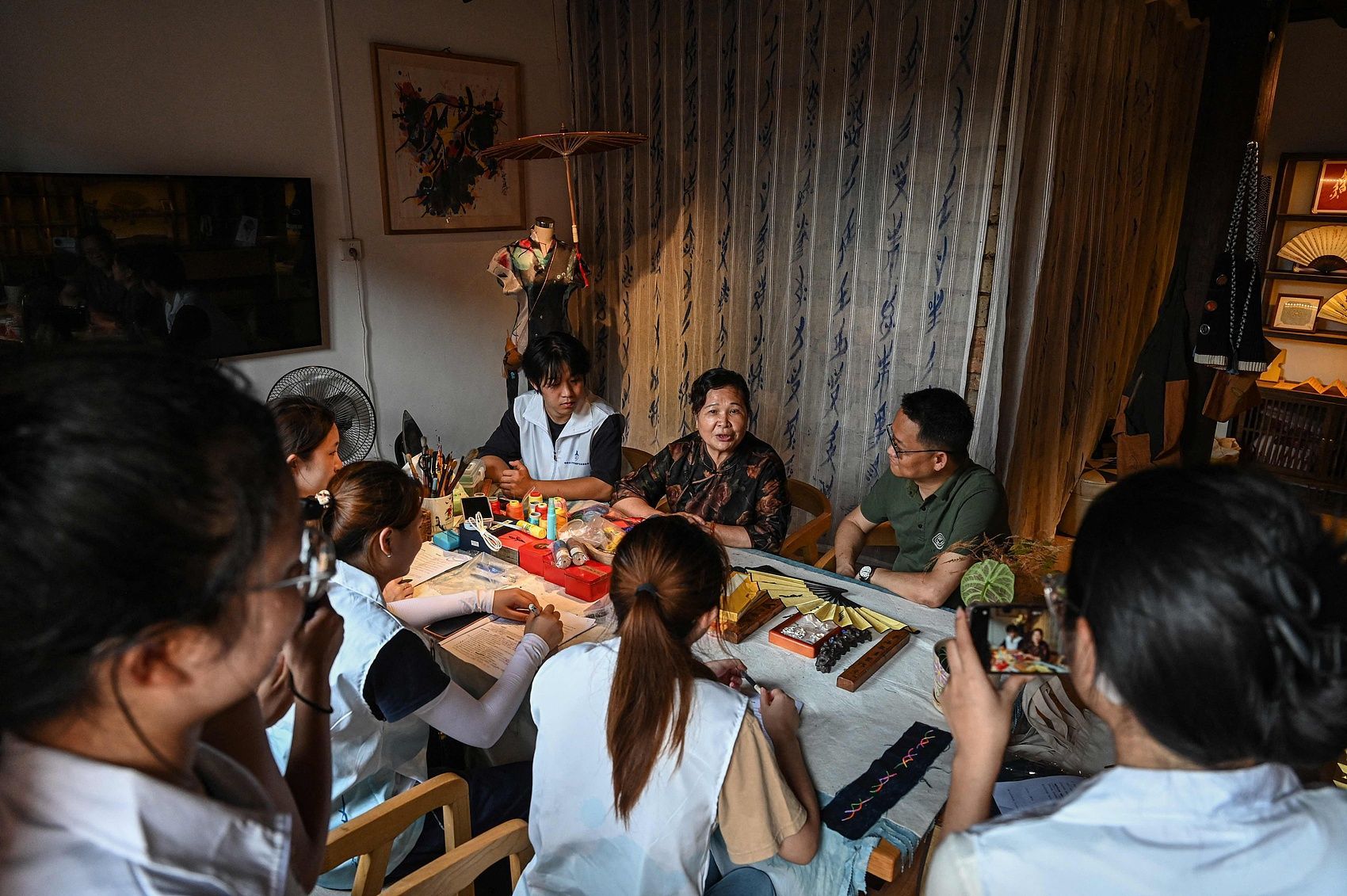
A fellow inheritor, He Yuejuan, discusses Nüshu with university students at a local workshop in Jiangyong (VCG)
Hu has also noticed the surge in online Nüshu content, which she sees as a positive development. “I think it’s a very good thing,” she says. “It brings Nüshu into people’s lives and allows more people to understand this culture.”
But as Nüshu gains popularity, concerns have also emerged. With characters readily available in handy online dictionaries, it’s easy to use them casually to make commercial products and profit without much research into the culture.
The art student Zhou noted that in her college’s art competitions, Nüshu is sometimes treated as a cultural shortcut. Some of the students would write a few Nüshu characters on fans and submit them as “cultural works” that would appeal to judges, without trying to gain a deeper understanding of the culture, according to Zhou.
Hu also expresses concern about some of the cultural products she has seen in recent years, where, in pursuit of aesthetics, designers alter or embellish the characters to the point that even Nüshu inheritors can no longer recognize them.
Still, she noted that many young creators approach the script with care. Some, she says, would consult inheritors like herself before producing their works, or check that the characters are written accurately before putting them into circulation.
In Xiamen, Chen’s recent exhibition connected Nüshu in Hunan province’s Jiangyong with Hokkien fishing women in Quanzhou, Fujian province, who traditionally went out to sea to support their families. She thought the two groups shared like-minded spirits in resilience and strength. She also tried to design the space in a way that would make women feel included and emotionally warm, rather than the neutral setting of ordinary museums.
A living legacy
In October 2025, 86-year-old He Yanxin passed away. She was regarded as one of the last “natural inheritors” of Nüshu—meaning that she learned the script not through institutional classes but organically, from older women in her community. Her death marked the fading of a direct living link to that earlier, intimate mode of transmission.
According to the Jiangyong Culture and Tourism Bureau, 10 officially recognized Nüshu inheritors currently remain in Jiangyong. While they continue to train apprentices, the threshold for becoming an inheritor is high. Candidates must first master the Jiangyong dialect, on which the script is based, for non-locals, that may require living in the area for years.
Inheritors are also expected to develop a deep cultural understanding of the songs, customs, and historical context embedded in the script. Like many forms of intangible cultural heritage, Nüshu faces ongoing challenges of preservation and continuity.
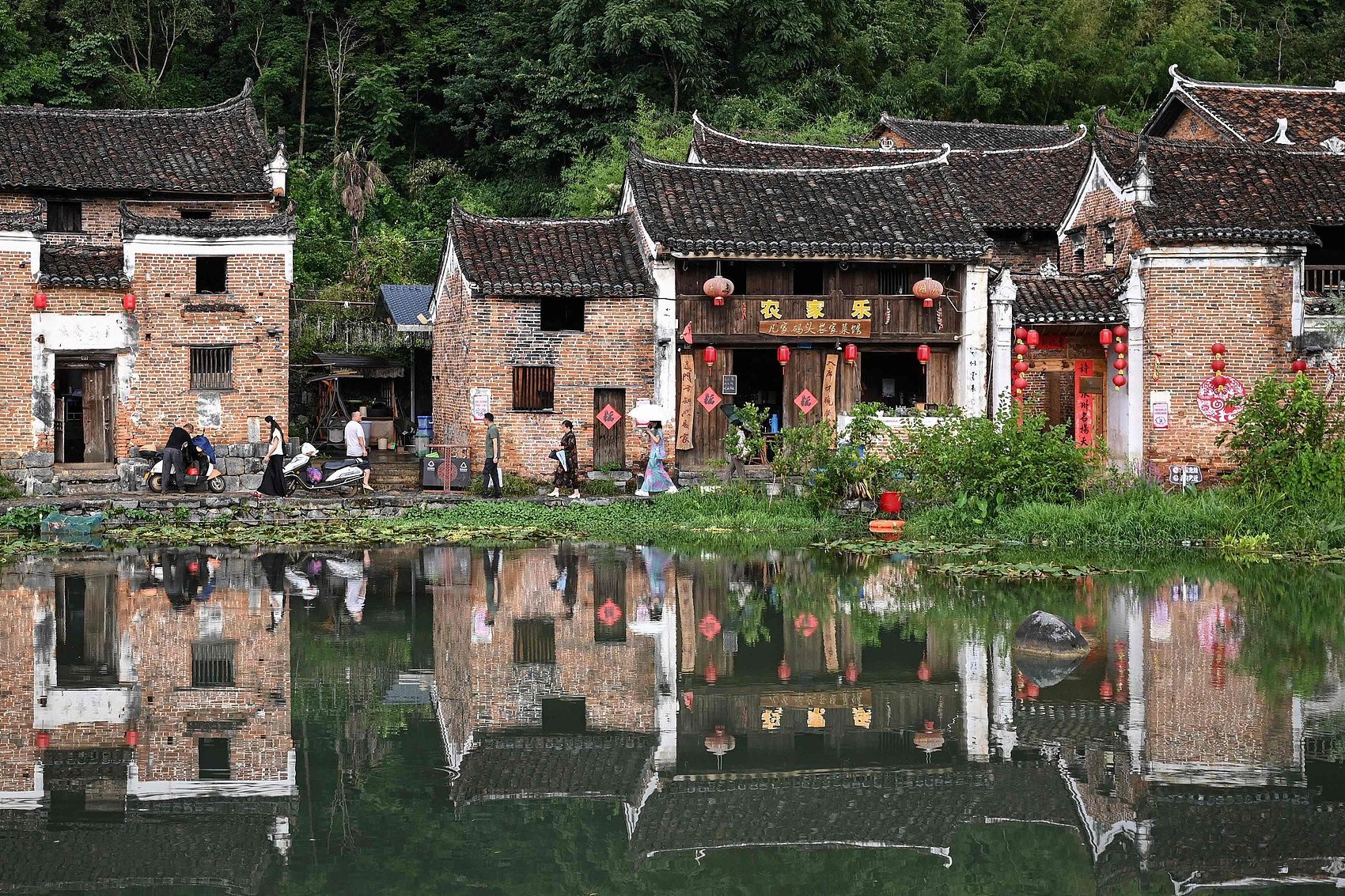
Jiangyong county has actively protected Nüshu through dedicated cultural centers, museums, and heritage sites, while documenting practitioners and reviving traditional customs (VCG)
Young enthusiasts say the spirit of Nüshu would anyhow last and pass on.
After two years of hosting traveling exhibitions, Chen returned to Jiangyong in the middle of last year to work with the local Nüshu museum to promote the culture. “I’ve decided to set down my roots here,” she says, “to go deeper.”
Zhou hopes to combine Nüshu with handmade books to create more sex education projects after graduation. “Women’s strength lies in creation,” she says.
The playwright Zhong, meanwhile, wants to uncover more stories hidden behind niche historical cultures like Nüshu. In the final scene of Women’s Script: Unsilenced, the embroiderer is forced into an arranged marriage. Zhong staged the moment using a traditional “wedding weeping” song, which women in the past would sing together before the marriage ceremony, expressing their sorrows over losing their sister or daughter.
But Zhong left the ending open: hearing the call of her sisters, the woman runs toward an unknown destination.
“May I be a free bird in the forest,” the actresses sing in the end, “with sky and sea wide enough for me to roam.”
Related Articles