


Last year, the Middle Earth Podcast released an episode examining how AI was being used in films, documentaries, and advertising. At the time, most of the more compelling AI-driven work was confined to short-form content.
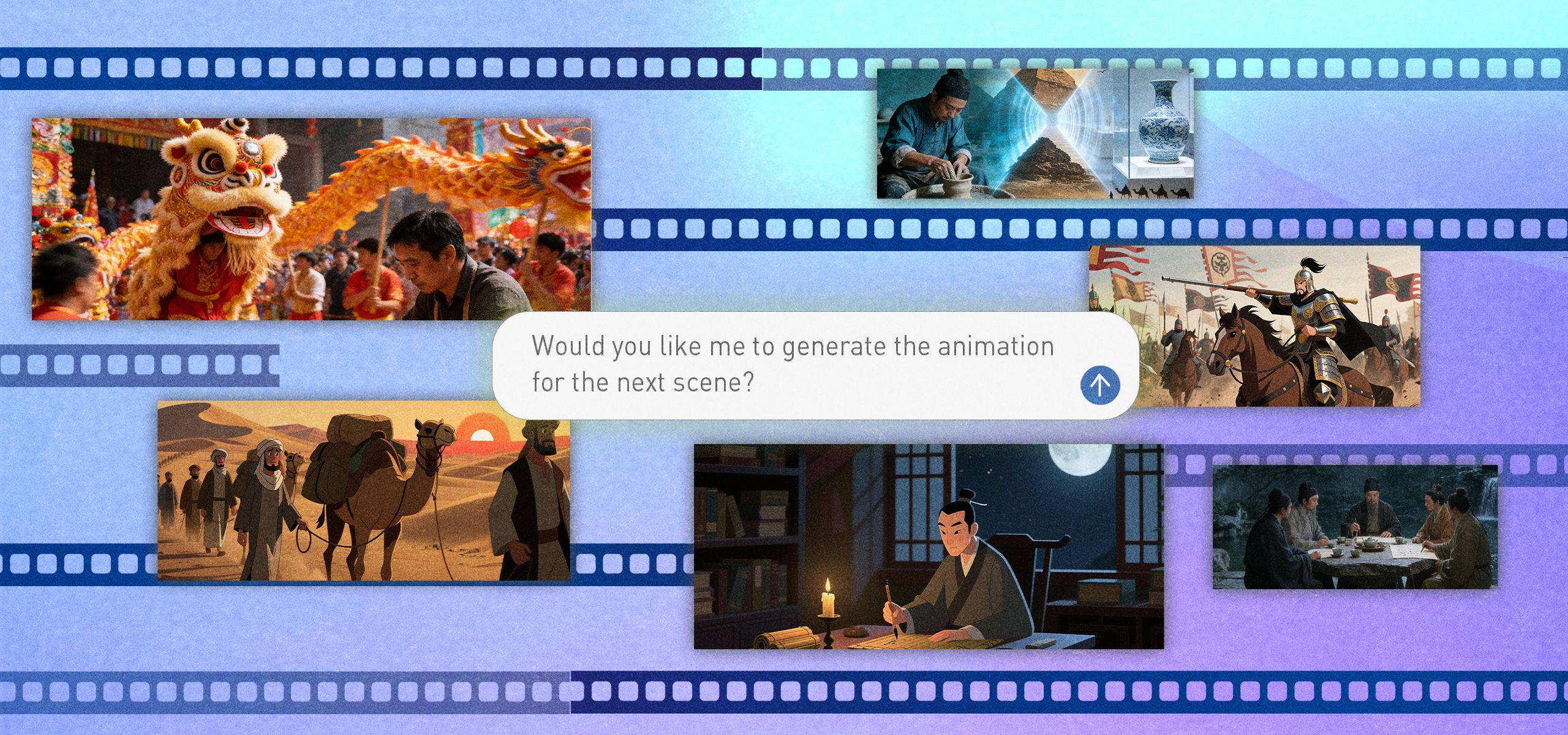
But as the technology has advanced at breakneck speed, 2025 has brought several game changers. One notable example is Pirate Queen: Zheng Yi Sao, the world’s first feature film fully produced by AI, which hit cinemas this April in Singapore. More filmmakers are now pushing the boundaries of AI in the industry, with some even experimenting with its use in documentary filmmaking.
While the production value of current AI films still pales in comparison to Hollywood blockbusters, some—like our guest in this episode, director Fan Lixin—believe that gap won’t last long.
But is this trend healthy for China’s already sluggish film market, with ethical concerns still lingering? To explore that question, we’ve invited several industry professionals who work closely with AI to share their perspectives.
Guests:
Chen Zhuo (Pax) is the founder and CEO of the global AIGC creator platform FizzDragon that produced Pirate Queen: Zheng Yi Sao.
Tina Jia is the founder and president of Wing Sight, working in film acquisition and distribution.
Fan Lixin is a two-time Emmy-winning documentary filmmaker.
Subscribe to the Middle Earth Podcast: Buzzprout | Xiaoyuzhou | Spotify
The following are excerpts from the transcript of the episode (edited for clarity):
04:05
Aladin: Fan Lixin, you started as a classical documentary director with handheld cameras and a really small crew. But this year, you started using AI in your documentary creation process. Can you talk about why you decided to go on this journey?
Fan: Fifteen years ago, I made my first documentary film on the country’s migrant workers. It was a classic observational documentary, meaning that my team and I embedded ourselves with this one migrant family for three years. This kind of film takes a lot of time and dedication.
About two years ago, I got interested in VR technology and thought it might help me better tell historical stories. Then came AIGC, and it really opened my eyes. With the technology, I can tackle historical topics with a limited budget.
Of course, the quality and aesthetic of these generated contents are not good at first. But I really see the potential of this documentary, so I started using AIGC in a feature documentary I was working on a year ago. We’re still in the middle of making it.
06:50
Aladin: Pax, you come from an IT background, but you pivoted to filmmaking. Can you share a bit of your journey?
Chen: I majored in engineering in college and found myself really enjoying creative projects during my time in school. But being in Singapore, there are limited opportunities in the film industry. When Sora came out in 2024, I had a call with my friend, who later became a co-founder of our company, FizzDragon, and we both felt that AIGC would have a lot of potential to bring more IPs to screens.
Aladin: Is that why you decided to make a film on the female pirate Zheng Yisao from almost two centuries ago?
Chen: Yes, she is a good example of how a lot of IPs around the world never get the chance to reach a global audience. As an ethnic Chinese, I want to bring these interesting Chinese figures to a broader audience.
09:25
Aladin: Tina, you worked for Paramount and handled movie distribution in China. You now run your company Wing Sight and run China Night at the Cannes Festival. On top of all that, you also do content creation with AI. I’m wondering if you could share your thoughts on why your company decides to take on such projects.
Jia: I was working on content acquisition, so I have a good relationship with streaming platforms. As foreign films have become less popular in China, we need to find a new way forward. Documentaries are actually still popular in China, and our company has AIGC talents, including my co-founder. We used AI to recreate locations that are difficult to find today for two historical docu-dramas, making them appear more realistic.
Aladin: So, how did these projects happen? Did platforms like iQIYI and Tencent come to you seeking a documentary on a limited budget, or was it the other way around?
Jia: When we first presented the idea to platforms, they didn’t really trust our technology. So we spent a year actually making the docu-drama Secrets of the Emperor’s Death and did revenue sharing with several platforms. Once they saw how successful that first one was, they started coming to us with documentary ideas they wanted exclusively for their platform. The docu-drama Figures of Chinese History we created for iQIYI just aired last week. I Have A Tyrannosaurus, another series we created for Tencent, will air by the end of December.
Fan: With today’s AIGC technology, achieving high-quality video production remains challenging—especially when it comes to maintaining character consistency, which is often crucial to a film’s overall aesthetic. With new technologies, platforms, and tools emerging almost daily, we’re constantly adjusting our workflow.
14:09
Aladin: Pax, can you walk us through the production process of Pirate Queen: Zheng Yi Sao?
Chen: The project began with just two people, neither of whom had a film background. Once we decided to recruit talent globally, the project attracted far more interest than we expected. Some contributors came from the film industry; others had left it for different jobs but still carried a strong passion for filmmaking.
The technology for AI video generation was far from mature: outputs often resembled static PowerPoint slides, with limited movement and no real consistency in characters. Together, we developed a set of standard workflows to push the project forward.
The final film runs 90 minutes, but the discarded material adds up to nearly 30 minutes. We created, scrapped, and recreated repeatedly until we had a film that could sell.
15:31
Aladin: Can AI-produced films really save money?
Fan: I think the reason our guests and I focus on historical topics is that high-quality historical documentaries have traditionally been very expensive to produce. With AIGC, we can dramatically reduce—or at least better control—those costs.
The technology is still in its infancy, even though it’s advancing quickly. We face technical limitations and platform-specific issues almost daily. While production costs are coming down, finding people who can truly adapt to and use these tools remains expensive. They need not only traditional filmmaking knowledge but also strong AIGC skills.
Jia: The hardest part is storytelling. What really matters is collaborating with experienced producers, directors, and writers who understand how to tell a compelling story—especially for film festivals. Works shown at festivals like Busan aren’t necessarily technologically advanced, but they’re engaging because of their storytelling.
For now, AI works best as a tool—particularly for lowering costs or replacing parts of visual effects. But without strong direction and writing, the technology alone isn’t enough. As audiences mature, their expectations will shift toward story rather than novelty. That’s why working with professional storytellers will be essential going forward.
Chen: For AIGC film projects, a collaborative approach works far better than trying to find one person who can do everything. Each team needs three key components.
The first is project and production management, which keeps the workflow on track. The second is the creative team, including traditional screenwriters and directors, as well as AIGC directors. The third is the engineering or production team, which handles the technical side. In practice, we keep these roles separated.
This structure has proven highly effective. AI often introduces unexpected “hallucinations”—it doesn’t always follow the director’s vision precisely—but these deviations can also generate new ideas that strengthen the story. As a result, directors continuously adjust the storyboard, working with the AI rather than forcing it to follow the plan exactly. Based on our experience, this collaborative process helps move projects forward and yields acceptable results.
22:43
Aladin: Is there one major roadblock you keep running into when using AI tools in production—something you wish would finally be solved?
Chen: One major issue in AIGC isn’t technological—it’s copyright. Because we operate as a platform, many creators come to us for help resolving disputes. Cases in which ideas are copied or used to secure funding without permission are frequent and can bring projects to a halt.
Jia: We have many customized production needs, but not enough dedicated, skilled talent assigned to the project. Building a reliable production team remains a major problem.
Fan: I totally agree with you. Taent is really the problem for now.
Aladin: It’s interesting that, in the end, the biggest problems around AI often come down to people
25:50
Aladin: Another major challenge is public reaction. I didn’t get a chance to see Pirate Queen: Zheng Yi Sao since it screened only at a few festivals and private or limited public showings in Singapore. What I did see were the reviews on Letterboxd, where reactions were largely negative.
Some criticism focused on the film’s quality, but others seemed to reject the idea of an AI-made film altogether. I know you also screened the film at a festival in Italy, so I’m curious—how did audiences respond in person? What were your interactions like after the screenings?
Chen: I think it’s an important point to raise. As I mentioned, this film was an experimental project from the very beginning. We weren’t even sure we could finish it—it stopped and restarted many times—so completing it already felt like a small miracle.
We’ve received a wide range of feedback, from criticism and suggestions for improvement to encouragement for taking the risk. All of it has been valuable. What’s exciting about AIGC is that we can keep refining the film.
28:04
Aladin: Expanding on the ethics of using AI to create stories, there are several concerns: the energy demands of AI and the growth of data centers, the use of copyrighted or stolen content in training models, and the lack of compensation for many creators. There’s also the growing difficulty of distinguishing what’s real from what’s AI-generated.
I’d love to hear how the panel views these ethical issues—and whether you’ve developed any guidelines in your own work.
Fan: As creators, we have a responsibility to respect copyright and original ideas. While large AI models are trained on vast amounts of existing data, making it difficult for individual users to trace their origins, we still need to be cautious in how we use these tools.
In our own work on historical documentaries, we continue to conduct in-person interviews, show them on camera, obtain releases from participants, and compensate participants for their stories. AI is simply a tool to help us tell those stories, not a replacement.
There’s no black-and-white answer to whether AIGC should be used—it’s clearly part of the future. Personally, I’d rather engage with it early, while staying conscious of copyright and creative responsibility.
30:48
Aladin: My final question is for Tina. How do festivals like Cannes and the broader global filmmaking community view the use of AI technologies in filmmaking today?
Jia: Festival markets are still cautious about AI, especially when it comes to fiction films, but it’s a trend they’ll have to confront. I’ve already heard that a film made entirely with AI may enter a competition. That’s why we’re considering co-hosting a forum to discuss how AI can be used as a tool for the industry. I don’t believe AI will replace human creators—but the two can coexist.