Newsletter
Popular

  • Society
  • Life
  • Business
  • Language
  • History
  • Arts
  • Literature
Podcast
Video
Magazine

  • China
  • International

  • About Us
  • Our Team
  • Join Us
  • Contact Us
  • Pitch to Us
Follow Us
Newsletter
The World of Chinese logo
Sign In SUBSCRIBE
Popular
Topics
  • Society
  • Life
  • Business
  • Language
  • History
  • Arts
  • Literature
Podcast
Video
Magazine
Shop
  • China
  • International
About TWOC
  • About Us
  • Our Team
  • Join Us
  • Contact Us
  • Pitch to Us
Subscribe
Cart
DESIGN

Gallery: Aquatic Art

Exhibit honors Chinese “shrimp painting” tradition through the works of one of its milestone artists

    author Sun Jiahui (孙佳慧)
Sun Jiahui (孙佳慧)
November 2, 2019
398A8263.jpg
Photo Credit:

Playing with shrimp and tadpoles in the local lake as a child, Zhejiang-born Zhang Dewen probably never expected to one day become the latest in a lineage of Chinese shrimp-painters stretching back to ancient times.

Staged from November 2 to 4 at the CPPCC Culture and History Museum in Beijing, the “Zhang Dewen Calligraphy and Painting Exhibition” gives new definition to “watercolor” by showcasing six decades’ in the artist’s portraits of shrimp, crab, goldfish, and aquatic plants in vivid and flowing ink.

Born in 1943, Zhang began copying the shrimp art of Ming dynasty painter Xu Wei at age 5 with the encouragement of his mother, a fan-painter who felt the boy’s affinity with the neighborhood’s water creatures. At age 11, Zhang was introduced to Qi Baishi (齐白石), the 20th century’s best-known shrimp painter, who was then in his 90s. Zhang then served as Qi’s apprentice until 1956, a year before Qi passed away.
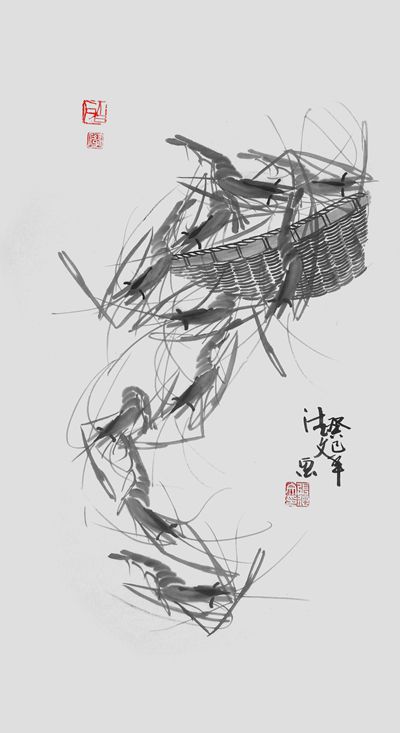
A basket of shrimp by Chinese artist Zhang Dewen.

Historically, the shrimp was a common motif in traditional Chinese painting due to its symbolic connotations: of the dragon in the north, and silver in the south. It was also admired for its transparent appearance, representing purity; its freedom of movement, similar to a dragon in flight; and its lack of predatory instincts toward other creatures, representing moral character.
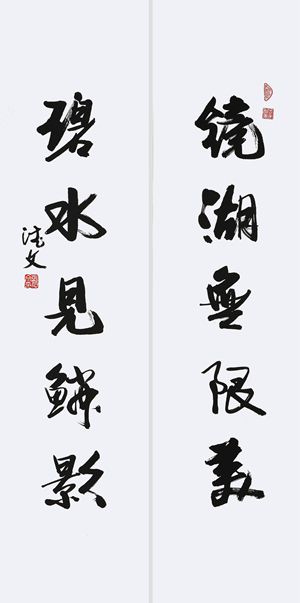
A piece of Chinese calligraphy by Chinese artist Zhang Dewen.

Zhang’s calligraphic work

Shrimp painting became a distinct school within Chinese painting in the late 19th and early 20th century owing to the influence of Qi Baishi, whose 1954 “Painting of Hundred Shrimps” (《百虾图》) also known as “Painting of Dragons Entering the Sea” (《群龙入海图》), is the best-known Chinese shrimp painting today. Fetching a record-breaking 120 million RMB at an auction in 2011, the painting exemplified the attention to detail and uncannily authenticity in Qi’s repertoire of works.

Over his own 60-year career, Zhang has built upon his teacher’s technique to create his distinguished “Baishi Shrimps” style. His lifelike works are praised as “living shrimps on paper” by critics, who have installed Zhang firmly as the country’s second-most eminent shrimp painter after Qi himself. In 2014, Zhang’s own “Painting of Hundred Shrimps (《百虾图》)” became part of the Chinese state’s collection.
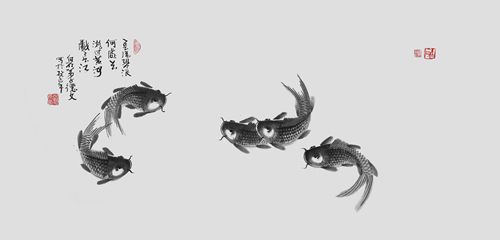
A painting of five black goldfish by Chinese artist Zhang Dewen.

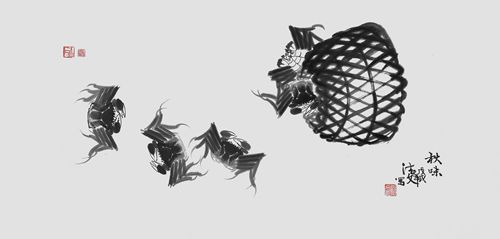
A painting of five crabs escaping from a basket by Chinese artist Zhang Dewen.

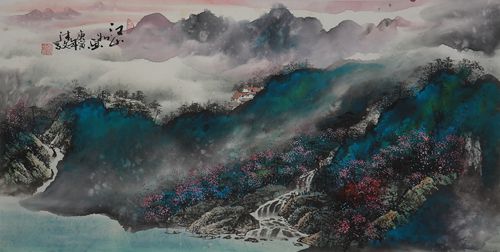
A picture of misty mountains by Chinese artist Zhang Dewen.

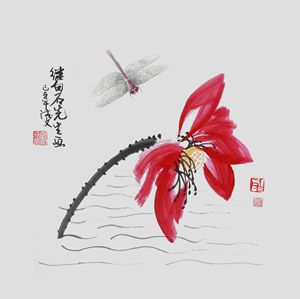
A dragonfly and red blower painting by Chinese artist Zhang Dewen.

Zhang’s other painting works

Tags:
PAINTING,FINE ART QI BAISHI

Related Articles

Chinese college students taking photos
EDUCATION

The Rise, Decline, and Transformation of University Majors in China

A Good Day
FICTION

It Was a Good Day | Short Story

Live action game cover
ENTERTAINMENT

Spoiled for Choice: Can Live-Action Games Become More than Drama with Buttons?

city sports space wuhan cover
SPORTS

Fields of View: Wuhan’s Sports Venues from the Sky | Photo Story

Related Articles

Chinese college students taking photos
EDUCATION

The Rise, Decline, and Transformation of University Majors in China

As China’s university majors are increasingly reshaped around national strategy, technological progress, and industry needs, what happens to the students and teachers whose fields are left behind—and what are the prospects for those entering this new academic world?

A Good Day
FICTION

It Was a Good Day | Short Story

The wind was strong, and the air was full of the stench of burning coal. She was halfway down the stairs when she heard the voice: “Are you Dr. Zheng Baixin?”

Live action game cover
ENTERTAINMENT

Spoiled for Choice: Can Live-Action Games Become More than Drama with Buttons?

China’s new wave of cinematic games is putting players inside the screen, but many titles are still figuring out how to put them in control

city sports space wuhan cover
SPORTS

Fields of View: Wuhan’s Sports Venues from the Sky | Photo Story

Photographer Zheng Binjie’s aerial images capture the city’s sports facilities, as well as the national fitness trends behind them

Subscribe to our newsletter

Scan to follow us on WeChat

Or add: Theworldofchinese

Topics

  • Society
  • Life
  • Business
  • Language
  • History
  • Arts
  • Literature
  • Photo Stories

Media

  • Magazines
  • Books
  • Podcasts
  • Videos

News and Events

  • Announcements
  • Events

About TWOC

  • About Us
  • Our Team
  • Join Us
  • Pitch to Us
  • Contact Us

PARTNERS

© THE WORLD OF CHINESE | 京ICP备05007371号-7