When Zhou Ge (pseudonym) learned that her university was canceling her major in 2019, she was already in her final year of college. “My first reaction was, ‘Thank god it’s finally gone,’” recalls Zhou. She had studied landscape architecture at Sichuan University, a leading comprehensive university located in southwestern China. Her relief stemmed from her own experience during the five-year program.
She quickly discovered that the curriculum was very different from what she had envisioned when she entered college, and she struggled to adapt to the way the classes were taught. “The teachers weren’t able to teach us in a very clear and logical way,” she says. “That made students who were not naturally proficient at drawing blueprints and design work, like me, feel even worse.”
Meanwhile, Long Wenxiang, who graduated from the university with a bachelor’s degree in radio and television studies in 2018, says the decision to axe his major came as little surprise, noting the profound shift from traditional media to social media in recent years. “The current media landscape has developed so quickly that radio and television have become obviously outdated,” Long tells TWOC. “The basic skills required in media have also undergone dramatic changes.”
Now working in Chongqing as a brand manager, Long feels that the knowledge he acquired during his studies doesn’t align with what he encounters in the workplace. “Especially now, when the technical requirements for shooting video are not very high and can be supported by AI, the challenge is how far one can push their thinking, creativity, and aesthetic vision.”
Read more about higher education in China:
- Bottom of the Class: The Woes of China’s Liberal Arts Students
- The Boom of College Admissions Counseling in China
- Parental Overreach: The Controversial Rise of Parent Groups in Chinese Universities
Zhou and Long’s majors were just two of 39 officially canceled by Sichuan University since 2019, including courses as diverse as musicology, animation, and public utilities management. At the time, the university’s significant academic “reshuffling” sparked heated online discussion, but the reformation of university majors in China has only accelerated since.
Numerous “traditional” majors—everything from design to business management—are being cut, frozen, merged, or phased out in recent years in favor of courses related to STEM, data science, artificial intelligence, and interdisciplinary fields. Nowadays, course offerings are increasingly aligned with China’s national strategy, industry needs, future development direction, and job prospects.
Yet this shift raises new questions about the future of students and teachers whose fields are being left behind—and what this new academic landscape means for those entering it.
Shifting demands
College majors in China have evolved alongside social and economic changes. After the founding of the PRC, China’s academic discipline was heavily influenced by the Soviet model, which trained specialized talent for industrialization and emphasized engineering, agriculture, and teacher education. Even the Chinese term for 专业, or major, was translated from the Russian term spetsialnost. But this overly narrow and rigid classification soon led to a series of revisions.

Students conducting experiments in Nanjing College of Pharmacy, the predecessor of China Pharmaceutical University, in 1978 (VCG)
College students’ preferences for majors in different eras also reflected broader social transformations. After the national college entrance examination, or gaokao, was restored in 1977 following more than a decade of interruption, basic disciplines such as mathematics, Chinese and philosophy attracted large numbers of students eager to pursue higher education. Following the launch of reform and opening-up in the late 1970s, finance and economics became increasingly popular in the decades that followed, as degrees in these fields could lead to well-paid jobs in banking and auditing.
From the 1970s to the 1990s, reforms of university majors focused on strengthening the overall structure and moving away from the influence of the planned economy. By the end of the 20th century, international trade and commerce had gained prominence as China prepared to join the World Trade Organization and reform its foreign exchange system.
As higher education enrollment expanded, universities also gained greater autonomy to establish their own majors in the early 2000s. Programs related to civil engineering, architecture and urban-rural planning flourished alongside rapid urbanization, while demand for legal professionals grew as China continued to strengthen its legal system. A decade later, the rise of internet companies such as Baidu, Alibaba and Tencent helped drive growing interest in computer science and information technology.
Today, as China’s social and economic development becomes increasingly complex while new fields and industries emerge, from AI to interdisciplinary studies, the country’s higher education system, with more than 880 undergraduate majors nationwide, is undergoing another round of reform.
A pivot to the future
The latest changes can be traced to a reform plan issued by the Ministry of Education and four other government departments in 2023, which called on universities to begin phasing out or scaling back undergraduate majors that faced low market demand or severe graduate unemployment.
Many universities were slow to act, allowing underperforming programs to continue through reduced admissions or enrollment suspensions rather than risk faculty resistance. Institutions that did take action mostly merged low-admittance programs into other departments or temporarily suspended admissions while restructuring their curriculum and resources. But more recent directives, such as those seen at Sichuan University, have been far more stringent.
The decline of individual majors does not necessarily mean fewer academic choices for China’s prospective students. According to the Ministry of Education, while around 12,200 undergraduate programs were either discontinued or suspended between 2021 and 2025, over 10,200 new programs were created.
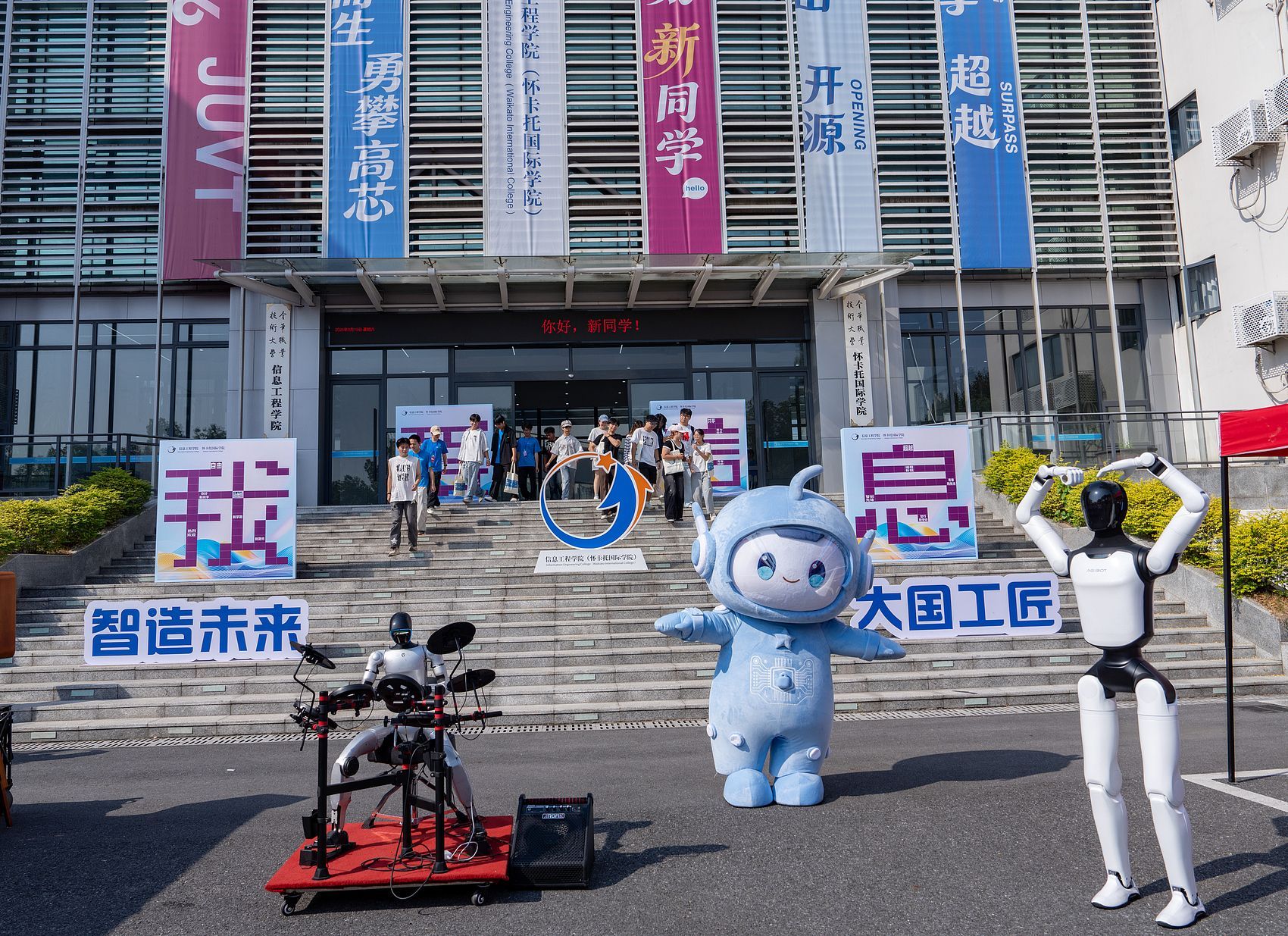
Thirty-eight new undergraduate majors were added to the official catalog this year, including embodied intelligence and brain-computer science and technology under the newly established interdisciplinary studies category (VCG)
Speaking to Caijing magazine in August, Li Liguo, an education expert at Tsinghua University, described how, in the past, universities primarily established academic programs based on their existing disciplinary strengths, faculty capacity, and educational resources. The recent shift represents a pivot toward adjusting and creating majors in line with national and regional economic and social development strategies.
In 2025, six universities added programs in low-altitude technology and engineering; in 2026, nine universities listed programs in embodied intelligence. All were approved through the government’s “green channels,” which allow universities to bypass conventional major approval processes when establishing programs deemed strategically important to national development.
This April, the Ministry of Education released its latest undergraduate majors catalog, adding 38 new majors, and the direction is clear. Of them, 13 include terms such as “digital,” “intelligent,” or “smart” in their names, such as digital finance, smart fishery, and artificial intelligence in business. The new catalog also, for the first time, establishes interdisciplinary studies as a separate academic category.
While the shift promises new opportunities for prospective students, some newly established programs are still taking shape, with curricula that have raised concerns among students already enrolled.
After watching Interstellar (2014), Li You became fascinated by whether machines could really sense, understand, and make decisions independently like the character TARS. That interest, along with the promising career prospects, led him to study artificial intelligence at the Shenzhen campus of Harbin Institute of Technology (HIT) in 2024. The program was established in 2019, when HIT was among 35 universities approved in the first round to offer undergraduate AI programs.
However, the 20-year-old soon found that the curriculum was essentially a mix of foundational subjects, with courses ranging from machine learning and computer science to electronic and information engineering and even electromagnetism.
“AI is fundamentally about making machines more ‘intelligent,’ yet after studying it, I sometimes felt I was the one becoming machine-like: attending classes, writing code, running experiments, tuning parameters, and constantly learning new tools and techniques,” says Li.
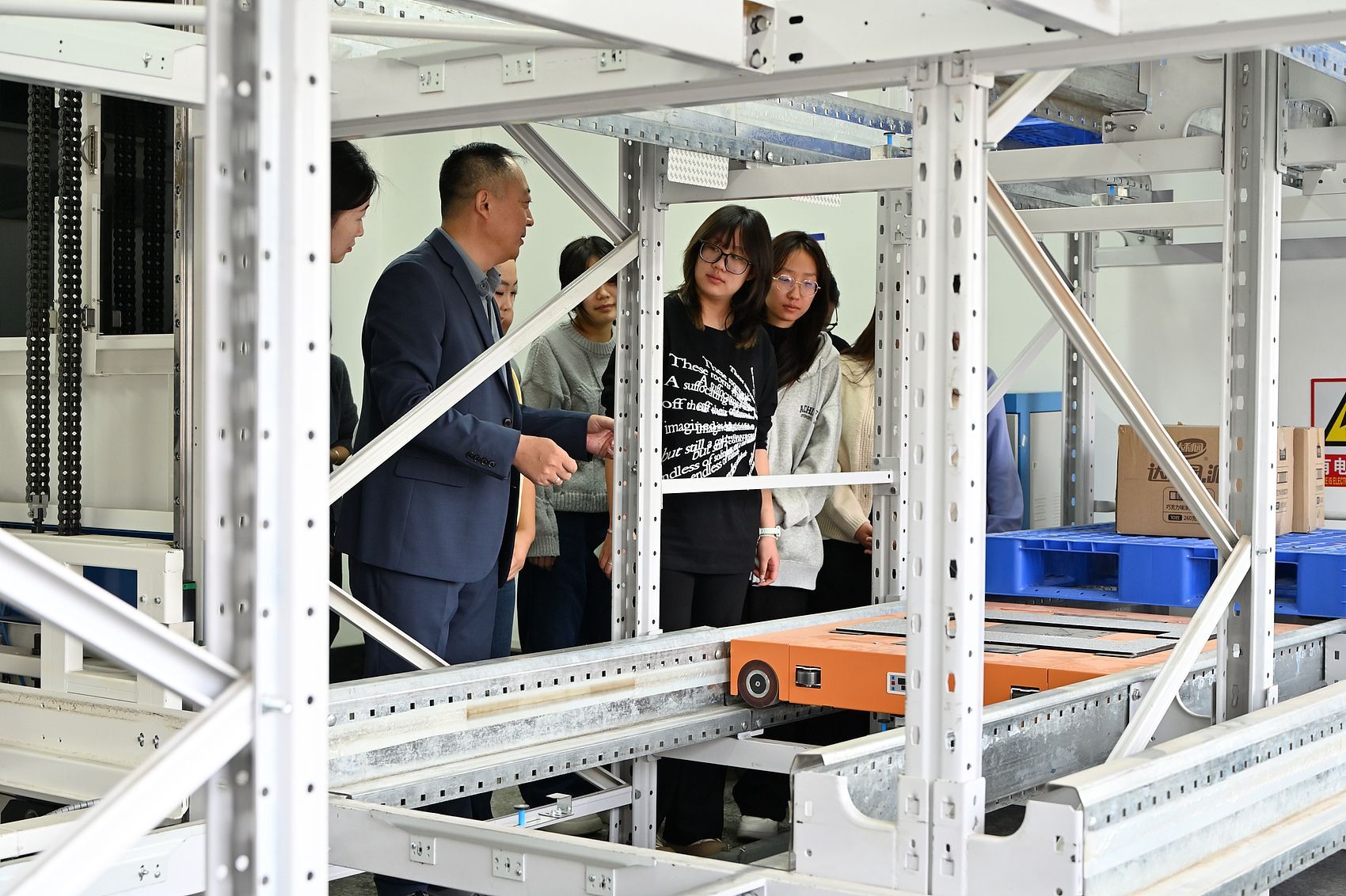
Students at Hohhot Minzu College, Inner Mongolia, learn the operating principles of shuttle robots. The university’s School of Intelligent Science was established in 2023 and began operations in 2025. (VCG)
Li’s concern is not baseless. The rapid AI development is largely driven by private tech companies, while many of the field’s most cutting-edge advances are out of the public’s research. Universities often lack the research base to support these fields, while technological advances are outpacing curriculum updates, leaving some students more familiar with the latest developments than their instructors.
This is also a source of Li’s anxiety: “It’s a field teeming with experts—you might master one thing only to see new models and methods emerge almost immediately. It makes me worry that I’ll be forever playing catch-up.”
Now two years into his study, Li has stopped fixating on whether he likes or can master every course in the curriculum. He had come to terms with what his undergraduate years should be: an opportunity to build foundational research skills and explore different fields.
“The major gives me a starting point, but it shouldn’t limit my options in the future,” he says.
Job first
Outside the emerging disciplines at a private college specializing in economics and finance in Chengdu, a teacher and administrator surnamed Xue, who has worked there for six years, says factors such as enrollment, available resources, graduate employment rates, and the school’s reputation all influence whether a major is considered advantageous.
“Adding new majors is definitely good news for us,” Xue tells TWOC. “The more majors we update, the more students enroll, the more money we earn—and the more stable my job becomes.”
Unlike public universities, which receive greater government support, private colleges rely heavily on tuition revenue, making enrollment particularly important. When interest in a major declines, faculty are often merged into other departments and asked to adapt their courses to new curricula. For instance, instructors are often encouraged to incorporate AI into traditional curricula to make their programs more appealing to prospective students. This additional work can interfere with their ongoing research, while instructors themselves may not have expertise in these new fields.
Xue’s college has responded to changing demand not only by adjusting majors but by reshaping what it offers within existing programs. For example, since 2023, it has piloted a program designed to prepare students for the civil service examinations, reflecting growing interest among China’s youth in stable government jobs amid economic uncertainty.
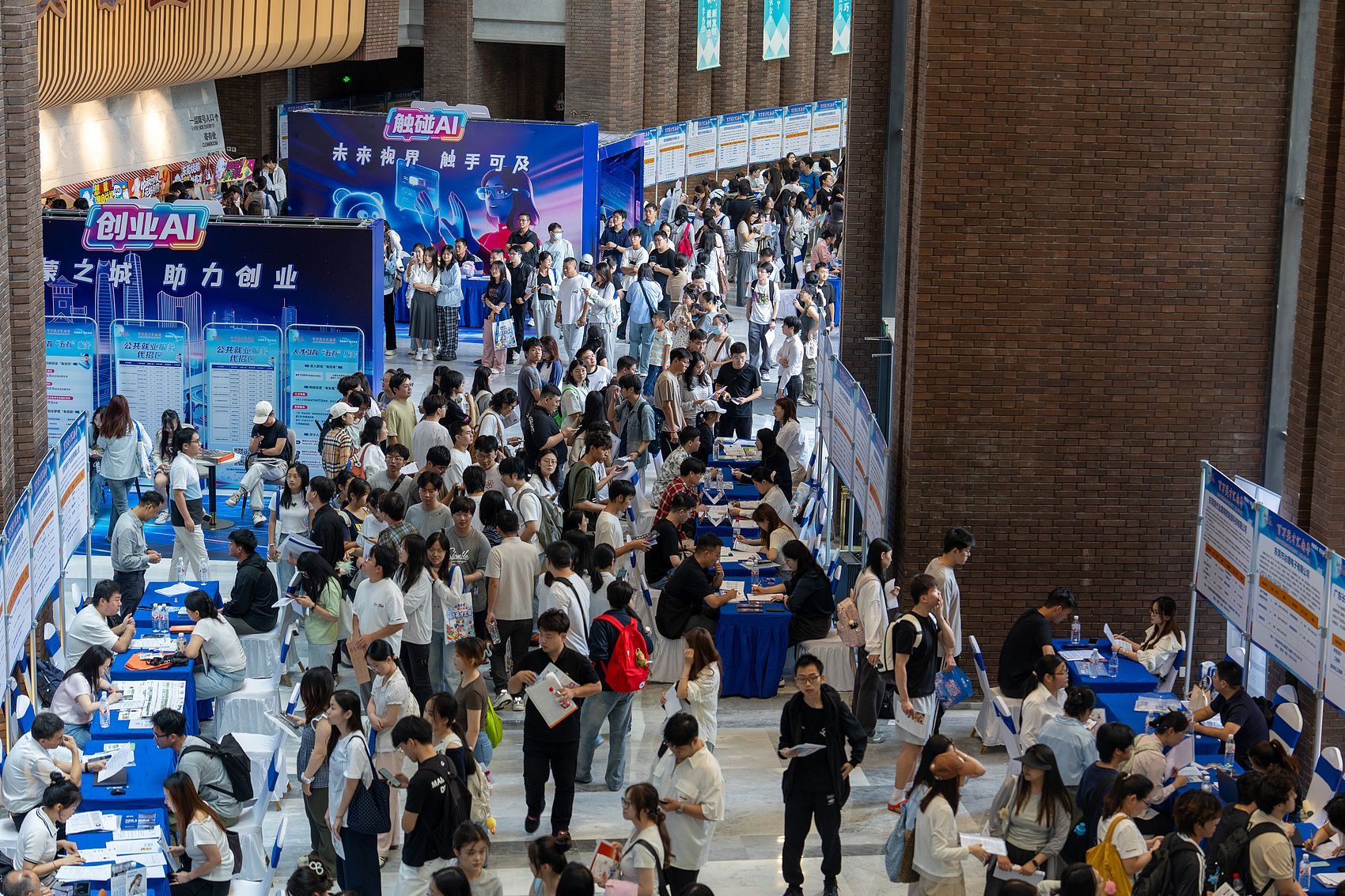
A job fair in Tianjin this September brought together more than 1,700 companies from Dongguan, Guangdong, offering tens of thousands of positions, most of them in emerging fields such as AI (VCG)
Aimed at freshmen across the college, the program—at an extra cost of nearly 10,000 yuan a year—offers several exam-oriented courses supplementary to their majors. It also includes a more intensive assessment system, such as monthly exams—and scores sent directly to parents. “This way, parents can see where the extra money is going,” Xue explains.
While the program hasn’t yet concluded for its first set of graduates, Xue says the results so far are promising, describing how the current batch of students has shown a 40 percent higher average pass rate on the College English Test (CET), a national standardized English test held twice annually for undergraduates across China.
Zhou, the former landscape architecture major, is now a final-year doctoral history student. Looking back, while she has mixed feelings about the axing of her course, she says it was understandable, given how the downturn in China’s real estate industry in recent years has weakened demand for related talent, including landscape architects. “I believe such cutbacks are justified—especially for institutions with weaker programs—as they align with broader societal trends,” she says.
But Zhou also believes the field may eventually find a new role. As China’s urbanization continues, she expects demand for public spaces designed with a human-centered perspective—emphasizing how people actually live and interact with their surroundings—to grow again.
Despite her difficult experience as a student, Zhou describes how the major left her with an unexpected gift: a love of visiting parks and observing the environment around her.
“[The major] heightened my sensitivity to the world I inhabit,” she says. Perhaps that, too, is part of what higher education is meant to cultivate.
Related Articles