


When a casting director offered Dai Zongqi 500 yuan for a one-year license to use her face in AI-generated micro-dramas, she posted her bewilderment on Xiaohongshu (RedNote): “So my face is worth just 500 yuan a year?” She did the math: 42 yuan a month; a little over one yuan a day. “Do I sell or not?” she asked her followers, “and if I sell, will I even recognize myself when I see my face on screen?
Dai isn’t exactly an unknown. A 33-year-old actress signed to a major production house in Hengdian, China’s sprawling film studio complex in Zhejiang province, she has credits, a resume, and until recently the power to choose her own scripts. Yet this year, opportunities in micro-dramas—the mobile-optimized series typically told across dozens of episodes, each lasting a few minutes—are in free fall for live actors, and Dai hasn’t booked a job in weeks. The 500-yuan offer should have been an insult, but given the circumstances, it was a lifeline she wasn’t sure if she could afford to decline.
Higher up the industry hierarchy, a similar deal has made headlines. Joey Wang, the award-winning actress famed for her breakout role in the 1987 film A Chinese Ghost Story, licensed the digital likeness from her 20s and 30s to a video game company in July despite retiring from acting in 2004. The terms were precise: limited use, a specific age range, and a finite term. The exact fee wasn’t disclosed, but media later reported that the three-year deal was worth a seven-figure sum. In August, popular actress Qi Wei also licensed her image for an AI-animated drama.
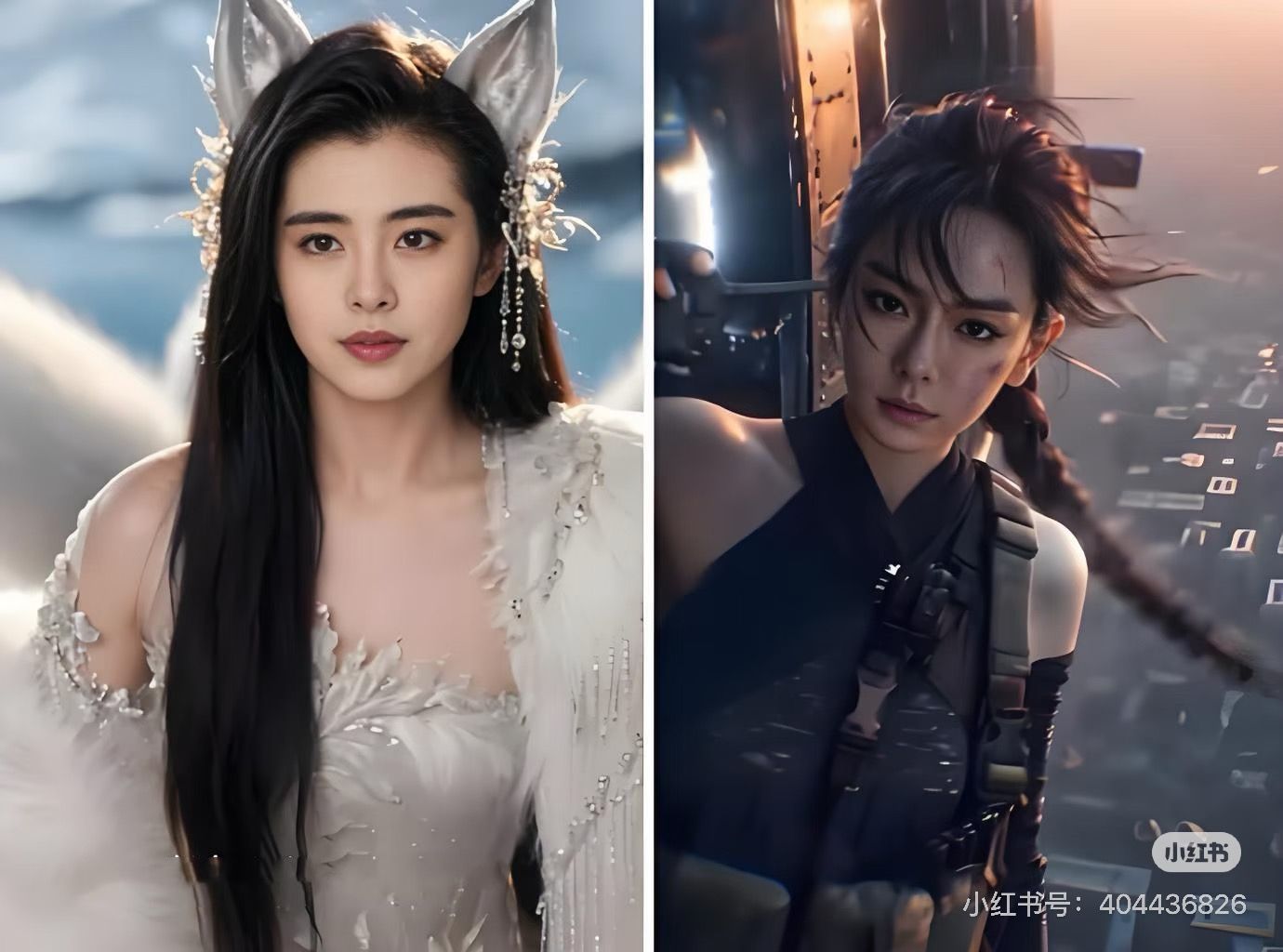
Joey Wang (left) licensed her likeness to the game Tianxia, developed by NetEase, while Qi Wei’s AI avatar played the lead character Han Qingxia in an AI-animated drama (screenshot via Xiaohongshu)
The vast imbalance in perceived value for different faces in show business reflects a market caught between two major forces. China’s micro-dramas have become a huge part of the country’s entertainment business in recent years, but now AI-generated versions are flooding the market, undercutting their live-action competition. At the same time, the growing dominance of streaming platform Hongguo is putting pressure on producers to create shows with ever-cheaper budgets. The combination is driving down production costs and reducing dependence on live actors.
“Why would a producer bother with real actors when you can spend very little money on AI alternatives and potentially make a huge profit?” asks Yang, an actress-turned-producer who agreed to reveal only her last name. She has worked on multiple micro-drama projects, all with minimal investment. “Everyone is chasing the same thing.”
Read more about the development of AI and its controversies in China:
- What Booming AI Revival Services Mean for China’s Relationship to Death
- Humans Distilled: When Coworkers Become Codes
- Are China’s Schools Ready for the Onslaught of AI?
Face value
The emergence of AI-generated micro-dramas has sent shockwaves through the live acting industry. A series that may have taken a crew of multiple people weeks to complete is now attainable with just a couple of employees and a computer. A standard 60-episode micro-drama, for example, costs around 500,000 to 600,000 yuan to produce with real actors. The same output generated by AI can be achieved for as little as 200,000 yuan. These economic realities haven’t escaped the notice of the country’s producers. According to data from the China Netcasting Services Association, in the first quarter of 2026 alone, approximately 128,000 new micro-dramas were released online, with more than 95 percent of them AI-generated. A report by marketing consultancy DataEye Research Institute found that, by the end of March, around 180,000 AI dramas and animated micro-dramas were active across Douyin, China’s version of TikTok, alone.
For live-action productions and their staff, the numbers are worrying. After months without landing a speaking role, Yang switched to producing in March. The production company she now works for has internalized the industry’s cost-cutting logic. On projects made under Hongguo’s guaranteed-payment program, her company budgets just 10,000 to 20,000 yuan for lead actors, supporting cast, and extras combined. Owned by ByteDance, Douyin’s parent company, Hongguo offers production companies a guarantee of around 100,000 yuan for each AI-generated project and 300,000 yuan for projects featuring real actors under its “A Thousand Micro-Dramas Plan.” For producers, the sum provides a secure return on their investment and is enough to cover the costs of a live-action production, provided those costs are kept razor-thin. “These days, Hongguo pretty much has a monopoly on micro dramas,” explains Dai, whose company also provides shows for the platform.
Crews are often assembled cheaply from whoever is available. “Someone who used to be a camera assistant becomes the main camera operator. They then bring in a complete novice to be the assistant. Sometimes there’s not even basic lighting,” says Yang. “Nobody is trying to make anything good; they just want that next pot of Hongguo’s guarantee.”

Hongguo now clearly labels AI-generated shows and those featuring human actors as separate categories for viewers to choose from (screenshot via Hongguo)
For those like Xing Tang, a Gen Z newcomer in Hengdian, even the guaranteed Hongguo cash is out of reach. She currently works as an extra, running errands on set, waiting for a break to come her way. “Being an extra doesn’t pay much,” she says, “but I’m not here to play around. I really want to act and will take any supporting role.” Xing admits that selling her AI-likeness is a tempting proposition, as she doesn’t have the luxury of turning down work. But she also isn’t sure if she can afford to sell off her face before she’s even had a chance to show it to the world. “Once my digital likeness is out there—in the hands of producers who paid pennies for it—what leverage am I left with? My dream is to be seen for the person I am. I can’t become a star by selling my face to AI.”
A 35-year-old casting agent surnamed Liu sees this struggle daily. Based in Shanghai, Liu works with both live-action and AI production companies. His advice for newcomers is to sell when you can to get started in the industry and secure that first significant paycheck. “It’s simple math,” he says. “Established actors and actresses should be careful during their prime—the more you license, the fewer real roles you’ll get—but if you are lesser known and not making much anyway, then I say do it. Sell first, earn first.”
This observation, however cold, is grounded in a logic that the market is already confirming as true. “Licensing is not infinite,” he says. “Once the market has enough faces, prices will drop further.” For project-based, non-exclusive AI licensing, the most common fee structure now is 500 to 1,500 yuan per project for unknown faces, and 3,000 to 5,000 yuan per project for lower-tier actors or influencers. For bulk licensing, the numbers are even starker: 10,000 yuan buys 50 faces at a time for a single drama with perpetual usage rights.
“But let’s say that, just maybe, the AI version of you gets famous one day. Then the offers will start rolling in: ads, micro-dramas, print. The lucky few will make a living just by licensing their faces one day,” Liu adds, seeing this race to the bottom as an inevitable development.
Unsurprisingly, the actors themselves have a different take on it. “It’s like a vegetable market without price controls,” says Dai, who is now considering leaving the industry after weeks without work. “Everyone starts undercutting each other to sell their stock.”
Saving face
Supercharged by AI technology, the market is evolving quickly as regulation struggles to keep pace. In late March, a hanfu blogger discovered that his photos had been used without his permission as the basis for a villain in an AI-generated micro-drama. Two days later, the Actors Committee of the China Federation of Radio and Television Associations issued a hardline statement warning against the unauthorized collection, use, or synthesis of an actor’s image or voice. Hongguo responded by pulling the show and suspending the producer from uploading new series on its platform for 15 days. The platform claimed to have since reviewed 15,000 works for improper use of AI and taken action against 670.
While the hanfu incident represented a modest victory for actors’ rights, broader enforcement across the industry remains elusive. “It all depends on the contract,” says Wang, a Guangzhou-based lawyer specializing in economic disputes. “A single vague clause can make a face permanently available for any type of use, anywhere,” Wang recommends clear written agreements that specify the scope, duration, and context of AI usage, as well as ownership of copyright and revenue splits. “You also need explicit prohibitions on inappropriate uses like pornographic content, false advertising, and illegal material, with clear liability for violations and compensation mechanisms.”
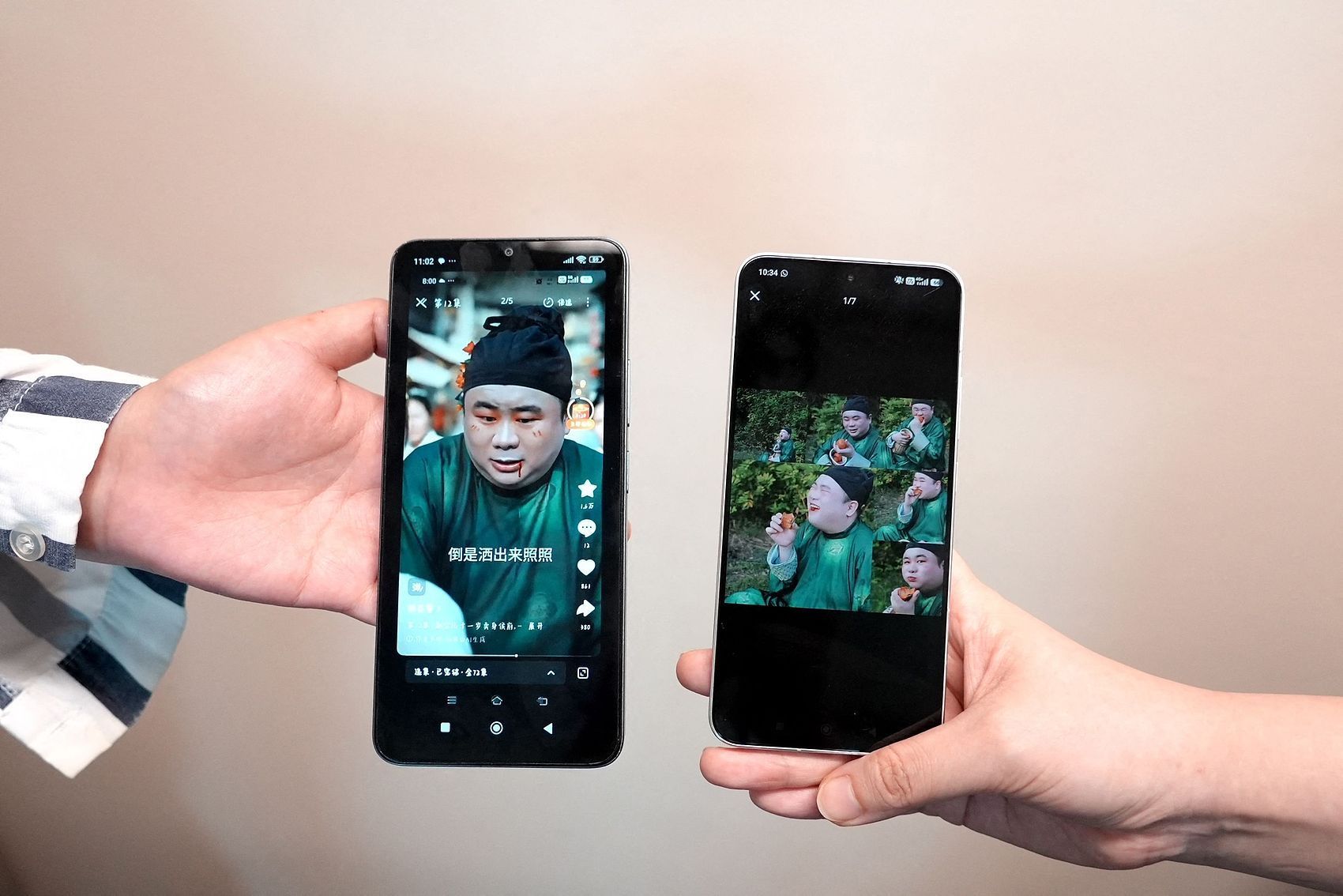
Screenshots of hanfu stylist Baicai's social media post (R) and the AI micro-drama (L) accused of stealing his likeness without authorization (VCG)
In reality, few actors at the bottom of the industry have access to lawyers to review their contracts, or the leverage to demand specific clauses if they do. When Dai was approached by a director looking to license her face for AI content production, she was offered a boilerplate agreement and an indifferent refusal when she asked to further review the terms of the arrangement. “We are expected to just trust that our face will not be misused. And if it is, it is our responsibility to find out and do something about it, which is exceptionally unfair.”
Despite the popularity of AI-generated dramas, like this summer’s breakout hit The Girl Who Was Laid Off, which helped turn its lead AI actress into a Douyin influencer with more than 500,000 followers, Yang remains optimistic about the future of human actors. “I don’t think real actors will disappear,” she says, seeing The Girl as a one-off success that would be hard to replicate. “The Girl gained a lot of exposure because the lead has an especially realistic face,” says Yang. “There are now plenty of AI-generated dramas with that level of quality, but none of them have the same level of hype.”
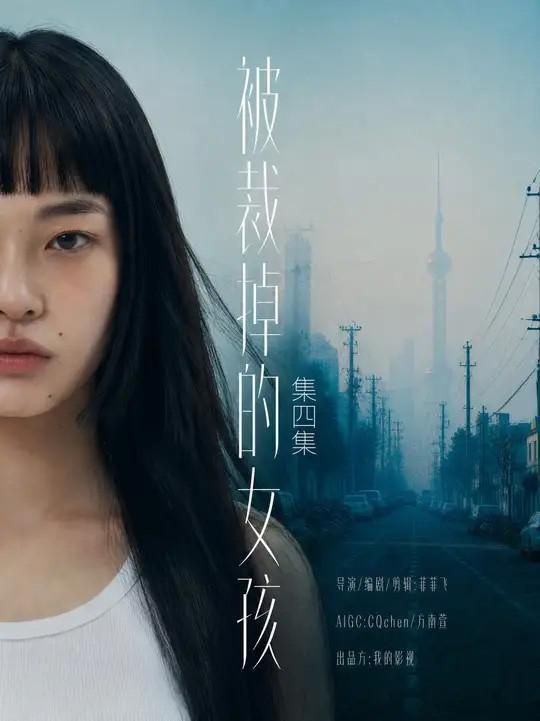
The Girl Who Was Laid Off has been praised not only for its realistic AI-generated characters but also for its relatable plot about a young woman from a small town trying to make it on her own in a big city (poster of The Girl Who Was Laid Off)
The pattern is similar to the rise of web movies in the mid-2010s. China’s streaming platforms offered distribution and revenue-sharing models that allowed low-budget feature films to reach huge audiences without the barriers of a theatrical release. The market soon exploded with low-quality, formulaic films chasing quick profits, prompting platforms to tighten their standards. “The industry quickly moved toward higher-quality content,” Yang says, “micro-dramas are walking the same path now.”
Dai strikes a more downbeat tone about the future of the industry: “I am starting to doubt whether the thing we are being asked to sell off—our likeness—can ever truly be bought back.”
She points out that even before the onslaught of AI, micro-drama actors earning 40,000 to 50,000 yuan a day were the exception, while most performers were paid the bare minimum. “The faces of background actors aren’t worth much to begin with, and no one really pays attention to them. Whether you use one person or another makes no difference,” says Dai. “We used to get paid by the hour; now we get paid by the pixel.”
As AI Takes Over Micro-Dramas, Will Actors Have to Sell Their Likenesses to Stay in Work? is a story from our issue, “Weight of the Nation.” To read the entire issue, become a subscriber and receive the full magazine.
Related Articles



