Walking into the Pang Jai fabric market in Sham Shui Po, Hong Kong, feels like entering an old mineshaft: a seemingly endless grid-like network of narrow pathways; makeshift supports holding up the sheet-metal-and-canvas patchwork of a roof so low one can almost touch it. Incandescent lights dimly illuminate the ceiling-high walls of fabric bolts in all colors and materials imaginable.
The trees surrounding the market, some of which were planted by the early hawkers for rain and sun protection when they first arrived over four decades ago, have literally become part of the structure, with branches growing into and embracing the metal fence surrounding the market and roots shooting through crevices in the concrete floor. There are radios bordering on antique playing Cantonese pop or local talk shows, and electric fans everywhere to keep hawkers cool when temperatures reach 40 degrees Celsius in summer. The whole market feels alive, filled not just with fabrics, but with the lives and memories of the people selling them—but all of this will be gone by the end of January.
Pang Jai, located in the heart of Kowloon, is bustling with activity when TWOC visits. Many visitors have come to catch a glimpse of old, makeshift Hong Kong before yet another part of it vanishes for good as the government, after years of indecision, is finally moving forward with plans to clear the area for residential construction. The hawkers are busy chatting and having their pictures taken; some of them have been here since the market’s beginning. At the time, subway construction in the area forced hawkers to relocate from nearby Yu Chau Street and set up shop at the rectangular area on the corner of Yen Chow Street and Li Chi Kok Road, today known as Pang Jai (meaning “shack” in Cantonese).
Tung Suk (Cantonese for “Uncle Tung”) has been here since the beginning. Now 90 years old, he is sporting what has become his signature outfit over the years: an orange raincoat and baseball cap. He has been in the leather and textile trade since the late 1950s, first at another market nearby before moving to Pang Jai in the late 1970s.
The name Pang Jai is said to have been given by students who discovered the market in the 90s
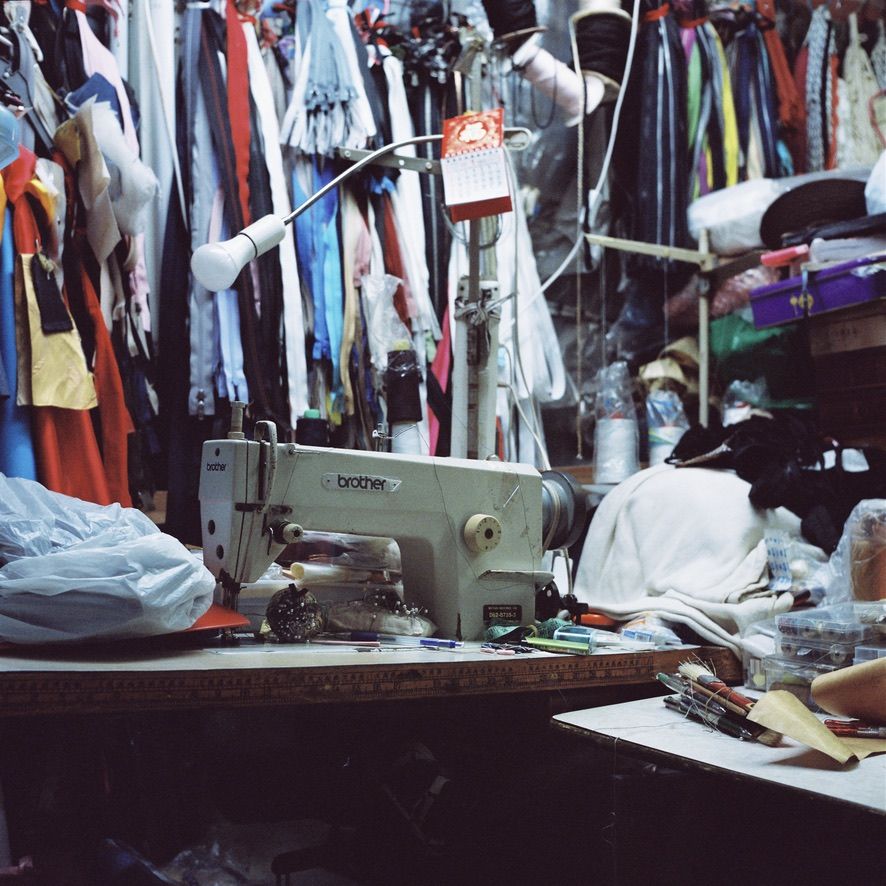
Some hawkers have expanded their business to providing services like mending clothes
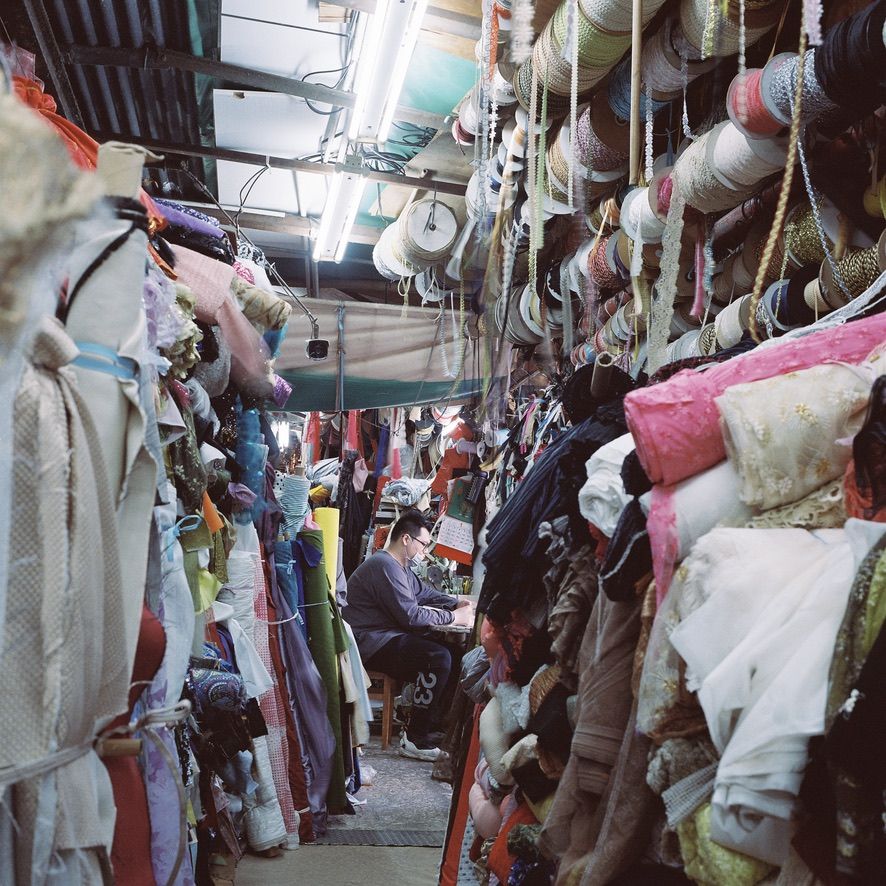
In summer temperatures can reach 40 degrees Celsius
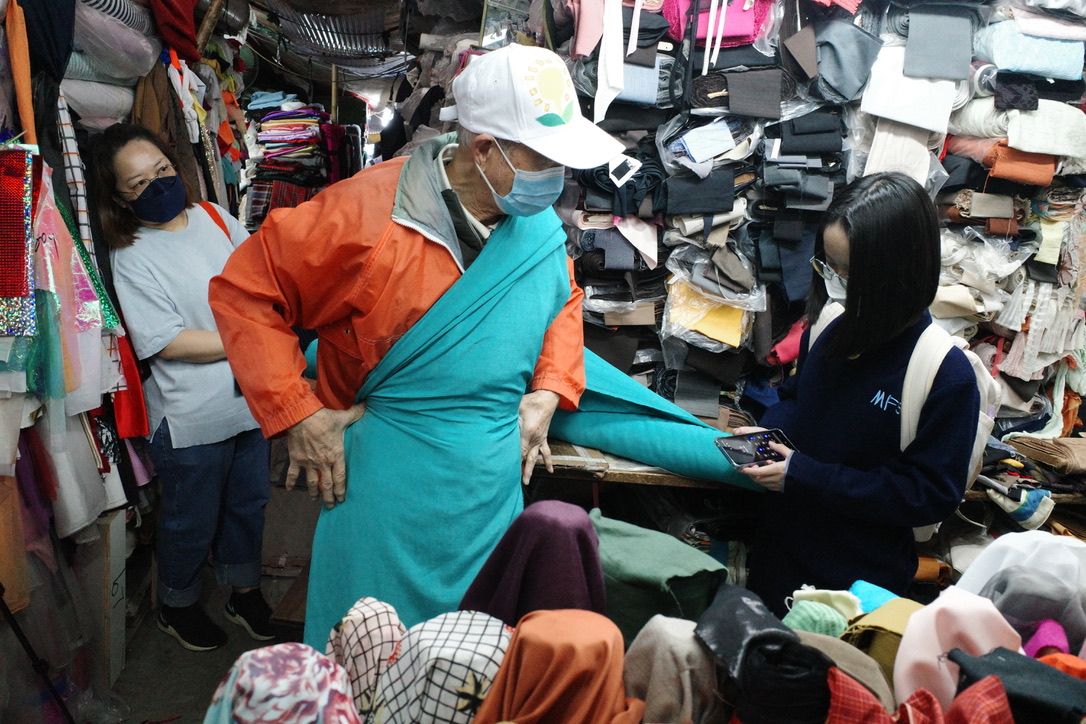
Three high school students approach him and pull out their phones to show him a pattern they’re looking for. They need turquoise fabric to make a dress for a school project. Tung Suk has it all: He pulls out a bolt of fabric from one of the stacks behind him, unwinds it, and wraps himself in it to show what a dress might look like. When he needs to pull out a fabric bolt from somewhere deep in the wall, he uses metal rods to prop up the bolt boards on top and then pliers to pull out the one he needs from below. “Working here is like playing sports,” he tells TWOC with a smile.
Business these days is mostly reduced to students looking to buy small amounts of supplies for projects and the occasional returning customer who still knows how to sew. But in the 1980s, this was a thriving center of the city’s garment industry. Back then, Hong Kong was a hub for fabric production and trade in East Asia, with markets like Pang Jai right at the intersection of large-scale production meant for export as well as small-scale local business.
The vast amounts of fabrics moving through the city, along with deadstock from local production, provided a steady supply for street hawkers like Tung Suk selling to local consumers in need of fabrics to make and mend clothes and other things at home. Those two forces—the large-scale trade and production in Hong Kong to source high-quality fabrics, and the demand from local consumers—have diminished greatly as the textile trade has moved to Guangdong province on the mainland since the 1990s, and consumers’ demand for fabrics has mostly been supplanted by fast fashion.
Some of the hawkers at Pang Jai have tried to adapt to this new reality: for example, by catering specifically to the needs of younger customers like design students. At one family-run stall TWOC comes across, the owner enthusiastically shows off their specialized fabrics with unique patterns imported from Japan. The shop, run by the Ho family for two generations, has an Instagram account where they show off their fresh wares. This sets them apart from competitors at Pang Jai, some of whom haven’t bought new fabrics in years because they can hardly sell off their old stock.
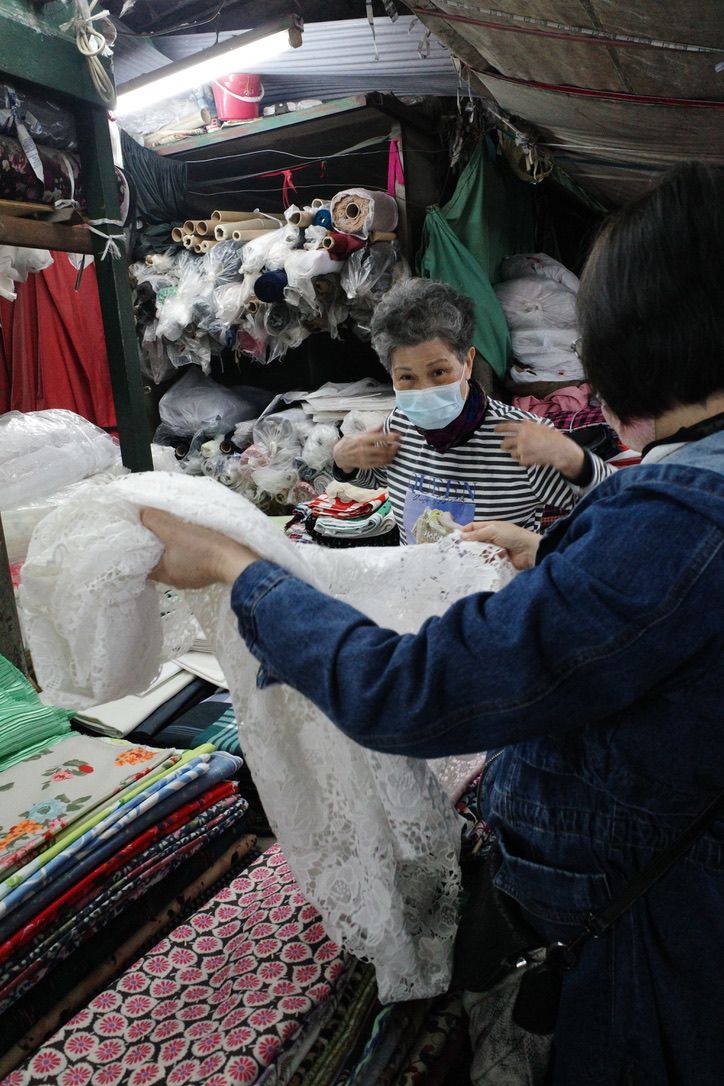
The demand for fabrics has been largely supplanted by fast fashion
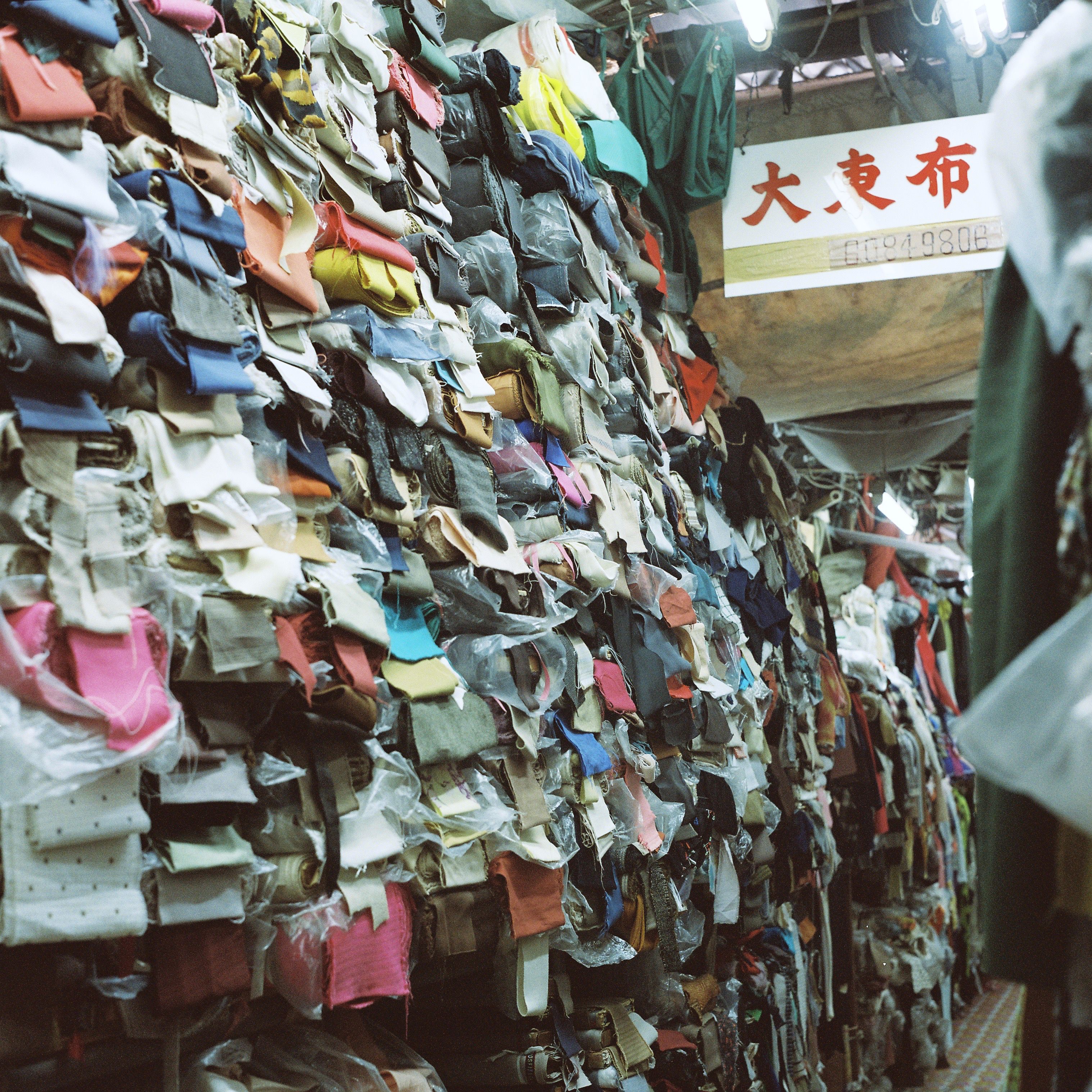
Tung Suk’s wall of fabric bolts
Nevertheless, business at Pang Jai is hardly booming nowadays. “Nobody really needs to buy fabrics anymore,” says Jasmine Lo, a student majoring in social work at Hong Kong Polytechnic University who has volunteered and organized community engagement projects at the market in the months leading up to the pending closure.
But dwindling sales are not the biggest threat the Pang Jai sellers have been facing. Since 2006, the Hong Kong government has been trying to seize the land to make room for residential construction. The hawkers were asked to relocate to a nearby area and set up shop there, but the authorities only formally recognized and were willing to compensate a fraction of the traders: those with an official hawker license, which were formerly issued to lower-income households to run tax-exempt street businesses.
The permits didn’t used to be desirable, explains Dr. Leung Chi Yuen, a teaching fellow for social work at Hong Kong Polytechnic University. But when the government stopped issuing the permits in the early 1970s, a legal gray area emerged wherein people without a permit aren’t legally allowed to sell anything on the street, but can be the “assistants” of those holding permits, creating a street economy largely beyond the control and oversight of the authorities. “Even the government can’t tell who owns the businesses,” says Leung.
Many sellers at Pang Jai never held permits and have been operating as “assistants,” and are therefore not eligible for monetary compensation once they move out. The traders resisted the first government push to clear Pang Jai until 2015, when the Food and Environmental Hygiene Department (FEHD) yet again started making plans to demolish Pang Jai for residential construction on what is now valuable land in the heart of Kowloon.
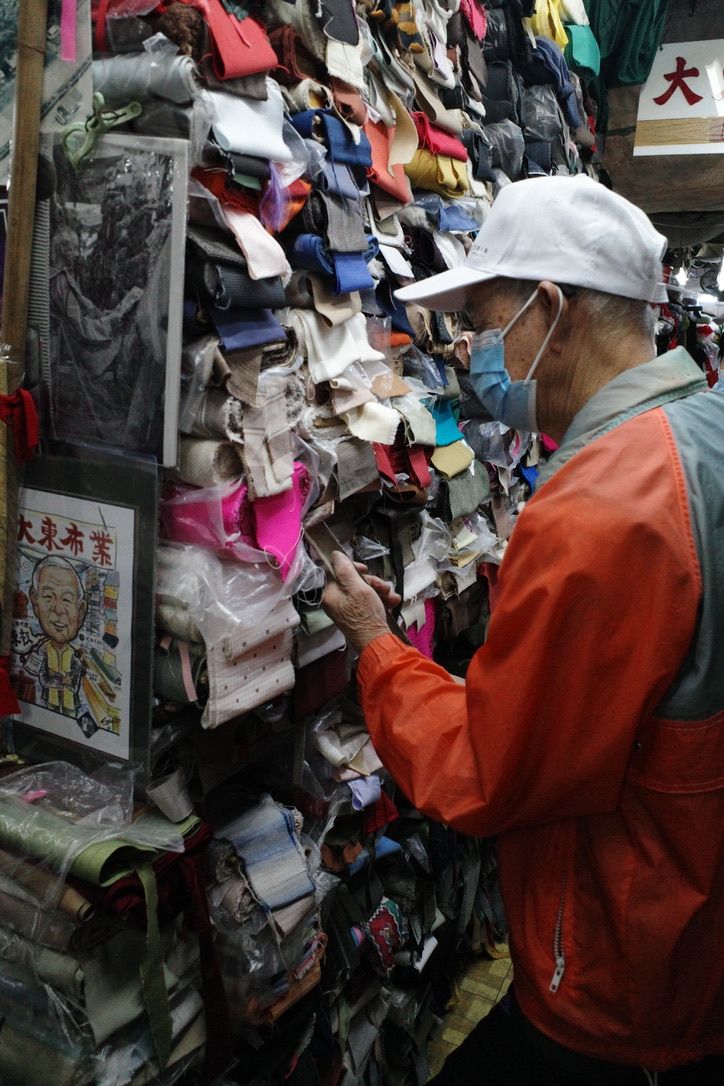
Tung Suk uses metal rods to access fabric bolts deep down in the stack

During the most prosperous times, around 100 hawkers were running businesses at Pang Jai
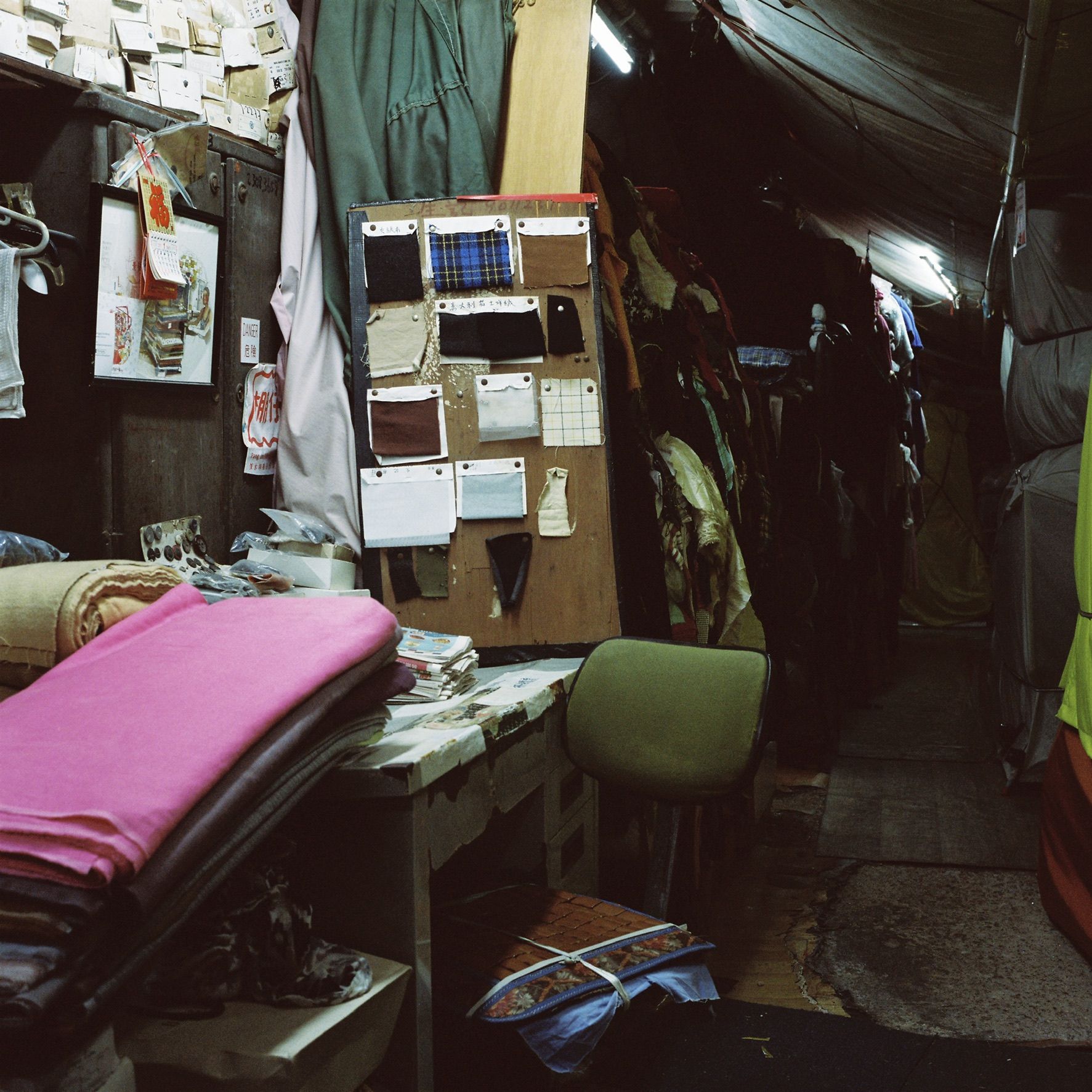
Now only around 30 hawkers are left at Pang Jai
Around that time, the hawkers banded together to establish a council of representatives. Social workers like Dr. Leung (doing research in the area for his PhD at the time) became aware of the fabric sellers’ struggle against the FEHD and began supporting them. “At first we just wanted to extend the deadline [for eviction],” he tells TWOC.
They managed to postpone the day of reckoning for years, but now January 31 has been set as the market’s closing date. Nevertheless, years of grassroots activism and rounds of consultations between the hawkers and the FEHD have borne some fruit. The FEHD now formally recognizes all hawkers at Pang Jai and offers them the chance to relocate to the new market nearby, or get monetary compensation instead—60,000 Hong Kong dollars for non-licensed hawkers and 120,000 for license-holders.
Tung Suk is sitting in front of his mountains of fabrics, reminiscing on weathering years of economic downturn, both the SARS and Covid pandemics, and even multiple fires at the market over the years (fortunately, the flames never touched his stall). He has built what looks like a little cave full of memories into his stall, displaying personal belongings, gifts, pictures of friends, former patrons, awards, and certificates from his decades of volunteer work supporting disenfranchised children in education.
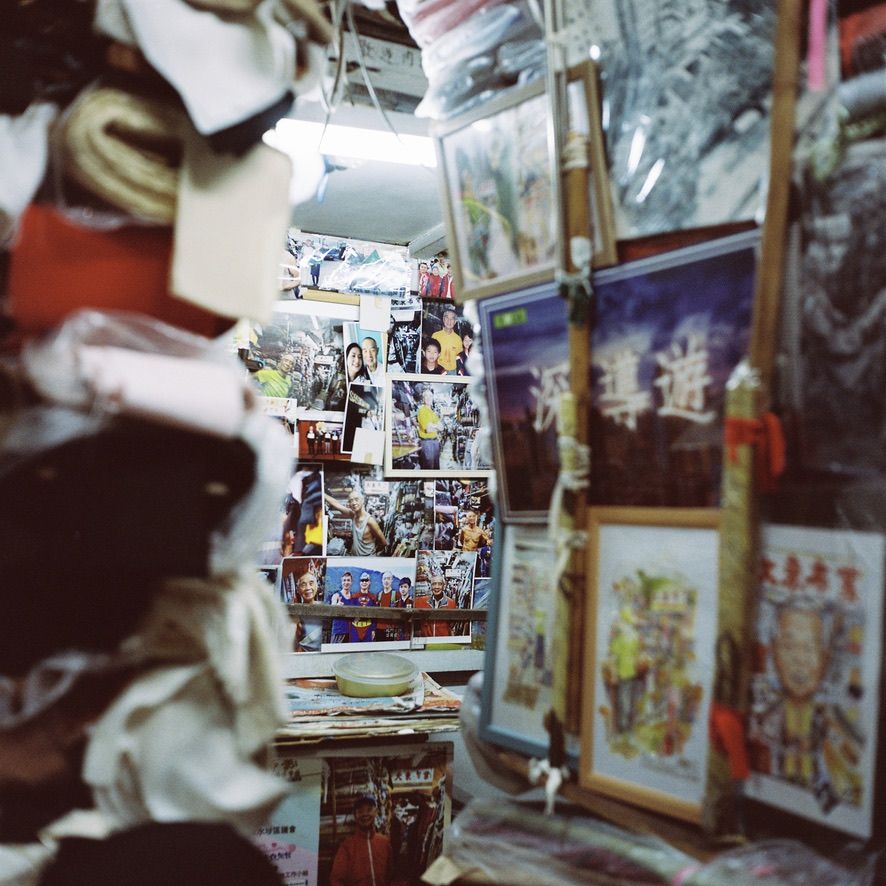
Tung Suk’s cave of memories
He points to the ramshackle roof above his stall, a long metal rod is lifting the heavy canvas to let air in, a kind of makeshift “skylight” of his own invention. With a smile, Tung Suk quotes a Chinese saying, “Open heaven’s window and speak clearly (打开天窗说亮话),” meaning to “get straight down to business,” no mincing words.
When Pang Jai is cleared at the end of the month, Tung Suk will not be moving to the new location. After 60 years in the garment business, he is retiring and looking forward to giving his remaining time to charity work. But he is worried about his remaining stock. “These fabrics all have a purpose,” he says with a sense of disappointment, pointing at the mountains of fabric bolts he is struggling to find customers for. “There’s a connection between these fabrics and our lives.”
Meanwhile, to support businesses moving to the new location, Dr. Leung and his team of students, researchers, and social workers have put forth a proposal to innovate and expand business for local consumers through a community and cultural center right next to the new market—making it a cultural hub around textile handicraft, design, and art, geared toward local consumers.
But the real value of Pang Jai may be something that cannot be simply moved and replicated elsewhere, muses Lo, the social work student and Pang Jai volunteer. “If you look around, it’s all high-rises now, and the old things with the flavor of Hong Kong are slowly disappearing.” With Pang Jai soon gone, the Hong Kong that exists between the towering skyscrapers and sterile shopping malls will have gotten a little smaller yet again.
But with a few hawkers continuing their business at the new location nearby, at least some of the social fabric that has been woven over four decades may remain intact.
Photography by Roman Kierst
Fabric of Life: The Final Days of Hong Kong’s Famous Pang Jai Market is a story from our issue, “Kinder Cities.” To read the entire issue, become a subscriber and receive the full magazine.
Related Articles