You may have never heard of Jingzhou, but about 2,000 years ago it was the most strategically important place in China. Today, Jingzhou city, located along the northern banks of the Yangtze River in Hubei province, is the unremarkable home to over 6 million people. However, it was at the heart of struggles for control of the country during the Three Kingdoms Period (220 – 280) and served as the backdrop for Romance of the Three Kingdoms, one of China’s most famous books.
Jingzhou was one of the first official administrative regions in China, apparently created by the mythological ancient ruler Yu the Great over 4,000 years ago. It served as the capital of the State of Chu, an advanced realm where the people were known for their distinct clothing and romantic poetry, in the Spring and Autumn (770 – 476 BCE) and Warring States (475 – 221 BCE) periods.
In the classic novel Romance of the Three Kingdoms, Jingzhou is mentioned in 72 of 120 chapters. The novel, an epic written in the 14th century and still a favorite in China today, has made Jingzhou known in every Chinese household. Here, the ferocious warlord Cao Cao (曹操) lost the Battle of Red Cliffs, missing his best opportunity to dominate the realm. Military ruler Liu Bei (刘备) rose in Jingzhou, only to lose a pivotal battle at Yiling and see his Shu state decline, while Guan Yu (关羽), known as the “martial saint” and still revered as a deity in much of China, fought his last battle in Jingzhou, leaving behind the most tragic memory in the area’s history.
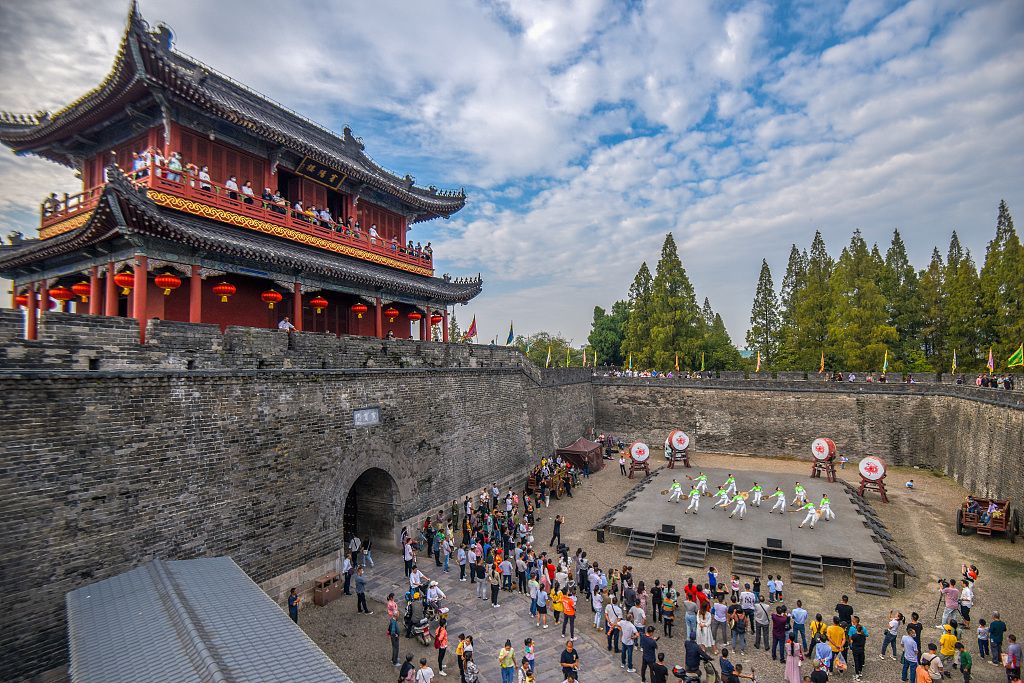
Local authorities reconstructed the ancient city wall of Jingzhou on the site of its ruins (VCG)
Today’s city is a remnant of the ancient Jingzhou. According to the Book of Documents (《尚书》), Yu the Great divided the country into nine regions, with Jingzhou as one of them. Back then, the region of Jingzhou was nearly three times the size of the city that retains its name today.
Vast fertile plains were surrounded by mountains that formed natural barriers to invaders, while the Yangtze and Han rivers flowed through the middle. It was a prosperous place, easy to defend but perilous to attack, which Cao Cao, ruler of the state of Wei, discovered to his cost in the year 208.
Cao occupied land north of the Yangtze River and sought to expand southwards via Jingzhou. To his east was the state of Eastern Wu under Sun Quan (孙权), and Liu Bei’s State of Shu lay to the west. All three powers wanted to defeat the others and unite the realm under their flag—Jingzhou was at the center of their decades-long power struggle.
Cao and his army took over most of Jingzhou in 208, prompting Sun and Liu to ally against him. Cao’s army still significantly outnumbered them, but an ingenious attack at the Battle of Red Cliff set Cao’s fleet on the banks of the Yangtze ablaze, ruining his chances of crossing and continuing his expansion. The battle at the heart of Jingzhou changed the course of history, leading to a precarious balance of power the three kingdoms all struggled to break for years.
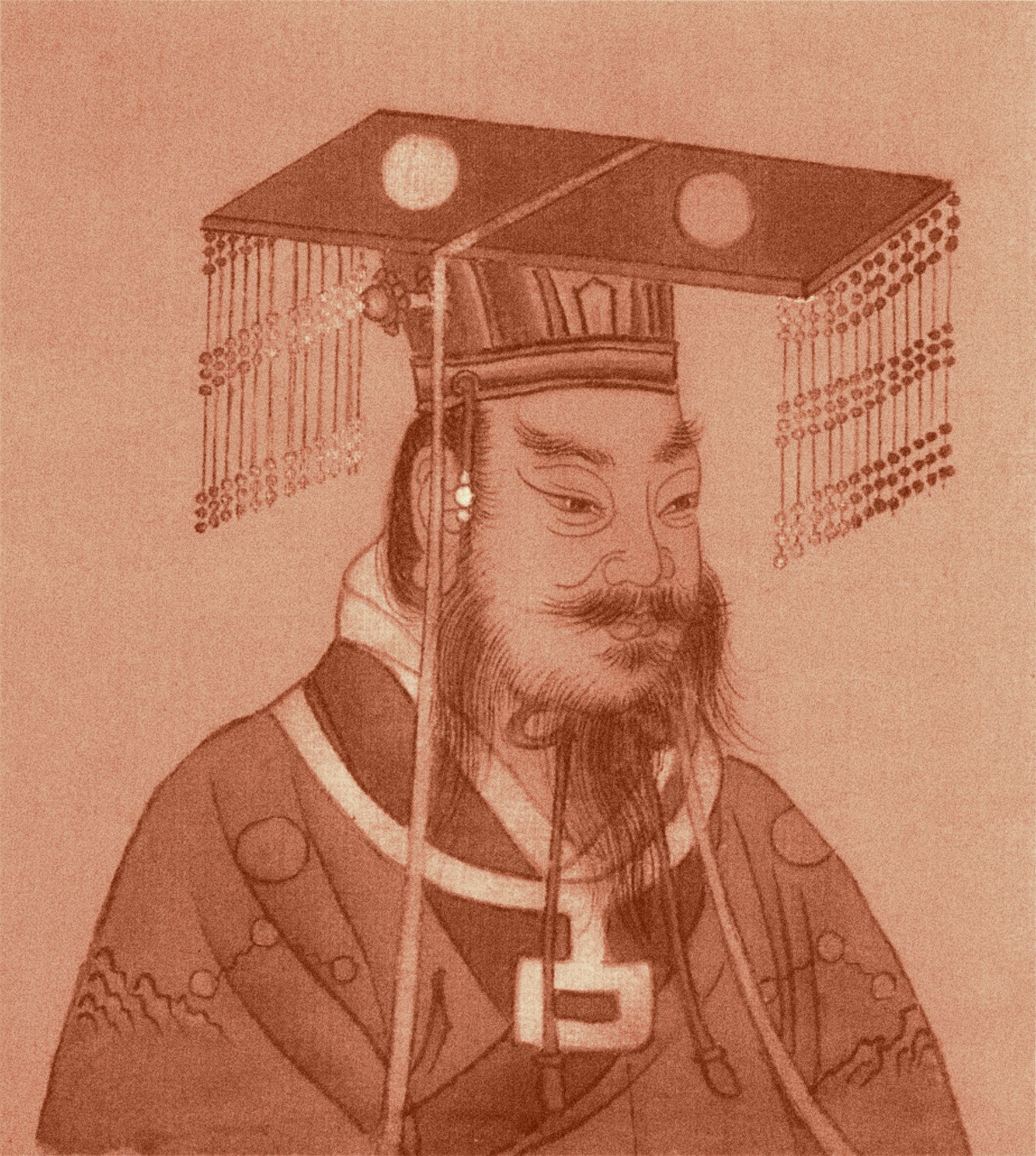
A portrait of Sun Quan, Emperor of Eastern Wu (VCG)
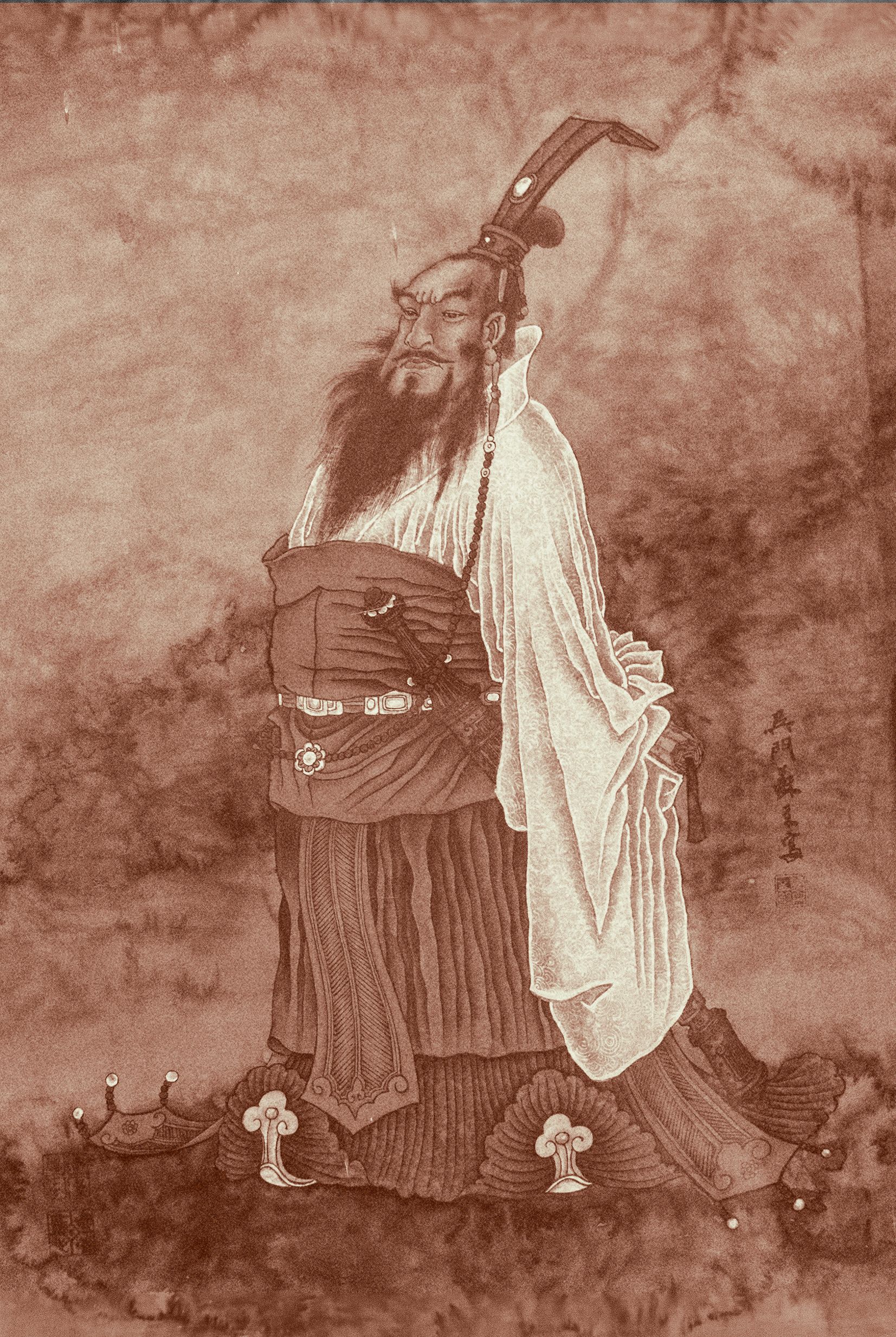
A portrait of Cao Cao, Emperor of Wei Kingdom (VCG)
Though defeated, Cao retained control over northern Jingzhou. Sun expanded westward, taking most of Nanjun county, which was the most important part of Jingzhou. Liu gained the least, taking some of the southern regions, but leaving him without a secure base.
Liu asked Sun to lend him some parts of Jingzhou, promising to return them once he had conquered more lands for himself. Sun agreed to his ally’s request, but years later, when Liu had secured much more land and firmly established his Shu state, he refused to return the lands he had borrowed. War soon broke out between the former allies. The phrase “Liu Bei borrows Jingzhou (刘备借荆州)” has since become a widely-used idiom, referring to the act of borrowing something without returning it.
Sun and his Wu state didn’t give up retrieving Jingzhou, though, and Liu’s desperation to keep hold of this strategic area eventually led to the death of one of China’s most revered generals, Guan Yu. Liu told Guan Yu, who was famously brave and loyal, to hold his ground despite threats from both Cao in the north and Sun in the east. Sun launched a surprise attack on Jingzhou while Guan Yu was distracted in the north, defeating the unprepared general. Guan Yu was captured and then executed.
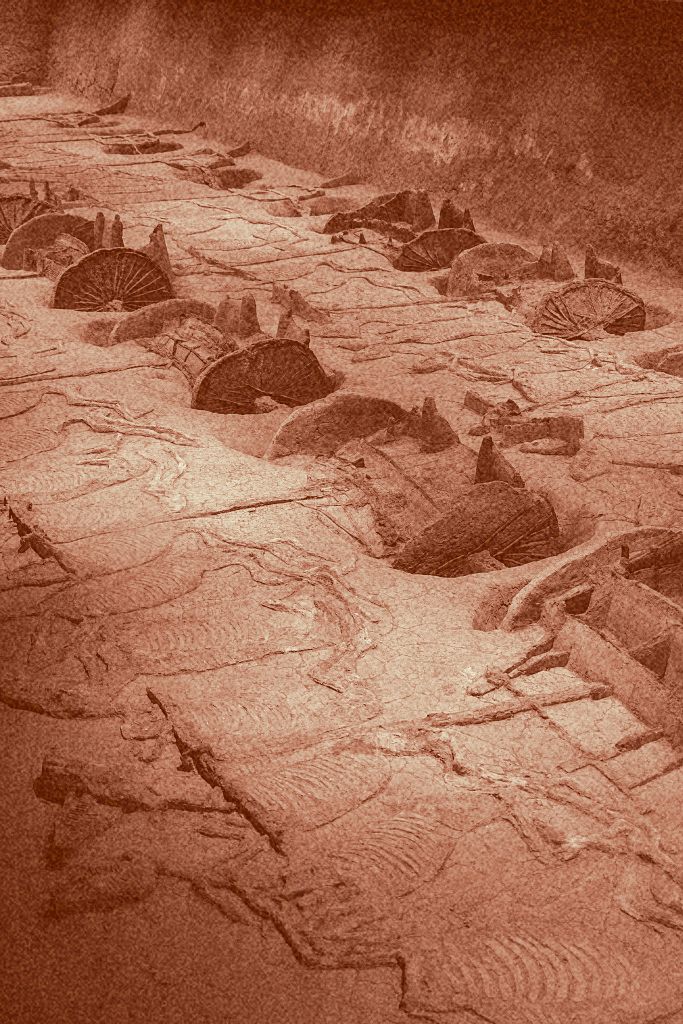
The large chariot horse pits in the Chu King's Mausoleum in Jingzhou display implements of Chu warfare from the Spring and Autumn and Warring States periods (VCG)
The dramatized version of the story told in Romance of the Three Kingdoms is even more famous. Here, Guan Yu’s loss of Jingzhou is attributed to his overconfidence and lack of vigilance, birthing the idiom “Guan Yu’s carelessness cost him Jingzhou (关羽大意失荆州 ),” which is used to caution against arrogance or underestimating an opponent.
Liu’s loss of Jingzhou marked another significant turning point in the power dynamics of the era, with the Wu state taking back control of Jingzhou and the Sun-Liu alliance destroyed. For the next four decades, the territorial boundaries between the three states remained largely unchanged.
Though Jingzhou’s heyday was two millennia ago, its ancient significance still attracts history buffs today. In 2011, stories of Jingzhou from the Three Kingdoms era were designated as intangible cultural heritage by Hubei’s provincial authorities. Visit Jingzhou today, and you’ll find the ruins of the ancient city along with a shrine dedicated to Guan Yu. While Jingzhou is no longer the sight of power struggles between warlords, it is still one of the most famous places in the country.
Related Articles