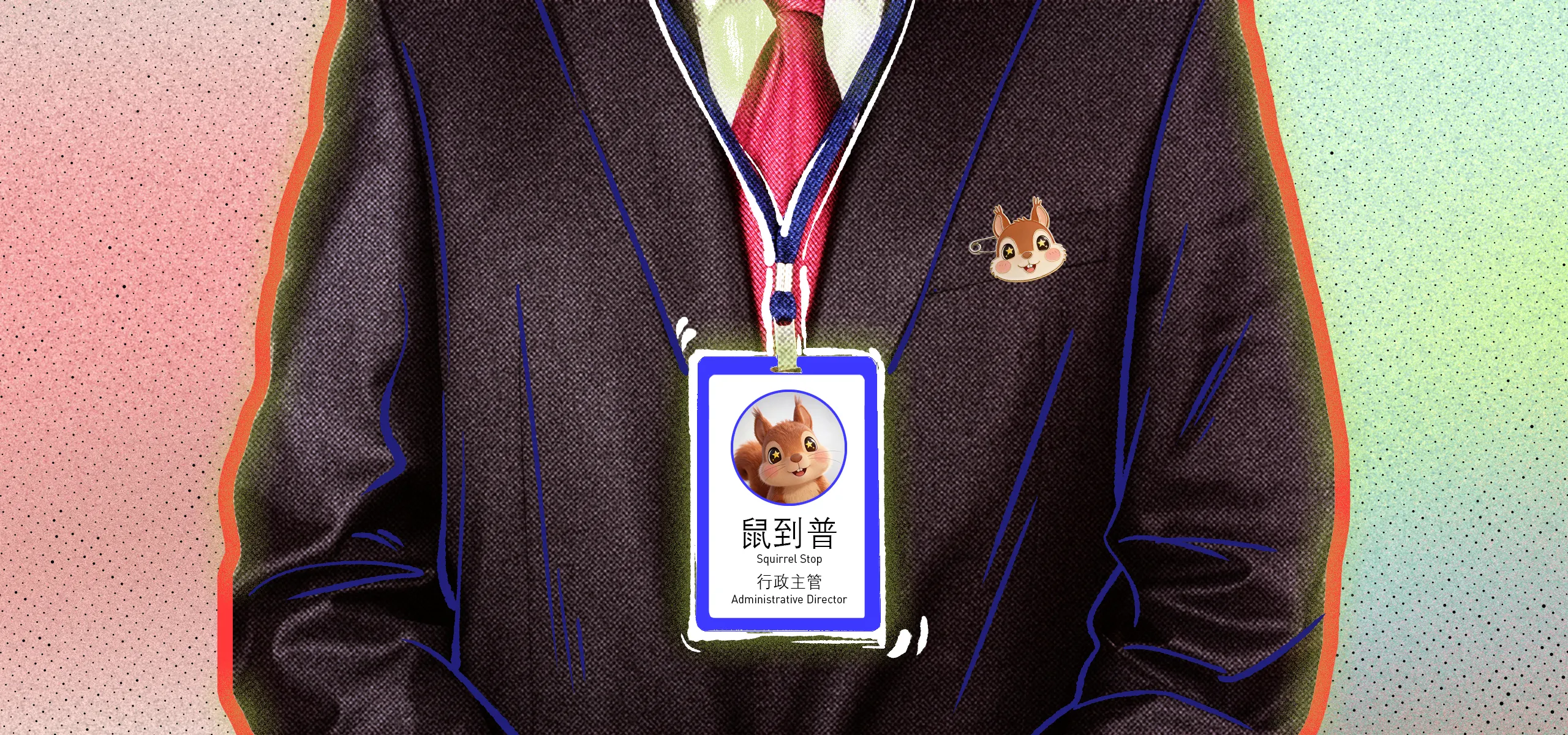

After discovering that employees at one of China’s biggest snack companies are imbued with squirrel-related names, netizens have begun concocting their own. But is there a darker side to this seemingly playful trend?
If you’re aware of the famous Chinese nut-and-seed snack brand Three Squirrels (三只松鼠 Sān Zhī Sōngshǔ), you’ll also probably know that many of its customers have recently taken to social media to ponder if there are actual rodents working there.
The chatter arose after buyers noticed a whole team of “squirrels”—with playful names like Squirrel No. 5 (鼠到五 Shǔ Dàowǔ), Squirrel Pancake (鼠蛋饼 Shǔ Dànbǐng), or Computer Mouse (鼠标器 Shǔ Biāoqì)—apparently manning the brand’s online store. They even honor customers as “masters (主人 zhǔrén).”
This crew of dedicated squirrel staff takes their furry personas to the next level, greeting you with messages like:
Master, you’re now speaking with Squirrel Qiaoren, a lively little customer-service squirrel who will solve all your problems!
主人,现在接待您的是鼠巧仁,是一只活泼可爱的客服小松鼠,您有任何问题都会帮您解决好哦。
And if they make a typo, they’ll say:
Sorry … my little paws slipped.
抱歉,爪爪按错了。
Despite being one of China’s largest snack brands since the mid-2010s, the Anhui province-hailing company recently went viral once again when a clip of their office—dubbed the “Squirrel Nest (鼠窝 Shǔwō)”—was posted online. Delving deeper into the company’s “squirrel culture (鼠鼠文化 shǔshǔ wénhuà),” it was discovered that every employee has a squirrel name (每一个员工都有自己的鼠名 měi yí gè yuángōng dōu yǒu zìjǐ de shǔmíng)—even their CEO, who goes by the name “Papa Squirrel (松鼠老爹 Sōngshǔ Lǎodiē),” and his wife, “Mama Squirrel (松鼠老母 Sōngshǔ Lǎomǔ).” In addition, the company’s mission is “to make all masters [customers] happy (让天下主人爽起来 ràng tiānxià zhǔrén shuǎng qǐlái).”
The names don’t stop there. The company’s internal software is called Flying Squirrel (飞鼠 Fēishǔ), the company’s business park is Squirrel Town (松鼠小镇 Sōngshǔ Xiǎozhèn), the cafeteria is Shared Squirrel Flavors (鼠味相投 Shǔ Wèi Xiāngtóu), and the restrooms are Squirrel Relief Rooms (松鼠发泄馆 Sōngshǔ Fāxiè Guǎn).
Meanwhile, Three Squirrels invites customers to casually embrace their “squirrel buddies (鼠搭子 shǔ dāzi),” and you can’t even be mad because…how do you yell at a squirrel?
Netizens, highly entertained, formed a “meme army,” suggesting names like Squirrel Super Idol (鼠泼爱豆 Shǔ Pōàidòu), a playful transliteration of “super idol”; Squirrel Tycoon (鼠窝富 Shǔ Wōfù), a homophone of “I’m the richest (属我富 shǔ wǒ fù)”; and Squirrel Counting Money (鼠钞票 Shǔ Chāopiào), a take on 数钞票 (shǔ chāopiào), literally count money.
This type of “nickname culture (花名文化 huāmíng wénhuà)” in China can mostly be traced back to the early days of Alibaba. Its founder, Jack Ma, a big fan of Jin Yong’s martial arts (武侠 wǔxiá) novels, wanted the company to feel like a free-spirited, heroic world at the time. As such, employees were encouraged to choose nicknames inspired by wuxia characters. Ma himself went by 风清扬 (Fēngqīngyáng), a master swordsman from Jin’s The Smiling, Proud Wanderer.
Now with over 120,000 staff members and running out of wuxia-inspired names, new employees often have to rack their brains to come up with unique nicknames, sometimes even asking netizens for help. Ever so cheeky, netizens have suggested names such as 来裁 (Lái Cái), meaning “come here and fire me”; 望裁 (Wàng Cái), meaning “waiting to be laid off”; or 蒜鸟 (Suàn Niǎo), literally “garlic bird,” a play on 算了(suànle), or “forget about it”—small jabs at the tech company’s notoriously demanding workplace environment.
Following Alibaba’s lead, many other companies adopted their own nickname systems. Major rival and e-commerce platform Pinduoduo (Temu’s parent company) is full of fruits and vegetables, workers at fellow e-commerce company JD.com greet each other as 兄弟 (xiōngdì, brothers), while those at ByteDance, owner of TikTok and Douyin, address one another as 同学 (tóngxué, classmates)—coincidentally, the same as what Alibaba now uses.
The trend has also sparked a wave of jokes among netizens:
Last time I picked 30 names, and all of them were taken. Then I realized...no one has used “Workhorse” yet.
上次选了30个都被占了,后来发现牛马还没人用。
You could call yourself “Meow-ao.” That way, everyone will be too embarrassed to say your name out loud.
可以叫喵嗷,这样大家都会因为羞耻而不敢叫你。
A stand-up comedian even joked:
We should name ourselves after our salaries. Then we could say things like: “Is this something 3,000 yuan should handle? No way—this needs 8,000 yuan. Right, 16,000 yuan?”
应该用工资取名,这样就可以说:这事儿该三千干吗,这不得让八千去干,您说呢一万六?
But choosing a nickname still requires some seriousness. Employees often remind newcomers:
Choose your workplace nickname carefully—otherwise, when it gets called out during a big meeting, it can be really embarrassing.
建议好好起名,不然等开大会被叫出来就很尴尬了。
Companies claim these nicknames help “flatten hierarchies” and make everyone feel like part of a big happy family. However, employees have noticed a more insidious side effect: behind all the cute nicknames, nobody knows anyone’s real name anymore. When someone leaves, their replacement can even inherit the same nickname and continue serving clients as if nothing has changed. This led netizens to quip:
Getting a nickname at a big tech company feels like having your soul replaced.
在大厂起花名像被夺舍。
Resisting the erosion of individuality in corporate life, young workers increasingly identify with Chihiro in Hayao Miyazaki’s Spirited Away (2001), where the 10-year-old heroine is trapped in a spirit world, stripped of part of her name, and forced to work in a bathhouse. They remind one another of a crucial line from the film in their online discussion:
Chihiro, don’t forget your name!
千寻,不要忘记自己的名字!
Young workers are even inventing satirical workplace nicknames for themselves to share online, using them as a form of rebellion against over-competitive and high-stress work environments. For example, a worker surnamed Lin might call themselves Lin Shigong (林时工), a homophone of “temporary worker (临时工 línshígōng).” Similarly, someone surnamed Wu might adopt Wu Suowei (吴所谓), which sounds like “whatever (无所谓 wúsuǒwèi).” Even employees accustomed to using English nicknames at foreign companies have joined the trend, creating hybrid nicknames that mix Chinese and English, such as “Maggies钱不干,” a play on “没给钱不干 (méi gěi qián bú gàn, no pay, no work).”
In the end, whether you’re a Squirrel, a Workhorse, or just a wad of fleshy cash, the work doesn’t stop. You might as well have some fun—and inject a bit of personality—into the nicknames you give yourself.
What to Say When Squirrels Take Over the Office is a story from our issue, “New Markets, Young Makers.” To read the entire issue, become a subscriber and receive the full magazine.
Related Articles