

Prized in ancient China for their strength on and off the battlefield, horses have long been synonymous with talent and misused potential—a theme now resonating with the country’s youth
Chinese New Year, which falls on February 17 this year, ushers in the Year of the Horse, the seventh zodiac animal. Symbolizing energy, loyalty, and endurance, fine horses have for centuries been compared to great talents in China, especially those who have wielded their acumen to serve the state.
The horse as a metaphor for talent is also reflected in Chinese characters. For example, the character 俊 (jùn), meaning “handsome” or “exceptionally intelligent,” as in 才俊 (cáijùn), shares its phonetic root with 骏 (jùn), or “a fine steed.” Along the same lines, an inferior horse is often used to describe a mediocre person of no talent.
Learn more about Chinese zodiac animals:
- Justice for Snakes: The Real Story of the Most Misunderstood Zodiac Animal
- Idioms for the Year of the Dragon
- The Many Faces of the Rabbit in Chinese History and Culture
In the late eighth century, Han Yu (韩愈), a literary giant of China’s Tang dynasty (618 – 907), succinctly captured the shared plight of Chinese intellectuals at the time, comparing them to the winged, mythical qianli horse (千里马)—a horse that can travel a thousand miles a day. In his essay “On Horses (《马说》),” he wrote: “Qianli horses are common, but a true judge of horses is not,” thereby elevating the fabled steed to a symbol of great talent in Chinese culture and underscoring the even greater rarity of a person able to recognize eminence when they see it. More pressingly, ability is meaningless if it’s not appreciated: a mismanaged steed was, in Han’s words, fated to “die in obscurity in the common stable.”
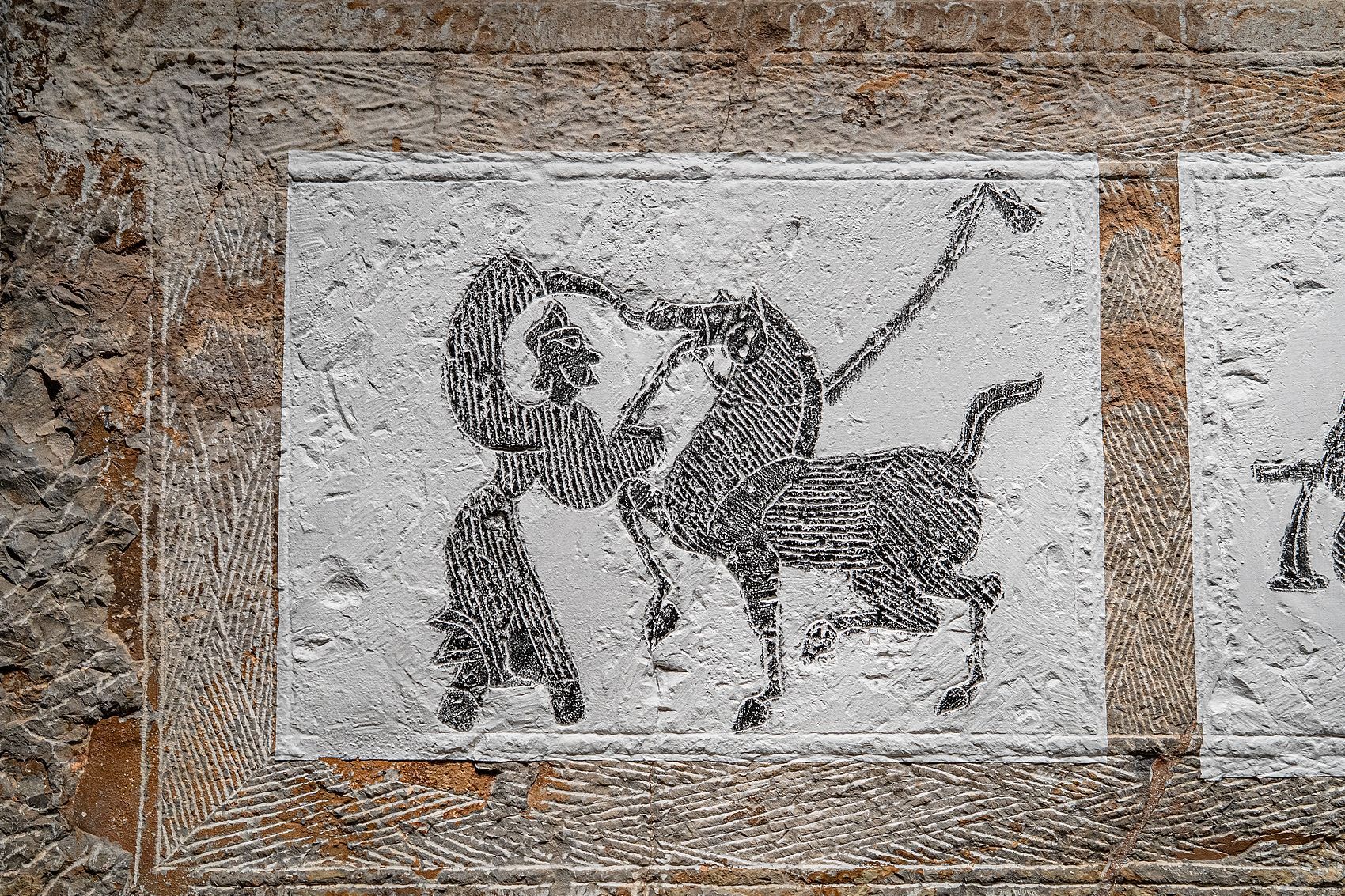
A relief on a stone coffin panel from the Western Han dynasty (206 BCE – 25 CE) depicts Bo Le, master of identifying exceptional horses, on display at the Tengzhou Han Dynasty Stone Relief Museum in Shandong province (VCG)
But why did the horse, rather than any other animal, become the archetype for talent? Han did not invent this idea; in fact, the connection between horse and ability had at that point already been woven into aristocratic Chinese culture for over a millennium.
For example, the horse as an emblem of unfulfilled ambition can be found in “Nine Arguments (《九辩》),” commonly attributed to the third-century BCE poet Song Yu (宋玉), which states: “People nowadays reject the swift steed and refuse to mount it, choosing instead to spur a slow, weak horse along the path.”
The text Strategies of the Warring States (《战国策》), detailing political strategies of the Warring States period (475 – 221 BCE), recounts a story of King Zhao of Yan, who sought advice on recruiting worthy men for his rule. To aid the search, the king’s advisor, Guo Wei (郭隗), presented a story: There was once an ancient king who offered a thousand taels of gold for a qianli horse, but none were found. Three years passed in vain until a courtier volunteered to lead the hunt, spending 500 taels of gold on the pursuit in a matter of months. However, upon returning, he only had the bones of a dead horse to show for his efforts. Furious, the king demanded an explanation. “If a dead horse is worth 500 taels of gold to you, how much would you pay for a live one?” the courtier reasoned. “The whole world is now convinced of your resolve to buy such a horse, and they will surely come.” Within a year, several magnificent specimens had been offered to the king, and the idiom “a thousand pieces of gold to buy bones (千金买骨 qiānjīn mǎigǔ)” was born.
Guo Wei’s strategy was simple: by convincing his own king to honor a modest talent, brilliant minds and loyalists would flock to his court, helping the king to revitalize the state of Yan.
In ancient China, because horses were of paramount value as strategic military assets and status symbols, breeding a suitable mount was not mere husbandry; it was a sophisticated discipline. Known as the art of horse appraisal, or xiangma (相马), such work demanded systematic judgment and a discerning eye—qualities long seen as analogous to identifying human talent.
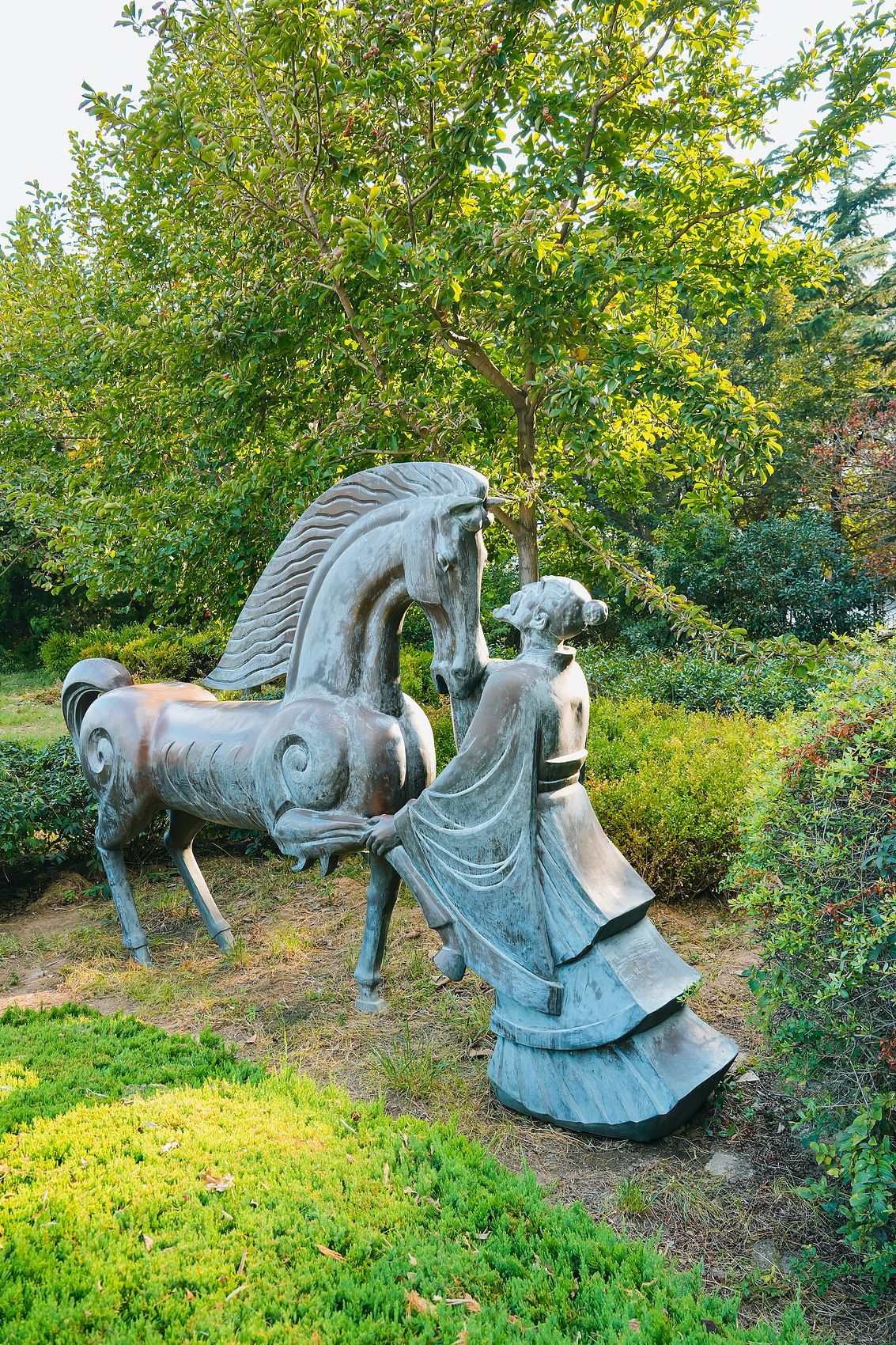
A modern sculpture of Bo Le examining a horse in a park in Qingdao, Shandong province (VCG)
According to the Rites of Zhou (《 周礼》), a Chinese classic on governance and rituals in the Zhou dynasty (1046 – 256 BCE), official posts dedicated to equine management, such as “Horse Administrator” and “Marshal of the Stables,” already existed. By the Warring States period, the practice had evolved into a highly specialized field. The ancient text Master Lü’s Spring and Autumn Annals (《呂氏春秋》), for example, records 10 famous horse appraisal masters, including Han Feng (寒风) and Ma Chao (麻朝), each renowned for their expertise in evaluating a specific part of the horse, such as the mouth, teeth, or eyes. This demonstrates how horse appraisal had already developed into a formal system, mirroring the strict assessments used to identify capable officials through mechanisms such as “the inspection and recommendation system” and the later imperial examinations.
The criteria for an excellent horse were systematically outlined in ancient texts like the Classic of Horse Physiognomy (《相马经》), dating from the Warring States period and of unknown authorship, and the agricultural encyclopedia Essential Techniques for the Common People (《齐民要术》), compiled by Jia Sixie (贾思勰) during the Northern and Southern dynasties period (420 – 589). Standards were established for the horse’s every trait, from conformation and physique to its coat and even the expression in its eyes.
As horse appraisal evolved into a systematic discipline, the name of one master, Bo Le (伯乐), transcended the craft. Bo was a legendary horse appraiser active during the Spring and Autumn period (770 – 476 BCE), later celebrated in historical and philosophical texts. His legend, however, rests not only on his excellent technical skills but also on his profound empathy for the creatures with which he worked. Strategies of the Warring States tells of Bo encountering a horse, hide chafed and weathered, struggling to haul a salt cart up a mountain slope. Recognizing the inherent value of the beleaguered animal, Bo was overcome. He descended from his carriage, clasped the horse, and wept, then removed his own robe to shelter it. In response, the horse “lowered its head to snort, before raising it to neigh, its cry reaching the heavens.” This story also coined the idiom, 骥服盐车 (jìfú yánchē), which literally means “a fine steed yoked to a salt cart”—a talented person wasted in a humble position.
This moment of shared sorrow in the face of squandered excellence transformed the name Bo Le from a mere title into the embodiment of a talent scout and mentor who recognizes and champions latent genius.
Today, the Chinese still refer to a promising newcomer as a qianli horse and revere discerning mentors as “Bo Le,” keeping these ancient metaphors alive. However, an interesting twist has emerged: young people, in a bleak spin on their need to endure grueling work in a highly competitive job market, have begun to refer to themselves as “work horses and oxen (牛马 niúmǎ),” traditionally beasts of burden. And while the analogy’s emotional tone has shifted from aspiration to resignation, its core still holds, speaking to the same age-old concerns: an individual’s value is often forged by the circumstances they face, as well as an enduring wish to be recognized should the opportunity present itself.
Related Articles