On an overcast day in early March beside Hangzhou’s famed West Lake, the yellow sashes of hundreds of gathered people popped against the slate sky. They were here for a jizu (祭祖) ceremony, traditional Chinese ancestor worship still held at family shrines across China. But unlike smaller ceremonies, this one took place at a grand ancestral hall, featured a dance troupe, and had a documentary crew recording the processions. This was a ceremony for the Qian family—one of China’s most illustrious bloodlines.
The yellow sashes indicated family members, with nearly 500 traveling from around China and the world—a particularly large number, in part due to the release earlier this year of the popular historical drama Swords into Plowshares, which tells the story of the attendants’ forbears from a millennium ago. On stage, following the honorary roll call of dozens of family societies but before the dancers had begun, a man led the crowd in reading the Qian Family Precepts (《钱氏家训》) in an over-enunciated manner usually associated with Chinese stage actors. This was the family motto at the root of the Qian’s 1,000-plus-year success: a pledge of national loyalty, family piety, and social responsibility.
Read more about ancient China:
- Thespian Emperors, Mandatory Castration, and Deadly Poetry: Fascinating Facts About China’s Forgotten Age of Chaos
- From “Big Brother Zhao” to Emperor Taizu: The History Behind Where Winds Meet
- Rebels with a Cause: Five Famous Leaders of Ancient Uprisings
The lineage can be traced back nearly 1,200 years to Qian Liu (钱镠), the founder of the Wuyue Kingdom. Qian was born in 852 in Lin’an county, in the rolling hills outside Hangzhou, during the final decades of China’s most cosmopolitan of dynasties, the Tang (618 – 960). Having ruled China for nearly 300 years from their imperial capital in Chang’an (modern-day Xi’an), they built Hangzhou—now a major tech hub—into a prosperous city, which marked the southern terminus of the Grand Canal, a waterway linking it to Beijing in the north. But it was Qian Liu who would elevate the city’s status to that of a capital.
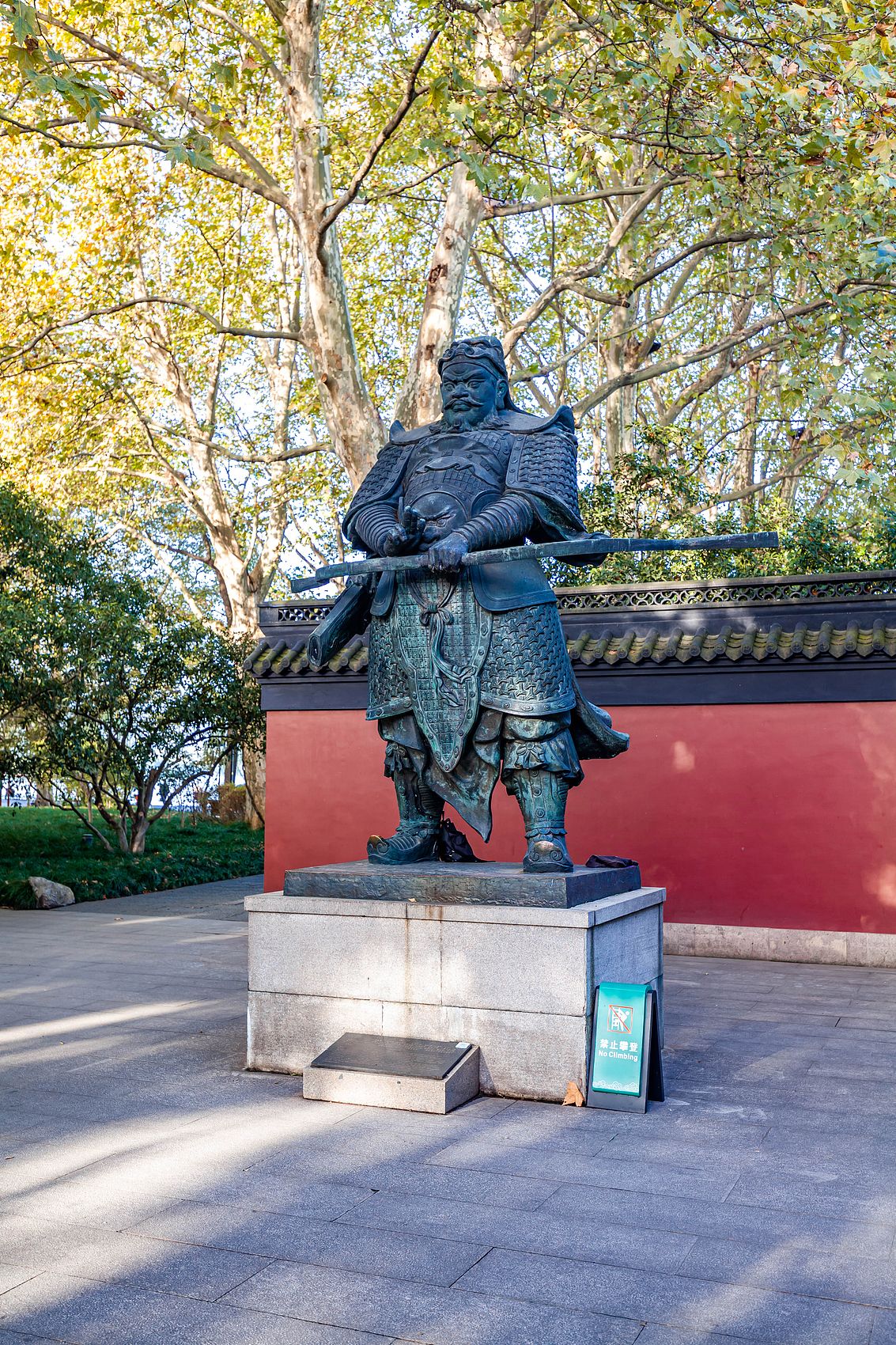
A statue of King Qian stands on the eastern bank of West Lake in Hangzhou, depicting him as a loyal guardian of the city (VCG)
In his classic work Seeing Like a State, the famed American political scientist James C. Scott describes how the state imposed family names on people to identify them for taxation. The Qians, whose surname literally means “money,” would have had a lot of tax to pay. According to the Song-dynasty (960 – 1279) historical encyclopedia, Comprehensive Records (《通志》), the Qian family was descended from a string of legendary figures. Among them was Pengzu (彭祖), a descendant of the mythical Yellow Emperor; Pengzu, rumored to have lived to 800 years old and sired 54 sons; and Jian Fu (篯孚), an official at the Zhou-dynasty (1046 – 256 BCE) treasury (qianfu, 钱府), who took his title as his clan’s family name.
However, Qian Liu’s early life was not as noble as his illustrious heritage would suggest. His official biography in the Spring and Autumn Annals of the Ten Kingdoms (《十国春秋》), a 17th-century historical work, lists his first profession as a small-time salt smuggler. Qian later served as a minor general under the local military governor. During the sweeping rebellion led by Huang Chao (黄巢), which shook the core of the Tang Empire in the ninth century, Qian successfully expelled the rebels from the lower reaches of the Yangtze River. He used this foothold to quickly rise through the local military hierarchy, killing rivals, seizing territory, and amassing titleships from the last of the Tang emperors.
By 907, when the child Emperor Ai vacated the Tang throne as its final ruler, Qian claimed military control over all of modern-day Zhejiang province, from Quzhou in the west to Wenzhou in the east, as well as parts of modern-day Jiangsu. This became known as the Wuyue area, named after the ancient states of Wu and Yue.
Following the end of the Tang rule, China descended into decades of instability known as the Five Dynasties and Ten Kingdoms period (907 – 979). Emperors fell like dominoes, and wars between regional warlords were near-constant. But in Wuyue, Qian Liu led a prosperous, developing region. He made Hangzhou his capital and built a seawall to protect it from the famous tidal waves of the Qiantang River, along with numerous other infrastructure projects. But perhaps his most important legacy was philosophical. According to the Song-era historical work Comprehensive Mirror in Aid of Governance (《资治通鉴》), on his deathbed, Qian Liu instructed his son and chosen successor, Qian Yuanguan (钱元瓘), that his “descendants should not abandon the rites of serving the great nation because of a change in dynasty.”
Helping to maintain the kingdom’s prosperity, the Qians upheld Qian Liu’s final commandment. Consequently, when the Song regime finally managed to reunite most of the fragmented nation, Qian Hongchu (钱弘俶), Qian Liu’s grandson and Wuyue’s final ruler, submitted peacefully to Song rule. As such, the kingdom was spared conquest and its prosperity allowed to continue. Moreover, before relinquishing the crown, Qian Hongchu compiled his grandfather’s ideas into a set of instructions known as the Qian Family Precepts, organized around four main concepts: the individual, the family, the society, and the nation. Qian Hongchu and his family moved to the Song’s new capital in Bianliang (modern-day Kaifeng, Henan province), where they became prominent Song politicians and military leaders.
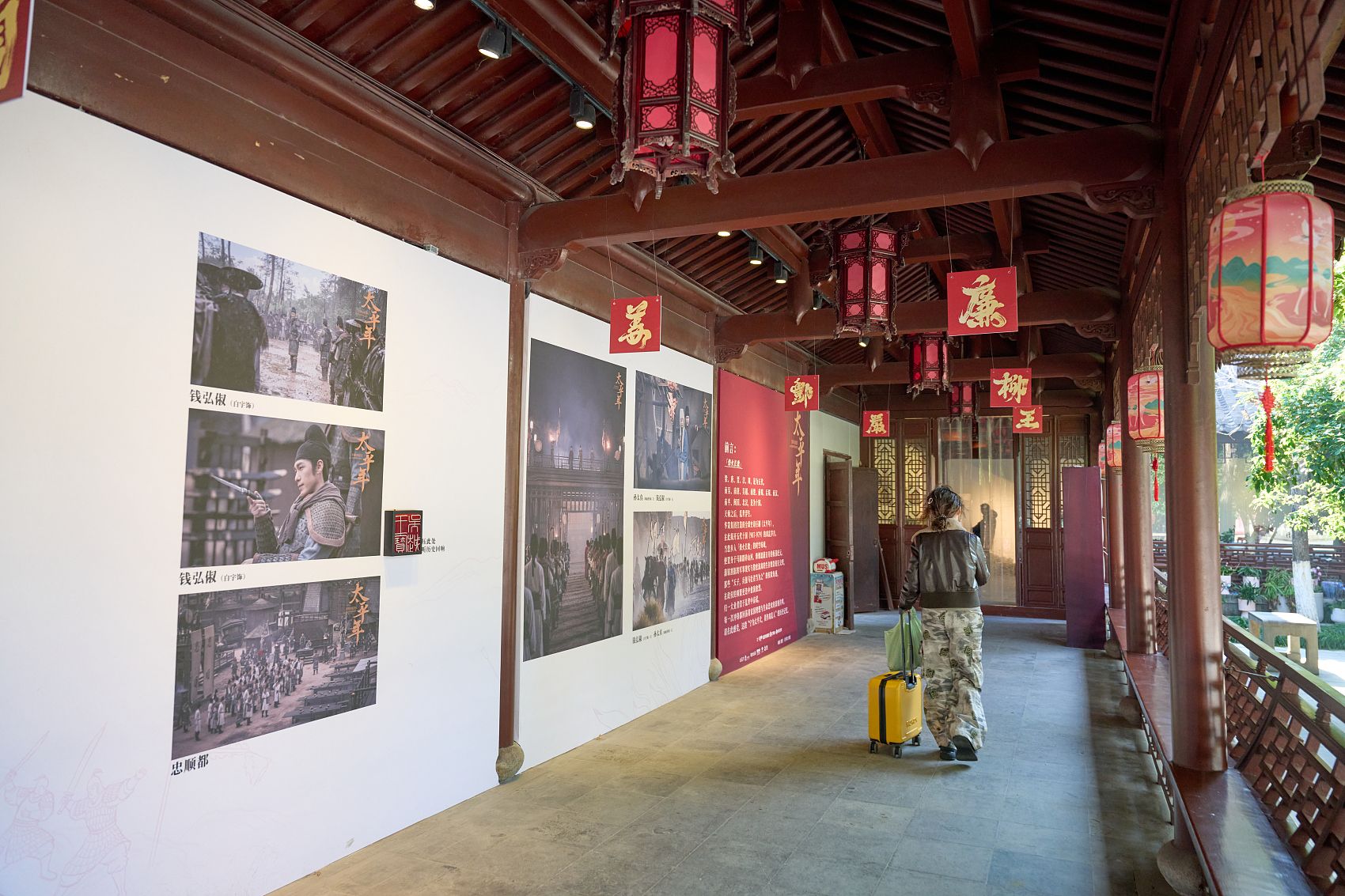
An exhibition of the recent hit historical drama Swords into Plowshares, which depicts the ancient Qian family, at King Qian’s Temple in Hangzhou (VCG)
As a result of this legacy, the Qian family can claim one of the most impressive bloodlines of any clan in China. Memorials to the family can be found in Hangzhou, Shanghai, Wuxi, and other cities around Zhejiang and Jiangsu provinces. From the time of the Song through to the Qing (1616 – 1911), China’s final dynasty, the Qian family descendants were among prominent politicians, writers, and academicians.
But it may have been in the 20th century when the family made its strongest mark. Various Qians helped to build China’s nuclear bomb, authored one of its most famous novels, won a Nobel Prize, wrote classic history textbooks, and served as the foreign minister, among numerous other achievements. The family precepts were also expanded during this time, codified into a 635-character mantra in 1925 by Qian Wenxuan (钱文选), a scholar and politician who was once the Chinese consul general in San Francisco.
Among the 20th-century Qians, perhaps the most famous is Qian Xuesen (钱学森), the rocket scientist dubbed the “father of China’s space program.” Though he bristled at this title, Qian was well aware of his noble lineage and, as Iris Chang wrote in her biography of him, Thread of the Silkworm, “family legends, as old as they were, instilled in him a sense of pride…a reminder that the blood of kings flowed through his veins.” Born in 1911, Qian received a Boxer Indemnity Scholarship to study in the US, finishing his doctorate in aeronautics and mathematics at the California Institute of Technology in 1939. Soon after, alongside teaching at Caltech, he joined the US war effort by designing rockets at the nearby Jet Propulsion Laboratory. But the US government, in the hysteria of the 1950s Red Scare, ordered Qian Xuesen to be deported and placed him under house arrest. He finally returned to China in 1955, where he would go on to be the key figure in the PRC’s development of ballistic missiles, satellites, and space flight.
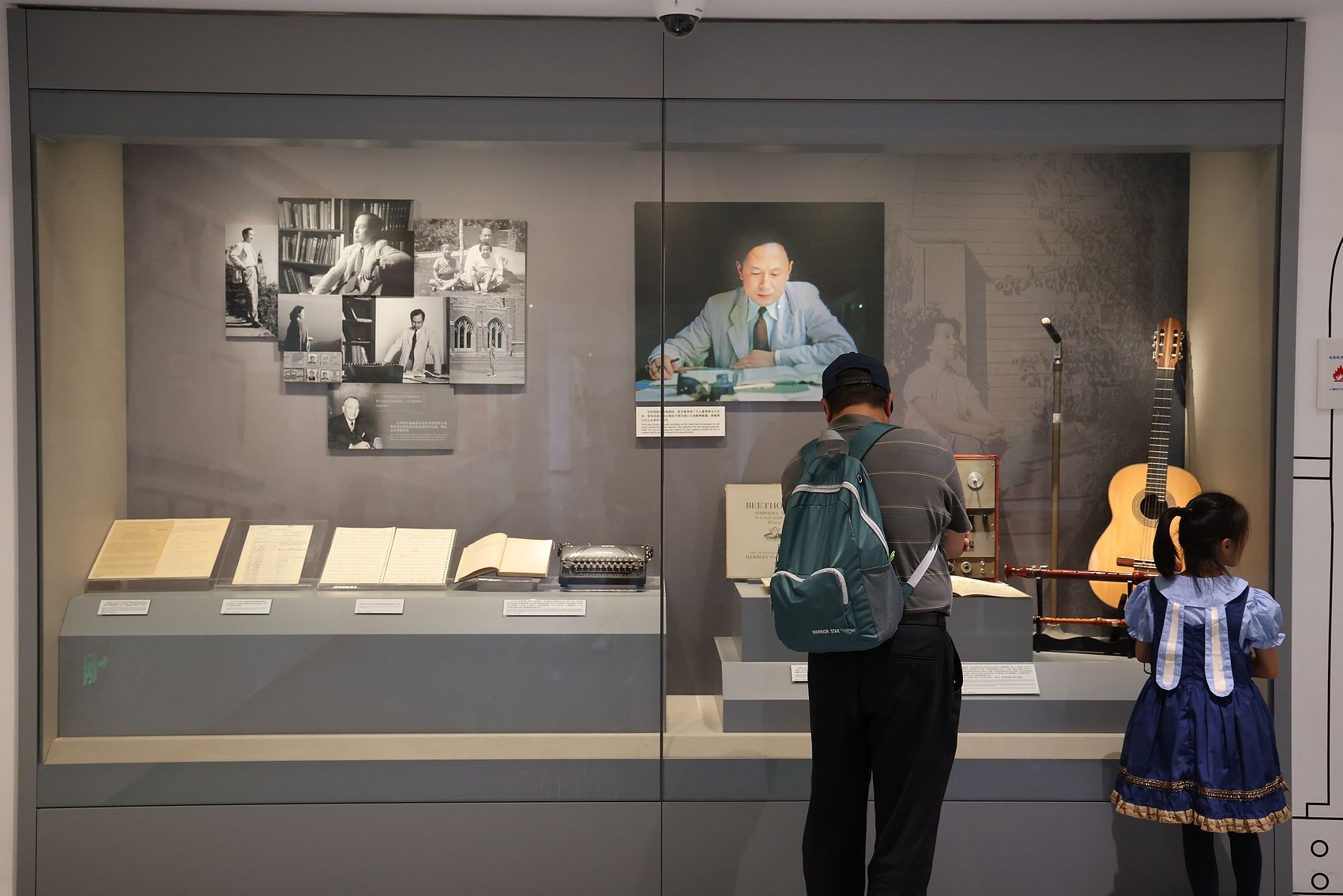
Visitors learn about Qian Xuesen’s legacy at the Qian Xuesen Library & Museum at Shanghai Jiao Tong University (VCG)
Qian Xuesen wasn’t even the only Qian working at Caltech at the time, with the Wuxi-born physicist Qian Weichang (钱伟长) also stationed there as a research associate in the 1940s. An expert in mechanics and applied mathematics, Qian Weichang returned to China in 1946 to work at Tsinghua University and later greatly influenced the development of scientific research in the PRC.
And last but not least, Qian Sanqiang (钱三强) was another prominent physicist in the early years of the PRC, known for leading China’s development of nuclear technology. Dubbed the “Three Qians (三钱),” the three physicists, each born one year apart, played a key role in shaping the development of science and technology in the PRC.
It may be an intriguing coincidence, but people often like to believe that their excellence and devotion stem from an ancient bloodline that imparts a sense of duty and service to its descendants.
While many may wish to claim that their Qian surname makes them heirs to this legendary tradition, only those recorded in official genealogical records, known as jiapu (家谱) or zupu (族谱), can consider themselves true descendants. Perhaps more importantly, Roger Y. Tsien, a Chinese-American chemist and winner of the 2008 Nobel Prize, made the point in his Nobel biographical essay that his legacy as the 34th-generation heir to Qian Liu was in fact insignificant. “Everyone in principle has 234 ancestors from 34 generations ago,” he wrote. “234 (about 17 billion) vastly exceeds the earth’s population in the 10th century, so practically everyone, at least from that part of China, probably has Qian Liu as an ancestor, even if not so strictly through the Y-chromosome.”
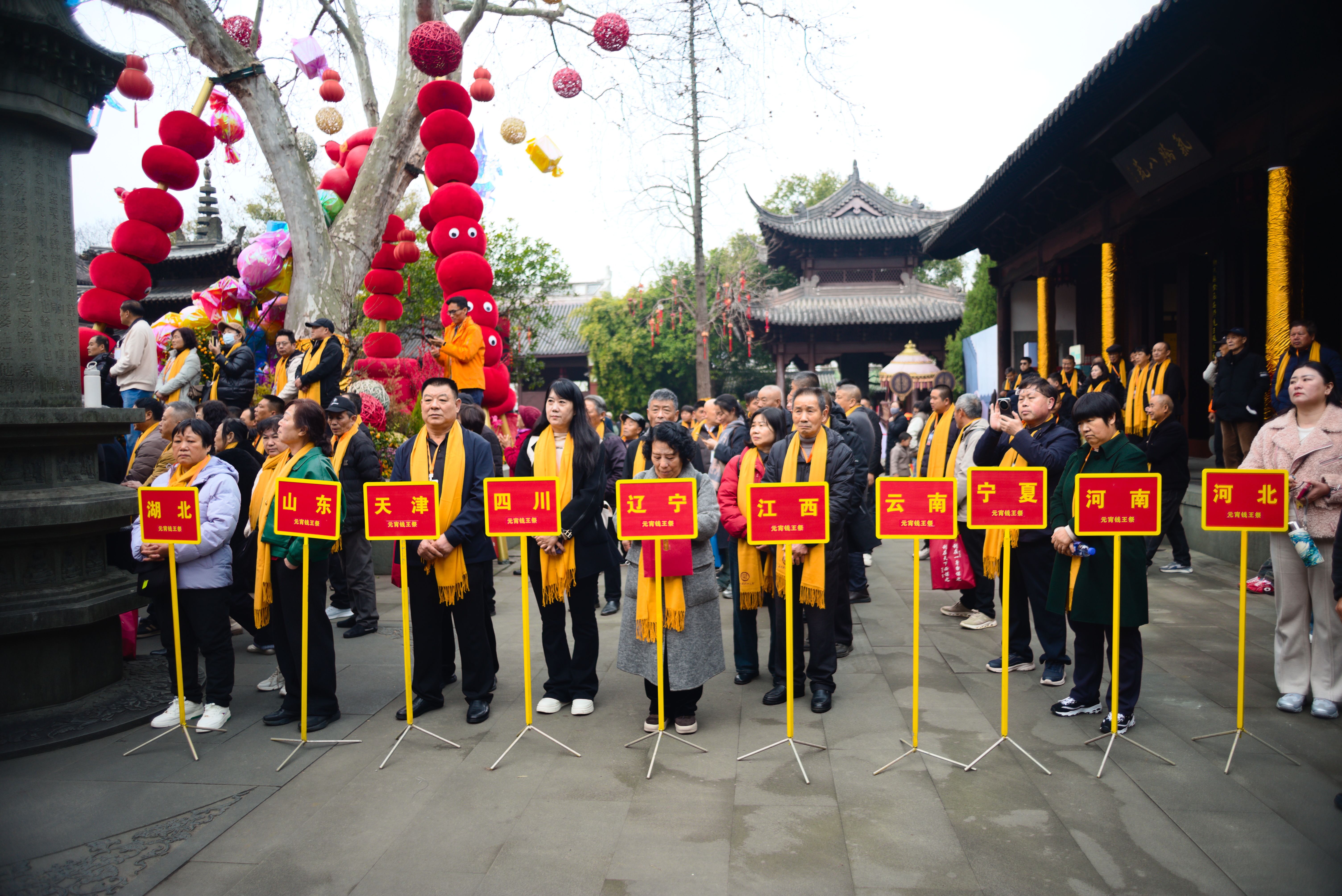
Various branches of the Qian clan from across the country gathered for ancestral worship, each holding a plate representing their home provinces (Evan Taylor)
There’s also the awkward politics of purporting an aristocratic background. In an era of disparaging those deemed to have found success through family connections as “nepo-babies,” boasting about an ancient royal ancestor can be a tough sell. The egalitarian aspirations of China’s system reinforce this principle. Even at the Qian Xuesen Library & Museum on the campus of Qian’s alma mater Shanghai Jiao Tong University, the displays make no direct mention of his illustrious roots, informing visitors only that he was “born into a cultured family.”
But for the hundreds of Qians who descended on Hangzhou to celebrate their family legacy, these quibbles mattered little. While the elders craned to photograph dancers performing in their honor, small groups converged to study the family genealogical chart at the back of the hall. Amid the hubbub, the newest generation of Qians ran around their knees, blissfully unaware of the latent success that may also course through their veins.
Related Articles