


For women walking alone through one of Shenzhen’s “urban villages” at night, it’s hard not to notice how little technology seems to understand the body that’s using it. Navigation apps give the fastest route, but rarely ask whether their users feel safe taking it.
That gap between what algorithms optimize for and what people actually experience was why Shi Wei, a STEM graduate student from Peking University, built SheLens with her teammates. A prototype designed to help women navigate the city more safely at night, SheLens utilizes Rokid AR glasses and a built-in AI agent to scan nearby crime data and suggest routes that include well-lit, “safe” locations like convenience stores or police stations. A hands-free and heads-up display, with the screen at eye level, ensures that users look ahead rather than down at a phone screen.
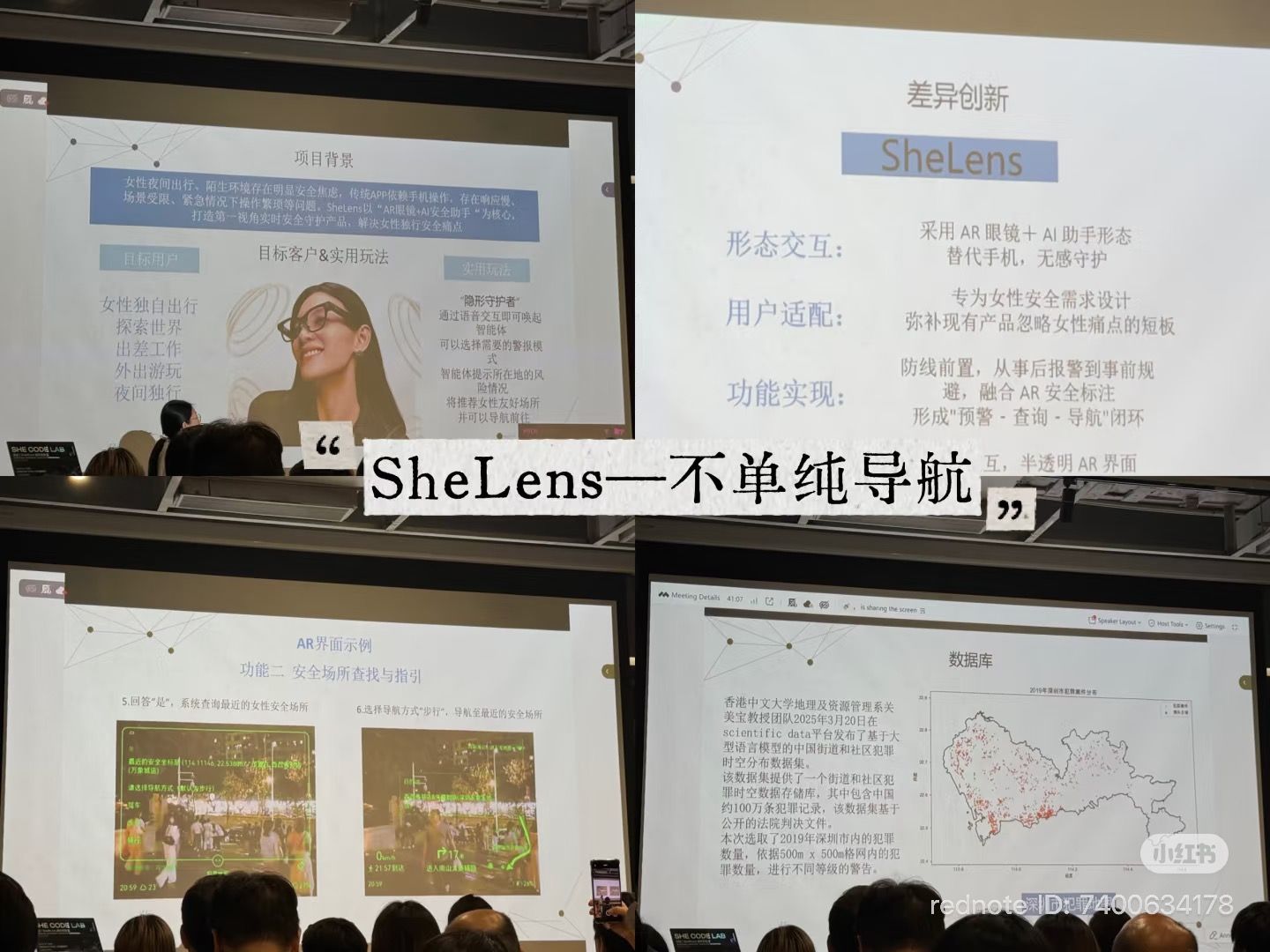
A participant of She Code Lab, a women-centered hackathon, posted about SheLens’ demo pages from a recent event in Shenzhen (Aha水濑@Xiaohongshu)
SheLens is just one of the products developed at She Code Lab, a women-centered hackathon whose recent event took place in Shenzhen from April 3 to April 6. It was a space that, for a couple of days, felt very different from the usual tech scene. Around 80 percent of participants were female, according to the event’s organizer, She Nicest, a community and brand focused on hackathons, workshops, and women in tech.
Xie Wutong, a participant of the hackathon, said she often felt ignored and belittled at past tech events, where men typically outnumbered women seven or eight to one, in an interview with T Magazine China. But the female hackathon this April has allowed her to focus “all on making the product,” without having to devote time and energy to explaining herself to male teammates.
“I feel like I don’t have to be afraid of getting things wrong,” says Wang Yuwen, another participant, a student currently doing her master’s degree at UC Berkeley. “That made it easier to try things I normally wouldn’t.”
Read more about feminism in China:
- Leveling the Playing Field: China’s Female Gamers Struggle for Recognition
- Why Is China Struggling to Find More Female Maintenance Workers Amid Surging Demand?
- Defending the Field: China’s Female Sports Fans Struggle for Inclusion
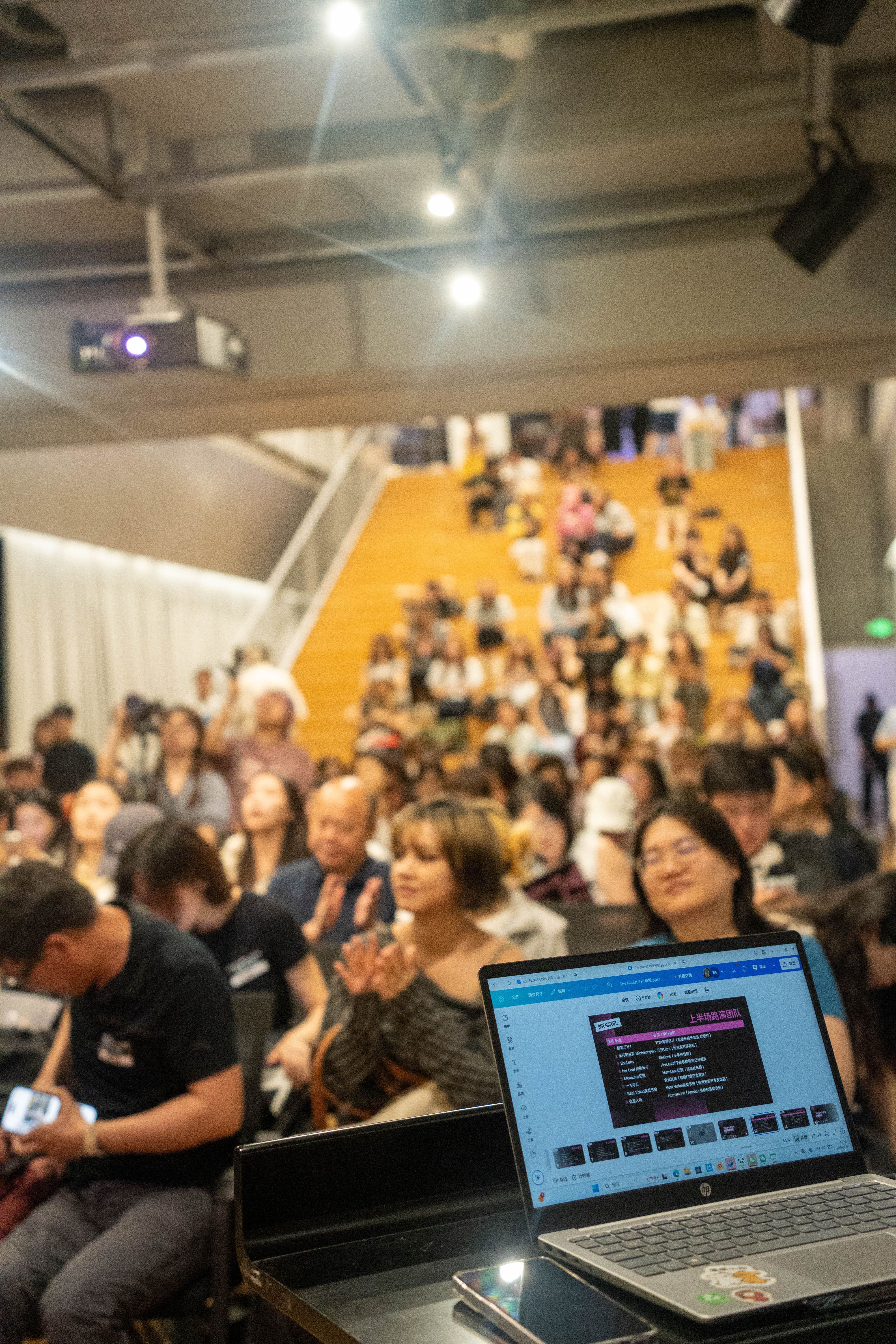
About 400 participants signed up for the hackathon in Shenzhen, with over 90 percent being women from diverse backgrounds, including programmers, project managers, and designers (courtesy of She Nicest)
That shift in atmosphere is also evident in the projects themselves. Instead of abstract efficiency, many projects focused on how technology is actually used in everyday life, addressing issues more specific to women. Wang’s team developed a tool for people with ADHD. According to Wang, compared to the more visible hyperactivity often associated with males with ADHD, many women with ADHD are more prone to internal distraction, which means their distractions are less visible and often not acknowledged. Their prototype combined a wearable device and a digital interface: a sensor on the laptop that tracks the user’s attention and notices when an ADHD user’s mind drifts, at which point the software would ring a gentle reminder to bring their attention back.
In that sense, the hackathon isn’t just about getting more women into tech: It was about what happens when different experiences are allowed to shape what technology is for. Yet the question of how far that change can go lingered in the background.
Some participants at the event were quick to point out to TWOC that even the most thoughtful designs exist within systems such as datasets, algorithms, and infrastructures, which are not entirely neutral. If those foundations are biased, individual products can only do so much.
The SheLens team acknowledged its limitations. “It still depends on how accurate the data is, and whether the places we send people to are actually safe,” Shi tells TWOC. “In the end, safety isn’t just a technical problem.”
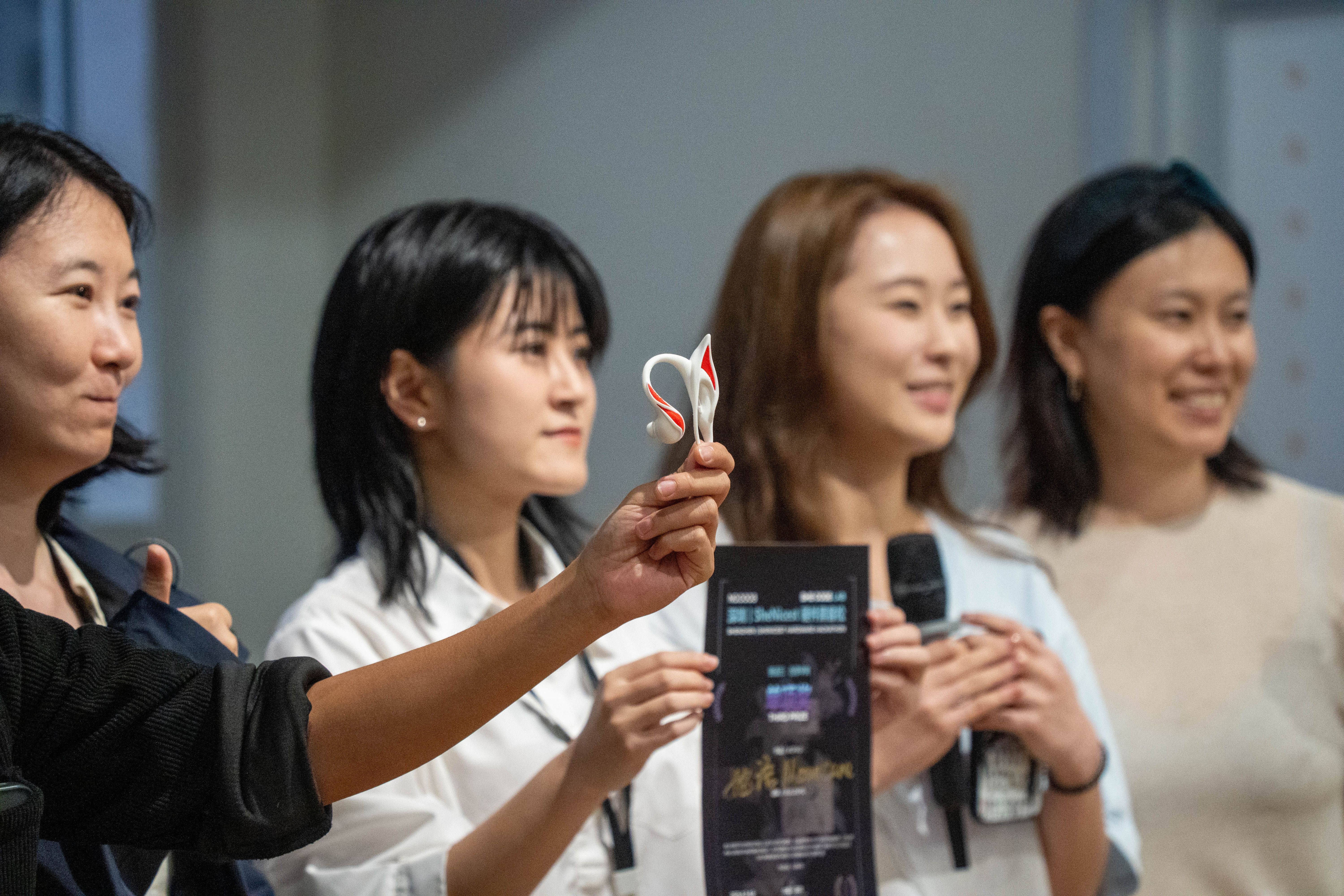
Mooncare, a smart earwear prototype designed for detecting and relieving premenstrual syndrome (PMS) and menstrual cycle-related symptoms, has been widely praised at the April event for addressing overlooked women’s health needs (courtesy of She Nicest)
That being said, gender-inclusive design, such as SheLens, can still bring about many changes. “It can reduce people’s sense of insecurity during travel, allowing them to face unfamiliar environments with better composure.” Shi explains, “It can also help users proactively avoid potential risks, thereby reducing the occurrence of danger to a certain extent.” But more importantly, Shi believes that with similar designs emerging in the future and integrating with urban systems, they may gradually transform the way people interact with urban spaces.
The hackathon provided a rare, vital sanctuary from the deeply entrenched patriarchal norms of the broader tech industry. “Traditional tech culture is often aggressive and hero-centric,” Huang Yalan, an associate professor of gender and media studies from Jinan University and a registered judge at the event, summarizes. She explains that aggressive, individualistic narratives such as the “geek” or “lone wolf” are often associated with Silicon Valley myths that romanticize innovation.
She points out that the classic image of the “geek”—the socially awkward, obsessive male in a black turtleneck—has created a fixed cultural script that inadvertently excludes women. This culture has historically alienated women by framing technological mastery as inherently incompatible with femininity.
Within the Chinese context, the tech industry carries its own uniquely sexist history. An unpublished paper by Huang and one of her students looks into Chinese mainstream media’s coverage of women in tech from 2000 to 2021, and reveals a troubling trend: Female coders were either hyper-sexualized as “hot hackers” or subject to patronizing discourses about their “delicate fingers” on a keyboard, which shows a highly stereotypical image of female tech workers.
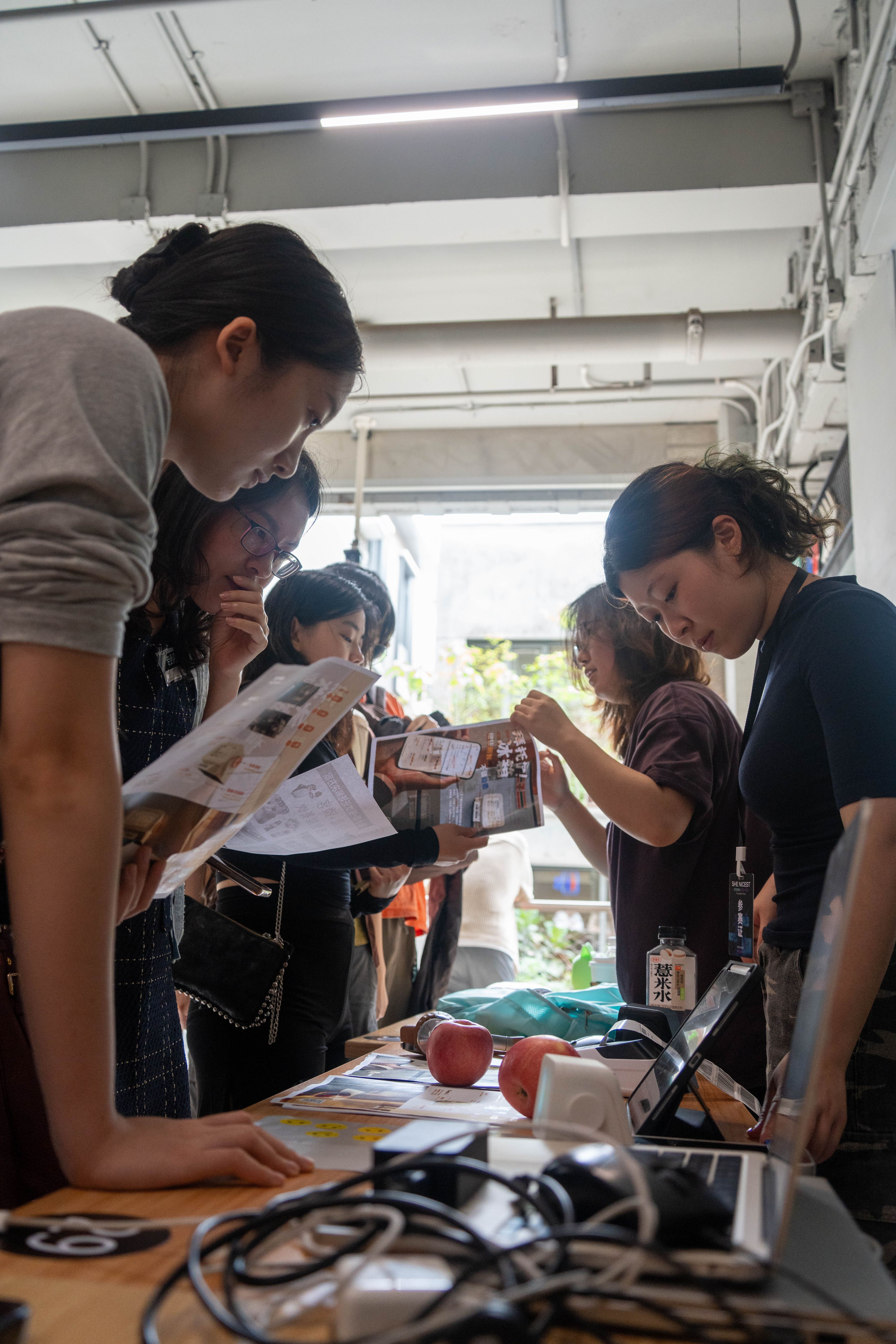
Over 48 hours, contestants team up to turn ideas about everyday needs into product prototypes (courtesy of She Nicest)
The number of women working in technology industries in China has been continuously rising, reaching 45.8 percent in 2025, according to Science and Technology Daily, a comprehensive daily newspaper overseen by the Ministry of Science and Technology. However, the representation of women decreases as seniority rises. In China’s top science institutions, the Chinese Academy of Sciences (CAS) and the Chinese Academy of Engineering (CAE), women only account for approximately 7 percent and 5 percent, respectively.
The lack of women in leadership roles has also persisted in Euro-American technology and creative industries. “Technology has never been neutral,” Ge Liang, a digital sociologist at the University of Manchester, tells TWOC. Ge’s research explores how social and cultural assumptions become naturalized in everyday technical design—for example, in cases like contraceptive pills that place the biological burden entirely on women—and how queerness and feminism in digital cultures can serve as creative forces for change.
According to Ge, events like She Code Lab are a starting point for bringing more women into advanced tech sectors. But the next step, Ge argues, is ensuring they are not confined to designing products solely for women. “In the future, they should push themselves to engage more broadly across the technology sector,” Ge says. “That’s what will lead to a more gender-equal landscape.”
Ge also advocates for more gender-sensitive training and greater engagement with feminist perspectives in the tech sector. “Feminism is not only about women or their empowerment; it is about advancing a more equal society.”
Several women-focused hackathons have emerged over the past year in major Chinese cities such as Beijing, Shanghai, and Shenzhen. While a few hackathons may not immediately transform tech culture, their impact can ripple outward. As cheers echoed through the venue after the Shenzhen hackathon concluded, it was clear that the event’s value lay in its ability to bring “experience” back to the core of design. By focusing on empathy, safety, and human connection, these women make the case for a digital world that doesn’t just become functionally smarter, but decidedly more humane.
When Chinese Women Dominate a Tech Scene is a story from our issue, “I, Humanoid.” To read the entire issue, become a subscriber and receive the full magazine.
Related Articles



