With guitar in hand and dressed in his signature black outfit and white cap with a red star, Cui Jian launched into the final refrain of his iconic “Rock ’n’ Roll on the New Long March.” The orchestra members behind him rose to their feet, from the string players to acclaimed pianist Ju Xiaofu. The audience—young and old, many clearly fans of the 65-year-old “father of Chinese rock”—stood and clapped along, joining Cui in the song’s unmistakable marching chant: “Oh, oh, oh … one, two, three, four, five, six, seven.” With 2026 marking the 90th anniversary of the victory of the Long March, the song felt like a fitting finale to an exhilarating night in Cui’s hometown, as the 29th Beijing Music Festival (BMF) closed at the National Center for the Performing Arts on November 20.
The evening moved between classical favorites and modern rock. It opened with Leopold Mozart’s “Toy Symphony,” as six child performers joined the orchestra with their toy instruments, bringing extra playfulness to the piece. Pianist Ju Xiaofu then performed Chopin’s “Variations on ‘Là ci darem la mano.’” For the finale, Ju joined Cui Jian and the Beijing Symphony Orchestra, conducted by Yang Yang. Orchestral arrangements of six of Cui’s best-known rock songs struck a lively balance with the symphony, allowing neither to overpower the other. One especially inventive moment paired “Spring,” from Vivaldi’s violin concerto “The Four Seasons,” with Cui’s signature song “Greenhouse Girl.” Heard in the intimacy of an opera house, Cui’s rock songs took on a different character than they would in a stadium.
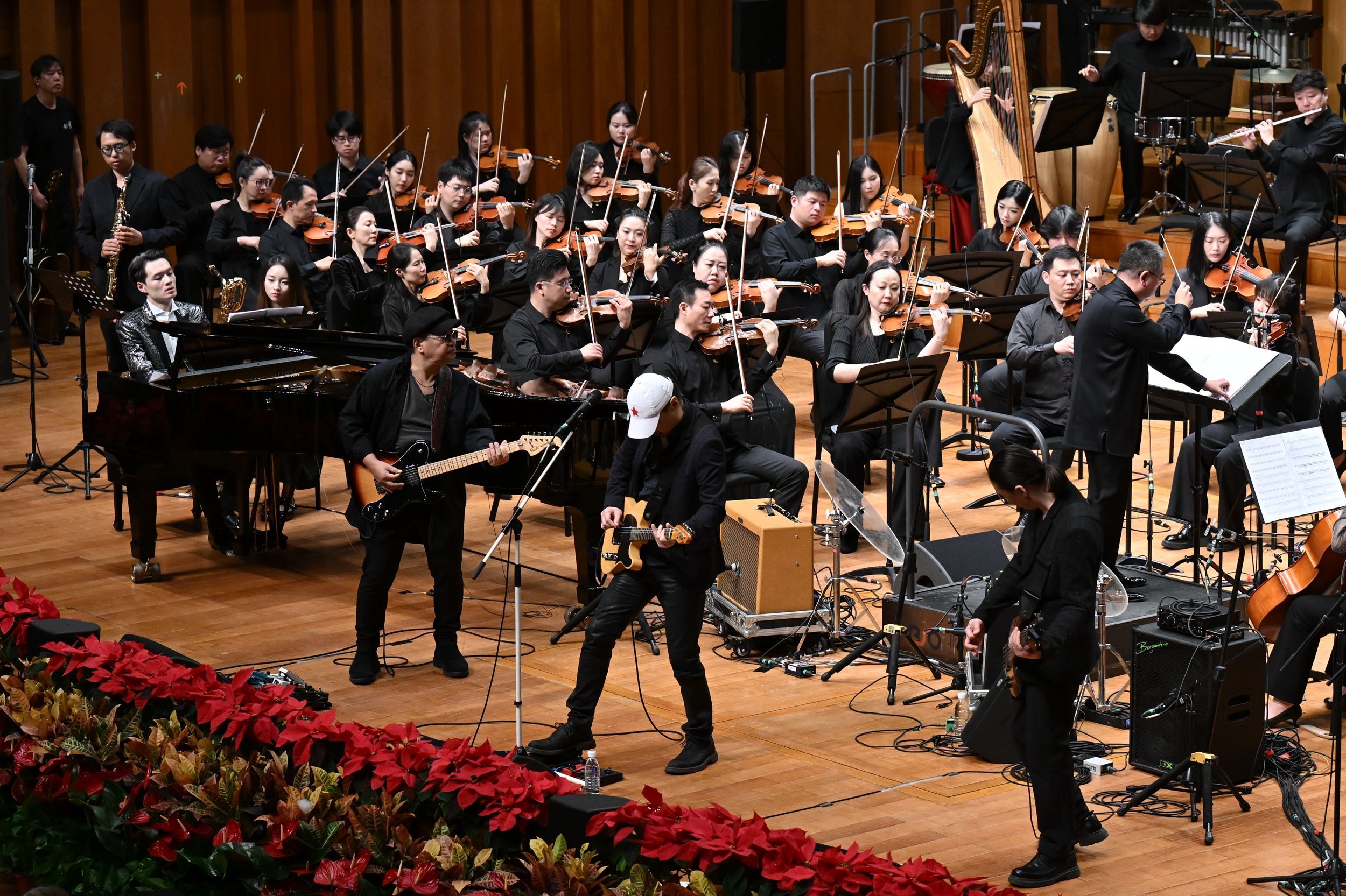
“Father of Chinese rock” Cui Jian, acclaimed pianist Ju Xiaofu, and the Beijing Symphony Orchestra brought the 29th Beijing Music Festival to a close with a genre-crossing finale
This isn’t Cui Jian’s first appearance at the BMF. In 2012, he joined pop singer Luo Dayou and American Chinese conductor and composer Tan Dun for a genre-crossing performance. Over its 28-year history, the festival has become known for imaginative performances shaped by a new theme each year.
This year, the festival marks the 270th anniversary of Mozart’s birth with a program celebrating the acclaimed composer. Violinist Ning Feng performed all of Mozart’s violin concertos in a single evening, while another program presented nine of the composer’s sonatas for piano and violin in one night. German pianist Gerhard Oppitz, clarinetist Andreas Ottensamer, and the Shanghai Quartet came together for a chamber concert exploring Mozart’s musical influences. The festival also featured a newly staged production of Mozart’s most famous opera, The Magic Flute.
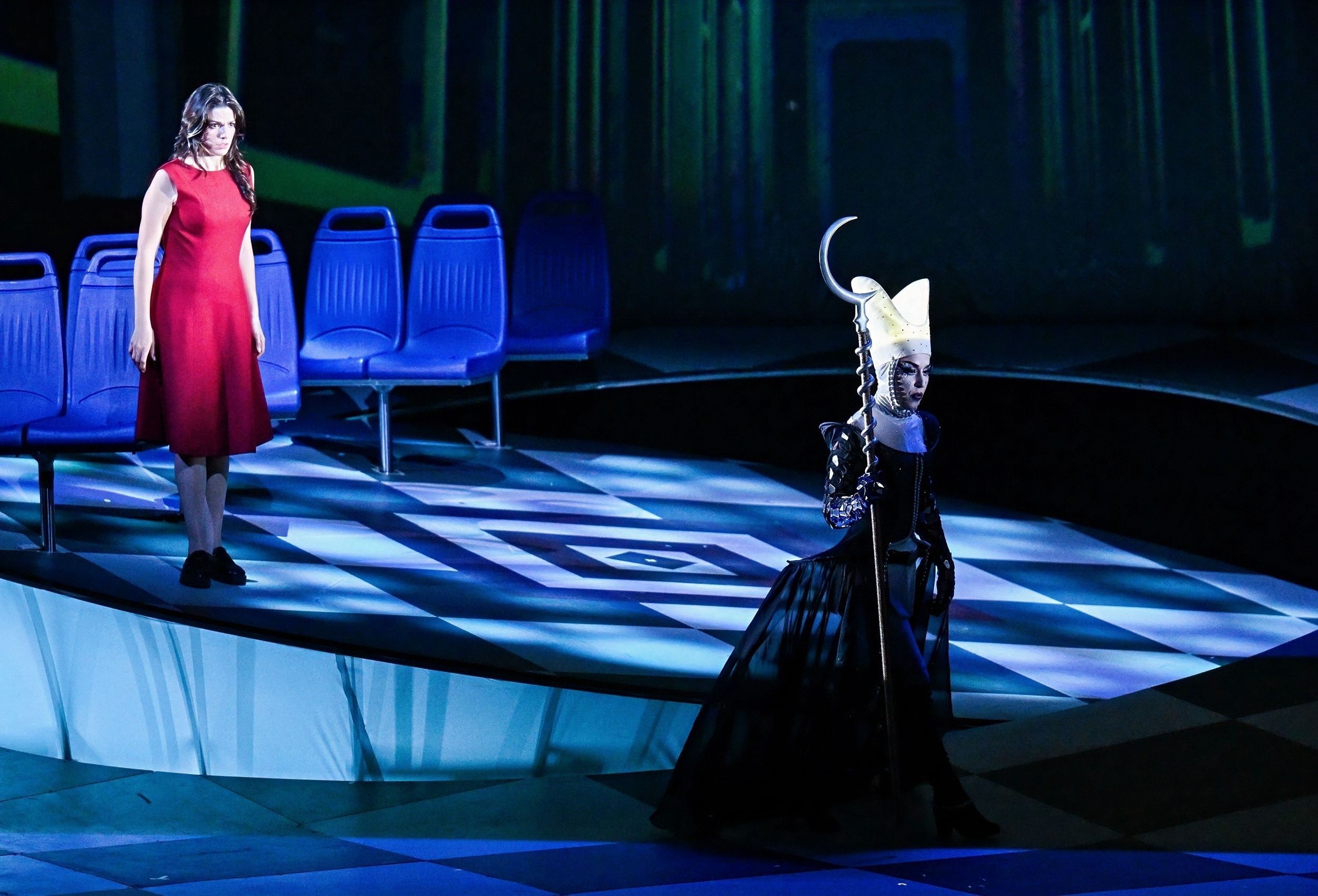
A collaboration among Opera Hong Kong, State Opera South Australia, the Beijing Music Festival, and the China National Opera House, The Magic Flute ran for two performances on October 10 and 11
Originally set in a fabled land of ancient Egypt, the adventure now unfolds in a modern metro system, where the protagonists and fated lovers, Prince Tamino (Anthony Gregory) and Princess Pamina (Sofia Troncoso), are two travelers who have forgotten where they are headed. Their comic sidekick, Papageno (John Chest), becomes a food delivery courier, bringing fried chicken to the Queen of the Night (Aigul Khismatullina) and her ladies, three flight attendants who have stepped straight out of a travel advertisement on the platform.
Director Zou Shuang has also adapted the original German dialogue into English, offering a fresh interpretation of the centuries-old story. For instance, the Queen of the Night and Sarastro, originally adversaries representing the clash between vengeance and reason, darkness and light, are recast as an estranged couple. In the orchestra pit, the London Philharmonic Orchestra, led by conductor Dane Lam, brings Mozart’s score to life with precision and skill.
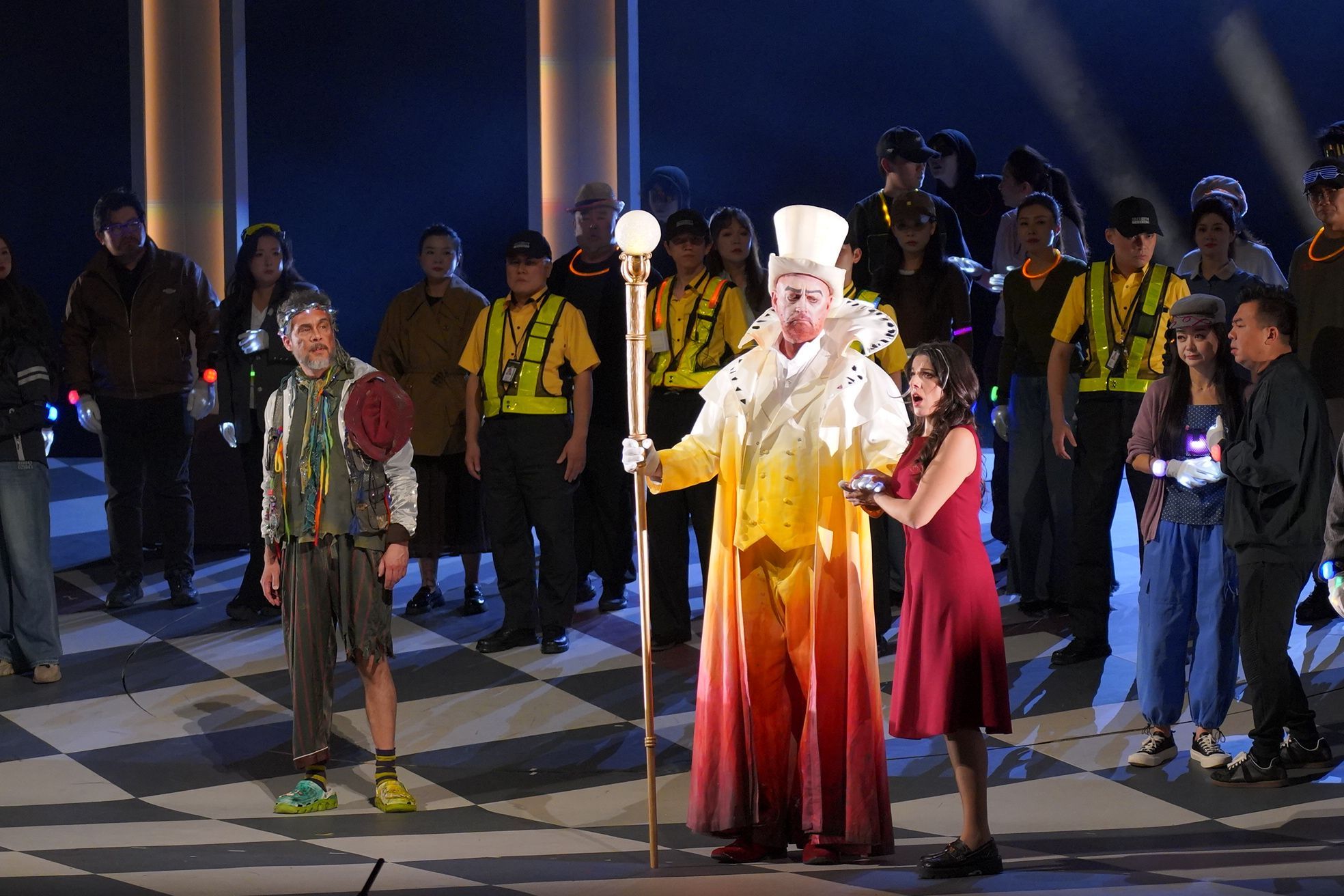
The newly staged production of The Magic Flute reimagines Mozart’s opera in a modern metro system, where the protagonists get lost in a magical world, only to find each other in the end
Sitar master Anoushka Shankar’s special concert was another major highlight of this year’s BMF. One of the world’s most influential sitar players and composers, she took the stage at the Poly Theatre with her fellow musicians, leading audiences beyond the concert hall into the expansive soundscapes of the Indian subcontinent and world music. For audiences accustomed to symphonies and opera, it offered a fresh listening experience, with music flowing without formal divisions or the constraints of traditional tonality, shaped by layered rhythms and spontaneous exchanges among the four musicians.
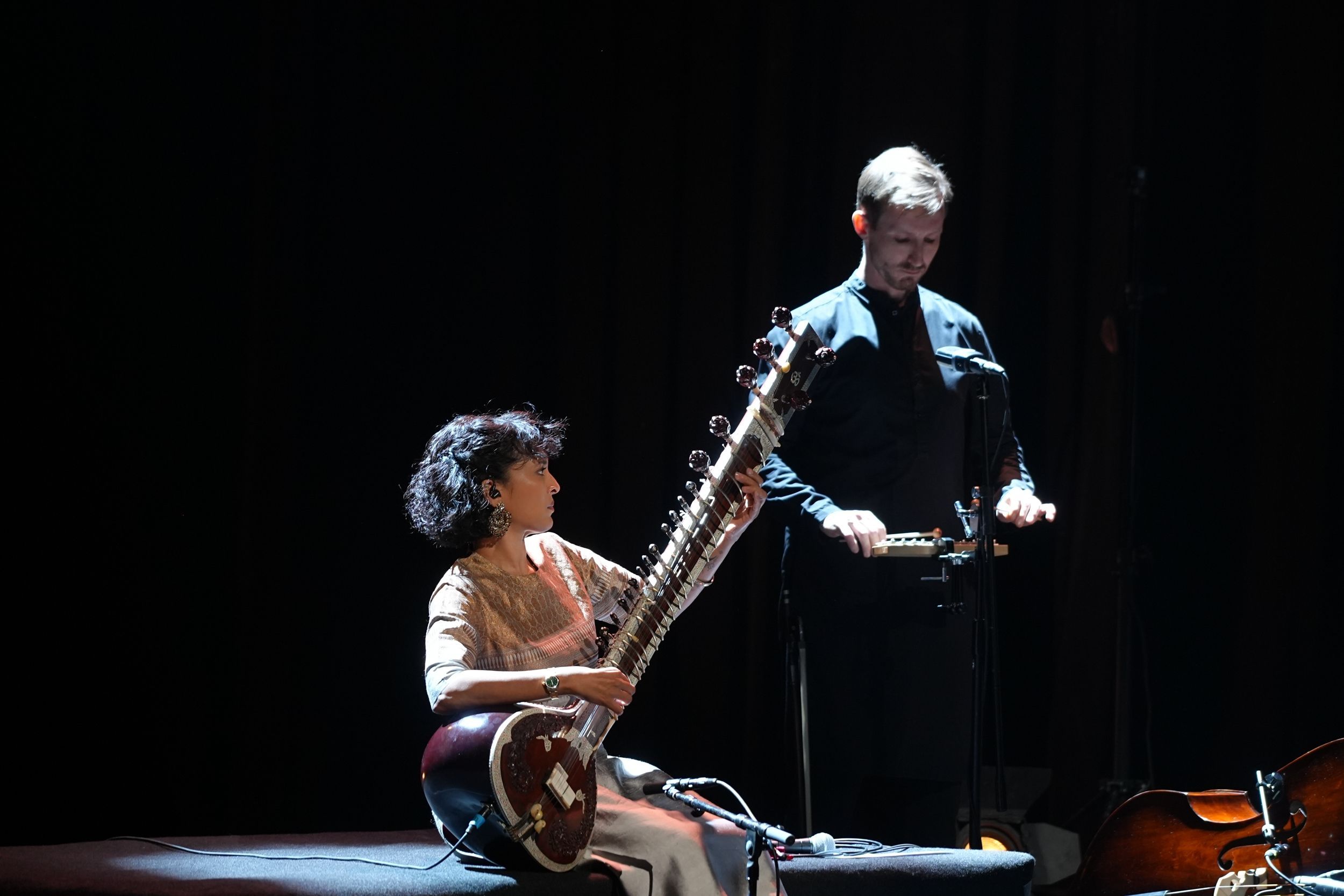
Sitar virtuoso Anoushka Shankar and her fellow musicians took the stage at the Poly Theatre on October 14
One of the evening’s most anticipated pieces was “Traces of You,” a song Shankar recorded with her half-sister, Grammy-winning singer Norah Jones. Sitar, voice, and piano answered one another in a tender, heartfelt exchange, creating the evening’s most intimate moment.
Over 12 days, the festival offered a feast for devoted music lovers and newcomers alike, with community events opening up new ways to experience music across the city. At the finale, Cui Jian’s encore, “City Boatman,” drew the audience into the music. He invited everyone to breathe in and out with the rhythm, making the crowd part of the song. It was a fitting reminder that music can be as natural a part of life as breathing. Now, Beijing waits for the festival to return next year.
Related Articles