“Are you a bard for a civilization at dusk?”
This was the question posed to British-American film director Christopher Nolan by the Chinese podcaster Zhong Shu, real name Zhuge Yiyang, during an interview after the premiere of his new film, The Odyssey, in Beijing this July.
In the 17-minute interview, Zhuge, a doctoral student at Boston College who studies classical political philosophy, asked Nolan a series of questions about heroism, the decline of civilizations, and conceptions of greatness. Despite her later plagiarism controversy, she was praised at the time for asking insightful, thought-provoking questions after the interview went viral in Chinese and international media. Some were surprised that one of Nolan’s most insightful conversations about his adaptation of Homer’s epic occurred in China.
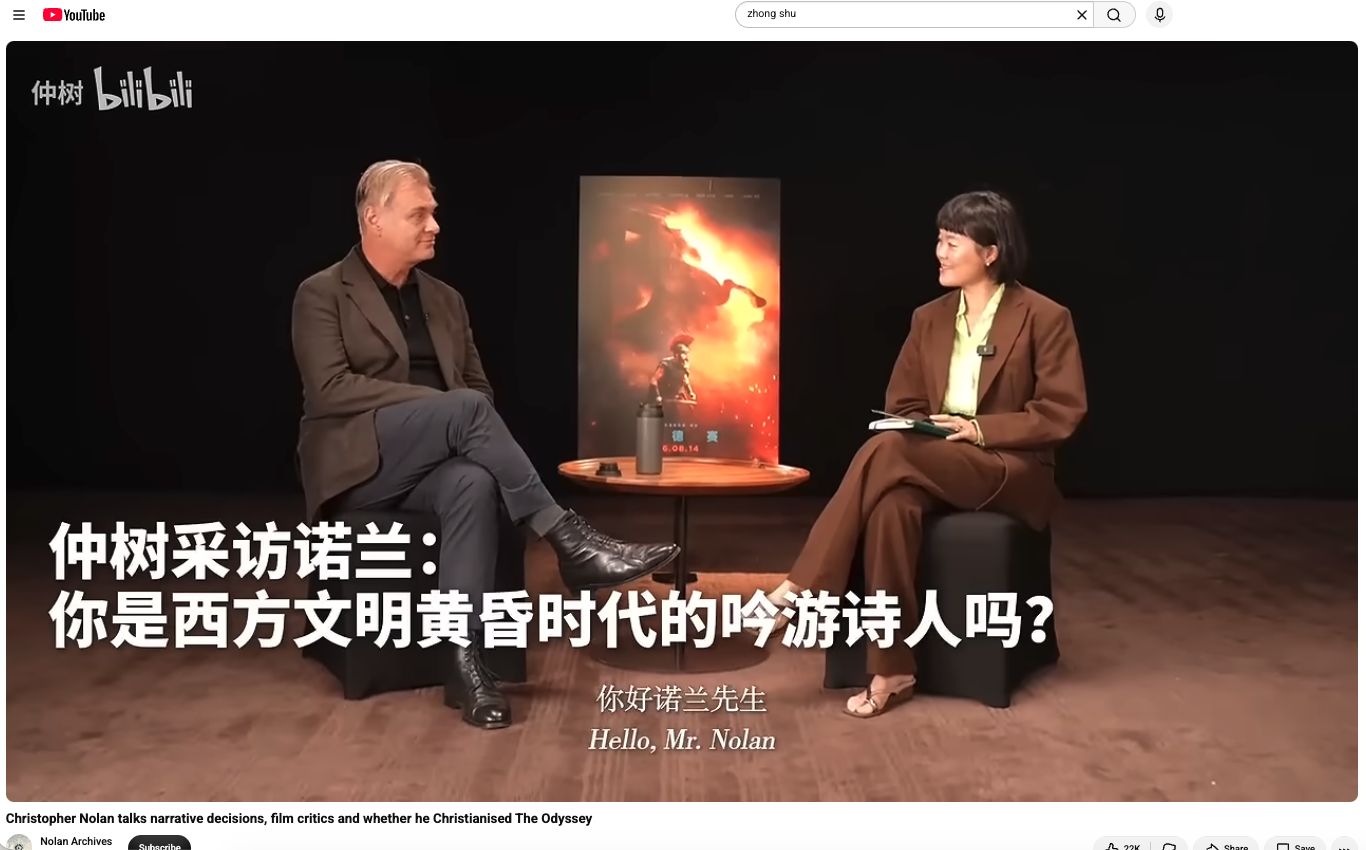
Zhong Shu’s interview was originally uploaded to the Chinese streaming site Bilibili. A Christopher Nolan fan account later reposted it on YouTube, and it has since garnered more than 583,000 views. (Screenshot via YouTube)
The interview is just one example of a growing interest in ancient Greek and Roman civilizations in contemporary China. Earlier this year, the term “Odyssey Years,” originally coined by New York Times writer David Brooks in 2007 to describe the uncertain transition between adolescence and adulthood, gained popularity as a viral expression on the Chinese internet.
In European and North American universities, the unmodified noun “classics” conventionally refers to the study of ancient Greece and Rome; in China, however, “classics” (古典学gudianxue) encompasses the study of ancient civilizations more broadly, including Chinese, Greco-Roman, and other traditions. Chinese universities have begun offering more options for studying Western antiquity, with Renmin University and Sichuan University both establishing undergraduate programs in comparative classics within the past two decades.
This interest has also drawn a small cohort of young Chinese scholars to classics departments outside China. But what happens when people long positioned outside the putative lineage of Western civilization become researchers, interpreters, and teachers of knowledge about its supposed origins?
An uneven field
As an undergraduate history major at Nanjing University in the late 1980s, Liu Jinyu, now an endowed professor of Roman history at Emory University, was captivated by the ancients’ moral imperfections. She said in an interview with the podcast Ms Dr that in contrast to Confucian sages with impeccable records of loyalty and filial piety in Chinese history, Roman historical sources were teeming with flawed and conflicted figures, who, to her, were more authentic. She cites a fictional legal case in Seneca the Elder’s Controversiae, of a man who disinherited his biological son but later decided to adopt the child born of the disavowed son and a prostitute. This fascination motivated her to continue her studies and earn a PhD in Roman history at Columbia.
While Liu took to Latin as soon as she began studying it as an undergraduate at Nanjing University, many aspiring Chinese classicists may feel they are starting at a disadvantage when it comes to meeting departmental requirements of Latin and ancient Greek: Their Western peers might begin studying these languages in elementary or secondary school, while Chinese schools rarely offer them.
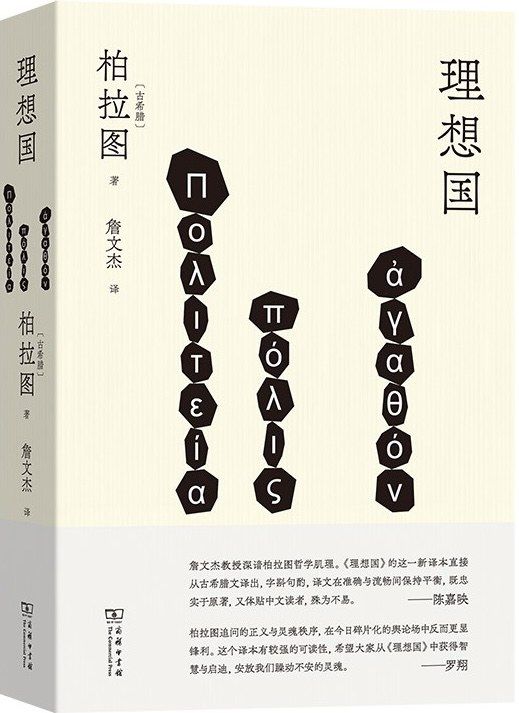
In 1920, Wu Xianshu’s translation of The Republic was published by the Commercial Press, TWOC’s parent company. It was the first complete Chinese translation of a work by Plato. A new translation was released this August. (Douban)
Many Chinese students would attend intensive summer language programs, but Liu doesn’t see these boot camps as a silver bullet. “Language learning takes time,” she tells TWOC, “it’s not possible to build a foundation over one summer.” She believes extending the program length might better accommodate graduate students from diverse backgrounds.
Li Yuecheng, a PhD candidate in Greek literature at Princeton, didn’t find the language barrier the most difficult part of his journey. A Beijing native, he audited Peking University professor Li Meng’s “Introduction to Philosophy” in high school. Plato’s portrait of the philosophical life in The Republic inspired him to step back from a busy student government role and immerse himself in books. He went on to study ancient Greek at Carleton College, a small liberal arts college in Minnesota. What he found more alienating in his studies was how peers in classical mythology classes flaunted their knowledge of Greco-Roman gods and heroes, “likely from previous exposure or from reading Percy Jackson” while growing up.
Li also jokingly recalls his college classmates who had studied Latin throughout high school parading their knowledge in Latin 101, “overwhelming the class like a peacock spreading its feathers.”
“It was quite a forbidding experience to me,” he explains to TWOC, “to feel that I didn’t have the same ownership of the subject as they did.” It didn’t help that, in many of his classes, Li was the only student of non-European descent.
Something to prove
Sally Song (pseudonym) was also often the only Asian student in her classics courses at a small liberal arts college in the US, but she paid little attention to her ethnic identity then. “Because the classical world is so distant from all of us in the modern world…it makes very little difference whether I am Asian, Greek, or American,” explains Song.
It wasn’t until she attended Oxford for her graduate studies that Song started to feel more attention on her cultural background. At Oxford, people “took a special interest in why and where I had studied classics and who taught me Latin,” she says. She also felt an expectation that certain knowledge, for example, the link between classic studies and modern Western society, should be common sense and that lacking it means ignorance.
Other interviewees have also told TWOC that in Europe, they received more questions about why a Chinese scholar would specialize in Western classics, sometimes from classmates who saw Roman and Greek civilizations as the progenitors of their own culture and history.
Despite these experiences, Song maintains that a scholar’s research content and approach can be completely divorced from their personal background.
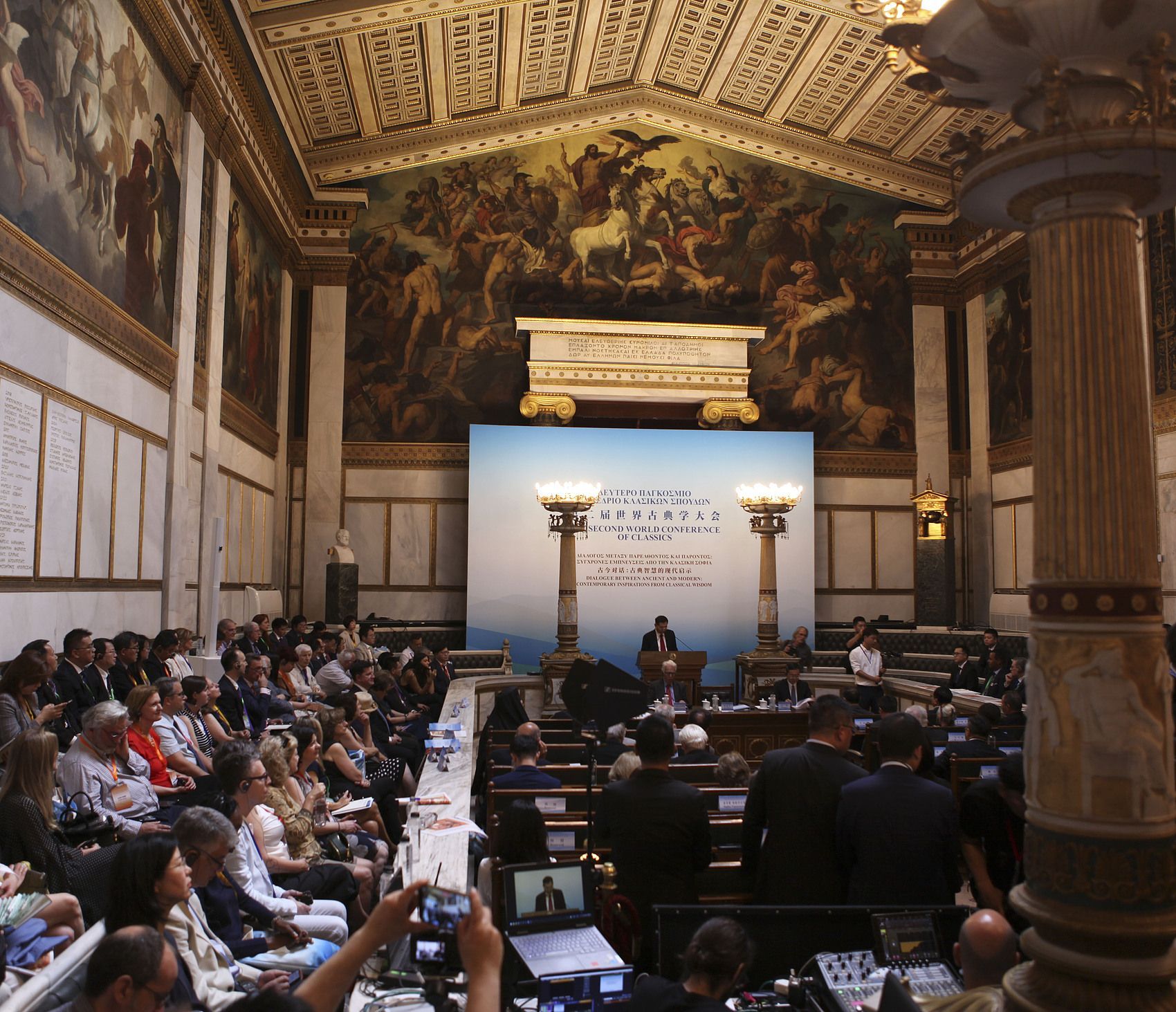
Co-organized by China and Greece, the World Conference of Classics brings scholars across the world together to explore classical civilizations. Its second edition was held in Athens, Greece, this June. (VCG)
Liu, the Emory professor, spent years trying to assimilate and establish her place in the field. “During my doctoral studies, I put aside my other training and just focused on learning Greek, Latin, as well as modern languages such as French and German required for classic historians,” says Liu. “I tried to fulfill the requirements, earn recognition, and prove that I belong to the discipline, and I accepted that Chinese was irrelevant to my studies.”
In her early teaching years at DePauw University in Indiana more than 20 years ago, Liu received some student evaluations with low ratings, paired with a comment, “she’s a foreigner,” with no further explanation, which left her puzzled. “Well, I can’t change the way I look,” Liu says, laughing, “so I could only try to improve my English [accent]. I felt the need to speak flawless English, to become more American, someone closer to my students.”
But now, Liu has stopped trying to prove her worth and has begun to see her unique upbringing as a powerful tool, for instance, in her ongoing study of movement in the Roman Empire. “A lot of current research focuses on how mobility enhanced the connectivity of the Mediterranean world, which is, of course, not wrong,” says Liu, “but I observe a lack of sensitivity to mobility on a micro-level.”
Her family moved around various cities in China during her childhood, and her first name, “Jinyu,” serves as a memento. Born in Tianjin (commonly abbreviated as “Jin”), she moved to Chongqing (often referred to as “Yu”) with her family in her early years, before resettling again in various cities in Jiangsu Province as a teenager. Each time, she had to learn new dialects and overcome the hurdles of being an outsider. “I want to consider how individuals [who traveled in the Roman Empire] might have experienced the displacement, what are the structural elements that shaped this experience, and what it took to surmount the obstacles.”
New perspectives
Indeed, more Chinese scholars are drawing on their distinctive cultural perspectives to inspire, guide, and enrich their academic research.
He Yanxiao recently began an assistant professorship in the history department at Shanghai Jiao Tong University, a few years after earning a PhD in ancient history from the University of Chicago. A prolific reader in his teenage years in Kunming, He was captivated by Homer’s epic and began teaching himself ancient Greek, while reading historian Chen Yinke’s (陈寅恪) work sparked his curiosity about the Silk Road. These interests led him to pursue a combined concentration in classics and Central Eurasian studies at Indiana University, where he learned to see history through a broader lens.
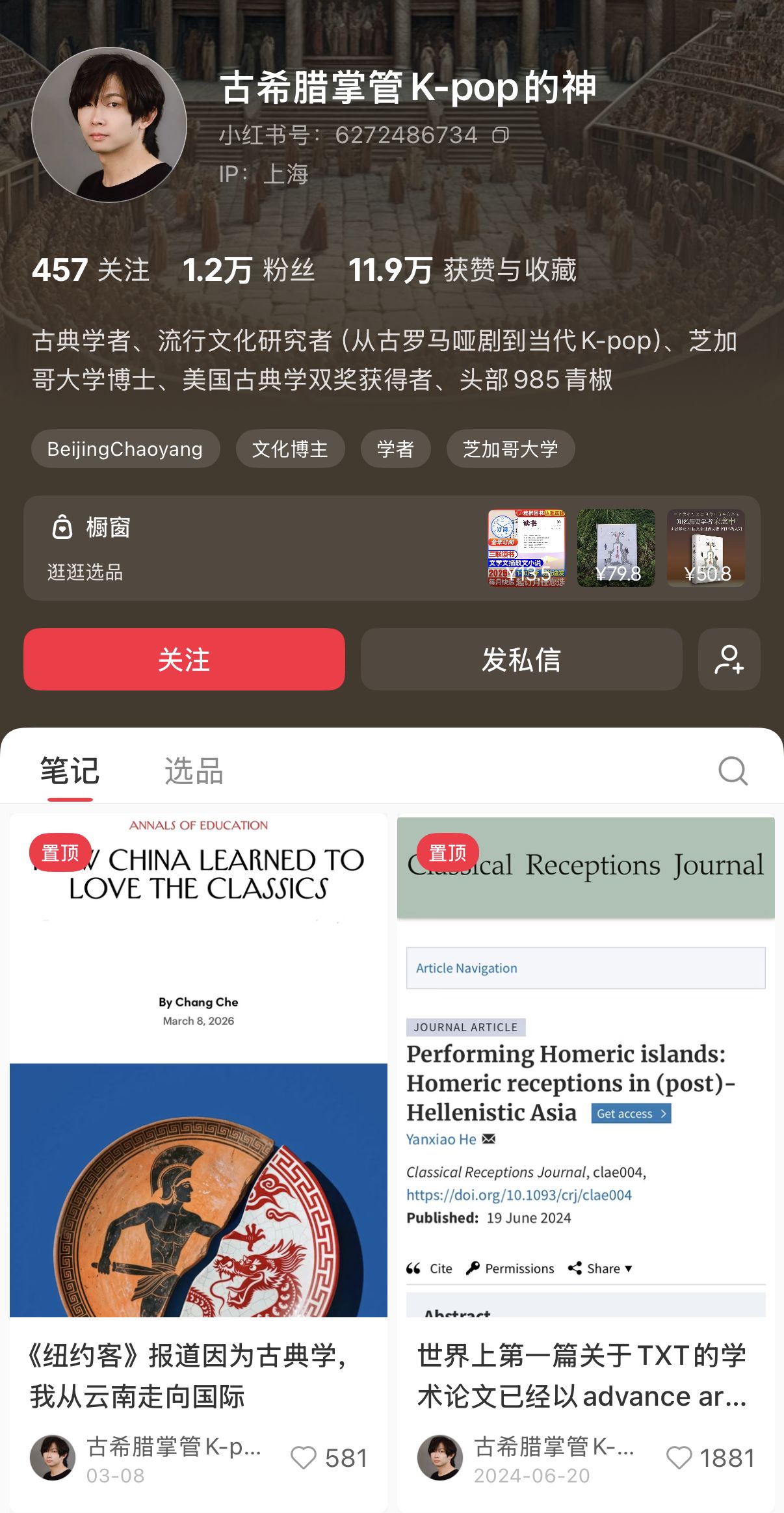
He Yanxiao, who posts on Xiaohongshu (RedNote) as “The Ancient Greek God of K-pop,” has amassed more than 12,000 followers. His work as a Chinese scholar of classics was featured in The New Yorker this March. (Screenshot via Xiaohongshu)
“To study Central Asia, you need to know something about Rome, about China, about Persia, about India,” He tells TWOC. “It gave me a more holistic understanding of history.”
His creative approach has led him to make unexpected comparisons across time and cultures, including between the ancient world and today’s K-pop industry. He examines allusions to classical texts in K-pop songs and draws parallels between K-pop and pantomime, a popular form of theater in the Roman Empire. Both, he argues, use vivid visual storytelling to reach audiences across linguistic and cultural divides—and have faced dismissive, elitist criticism from intellectual circles. The young professor appears frequently on podcasts to discuss his research and updates his popular Xiaohongshu account almost daily, often connecting academic theories to observations and experiences from his daily life.
Tom Wang, a PhD candidate in Yale’s classics and history departments, recently won the prestigious Rome Prize, which allows him to spend 10 months in Rome researching how Roman cities managed their finances amid the empire’s fiscal pressures. His interest in the far-reaching effects of economic policy began much earlier. Originally from Jinzhou, a small coastal city in Liaoning, he saw his family experience mass layoffs at state-owned enterprises in northeastern China around the turn of the century, when millions of factory workers lost jobs they had long considered permanent.
Wang believes that cultural experiences can shape how scholars interpret history and challenge assumptions. For example, he explains to TWOC that some Western scholars struggle to grasp the hypothesis that at various points in history, the fiduciary value of money, backed by public trust and government authority, can far exceed its intrinsic value, the money’s actual material worth. “If you’re familiar with Chinese history, it’s not difficult to imagine that sometimes you simply had to follow the state’s rules on currency,” says Wang. “People so accustomed to a market economy have a hard time even imagining that.”
Liu, the Emory professor, is also noticing changes in the historically Eurocentric field. “Now when I go to classics conferences, I see a lot more diversity among the attendees, and their work has opened my horizons,” she says. She gives the example of Kelly Nguyen, a Vietnamese-American scholar at UCLA’s classics department who synthesized her training in classics, experience as a refugee, and knowledge of Vietnamese authors’ works to analyze the poet Ocean Vuong’s use of classical imagery.
After seeing more diverse research and recognizing the value of different cultural perspectives in academia, Liu has also changed her approach to teaching. “Now I have a different view on what makes a good student: someone who can make full use of his or her existing capacities, language abilities, and cultural capital,” she says. “I now tell my students, if you like Chinese opera, it’s an excellent idea to conduct a comparative analysis between that and Greek theater. That’s something I would never have done in the past.”
Related Articles