
Newsletter
Popular

  • Society
  • Life
  • Business
  • Language
  • History
  • Arts
  • Literature
Podcast
Video
Magazine

  • China
  • International

  • About Us
  • Our Team
  • Join Us
  • Contact Us
  • Pitch to Us
Follow Us
Newsletter
The World of Chinese logo
Sign In SUBSCRIBE
Popular
Topics
  • Society
  • Life
  • Business
  • Language
  • History
  • Arts
  • Literature
Podcast
Video
Magazine
Shop
  • China
  • International
About TWOC
  • About Us
  • Our Team
  • Join Us
  • Contact Us
  • Pitch to Us
Subscribe
Cart
FOOD

Food for Port

Sample the catch of the day in Guangdong’s biggest fishing port

    author Hatty Liu
Hatty Liu
May 25, 2019
Food-port_master1200.jpg
Photo Credit: Meng Qingchun

The Bohe Fishing Harbor wakes before the sun. Each morning, fishermen wearing powerful headlamps arrive under the spell of darkness to uncover their boats, ready the nets, and light incense to bless the voyage ahead.
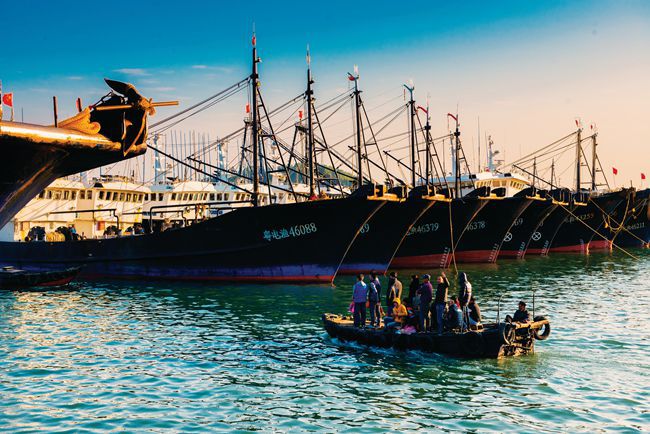
Each September-May fishing season, Guangdong’s biggest fishing port produces 100,000 tons of fresh catch, from shrimp to perch to a significant portion of the world’s tilapia. Over 1,400 fishing boats call the deep-water harbor home, with the biggest departing each week for four or five-day journeys up the coast or down to the South China Sea. Meanwhile, small family-owned dinghies putter around the closer waters as they have for thousands of years, carrying offerings to the sea goddess on the makeshift altars on their prows.
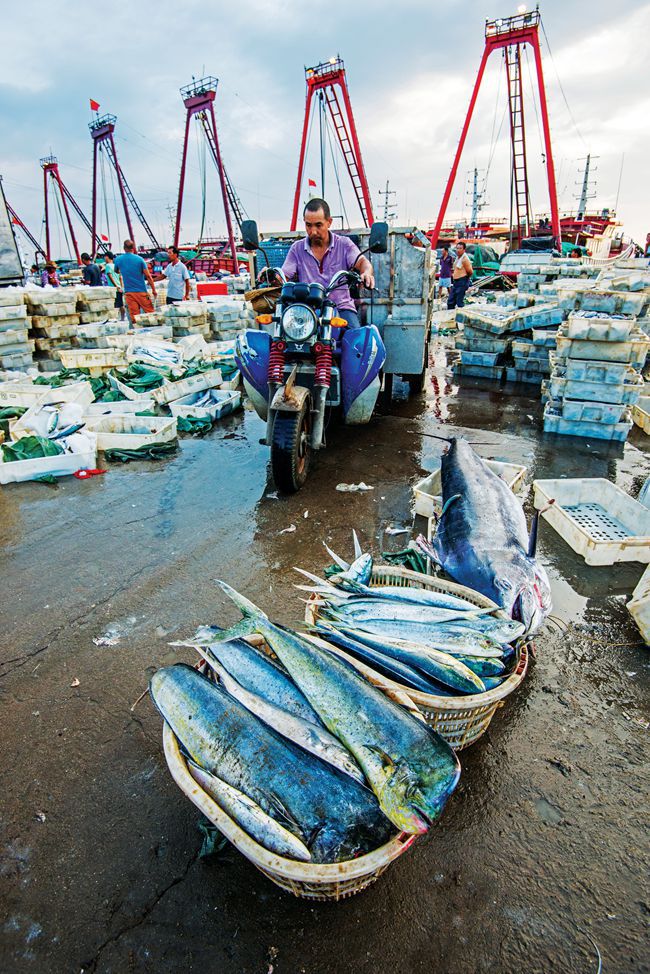
Bohe is one of China’s 10 biggest working harbors for fishery

Bohe used to be a major shipbuilding center and port of departure for Maritime Silk Road treasures bound for Southeast Asia. Today, when the ships come in, it’s crates of edible treasures which are unloaded, sorted, and sold on site, packed onto waiting ice trucks for processing centers and seafood markets around the region, if not sold to a passing tourist. Fishermen (and women) and buyers, clad in galoshes and straw hats, expertly weave through the teeming and slippery dock, sizing up the value of the day’s catch by sight.
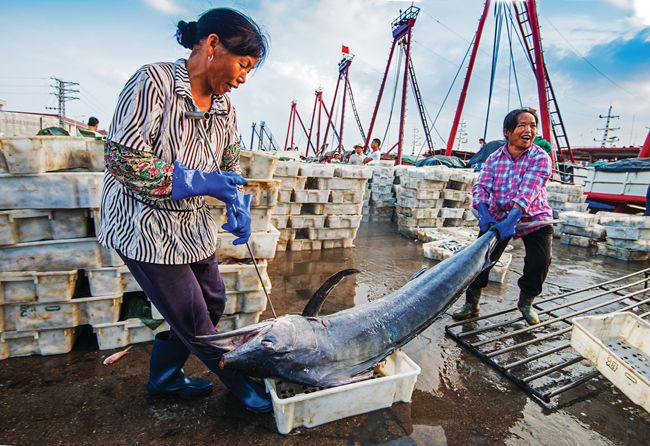
Over half of the 63,000 residents in the town of Bohe make their living from fishing

The government is now expanding Bohe’s seafood processing and cultural facilities in effort to revitalize its Silk Road history. Strict no-catch seasons are also being enforced, in order to combat overfishing along China’s coasts. As younger generations seek less dangerous and better paid occupations, the culture here faces an uncertain future, but locals remain proud of their way of life. As a regional sea shanty boasts, “Officials must know how to read words/ Fishermen must know how to read tides.”
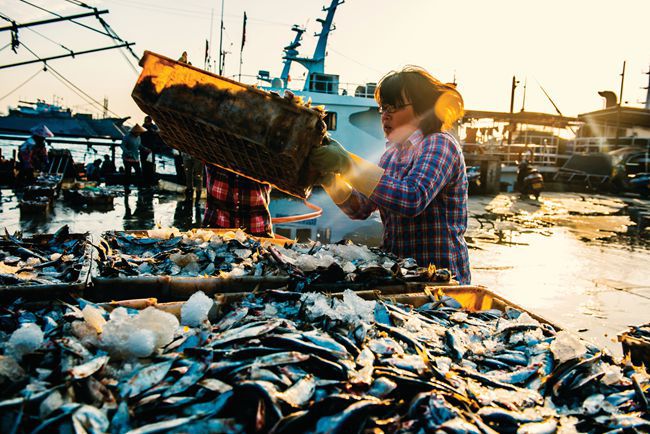
Fishing is still largely a family business, with each generation going out to sea as young as 14 or 15

Photography by Meng Qingchun (孟庆春)


Food for Port is a story from our issue, “China Chic.” To read the entire issue, become a subscriber and receive the full magazine.

Tags:
BOHE FISHING HARBOR CHINA'S FISHING INDUSTRY FISHING PORT GUANGDONG SILK ROAD

Related Articles

莫高窟第323窟张骞出使西域图(初唐)
BOOKS

Civilization and Governance: A Conversation on an Inclusive China

garment workers in Kanglu
BUSINESS

In Southern China’s Once-Thriving “Garment Kingdom,” Business Fades Amid Urban Renewal

58597431-ecc8-4325-a015-d00917af88b7
TRADITIONAL CULTURE

The Fast and Furious Dragon Boat Racers of Foshan

kanglu 2
SOCIETY

Glimpse Inside China’s Vanishing Garment Hub

Related Articles

莫高窟第323窟张骞出使西域图(初唐)
BOOKS

Civilization and Governance: A Conversation on an Inclusive China

In his revised edition of “Under Heaven: Inclusive China,” Peking University Professor Han Yuhai reimagines “tianxia” as an interconnected world shaped by cultural diversity and exchange

garment workers in Kanglu
BUSINESS

In Southern China’s Once-Thriving “Garment Kingdom,” Business Fades Amid Urban Renewal

Once a major hub for clothes manufacturing, Guangzhou’s Kanglu district has in recent years been beset by difficulties, including Covid-19, competition fueled by the rise of e-commerce, and a protracted facelift

58597431-ecc8-4325-a015-d00917af88b7
TRADITIONAL CULTURE

The Fast and Furious Dragon Boat Racers of Foshan

In Foshan, the Ming-dynasty tradition of dragon boat racing continues to draw daring local competitors and big crowds

kanglu 2
SOCIETY

Glimpse Inside China’s Vanishing Garment Hub

As the garment industry of Guangzhou’s Kanglu area winds down to its last days, TWOC captures life in for the 100,000 workers and factory bosses in its urban villages

Subscribe to our newsletter

Scan to follow us on WeChat

Or add: Theworldofchinese

Topics

  • Society
  • Life
  • Business
  • Language
  • History
  • Arts
  • Literature
  • Photo Stories

Media

  • Magazines
  • Books
  • Podcasts
  • Videos

News and Events

  • Announcements
  • Events

About TWOC

  • About Us
  • Our Team
  • Join Us
  • Pitch to Us
  • Contact Us

PARTNERS

© THE WORLD OF CHINESE | 京ICP备05007371号-7