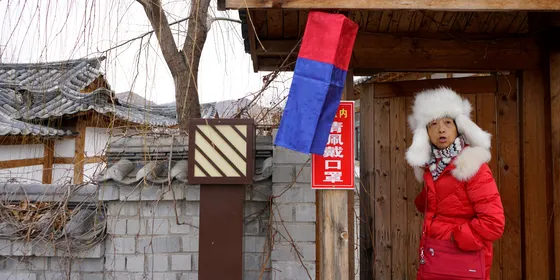
Millions of donated medical supplies and investments in Covid-19 research technology are shining a global spotlight on China’s emerging corporate philanthropy culture.
In the wake of the Covid-19 pandemic, Chinese internet and technology giants including Alibaba, Tencent, Baidu, Huawei, and Didi are donating millions to global relief efforts. Since mid-February, Tencent’s Anti-Epidemic Fund has pledged over 200 USD million for medical supplies and technical support.
At the same time, the Alibaba Foundation and the Jack Ma Foundation have donated medical supplies including masks, ventilators, and thermometers to 23 countries across Asia, Europe, and the Americas. They’ve also worked with doctors and university researchers to develop the Handbook of Covid-19 Prevention and Treatment, a guide for hospital treatment and disease containment.
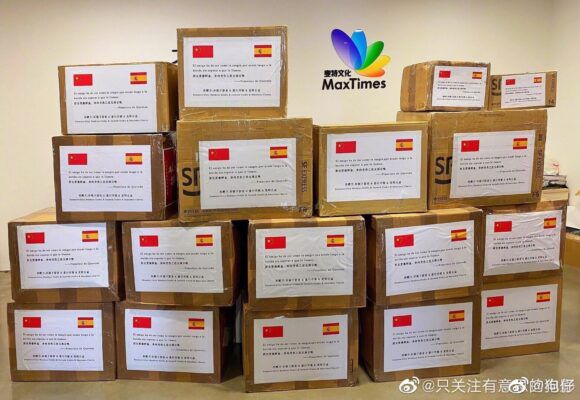
Donations to Spain from a Chinese company (Weibo)
Baidu, Huawei, Didi, and Alibaba have also ramped up development of digital health technology using cloud computing and AI. Their algorithms can analyze CT scans, assisting with faster diagnosis of the virus, and help researchers understand the genetic makeup of Covid-19 which could lead to the faster development of a vaccine.
These initiatives have come as something of a surprise given China’s poor track record of philanthropy. In 2016, Chinese citizens gave the equivalent of 0.2 percent of the country’s GDP to charitable causes, whereas US citizens donated 2 percent of their GDP. Just last year, the Charities Aid Foundation (CAF) World Giving Index ranked China last out of 126 countries for volunteerism, charitable donations, and helping strangers.
However, private philanthropy culture in the PRC has been developing steadily since the early 2000s. In 2004, the State Council issued the “Regulations on Foundation Administration,” which allowed private individuals to create their own charitable foundations. Private foundations quickly began appearing all over the country.
The enactment of the China Charity Law by the National People’s Congress in 2016 further smoothed the way for private philanthropists by making it easier to register nonprofits and give tax deductible donations.
Culturally, China had strong philanthropic roots in its history. In the Analects of Confucius, for example, the great philosopher is quoted as saying, “Even if you have fine abilities, if you are arrogant and stingy, the rest is not worth considering.” Daoism and Buddhism similarly encourage their practitioners to engage in philanthropy, and Buddhist monasteries during the Zhou dynasty are known to have aided the poor and the orphans of society.
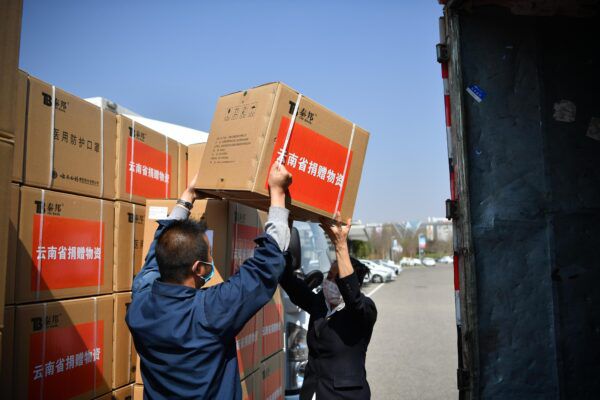
Workers in Hubei province receive a shipment of donated masks from the Yunnan Baiyao Group (VCG)
However, periods of war and shifting political power in China put a temporary damper on philanthropy culture. During the Maoist era, religious groups that traditionally provided help for the poor were persecuted. The state also monopolized all citizens’ basic needs (at least, that was the theory). It wasn’t until the reform and opening up period was well underway that the nation re-awakened its tradition of charitable giving.
Alibaba in particular has been at the forefront of the new corporate philanthropy trend. Since 2011, the e-commerce firm has donated 0.3 percent of its annual revenues to social sustainability projects. The company and its founder, “Jack” Ma Yun (who once complained that it was easier to make money in China than to give it away), have also established several branch foundations, including the Alibaba Foundation, the Ali Poverty Relief Fund, and the Jack Ma Foundation. In an interview with Alizila, the company’s news portal, Alibaba Foundation chairman Sun Lijun said “philanthropy is the core of our business model.”
In 2019, Ma stepped down from his role as CEO of Alibaba to focus on philanthropy, following in the footsteps of American billionaires like Bill Gates and Warren Buffett. Ma’s self-titled foundation has been active in the Covid-19 response, including donating 500,000 test kits and 1 million masks to the Center for Disease Control and Prevention (CDC) in the U.S.
However, the response to Chinese aid has been mixed. Apart from accusations from the likes of Josep Borrell, the EU’s foreign policy chief, that the Chinese state might be engaging in the “politics of generosity” in a bid to increase its influence, the quality of aid supplies have also been called into question. The Spanish, Dutch, and Turkish governments have each returned shipments of allegedly faulty medical supplies sent from China.
One Twitter user pointed to the defective surgical masks supplied to the Netherlands as evidence that the Jack Ma Foundation’s masks may be similarly flawed: “Many countries have received defective medical products from China. Don’t you watch international news?” On April 1, however, CGTN reported via Twitter that the Jack Ma Foundation had received no quality complaints and none of their medical supplies have been rejected.
Cover image from VCG
Related Articles