
Newsletter
Popular

  • Society
  • Life
  • Business
  • Language
  • History
  • Arts
  • Literature
Podcast
Video
Magazine

  • China
  • International

  • About Us
  • Our Team
  • Join Us
  • Contact Us
  • Pitch to Us
Follow Us
Newsletter
The World of Chinese logo
Sign In SUBSCRIBE
Popular
Topics
  • Society
  • Life
  • Business
  • Language
  • History
  • Arts
  • Literature
Podcast
Video
Magazine
Shop
  • China
  • International
About TWOC
  • About Us
  • Our Team
  • Join Us
  • Contact Us
  • Pitch to Us
Subscribe
Cart
TRADITIONAL CULTURE

The Changing Face of Yingge Dance

How the whole village works together to keep Puning’s traditional “hero dance” alive

    author Hatty Liu
Hatty Liu
November 13, 2021
Yingge Cover Photo
Photo Credit: Huang Ruide (黄瑞德)
00:00
Subscribe to listen to this audio

The ghosts are gone from Puning today, but that doesn’t mean the locals don’t relish a chance to play heroes. Yingge (英歌), written with the characters for “hero” and “song,” is a type of folk dance with 300 years of history from the Chaoshan region of Guangdong province. It evolved from the sacrificial Nuo opera (傩戏) performed in various parts of southern China to welcome the spring, dispel evil spirits, and pray for good fortune.

While ancient Nuo opera consisted of religious masks, shamans, and scenes from various folk tales, Yingge dances have evolved to use face makeup and just one plot: the adventures of the legendary “108 Heroes” of Liangshan Mountain, best known from the classic novel Outlaws of the Marsh. The version performed in the villages around Puning, specifically, retells the heroes’ rebellion against the capital Daming Fu through acrobatic dances, martial arts, musical numbers, and other displays of talent. With 20 to 30 characters in the show, whole villages would turn out to perform in the past, and able-bodied young men had to take on the physically taxing roles of the heroes.

As young people move out of the villages, so are local folk arts gradually vanishing all around China. In Puning, Yingge is still danced during holidays such as the Lunar New Year, and the performers are generally amateurs—farmers who have put down their tools and put on costumes. Some of the parts are passed down in the family, from father to son, and some villages have started giving performers a basic salary. Under the skilled hands of costumers and makeup artists, ordinary villagers are transformed into heroes for the day, and the antics of ancient outlaws grace the village square one more time.
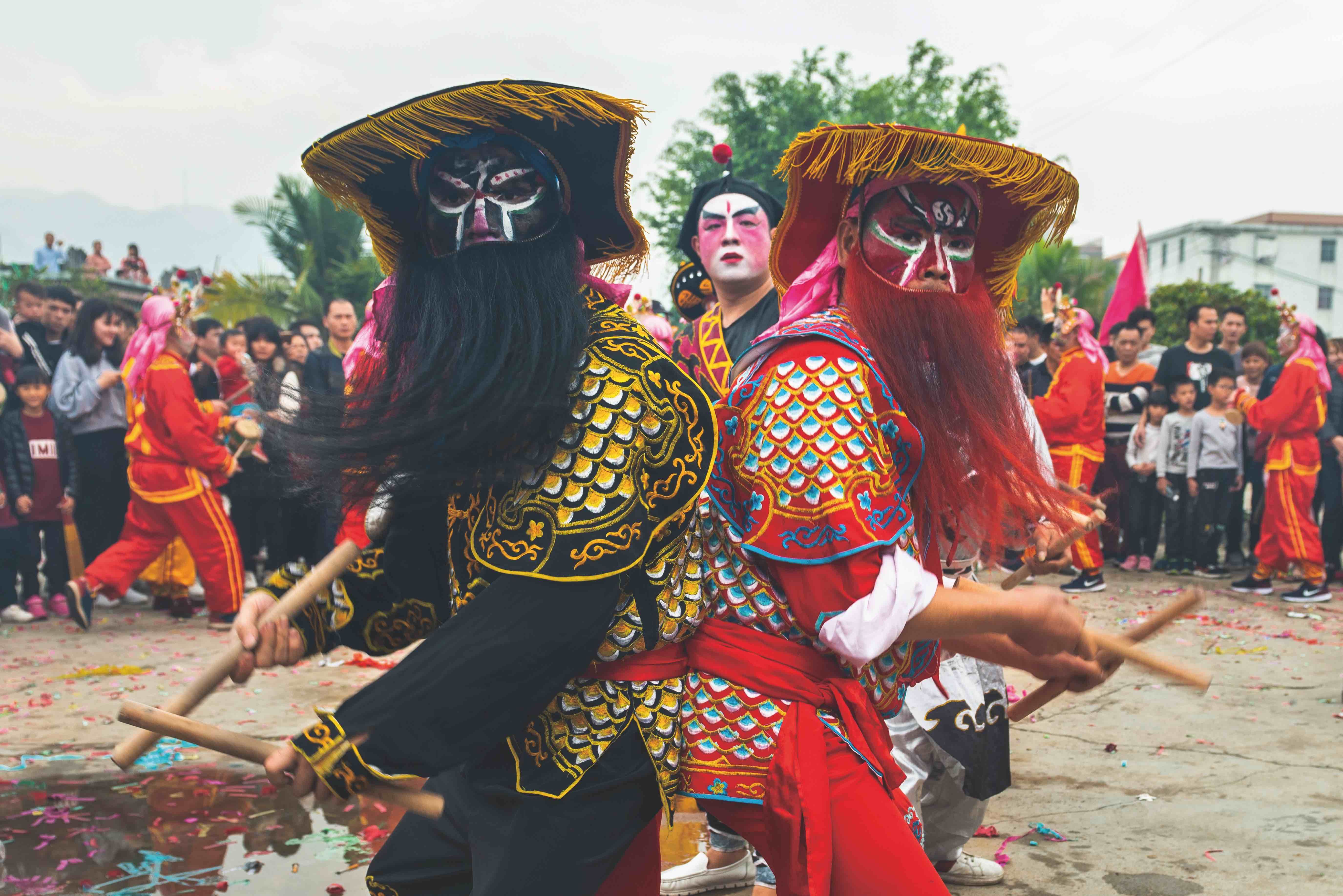
Dancing with wooden clubs is a distinctive skill from Yingge
Dancing with wooden clubs is a distinctive skill from Yingge

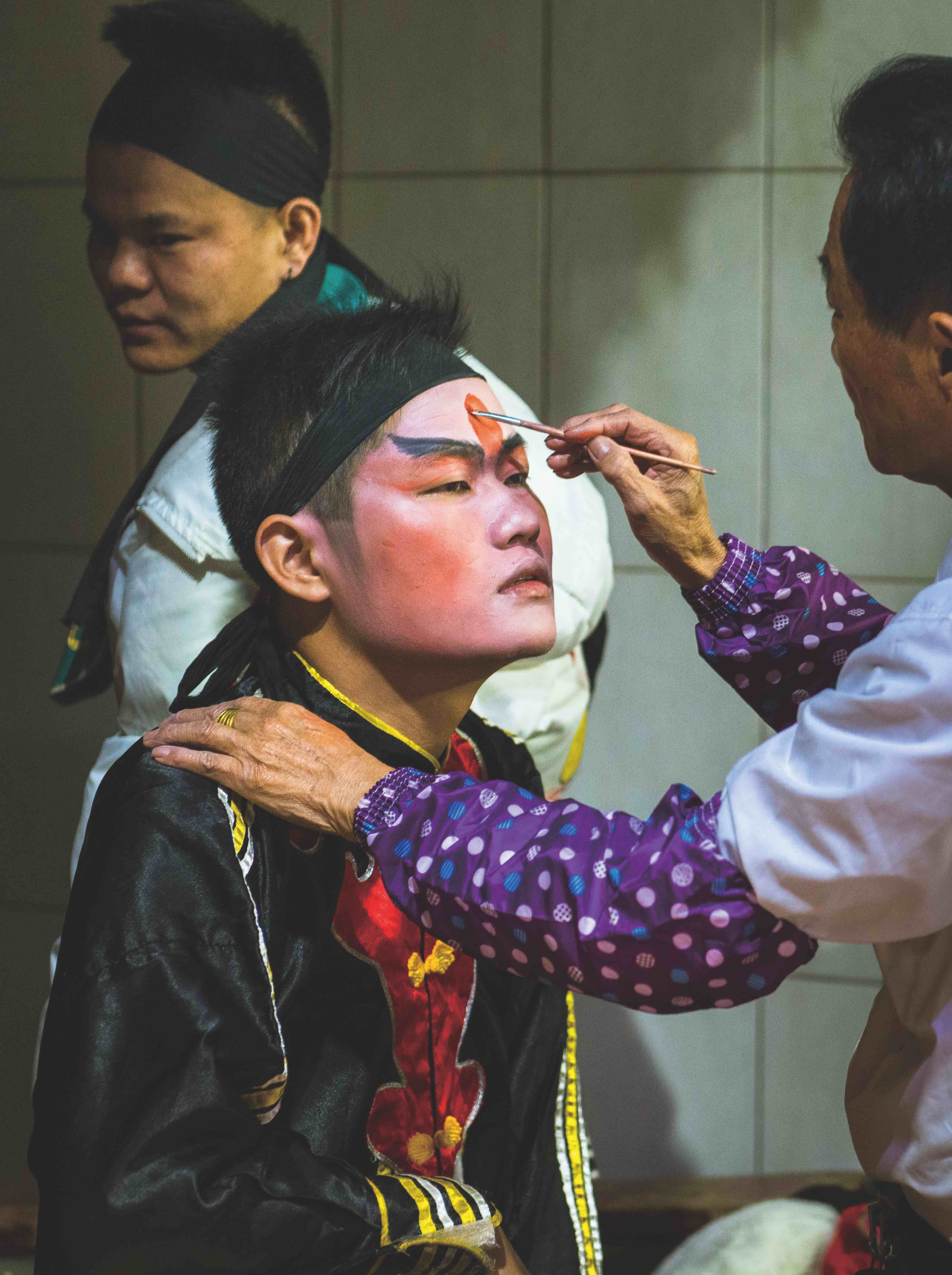
Every member of the troupe, from actor to makeup artist, is an amateur from the local village
Every member of the troupe, from actor to makeup artist, is an amateur from the local village

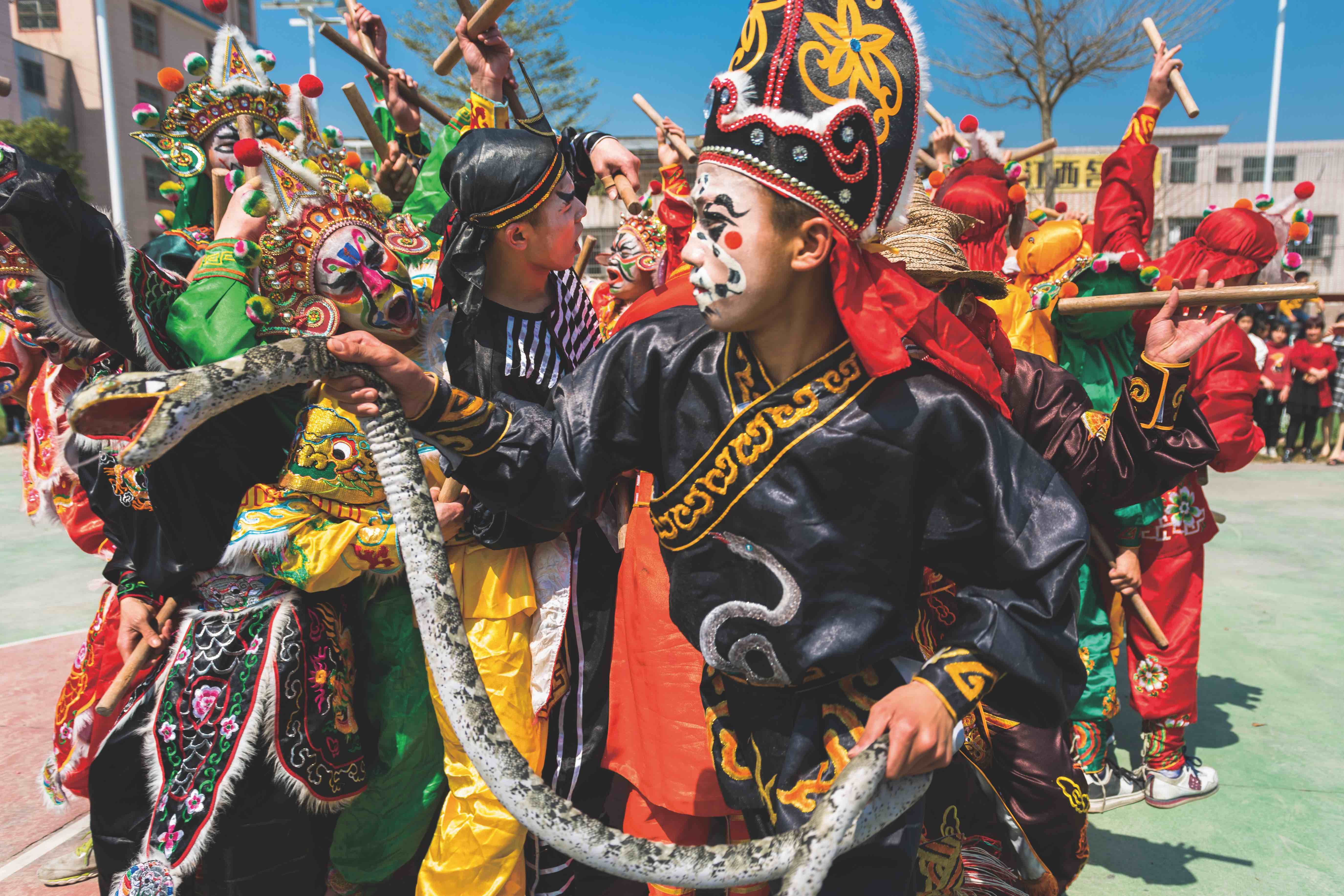
Shi Qian, a spirit character, is responsible for scene-changes during the dance
Shi Qian, a spirit character, is responsible for scene-changes during the dance

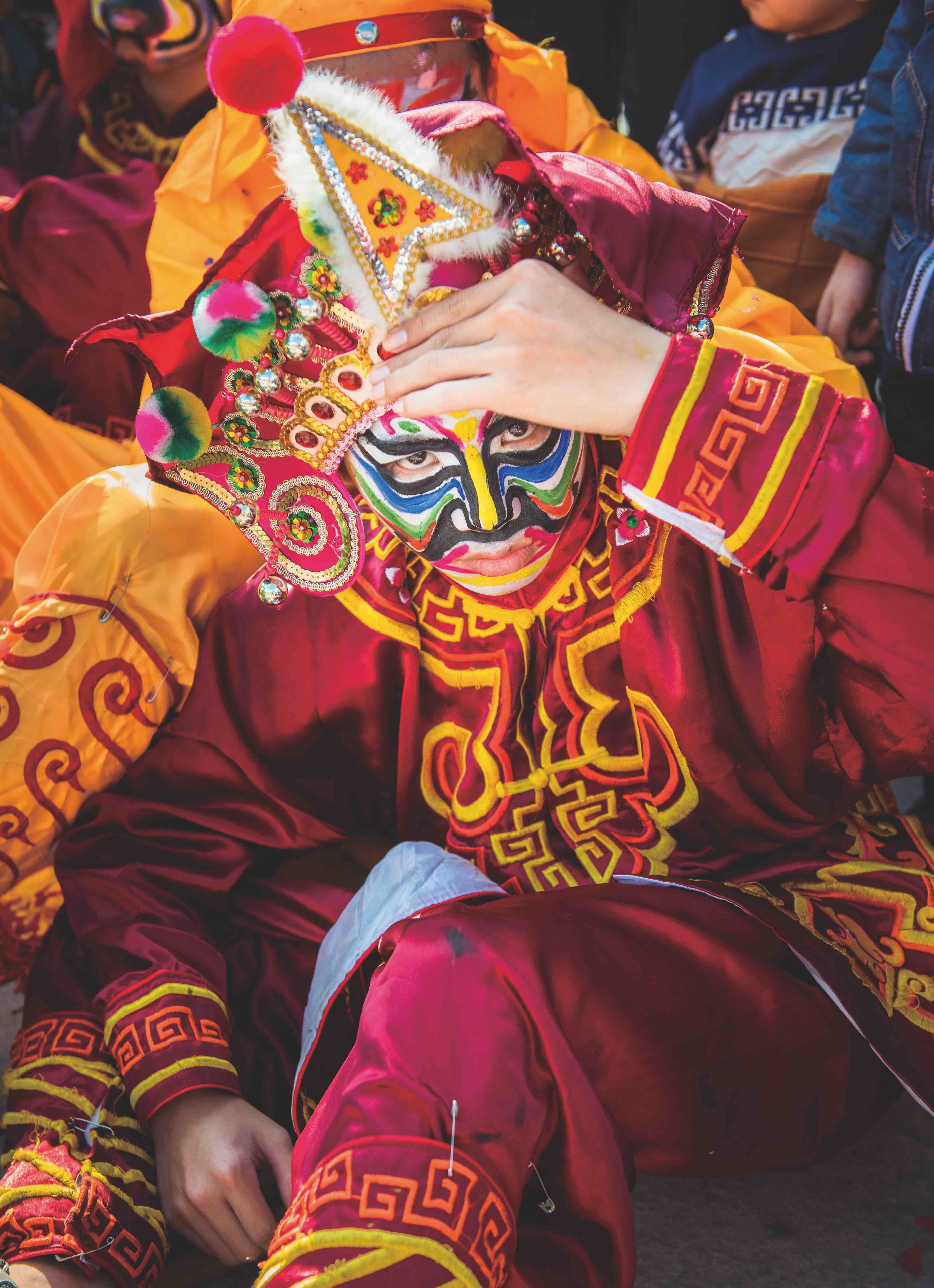
Everyday clothing can serve as part of the costumes in a pinch
Everyday clothing can serve as part of the costumes in a pinch

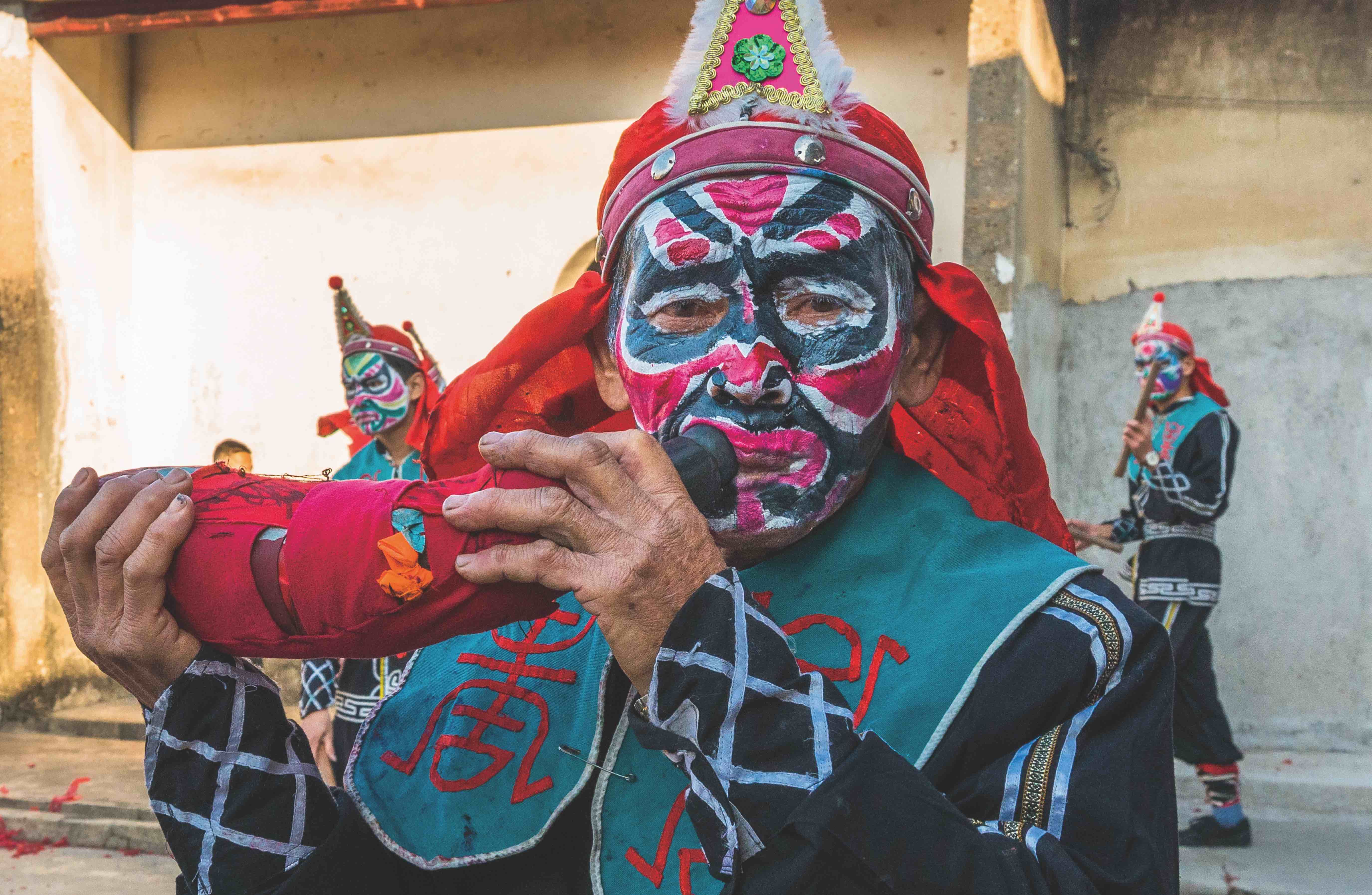
A veteran bugler from the army plays the horn for the troupe
A veteran bugler from the army plays the horn for the troupe

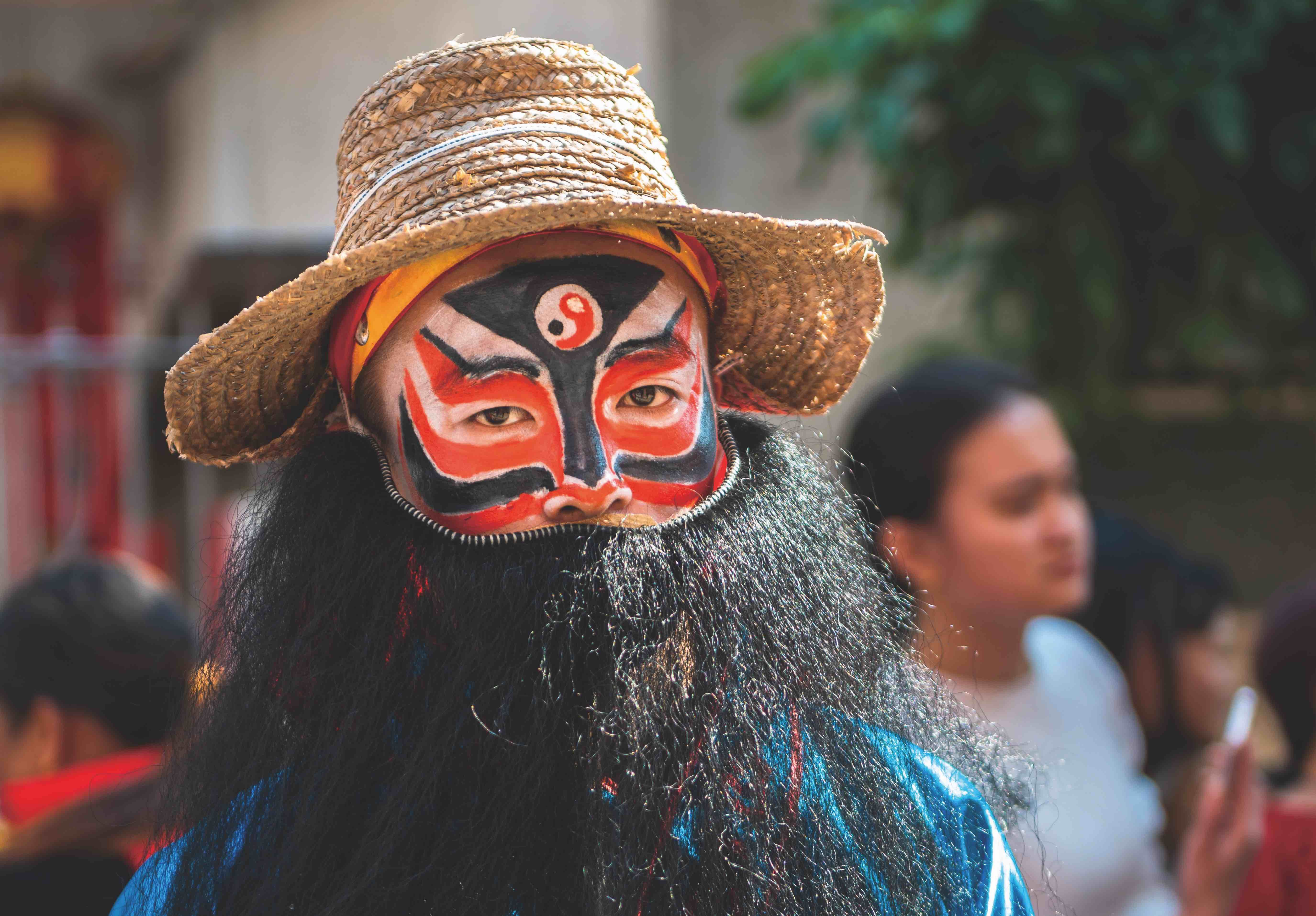
Each village has its own repertoire of face-paint designs
Each village has its own repertoire of face-paint designs

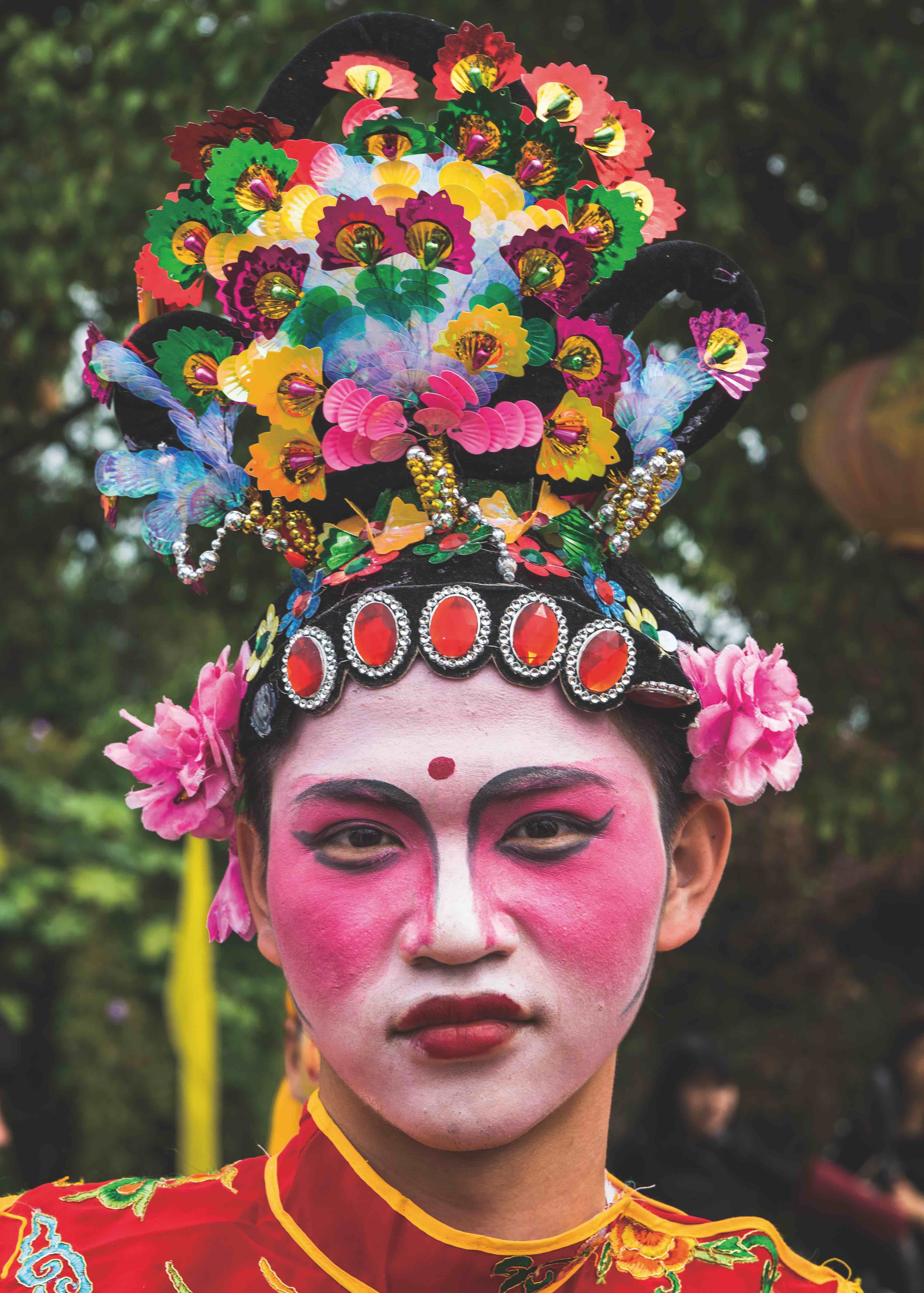
Traditional yingge is performed by males only, including all the female parts

Traditional Yingge is performed by males only, including all the female parts

Photography by Huang Ruide (黄瑞德)


The Changing Face of Yingge Dance is a story from our issue, “Upstaged.” To read the entire issue, become a subscriber and receive the full magazine.

Tags:
GUANGDONG FESTIVALS SPIRITUALITY

Related Articles

Mount Putuo Guanyin Island Zhejiang
TRAVEL

Mount Putuo: The Many Faces of Guanyin’s Island

Wedding at stadium in Guizhou
TRADITIONAL CULTURE

How China Is Celebrating Qixi This Year | Photo Story

eggs cover
HISTORY

Portrait of the Egg in China: More Than Just Food

Chinese ethnic minorities celebrating Sanyuesan and robots
TRADITIONAL CULTURE

Celebrating Sanyuesan: A Vibrant Fusion of Tradition and Myth

Related Articles

Mount Putuo Guanyin Island Zhejiang
TRAVEL

Mount Putuo: The Many Faces of Guanyin’s Island

On this Buddhist holy ground, monks, merchants, pilgrims, and tourists blur the boundaries between devotion and daily life

Wedding at stadium in Guizhou
TRADITIONAL CULTURE

How China Is Celebrating Qixi This Year | Photo Story

From traditional rituals to mass weddings and DIY drafts, the Qixi festival has blended centuries-old romance with modern ways of celebrating love

eggs cover
HISTORY

Portrait of the Egg in China: More Than Just Food

From ancient creation myths to everyday meals, the humble egg has long been woven into Chinese culture and cuisine

Chinese ethnic minorities celebrating Sanyuesan and robots
TRADITIONAL CULTURE

Celebrating Sanyuesan: A Vibrant Fusion of Tradition and Myth

From ancestral worship to joyous festivities, discover the rich cultural significance of Sanyuesan, or Shangsi Festival, across China

Subscribe to our newsletter

Scan to follow us on WeChat

Or add: Theworldofchinese

Topics

  • Society
  • Life
  • Business
  • Language
  • History
  • Arts
  • Literature
  • Photo Stories

Media

  • Magazines
  • Books
  • Podcasts
  • Videos

News and Events

  • Announcements
  • Events

About TWOC

  • About Us
  • Our Team
  • Join Us
  • Pitch to Us
  • Contact Us

PARTNERS

© THE WORLD OF CHINESE | 京ICP备05007371号-7