
Newsletter
Popular

  • Society
  • Life
  • Business
  • Language
  • History
  • Arts
  • Literature
Podcast
Video
Magazine

  • China
  • International

  • About Us
  • Our Team
  • Join Us
  • Contact Us
  • Pitch to Us
Follow Us
Newsletter
The World of Chinese logo
Sign In SUBSCRIBE
Popular
Topics
  • Society
  • Life
  • Business
  • Language
  • History
  • Arts
  • Literature
Podcast
Video
Magazine
Shop
  • China
  • International
About TWOC
  • About Us
  • Our Team
  • Join Us
  • Contact Us
  • Pitch to Us
Subscribe
Cart
TRADITIONAL CULTURE

Gimme Sugar: Fujian’s Ancient Sugar-Making Traditions Live On

Sugar-making in Longyan, Fujian province, is the sweetest job in town

    author Hatty Liu
Hatty Liu
January 21, 2022
Sugar farmers
Photo Credit: Li Guochao (李国潮)
00:00
Subscribe to listen to this audio

In the era of UNESCO and social media, every town and hamlet in China is scrambling to revive traditional handicrafts to claim as their “intangible cultural heritage.” But the villages of Zhuotian town in Longyan, Fujian province, have everyone beat with the sweetest tradition of all—the ancient method of making brown sugar with freshly cut sugarcane, a roaring fire, and lots of taste tests.

Sugarcanes have been grown in China since at least the Warring States period (475 – 221 BCE). In the Tang dynasty (618 – 907), Buddhist pilgrims brought back high-yielding sugarcane from India, as well as a method for mass-producing sugar that remains nearly unchanged today. The cane juice is squeezed out using a mill (now electrical, instead of ox-powered), strained, left to ferment, then boiled in a large pot for the liquid to evaporate. The sticky syrup is then transferred into a barrel and stirred with a metal rod until it starts to congeal. It is then poured in a mold and, once solid, cut into blocks for transport. In Zhuotian, sugar has been made this way locally since the start of the Ming dynasty (1368 – 1644).

Throughout November, the season of sugarcane harvest in the Zhuotian riverplains, the fires are never allowed to burn out in the dozen or so family-run sugar shacks in the area, as the temperature needs to be consistent for the whole month so that the juice will not overcook.

Sugar-making is sweaty work, as the workers need to transfer pots of boiling juice between different vessels and continue stirring the syrup with an even pressure as it solidifies, all before a sweltering blaze—but the chance to sneak a mouthful of delicious cane juice in between shifts, or treat eager children at the door to a taste of the syrup, make the rewards of this job undoubtedly sweet.
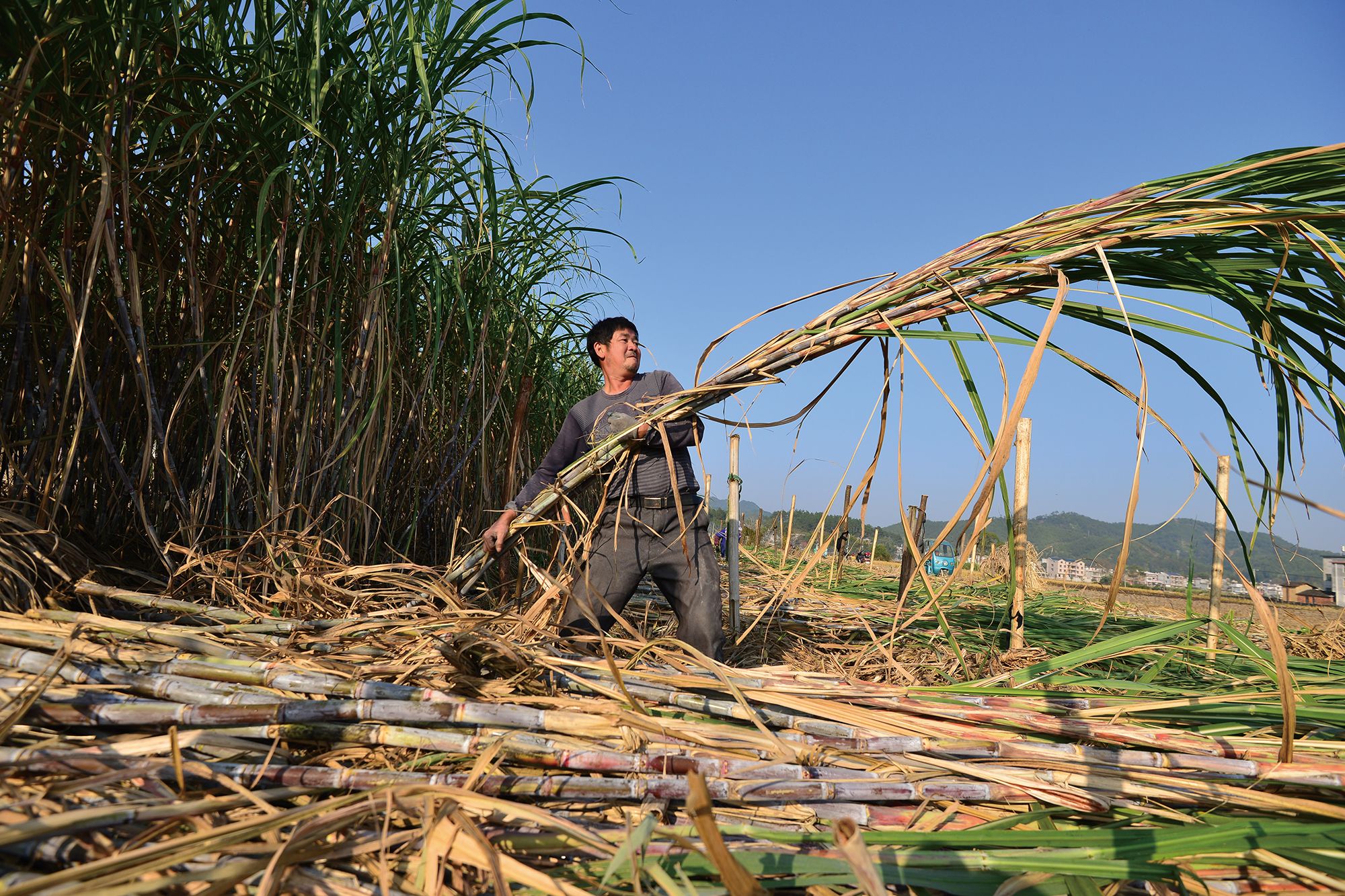
The sugarcane harvest begins every November
The sugarcane harvest begins every November

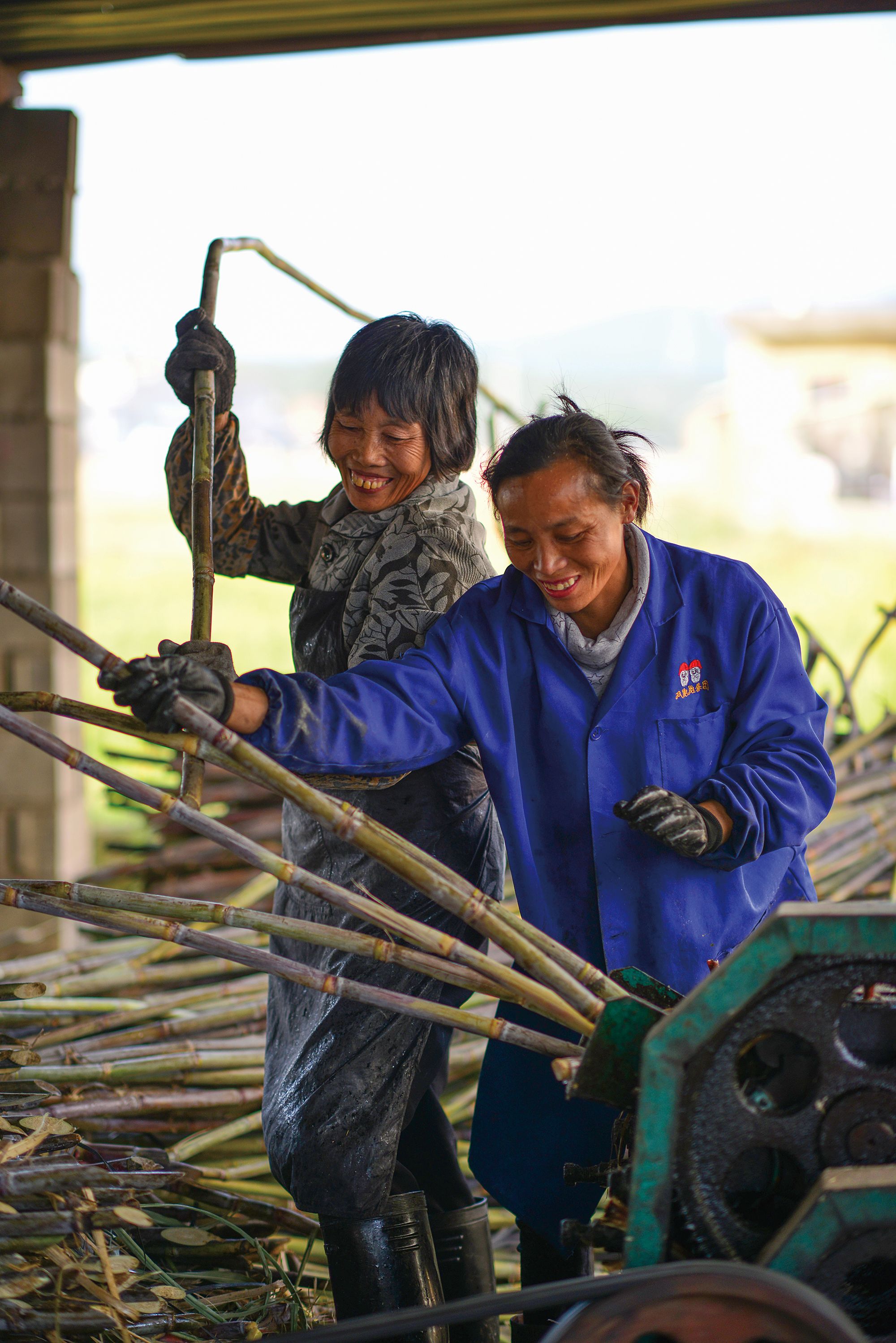
Cane juice used to be pressed by a mill powered by oxen, but now a machine does the job
Cane juice used to be pressed by a mill powered by oxen, but now a machine does the job

Workers must quickly ladle the juice so that no portion overheats in the pot
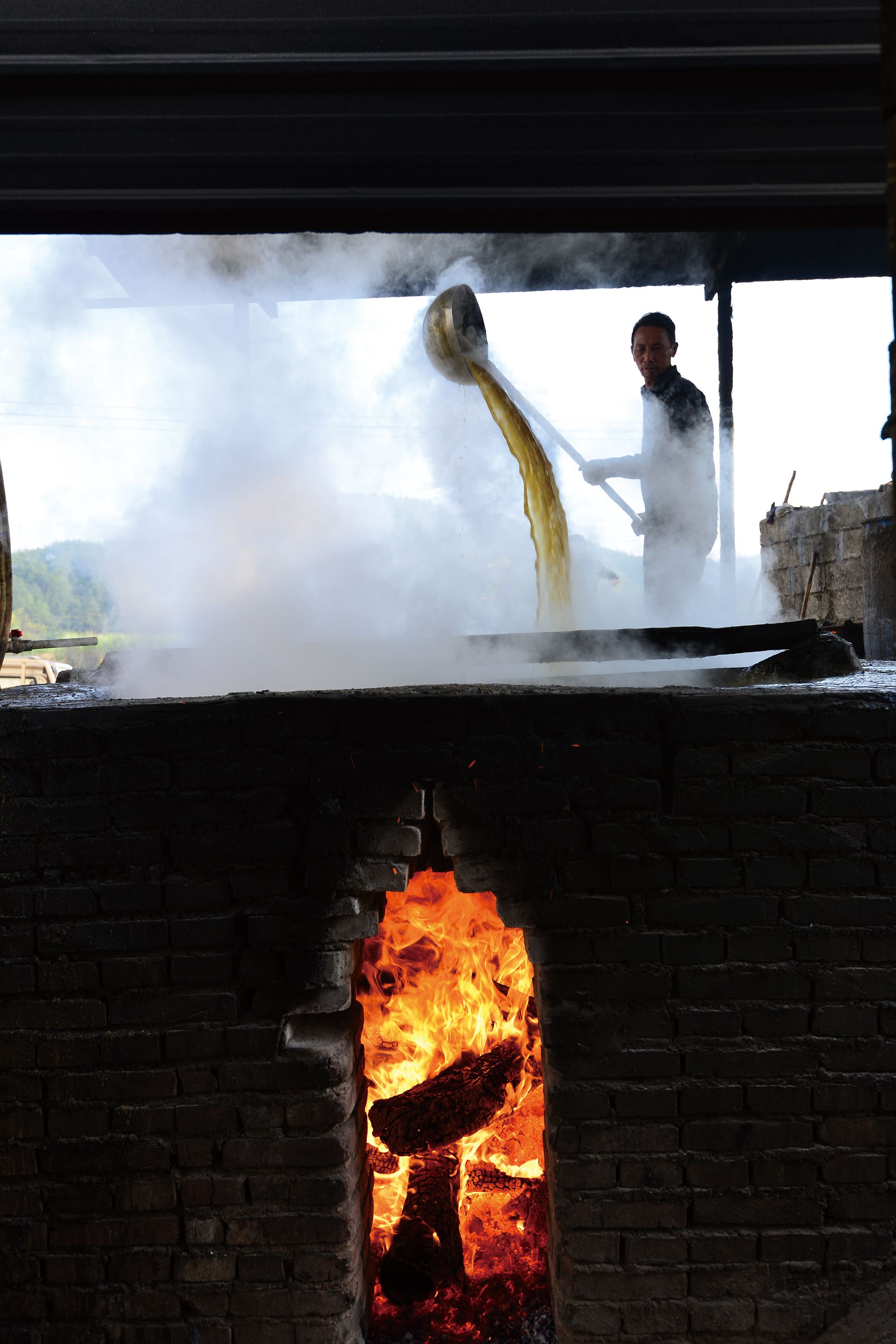
Workers must quickly ladle the juice so that no portion overheats in the pot

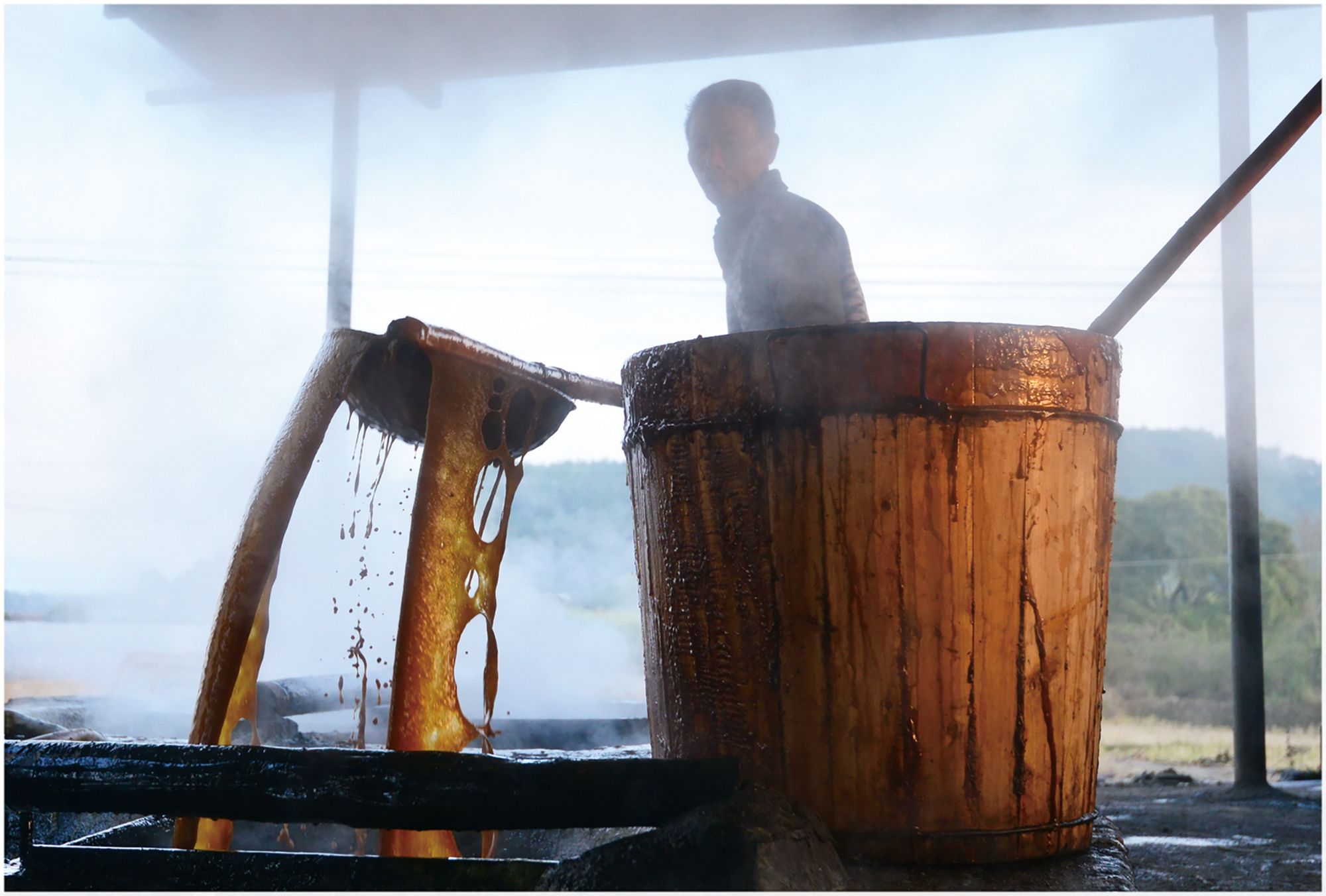
Workers will transfer the cane juice into another pot to cool if the pot overheats

Workers will transfer the cane juice into another pot to cool if the pot overheats

Workers pouring juice out onto a tray

Once the juice evaporates, the remaining syrup is poured into a mold to harden
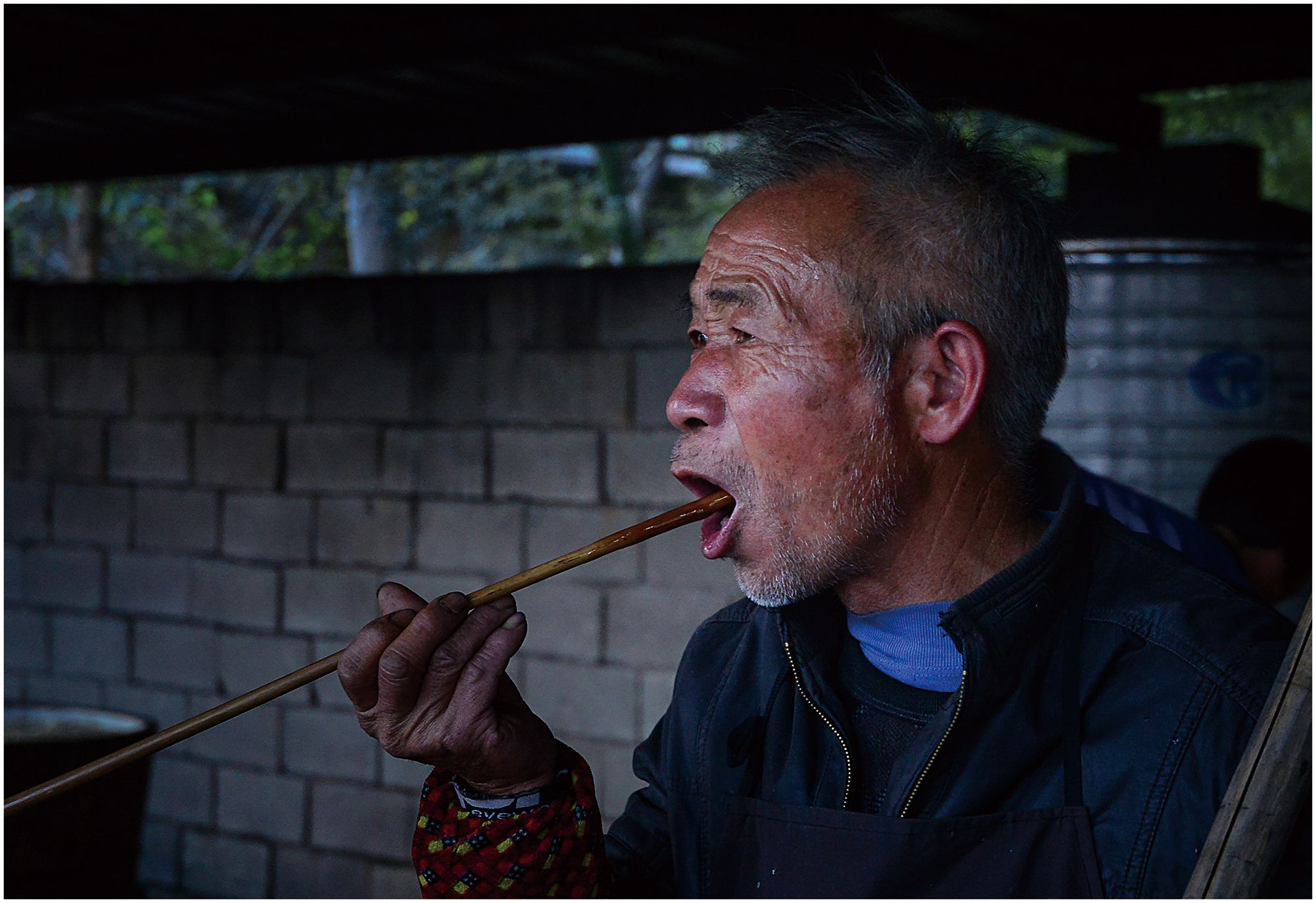
As the syrup boils, workers must periodically sample it for the taste
As the syrup boils, workers must periodically sample it for the taste

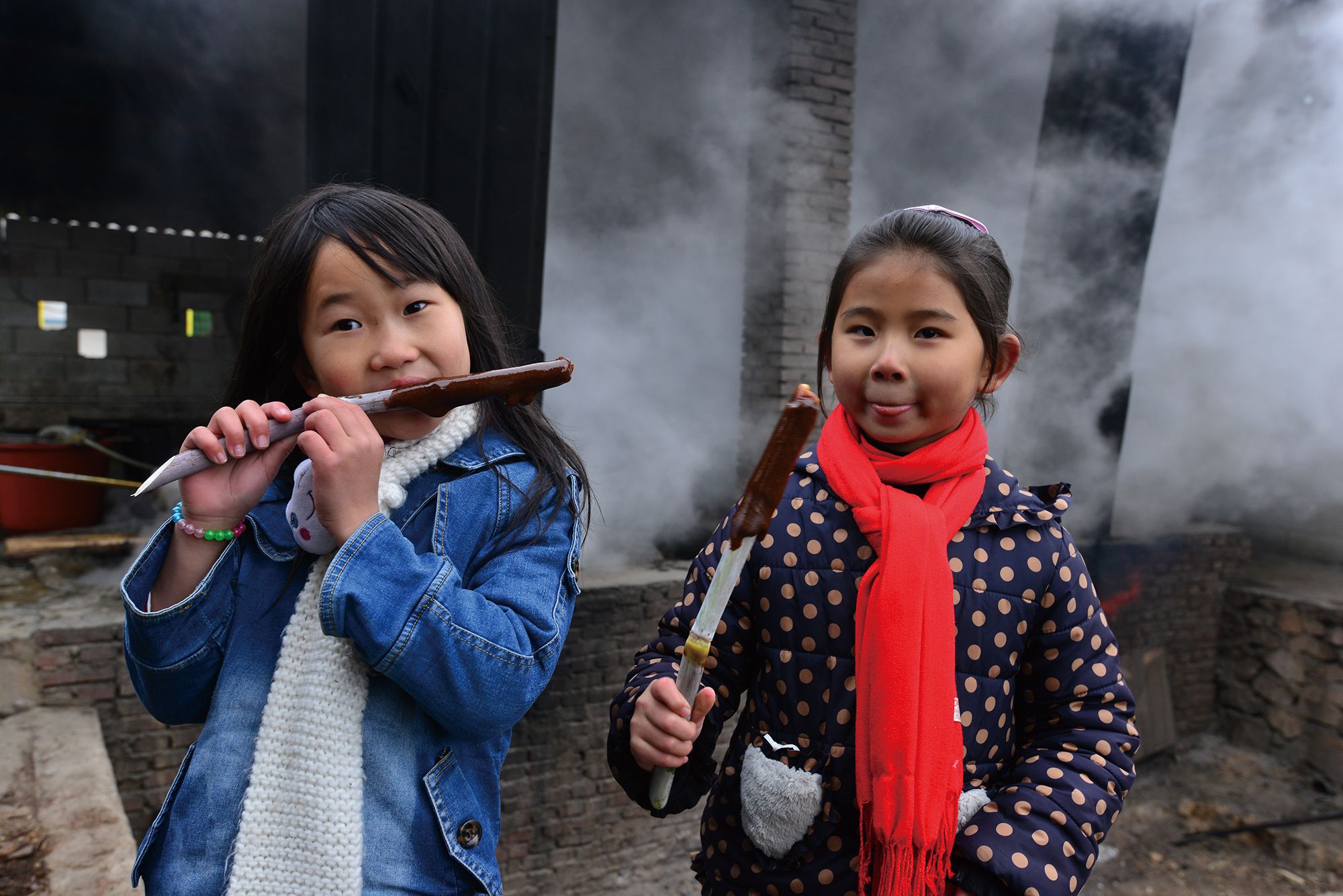
Children warming themselves by the sugar shack can often get a treat from the workers
Children warming themselves by the sugar shack can often get a treat from the workers

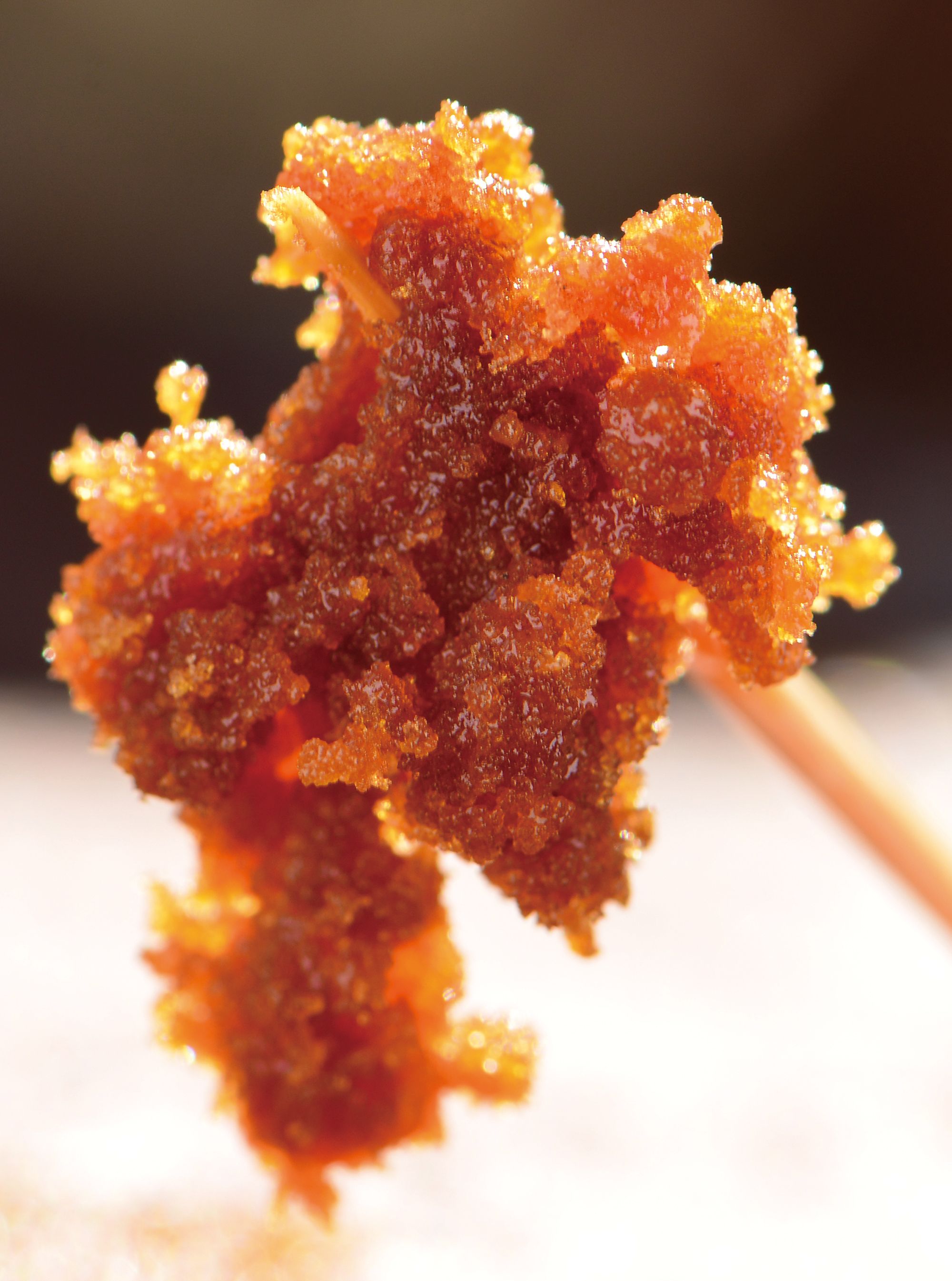
The hardened brown sugar looks solid on the surface, but feels smooth and fine when scooped up

The hardened brown sugar looks solid on the surface, but feels smooth and fine when scooped up

Photography by Li Guochao (李国潮)


Gimme Sugar: Fujian’s Ancient Sugar-Making Traditions Live On is a story from our issue, “Access Wanted.” To read the entire issue, become a subscriber and receive the full magazine.

Tags:
RURAL SWEET FUJIAN

Related Articles

Young Chinese taking photos gelato
FOOD

Can China’s Gelato Craze Stay Cool?

Tibetan Lhasa style yogurt
FOOD

The Sweet and the Sour: A History of Yogurt in China

Taking in Altay air
TRAVEL

When Youth Tourism Meets Village Life in Altay, Xinjiang | Photo Story

what comes after the pigs-cover
FICTION

What Comes After the Pigs? | Short Story

Related Articles

Young Chinese taking photos gelato
FOOD

Can China’s Gelato Craze Stay Cool?

As gelato grows popular in China, many are pondering whether the seasonal treat can follow coffee and milk tea to become an everyday indulgence

Tibetan Lhasa style yogurt
FOOD

The Sweet and the Sour: A History of Yogurt in China

Yogurt has long been enjoyed in disparate regions across the country—even honored with a dedicated festival among Tibetan communities. But as it becomes increasingly ubiquitous at tourist sites and faces a string of recent scandals, is public sentiment beginning to sour?

Taking in Altay air
TRAVEL

When Youth Tourism Meets Village Life in Altay, Xinjiang | Photo Story

As Xinjiang’s Altay rises as a trendy escape for urban youth, a long-time resident captures life in the local villages

what comes after the pigs-cover
FICTION

What Comes After the Pigs? | Short Story

During a rural Chinese family reunion after the Lunar New Year, a man and his pigs became the unexpected center of attention

Subscribe to our newsletter

Scan to follow us on WeChat

Or add: Theworldofchinese

Topics

  • Society
  • Life
  • Business
  • Language
  • History
  • Arts
  • Literature
  • Photo Stories

Media

  • Magazines
  • Books
  • Podcasts
  • Videos

News and Events

  • Announcements
  • Events

About TWOC

  • About Us
  • Our Team
  • Join Us
  • Pitch to Us
  • Contact Us

PARTNERS

© THE WORLD OF CHINESE | 京ICP备05007371号-7