
Once a humble household snack sold by the streetsides, “chaohuo” has now become a hundred-billion-yuan business—but for many, its real value still lies in memory, ritual, and the taste of New Year
Growing up in Liaoning province, some of Li Guannan’s fondest memories came from street vendors cracking freshly roasted hazelnuts together in their palms to show how easily and cleanly the shells could split during the region’s long winter season. Roasted sunflower seeds at her neighborhood market stall were another staple, heaped onto trays or spilling from plastic bags, each pile offering a different flavor—original, salt-baked, five-spice, buttery, caramel, and more.
Like many Chinese households, every Chinese New Year, Li’s family would stock up on these roasted nuts and seeds, known in China as chaohuo (炒货, roasted goods), and pour them, along with other snacks, into a large round tin: sunflower seeds, black watermelon seeds, peanuts, hazelnuts, and candies like peanut brittle. The salty aroma and rich, buttery crunch became one of her most vivid memories of the annual celebration.
“Chaohuo, especially roasted sunflower seeds, carries a sense of nostalgia for me,” says Li, “There’s something strangely powerful about it: Once I start eating them, all those scenes would just come back to me.”
Now living in Beijing, Li notices that these roadside setups are disappearing. Freshly roasted nuts gave way to packaged products on the mall store shelves. “The market vendors don’t seem to roast nuts themselves anymore,” she says.
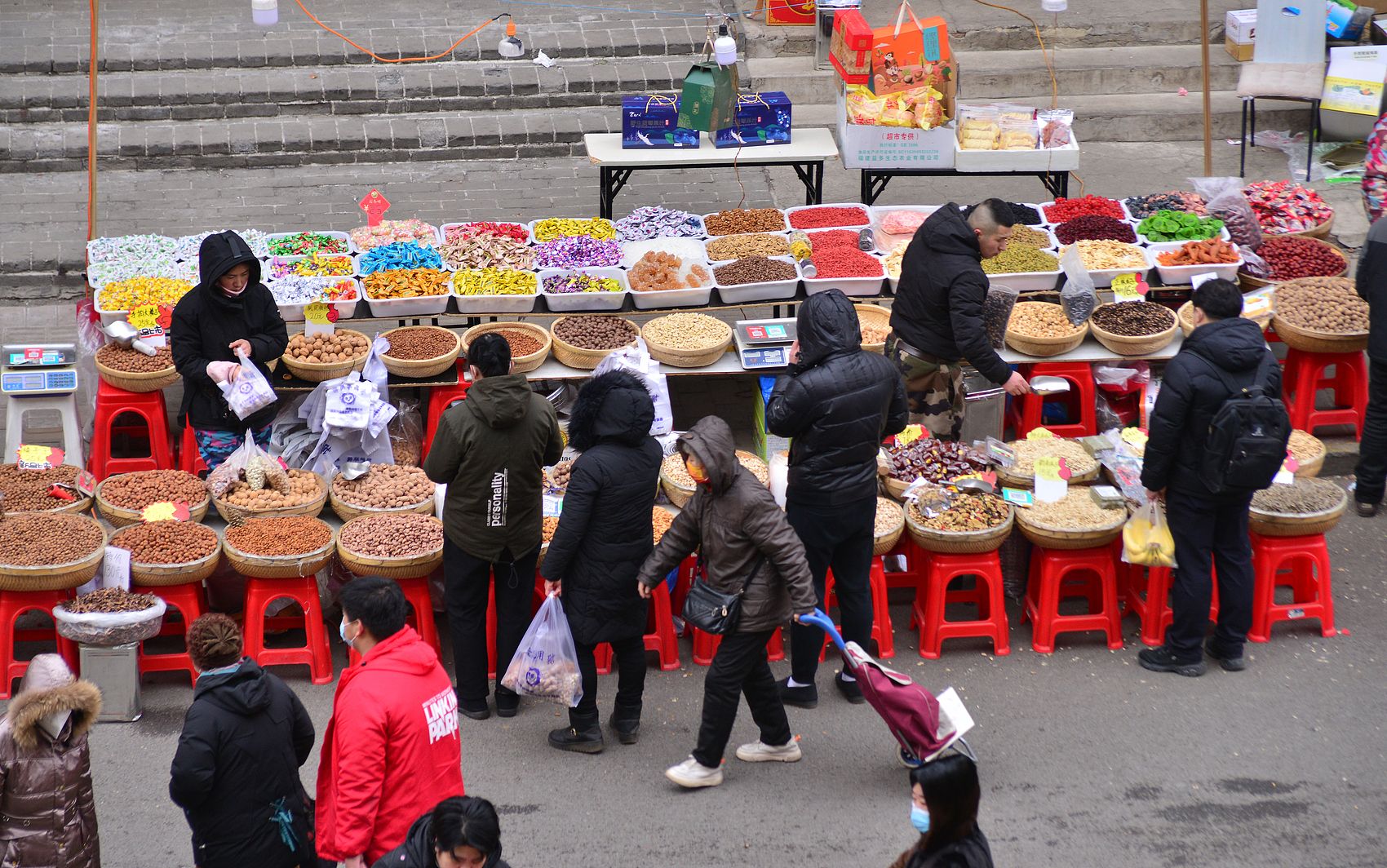
Buying assorted nuts and seeds at the local market is a treasured tradition for many Chinese households before Spring Festival (VCG)
Li’s experience traces the broader transformation of these snacks: once affordable, handmade, and local, they are now branded and chain-operated with the rise of companies like ChaCha, Three Squirrels, and Xueji. While chaohuo remains a familiar presence in most Chinese households, especially during the Chinese New Year, its glossy packaging and rising prices have made it a bit less homey in recent years.
Read more about staple Chinese snacks:
- Stripped Down: The Story Behind China’s Favorite Snack
- The Ubiquitous Street Snack That’s Neither Noodle Nor Roll
- Bones of Industry: Discover Shenyang’s Favorite Street Snack
Roots of the seed
A long-standing tradition in China, chaohuo ranges from roasted peanuts and assorted seeds (sunflower, pumpkin, watermelon) to nuts like pistachios, walnuts, pine nuts, and hazelnuts.
As early as the Song dynasty (960 – 1279), roasted chestnuts were already a familiar treat. Poet Lu You (陆游) recorded in his Notes from the Old Scholar’s Study (《老学庵笔记》) that “Li He in the old capital [today’s Kaifeng, Henan province] was famed far and wide for his roasted chestnuts. Others tried every method to imitate him, but none could match his skill.”
In the Ming dynasty historical work Annals from the Inner Court (《酌中志》), the author, eunuch Liu Ruoyu (刘若愚), notes that the Wanli Emperor enjoyed eating lightly roasted watermelon seeds with a pinch of salt.
The Qing dynasty’s Qianlong Emperor, ever confident in his poetic abilities despite a track record of spectacularly average verse, also churned out some strikingly plain lines for his love of roasted chestnuts: “Small ones are cooked while the big ones stay raw; When the big ones are done, the small ones scorch. To cook them all evenly, one must master the fire. Piled high on a jade tray, it was offered at the New Year like a spring pepper.”
By the Republican era (1912–1949), sugar-roasted chestnuts had become a staple winter snack in Beijing, sold by vendors straight from iron woks filled with small black stones. The stones evenly distribute the heat, roasting each chestnut to perfection and coating it with sugar and oil—bringing the skill that once earned Qianlong’s envy within reach of anyone on the street.
Nutty business
Nowadays, in addition to seeds and nuts, many chaohuo shops also sell other snacks such as sugar-coated dried fruit, beef and pork jerky, and puffed rice. These snacks can be purchased by weight or in pre-packaged bags, not only at mom-and-pop stores but also at most supermarkets and online stores in China.
ChaCha Food is perhaps one of the first and biggest national brands that still dominates the chaohuo aisle in supermarkets and convenience stores. Founded in Hefei, Anhui, in 2001 with sunflower seeds as its flagship product, ChaCha quickly became a household name after a 4-million-yuan TV ad campaign. Sales jumped from 30 million yuan in 1999 to over 100 million a year later, and its roasted seeds still command 40 to 50 percent of the market today.
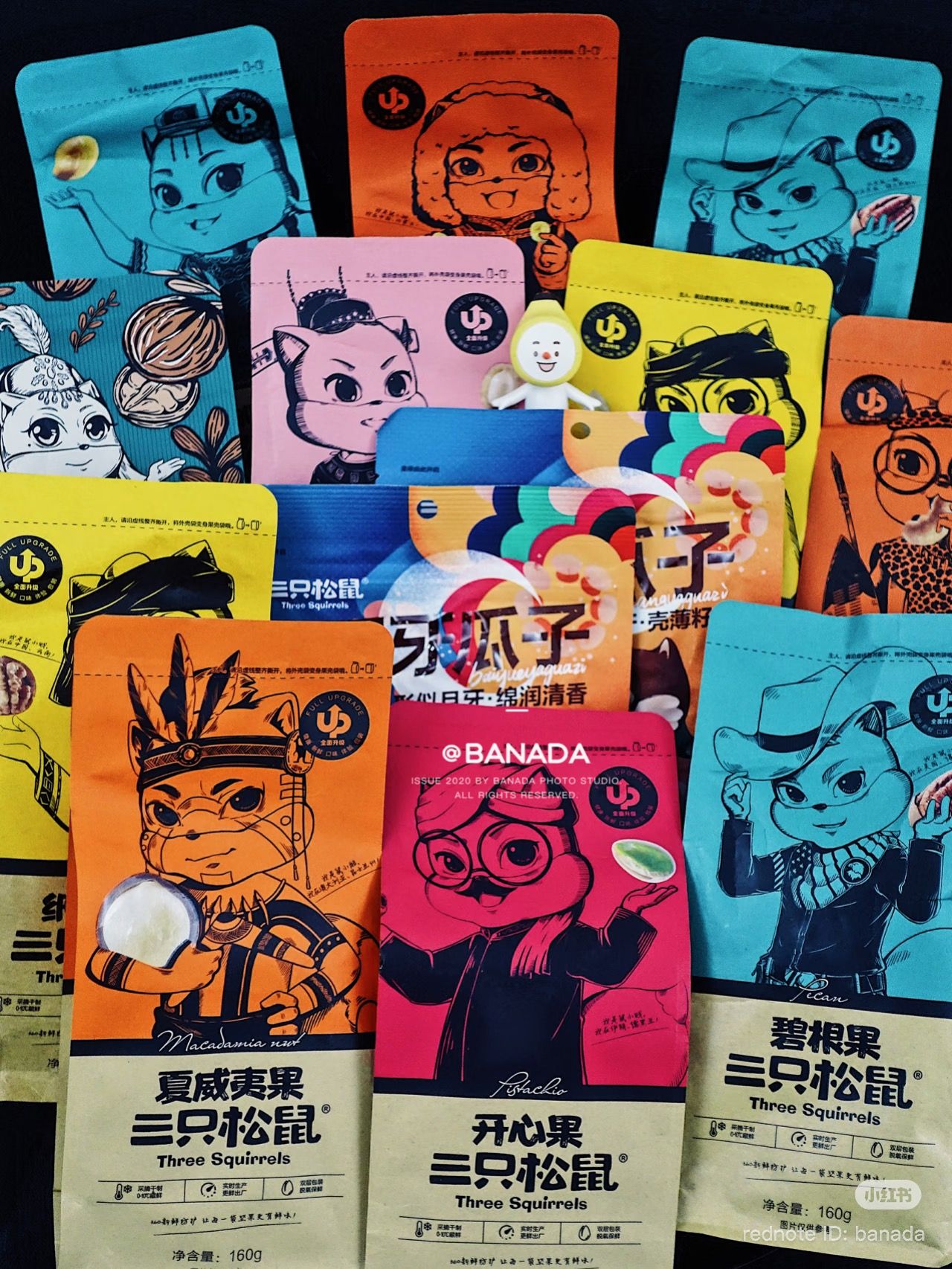
Three Squirrels recently went viral for having all its employees use squirrel-related nicknames at work (Screenshot from Xiaohongshu)
As China entered the digital age, the brand Three Squirrels emerged as a breakout player, riding the rise of e-commerce with a playful brand identity and creative marketing. In its campaigns, the three cartoon squirrel mascots each have distinct personalities but are united by the same mission: delivering fresh nuts to their customers, or “masters” as they call them. The brand also highlights its product origins, such as American pecans, Xinjiang paper-shelled walnuts, and pine nuts from northeastern China. In its early years, growth was explosive: during the 2012 Singles’ Day shopping festival—just months after launching—Three Squirrels hit 7.66 million yuan in daily sales, ranking first among food brands on e-commerce platform Taobao. By 2014, its Singles’ Day sales had climbed to 109 million yuan.
According to the marketing research company iiMedia, China’s chaohuo market surpassed 300 billion yuan in 2024 and is poised to grow by more than 100 billion yuan over the next five years. Yet this rapid expansion hasn’t been without controversy—especially over the rising prices of the once-modest snacks.
In July 2020, Xueji Chaohou, a Shandong brand that started as a morning market stall in Jinan, went viral for its milk dates, or naizao (奶枣). Coated in sweet milk powder, stuffed with almond filling, and coming in multiple flavors, this richly layered snack quickly gained widespread traction online, making the almost two-decade-old traditional chaohuo shop a trendy treat among young urbanites. It has since introduced more innovative products like mango milk sticks, yogurt hawthorn balls, and pork floss cheese balls. However, as the brand opens more polished chain stores in shopping malls, the price has also become noticeably higher.
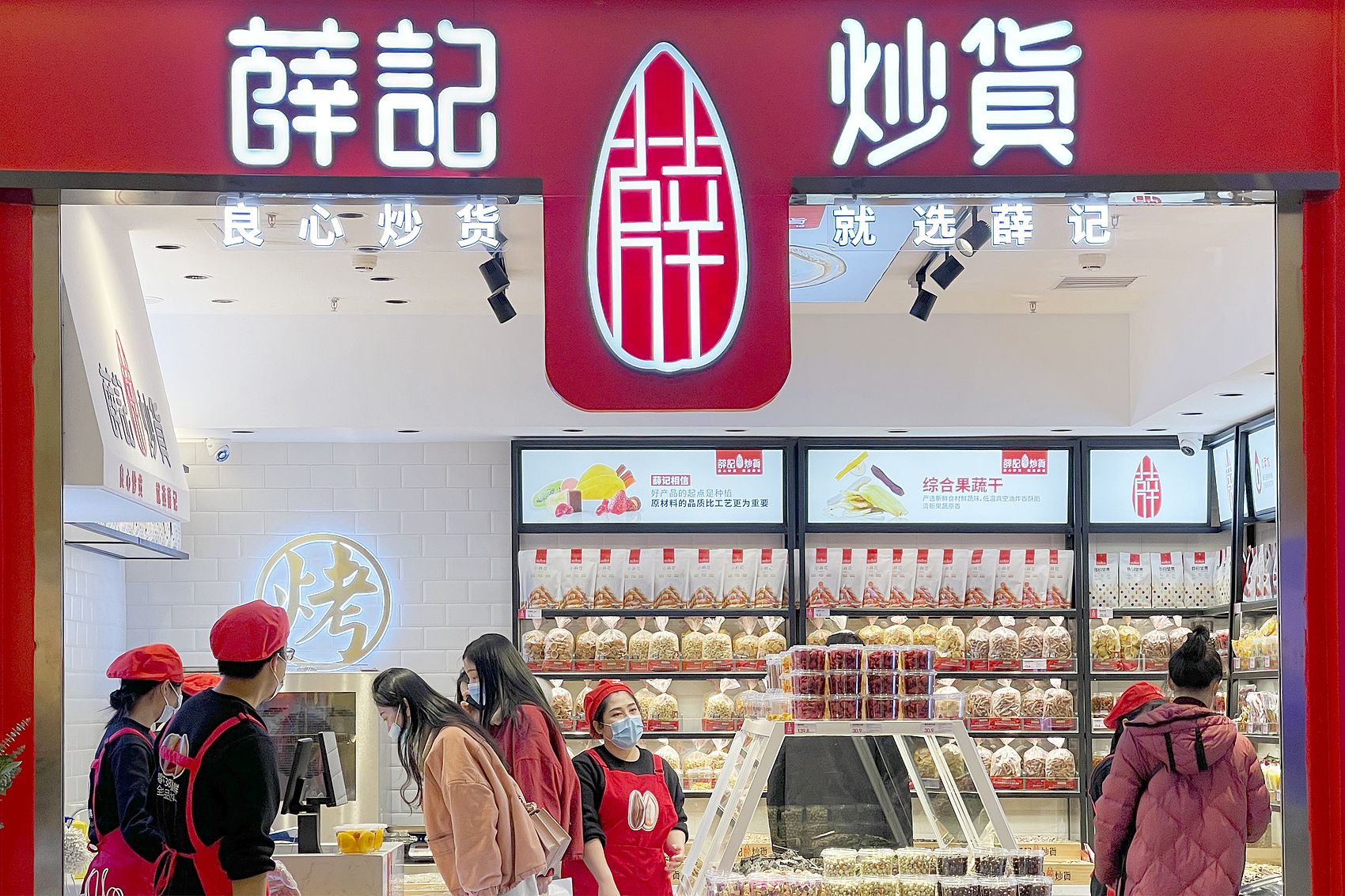
Xueji Chaohuo has established over 1,000 offline stores across China by 2024 (VCG)
“[The chaohuo sold at chain stores] are quite pricey. Every time I try to keep it minimal, the bill still jumps,” says Li, the Liaoning native.
According to TideSight, a media platform focused on the new consumption industry, Xueji’s classic chaohuo items, such as roasted sunflower seeds, peanuts, and chestnuts, remain affordable, but its creative snacks, such as freeze-dried strawberry crisps and mixed yogurt fruit bites, can cost more than 600 yuan per kilogram. As a result, many Chinese netizens jokingly call the store the “Xueji Gold Shop” or “Xueji Jewelry,” even quipping that lining the dining table with full bags of Xueji products during Chinese New Year is the ultimate way to flaunt wealth.
Facing sharp criticism from consumers, a Xueji investor defended the brand’s higher prices, citing the use of superior raw materials and claiming that their profit margins are “even slightly lower than others in the industry.”
Li also understands the higher price point of these chain stores: “Every step of the operation has expenses. They guarantee consistent size and quality—no bitter or damaged nuts. That costs money.”
For 51-year-old An Xiaoqin, some of the newly viral products feel more like an indulgence rather than an everyday purchase like the traditional chaohuo items: “I can live just fine without them, but if I decide to buy them to treat myself nicely, I’m prepared to pay more.”
The taste of childhood and hospitality
Despite the pricing controversy, chaohuo remains an essential part of the cherished nianhuo (年货, New Year goods) traditions—new clothes, fresh meats, spring couplets, and all the little things that make the holiday festive. These treats are a small reward families give themselves after a year of hard work. When the long holiday finally arrives, loved ones travel back from every corner of the country, set aside their busy lives, and settle into rare, unhurried moments together—often with a bowl of chaohuo to share in front of the TV in the living room. Cracking these nuts and seeds is a simple, rhythmic task—it can keep the hands busy without breaking the conversation, soften awkward pauses, and set a relaxed mood for people to bond.
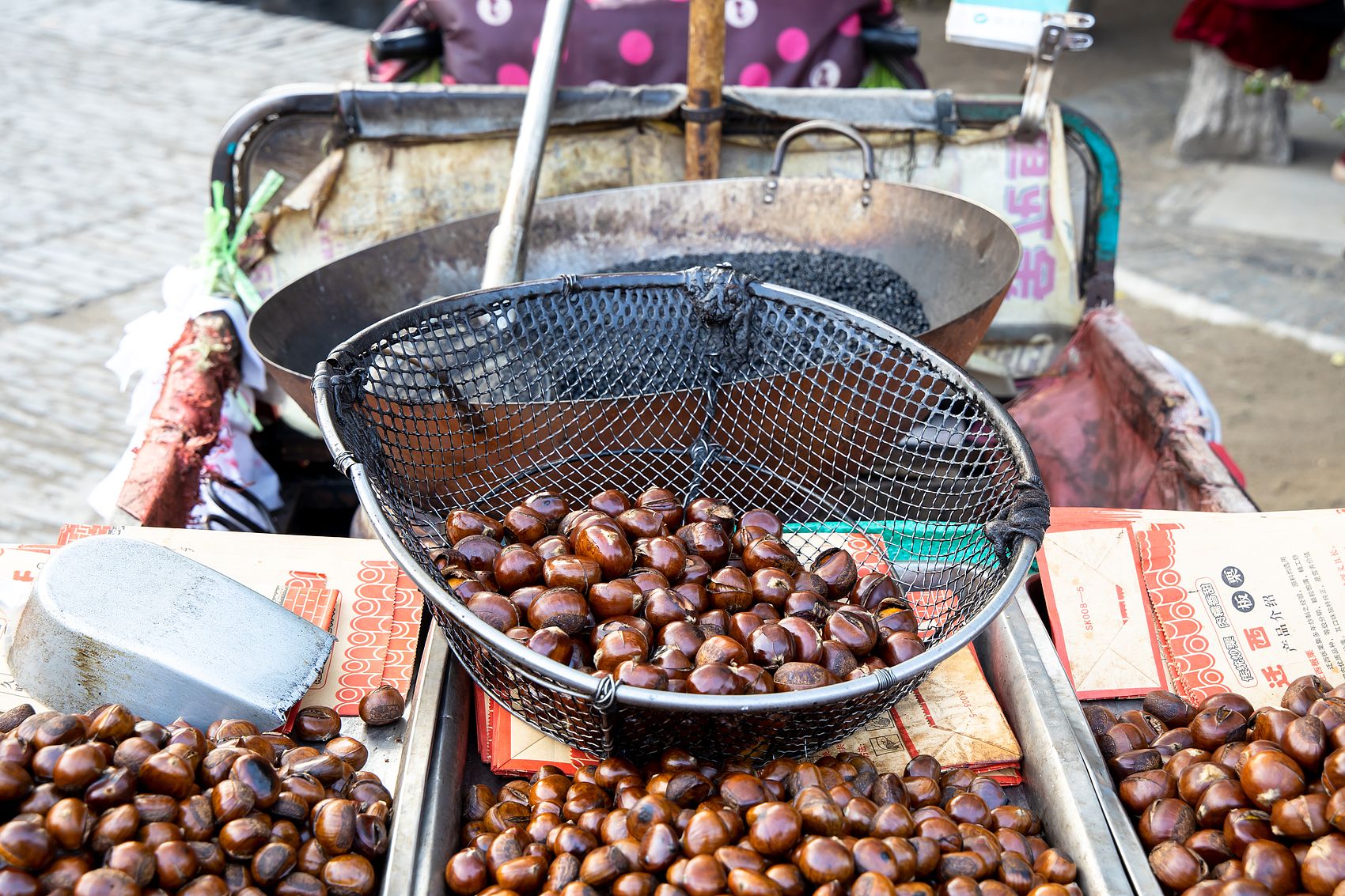
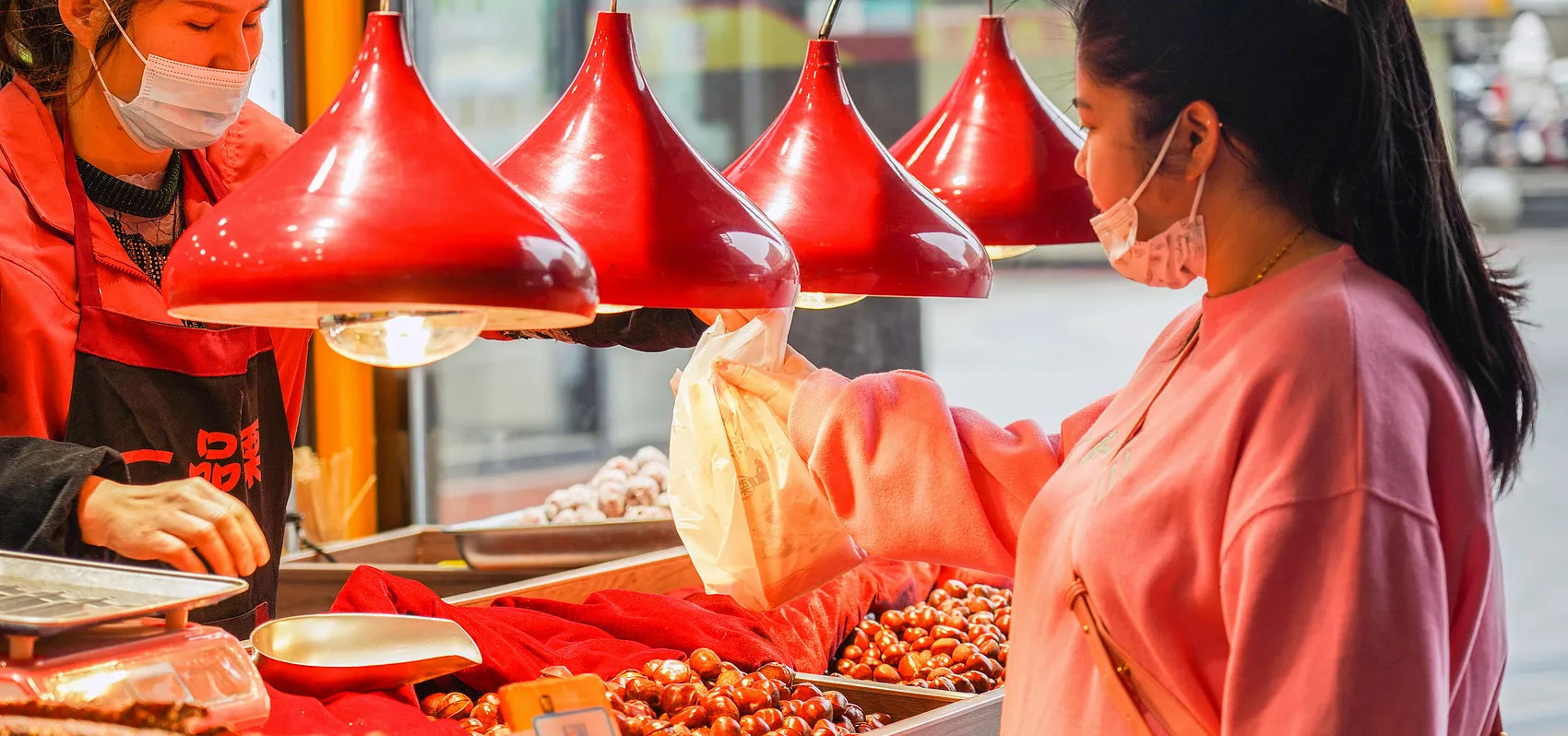
Many Chinese people associate the aroma of roasted chestnuts on the street with the official start of the fall season (VCG)
“Back then [when I was young], there was never quite enough to eat or to wear. Still, we’d buy a bit of roasted sunflower seeds, peanuts, and candies for Chinese New Year, but they were only brought out when there were guests,” An, the 51-year-old recalls.
Growing up in Shanxi, chaohuo was a rare childhood treat for An in those difficult years. The only time she could taste her favorite roasted chestnuts outside the Chinese New Year was around the Mid-Autumn Festival, when the chestnuts ripened, and people hiked into the mountains to gather wild ones to sell by the roadside. In her memory, these wild chestnuts were no bigger than a fingernail, firm in texture, and naturally sweet.
Now living in Xi’an, the capital of Shaanxi, An still buys roasted chestnuts from local chaohuo shops, and sometimes even orders raw chestnuts online to roast at home.
Li’s favorite when she was a child was five-spice-flavored roasted sunflower seeds, but the grown-ups in her family preferred the original flavor for just eight yuan a kilo at her local stall. However, “after my grandparents passed away, it’s difficult for the whole family to get together. The little rituals around chaohuo and other snacks faded away, too.” Li reflects. She feels sad imagining the tradition disappearing with the older generation.
Now in her 30s, she still buys chaohuo whenever nostalgia strikes or when it simply feels like it. While she can afford to choose any flavor she likes, she finds herself starting to love the original, too.
“Maybe it’s just an age thing,” she laughs.
Nostalgia in a Nutshell: How Roasted Nuts and Seeds Become a Staple Winter Snack in China is a story from our issue, “New Markets, Young Makers.” To read the entire issue, become a subscriber and receive the full magazine.
Related Articles