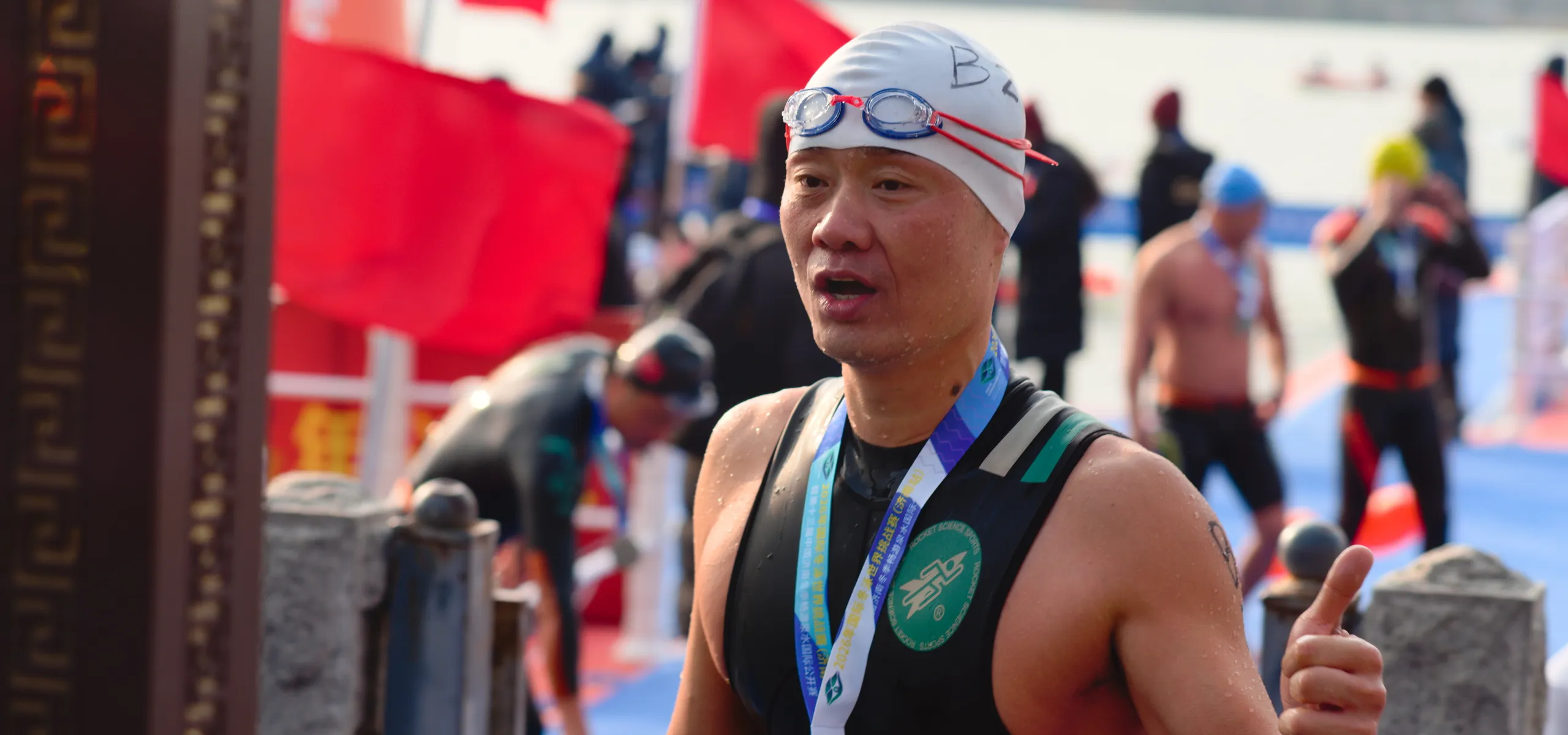

At Jinan’s annual winter swimming competition, participants from across China and around the world plunge into icy waters, as a sport practiced mostly by older residents begins to catch on more widely
Nearly 800 years ago, on a visit to what is now Jinan, capital of Shandong province, the poet Yuan Haowen (元好问) recorded his impressions of boating on the city’s central Daming Lake on a tranquil fall day. “The autumn lotus blossoms are in full bloom, their red and green like embroidery,” he wrote. But this January, the tranquility gives way to icy excitement as hundreds of swimmers plunged into the frigid water during the 2026 International Winter Swimming Association (IWSA) World Challenge. Boat rides that once carried leisurely visitors like Yuan now ferry competitors from more than 20 countries to a small in-lake island, from where they would swim 300 meters back to shore.
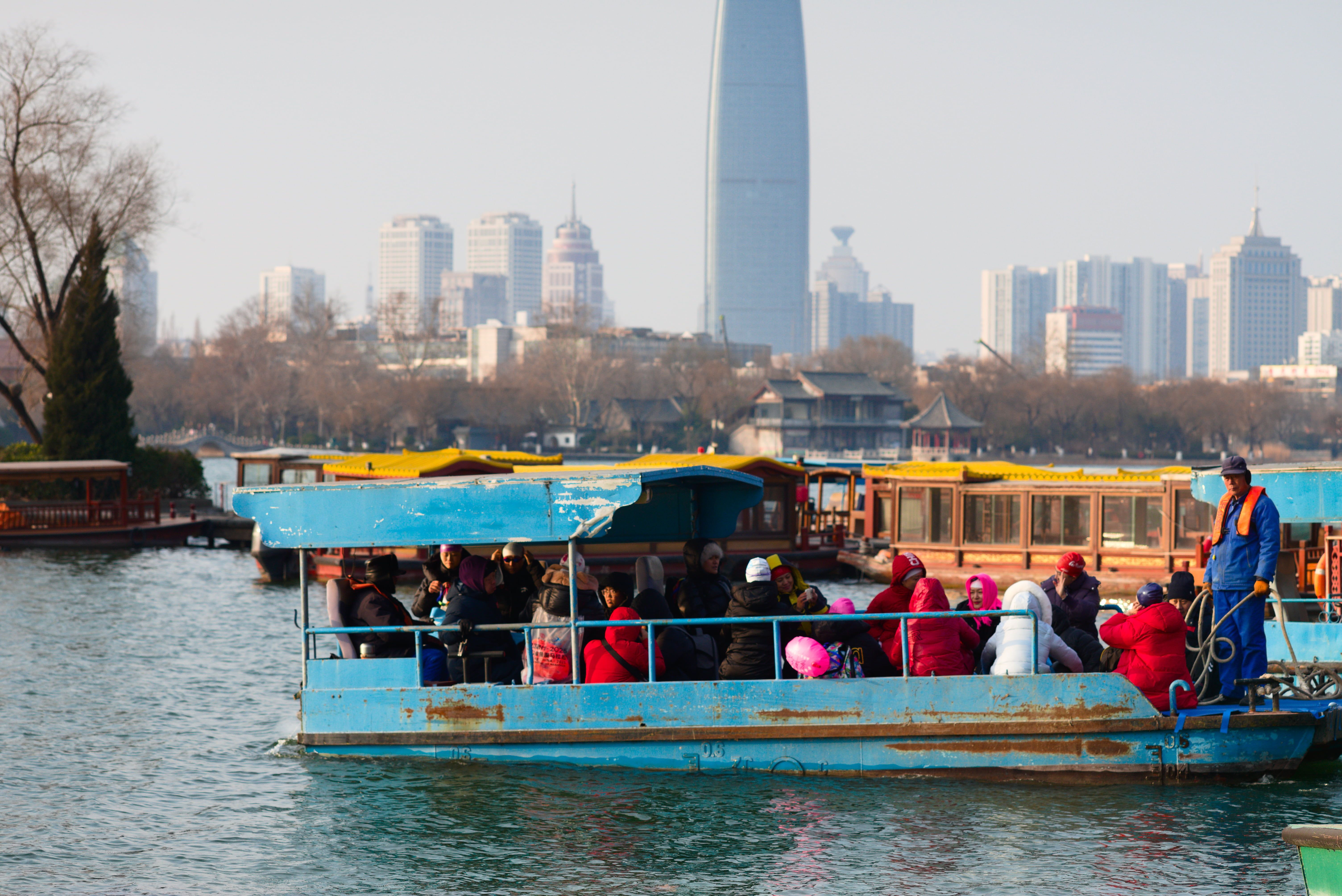
Tourist boats ferry swimmers to the starting line on a small island where the centuries-old Lixia Pavilion stands (Evan Taylor)
Despite the bright winter sun, a sharp wind bites at spectators’ ears, and the air hovers around freezing, while the water feels comparatively warm at six degrees Celsius. Competitors are barred from full-body wetsuits, and men are required to swim shirtless. But none of it seems to dampen the swimmers’ enthusiasm.
“Winter swimming is the sport that brings you fastest from hardship to sweetness,” says Qiu Libo, a leader of the Yantai Winter Swimming Club now in her 50s. “It energizes your day.”
Read more about winter sports in China:
- China’s winter sports market : How to get 300 million snow enthusiasts?
- Hitting the Slopes: Where to Ski in China?
- On Thin Ice: When Dutch Traders Challenged the Qing Empire for Skating Glory
“[Winter swimming] is an old tradition here,” remarks a spectator in the crowd. Home to more than 70 freshwater spring wells, Jinan—also known as the “City of Springs”—has seen residents take part in winter swimming for decades. The IWSA World Challenge also doubles as the 13th Jinan International Open Winter Springs-Swimming.
It’s not just Jinan. Every winter, northern cities like Beijing and Tianjin come alive with winter swimmers, a pastime now closely associated with older residents. In the minds of many Chinese, it has become a distinctly local tradition: In places like Beijing’s Houhai Lake, it has even turned into a seasonal spectacle, drawing curious tourists eager to watch the brave take the icy plunge.
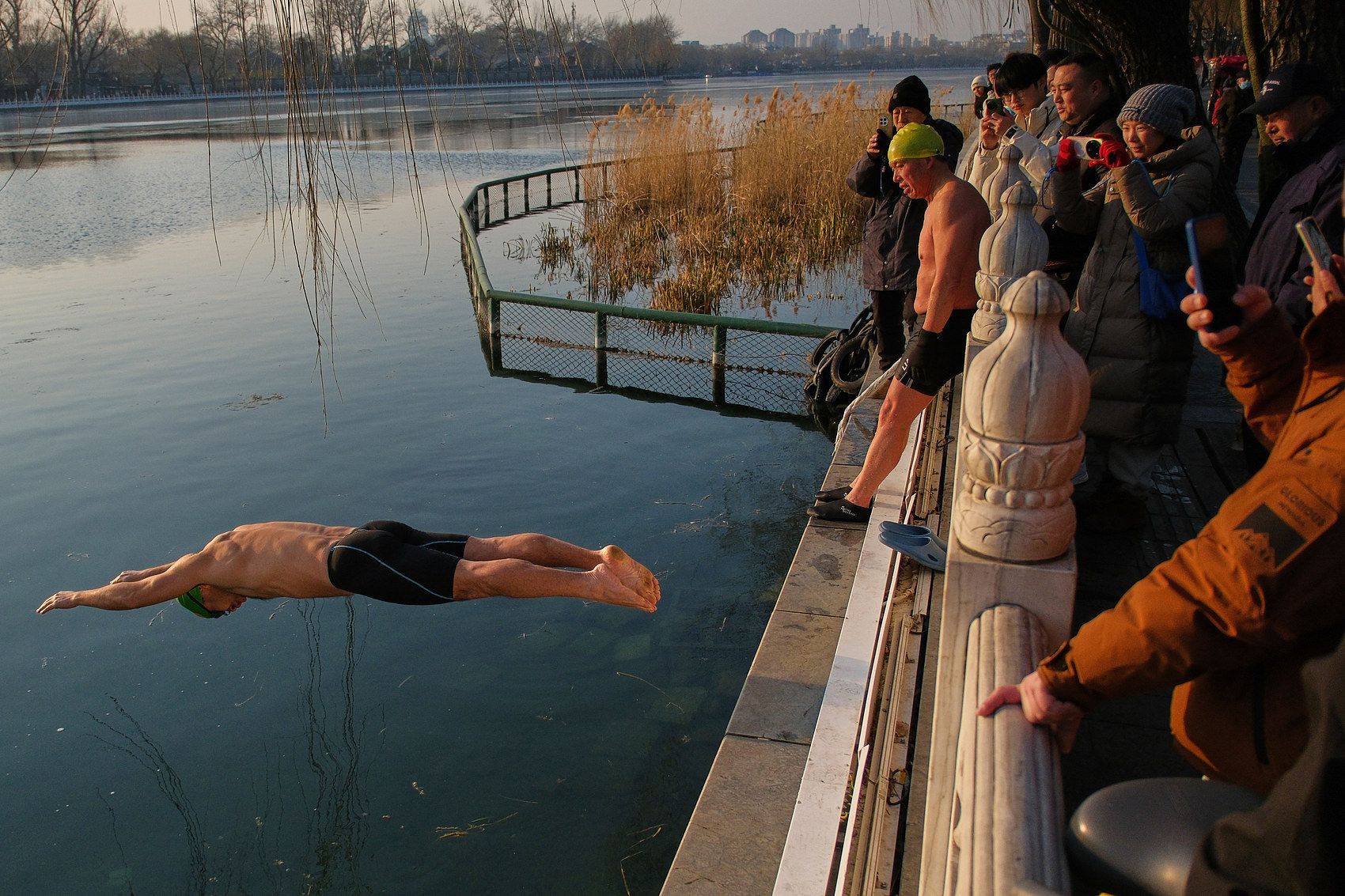
In Beijing’s Houhai Lake area, watching elderly men dive into the ice-cold water has become a popular activity for tourists (VCG)
However, modern winter swimming in China actually bears a strong connection to the Russian ritual known as the “Epiphany Baptism.” Each year, at the stroke of midnight on January 19, devotees would plunge into icy waters to mark the baptism of Jesus—a daring tradition that eventually made its way to northeastern China’s Harbin in the late 19th century. With the establishment of the Russian-built Chinese Eastern Railway, Harbin became the center of the Russian expatriate community in China. Following the 1917 Russian Revolution, the city became home to the largest Russian community in East Asia, many of them practitioners of Russian Orthodox Christianity. Every January for the first half of the 20th century, masses of Russian worshippers would march from Harbin’s St. Sophia Cathedral down to the Songhua River, cut a cross-shaped hole in the ice, and plunge into the frigid waters.
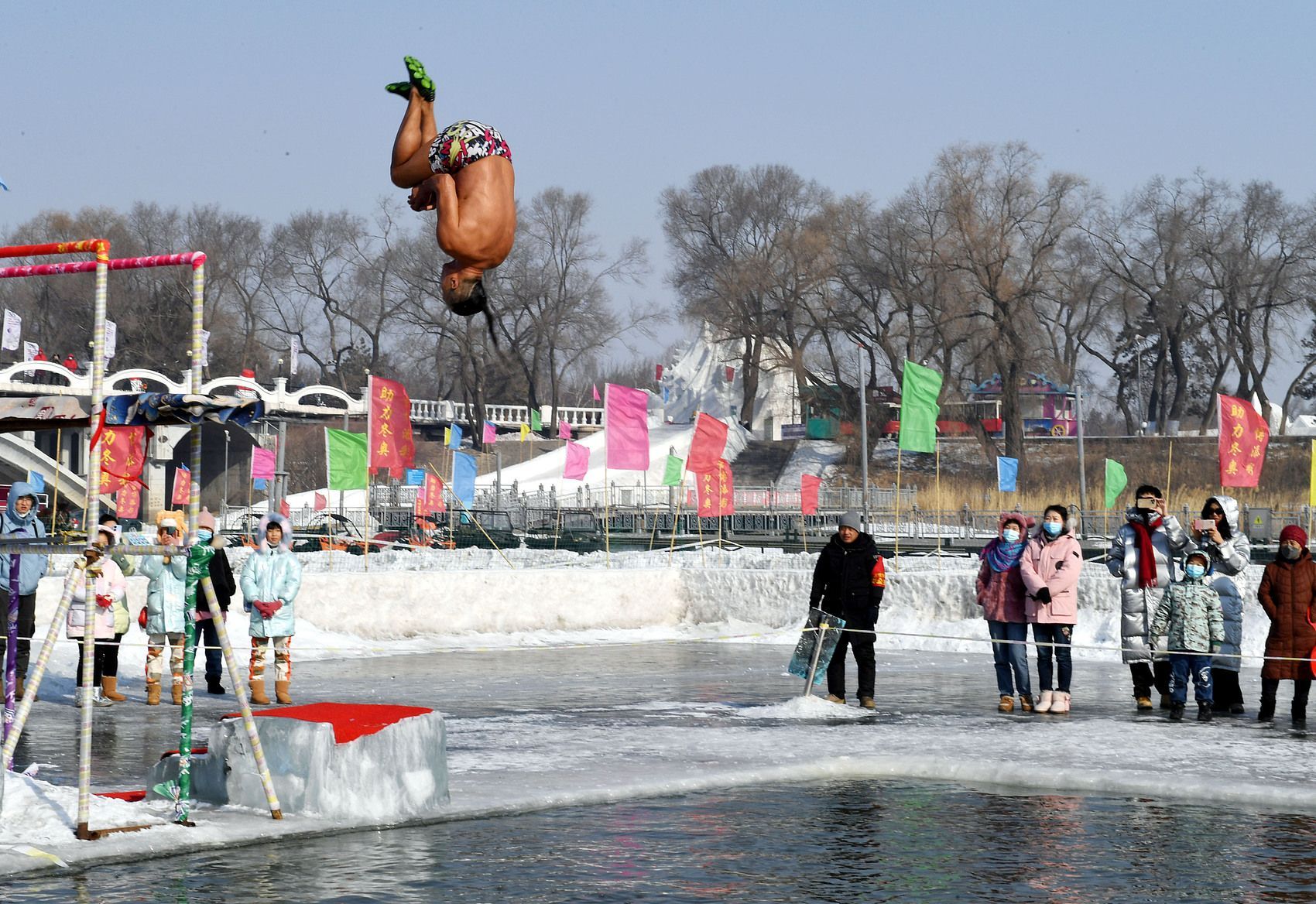
Winter swimming in Harbin now bears no trace of religious worship, having evolved into a popular form of exercise among older residents to keep their minds and bodies strong (VCG)
Though the city’s Russian population dwindled to nearly nothing after the founding of the PRC in 1949, local residents had rediscovered the invigorating thrill of a plunge into icy waters by the 1970s. Reportedly, the tradition was revived by a Harbin native, Pan Jianzhang. A photo of him swimming in minus 2 degrees Celsius water was featured in the November 1979 issue of Traveler Magazine. Winter swimming quickly became a local craze, and by 1983, the official Harbin Winter Swimming Association was founded, along with a permanent swimming area carved out of the ice and an indoor changing area. In 1985, Harbin held its first winter swimming competition, an event now in its 40th year. Since then, winter swimming’s popularity has only grown, with the city’s Ice and Snow Festival featuring a daily ice-diving show, alongside the regular swimming events.
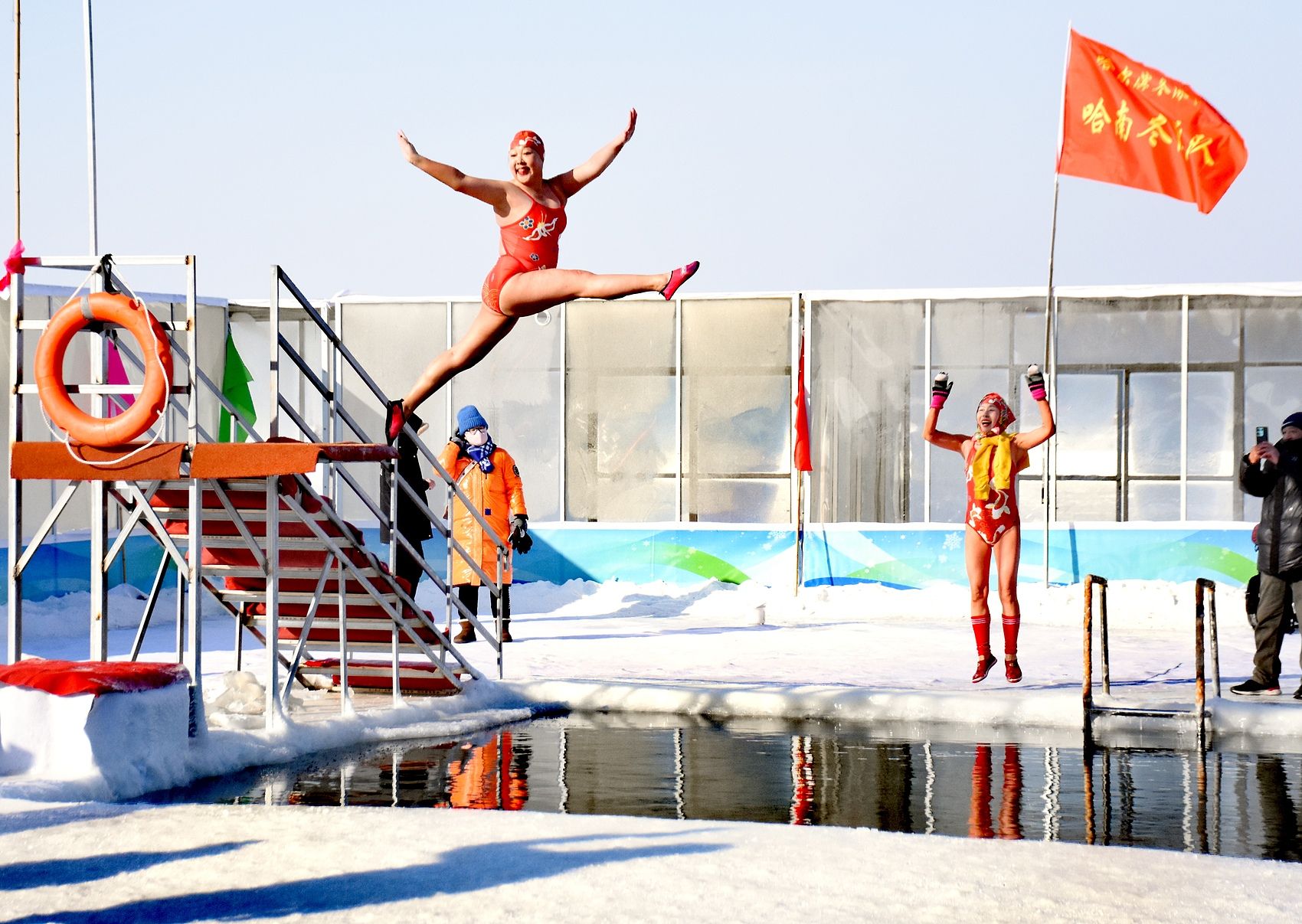
Only around 20 percent of China’s winter swimmers are women (VCG)
The sport has also spread to other parts of China. This growth mirrors the burgeoning popularity of all winter sports in China, accelerated by the 2022 Beijing Winter Olympics. In Shanghai’s Huangpu River, even with swimming officially banned, some wily senior citizens still stake out areas to take their daily polar plunge. This year in Jinan, participants hailed from 16 provinces and cities, as far south as Guangdong and as far west as Sichuan. One week prior, Liaoning province’s seaside city of Dalian held its annual Winter Swimming Carnival, hosting close to 2,000 swimmers in the frigid ocean waters, as snow drifts dotted the beach and spectators hid under pillowy jackets. Reflecting the sport’s inclusive, friendly spirit, many winter swimming competitions are open to anyone able to withstand the frigid water.
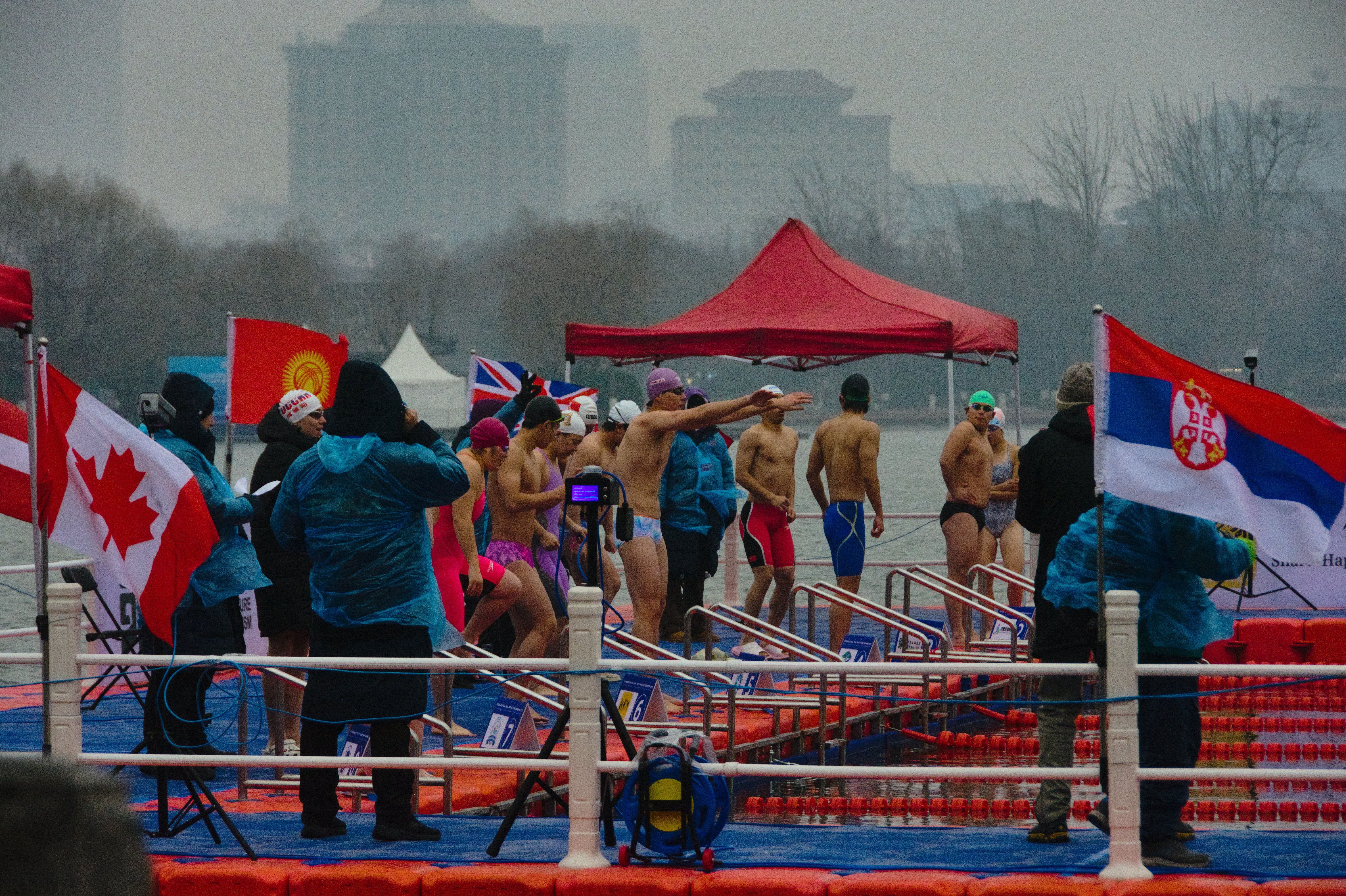
The Jinan IWSA World Challenge is open to anyone healthy and brave enough to embrace the cold, as long as they register in advance (Evan Taylor)
“I do it because it improves my immune system,” remarks one of the many locals who have turned out to watch the Jinan competition. Tall and wrapped up in a large padded jacket bearing his son’s university logo, he says he tries to go swimming as many days as he can in the winter.
Though winter swimming is not recommended for people with health issues such as cardiovascular disease and high blood pressure, a growing body of research appears to support the wisdom of these brave swimmers. A recent UK study by psychologists Jill Forsten and Mark A. Wetherell finds that daily cold-water swimming can significantly reduce anxiety, boost self-confidence, and improve sleep. Research by University College London’s Joyce Harper also finds that cold-water swimming substantially improves both physical and psychological menopause symptoms among older women. And in a comprehensive 2022 review of published scientific literature on the topic, scientists from the Arctic University of Norway conclude that while rigorous research on the health benefits of the sport is in its early stages, data show that cold dips have a positive impact on people’s immune system, cardiovascular system, insulin sensitivity, and mental health overall.
Beyond the health benefits, many swimmers are drawn to the icy waters by the roar of spectators lining the shore. “I enjoy the atmosphere,” says Liu Juan, in her 50s and a member of the Jinan Ironman Team, competing in the Jinan event for the second time. Though she takes part in swimming meets year-round, they’re usually confined to indoor pools, where the water is kept at around 28 degrees Celsius. To acclimate to the cold water, Liu made a trip to Jinan two weeks earlier to swim in the moat connected to Daming Lake.
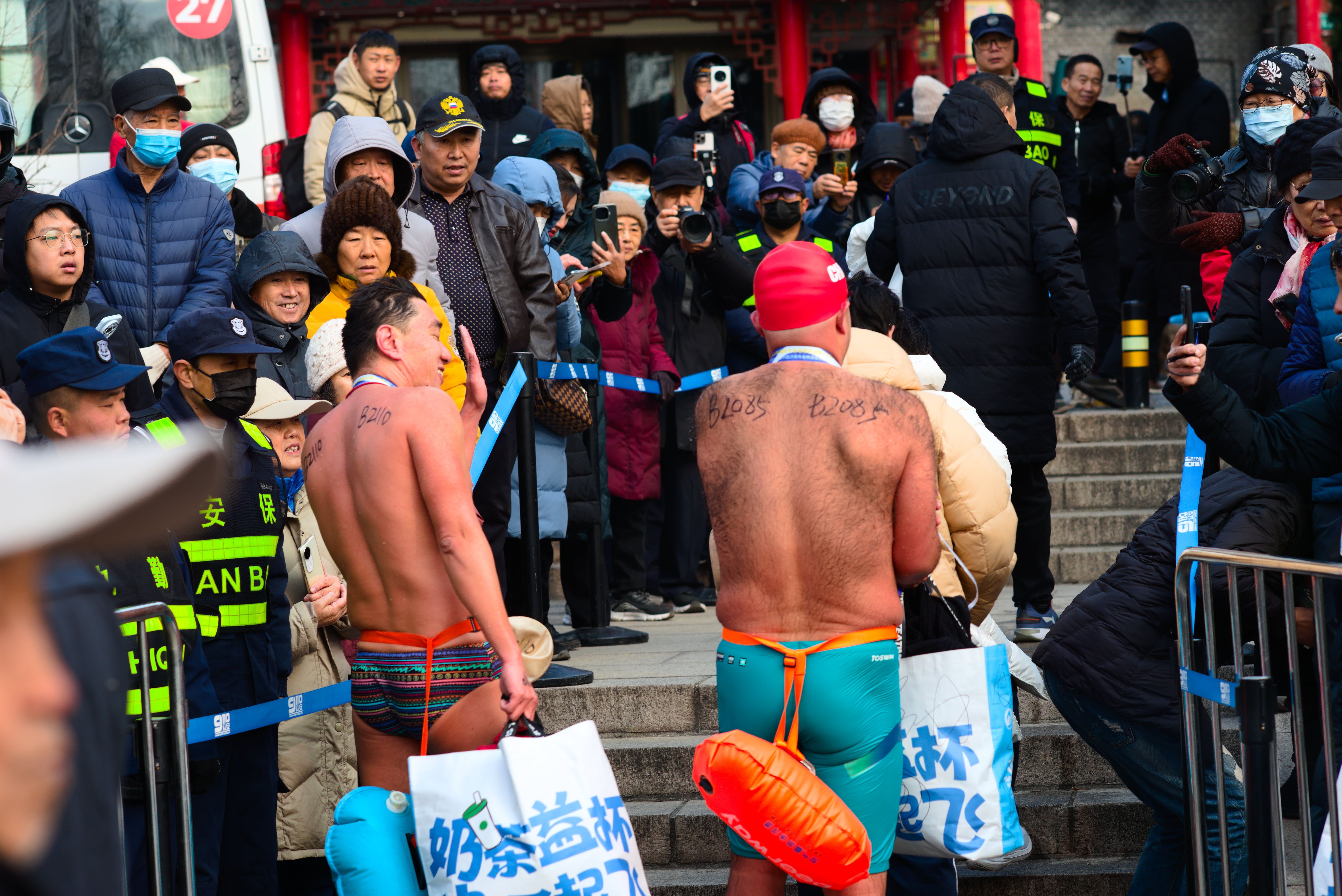
Swimmers receive star treatment at the winter swimming championship in Jinan, entering the field as spectators and press crowd the sidelines, snapping photos and cheering them on (Evan Taylor)
“Winter swimming competitions require mental toughness, complex and versatile techniques, and the ability to adapt to various types of water, weather conditions, and marine life,” Xue Wen, the only competitor from Shanghai, adds. A decorated swimmer who competed for China in the over-55 age group of the 2024 World Aquatics Masters Championships, Xue enjoys the added challenges posed by open-water swimming. “I once encountered a typhoon and thunderstorm,” he tells TWOC, recalling a particularly perilous swimming meet on Dongshan Island, off the coast of Fujian province.
Compared to that, the mix of slush and snow pelting down on the second day of the Jinan competition, and the metal ladders coated in a thick layer of ice that swimmers used to enter and exit the lake, seemed a small feat.
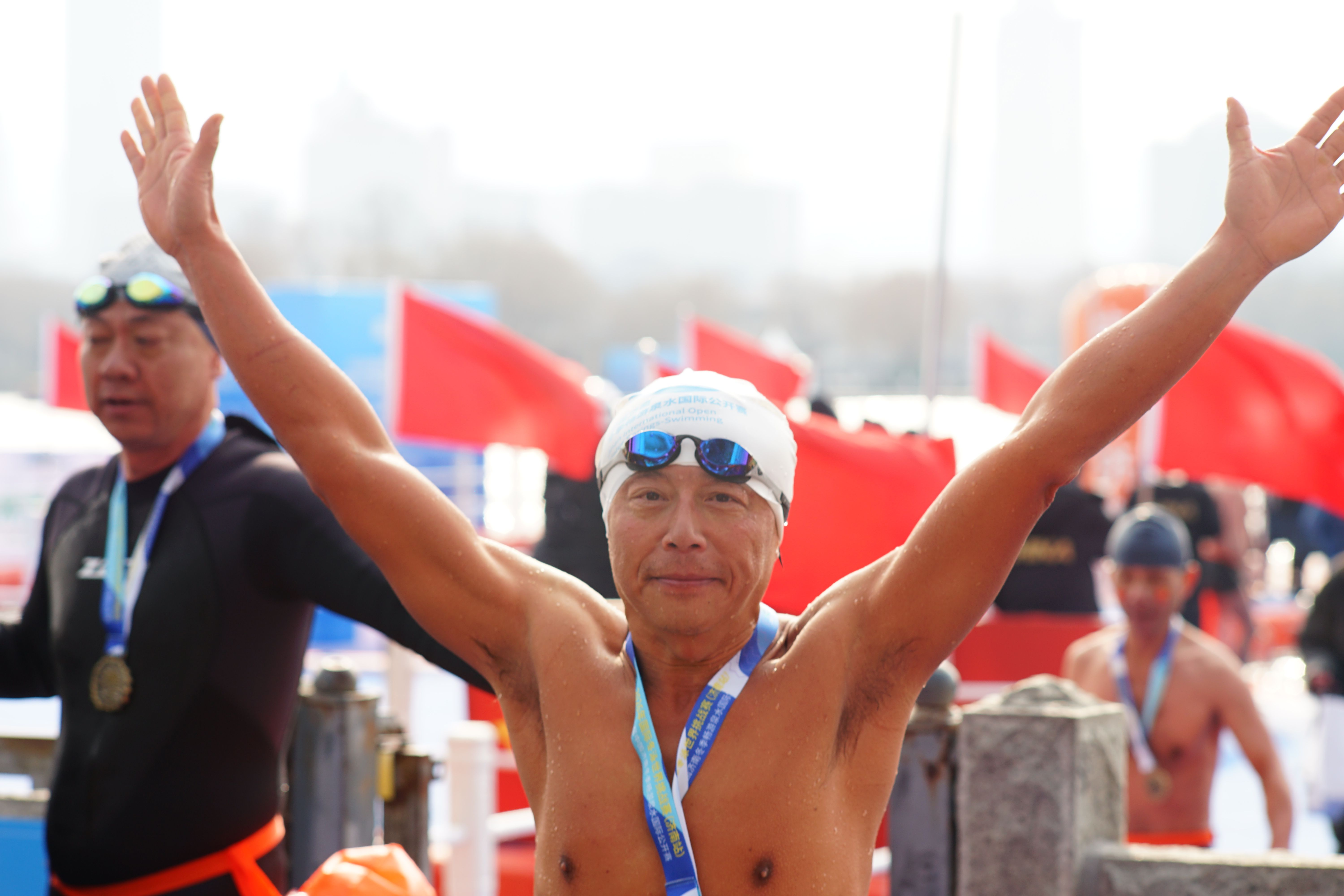
Xue’s spirit is high on the day of the Jinan IWSA World Challenge (Evan Taylor)
Xue completed the 300-meter swim in roughly five and a half minutes, while the fastest competitor, 22-year-old Lu Anfeng from Henan province, finished in just 2 minutes and 50 seconds. For those unable to finish, a fleet of rescue boats staffed by Red Cross volunteers hovered nearby, while numerous drones recorded the action from above. When they returned to shore, the swimmers were surrounded by onlookers eager to take their photo.
Following the open-water swim, the action moved to a 25-meter-long “pool,” demarcated by rafts, where both men and women competed across various disciplines and distances. Top individual swimmers were eligible for modest cash prizes, with first place in the open-water swim earning up to 3,500 yuan, as were teams that accumulated the most points in the pool races.
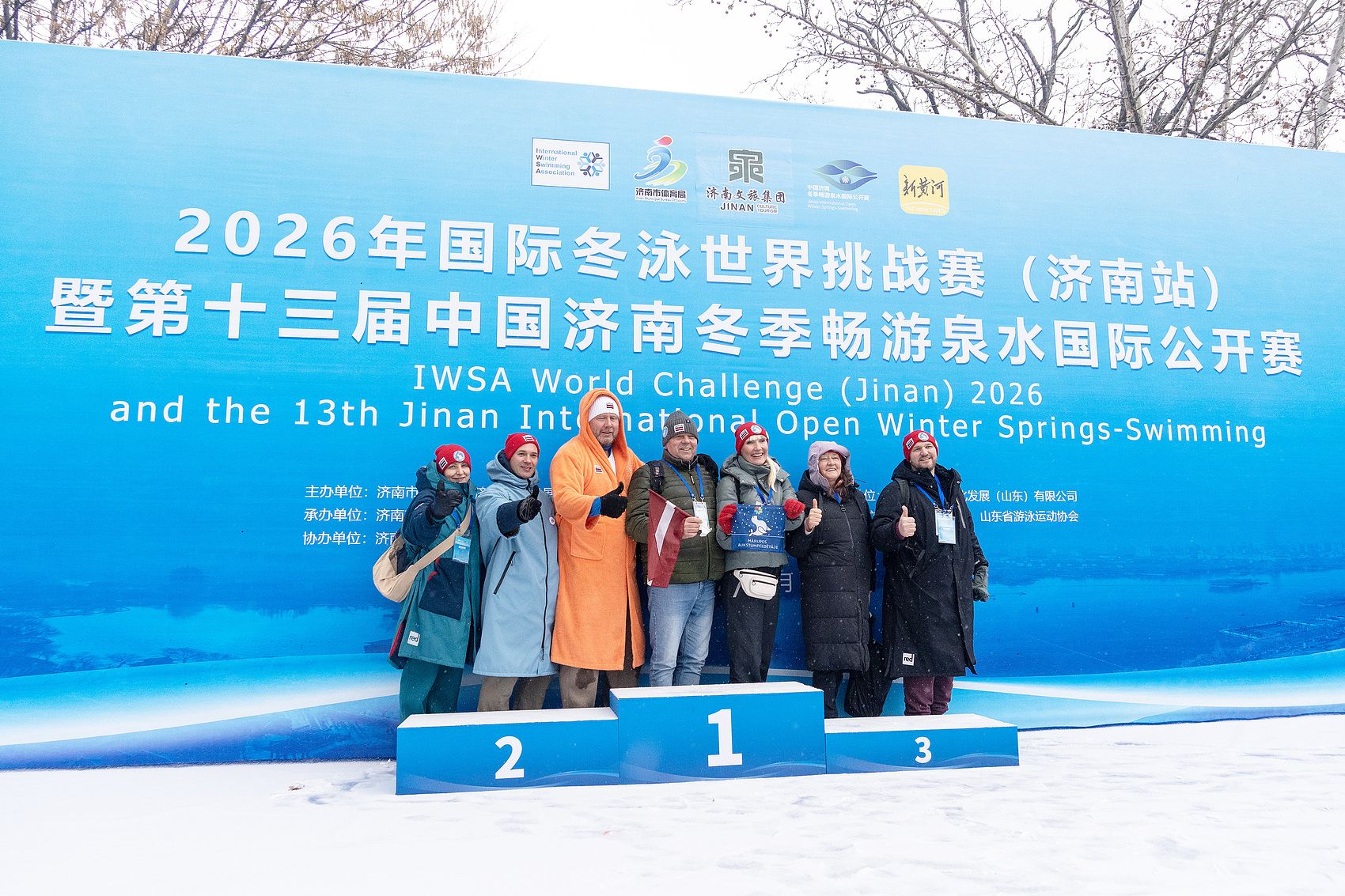
Each year, the Jinan winter swimming event draws competitors from around the world (VCG)
This year’s Jinan event also saw two dozen international competitors. “When you get out of the water, you always feel good,” says Stefanie Palle, a German swimmer. Palle had never been to China before, but decided to visit after encouragement from other international competitors on the winter swimming circuit. For many swimmers, both Chinese and international, their season will conclude at the biannual International Winter Swimming Championships, this year to be held in Oulu, Finland, the place of its founding.
As the competition winds down amid a steady stream of sleet, the athletes remain as positive as ever, shivering as they run around the temporary pool’s deck, some yelping as they return to the bitter embrace of the cold water before relaxing in the post-swim hot tub with cups of warm ginger tea. Soon, swimmers begin to outnumber spectators, with one group dancing on the shore to keep warm as they watch a teammate compete. Like climbers atop a mountain, they are experiencing the solidarity of a shared suffering and the adrenaline of another challenge completed.
“Once you start [winter swimming], you can’t stop,” says Palle.
Related Articles