


While modern technologies like AI tools and humanoid robots may seem unimaginable to people centuries or even decades ago, some ancient inventions are no less ingenious to our modern eyes. One such artifact, a repeating crossbow, excavated from a 4th-century BCE tomb in Hubei’s Jingzhou city in the 1980s, could fire 10 consecutive two-arrow payloads and reportedly kill from up to 25 meters away, drawing comparisons to a modern machine gun.
The secret to the crossbow’s power mainly lies in its firing mechanism, or trigger, 機 (jī), a character that first appeared over 2,000 years ago. The character itself offers clues to the crossbow’s construction: The 木 (mù) radical indicates what the crossbow was mostly made of—wood. Meanwhile, the phonetic component on the right, 幾 (jī), consists of two 幺 (yāo) characters, representing the crossbow’s small components, and a 人 (rén), the “person” it was designed to be used by, alongside a 戈 (gē), a preexisting weapon. While 機’s pronunciation has remained the same, its meaning has evolved with time, as has its written form, which was simplified in the 1950s to the homonym 机, a character originally denoting the alder tree.
Learn more Chinese characters:
- 修: The Character That Builds and Repairs
- 构: The Character That Brings Blueprints Into Reality
- 利: The Character That Reaps Everything from Crops to Profits and Wealth
Throughout history, 机 has been used to designate machines of all kinds, from ancient cloth-weaving looms (织机 zhījī) and modern-day printers (印刷机 yìnshuājī) and computers (计算机 jìsuànjī), literally “calculating machines,” to 手机 (shǒujī, cellphone), “hand machines,” 飞机 (fēijī, airplane), “flying machines,” and 机器人 (jīqìrén, robots), “machine person.” Collectively, these are known as 机器 (jīqì), “machines and devices,” or 机械 (jīxiè), “appliances.”
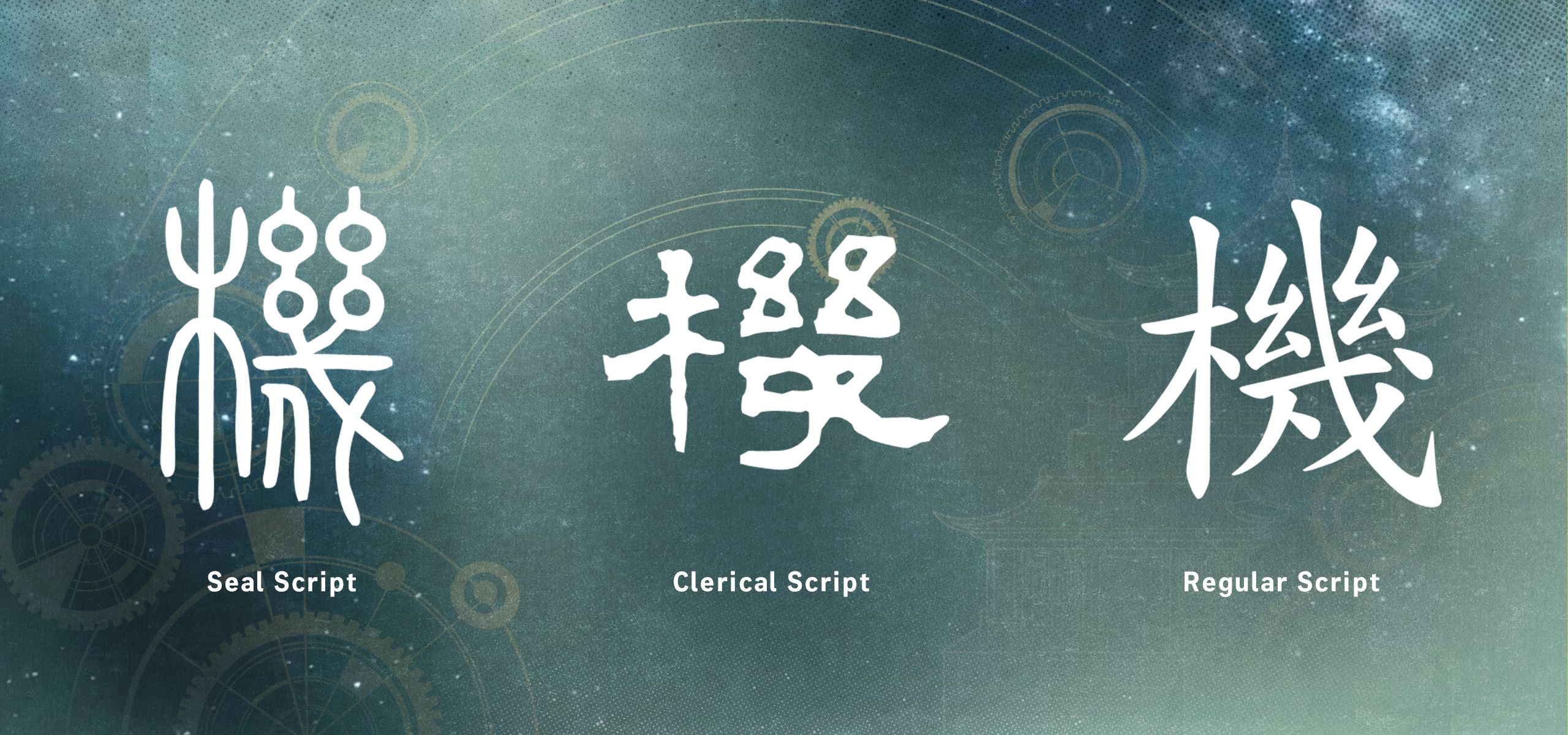
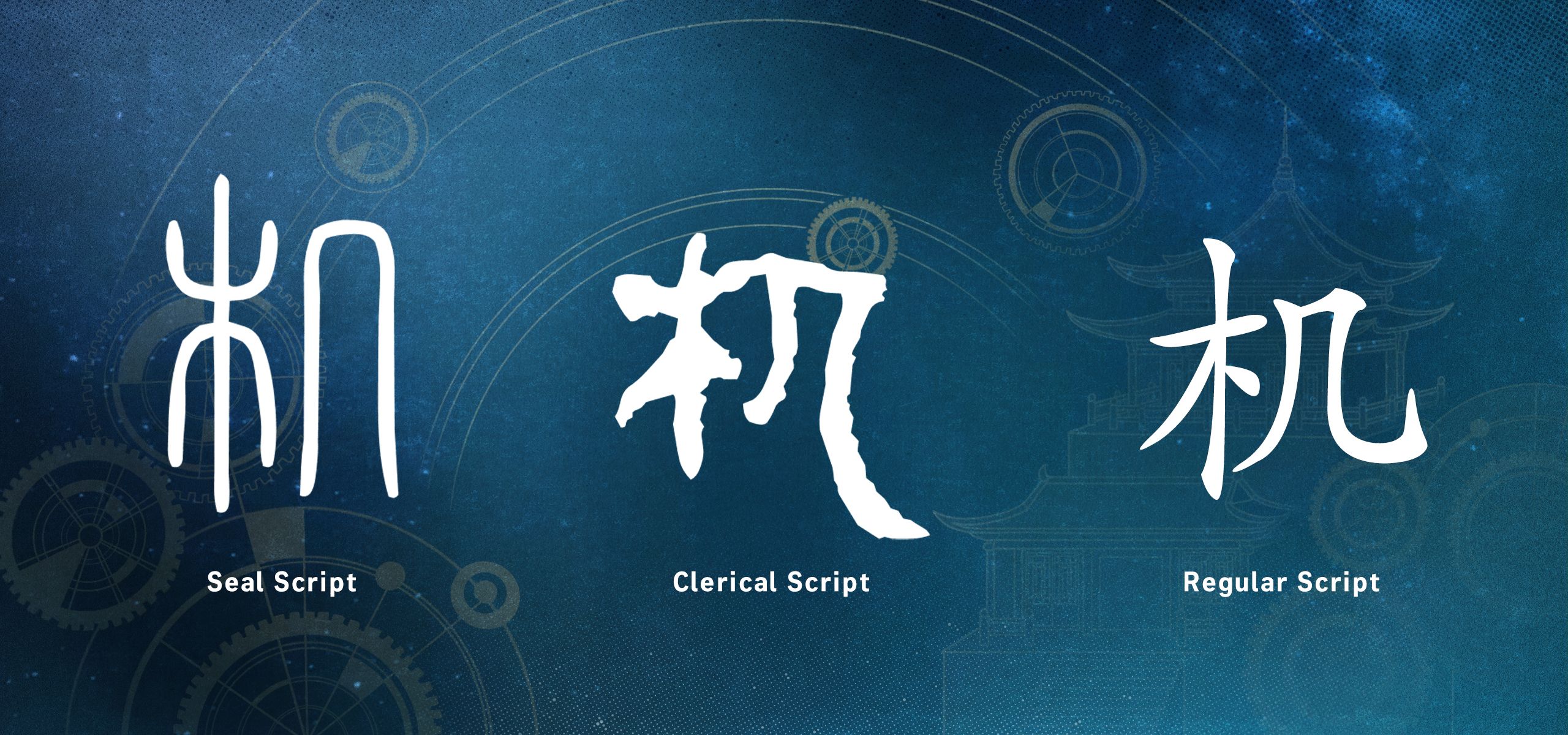
Given the importance of the trigger mechanism to the ancient crossbow’s function, 机 later came to mean “key” or “crucial moment.” For instance, crisis is 危机 (wēijī), “dangerous moment,” while if the situation takes a “turn” for the better, it can be said to have a 转机 (zhuǎnjī, turning point). The latter often relies on a person’s astuteness when it comes to seizing the opportune moment, 时机 (shíjī) or 机会 (jīhuì, chance), as captured by the saying: “Chance favors the prepared mind (机会总是留给有准备的人 Jīhuì zǒngshì liúgěi yǒu zhǔnbèi de rén).” Otherwise, one may let the opportunity slip, or 坐失良机 (zuòshī liángjī) without even knowing.
It’s understandable then that secrets are a “hidden mechanism” (机密 jīmì) as to how something might work. In contrast, to rebuff others’ prying, we can jokingly say 天机不可泄露 (tiānjī bù kě xièlòu), “One must not give away a heavenly secret,” an idiom that originated from ancient people’s belief that everything under the sun is destined, and to reveal a secret may incur endless trouble.
机 can also be used to describe the traits of human beings, such as 机灵 (jīling), clever or smart, 机敏 (jīmǐn), alert and resourceful, and 机智 (jīzhì), quick-witted. It can also refer to our ideas: A motive to do something is 动机 (dòngjī), while 心机 (xīnjī), meaning “calculating” or “scheming,” is often used pejoratively.
Over the past several decades, especially after the AI program AlphaGo defeated South Korean Go master Lee Sedol in 2016, concerns have grown that the line between machine and human intelligence is becoming increasingly blurred. Today, there is even greater anxiety that AI may soon replace many jobs—or lead to more troubling consequences. Yet as the Chinese words 危机 (crisis) and 机遇 (jīyù, opportunity) suggest, periods of disruption can also create new possibilities. Whether it is a crossbow or a large language model that seems to know the answer to everything, human ingenuity remains at the heart of these creations. Perhaps it is also a good time to remember the Chinese idiom 随机应变 (suíjī yìngbiàn), to adapt to changing circumstances, as people have done throughout history in response to technological change.
机: The Character Behind Machines and the Human Mind is a story from our issue, “I, Humanoid.” To read the entire issue, become a subscriber and receive the full magazine.
Related Articles