

Since 2024, Liu’s family has enjoyed a few scoops of handmade ice cream at Yeah Gelato almost every week during the summer whenever they visit the shopping mall. Her 9-year-old son loves the pistachio nut flavor, while she prefers the brand’s signature variety featuring Wuchang rice from northeastern China’s Heilongjiang province.
“They offer bigger portions than other brands like Häagen-Dazs. The flavors are more unique and not too sweet,” the Beijing resident in her 30s explains. Still, the family sometimes switches to Mixue Bingcheng, China’s biggest milk tea chain best-known for its 2-yuan ice cream cones and 4-yuan lemon teas, for a cheaper alternative, since a single serving of ice cream at Yeah Gelato can cost 30 to 40 yuan.
Over the past few years, gelato, or Italian-style handmade ice cream, has prospered in the country. According to a report last September by consulting firm iiMedia, the market size of gelato more than doubled between 2019 and 2024, reaching 12.2 billion yuan with a compound annual growth of nearly 18 percent. Yeah Gelato, a Beijing-based company founded in 2011, alone opened more than 1,000 stores in 2024 and 2025, totaling over 1,600 outlets by early August, making it the second-largest ice cream chain on the Chinese mainland, behind only Dairy Queen, which has amassed over 1,800 shops since 1992.
Read more about summer refreshments in China:
- China, Not Italy, Probably Invented Ice Cream
- Land of Milk and Honey: The Story of China’s Most Profitable Milk Tea Brand
- Bubble Trouble
The icy refreshment has even swept the whole food and beverage industry, with an increasing number of businesses, from cafes and milk tea shops to bakeries and restaurants, adding gelato products to their menu. For instance, the leading milk tea brand Heytea began offering gelato at some outlets in 2019, and this year it opened several gelato-themed shops in major cities such as Shanghai and Beijing. Another milk tea brand, Chagee, has also launched a “Geelato” series that combines handmade ice cream with its signature tea flavor in 70 stores across 29 cities since this May. With those new launches, some of their stores have even seen long lines of customers waiting up to two hours for their orders to sample the new flavors and take advantage of the limited-time discounts.
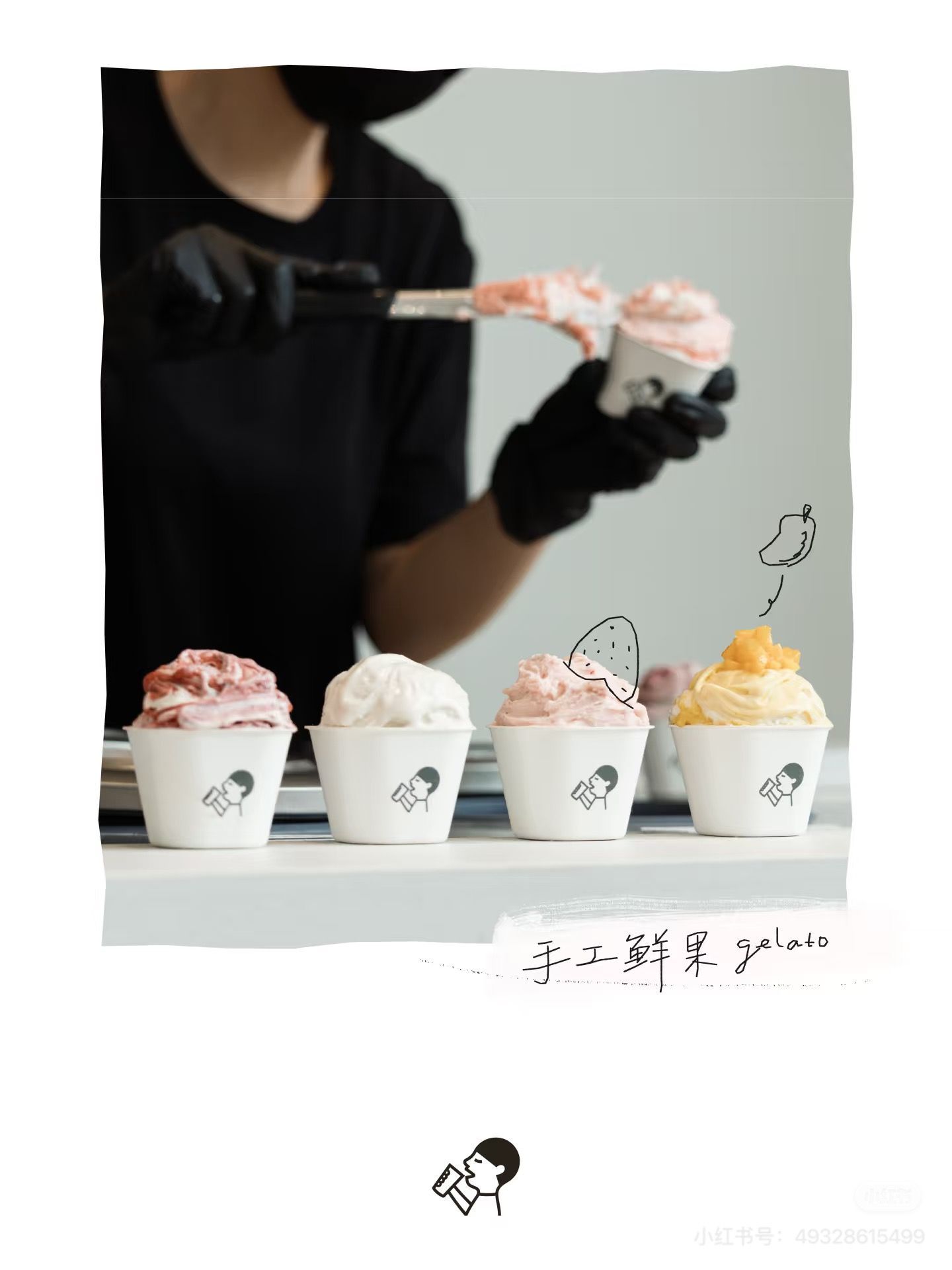
When the milk tea brand Heytea opened its gelato store in Beijing this July, customers lined up for up to three hours on opening day just to get a taste (screenshot via Xiaohongshu)
Social media has further fueled the trend, as the bourgie decor of many gelato shops, colorful scoops, and bizarre yet eye-catching flavors like chili pepper and Beijing fermented soybean milk make for highly shareable photos and videos. Gelato-related topics had received over 1 billion views on the lifestyle platform Xiaohongshu (RedNote) by this May.
Meanwhile, many once-viral high-end ice creams have cooled off: Zhong Xue Gao (or Chicecream), once dubbed the “Hermès of ice cream,” went bankrupt last July; the once viral Moutai ice cream, created by the country’s most prestigious liquor brand, announced plans to shut down the line in June, only four years after its launch, following the mass closure of its outlets over the past two years; and the same month, all 171 Häagen-Dazs ice cream shops on the Chinese mainland, down from over 550 in 2019, were sold to a local investor group that includes tea brand Ningji, due to their declining revenues.
Pan Chunni, who opened her own gelato stall in Guangdong this April, actually bought the display freezer at half price from a failed ice cream shop, and says second-hand equipment from failed businesses has become increasingly common in the industry. Though many are still skeptical whether gelato can become a daily staple in China, like coffee and milk tea, or whether it will follow the fate of other premium ice cream it has replaced.
Gelato is not new to the Chinese market. The Italian variety entered the Chinese market in the 1990s, around the same time as American brands like DQ and Häagen-Dazs. Yet it failed to match the success of established, industrialized American brands due to the lack of domestic equipment and supply chains needed to produce handmade gelato, which is typically made with fresh milk, fruit, and nuts. Compared with conventional ice cream, gelato contains less fat, sugar, and air, while offering a denser texture and richer taste.
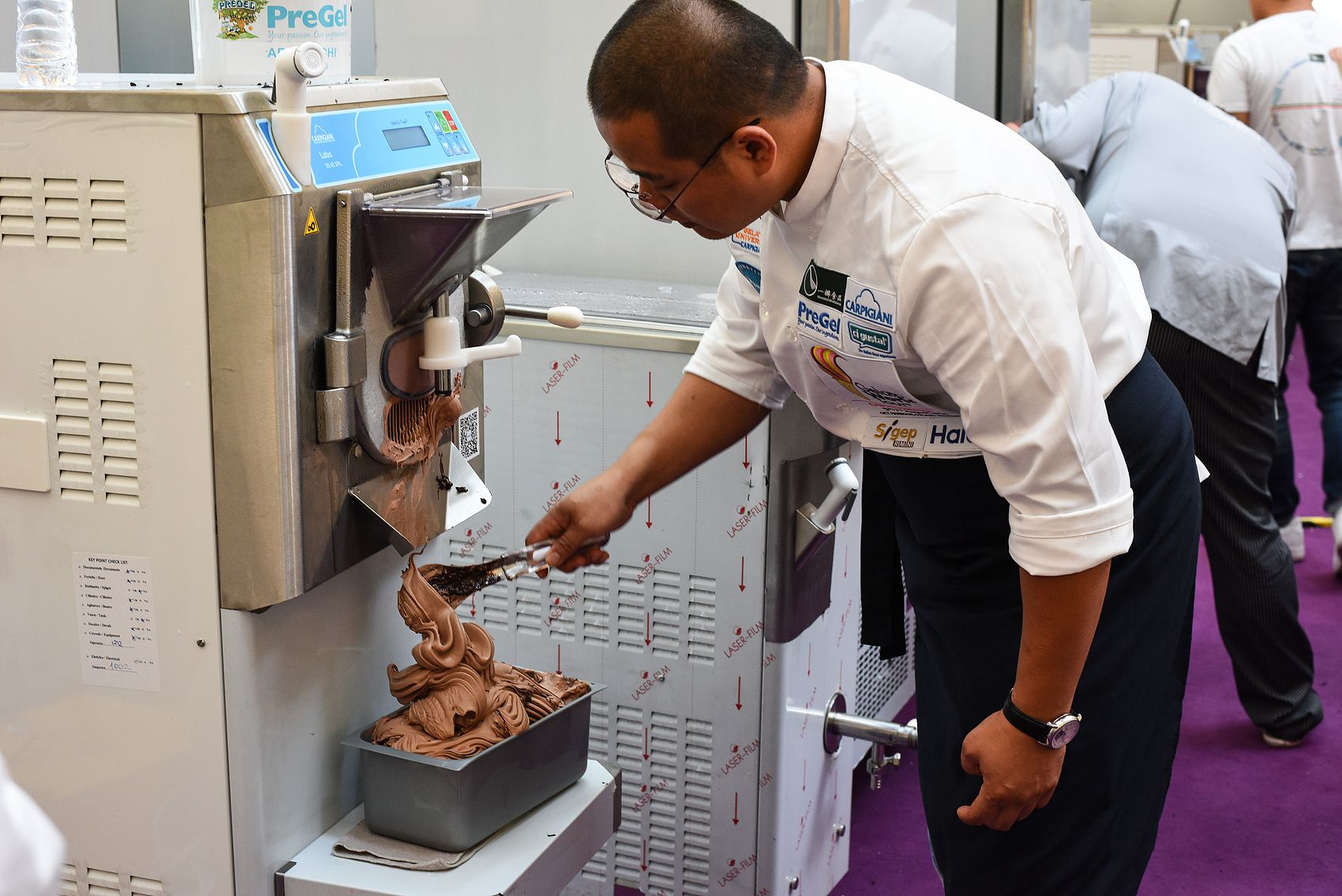
The high cost of gelato machines once deterred many small businesses from entering the industry in China (VCG)
Industry veteran Hu Wending recalled that when he first entered the sector over a decade ago, ice creams made with domestic machines varied in size and softness, while imported Italian equipment often cost hundreds of thousands of yuan a piece. Opening a gelato shop could cost up to 800,000 yuan, he told industrial analyst Vision Finance in July, and a helping of around 100 grams was typically priced at 60 or 70 yuan.
Now domestic gelato machines have improved in quality and cost only 60,000 yuan, one-tenth of the price of imported models. That’s why Yeah Gelato only began franchising in late 2023, founder Cui Jianwei said in an interview with tech media outlet 36Kr in April. The number of stores had grown more than tenfold in just three years.
Pan, the gelato stall owner, had quit her day job to run it with her husband at commercial streets and fairs around Guangzhou and the neighboring cities of Foshan and Dongguan. “Now almost everyone knows about gelato,” says Pan. Indeed, in a country known for adapting foreign brands and food names into Chinese, such as translating paella as “Spanish seafood rice,” gelato has surprisingly remained simply “gelato.”
When TWOC visited her stall, sandwiched among stalls selling other snacks and handicrafts on Guangzhou’s busiest street, Beijing Road, on Friday evening this July, Pan was busy handing out free samples to passers-by. According to Pan, the dessert has become particularly popular among Gen Z, who “have grown up eating well and are therefore picky eaters,” as well as their parents’ generation, who can afford its higher prices.
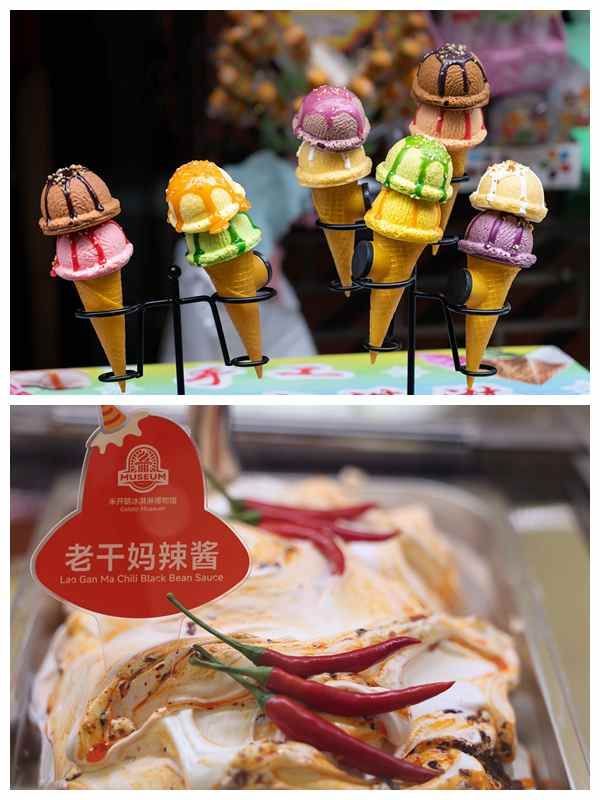
Gelato shops in China often incorporate Chinese elements in their products, even including the chili sauce laoganma. Those creative flavors, which vary from one shop to another, have also contributed to the dessert’s rise. (VCG)
Chinese people’s growing health awareness is another important factor. A scoop of gelato typically contains around 5 percent milk fat, about 10 percent less than regular ice cream. “Those parents like me born in the 1990s, who care a lot about health and food safety, would choose gelato [over other varieties] for their kids,” says the business owner.
As indicated in an ice cream industry report released by the consumption research institution Qince this May, health has become consumers’ primary consideration, with a majority preferring low- or no-sugar varieties, natural ingredients, and low-calorie options. Yeah Gelato, for instance, has won over many consumers with its policies “made fresh daily with no overnight leftovers” and “buy one get one free after 9 p.m.” to deal with any remaining stock.
However, Pan is still uncertain whether the business—usually with a gross profit of up to 70 or even 80 percent, according to the industry journal China Ice Cream—offers a promising career. Over the past several months, she and her husband have often worked from 8 a.m. to 10 p.m., but make about 1,200 yuan per day. There is not much left after deducting their rent of around 500 yuan, the cost of ready-made products from suppliers, and other expenses. The franchisees of Yeah Gelato may feel even greater pressure, as they face higher rent and decor costs in shopping malls, as well as franchise fees. “Many people only go there after 9 p.m. for the discounts,” Pan observes.
Meanwhile, there have been complaints that Yeah Gelato’s products cannot be considered “freshly handmade,” since the stores use frozen milk pulp delivered from a central kitchen rather than fresh milk. Some consumers have also expressed concerns that handmade ice cream may be less safe than better-regulated, more standardized alternatives, and that the health benefits might be overhyped given its similarly high sugar content.
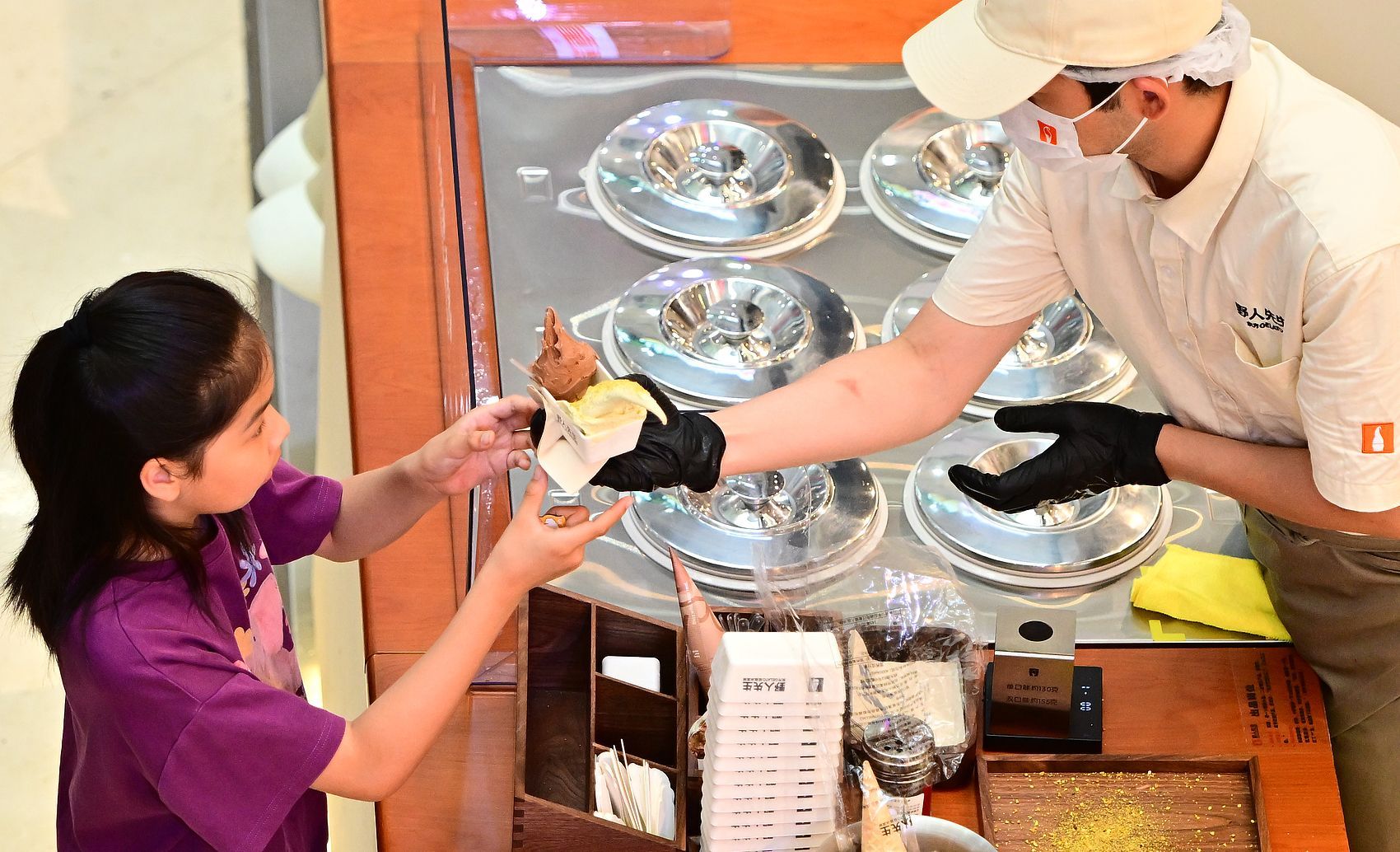
Yeah Gelato stores often see lines of customers around 9 p.m., when the “buy one, get one free” campaign starts (VCG)
Liu, the Beijing consumer, is unfazed by these concerns. She knows full well that gelato is simply a summer treat that puts her in a good mood. “The supposedly healthy ingredients are really just an excuse for us to satisfy our cravings,” she admits.
While Cui, Yeah Gelato’s founder, has expressed confidence in various media interviews that it’s only a matter of time before gelato becomes as common as a daily cup of milk tea and coffee, small operators like Pan and her husband aren’t looking that far into the future. They’re more concerned with surviving the coming winter, a notoriously tough season for the business. They’ve been considering buying equipment to make their own products instead of sourcing from suppliers, both to cut costs and potentially expand into supplying bakeries and restaurants. “I’m not sure how it will go, since this will be our first,” says Pan.
Can China’s Gelato Craze Stay Cool? is a story from our issue, “Weight of the Nation.” To read the entire issue, become a subscriber and receive the full magazine.
Related Articles