

It’s often said that in China’s affluent Guangdong province, billionaires are barely distinguishable from the most humble migrant workers. Local landlords, who often live in riches simply by collecting rent on their myriad apartments or buildings, can be seen happily lazing around in worn-out T-shirts and flip-flops, and have even been known to take up side jobs as vegetable stall vendors or street cleaners. No matter how unassuming they appear, however, it only takes the arrival of Duanwu Festival to filter the true landlords from regular folk.
In the lead-up to Dragon Boat Festival, as Duanwu Festival is known in English and which falls on the fifth day of the fifth lunar month on the Chinese lunar calendar, boat racers across Guangdong can be found practicing in their “dragon boats” in lakes or rivers for hours at night. This includes a sizable cohort of avid landlord hobbyists, who have not gone unnoticed thanks to their fervor for the sport. The hashtag “How much do Guangdong landlords value boat racing?” has attracted over 9 million views and thousands of comments on the microblogging platform Weibo. One commenter quips about how “the sinking of just one ship could influence the province’s GDP.”
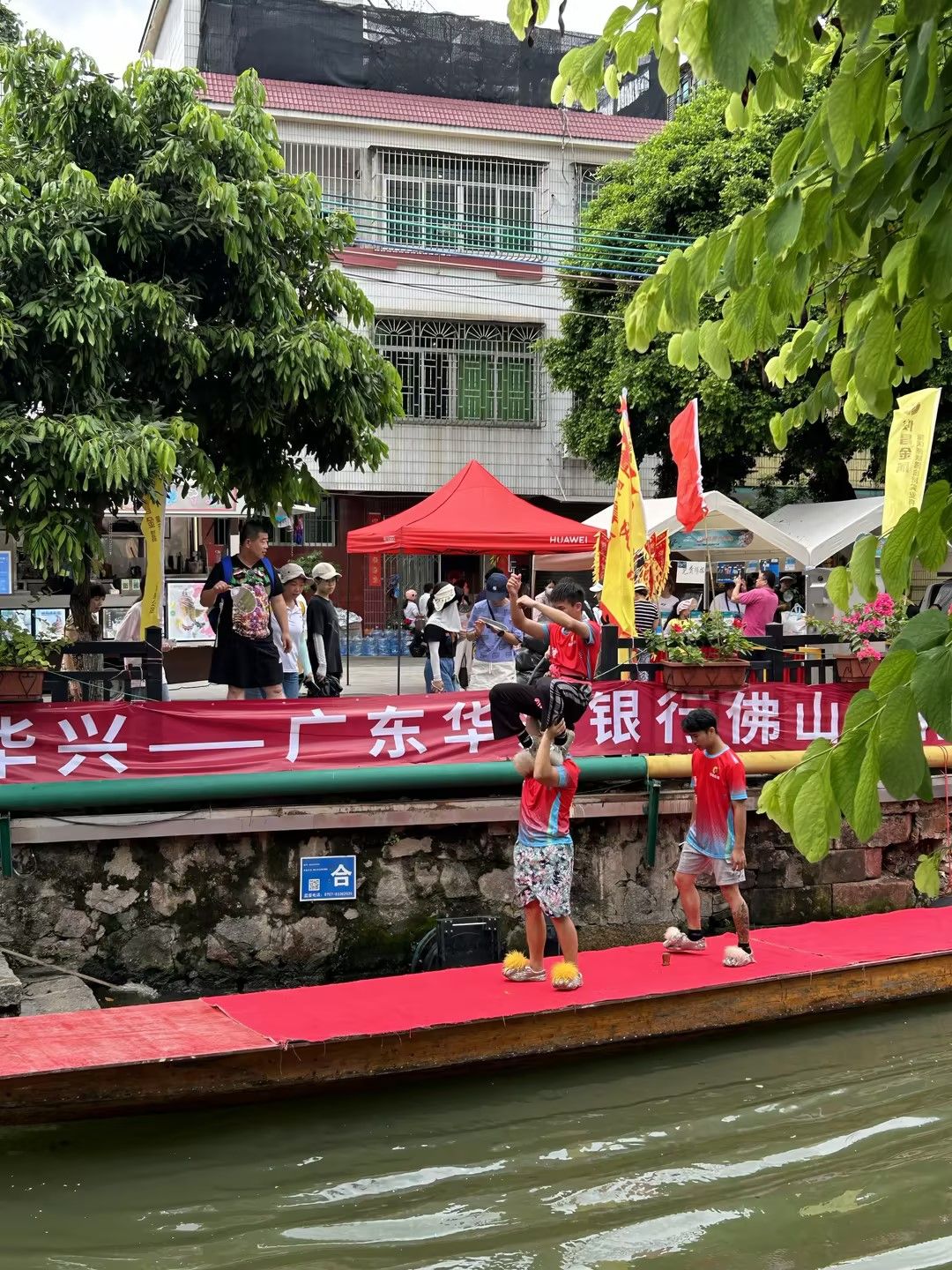
Performances, like acrobatics and lion dances, are often staged before and after the race
Liu Zhifeng, one such amateur boat racer from Foshan in Guangdong, admits that he and his compatriots value Duanwu even more than the Lunar New Year. “Our relatives and friends abroad, no matter how far away they may be, will come back for Duanwu to help [with the race], but not for Lunar New Year,” the telecommunications engineer, who is in his thirties, tells TWOC. His team, one of three in his village, begins training almost every night after work two months before the festival arrives.
Read more about Dragon Boat Festival:
- How Foshan’s Artisans Craft Dragon Boats
- Discover the Many Legends of Dragon Boat Festival
- Idioms About the Man Who Inspired Dragon Boat Festival
In fact, the Duanwu celebrations in Foshan’s Diejiao township (which consists of 15 villages, including Liu’s Dongsheng village) have been attracting former residents and spectators from all around for the last decade or so. Featuring a 35-kilometer river network that winds among the villages, Diejiao is renowned for its exhilarating races, which have been dubbed “dragon boat drift” or “Fast and Furious on water” on account of participants needing to navigate their 25-meter-long vessels around a slew of five-meter-wide S, C, L, and T-shaped curves. As a testament to the popularity of Diejiao’s dragon boat races, in addition to the tourists that crowded along the course during last June’s two-day competition, over 30 million people also tuned in online.
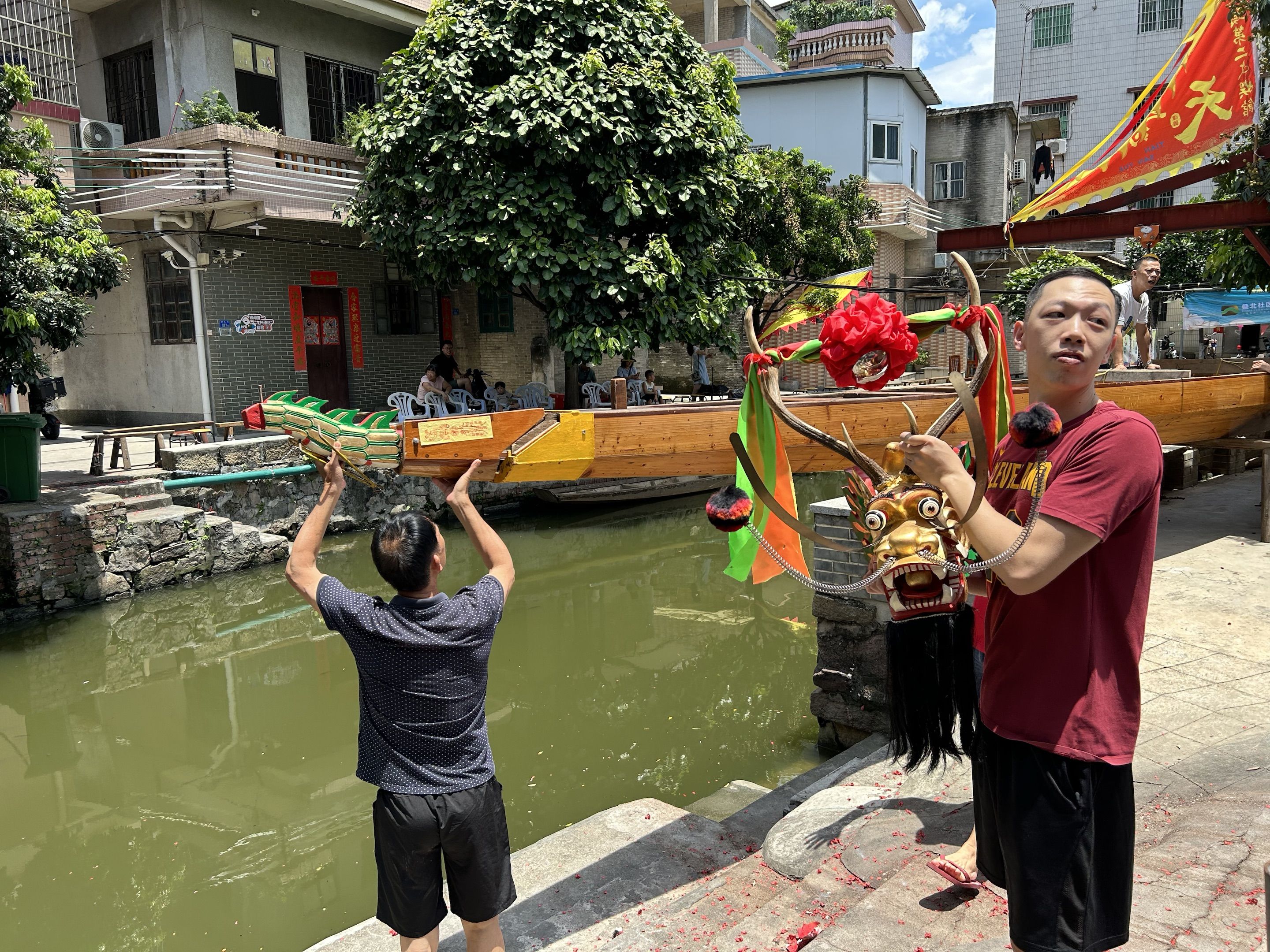
Villagers prepare their dragon boat before the competition
Diejiao’s dragon boat races are notorious for racers needing to navigate especially narrow and winding waterways
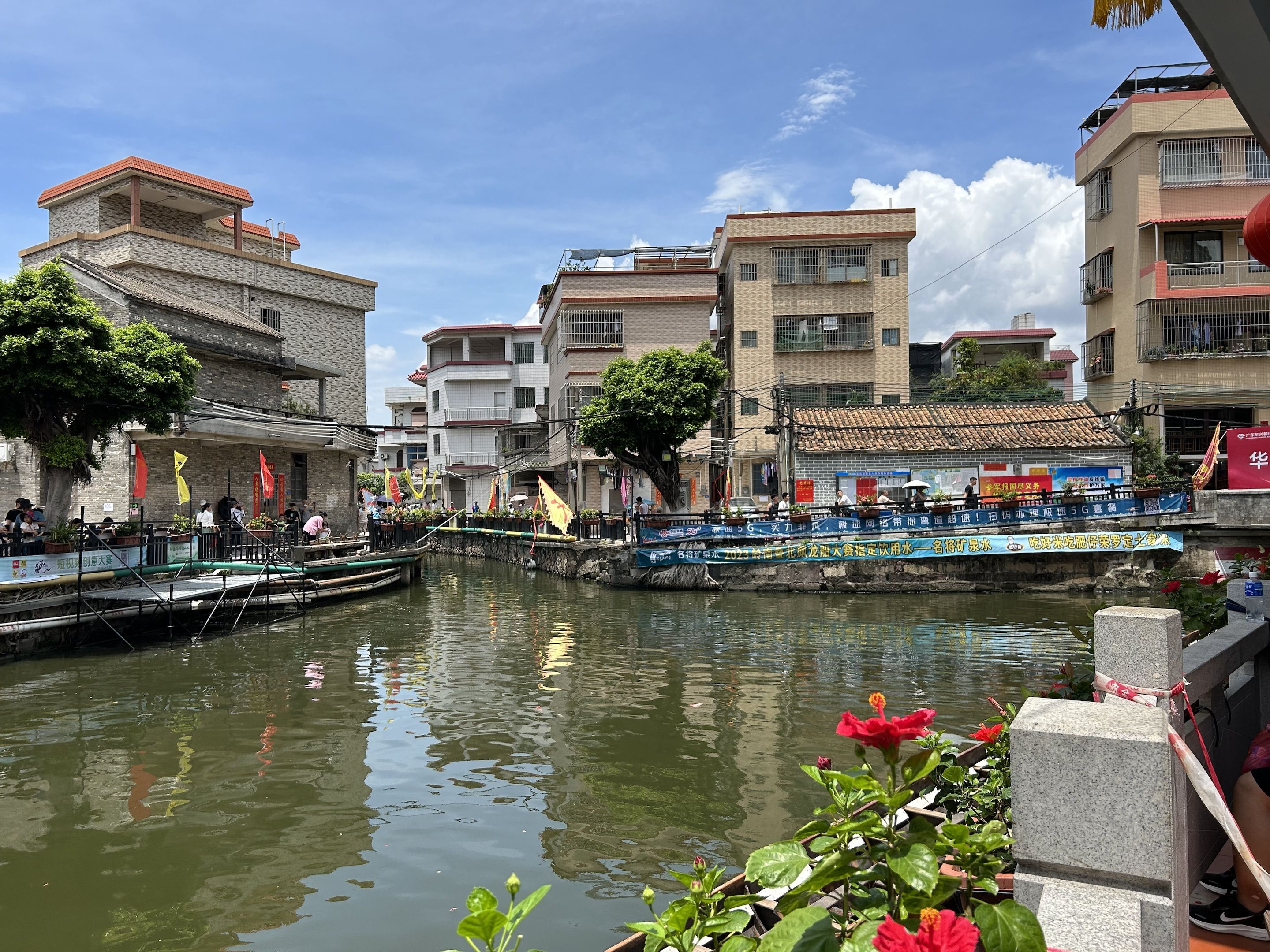
Diejiao’s dragon boat races are notorious for racers needing to navigate especially narrow and curved waterways
The history of dragon boat races in Foshan can be traced back to the Ming dynasty (1368 – 1644). Of Dragon Boat Festival, the Local Records of Shunde (《顺德县志》), a district of Foshan, describes the scene: “During Duanwu, [people] make rice dumplings, drink calamus liquor, tie mugwort to their doors, and villages prepare their dragon boats to welcome the gods, all the while various instruments play.” A 592-year-old, nearly 37-meter-long dragon boat made from Bornean ironwood still exists in Foshan’s Yanbu township. Each year, it is dredged up from the muddy river bed, where it is stored year-round, and then paraded around the nearby waterways in a ceremony that evokes the “rising” and washing of the “dragon.”
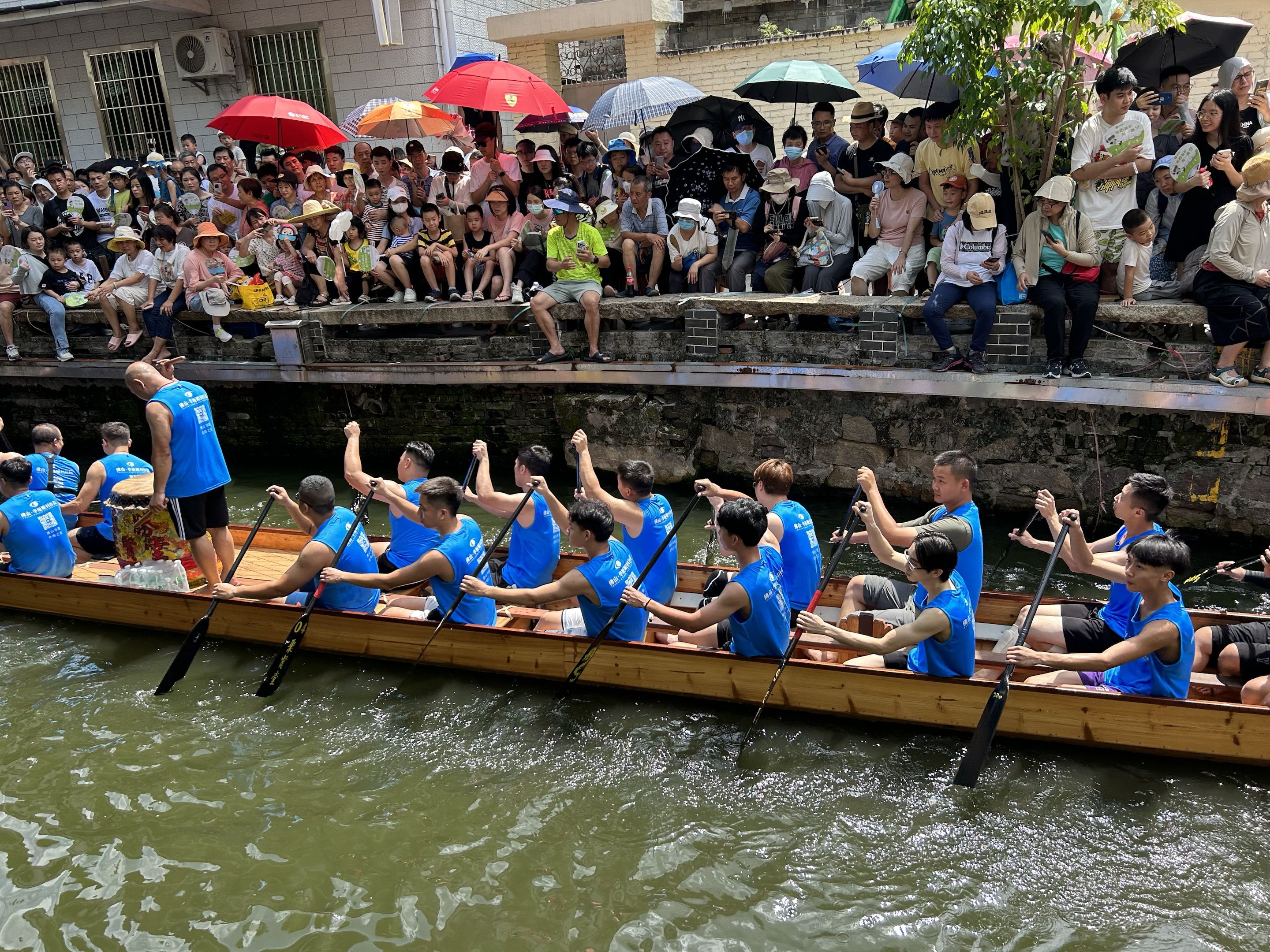
Diejiao’s modern-day dragon boat races are commonly believed to have begun in the early 1980s, evolving over the past five decades into their current form. In them, a team of around 40 people, including 32 rowers, one drummer, and several helmsmen at each end of the boat, compete rowing the 500 to 650-meter-long course. Times range from 2 to 4 minutes and can often end in a flash finish. According to Liu, who learned how to row as a child but only started participating in the competitions in around 2010, the traditional Bornean ironwood or teak boats of his parents’ generation have made way for lighter cedarwood varieties, mostly in the pursuit of speed. As one Guangdong folk saying goes: “It’s better to crash the boat than be late.”
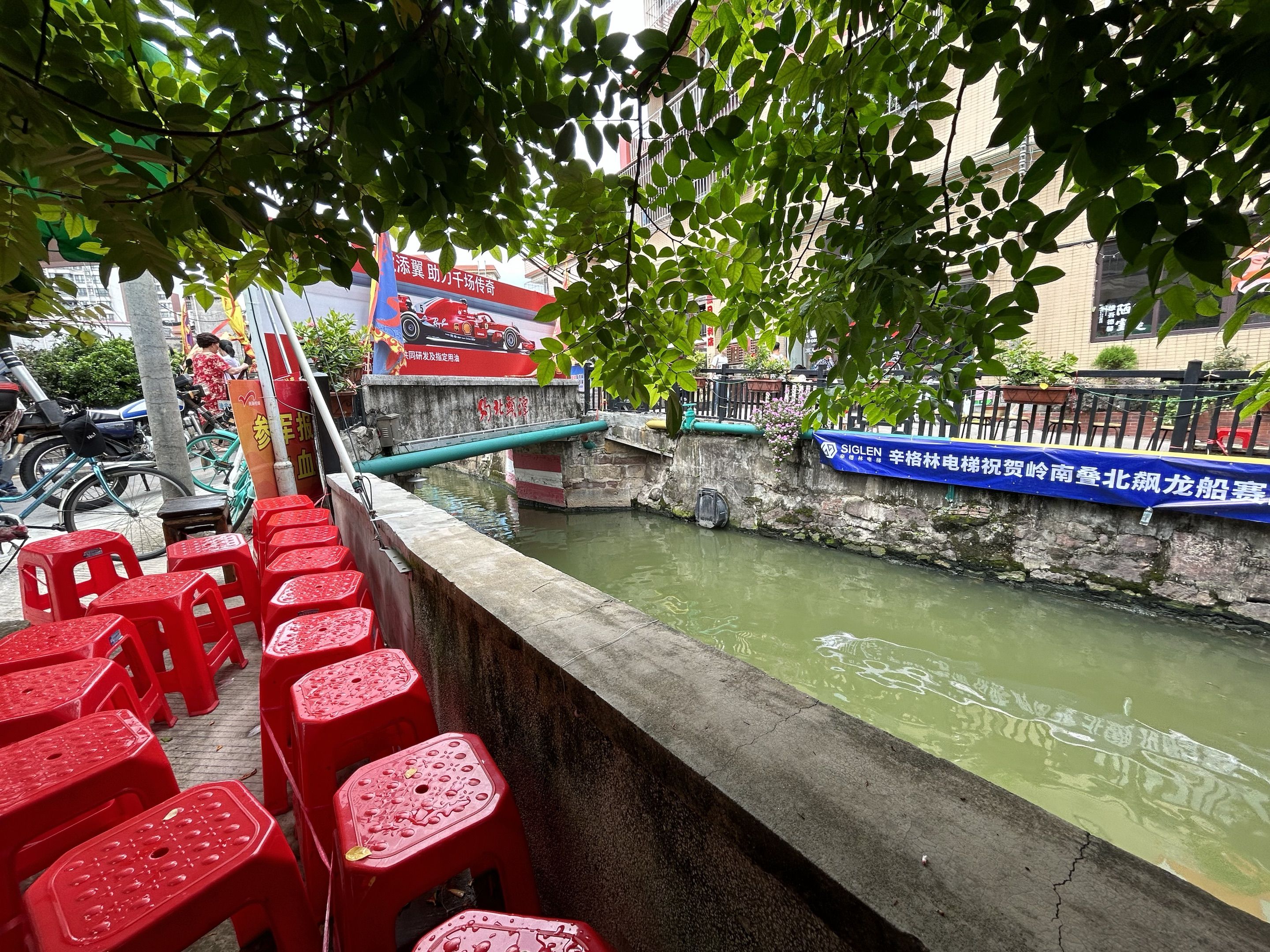
Residents secure their seats along the course, especially on tight bends, days in advance
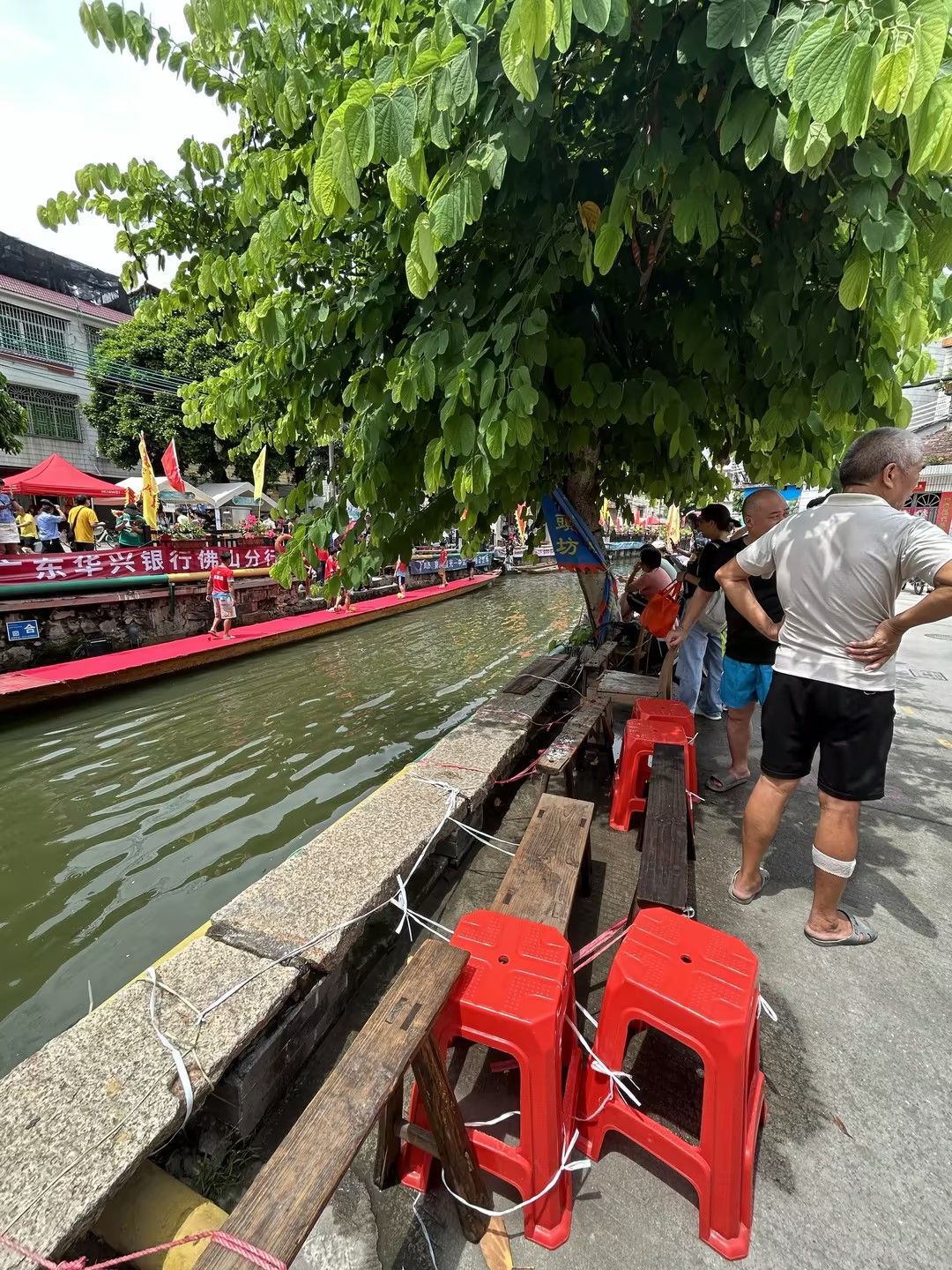
Residents secure their seats along the course, especially on tight bends, days in advance
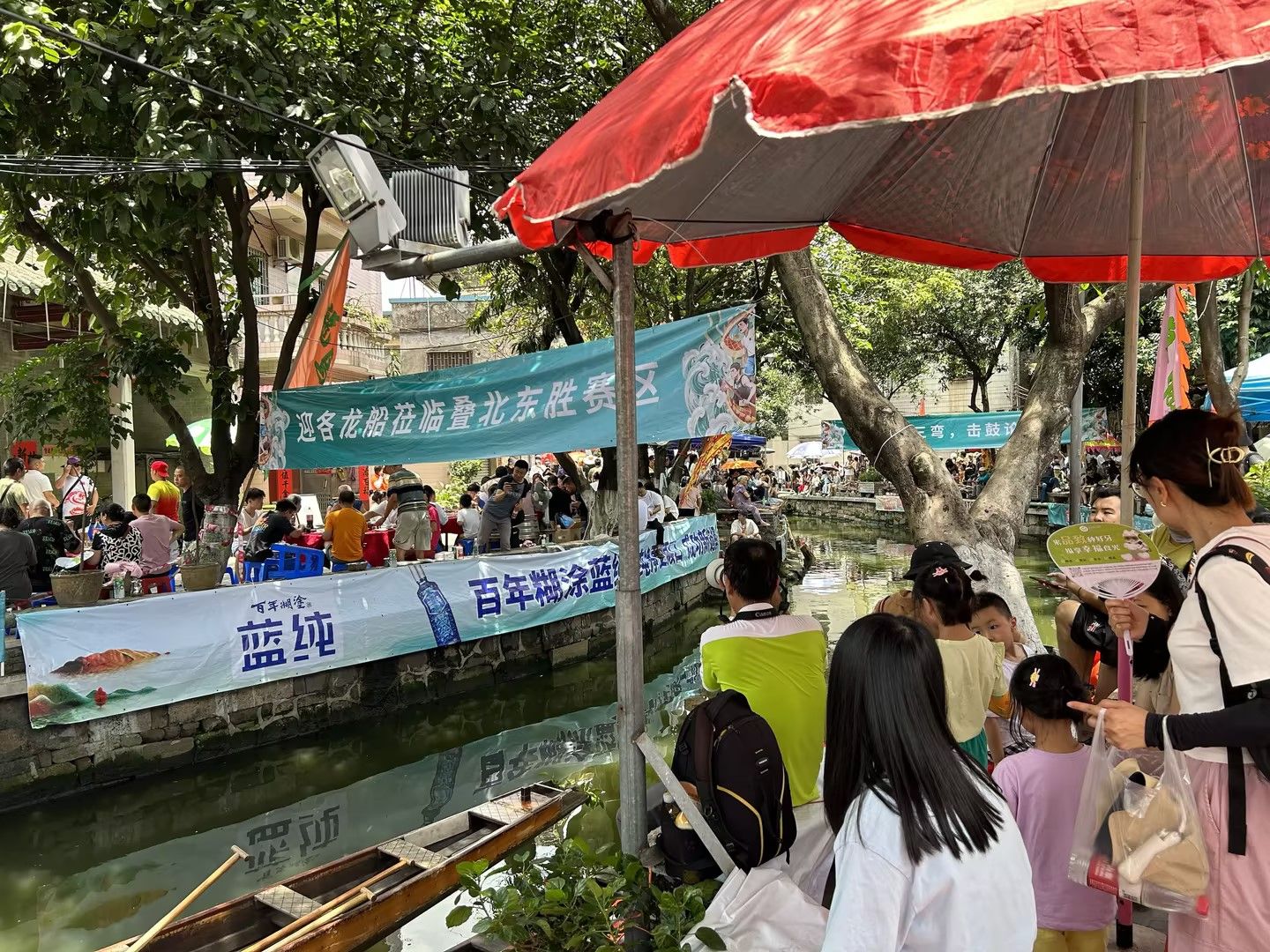
Tourists arrive early to get a good vantage point before the race officially begins at around 2 p.m.

Locals watch a live stream of the race on TV
Though he dismisses the comment about what would happen if one of these “landlord boats” were to crash as a joke, Liu admits that the sport is prohibitively costly. “[The team] has spent over 20,000 yuan on drinking water alone, and another several tens of thousands of yuan on food [during the two-month training]. The fee for the coach costs several hundred yuan per day, and the ship’s maintenance and refurbishment can cost hundreds of thousands of yuan,” he says.
However, the locals state they don’t care about the money spent, just so long as their traditions and heritage continue. He Xiangzhi, a resident of Dongsheng village who grew up attending dragon boat races, hopes that the sport can prosper. “When I was young, I would often go door to door ringing a gong to raise money for the ‘Dragon Boat Banquet,’” the now 54-year-old told the news platform Southcn.com last year, referring to the meal that was traditionally prepared to feed the competitors but caters to the whole village today.
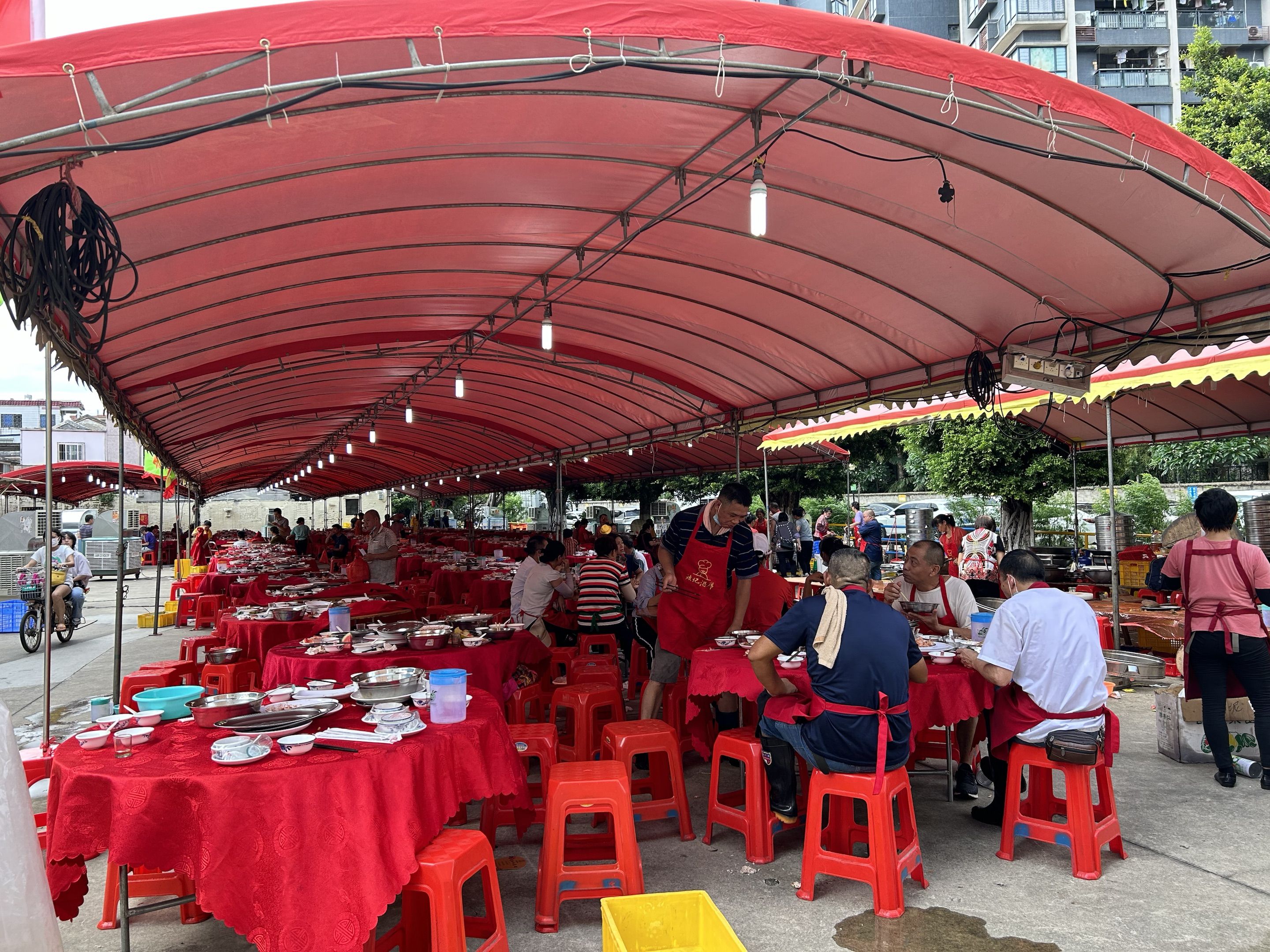
Dongsheng village organizes its 100-plus-table Dragon Boat Banquet outside since the Ancestral Halls that usually host such events are not big enough

Dongsheng village organizes its 100-plus-table Dragon Boat Banquet outside since the Ancestral Halls that usually host such events are not big enough

Village donors and other race sponsors are publicized during the event
Liu agrees. “It’s mainly about passing down the tradition. It’s useless if no one joins despite [the abundant] investment.” His team placed second among the 13 teams in 2023’s Diejiao Dragon Boat Race, winning a token prize of 1,700 yuan. Meanwhile, the donations from villagers, community and local government, and business sponsors, ranging from several hundred to millions of yuan, are put aside for the team to use toward their labor of love. Liu claims some locals who have moved to work in other cities pay contractors to do their jobs so they can go on leave and return home to join or witness the races.
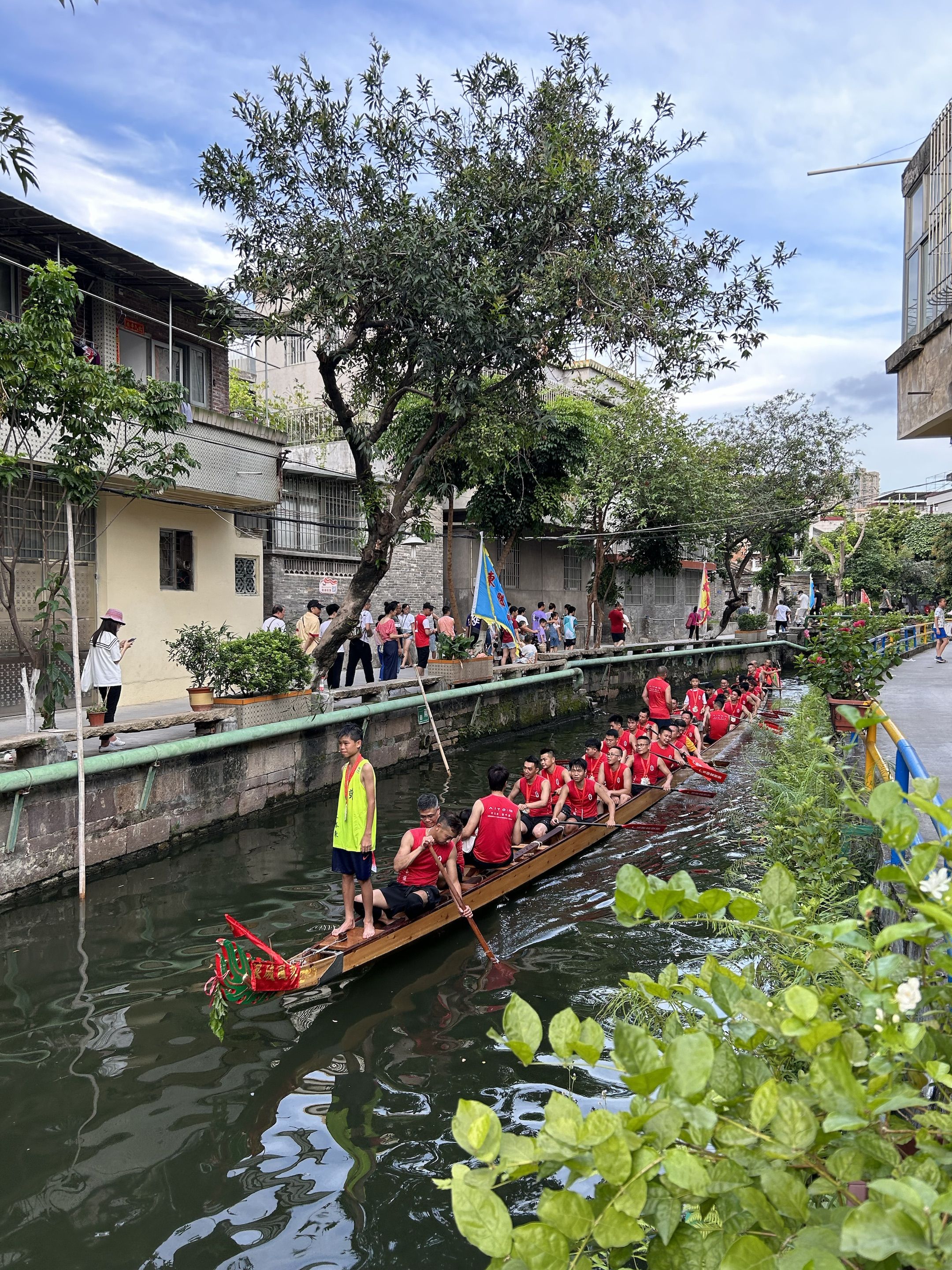
One winning team parade in the river
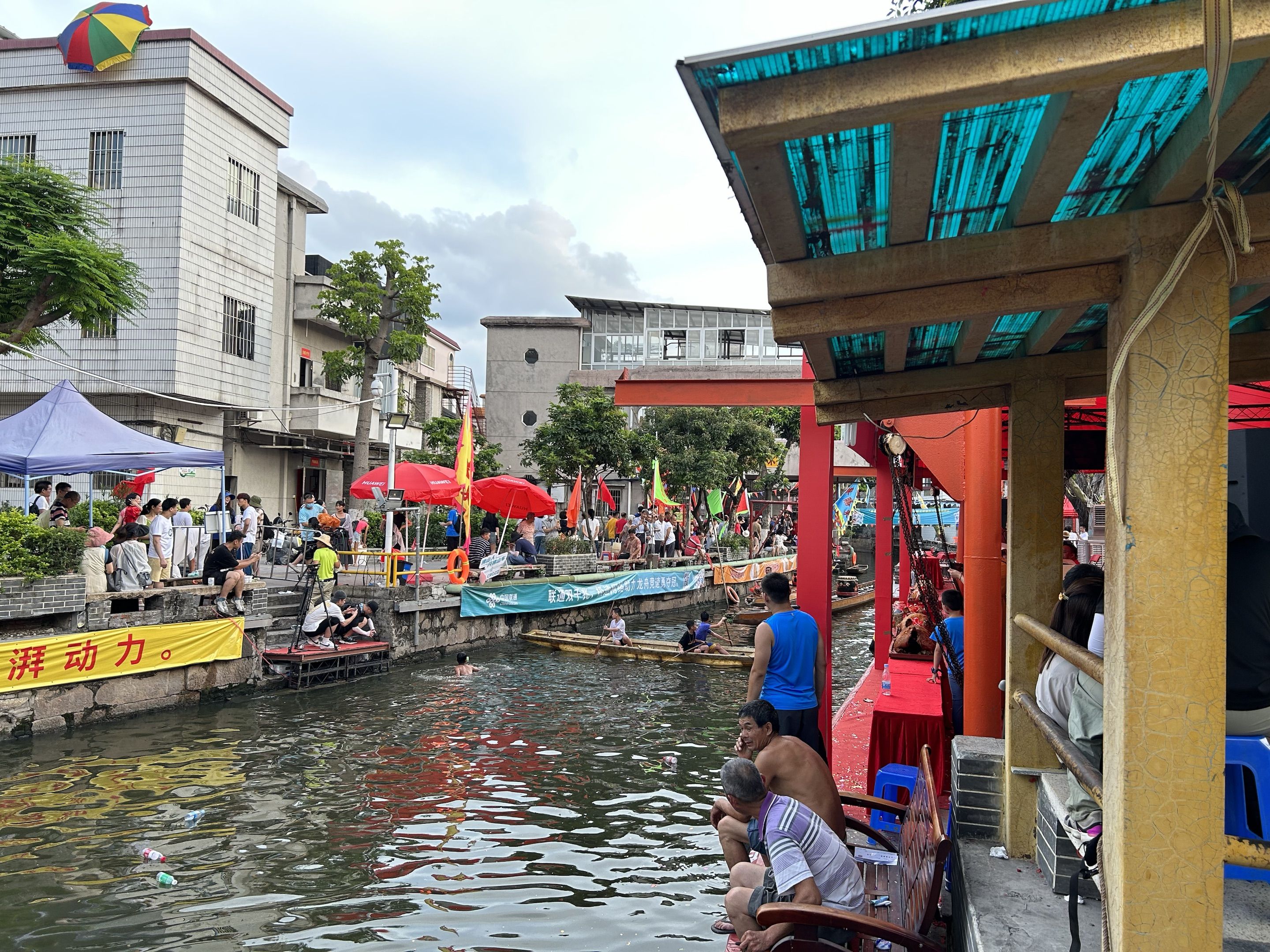
Locals often learn how to row from a young age on account of the easy access to water
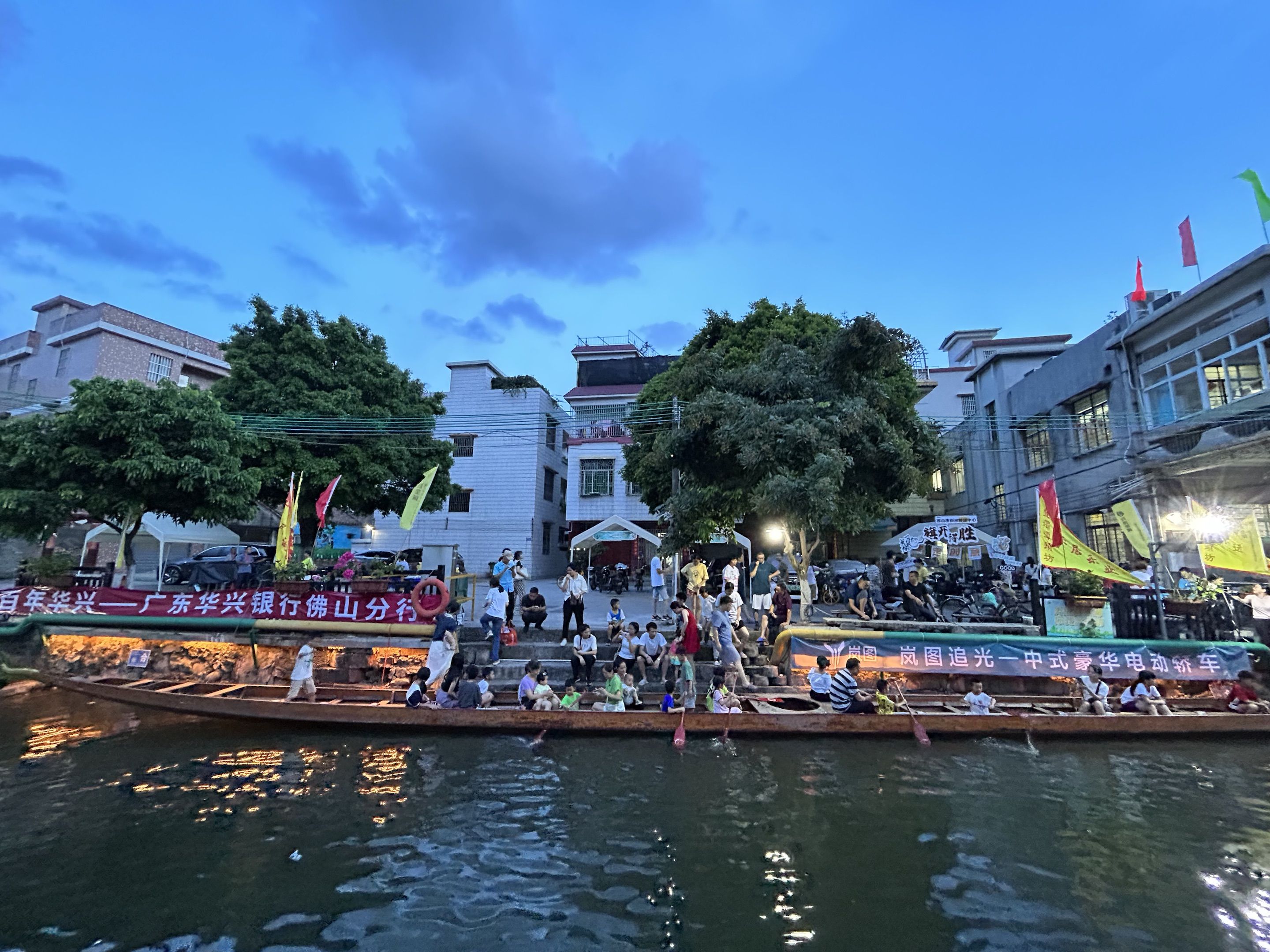
Tourists enjoy a dragon boat tour on the river
Though the fiscal reward for taking part may be negligible, it’s also about honor—and good old-fashioned competition between neighboring villages. “[If we win] we can raise our heads high, stand tall, and stride like the wind,” Liu says.
Photography by Tan Yunfei
Related Articles