The storefront at No. 20 Di’anmenwai Street blends in with its neighbors: gray-brick hutong houses home to small eateries and souvenir shops. Yet taking one step closer, visitors are immediately drawn to a striking crimson corridor leading into a carefully designed space: a modern teahouse set in a double-height room with full glass walls and a narrow, elongated courtyard. However, the best view is reserved for the second-floor terrace, where guests can gaze out toward the Drum Tower, one of the most noted historic sites in the heart of Beijing.
Originally built in the 13th century, the Drum Tower, along with the Bell Tower to its north, served for over 600 years as the timekeeping center of the capital. Every morning and every evening, the drums and bells in the towers were struck 108 times to mark the opening and closing of the city gates. Rising over 40 meters above the city, the towers once sent the sounds echoing for several kilometers.
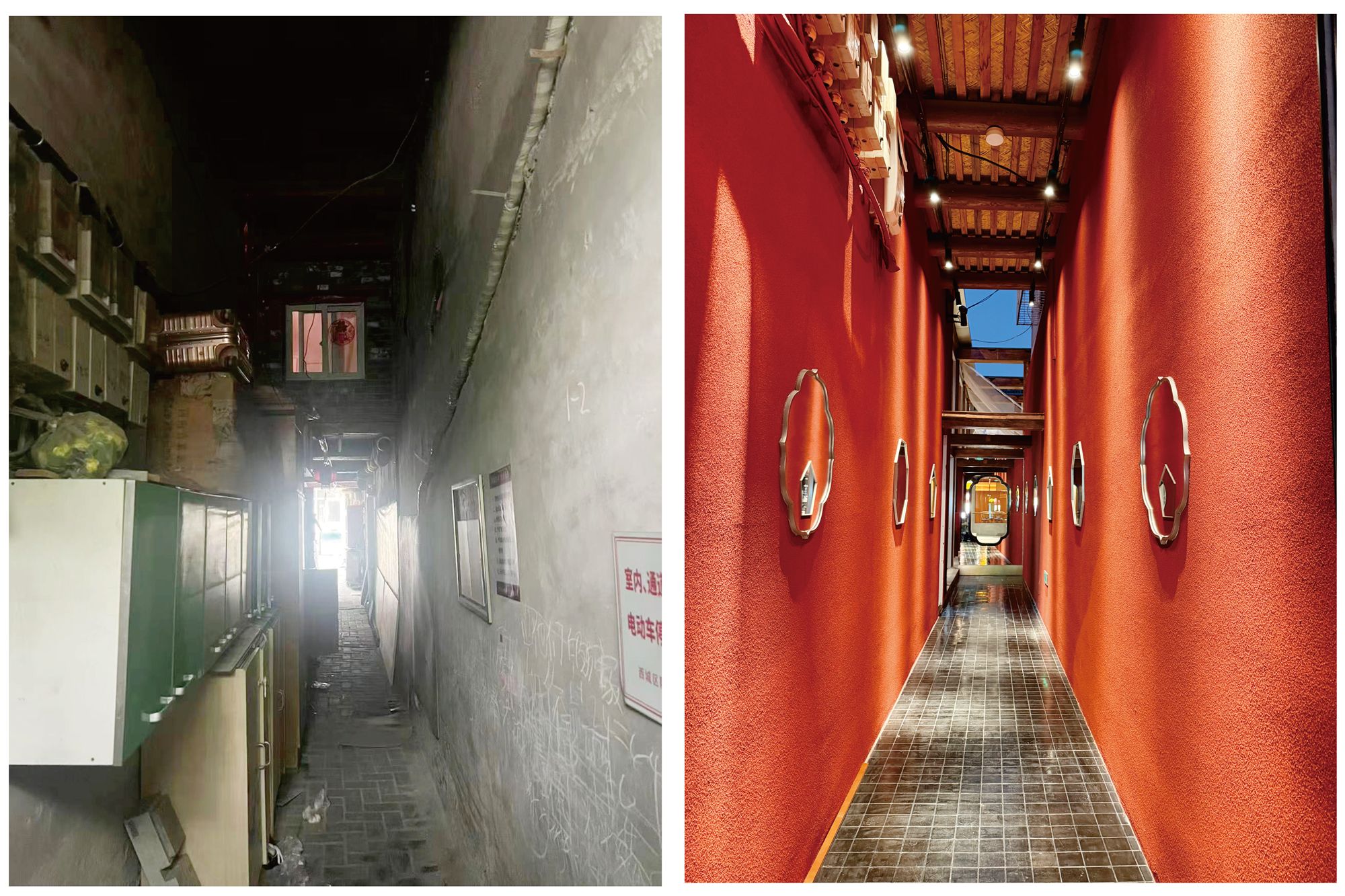
The renovation, completed last year, transformed a shabby hutong courtyard house plagued by fire hazards into a modern commercial and cultural space
The Drum Tower and Bell Tower were inscribed as a UNESCO World Heritage site as part of the Beijing Central Axis in 2024, serving as its northern end. Running 7.8 kilometers long, the Central Axis is lined with former imperial palaces and gardens, as well as ceremonial and public buildings, dating back to the Yuan dynasty (1206 – 1368). It stands as a living example of Chinese urban planning traditions and the changes of imperial dynasties.
Explore the preservation of China’s historic landmarks:
- How China’s Imperial Treasures Became a Public Exhibit
- A Fusion Mosque in the Hinterlands
- The Family Mansion at the Heart of Yunnan’s Modern History
Preserving the Central Axis as Beijing’s historic core is challenging in the densely populated old districts, particularly in Dongcheng and Xicheng. In the narrow lanes and alleys are crammed houses and small yards, many of which are state-owned rental housing formed in the 1950s. Starting in 2021, the district governments launched a series of programs encouraging residents to voluntarily terminate their leases in exchange for monetary compensation, determined by subtracting the replacement cost of the property from its assessed market value. Eligible residents may also apply for shared-ownership housing or public rental housing elsewhere in the city.
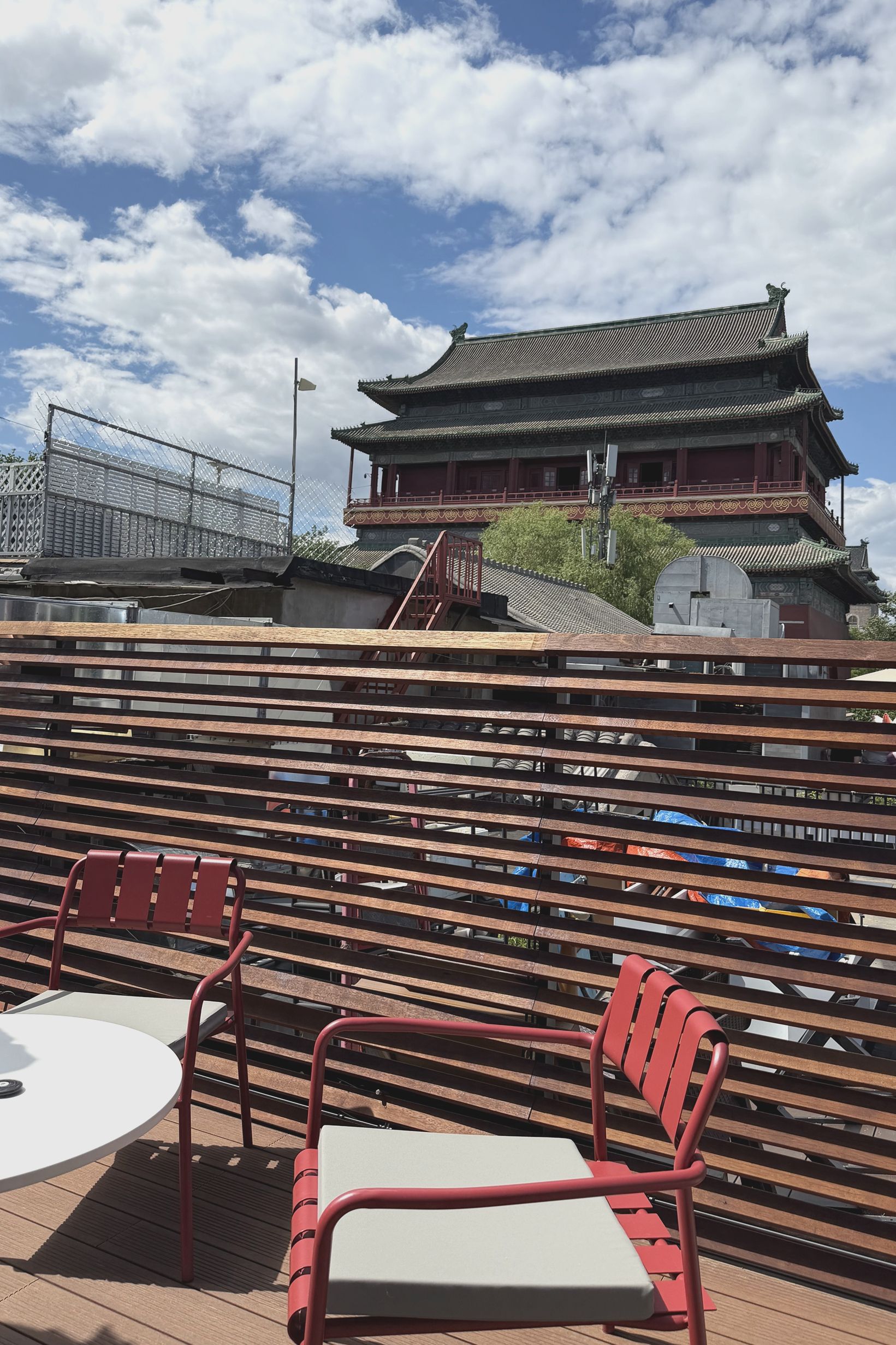
View of the Drum Tower from Shixi Teahouse’s second-floor terrace
Scattered throughout the area, some of these vacant houses now pose an opportunity for new cultural and commercial spaces. Just opened last December, Shixi Teahouse is one of several renovation projects led by a state-owned enterprise under the Xicheng district government, transforming a shabby hutong courtyard into a relaxing space for locals and visitors alike.
“We’re creating a place along the Central Axis where people can pause, sit, and find a moment of calm,” says the project manager Liu Na.
From the very beginning, the renovation has aimed to preserve the building’s historic character with minimal intervention, such as retaining the texture of the original brickwork. Beyond its thoughtful design, Shixi’s tea selection offers classics with a modern twist to attract young customers, ranging from white tea with dried tangerine peel and peach–infused jasmine tea to lotus leaf–scented oolong, paired with a variety of snacks. Besides the teahouse, the company also runs a noodle shop on Di’anmenwai Street, both aiming to combine traditional Beijing flavor with modern experiences.
As China enters a new phase of urban development, where construction and expansion are giving way to renovation and renewal, heritage conservation has become central to preserving a city’s memory. While museums and heritage sites welcome visitors, commercial venues that boost market vitality through cultural offerings are equally important in revitalizing historic areas.
“Tea should be fragrant, the space should be quiet, and people should feel at ease—this is what true respect for the Central Axis and the old city looks like,” concludes Liu.
Images courtesy of Shixi Teahouse
Related Articles