

In the summer months, yangmei (杨梅, Chinese bayberry) is a guilty pleasure in southern China. Find a shaded spot to enjoy a basket of the succulent berries, freshly picked beneath a cover of leaves, and toss a few into your mouth, letting the sweet and sour juices explode. Just be warned that you may be caught red-handed, as the fruit’s rich juices dye the skin a purplish color: Your “yangmei fingers” are a dead giveaway of your sinful snack.
Even the soldiers of ancient China could not resist the temptation of yangmei. In the Eastern Han dynasty (25 – 220), the military strategist Cao Cao (曹操) was leading an expedition against Zhang Xiu (张绣), another warlord, during which his troops struggled to find water. When the thirsty soldiers became increasingly disheartened, Cao Cao gestured before them, “There is a large yangmei forest ahead, with many sweet and sour plums to quench your thirst.” Just by imagining the tasty yangmei, the soldiers’ mouths filled with saliva, staving off their thirst until they reached fresh water.
Yangmei, an indigenous Chinese fruit growing in the south of the Yangtze River basin, is known as the “agate of fruits.” Even the Song dynasty (960 – 1279) poet and foodie Su Dongpo (苏东坡) who was known to “indulge in more than 300 lychees a day (日啖荔枝三百颗)” became a convert after tasting these delicacies, declaring that “lychees from Minguang cannot compare with yangmei from Wuyue (闽广荔枝, 未若吴越杨梅).”
While Wuyue refers to today’s Zhejiang province, the history of yangmei can be traced back to the Neolithic Hemudu cultural site in Yuyao, Zhejiang, where yangmei pollen was found, indicating that these fruits were growing in the area more than 7,000 years ago. In Yuyao today, there are still large forests of ancient yangmei trees, each between 120 and 150 years old.
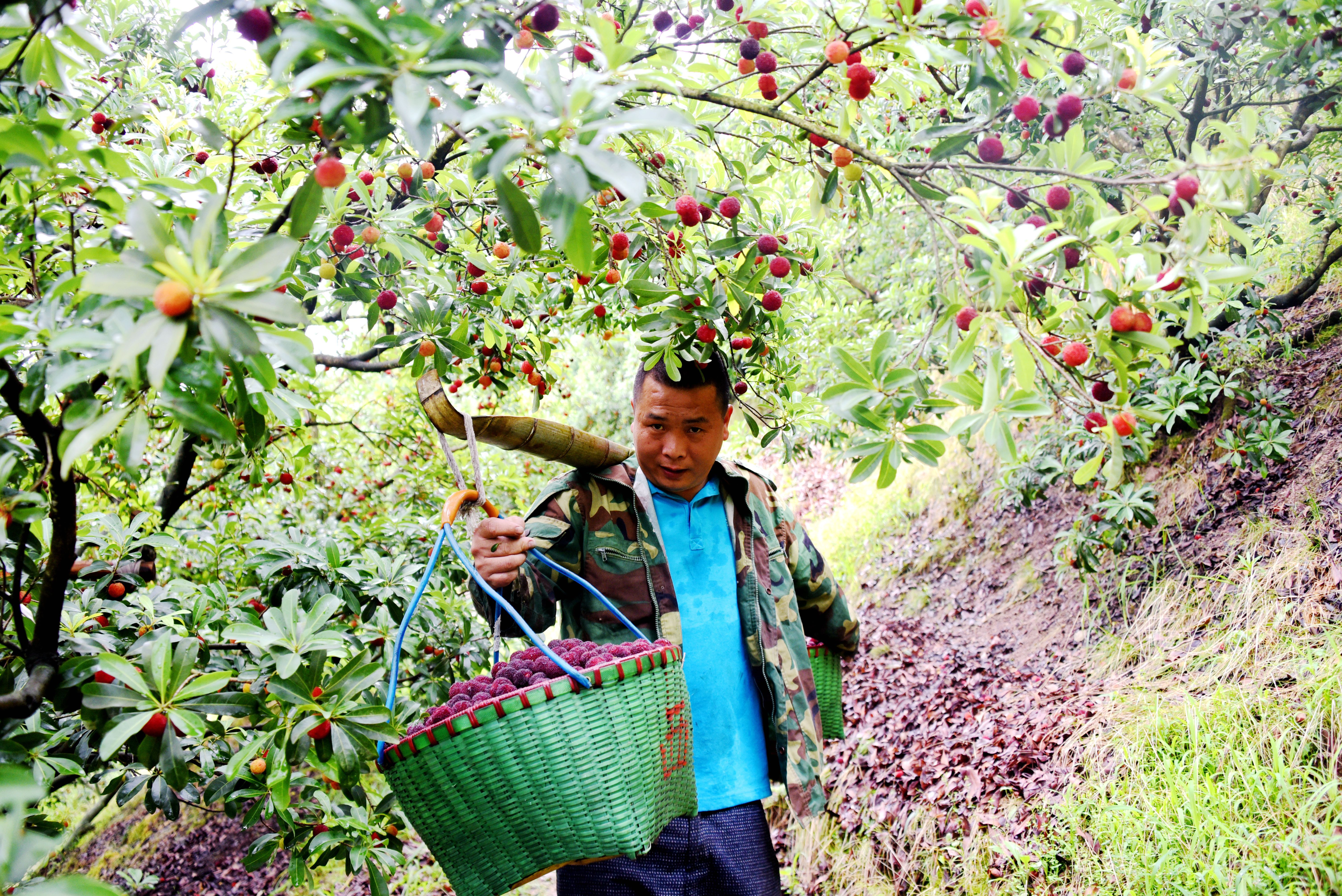
Locals in Yuyao can harvest several kilograms of yangmei in a day (VCG)
From May to July, the air is filled with the smell of yangmei. In Yuyao, the subtropical climate, the moist, organic soil, and the rainy season between spring and summer make it a perfect fit for the plums. Even the mountain mist adds a layer of mystery, further enhancing the fruit’s irresistible charm.
In June when yangmei are at their ripest, locals celebrate the harvest with a yangmei festival. Yangmei enthusiasts can hike the ancient Yuyao yangmei trail, discovering thousands of old yangmei trees and breathing the fragrant air. When hunger strikes, they can pick the fruits from the trees and compete to see who can eat the most.
When there are too many yangmei to eat, locals make them into wine. Put one layer of yangmei into a glass jar and another layer of rock sugar on top. Add layer by layer, until you reach the neck of the jar. Pour in baijiu (白酒, Chinese sorghum wine) until everything is submerged and close the lid tightly. After around 10 days, the yangmei wine is ready to consume.
Every household prepares a big jar of yangmei wine, as it is a magical cure for summer sickness. Rich in organic acids and vitamins, it can heal heatstroke, invigorate the stomach, and improve appetite on the hottest days, according to traditional Chinese medicine. Even better, it tastes sweet, sour, and utterly cool. On a summer evening, why not sip yangmei wine and give your cheeks a rosy glow in honor of this red fruit?
Related Articles