Of all China’s symbolic birds, parrots were probably Emperor Huizong’s favorite. The eighth emperor of the Northern Song dynasty (960 – 1127) even painted one in his work “Five-colored Parakeet on a Blossoming Apricot Tree.” “Heaven produced the parakeet, this unusual bird,” the emperor wrote in a poem composed about the bird he had painted. “He came as tribute to the palace from far abroad. His body has all the colors of the rainbow, making him far from ordinary. This marvelous bird sticks out its tongue and speaks in a beautiful voice. When he flies to the treetops, he seems envied by all feathered creatures.”
In Chinese poetry, folktales, and tradition, birds often symbolized certain qualities: the magpie for happiness, cuckoo for sorrow, crane for longevity, and wild goose for loyalty. But among these symbolic birds, the parrot came to be a favorite among writers and poets, in part for its ability to talk.
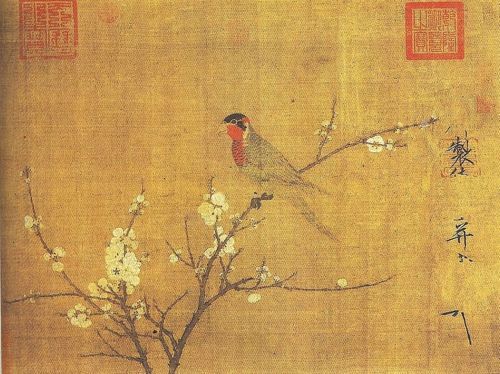
Emperor Huizong’s “Five-colored Parakeet on a Blossoming Apricot Tree,” from the Northern Song dynasty (Wikimedia Commons)
Parrots were admired as pets and for their intelligence, but they were not worshipped the same way as, for example, majestic cranes. In many works, writers expressed sympathy for the caged parrot, or likened themselves to parrots, lamenting their lack of freedom or some unrecognized talent. Since parrots can imitate human words, they were often personified in stories as if they were human characters, rather than being deified or demonized (unlike, for example, foxes, which were often portrayed as spirits).
In ancient Chinese, parrot was written as 鹦䳇, using the radicals 婴 (baby) and 母 (mother), implying they could mimic human speech like a baby learns from its mother. That has evolved into today’s 鹦鹉 (yīngwǔ). Parrots appear to have been a favorite pet since ancient times. In the tomb of Fu Hao, a well-preserved Shang dynasty (1600 – 1046 BCE) grave that was unearthed by archaeologists in 1976, researchers discovered 21 pieces of parrot-shaped jade, suggesting people back then already had parrots for company. In the Han dynasty (206 BCE – 220 CE), as China’s connections to lands to its west grew, parrots were often brought into China as tributes.

A Tang dynasty porcelain maid and parrot (VCG)
In the Eastern Han dynasty (25 – 220), scholar Mi Heng (祢衡) wrote his famous poem “Rhapsodies on a Parrot (《鹦鹉赋》),” one of the earliest Chinese poems featuring parrots on record. Mi was an infamous official who offended multiple rulers he worked under. Around the year 196 he joined the warlord Cao Cao’s (曹操) court, but was soon banished after offending him. Eventually, Mi began working for Huang Zu (黄祖), the governor of Jiangxia (in today’s Wuhan). At a banquet, a guest asked Mi to compose a poem for his pet parrot.
Mi wrote the long and winding ”Rhapsodies” poem, beginning by outlining the bird’s intelligence and talent, then lamenting how nobles had ordered its capture. The bird, “limited by fate, left its flock, lost its spouse, lived in a cage, and had its feathers cut.” Finally, the ever-confident Mi compared himself to the caged bird, expressing his frustration as a man of great talent forced to work according to the narrow orders of various leaders.
Not long after his poem, Huang had Mi killed. He was buried on an islet in the Yangtze River, which became known as “Parrot Island” in memory of Mi.
Mi inspired poets for centuries to come, with parrots showing up more frequently in new works. In the Complete Tang Poems (《全唐诗》), a vast collection of around 49,000 Tang dynasty (618 – 907) poems, over 100 featured parrot themes. For example, Bai Juyi’s (白居易) “Parrot” described how: “People deeply love the parrot’s ability to speak; while the bird can’t let go of the memory of flying,” showing his pity for the bird’s fate.
However, parrots also gained a reputation for gossiping. The bird could easily give away one’s secrets if they weren’t careful. Another Tang writer Zhu Qingyu (朱庆馀) described women living in the imperial palace in “A Palace Poem”: “Pensively, they want to talk about matters in the palace; But remain hushed in front of the parrots.” Zi Lan (子兰), yet another poet of the Tang dynasty, even directly blamed the bird for gossiping in his work, also titled “Parrot”: “Recently, the bird began to understand human words; and tell tales in its golden cage.”
Sometimes, parrots made valuable contributions. In Anecdotes of the Emperor Xuanzong of Tang (《开元天宝遗事》), a book finished during the Five Dynasties period (907 – 960), author Wang Renyu (王仁裕) recorded how a parrot turned in two murderers. Yang Chongyi, a rich man living in the capital Chang’an (today’s Xi’an), was killed by his wife, surnamed Liu, and her lover, Li Yan, who dumped Yang’s body into a well. The authorities searched for Yang but turned up nothing, and had no leads for his disappearance. Until one day, when the governor revisited Yang’s home, Yang’s parrot suddenly flew down onto the governor’s arm and squawked: “Liu and Li killed my owner!” The governor interrogated Liu and Li, who both confessed.
The case was reported to Emperor Xuanzong, who was so enamored by the parrot’s loyalty that he adopted the bird and gave it a title—“Green-Coated Messenger (绿衣使者).”
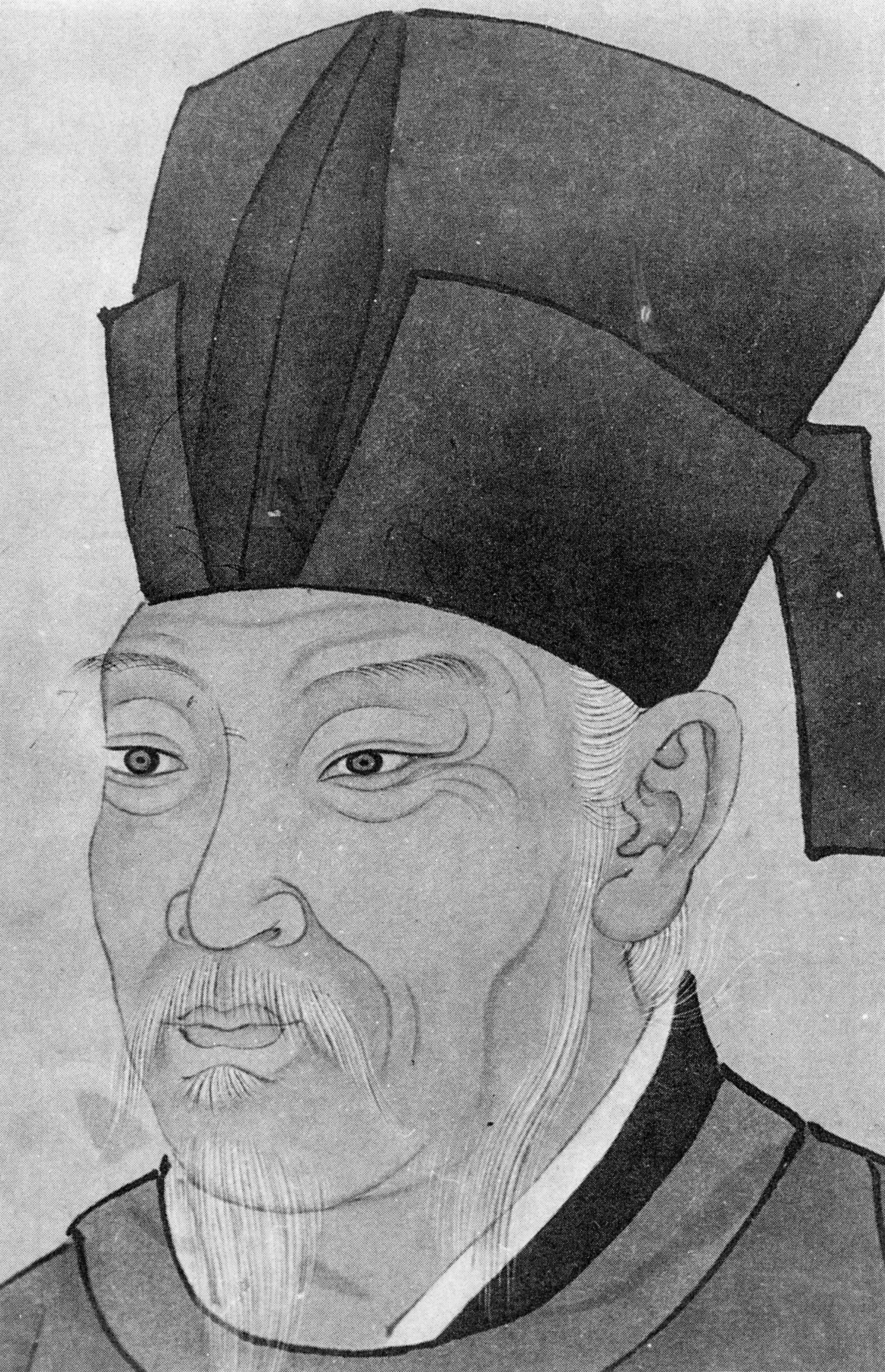
A portrait of renowned Tang dynasty poet Bai Juyi (白居易) (VCG)
Another popular folktale tells the story of “Prime Minister Parrot” who supposedly advised Emperor Ping of the Han dynasty. Emperor Ping took the throne when he was just 8 years old, and became fond of his pet parrot. In fact, the parrot could not only speak, but was intelligent, more so than his ministers, the young emperor thought, so he named it the prime minister and consulted with it on matters of state.
The child-emperor faced many dangers from ambitious officials, including Wang Mang, a nephew of the emperor’s grandmother, and whose daughter the young emperor had already married. When Wang became ill, the emperor wished to visit him, failing to see his duplicitous nature. Prime Minister Parrot implored: “the emperor must not go! Wang Mang is a treacherous villain…it is probably a trap!” But Emperor Ping ignored his feathered official’s advice, and as soon as he entered Wang’s residence, the rebel’s troops attacked and killed him.
Wang also hoped to use the intelligent parrot as an adviser, but when he took the throne, he found the prime minister wouldn’t utter even one word until the bird blurted out: “You are a beast with a human face, you killed the king and usurped the throne…it will not end well for you!” The furious Wang pulled the feathers out of the parrot’s body one by one, and tossed him out of the palace.
The poor prime minister hid in a shrine until his feathers grew back. When he could fly again, he spent his days traveling across the country spreading the word that Wang was a treacherous usurper, eventually helping spur the rebellion that toppled Wang 16 years later.
Parrots were also often associated with benevolence and loyalty. In Qing dynasty (1616 – 1911) writer Zeng Yandong’s (曾衍东) short story “Farewell to the Parrot,” the bird was a loyal friend. In the story, a poor scholar surnamed Li spends a year teaching his beloved pet parrot to sing, but when a local official hears of his talented bird, he orders Li to sell it to him. Li was distraught, and the official elated with his new pet. The official held a vast banquet the next day, bragging that the parrot would sing to his guests all night. He ordered the musicians to strike a tune and commanded the parrot to sing. But the bird only looked forlorn and remained silent. Not only that, but the heartbroken bird refused to eat, and a few days later passed away. A sad way to go for many an emperor’s treasured pet.
Related Articles