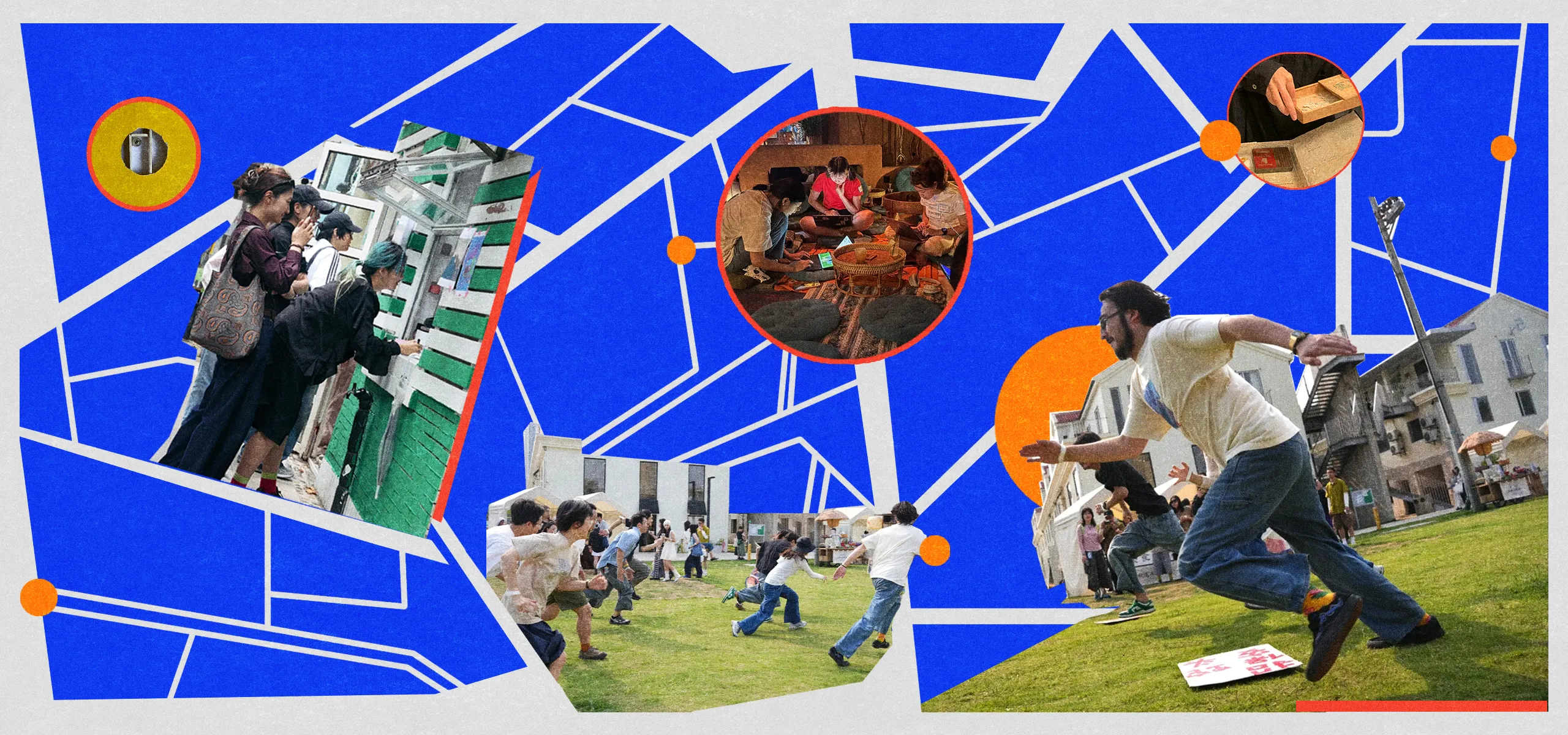

Pushing back an increasingly online world, Shanghai art-game collective “rect repair” wants people to put down their phones and rediscover life in the city
On a sunlit May afternoon in the coastal city of Ningbo, laughter drifts across a wide grassy field where a group of adults stands facing one another in charged poses, bodies leaning forward, one arm thrust out as they prepare to throw rock, paper, or scissors. These city dwellers have set aside their routines to play a reimagined version of the childhood game called “Rock, Paper, Scissors Run,” where two teams, after throwing their signs, burst into a sprint for a round of tag-like chasing.
Amid rekindled childhood memories, the organizers posed a bittersweet question to the participants: “How long has it been since you last played freely like a child?”
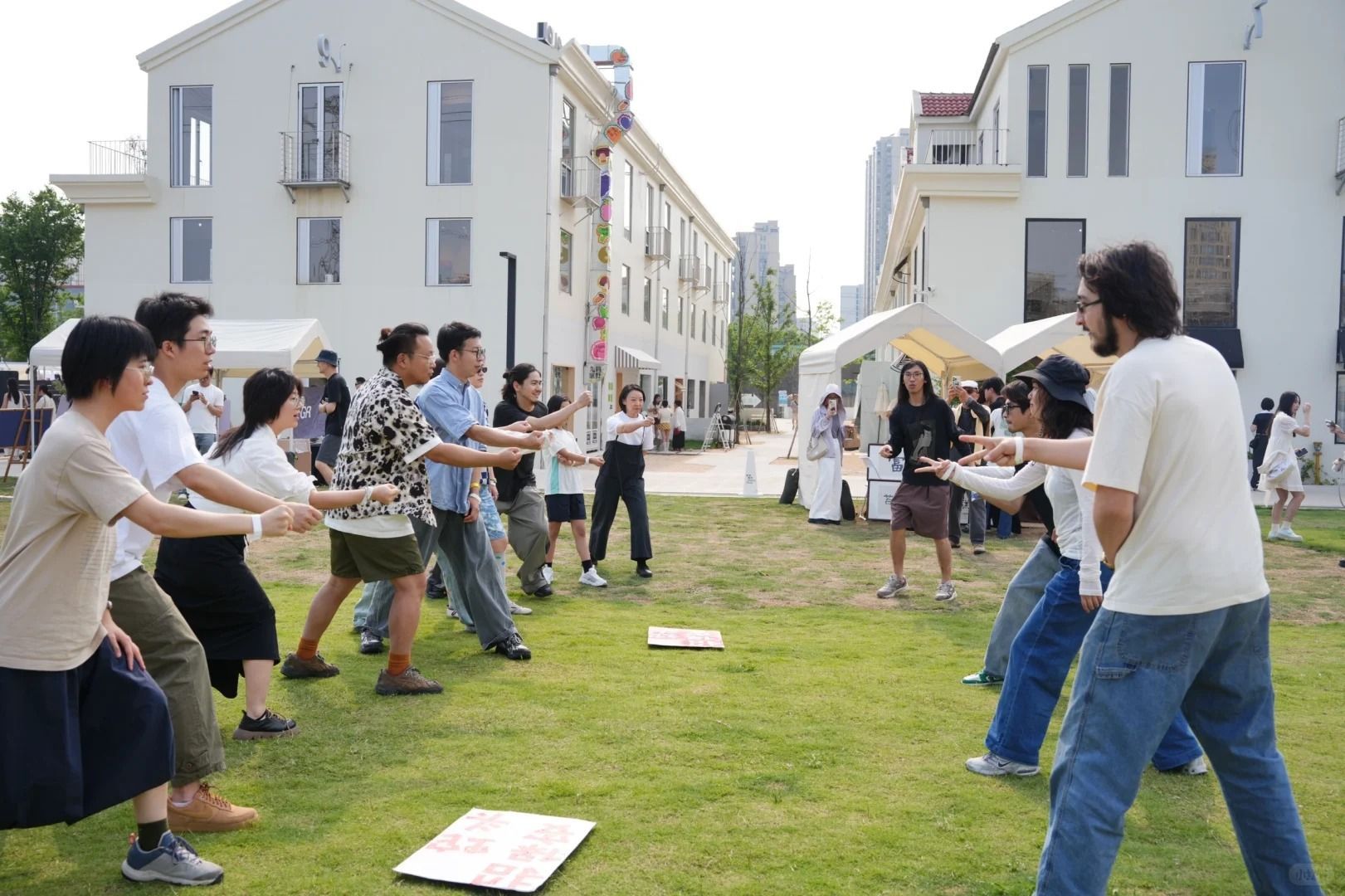
Art game collective rect repair’s “Rock, Paper, Scissors Run” attracted participants at a spring market in Ningbo in 2025 (HAO.A)
This is just one of the many events that the Shanghai-based art collective [[rect*]]repair (hereafter “rect repair”) has organized since its founding in 2024. The organization aims to lure participants away from their phones and computers and bring a sense of play back into the real world through a series of creative games in public spaces, forcing urbanites to reengage with their own bodies and heal mental fatigue.
Real-world games
The games created by rect repair generally draw inspiration from traditional games with a fun twist. For Joanna Lyu, co-founder of the collective, these games were not about simple nostalgia or longing for a pre-internet past. On the contrary, they were a direct response to the acceleration of technological change.
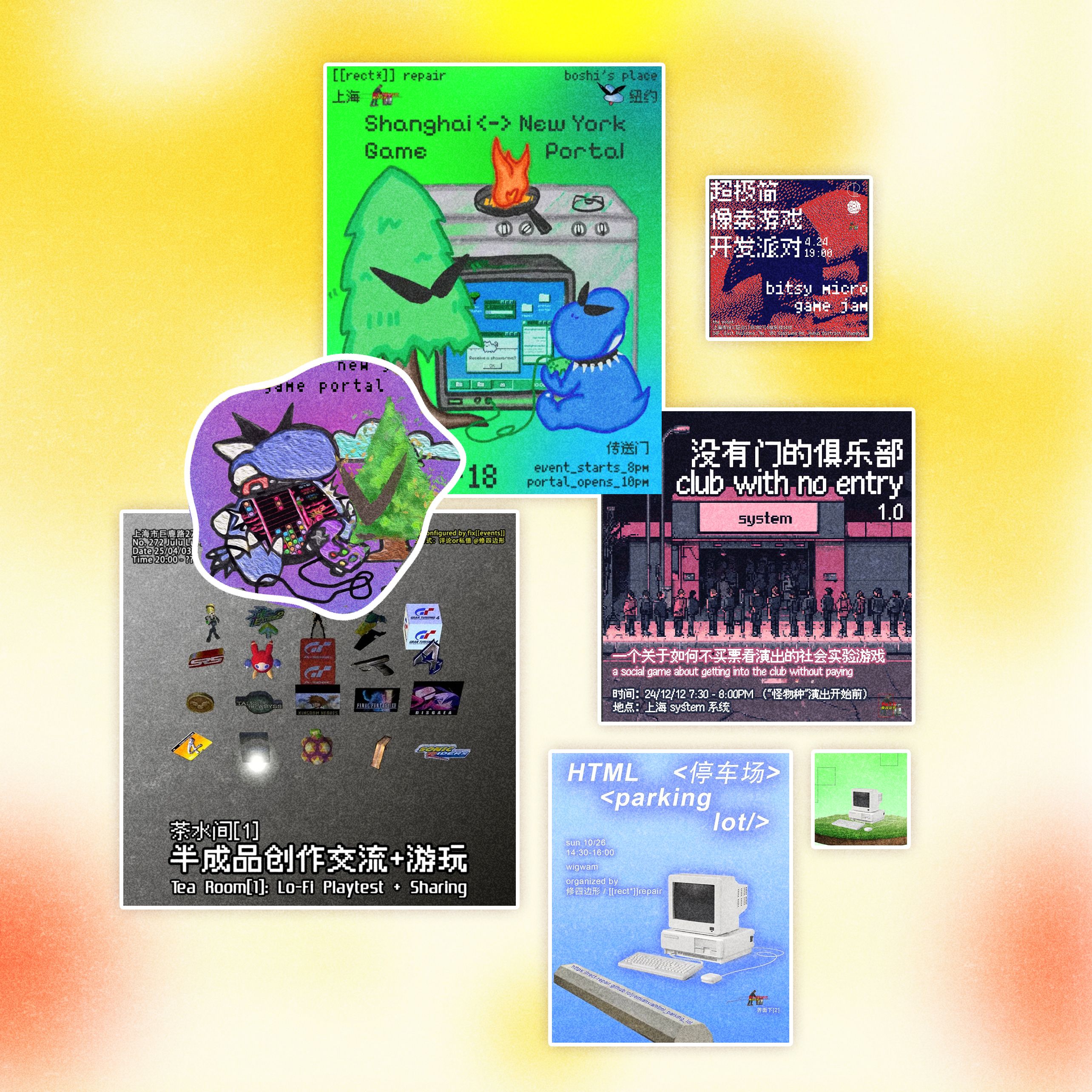
The art game collective’s event posters often feature old tech and other nostalgic aesthetic elements (courtesy of rect repair)
“There is a gap between the futures we imagined and the one we ended up with. People used to picture flying cars, but instead, we got an ever-expanding array of social media,” says Lyu.
As the world turns inward and borders tighten, and as digital spaces fill with AI misinformation and polarizing noise, she says this kind of play—real people, together, face to face—feels more necessary than ever.
Co-founder and game designer Zhang Tianqi adds that the original impulse behind organizing public games was simple: they’re fun, and they wanted to play themselves. They figured, why not take two hours to step away from electronic devices, breathe the fresh outdoor air, and play like a child with a group of friends?
Repairing modern cities
Another aim of rect repair’s reflection-through-play approach is to inspire analysis of modern urban life. Their unconventional name looks to capture this, embodying the group’s wish to deconstruct and rebel against modern urban culture. “In the city, the rectangle is the most common shape. Doors and windows, building facades, streets and urban layouts, even electronic devices like phones and computers, all are rectangular,” Zhang explains, “rect repair aims to mend all these orderly, rigid aspects of the city.”
The collective developed a series of urban exploration and puzzle-solving games between 2024 and 2025 called “Shanghai Encounter,” inspired by the Polish game design collective Departament Gier’s “Encounter” nighttime treasure hunts. In these games, rect repair encouraged players to look for “treasure” around the city’s ruins and forgotten corners, such as unfinished buildings and a repurposed factory-turned-urban park. Amid the urban development’s relentless pursuit of efficiency, Zhang describes how these ruins, which they call “negative space,” originally an architectural term, exist in limbo. Take an overpass as an example: the bridge’s platform is considered “positive space,” while the unused area beneath is deemed “negative.”
“In everyday use of the city, people are often unaware that these spaces even exist. For us, that moment of discovery is at the core of the game’s design,” explains Zhang.
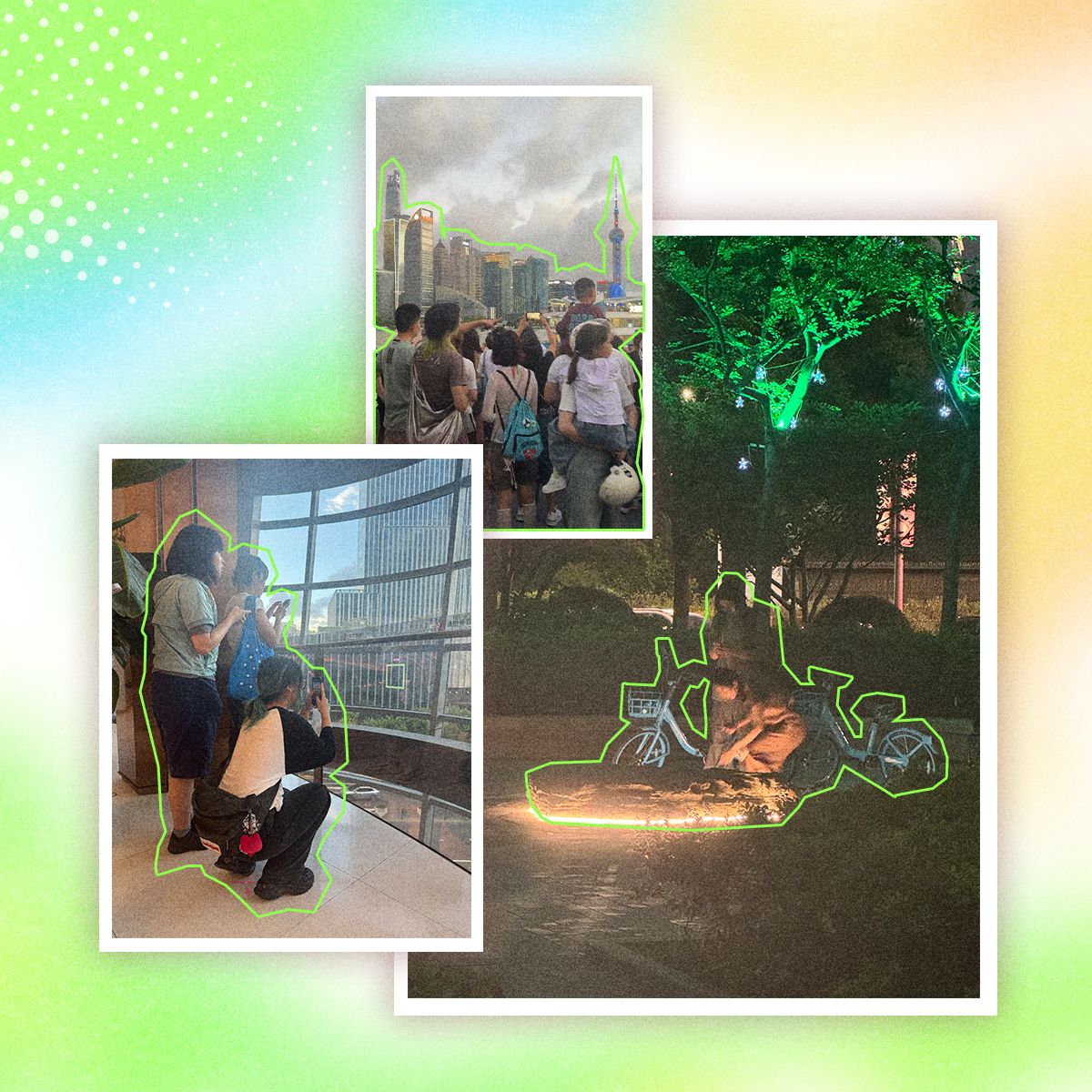
Players searched for clues in various corners of the city during “Shanghai Encounter 2.0” last July (courtesy of rect repair)
Ouchen Gaoge, a 26-year-old advertising photography director, participated in a “Shanghai Encounter” game in December 2024. “We biked hard along the river in Shanghai, solving puzzles as we went. The mix of physical, mental, and reflex challenges was perfect for me,” Ouchen recalls. “I remember the first puzzle required us to take the subway to a destination, then switch to shared bikes to explore the neighborhood. When we arrived, everyone rushed out, and it was overwhelming to see all the bikes at the exit disappear in the blink of an eye.”
Ouchen first learned about rect repair through a street tag game, where players find hidden checkpoints and tag others while covering their own tracks. “I often attend more ‘refined’ events, like book launches and exhibitions, but this was my first time participating in something so intense. Though it was in the same neighborhood, the experience was completely different,” says Ouchen. He has participated in four different game events so far, initially as a participant and later volunteering as a photographer and an NPC (non-player character).
Deconstructing a dilemma
The expansion of gamespace from the virtual to the real world has been a growing trend in recent decades, fueled by the rapid development of communication and mobile technologies. Known as pervasive games, these games use real-world locations for players to achieve in-game goals; notable examples include Pokémon GO and Geocaching. According to the 2009 foundational book on the genre, Pervasive Games: Theory and Design, such games encourage players to move through physical spaces embedded with digital content, interact with other players, and explore their environment in unexpected ways, forming an immersive experience.
To Lyu, pervasive games could transform the “magic circle”—a game term denoting the boundary between the game world and the real world—from a barrier into a membrane. “Let game and life bleed into one another, so that the game becomes infused with the reality of life, and life becomes charged with the meaning of the game,” she says.
Guided by this vision, one of rect repair’s recent game projects uses a playful, immersive experience to explore the rise of AI and its side effects. “The Reality Restoration Project, Kyoto,” launched last October and ran for five days, inviting local diaspora and Chinese travelers to explore the Japanese city in person. Using Google Maps, the team constructed an imagined vision of Kyoto in the future, including real streets, historic sites, monuments, and even the weather in forms of text and graphics. Players are then presented with the premise: “What if in the year 2125, after the Second AI War, artificial intelligence has completely replaced human experiences of real life? How would you repair your memories?” With instructions and NPCs, the three-hour game guides players around the streets, temples, and mountains of Kyoto, while they take special notice of the shops, signs, and even topographical features—clues that can be used to restore the “real,” physical world of Kyoto versus the AI-generated “fake memory.” The game challenges players to become more aware of, and learn to discern, the increasing number of AI-generated falsehoods in everyday life.
While noting the impact of technology and advocating the return to the real world, rect repair isn’t opposed to technology itself. The collective’s three core members—Zhang, Lyu, and Huang Yuemin—all come from computer science and game design backgrounds. To Huang, these games are meant to foster reflection on the current “high tech, low life” conditions.
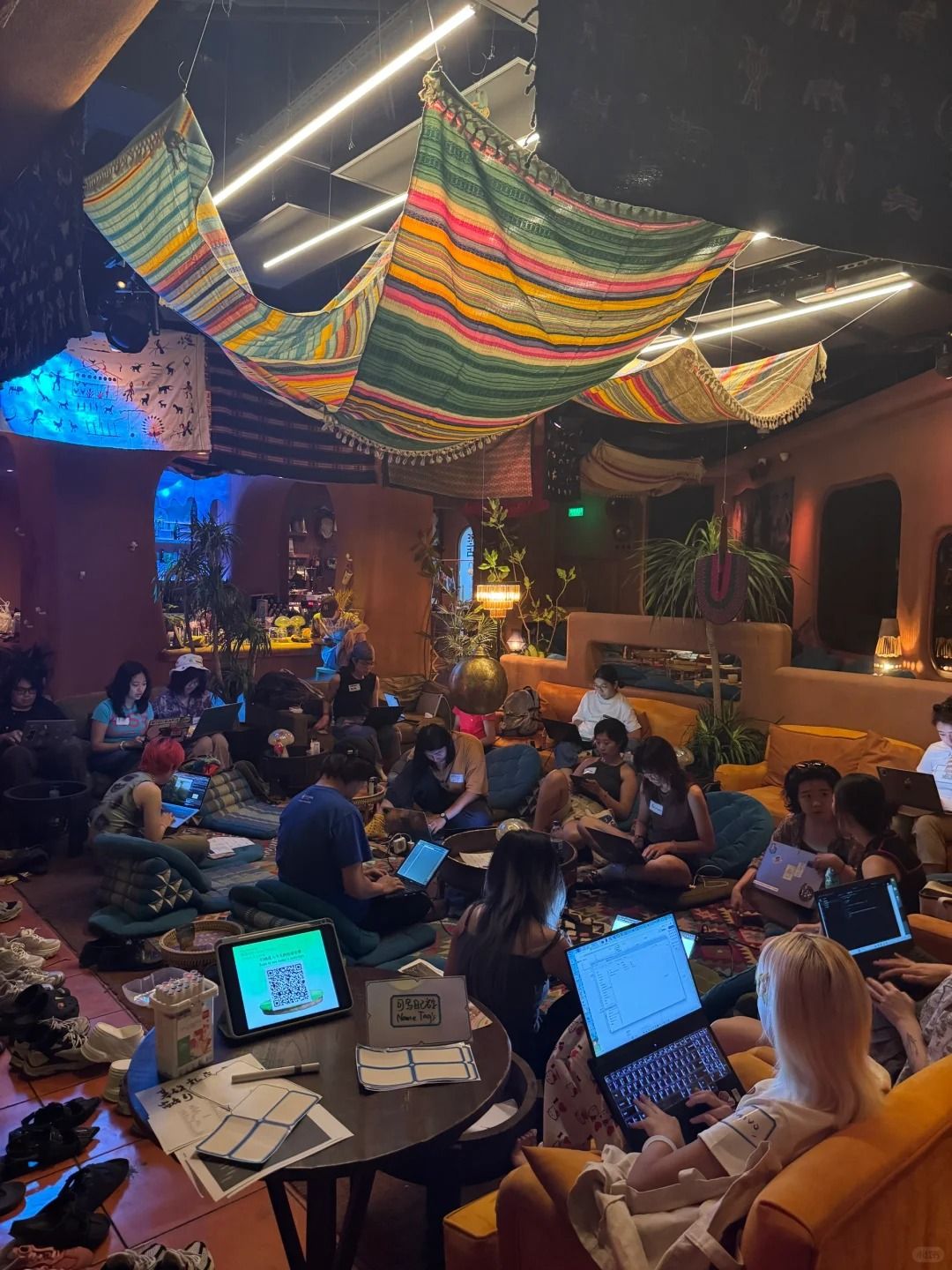
A web-writing event in Shanghai organized by the collective on HTML Day in August 2025 (courtesy of rect repair)
Besides real-world games, the team also runs coding workshops, often built around creative themes that challenge the notion of programming as a tedious, solitary pursuit.
“When I teach people how to design a webpage, for instance, I encourage them to envision it as an ocean or a starry sky, blending technology with sensory experience to inspire creation and imagination,” says Huang.
One tactic they have used is to hold these workshops in parks or bars, and for people who stumble upon one, they might be forgiven for thinking they had walked into a party. These offbeat events seek to create new forms of public engagement in the digital age.
While rect repair’s events attract far fewer players than China’s major online games, their value lies in their authenticity. Now, the team has registered as a game design company and is exploring pathways to commercialization and sustainable operations.
Game participant Ouchen finds such games refreshing in big cities like Shanghai, and hopes to attend more events in the future whenever he can. He finds that, despite the city’s rich cultural and artistic resources and relatively relaxed atmosphere, people are often preoccupied with work.
“In Shanghai, every minute has economic value, and when you go out, you always need to have a purpose,” says Ouchen, who recalls his hometown in the central-southern province of Hunan, where one could casually call up a friend and spend the day together. Participating in rect repair’s events gives him a taste of that rhythm again. “I just feel that, like in childhood, studying the rules, thinking, running, exploring, and discovering—these things bring me great joy.”
Related Articles