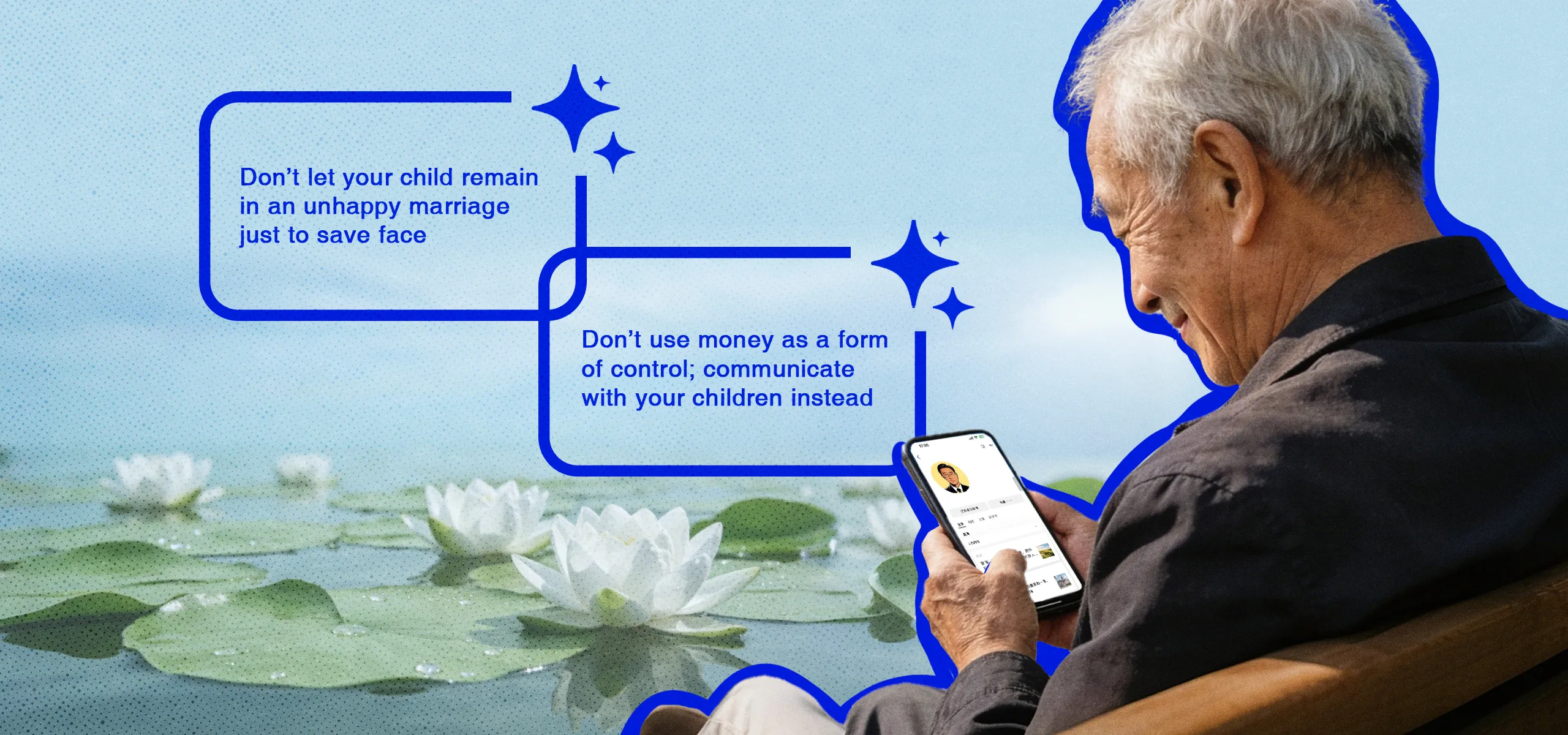

Chinese millennials have found an unlikely ally: an AI-generated elder who preaches what they can’t
As of late, a kindly smiling “expert” with gray hair and silver-rimmed glasses has overrun the WeChat Moments of many Chinese parents. On the surface, the man, surnamed Zhao, appears to be the earnest operator of an account titled “Lao Zhao Talks Sense (老赵讲道理 Lǎo Zhào jiǎng dàolǐ),” where he frequently publishes articles with striking, sensational headlines. Some recent examples include:
Exposed! The most comprehensive roundup ever of dozens of scams targeting middle-aged and elderly people! Forward this to your family now!
曝光!史上最全的几十种针对中老年人的骗局套路大揭秘!快转发给你的家人!
Or
I’ve spent more than 30 years in the education field—I’ve seen far too many parents educate their children the wrong way
我在教育行业摸爬滚打了三十余年,见过太多家长用错误的方式教育孩子
These posts—peppered with “sunset style (夕阳红 xīyáng hóng)” images of lotus flowers and scenic landscapes, and featuring large fonts with abundant underlining for emphasis—tend to resonate with older readers, striking an emotional chord and prompting widespread sharing. In just two months, his account maintained an astonishing output of four to six posts per day—including nine viral articles each surpassing 100,000 views—gained over 200,000 followers, and has repeatedly appeared on the trending list of the microblogging platform Weibo.
Lao Zhao’s profile is also crafted to win parents’ trust: he is the recipient of high-profile awards, including Time magazine’s 2006 Person of the Year and Special Prize of the 2008 Moving China Awards (the real recipients being “You” and the entire Chinese population). He also claims to have “helped millions of parents build bridges of communication with their children (帮千万家长建立亲子沟通的桥梁 bāng qiānwàn jiāzhǎng jiànlì qīnzǐ gōutōng de qiáoliáng).”
It may come as a shock then that Lao Zhao is, in fact, an AI-generated persona created by a millennial woman from Chongqing—making him a “hand-molded” fake expert (“手搓”假专家 “shǒucuō” jiǎ zhuānjiā). While his content is packaged as a source of “life guidance” for older generations, Zhao serves as a vessel for genuinely progressive ideas. Via his posts, we learn that he opposes marriage pressure, encourages science-based approaches to health, advocates mutual respect, and discourages PUA-like control tactics. Related posts include:
Don’t let your child remain in an unhappy marriage just to save face
别为了面子,让孩子在不幸婚姻里熬一辈子
And
Don’t use money as a form of control; communicate with your children instead
不要用钱压人,要与孩子好好沟通
These are sentiments younger generations will recognize immediately. When trying to convince their elders of why they might want to live a different way, they often face sweeping claims like “It’s for your own good (我都是为你好 wǒ dōu shì wèi nǐ hǎo),” or have their objections dismissed with so-called “expert” articles—often unsourced, low-quality content designed to drive clicks or sell products—with preachy titles like:
Shocking! Never eat these vegetables!
震惊!这几种蔬菜千万别吃!
When counterarguments prove futile, young people have finally found a fitting way to strike back: articles from the revered “Professor Zhao,” hailing him as 年轻人的真专家 (niánqīngrén de zhēn zhuānjiā, a true expert for young people), or simply their 赛博嘴替 (sàibó zuǐtì, a cyber mouthpiece). Forwarding Lao Zhao’s posts has come to be known as 魔法对轰 (mófǎ duìhōng) or “fighting magic with magic.”
Professor Zhao, you’re the perfect “digital bomb” for me to drop into the family group chat.
赵老师,你是我不可多得、往家族群里扔的电子炸弹。
In addition to sharing Lao Zhao’s posts with their families, young followers help bring his persona to life by commenting as “beneficiaries” who describe how profoundly his advice has helped them. These testimonials—often over the top, hinting at their fabrication—nonetheless bolster his authority, creating the impression that he truly exists as someone who has healed countless strained families.
While I was studying in the UK, I had the privilege of attending one of Professor Zhao’s offline lectures. After more than eight years, his teachings remain words of brilliance—forever a guiding light on my path of learning!
我在英国上学期间曾有幸听过赵老师的线下讲座,这一晃已八年有余,赵老师的教诲如同月章星句,永远是我求知的明灯!
Other comments take on parents’ voices:
After reading this, I feel deeply saddened. It turns out that my way of educating my child has been wrong all along. Thank you to the expert for waking me up in time!
看完之后好心酸,原来我一直以来的教育方式都是错的,谢谢专家让我及时醒悟!
And as older internet users often do, young readers plaster the comments section with rose and smiley face emojis—with a healthy dose of sarcasm.
Following Lao Zhao’s rise in popularity, similar “cyber spokespersons” have begun to emerge, such as “Grandma Wang Doesn’t Nitpick (王姥不挑理 Wáng lǎo bù tiāo lǐ)” and “Lao Li Talks Things Through (老李讲事 Lǎo Lǐ jiǎng shì).”
However, in an ironic twist, copycat accounts began appearing across social media, impersonating Lao Zhao in an attempt to cash in on the trend by selling parenting courses and health supplements to unsuspecting users—ultimately leading to the original Lao Zhao being banned on Douyin after a customer complaint.
For young people who sometimes struggle to communicate with their parents, Lao Zhao serves as a playful, collective nudge, encouraging parents to see things from their children’s perspective. But in the age of AI, it is becoming increasingly difficult to discern what—or whom—to believe. Even well-meaning humor now comes with a warning: you might be fooled more easily than you think.
Related Articles