

As concerns grow over the decline of China’s intangible cultural heritage, young inheritors, veteran artisans, and enthusiasts are finding new ways to revive traditional crafts and connect with a modern audience
While riding the Beijing subway, Lang Jiaziyu pulls a small piece of dough from his red tote bag and rolls it between his fingers. Within minutes, the lump takes shape, not as a Peking opera character or a decorative animal—usual shapes one might expect from this craft—but as a tiny cow and horse in neckties. The playful figures are likely to resonate with young commuters nearby, some of whom have taken to calling themselves “work oxen and horses,” emblems of the grueling, modern-day office culture. For Lang’s millions of followers online, the scene is a witty blend of centuries-old folk craft and internet-born slang.
Read more about traditional crafts in China:
- Traditional Crafts Went Viral in China’s Wilderness Survival Contest
- Training the Next Generation of Tibeta Thangka Artists
- Keeping Alive the Ancient Craft of Natural Dyeing
For the 31-year-old, this fusion of traditional craft, known as mianren (面人), literally “flour people,” and pop culture comes naturally. “Dough figure making is my way of expression,” Lang tells TWOC. “It’s a way for me to make something I personally enjoy, while also connecting with what other people know and love.” On his social media, dough figures inspired by the 2024 action role-playing game hit, Black Myth: Wukong, viral emojis, the fantasy animation, Yao-Chinese Folktales, and Labubu designer toys regularly draw thousands of views.
His efforts reflect a wider shift nationwide. As rapid industrialization and mass production have reshaped consumption, many intangible cultural heritage (ICH) practices are struggling to keep pace, especially labor-intensive crafts that are tricky to scale or commercialize. In China, home to more than 40 UNESCO-listed ICH, from paper-cut to shadow puppetry, many face an uncertain future as artisans age and audiences shrink. In response, young inheritors, veteran craftspeople, and enthusiasts are exploring new ways to revive these time-honored arts, including incorporating popular memes, recruiting new learners through social media, and redesigning crafts for modern consumers.
When memes meet heritage
For a new generation of “cultural inheritors,” pop culture has become a bridge to relevance. Many, like Lang, are turning to trendy online aesthetics to revive traditional arts and connect with a younger audience. By helping these crafts shed their stereotypes of being outdated or inaccessible, these innovative inheritors are making artistic legacies more visible, relatable, and engaging.
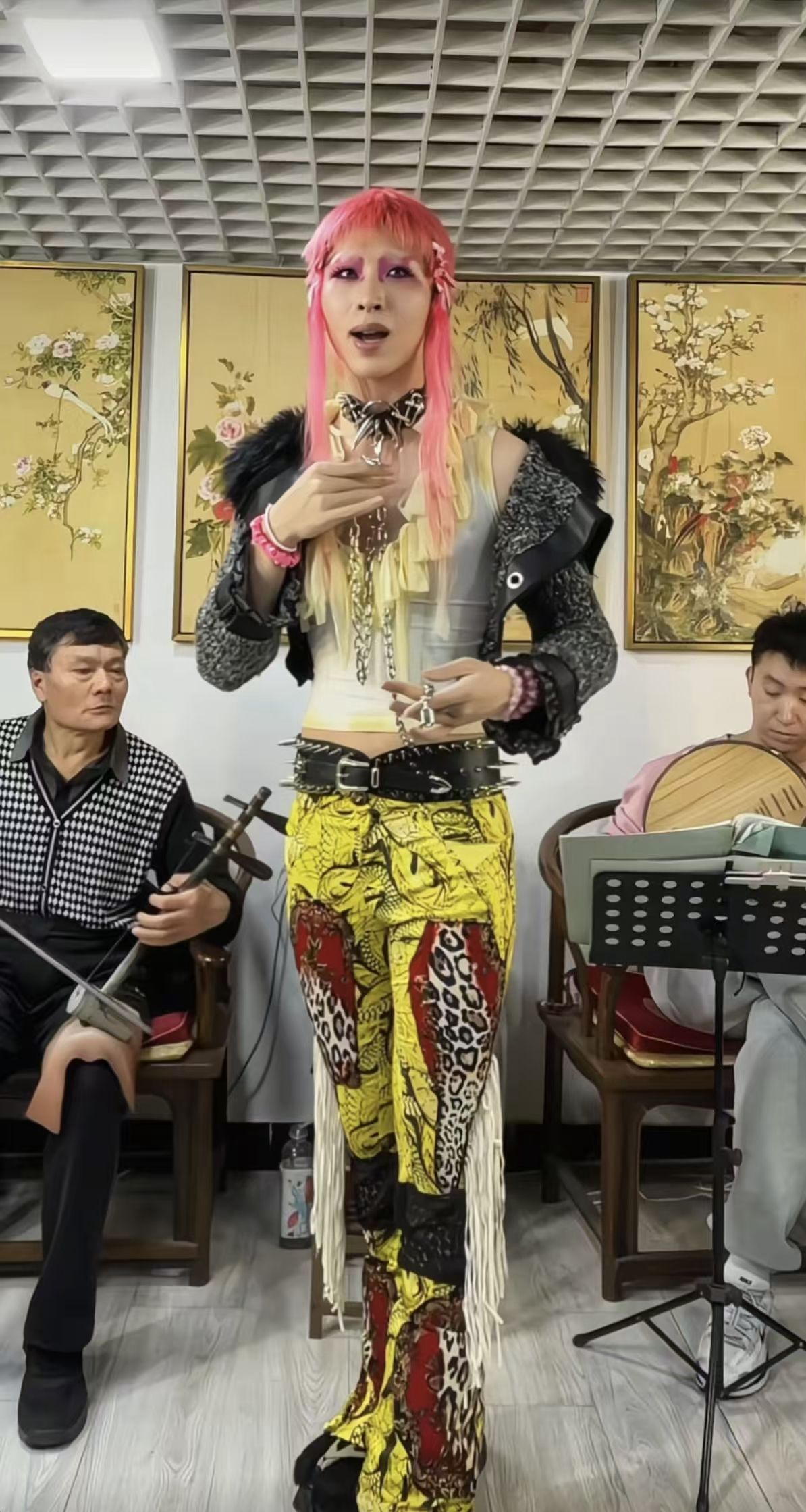
College student and Peking opera enthusiast Kaka went viral for his flashy goth look and resonant Peking opera performances (Screenshot via @Kaka on TikTok)
One such purveyor blends Peking opera with gothic punk aesthetics. In one widely shared video on streaming platform Bilibili posted in January, the Beijing-based college student performs The Beheading of Chen Shimei (《 铡美案》)—its protagonist a byword for male infidelity since the Qing dynasty (1616 – 1911)—in platinum-blonde hair, dark eye makeup, a sheer top, leather miniskirt, stockings, platform heels, and a studded choker. The video earned more than 780,000 views, with many praising his style as “heavy metal Peking opera.” In Shaanxi, Dang Feihua, a shadow play inheritor in his 20s, has incorporated everything from MBTI to zombies and Ultraman into his performances, drawing praise from netizens as well as state media. Meanwhile, artisan Yueyue from Guizhou has reimagined the centuries-old jewelry craft diancui (点翠)—traditionally adorned with iridescent kingfisher feathers—into unconventional designs, including cockroach-shaped brooches featuring dyed goose feathers, selling hundreds within months.
Young Chinese are increasingly embracing the reinvention of heritage crafts. A November 2025 survey by China Youth Daily found that over 90 percent of 1,500 respondents born between 1990 and 2009 believe incorporating youth culture into traditional disciplines makes them more appealing, while 86 percent hope to see more of these reinterpretations.
Lang believes innovation is essential to keeping traditional crafts alive. The real challenge today, he argues, isn’t skill but fading attention. “When audiences dwindle, the market appeal disappears,” he says. “Then fewer people want to learn it.”
Some, however, worry that excessive entertainment risks reducing living traditions to mere clickbait. For Lang, innovation doesn’t contradict tradition. “What exactly is tradition?” he asks rhetorically. “It was once simply what was mainstream in its time—and that’s how new traditions are born.” Whether preserving or reinventing, he says, the goal is the same: winning over the audience.

Dough figure artist Lang Jiaziyu’s work based on the popular Japanese anime Slam Dunk—a childhood favorite of the post-80s and 90s generations (VCG)
At the same time, Lang also works to preserve the past. To do so, given the fragility of dough figurines, he and his team have in recent years turned to digital tools. Since 2023, with support from a national fund, they have digitized over 100 works, including century-old pieces once made by his grandfather. Through 3D modeling and immersive exhibitions, Lang hopes to present the craft through various media. He estimates more than half of the visitors to the exhibition are young people who first encountered their work online.
Reaching new learners
While younger inheritors are exploring new creative directions, veteran artisans are also finding their own ways to adapt. In recent years, many have moved beyond the traditional master-apprentice model, offering workshops and short-term training programs to reach a wider audience and train new talents.
For Huang Xiaoming, a 61-year-old master of wood carving from Dongyang, Zhejiang province, change is a necessity. “For the craft to be passed down, it first has to survive,” he tells TWOC. With a history of over 1,300 years, Dongyang wood carving was long renowned for its exquisite design and wide application in architecture, statues, and furniture. With more than four decades of experience in the craft, Huang says tradition doesn’t mean staying frozen, and sees the rise of creative content as a positive sign. “No matter how you innovate, the foundation doesn’t disappear. Take the art of face changing (popularized by Sichuan opera). Whether it’s performed by Sun Wukong or Labubu, the essence remains the same.”
To connect with younger audiences, Huang has been running a WeChat series titled “Traveling with Wood carvings” since 2015, documenting how he turns inspiration from his travels into intricate wood-carved miniatures—from everyday scenes to Antarctic penguins. Yet beyond visibility, Huang is also trying to tackle a deeper issue: the lack of young learners. Traditionally, crafts like wood carving have been passed down through regional, often family-based networks. “People would say things like, ‘Take my grandson,’ or ‘My son dropped out of school, could you teach him?’” recalls Huang, highlighting how the craft has remained highly localized.
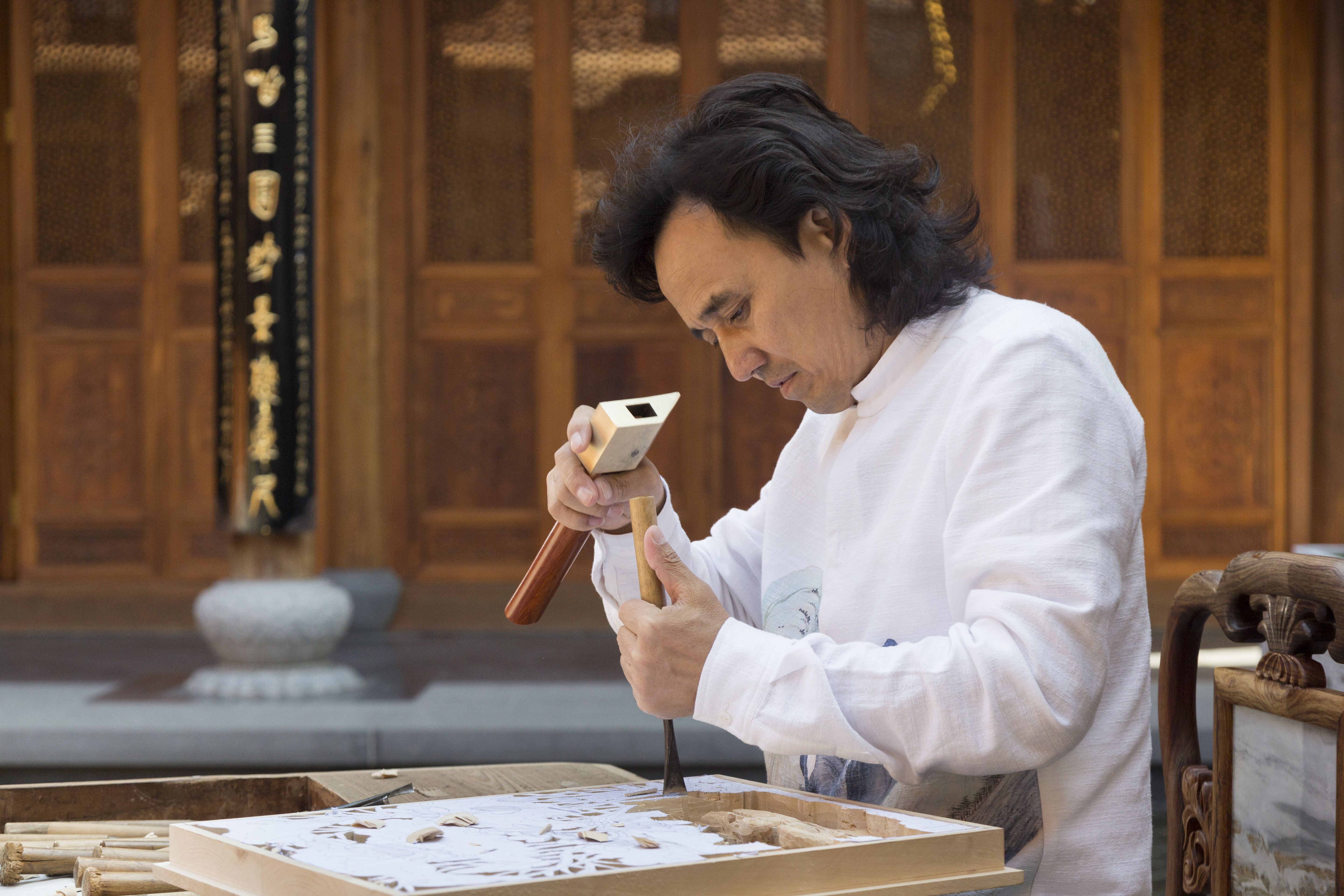
Huang Xiaoming began woodcarving at 16 and has brought a modern twist to this ancient art. He is a national-level inheritor of Dongyang woodcarving, with works collected by the Palace Museum, the National Museum of China, and others. (Courtesy of Huang Xiaoming)
In recent years, Huang has tried to break the barrier. Since 2016, he has recruited apprentices online, posting open calls and organizing regular offline gatherings for students willing to travel to Dongyang. Over the years, Huang has trained more than 30 apprentices from around the world. Even so, he acknowledges that attracting young learners remains difficult. In one of his workshops, most of the more than 40 workers are already in their 50s. “It’s hard to convince people in their 20s to learn [wood carving],” adds Huang. “The training takes years and can feel repetitive. You might study for a year, or even three, but still not see a breakthrough. In other fields, after a few months, you can already start earning.”
The challenge is not unique to wood carving. A nationwide study conducted in 2024 by the National People’s Congress Standing Committee found that the average age of national-level inheritors exceeded 65, with nearly half aged 70 or above. The report warned that the pool of inheritors is aging rapidly, with some traditions on the verge of disappearing due to a lack of young successors.
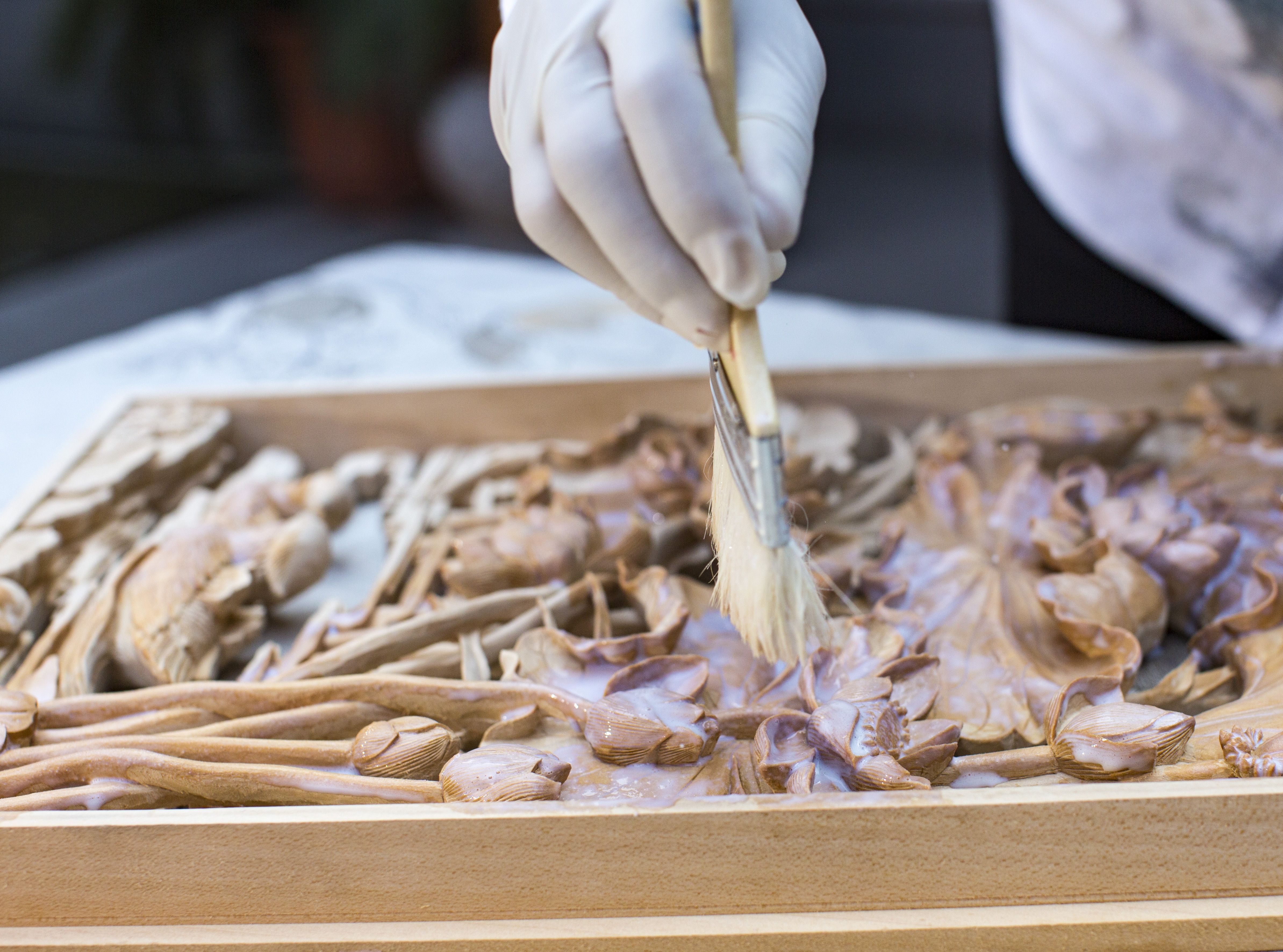
Traditional Dongyang wood carving is decorative, with a light, natural color. It doesn’t use dark paint, letting the wood’s natural grain show, giving it an elegant look. (Courtesy of Huang Xiaoming)
To keep the craft alive, Huang has expanded his efforts to schools and universities across China, offering hands-on programs and lectures. According to him, many students are encountering his techniques for the first time, and he hopes that this early exposure could spark long-term interest among younger generations. Huang has also advocated for greater policy support for young learners, petitioning local authorities in Dongyang, which in July introduced scholarships of up to 36,000 yuan for college graduates who choose to study wood carving.
Similar initiatives have been rolled out across China. In 2016, national-level ICH inheritors began receiving an annual subsidy of 20,000 yuan. The Ministry of Education has also added traditional craft lessons, such as embroidery, to vocational schools. Today, over 3,300 schools nationwide offer programs in heritage arts, along with 106 heritage training centers at universities.
Heritage translator
Following the rise of Chinese influencers like Li Ziqi, noted for her high-production-value videos of craftmaking and rustic living, a new wave of content creators has brought ICH into the digital spotlight. By learning traditional techniques and documenting and posting the process via short videos, these young creators are transforming once-obscure crafts into viral trends.
For Dai Lüxia, visibility alone isn’t enough. Driven by a passion for traditional culture, Dai and her team have spent much of the past decade traveling across China to document hundreds of ICH practices. Through filming artisans, recording techniques, and sharing personal stories online, the 30-year-old from Guizhou province gradually realized that documentation alone doesn’t guarantee survival. “You see these craftspeople with incredibly refined skills, but their income is unstable, and often no one is willing to carry on after them. These traditions could disappear any time,” laments Dai. “The best way to pass down is for people to use it,” she says, emphasizing the need to bring traditional craftsmanship back into everyday life. “Only when they become part of how we live today can they truly endure.”
Young Chinese consumers are also driving the change with a newfound interest in ICH products that incorporate pop culture elements.
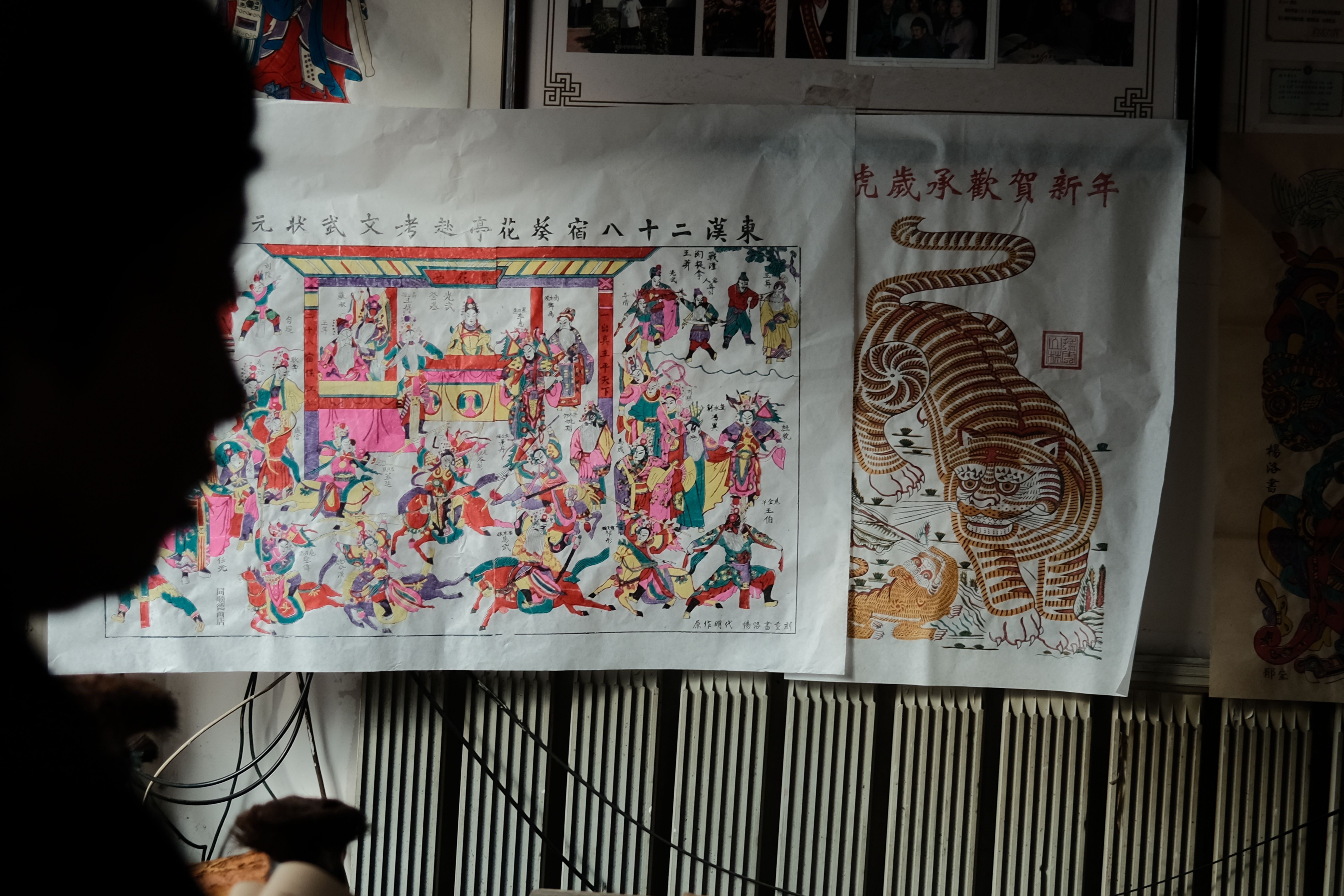
With a legacy spanning over 600 years, Yangjiabu’s traditional woodblock prints flourished in the 18th century, featuring New Year designs of auspicious symbols, local customs, and legendary tales (courtesy of Dai Lüxia)
Dai and her team are working to meet these changing tastes. In 2023, they spent approximately two months in Yangjiabu, Shandong province, working on introducing the area’s traditional woodblock printing methods to a contemporary audience. Instead of altering the techniques, they redesigned the prints as decorative wall art tied to modern themes of wealth and good fortune. “If you call it a handmade multicolor woodblock print, many people may not understand [the appeal],” explains Dai. “But if you say they’re decorative prints wishing for wealth, suddenly everyone gets it.” In that sense, Dai likens her role to that of a translator. “These crafts can feel distant to young people. What we are doing is translating them into something easier to understand and engage with.”
The results were striking. The short-video storytelling about woodblock printing and its artisans helped sell nearly 10,000 prints within two months, far exceeding the few thousand items local workshops typically sell in a year.
Yet the boom in ICH products has also raised concerns. Dai worries that excessive online exposure and commercialization could compromise the cultural value of the same crafts she’s attempting to keep alive. Some artisans, she notes, may receive up to a dozen filming requests in a single day, yet the attention doesn’t always translate to tangible benefits. “Many of these videos bring traffic, but not real change,” she says. While creators may gain followers or advertising opportunities, the artisans themselves often see little improvement in their livelihoods. As a result, Dai says some have begun declining both interviews and filming requests.
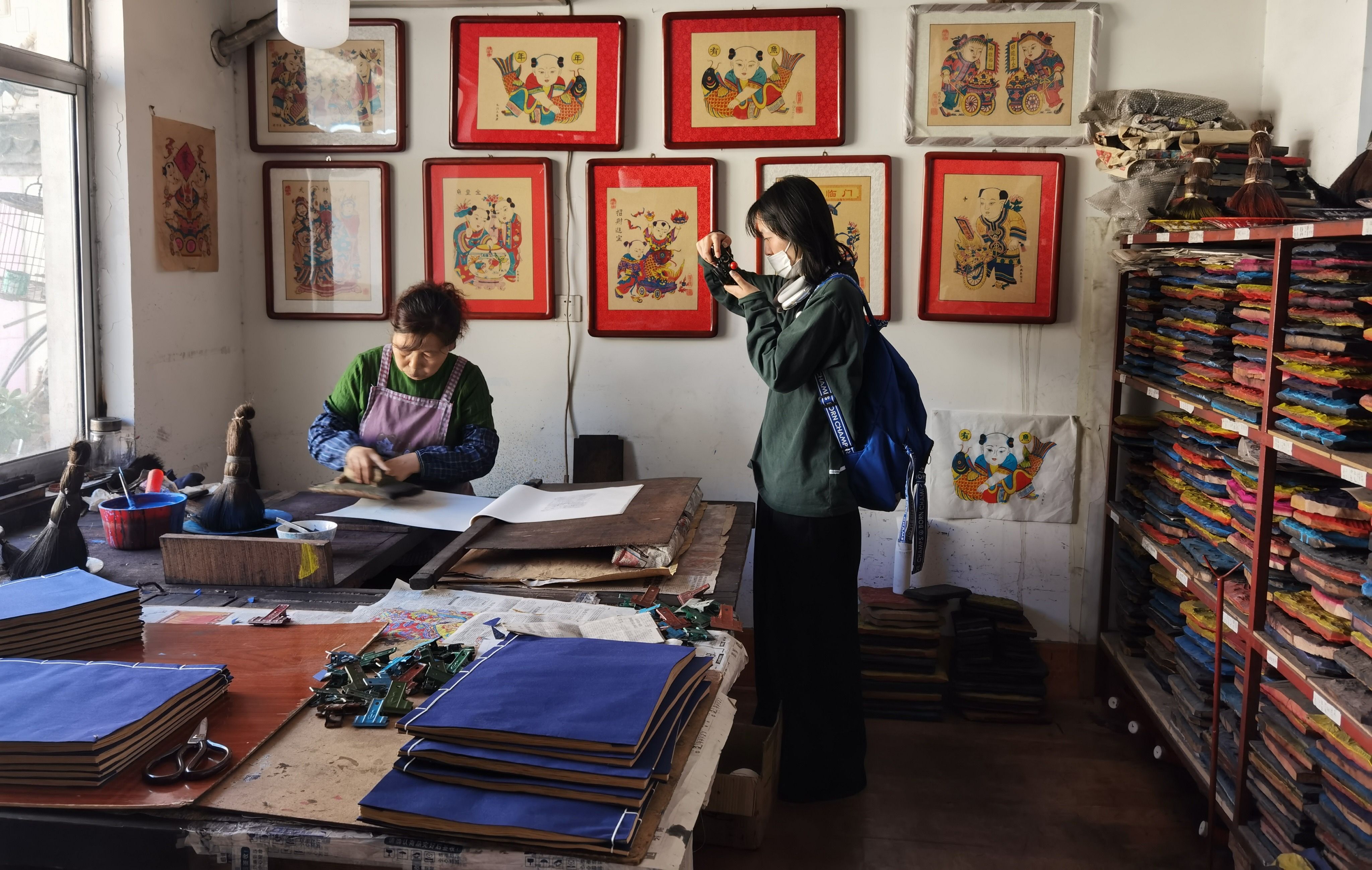
Influencer Dai Lüxia and her team travel across the country to film traditional crafts and the people behind them (courtesy of Dai Lüxia)
After years of travel to hundreds of locations, Dai remains driven to bring more crafts and the lives behind them to the public’s attention. Dough sculpture Lang, meanwhile, says he wants to return his craft to its roots by focusing on ordinary people. Inspired by his grandfather’s work to capture “the 360 professions of old Beijing,” he began to create dough figurines of the city’s modern occupations, such as baristas, cleaners, and delivery workers. “It’s a folk art that comes from everyday life,” he says. “But over time, it has somehow drifted away from the people that once sustained it. [My team and I] want to restore that bond.”
Finally, Huang is taking a similar approach, introducing wood carvings into daily life through small objects like paperweights and wooden combs. At home, the craft has already become part of his family routine. His son, now in middle school, grew up immersed in the craft. “I gave him a piece of wood and some tools when he was 3 and let him play,” says Huang. “Now, he can teach beginners in the workshops, and works faster than most—without any formal training. It all comes from being surrounded by it.”
Related Articles