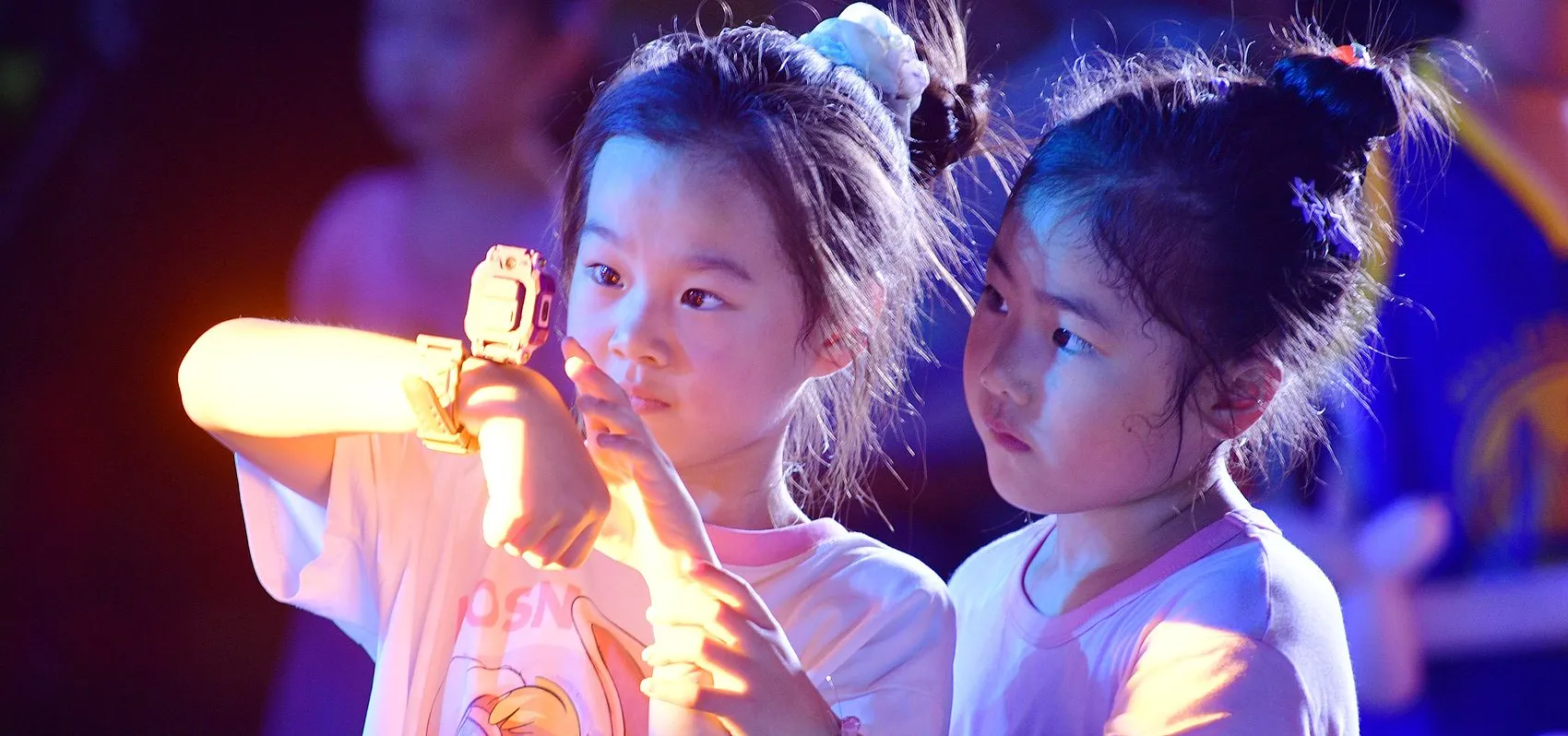

Children’s smartwatches have become big business in China, but do their safety features outweigh the potential risks to attention spans and social inclusion?
Five years ago, Yu bought her five-year-old son a smartwatch so he could reach her during a daylong school hiking trip. The device reassured her: It felt like a “guardian angel,” offering peace of mind through GPS tracking, geofencing, and instant two-way calling.
But a year later, that sense of security wavered when her son asked for a new model—the Xiaotiancai watch—drawn to its proprietary “bump-to-add” friend feature. Yu, who gave only her last name, eventually relented. Yet the 38-year-old nutritionist from Fujian began to wonder whether a device meant to keep her child safe was now opening the door to unforeseen risks, having evolved into a kind of social passport among children in China.
Read more about education and technology in China:
- Are China’s Schools Ready for the Onslaught of AI?
- Digital Babysitters: Battling Phone Addiction in China’s Rural Schools
- China’s Winding Path to Gaming Literacy
A social currency
In parks and schoolyards across the country, kids can be seen bumping their watches together, a soft beep signaling that a new friend has been added and a social circle affirmed. “For many kids, especially in the lower grades, ‘bumping’ watches to add contacts is the digital equivalent of sharing toys and snacks. It’s an icebreaker, a low-stakes way to initiate contact,” notes Zhang Tingting, a middle school English teacher and head of a ninth-grade class in Shenzhen Longgang Middle School.
Today, roughly one in three children wears a smartwatch, with Xiaotiancai, or “Little Genius,” remaining the dominant brand since its launch in 2015. China’s children’s smartwatch market shipped more than 4 million units in the first quarter of 2024 alone and is projected to reach 27.6 billion yuan this year.
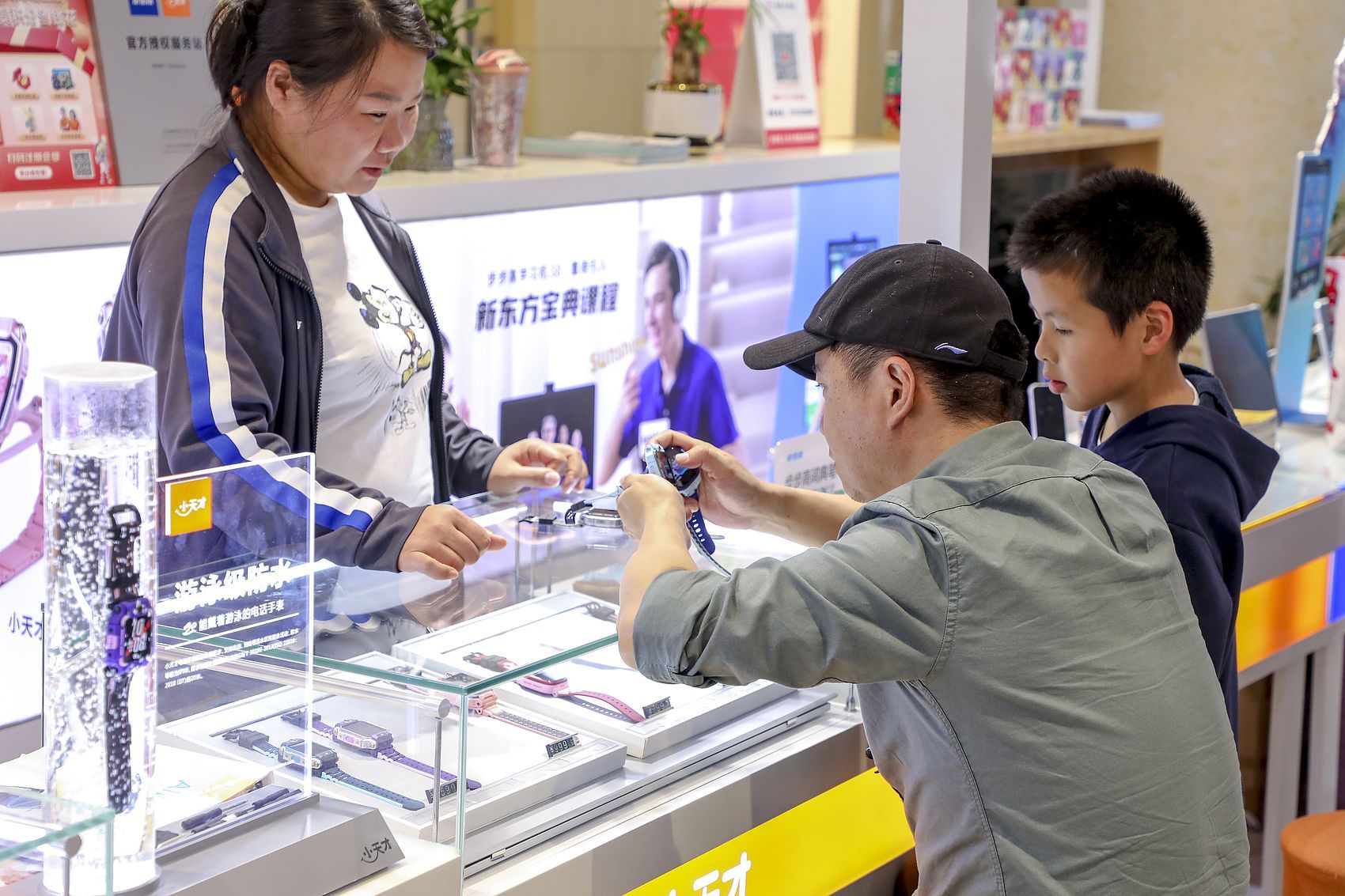
Many parents buy their children the watch for its safety features, such as geo-location tracking that works indoors and even tracks floor levels (VCG)
With the market expanding rapidly and new models constantly rolling out, many priced at around 1,000 yuan, the watches themselves have also become a form of social capital. Zhang describes how students compare models, features, and friend counts, creating subtle hierarchies at a young age. The phenomenon has also spawned a complex social economy where online “likes” and friend counts become status symbols, fueling a gray market where, in some cases, underage teens trade high-value accounts for real money.
When Yu’s son lost his entry-level Xiaotiancai watch, he began eyeing the brand’s newer, flashier Z-series models, which allow users to edit friends’ nicknames so they can be identified by their real names, with the higher-end Z10 priced at 1,999 yuan. She decides to turn the moment into a lesson in value assessment: Together, the two compared the different feature improvements in models and eventually purchased a relatively new Z6 Pro, priced only slightly higher than his last model (599 yuan) and offering improved geolocation, after scouring the secondhand marketplace Xianyu.
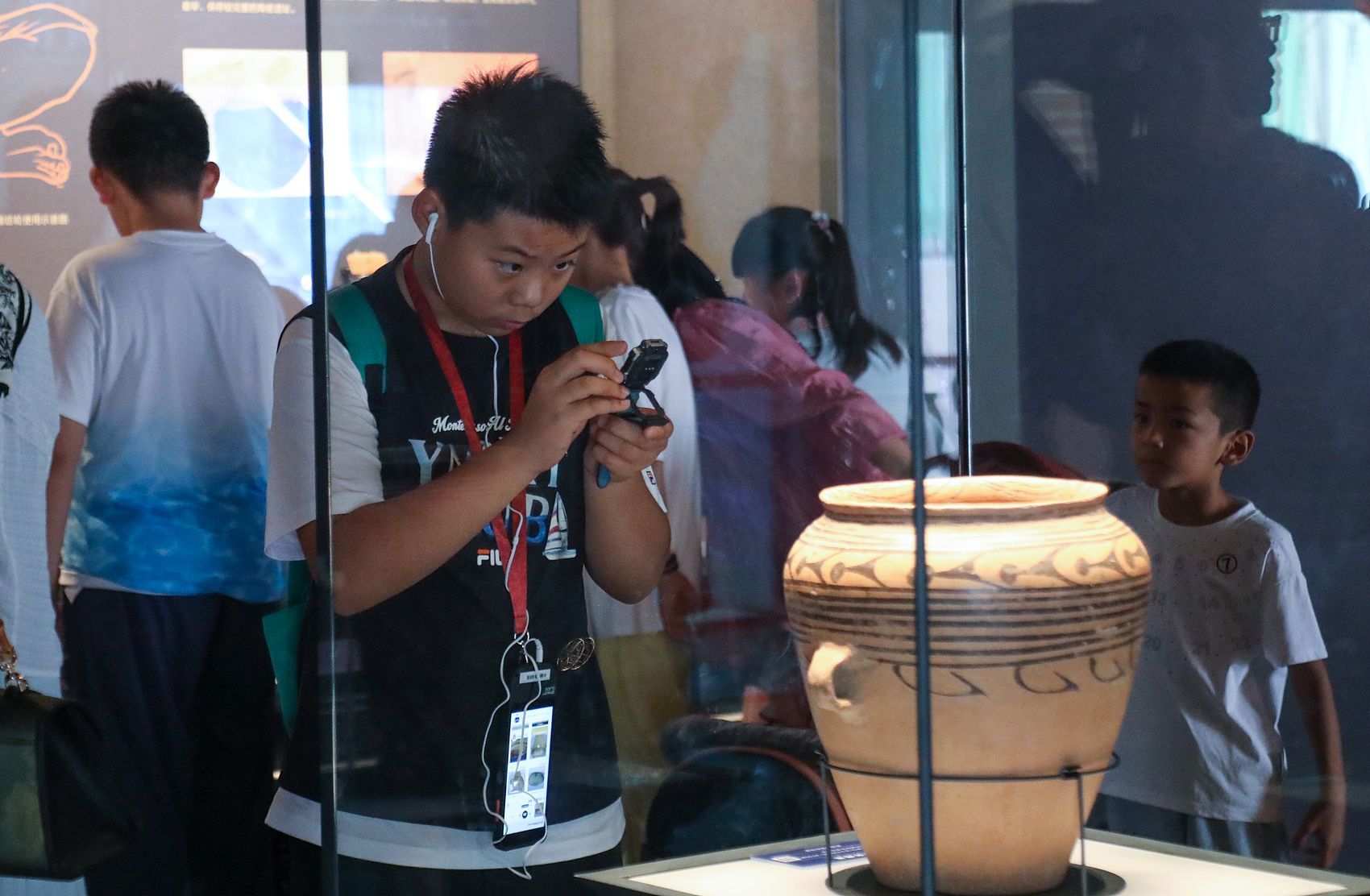
The camera function of the watches is a major draw for many schoolchildren (VCG)
“He’s bound to envy those with the latest Z-9/10 models [that have superior cameras], but he didn’t push for it after we compared the model with an average phone [in that price range], which must outperform any smartwatch,” says Yu. To make up for the Z6’s weaker photo quality, she gave her son an old Sony point-and-shoot camera. “I explained the situation to him clearly; within our budget, this was a reasonable upgrade.”
To Yu, who co-parents with her ex-husband, the watch’s most essential feature remains the direct line of communication between her and her son—a small, managed space within their changing family structure.
Trouble on campus
However, teachers like Jiang Zhengyi, an elementary school teacher in Shenzhen’s Nanshan district, see a totally different reality: “Elementary school students are at the age of least self-control,” she says. “Giving them a watch means they simply won’t listen or do their work.”
Although around 90 percent of her students, across nearly all economic backgrounds, own a smartwatch, she now enforces a simple rule in her fourth-grade class—no smartwatches, a zero-tolerance stance cemented by repeated disruptions from ringing watches last semester.
Beyond distracting students, Jiang finds the smartwatches’ recording function potentially troubling for teachers as well. “It’s not that we have something to hide,” Jiang explains, choosing her words carefully. “But a classroom is a living, breathing space. Teachers raise their voices and say things in the heat of the moment that make sense in context. A ten-second recording shared in a parent group without that context, however, can create unnecessary trouble.”
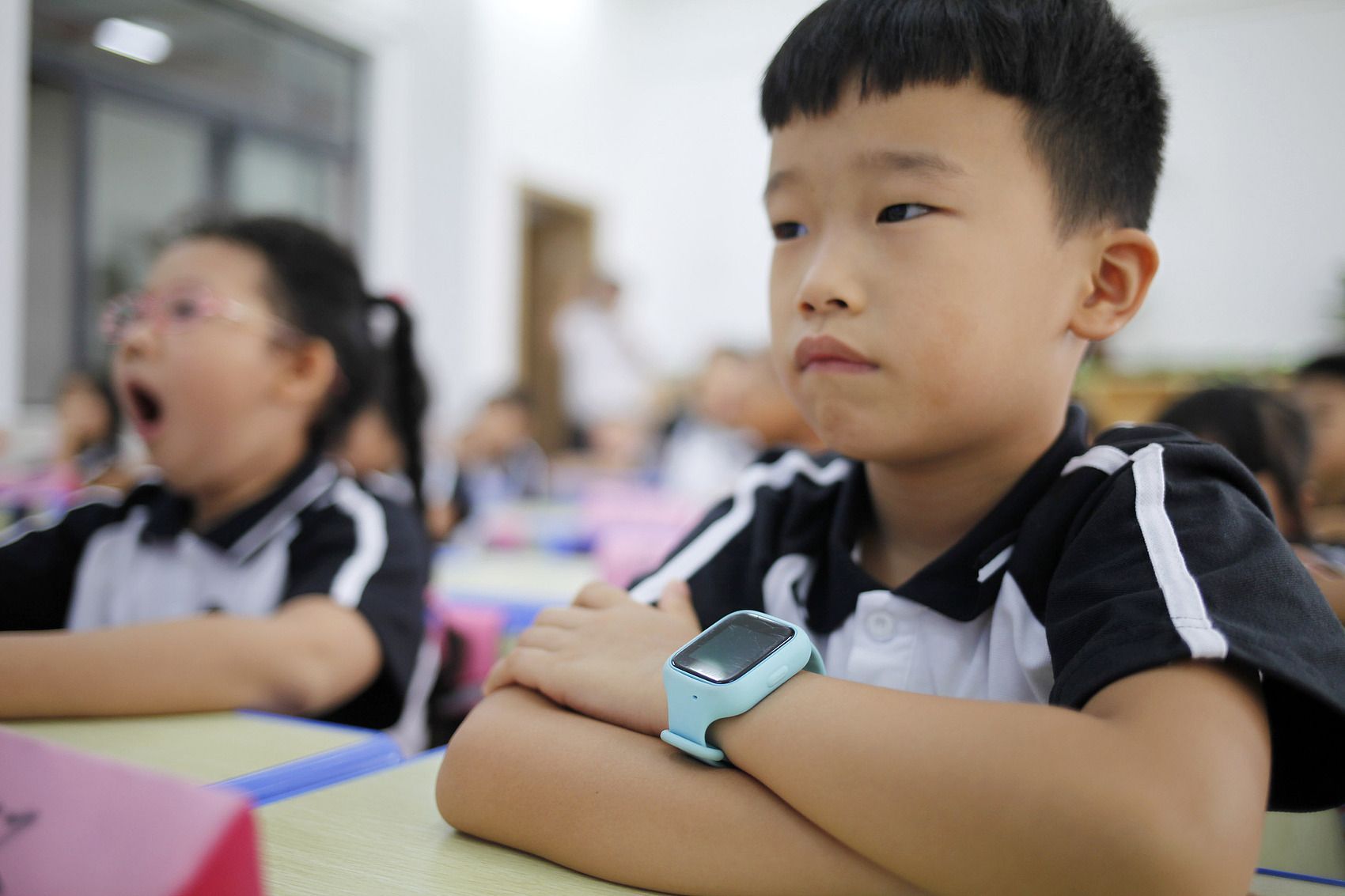
Although most children’s smartwatches have an classroom mode, they are still banned in many classrooms due to their potential to disrupt teaching (VCG)
For essential communication, she directs students to the school’s landline phone. For the few parents who insist on their child having a watch for their commute, a strict protocol exists: a formal application must be filed, and the device is collected upon arrival and locked in her desk until the end of the school day. School-wide security checks at the entrance help enforce this policy.
Zhang, the middle school teacher, has a similar smartwatch policy at her school, but she finds that students still manage to sneak the devices in. She has caught some using the watches to cheat on quizzes, though she doesn’t see confiscating the devices or voiding scores as a way to address the deeper issue.
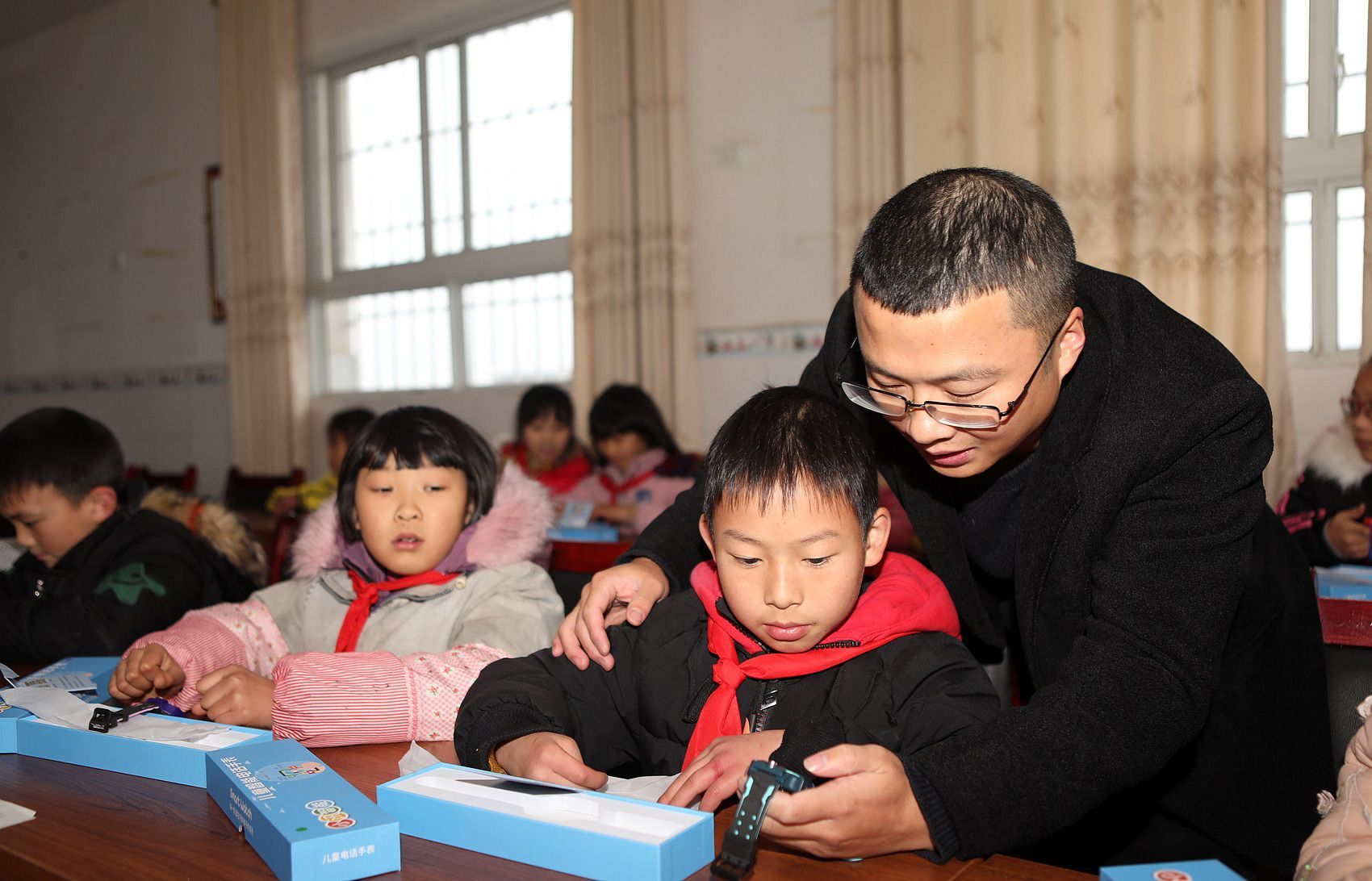
A tech company from Chongqing donated smartwatches to a local rural elementary school, teaching students how to use the devices responsibly (VCG)
“Those who are prone to cheat will cheat eventually, no matter by phone, watch, or notes hidden in sleeves,” she argues, adding that she has witnessed several cases of students cheating in finals with these devices despite prior warning. “The device isn’t the problem; it’s how it’s used.”
Smartwatches, she believes, can become teaching tools that help students learn about digital literacy, online safety, time management, and resisting peer pressure. “It’s a daunting task that goes far beyond policing device use, requiring parents, teachers, and society at large to work together,” says Zhang.
The ultimate challenge
But as the kids grow older, the watch, for all its complexity, becomes just a waypoint. The destination, inevitably anxiety-inducing, is the smartphone. According to the 5th National Report on Internet Use by Minors in 2022, over 60 percent of China’s 193 million underage netizens already own their own smartphones, with these devices serving as the primary internet portal for over 90 percent of them. The transition begins early—more than a third of elementary school students first used the internet before ever setting foot in a classroom.
For Tao, the mother of a ninth-grader in Liaoning, who agreed to be interviewed using only her last name, these numbers only strengthen her resolve not to buy her son a phone. “What’s the point of buying him a phone? He can’t use it at school, and I pick him up afterward,” says Tao.“If adults can’t control their scrolling, how can a child?”
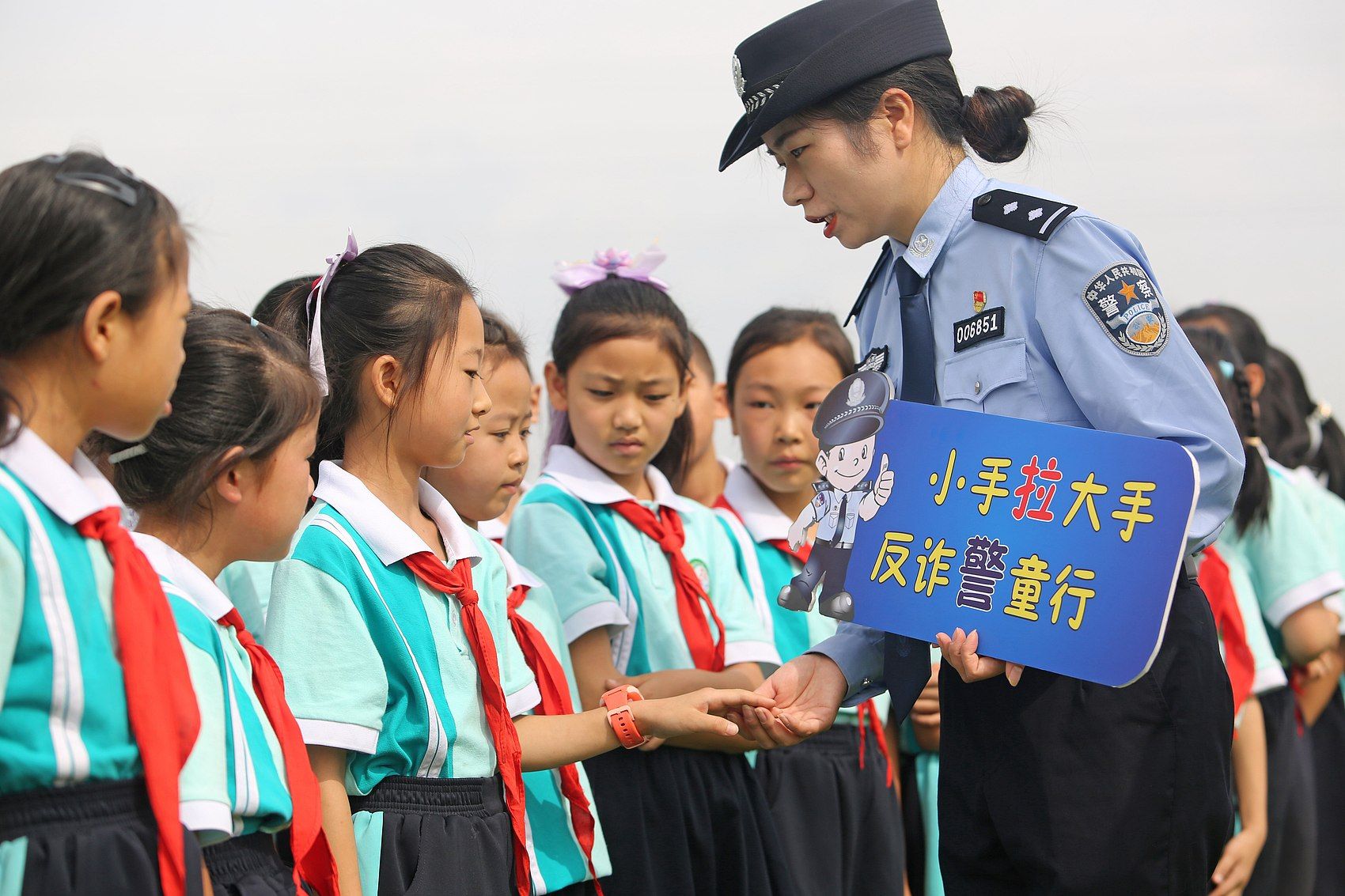
Many smartwatches designed for children are programmed to block sensitive keywords in text, as well as in photos and videos. Police have also set up workshops in schools to educate students about the dangers of scammers. (VCG)
While every other teenager in his class has a smartphone, he’s left with only his smartwatch—and that comes with some social costs. Tao has noticed her son stuffing his watch deep into his pocket, as he is embarrassed to take it out. “A tall teenager with a little kid’s watch—it’s quite a scene,” Tao says, half-amused but aware of the underlying strain.
Her son eventually drops his request for a new phone with the looming high school entrance exam, or zhongkao. Zhang, the Shenzhen teacher, has also noticed that as students buckle under the pressure of the high school entrance exam, electronic devices, whether smartwatches or phones, become less of an issue.
“They become so consumed with studying that often no one even bothers to hand in their watch,” she notes. “They’re not playing with it, either; they’re simply too busy. It’s not a toy or a social lifeline anymore. It’s just … an object.”
Zhang also believes that smartwatches may be simply training wheels for socialization before more self-sustaining friendships take over. “Students in higher grades don’t need to ‘bump’ or farm ‘likes’ to prove a connection,” she affirms.
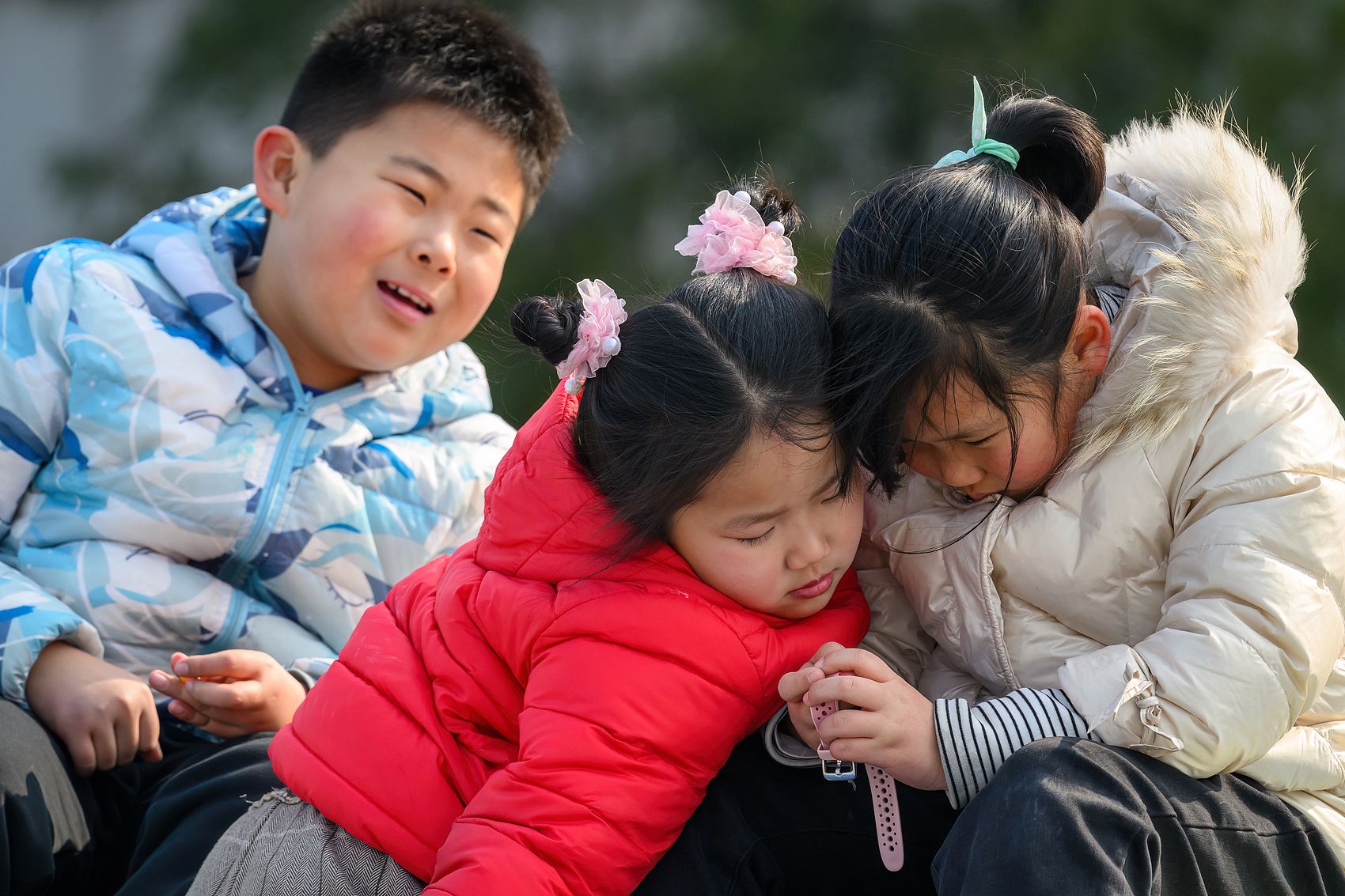
While smartwatches might help young children form connections, long-lasting friendships are still built on face-to-face interactions, shared experiences, and emotional bonds that technology can’t fully replicate (VCG)
Tao also acknowledges that her son’s social problems may stem from “personal reasons,” not just from still using a smartwatch. But as he approaches high school, where independent commuting, boarding, and new social circles await, his mother’s preference for digital minimalism may face its hardest test. In a world where the digital and real increasingly blend, how and when do children develop the internal discipline to navigate it on their own? Perhaps the answer lies less in control and more in guided practice.
Yu, the 38-year-old mother, has established what she calls a “device airport (养机场)” at home, a dedicated charging station in the living room where all electronics, including the watch, must “land” at bedtime. During homework time, she enables the watch’s classroom mode to block distractions, but allows her son to listen to music during repetitive tasks such as copying text.
“The goal isn’t total control, but building habits. Right now, we’re focusing on basic task management. If [my son] can complete assignments within a reasonable time to an acceptable quality, that’s enough,” says Yu.
Related Articles