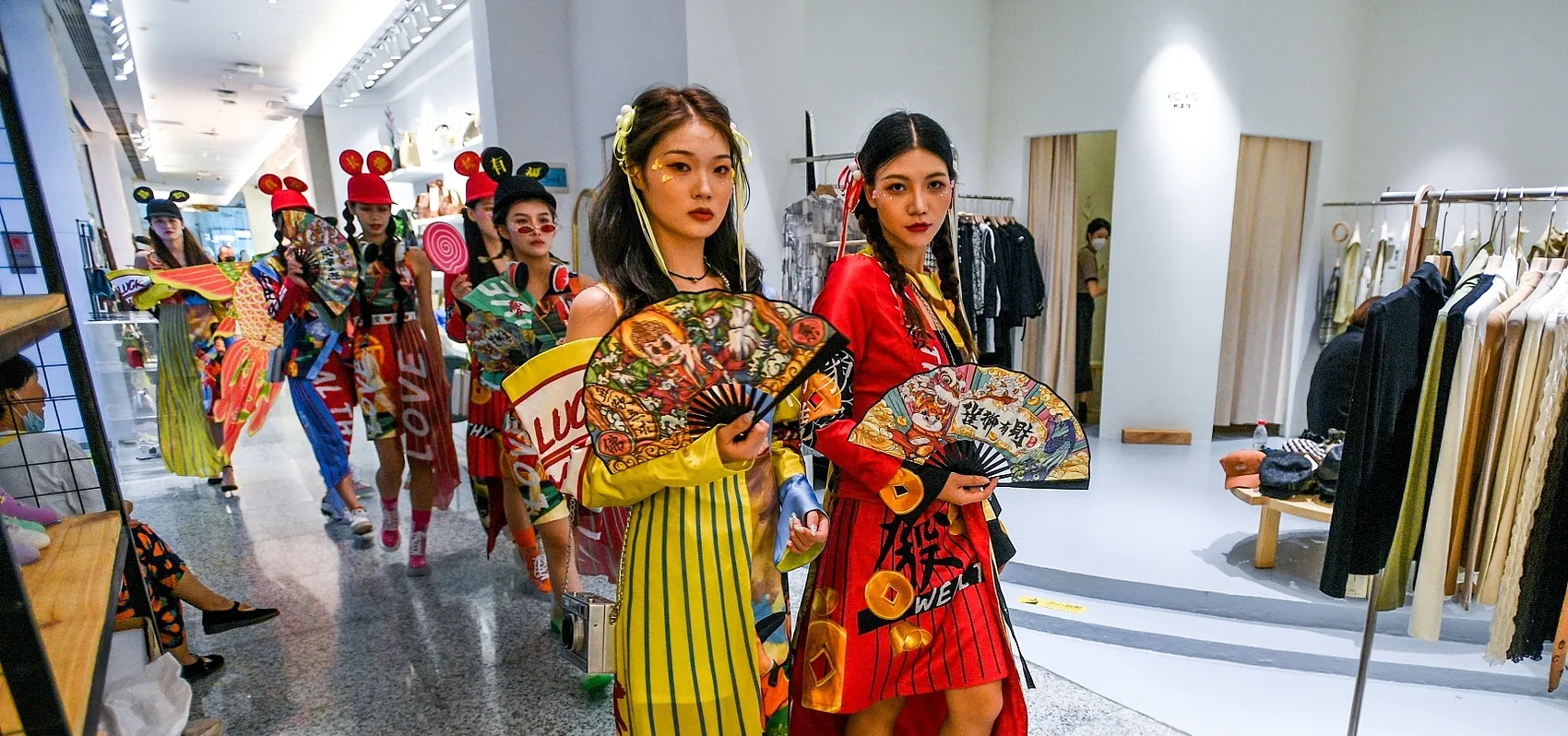

While many of China’s intangible heritage traditions are struggling to survive, recent commercialization efforts have helped to transform some into sustainable business enterprises by integrating them with tourism and product sales
Vendors spill from vintage storefronts, calling out in local dialect and recreating the rhythms of an old street market. Visitors slip into rented hanfu, adjusting flowing sleeves and hairpieces before drifting through the space as if part of the scene itself. Nearby, small stages come alive with Pingju opera and shadow puppet performances, their catchy tunes and vivid silhouettes drawing passing crowds to linger. This is an everyday scene at the “Tangshan Feast” in Hebei province, where more than 150 varieties of local snacks—many made using techniques recognized as intangible cultural heritage (ICH)—are brought together under one roof.
Converted from a failed three-storey mall project, the space has now drawn more than 5 million visitors annually since opening in 2018, with daily attendance peaking at 50,000, according to Tangshan’s tourism bureau.
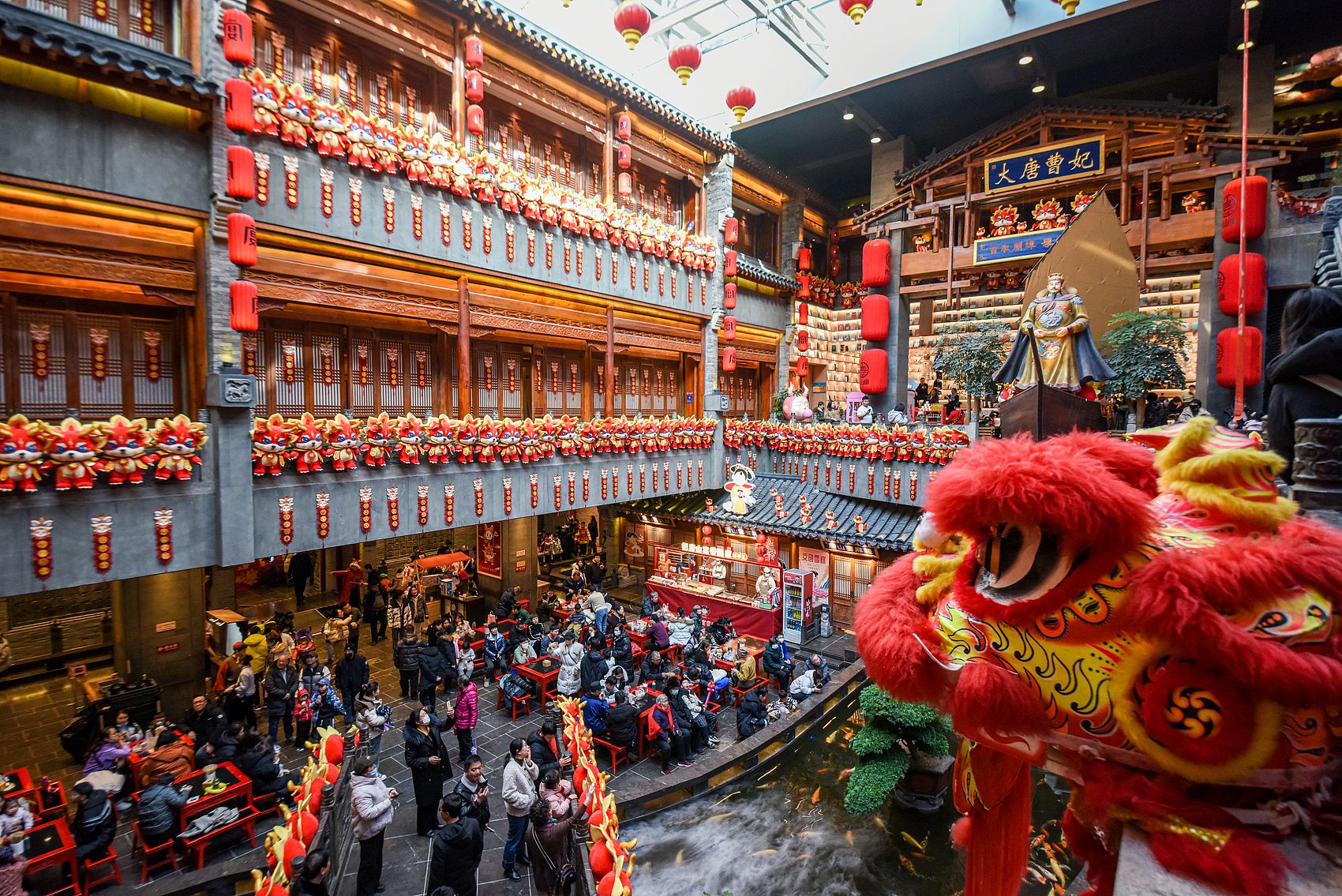
Officially named the Tangshan Diet Culture Museum, Tangshan Feast opened in late 2018. Its indoor space, covering over 30,000 square meters, features ancient-style streets, ponds, opera stages, restaurants, stalls, and more. (VCG)
Tangshan Feast owes much of its success to canny marketing as a destination for authentic ICH products and experiences. Shops showcase the skills and works of heritage bearers, while staff are encouraged to engage visitors energetically and share the stories behind the craft. Its revenue from sales of ICH snacks and related products alone amounts to 160 million yuan in 2025, according to an industry research platform, nearly rivaling takings from its main catering business.
Read more about traditional Chinese culture:
- Old Techniques, New Vibes: How China’s Inheritors Are Reshaping Ancient Arts
- A Village Fashion Show Brings Ethnic Clothing into the Spotlight
- Saving Traditional Chinese Music, One TikTok at a Time
Tangshan Feast is just one of a growing number of attractions in recent years that lean into marketing ICH. With the Spring Festival officially added to UNESCO’s Intangible Cultural Heritage list in 2024, a renewed wave of interest has swept across the sector. No longer confined to quiet workshops or remote villages, these traditions are spilling onto social media feeds, lining the shelves of boutique stores, and becoming a central draw in tourism experiences.
Experience is king
In Chaozhou, Guangdong province, the pounding drums of the local Yingge folk dance echo through the old city at night. No longer just a passive spectacle for lookers-on, swirling cloud motifs are painted onto the crowd’s faces, drumsticks placed in visitors’ hands. In Shexian, Anhui province, fish lanterns glide through the city’s narrow alleys as tourists fall into step with the procession, becoming part of the shifting glow themselves. In Yunnan’s Dali, young travelers crowd into tie-dye workshops, sleeves rolled up and hands stained blue. In Fujian’s Quanzhou, floral headdresses, or zanhua, once worn in ceremonial settings, are now pinned into the hair of eager tourists by local artisans.
These are just some of the most viral domestic travel destinations in recent years, drawing visitors with firsthand experiences of regional crafts and traditions. On the travel platform Mafengwo, posts about ICH in the first half of 2025 had already outpaced the total number from the previous year. In addition, authentic local flavors, regional customs, heritage preservation, specialty foods, and traditional handicrafts have been found to be travelers’ top searches before trips.
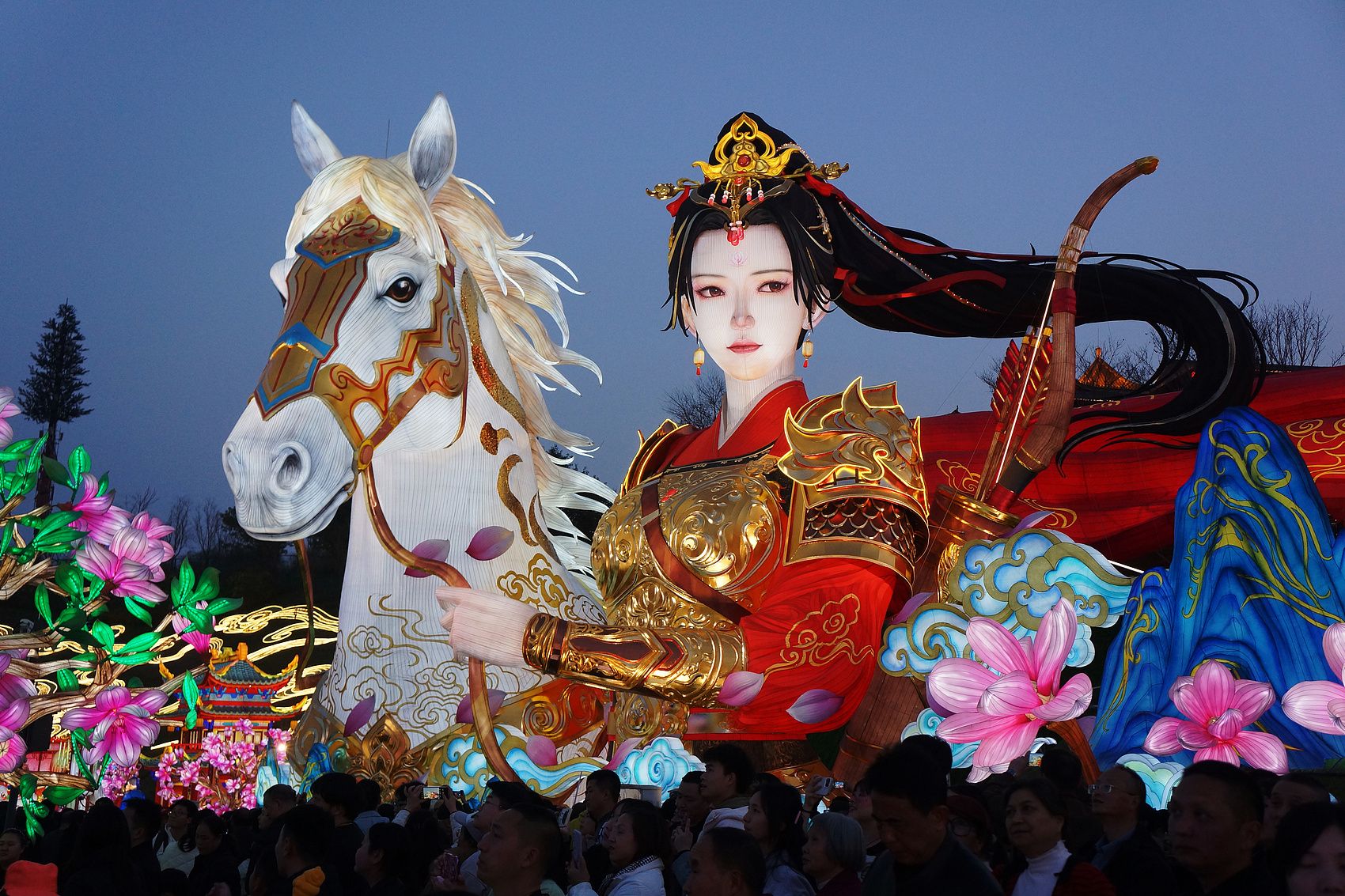
The Zigong Lantern Show, at its 32nd edition this year, is known for its grand scale and complex, dazzling lantern displays combining Chinese myth and futuristic sci-fi elements (VCG)
ICH-themed travel is also becoming a highly profitable business. Sichuan’s Zigong Lantern Show, a national-level cultural heritage event, raked in 200 million yuan in ticket revenue alone over 112 days in 2025, while the Korean Folk Culture Park in Yanbian, Jilin, which offers ICH experiences such as ethnic costume photography, surpassed 100 million yuan in annual revenue.
Building brands
The rising enthusiasm of traditional culture among young Chinese consumers has also encouraged brands to weave traditional elements into their products, leading to the rise of guochao (国潮), or the “China chic” trend, celebrating homegrown fashion and design. In recent years, ICH has become a go-to source of inspiration for brand collaborations, giving artisans new ways to profit from their craft.
Popular brands like Pop Mart and Luckin Coffee have all collaborated with ICH inheritors, incorporating traditional crafts into limited-edition products and co-branded experiences, bringing heritage into everyday consumer culture.
Yang Huazhen, a 66-year-old national-level inheritor of Tibetan weaving techniques and the embroidery tradition known as tiaohua (挑花, literally “picking flowers”), went viral after reportedly earning over 3 million yuan in 2025 through collaborations with nine brands, including Universal Studios and NBA China. Her journey began in 2014, when she was approached by the Japanese brand Shu Uemura to design patterns for the packaging of a new makeup remover. “We originally thought we’d ‘aim high’ and ask for 30,000 yuan, but we were too embarrassed to even say it,” she told Sichuan Daily this March. Instead, the client offered 200,000 yuan outright. “I thought I’d misheard! I had to confirm it again before realizing—we’d struck gold.”
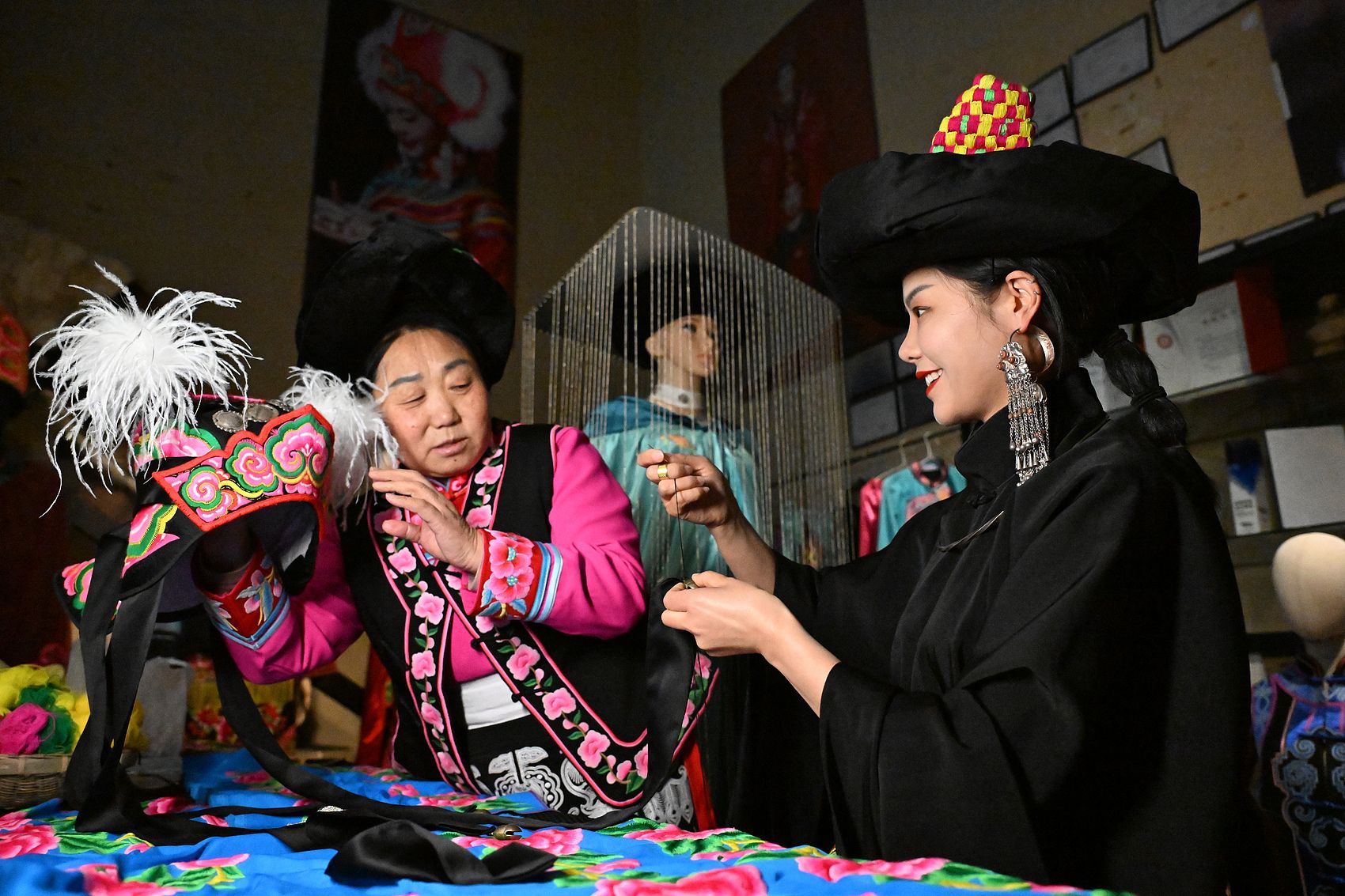
The fourth-generation inheritor of the traditional costume of the Qiang ethnic group, Chen Shijian (right), is dedicated to interpreting tradition with modern designs (VCG)
Aside from the design fee, Yang also received a 5 percent cut from product sales, pushing her total earnings from the deal to 3 million yuan. She has since built on this model—pairing upfront design fees with a share of sales—and her team has registered intellectual property for around 200 works, making her a template for other ICH inheritors looking to capitalize on their craft.
Despite Yang’s case, ICH is far from being the touchstone of success for brand collaboration. One controversial example occurred this past Chinese New Year, when McDonald’s China branch launched a series of holiday special packaging designs inspired by paper lanterns from different regions, partnering with four ICH inheritors.
Featuring a red-and-gold color scheme and the signature “M” logo, the designs were printed alongside auspicious phrases such as “Wishing you a golden year under the Golden Arches.” However, consumers were quick to point out that the shiny packaging bore an uncanny resemblance to paper ingots used in funeral and tomb-sweeping rituals. Netizens also joked that the specially designed receipts, printed vertically in black and white, looked strikingly similar to those used by Daoist talismans to ward off evil. When a netizen made a complaint to McDonald’s customer service, they replied that the feedback had been recorded and forwarded to the relevant department, but the company has not officially commented on the matter.
As McDonald’s marketing backfire suggests, tapping into ICH is not as simple as piling up on celebrated aesthetics or symbolism—it requires a nuanced understanding of cultural context and sensitivity to how those elements are perceived in everyday life.
Yang, the inheritor, also cautioned against letting commercialization overshadow the true essence of the traditional craft. “Innovation must always be rooted in tradition,” she said. “The works of heritage inheritors can’t be copied blindly. They must involve reinterpretation, reflecting the creators’ own understanding of life and the times.”
Related Articles