

When Zhao Qijun announced in 2023 that his girlfriend, Yang Kaiwen, had accepted his marriage proposal, netizens seemed more excited than the couple themselves. On the microblogging platform Weibo, the hashtag “Zhao Qijun successfully proposed to Yang Kaiwen” received 540 million views and 93,000 discussions.
“I couldn’t be happier if it were my own proposal,” netizens wrote. “The couple that I’ve ‘shipped’ is real,” went another frequently posted comment, using a slang term for romantically pairing up two people (often fictional characters or celebrities). In the years that followed, netizens avidly followed the “CP” (short for “couple”) as they registered their marriage in 2023 and shopped for wedding dresses last July—just as they had ever since 25-year-old Yang and 28-year-old Zhao met on the dating-themed reality show Heart Signal in 2019.
Over the past decade, dating and marriage-themed reality shows have prospered in China—a striking contrast with the country’s shrinking real-life marriage rate. According to a report by Enlightent, a data platform for video content, there were nearly 50 dating shows on China’s major streaming platforms between 2022 and 2024. The majority of their audiences were women in their 20s.
Meanwhile, official statistics showed that the annual number of registered marriages has dropped by more than half over the past decade, from nearly 13.5 million couples in 2013 to just 6.1 million in 2024. China’s unmarried population has reached 240 million, accounting for 17 percent of the total population.
Learn more about relationship trends in China:
- Can Livestreaming Be the New Way to Solve Relationship Issues in China?
- Learning to Love: Why Demand for Relationship Classes is Booming in China
- The Desires and Disappointments of Chinese Seniors Seeking Twilight Love
Rather than going on dates themselves, young people today seem to “prefer watching other people date,” as many on the internet have quipped. However, as controversies emerge over scripted plots and participants’ messy personal lives, many viewers have also been left disenchanted with TV romance, wondering whether there is a place for real love on reality shows.
From matchmaking to dating
Relationship-themed shows in China date back to a program called TV Matchmaker that aired locally in Shanxi province in 1988. It was a far cry from today’s reality shows. On TV Matchmaker, participants read aloud the marriage ads they might have otherwise placed in the local paper—including personal and family information, and expectations on a potential partner—and waited for interested viewers to contact them by phone. For the first time, matchmaking and dating turned from a private topic to a public spectacle.
Though the public as a whole was still conservative, breakout matchmaking shows started to emerge. During its nine-year run on Beijing TV from 1991 to 2000, You and I Get Acquainted this Evening, where participants got to know one another through self-introduction, Q&As, and games, reportedly won an audience rating of up to 30 percent and claimed to have matched over 1,000 couples. By the turn of the century, new shows began following the format of Taiwan’s About Romance (1996 – 2003), where contestants discuss “sensitive” topics like “How do you think of premarital sex,” and a panel of family or friends, and astrologers gave them advice on their relationship. Hunan TV’s Dating of Rose (1998 – 2005) took it further by recruiting good-looking participants and letting them showcase their talents or play games together.
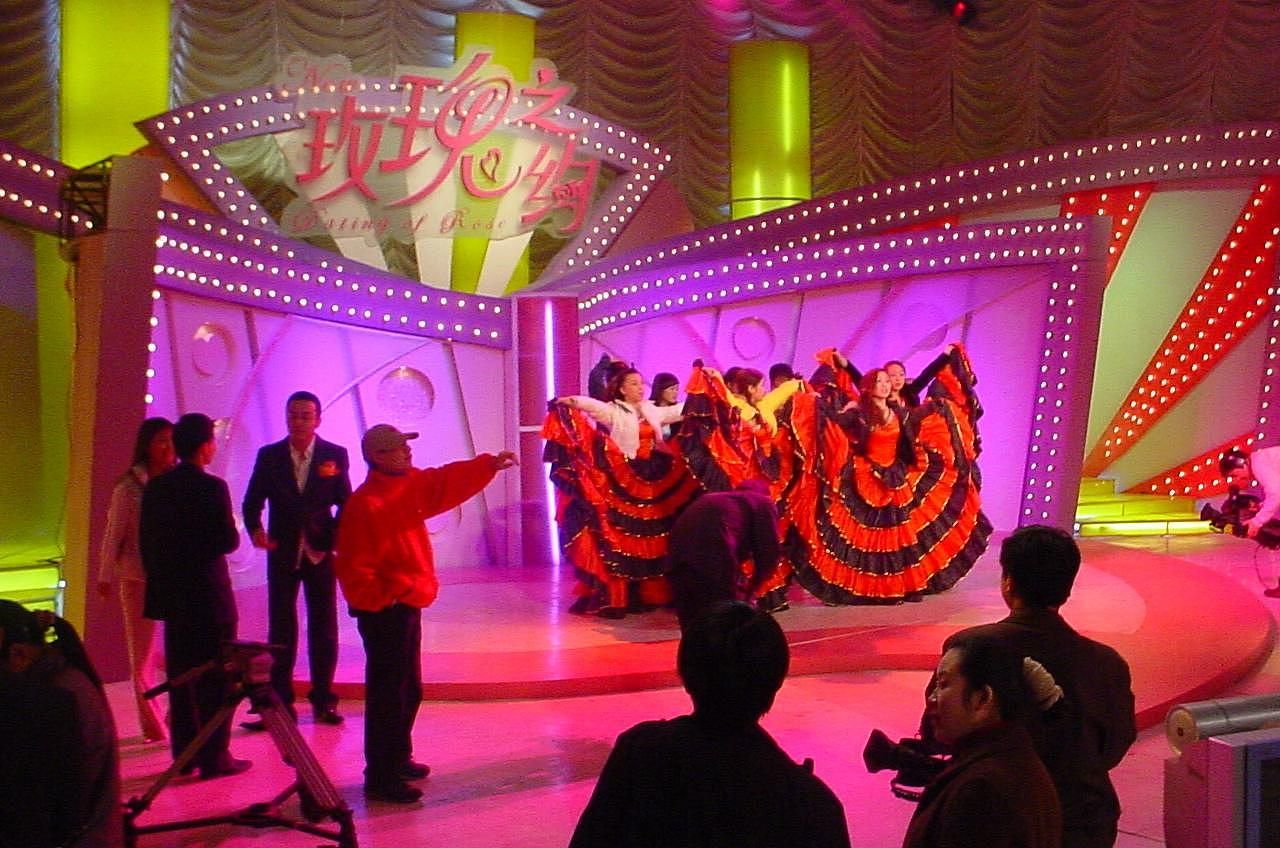
Hunan TV’s Dating of Rose is regarded as a pioneering matchmaking show signaling a shift to entertainment-oriented content (VCG)
In the 2010s, alongside the rise of online matchmaking platforms, Jiangsu TV’s If You Are the One brought the genre to a new high. Dubbed China’s version of the widely popular UK dating show, Take Me Out, the Chinese show presented male contestants one by one to a panel of 24 female contestants. The women may keep their lights on or turn them off to indicate continued interest (or lack thereof) in the eligible bachelor after learning about his job, earnings, and views on relationships and marriage, often with advice from a panel of celebrities and psychological counselors.
The show became infamous for its supposed materialism, encapsulated by the statement “I’d rather cry in a BMW than smile on a bicycle” by contestant Ma Nuo. Controversies like these caught the attention of the regulatory authorities, which issued two guidelines urging producers not to present or promote “unhealthy and wrong views on relationship and marriage,” such as materialism.
In the past decade, the genre has evolved from matchmaking to dating, emphasizing natural interaction between participants and the idea of actually falling in love. Heart Signal, adapted from a Korean program of the same name, was regarded as the first of a new generation of Chinese dating shows when it was released in 2018. Though each show boasts its own rules and gimmicks, these “reality”-type dating shows follow a general format. Contestants are usually good-looking, with a base level of education or enviable jobs. They are strangers to one another, but must live under the same roof for a period of several weeks to a month, where viewers get to watch how their relationships evolve under certain natural-seeming interactions—albeit with strict rules, such as no exchange of personal contact details or direct expressions of affection until the final night, like in the Signal series.
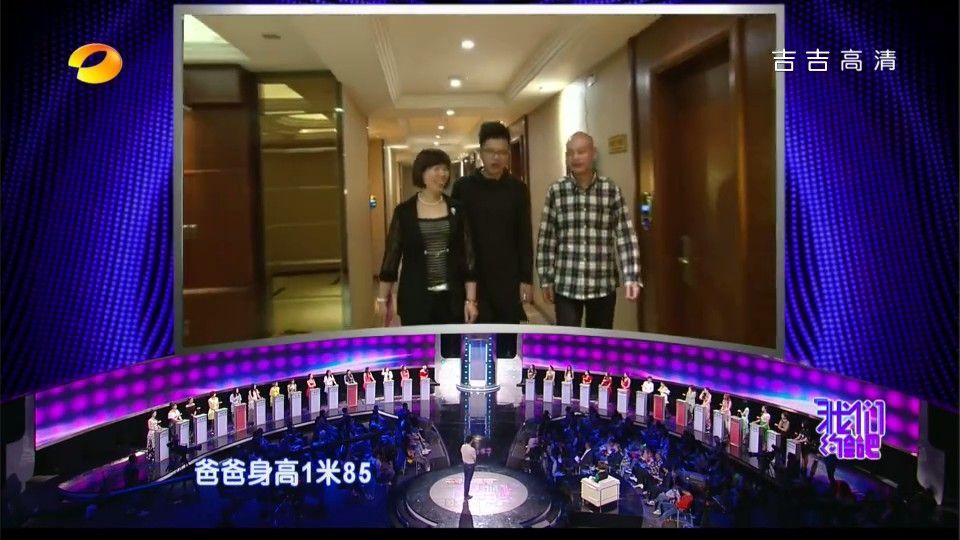
In the 2010s, pre-recorded videos introducing the male participants and their families were often played for the audience and the dozens of women standing behind podiums before any interaction began (screenshot from Hunan TV’s 2009 show Take Me Out)
Tai Qi, a nationally certified marital and family counselor, tells TWOC that the shift from speedy matchmaking to real-time romance may echo Chinese society’s increased emphasis on emotional connection in relationships, including marriage. Traditionally, “people chose a partner based on numbers, such as how many houses and deposits one owns, as they’re the parameters for ‘happiness,’” he says. These new dating shows, however, allow people to discover their feelings and their compatibility with another person over a longer period, and under a variety of conditions.
These “reality”-style dating shows have spun off into many variations: Forever by Your Side (2025) for those near retirement age, See You Again (2021 – 2025) for couples on the brink of divorce, and So In Love (2022) for those who have never been in a relationship. There’s now essentially a show for every kind of viewer to see themselves reflected, and the internet age allows audiences to be more involved and invested than ever, as they can immediately discuss each episode online.
“Viewers would ask me how they can tackle [relationship] problems as they see themselves or their ex or present partner [in the show],” says Tai, who often receives related comments and private messages. He started posting videos analyzing scenes and people from dating shows on his social media account a few years ago. These analysis videos can get 100 times more views than his other videos on general psychology knowledge on Xiaohongshu (RedNote), where he has more than 20,000 followers.
The “ideal” lover and relationship
Wang Huixuan has watched dating shows since 2020. “I like shipping,” the college student from northeastern China’s Jilin province tells TWOC. “There is a [romantic] atmosphere when the handsome men and beautiful women get together.”

Early this year, the middle-aged (mostly divorcees) dating show Forever by Your Side became the top reality show on Douyin, China’s version of TikTok, with nearly 1,000 related hot topics on the platform (poster of Forever by Your Side)
Li Ziming, another college-aged fan from Tianjin, also likes good-looking participants, their chemistry, and the happiness they seem to share when they’re together. “I like watching people who are well-matched in looks and values enter into a healthy and happy relationship. It’s enjoyable and also teaches the right values about love,” she tells TWOC. “I feel that by watching how others get it right, I can’t go wrong.”
One of Li’s favorite couples is Hu Wei and Jiang Shangru from first season of Live and Love (2024), a survival-themed dating show filmed on an island. These lovebirds not only survived the show but also the long-distance relationship afterward. “I’ve never been in love, but from those dating shows…I’ve gained a better understanding of the healthy relationship I want,” Li concludes.
A 2023 study published on the academic journal Contemporary Youth Research argued that young urbanites seek “substitutional experience” from relationship-themed shows. For individuals who feel increasingly alienated from a fast-evolving, competitive society, being a voyeur in other people’s romantic lives is a type of emotional fulfillment. They watch someone else enact their own emotional aspirations and needs, without needing to handle the actual risks and uncertainties of dating.
Tai, the counselor, also notes that by watching, discussing, and gossiping about the participants among friends or in online spaces, young viewers can learn about love without paying any of the “costs”—quarrels, hurts, or heartbreak—that couples cannot avoid in real life.
This has been true of the romance genre of literature, films, and TV in general, he adds. The parent generation of today’s dating show viewers sought similar experiences in novels and their screen adaptations by romance writer Qiong Yao, whose works were popular from the 1960s to the early 2000s. Dating shows also feature unexpected twists, which audiences have dubbed “reversals (反转),” much like those in any romance drama, keeping viewers hooked.

Some shows even incorporate a competitive elimination format through various games (still from Season 1 of Live and Love)
For many young Chinese adults, a lack of relationship education and the social stigma surrounding zaolian, or adolescent relationships, makes reality shows an important (if not the only) channel for learning about romance. Typically, parents and teachers discourage teenagers from dating in middle and high school, citing it as a distraction from studies. Parents may also have had little or no dating experience themselves.
This was the experience of Mo Yang, a 24-year-old office worker from the southwest who agreed to be interviewed under a pseudonym. Having no dating experience of his own, Mo gets most of his knowledge about relationships from watching dating shows and discussing on Xiaohongshu. “I used to be introverted and shy, but now I’m constantly urging myself to be as honest and brave as Jiang Shangru,” he says, referencing the male participant from Live and Love who successfully entered a relationship with a female contestant on the show.
Real vs. scripted
However, as more reality dating shows hit the market, many are facing backlash for being elitist, scripted, or even for manufacturing romances, conflicts, and love triangles in post-production. Signal’s rating on Douban fell from 7.3 in the second season to 5.6 in the seventh.
Li has struggled to get past the first season of many programs because she finds them too repetitive or fake. “The artificial sweetener can never match natural ones,” she complains, emphasizing the importance of real and sincere, or “natural,” interactions between participants. She can accept a bad ending (“BE” in short) for couples, but not seemingly romantic happy endings (“HE”) where participants pretend to like each other.
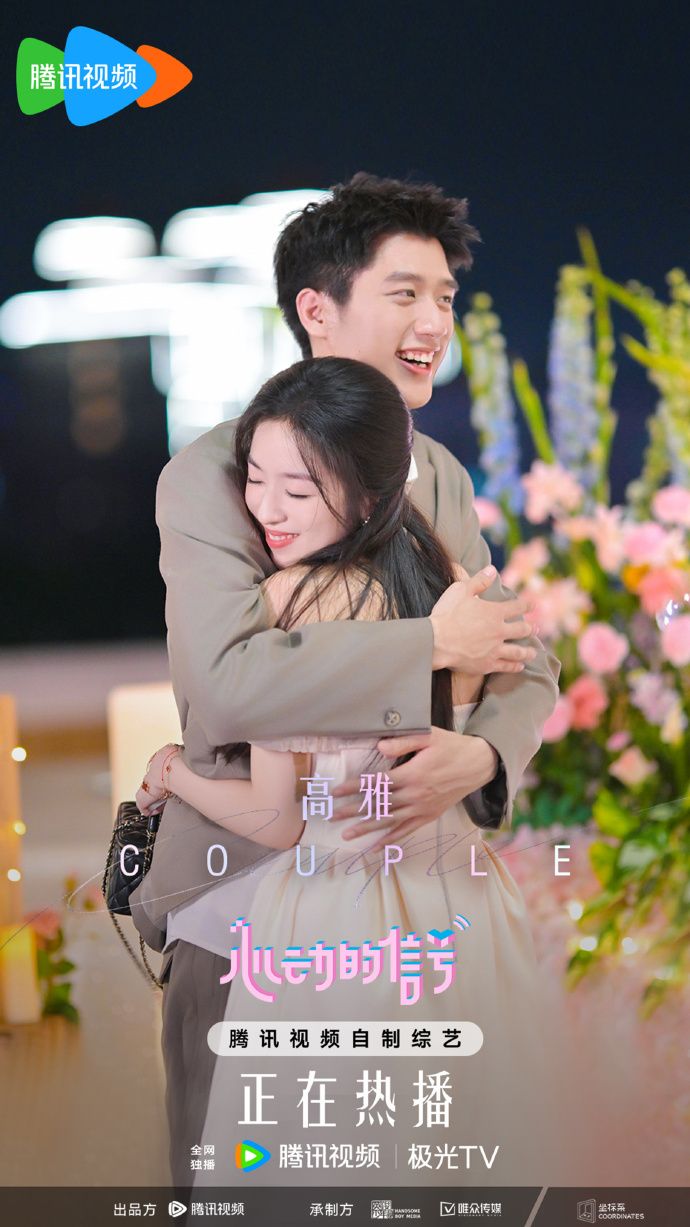
Peng Gao and Weng Qingya, a popular couple from Heart Signal Season 7, announced their breakup on social media just days after their scheduled get-together by the end of the show, sparking controversies and criticisms (poster of Heart Signal)
Wang also suspects that some participants may be playing to a script, whether BE or HE, having joined the show mainly to gain fame. Some plots have become so formulaic that “I knew who would end up with whom halfway through the season, maybe even sooner,” says Wang, who rarely finishes a whole season now.
While acknowledging the scripted nature of these shows, which may condense days or even months of shooting into around 20 hours of footage, Tai interprets viewers’ obsessive criticism of “scripts” as another form of idealization. “We’ve projected our emotions, feelings, or experiences on the participants…once they don’t act as we expected, we’d say they have to do so due to the scripts,” he explains.
Participants’ off-camera behavior, which has occasionally been leaked on social media, also puts off some former fans. Though in some cases, it’s a simple mismatch of their on-camera and private personas, other cases have involved contestants accused of cheating or domestic violence. Wang found out that several couples she once liked had broken up before the show went off the air, or even had a real-life partner the whole time.
Though many producers deny using scripts during media interviews, shows have taken steps to address audience feedback. According to a 2021 report by Chinese entertainment outlet Yuli Studio, the casting team of Signal Season 4 worked with professional background check companies to select “representative” contestants who were legally and morally “safe.” They also established a team of psychologists and had contestants complete a questionnaire with over 100 questions to vet their personality types and behavioral patterns.
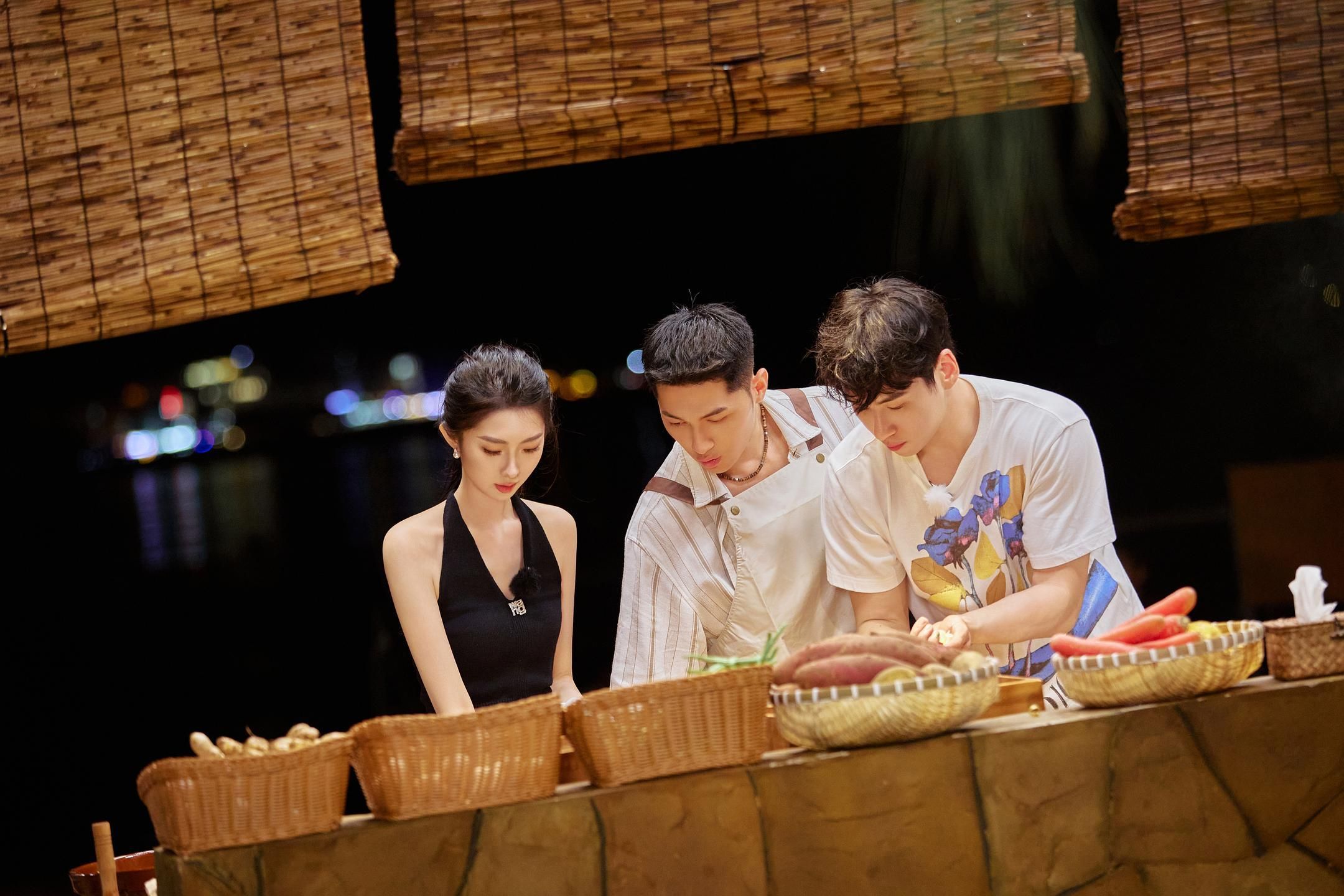
The kitchen is often a place of drama in dating shows, where love triangles play out among contestants (still from the first season of Live and Love)
Such efforts, though, have not necessarily brought about positive feedback. In response to complaints about elitism in Season 7, whose participants graduated from prestigious universities or lived overseas and often mixed English with Chinese in their conversations, the latest season of Signal featured more “common college graduates.” However, its ratings on Douban show no improvement.
Now that Wang and Li spend less time watching dating shows, they are wondering if their youth could be better spent actually finding love. Li is not optimistic about finding an ideal match, but says she can accept being alone, now and in the future.
Wang still longs for a relationship, whether or not she finds an “HE” immediately. “I think now it’s the right time, while I’m still on a college campus, with some remaining youthful innocence, a little bit of yearning and anticipation for love,” she says. “I’m only a sophomore. I’ve got time to date.”
Dating by Proxy: Why Young Chinese Prefer Dating Shows to Real Dates is a story from our issue, “I, Humanoid.” To read the entire issue, become a subscriber and receive the full magazine.
Related Articles