Over the past two decades, web novels have transformed from a niche subculture into a new vehicle for bringing Chinese culture to global audiences. Overseas revenue from Chinese online literature reached 5.64 billion yuan in 2025, with nearly 200 million active overseas users.
The popularity of Chinese web novels proves that a good story can transcend language barriers and cultural differences. Whether you are drawn to a heart-wrenching romance, an epic quest, or a hero’s journey of self-redemption, there is a Chinese web novelist whose work may resonate with you. At a literary event hosted by the China Writers Association at the Beijing International Bookstore in late May, 11 leading figures in Chinese historical, fantasy, and web literature shared their experiences of taking Chinese stories overseas. Here is the second part of a series introducing the writers you should know.
Tang Jia San Shao 唐家三少
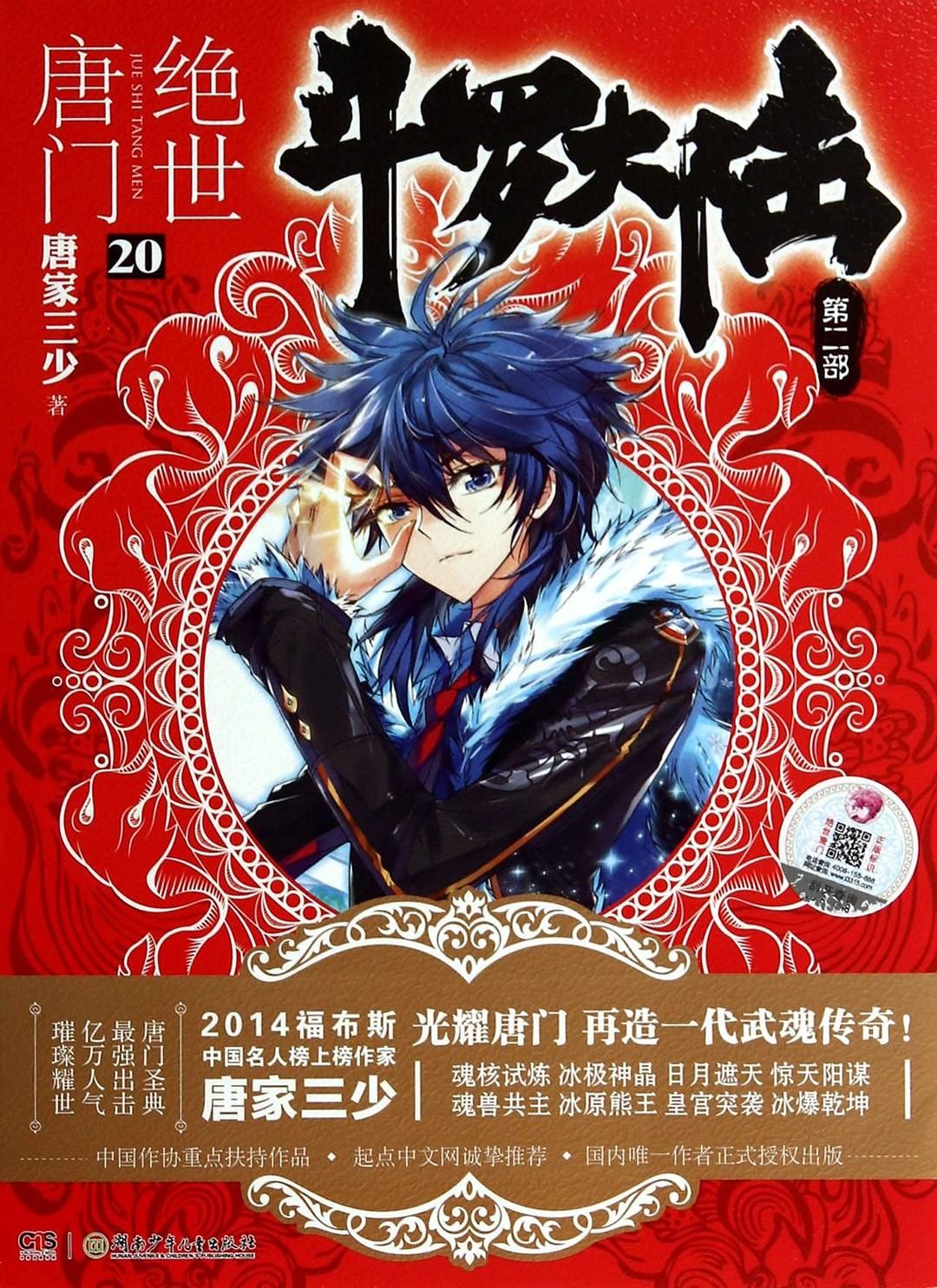
Soul Lands series (2008 – 2022), Qidian.com
In April 2024, when Zhang Wei, better known by his pen name “Tang Jia San Shao,” announced on Weibo that he would take a break after completing Sealed Divine Throne II, the news immediately made headlines across social media. Over the past two decades, he had updated his online novels every day, with the only exception being in 2018, following the death of his wife. He had published more than 50 million words in total and had become one of China’s highest-earning web fiction writers throughout the 2010s.
His early works often featured Western fantasy elements, a common practice during the infancy of China’s online literature. For instance, the debut story Child of Light is set in a magic world populated by humans, elves, dwarves, and dragons, much like The Lord of the Rings and Game of Thrones. As his writing matured, he began to integrate more traditional Chinese elements, such as the cultivation of immortality, in his fourth novel, I am the Sole Immortal (2006). His 2008 novel Soul Land established his distinctive style. The story follows a protagonist’s rise to the top after being transported to a strange new world where people’s “martial spirits” can be awakened in the forms of animals, plants, or objects, each granting corresponding powers.
Many of Zhang’s novels have been adapted into various media, including TV series, films, comics, and games. Soul Land, an unprecedentedly phenomenal IP in the sector, alone earned the author over 130 million yuan. In 2014, he worked with the online literature platform Cloudary to establish the Tang Studio, the first of its kind in the country, to manage his IPs. Many of his works are now translated into foreign languages on WebNovel, including English, French, Korean, and Thai.
Tian Rui Shuo Fu 天瑞说符
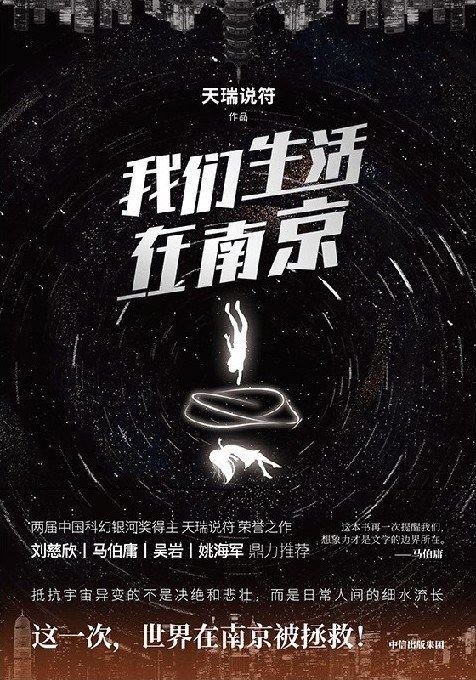
Once We Live in Nanjing (2021 – 2022), Qidian.com
Unlike many popular web writers in the 2010s who found success with their debut or second work, He Jian, now better known for his online alias “Tian Rui Shuo Fu,” struggled through the first six years of his writing career. Born in 1996, he began writing online fiction in 2014 and spent years waiting for a chance to secure a contract with a major web fiction platform. During this period, he experimented with various genres, ranging from fantasy to urban fiction and science fiction. He told New Weekly in 2022 that this long and frustrating phase is like being in a “single-player” mode—writing for years without an audience. His big break came in 2018 when he started writing the sci-fi novel Dead on Mars on Qidian. The story follows astronaut Tang Yue, stranded at China’s Kunlun Station on Mars after Earth suddenly explodes, and space station scientist Mai Dong, the only other known survivor, as they rely on each other and fight to survive the harsh isolation of deep space. The 588,000-word novel won the Best Online Literature Award at China’s prestigious Nebula Awards the following year. He won the award again in 2021 for his next sci-fi novel, Once We Lived in Nanjing. It follows high school student Bai Yang, who in 2019 discovers a mysterious radio signal from Banxia, another high schooler claiming to be living in 2040 after an alien invasion has brought humanity to the brink of extinction, sparking a time-crossing rescue mission to uncover the truth behind the catastrophe and change their fate. The book has been adapted into a TV series scheduled to air in 2026 and will soon be published in Thailand.
Sanjiuyinyu 三九音域
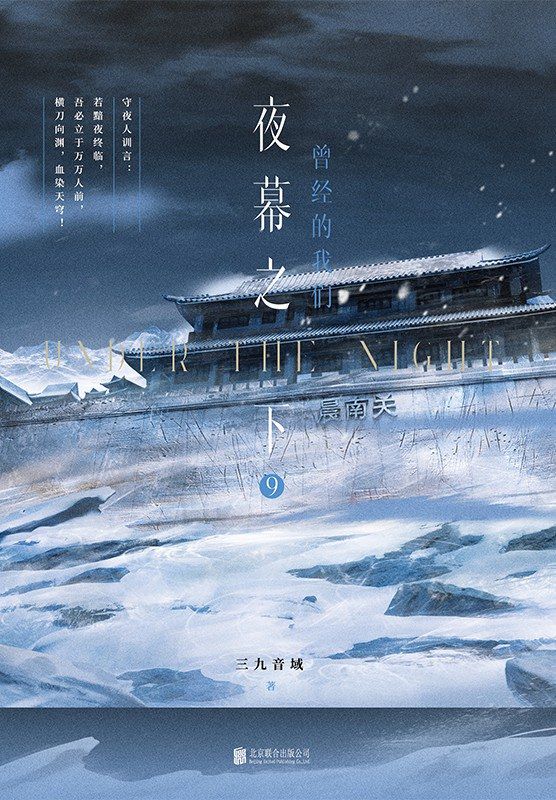
Under the Night (2021 – 2023), Qidian.com
A leading new voice in online fiction, Wang Huaiyu, better known by his pen name “Sanjiuyinyu,” builds epic fantasy worlds rooted in Chinese mythology and contemporary realities.
Born in 1999, Wang is already the vice president of the Jiangsu Provincial Online Writers Association. A longtime fan of web fiction, he began writing in his senior year of college, hoping to make some money to buy anime figurines.
His debut novel Superpower: I Have a Replication Mirror (2021) received a lukewarm reception on Fanqie Novel, a leading web fiction site under ByteDance, but laid the groundwork for his breakout hit, I Study Slaying Gods in a Mental Hospital (2021 – 2023). The 4.2-million-character epic follows a teenager who battles ancient gods to protect humanity. Blending Chinese mythology with urban fantasy, the story reimagines familiar characters in unexpected ways, including a traumatized Sun Wukong suffering from PTSD and the “Night Watchmen (守夜人),” a team of superpowered guardians inspired by real-life soldiers and rescue workers. Its animated adaptation became one of China’s biggest hits in 2024, even inspiring countless fan videos and cosplay.
The two novels have been translated into English and published on Webnovel, attracting a growing global readership while introducing international audiences to Chinese mythology and traditional culture. His latest work, I Am Not the God of Drama, takes the fusion further, incorporating traditional opera, Suzhou embroidery, and lion dance into his post-apocalyptic world.
While his novels deliver the typical thrills readers expect from web fiction, Wang also explores in-depth questions of identity, responsibility, and how to find one’s place in an uncertain world.
Qingxian Yatou 清闲丫头
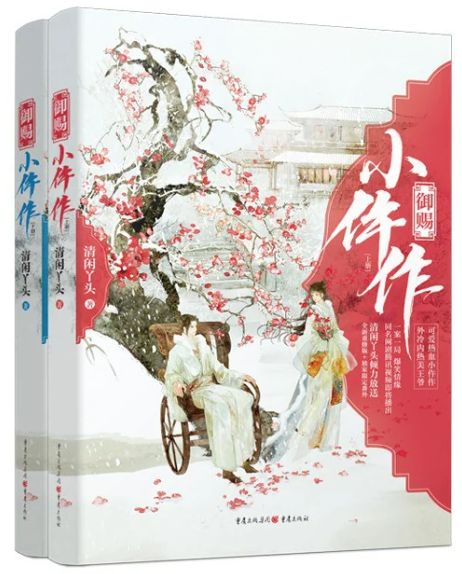
The Imperial Coroner (2020), Chongqing Publishing Group
No big data. No DNA testing. No surveillance cameras. For Liu Qingxian, these limitations are what make ancient China the best setting for a detective story. “The process of solving a mystery is also a way of bringing history and traditional culture to life,” she said at the May event.
Renowned for blending historical fiction with mystery, Liu, better known as “Qingxian Yatou (literally ‘idle girl’)” on the female-oriented web novel site Jinjiang, uses traditional investigative methods to solve crimes while revealing the societies behind them. Rather than using history as a mere backdrop, her stories weave together legal institutions, everyday customs, and political struggles, allowing readers to step into the lives and dilemmas of people from another era.
Her major hit, The Imperial Coroner (2013), follows a young female coroner in the late Tang dynasty as she investigates cases ranging from the murder of a powerful noble in the capital to the suicide of an imperial examination candidate, and ultimately uncovers a decade-old conspiracy that framed a military general for treason. The 2021 low-budget television adaptation of the book became one of the year’s biggest successes, helping to turn the once-niche coroner genre into a mainstream favorite. Although the novel does not have an official English translation yet, the 36-episode drama has drawn viewers worldwide.
Qitongren (The Bucket Rider) 骑桶人
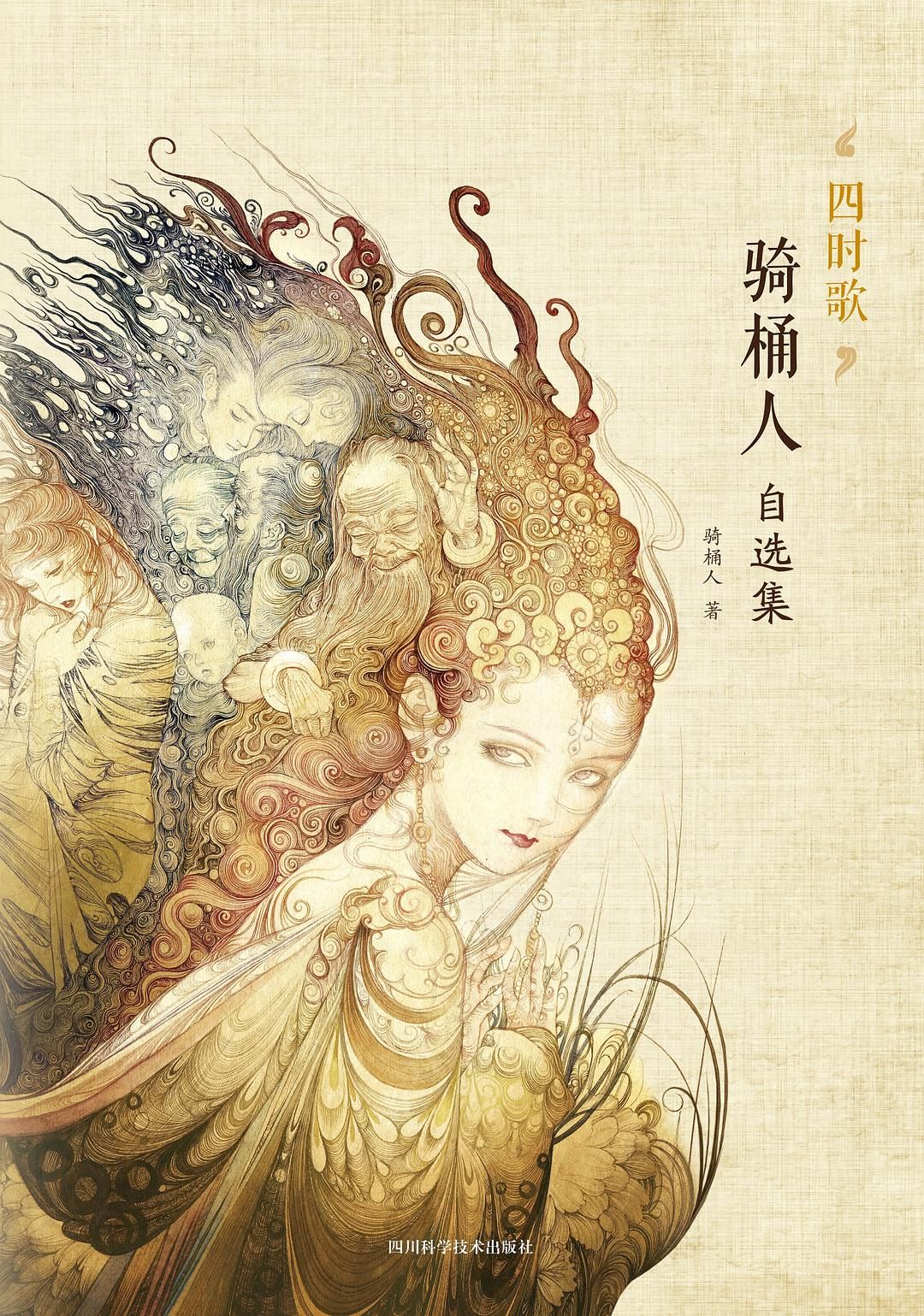
Song of the Four Seasons: A Selection of Works by Qitongren (2019), Sichuan Science and Technology Press
Though his pen name is inspired by Kafka’s 1921 short story, Li Qiqing’s writing is deeply rooted in classical Chinese literature. As a result, his stories often defy the narrative structures and themes contemporary readers expect. At times, the plot becomes secondary to the vivid imagery he conjures with his lush yet airy prose. In his short story “The Floating Temple,” the apparent protagonist—a monk who spends his life searching for meaning—dies within the opening pages. The rest of the story follows the aftermath, as his entire temple rises into the sky with all the monks still inside. Readers continue to debate what his stories mean, rarely reaching a consensus, yet they remain captivated by their dreamlike visions: a grass-covered moon rising from the sea, flaming butterflies laying eggs on the sun, stars that are in fact dragon-bone orchids, and Guixu, the mythical abyss into which all waters, even the Milky Way, flow.
When Li began writing in his 20s, rural literature dominated the contemporary Chinese literary scene, a tradition that held little appeal for him. It wasn’t until he came across a set of Extensive Records of the Taiping Era (《太平广记》) in his hometown library that he found a literary tradition that resonated with him. This 10th-century anthology of supernatural tales and historical anecdotes opened a gateway to the world of ancient Chinese fantasy and became a lasting source of inspiration.
Li has published several collections of short stories. His short story “The Spring of Dongke Temple,” first translated and published by The World of Chinese, was later included in The Big Book of Modern Fantasy (2020), edited by Ann and Jeff VanderMeer.
Wolf of History Dept 历史系之狼
My Father Gaozu of Han (2022 – 2023)
Back in middle school, when Alitamur Parhati received a copy of Romance of the Three Kingdoms (《三国演义》) to help him learn classical Chinese writing, the Xinjiang student never imagined that he would one day write his own historical fiction.
After extensively reading historical texts, including Records of the Grand Historian (《史记》) and Book of the Han (《汉书》), he fell in love with the subject and went on to major in history. In 2018, the third year in college, he published his first novel Found a Copy of Records of the Three Kingdoms on Qidian under the handle “Wolf of History Dept,” telling how Liu Hong or Ling Emperor of the Han, tries to change the state’s fate written in a copy of Records of the Three Kingdoms (《三国志》) the nine-year-old found in a golden fish’s stomach.
Alitamur became a full-time writer after graduation and has since published six more novels, often set between the third century BCE and the fifth century CE. His historical fantasy My Father Gaozu of Han (2022), which follows a modern man’s time travel to more than 2,000 years ago and reborn as the son of Liu Bang, the founder of the Han dynasty, became the most popular historical novel on Qidian. Many readers like its modern perspectives, with twists of humor and tender feelings, set against the magnificent historical background, and its more rounded portrayal of Liu Bang and Empress Lü Zhi.
Some readers emphasize the importance of historical facts, while others are keen on storytelling when it comes to historical fantasies. The novelist has been exploring how to balance facts and fiction in his work. “I believe they’re not contradictory, and I can make my novel more reasonable and real based on history,” he shared at the writers’ this May.
Related Articles