Over the past two decades, Chinese online literature has grown into a form of literary participation on an unprecedented scale, with more than 520 million readers, 35 million registered writers, and 33 million published titles. Amid this vast body of work, readers can find stories to suit virtually every taste, with platforms eager to guide them down their own literary rabbit holes. On a typical web novel app, such as Tomato Novel or Qimao, new users can sign in as male or female readers, with content recommendations tailored accordingly. Male readers might see categories such as “urban,” “suspense,” and “fantasy,” or even “no romance,” while female readers might be offered “modern romance,” “historical romance,” or “pure love,” a coded category for danmei, or male–male romance.
Compared with mainstream romance, “pure love” may be a smaller genre, but it has produced notable writers, internationally popular works, and successful screen adaptations. Here are four writers to discover:
Priest
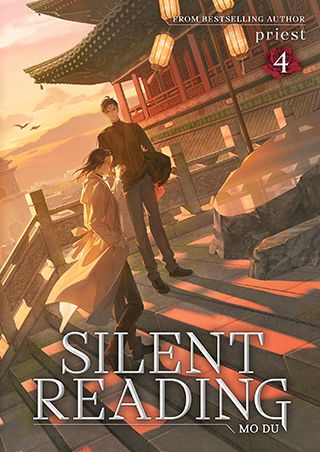
The first volume of the English edition of Silent Reading was published in 2025
This September, Priest became the first web novelist to be shortlisted for the Newman Prize for Chinese Literature, nominated by Heather Inwood, an associate professor of modern Chinese literature and culture at Cambridge University. Known only by her pen name, Priest has been publishing on the female-oriented online literature platform Jinjiang since 2007. A prolific writer with more than 30 works of fiction to her name, she has millions of readers across the globe, with many of her works now available in English. While Priest is best known for her stories of male romance, her work spans a diverse range of genres, including wuxia, fantasy, sci-fi, crime, and historical fiction, all while exploring broader questions about power, freedom, and human relationships. Her hit crime thriller Silent Reading (2016 – 2017) follows a police investigator and a wealthy young CEO as they unravel a series of interconnected murder cases while confronting questions of morality and family, as well as their own pasts. The book was adapted into a 2023 TV series, joining a roster of popular TV and animated hits based on her works, including Guardian (2018), Legend of Fei (2020), Word of Honor (2021) and Drowning Sorrows in Raging Fire (2021). Her latest novel, Baily’s Beads, is currently being serialized on Jinjiang and ventures into a cyberfuture shaped by holographic technology, where the heroine sets out to defy her fate after receiving a sinister warning from her future self.
Mo Xiang Tong Xiu 墨香铜臭
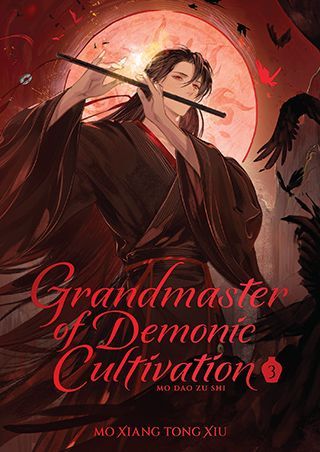
The five-volume English edition of Grandmaster of Demonic Cultivation was published between 2021 and 2023, followed by a deluxe hardcover edition released in 2025 and 2026
In August, the web novel platform Jinjiang hosted an elaborate writers’ conference in Hangzhou. But what made rounds on social media were the platform’s newly released charts showing revenue from copyright sales. At the top of the list, with more than 100 million yuan in sales, were just two novels—Heaven Official’s Blessing (2017) and Grandmaster of Demonic Cultivation (2015)—both written by the same author, Yang Yimei, better known by her pen name, Mo Xiang Tong Xiu.
Born in 1994, Yang first began to serialize her work on Jinjiang in 2014. She has published only three fantasy novels so far, but all three have been highly successful. Her work often combines romance with Daoist cultivation, supernatural elements, adventure, setting in elaborate fictional worlds. Grandmaster follows Wei Wuxian, a brilliant but unconventional cultivator who is resurrected years after his death, and Lan Wangji, a reserved and highly principled cultivator from a powerful clan. The two investigate a series of mysteries that gradually reveal secrets from their shared past. Heaven centers on Xie Lian, a once-glorious crown prince who has fallen into disgrace and poverty. He encounters Hua Cheng, an enigmatic and immensely powerful ghost king who has an unusually devoted connection to him. As Xie Lian investigates supernatural disturbances, the story gradually reveals their intertwined histories.
Yang’s works have been adapted into comics, animations, and audio dramas, but it was the 2019 TV adaptation of Grandmaster, The Untamed, that became a global sensation, helping the author amass a huge following overseas. When the English edition of her three works was launched in the US in 2021, all three books immediately hit the New York Times bestseller list.
Wu Zhe 巫哲
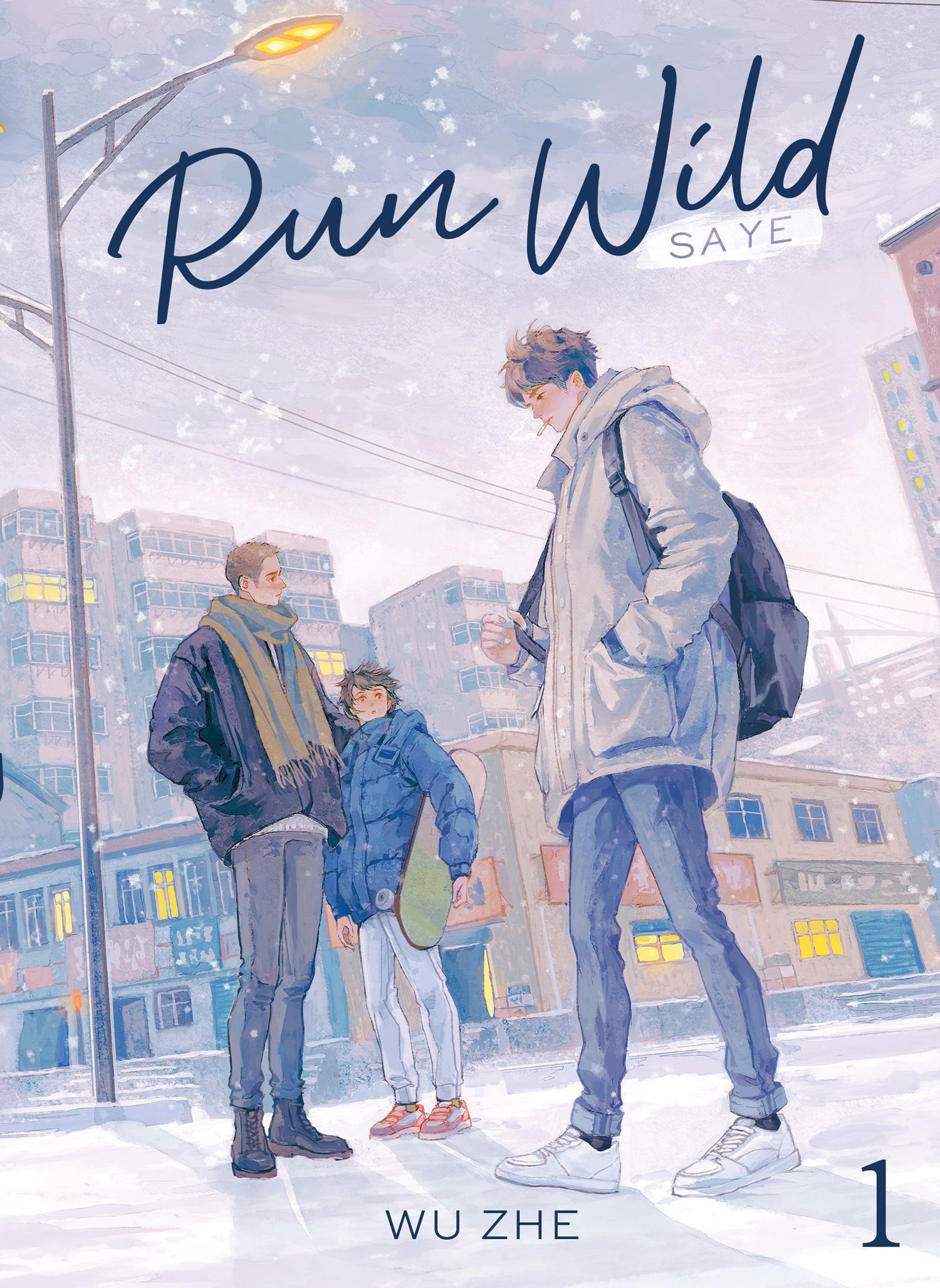
The six-volume English edition of Run Wild was published in 2025 and 2026
Wu Zhe’s Run Wild (2016) was the only book in the “nearly 100 million yuan” copyright-sales category, just below the two works by Mo Xiang Tong Xiu highlighted at the August Jinjiang writers’ conference. It’s a coming-of-age romance about Gu Fei, a rebellious boy from a troubled family in a small industrial town in northeastern China, and Jiang Cheng, a high-achieving teenager forced to move there to live with his biological father with a gambling addiction. The two support each other as they navigate family, school, and financial pressures, as well as uncertainty about their futures, before eventually breaking free from the constraints of their families and environment to build a better life together, with Jiang Cheng becoming a lawyer and Gu Fei a photographer.
Many of Wu Zhe’s earlier works echo the vibe of Run Wild, tending to be darker and placing their characters in difficult family situations, financial hardship, and other painful circumstances. Her later works have become lighter in tone, evolving into more heartwarming and healing love stories.
A prolific writer, Wu Zhe has been publishing on Jinjiang since 2010, with nearly 30 completed danmei novels to her name and counting. She particularly excels at capturing the details of everyday life. At a time when many popular web novels centered on the wealthy and powerful, she stood out by letting her characters unfold naturally amid the warmth and bustle of everyday life. Her works have been translated into English, Thai, and Vietnamese.
Fei Tian Ye Xiang 非天夜翔
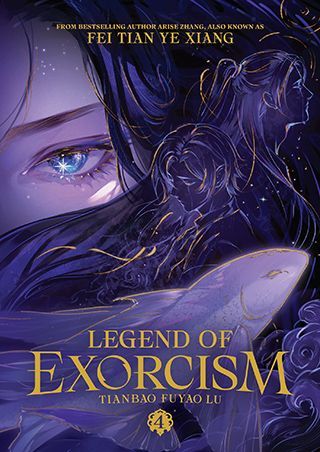
Legend of Exorcism is one of Fei Tian Ye Xiang’s most popular works
Fei Tian Ye Xiang is one of the pen names of Zhang Yifan, who started posting on the online literature platform Jinjiang in 2008. Estimated to have written 30 to 40 works, Zhang also works as a screenwriter for films and TV series. As a rare male writer in the danmei genre, which is predominantly written and shaped by women, Zhang is known for his mature writing style, grand world-building, and dynamic ensemble portrayal. His most notable work, the Exorcists series (2014 – 2025), includes five novels set in the same universe spanning ancient and modern times and draws inspiration from Chinese mythology and historical events. It follows a group of protagonists with special powers who are tasked with fighting an evil force that descends upon the world, blending romance with adventure. Among them, Legend of Exorcism (2017) is set during the mid-eighth-century An Lushan Rebellion, a turning point in the Tang dynasty’s (618 – 907) decline, while Dinghai Fusheng Records (2019) is set in the Sixteen Kingdoms period (304 – 439), both eras of conflict and bloodshed. The expansive worldbuilding, vivid characters, and intricate plotlines have made them ideal for multimedia adaptation for general audiences; both have animated versions.
Like many web novel writers, Zhang’s work spans genres, catering to shifting tastes of online readers, from fantasy and sci-fi to historical and modern romance. His wildly popular 2011 work, The Dawn of the Apocalypse, even sparked a trend of doomsday survival stories. In today’s web novel scene, where stories increasingly rely on niche concepts and special character designs to attract readers, Zhang’s writing may seem outdated. But his solid prose and protagonists, who always have a deep love of humanity, have kept readers coming back time and again. Four of Zhang’s works have so far been fully translated into English and published by Seven Seas Entertainment, while five more series are being released.
Book covers from Seven Seas Entertainment
Related Articles