When it comes to Chinese sci-fi, many readers immediately think of Liu Cixin, the author of the epic The Three-Body Problem trilogy. Yet over the past two decades, a growing number of young and diverse Chinese voices have begun to emerge. In March, the China Writers Association and the China Science Writers Association brought several of them together at a Beijing event, some in person and some online, to discuss what Chinese sci-fi offers to an international readership.
Liu himself sent a video message to the event encouraging readers to explore the diverse perspectives of young Chinese writers. “We are at a unique moment,” Liu said. “The future has already arrived, yet history has never left us. Machines are becoming increasingly intelligent, while humans are growing more disoriented.”
Here are seven young writers featured in the event:
Gu Shi 顾适
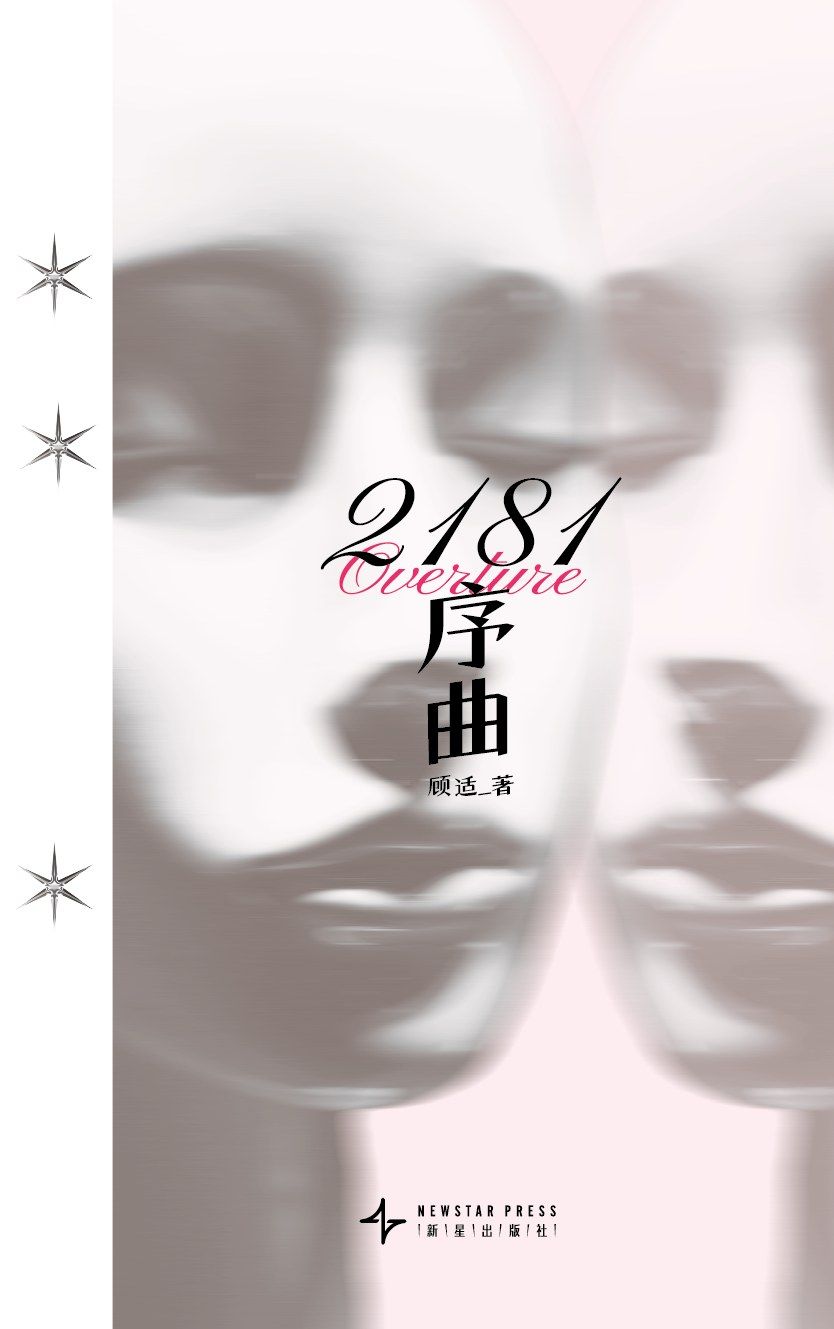
2181 Overture, 2024, Zhejiang Literature & Art Publishing House
Born in 1985 in Beijing, Gu Shi, an urban planner by day, only started writing sci-fi in 2011. Her profession shows in many of her works, including her 2023 short story “Choice of the City,” in which an AI system named YU—after the legendary flood-tamer—runs emergency response in a future defined by catastrophic floods. The protagonist, also a city planner, discovers that the AI prioritizes speed when guiding her child but slows down when she’s alone, abandoning the elderly and the sick. “When humanity faces climate change, should we confront it together, or should we give power to those who are more likely to survive the subsequent disasters?” said Gu at the March event.
Gu has won the China’s top sci-fi prizes, the Galaxy Awards and the Nebula Awards, and lately she’s worked to promote women in sci-fi. In a 2025 interview with Youth36kr, she said that she tries to break away from stereotypical female roles, instead portraying the kind of women who can “hold their own”—the kind she meets in real life. Her 2024 short story collection, 2181 Overture, was included in Douban’s 2024 Annual Book List and features eight short stories centered on women, AI ethics, and future cities. The Strange Girl, a January anthology of sci-fi by Chinese women that Gu edited and contributed to, holds an 8.5 rating on Douban.
Baoshu 宝树
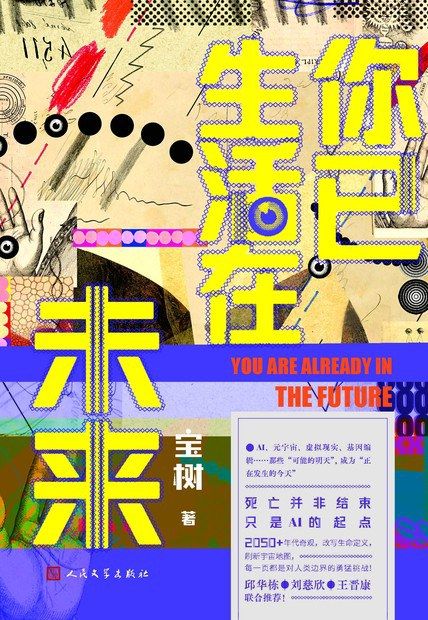
You Are Already in the Future, 2025, People’s Literature Publishing House
Baoshu is best known internationally for The Redemption of Time translated by Ken Liu and published by Tor Books in 2019. Fan fiction based on Liu Cixin’s Three-Body world and published with Liu’s blessing, the novel picks up where the trilogy ends. The 46-year-old Sichuan native has won several Chinese sci-fi Nebula and Galaxy awards over the past two decades, with his works translated into more than a dozen languages.
Baoshu’s work appears in translated anthologies, including short stories such as “Songs of Ancient Earth” (2018) and “Doomsday Tour” (2023). Clarkesworld magazine also runs his work in translation, including the award-winning piece “Everybody Loves Charles.” It follows a space race pilot who lives a fast life, as a hundred million fans tune in 24/7—not just watching, but experiencing his every sensation through a neural link.
Dive into the world of Chinese sci-fi:
- Turning the Page on a Male-Centric Sci-Fi World
- Ready to Launch: A Guide to China’s Latest Science Fiction Writers
- Burst Your Bubble With Taiwan's Queer Sci-Fi Classic
Less of Baoshu’s recent work has been translated, including his AI-themed short story collection You Are Already in the Future (2025). At the March event, he previewed his current work in progress, Our Age of Science Fiction, in which he depicts a parallel version of contemporary China from the 1960s to the mid-21st century, weaving real historical events (such as the decade-long political upheaval, China’s space program during the Cold War, reform and opening up, and even China’s sci-fi boom) into imaginative narratives.
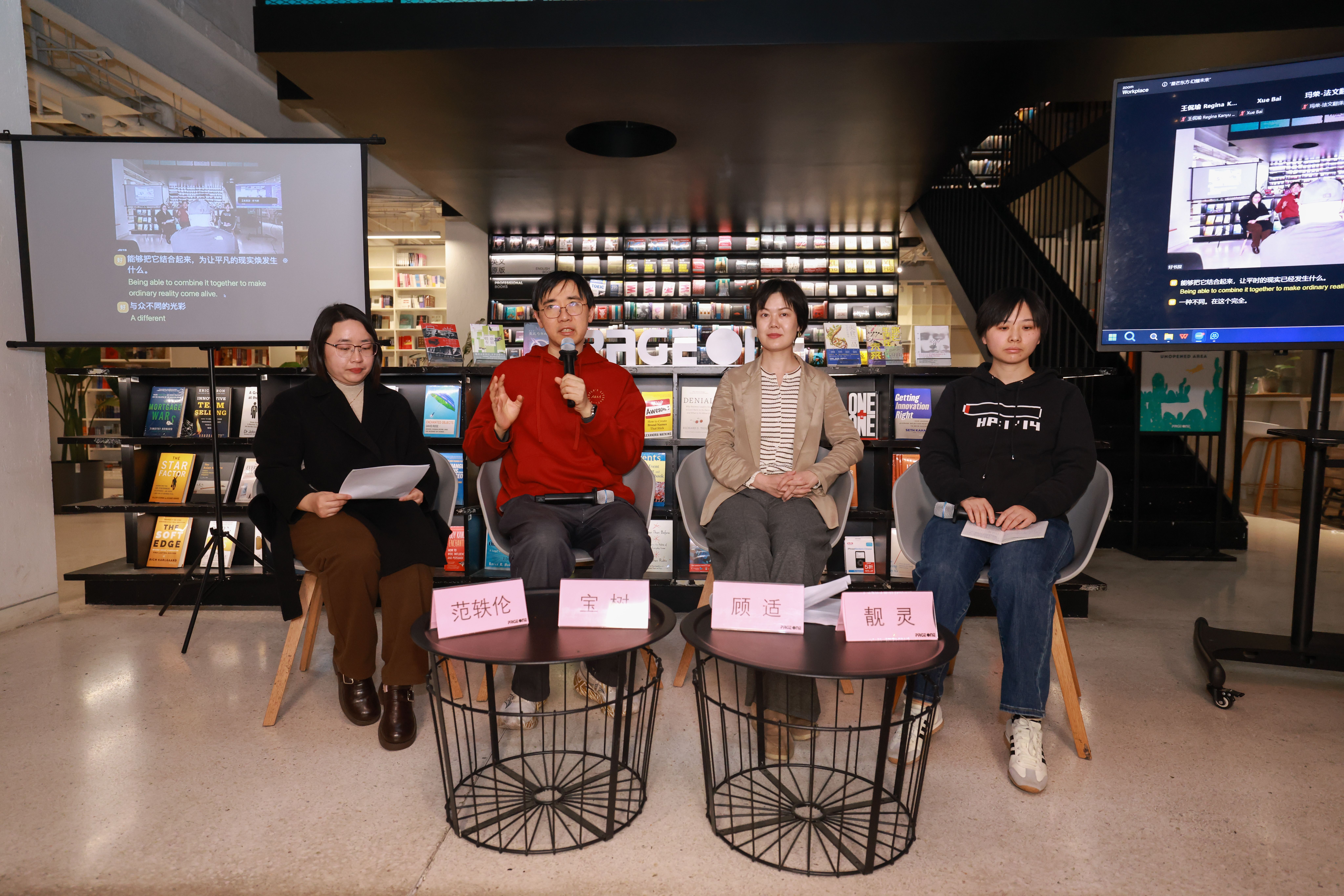
A panel discussion at the March event, “Emerging Chinese Science Fiction Writers: An International Outlook,” moderated by scholar Fan Yilun (first from left), featuring writers Baoshu (second from left), Gu Shi (third from left), and Liang Lin (first from right)
Baoshu also spoke of a sense of mission as a Chinese writer addressing a global audience: “We have an opportunity to portray a China that moves beyond the cliched ‘ancient civilization’ or ideologically shaped images—one that is truly future-oriented, grounded in forward-looking thinking, and committed to a shared future for humanity.”
Chen Qiufan 陈楸帆
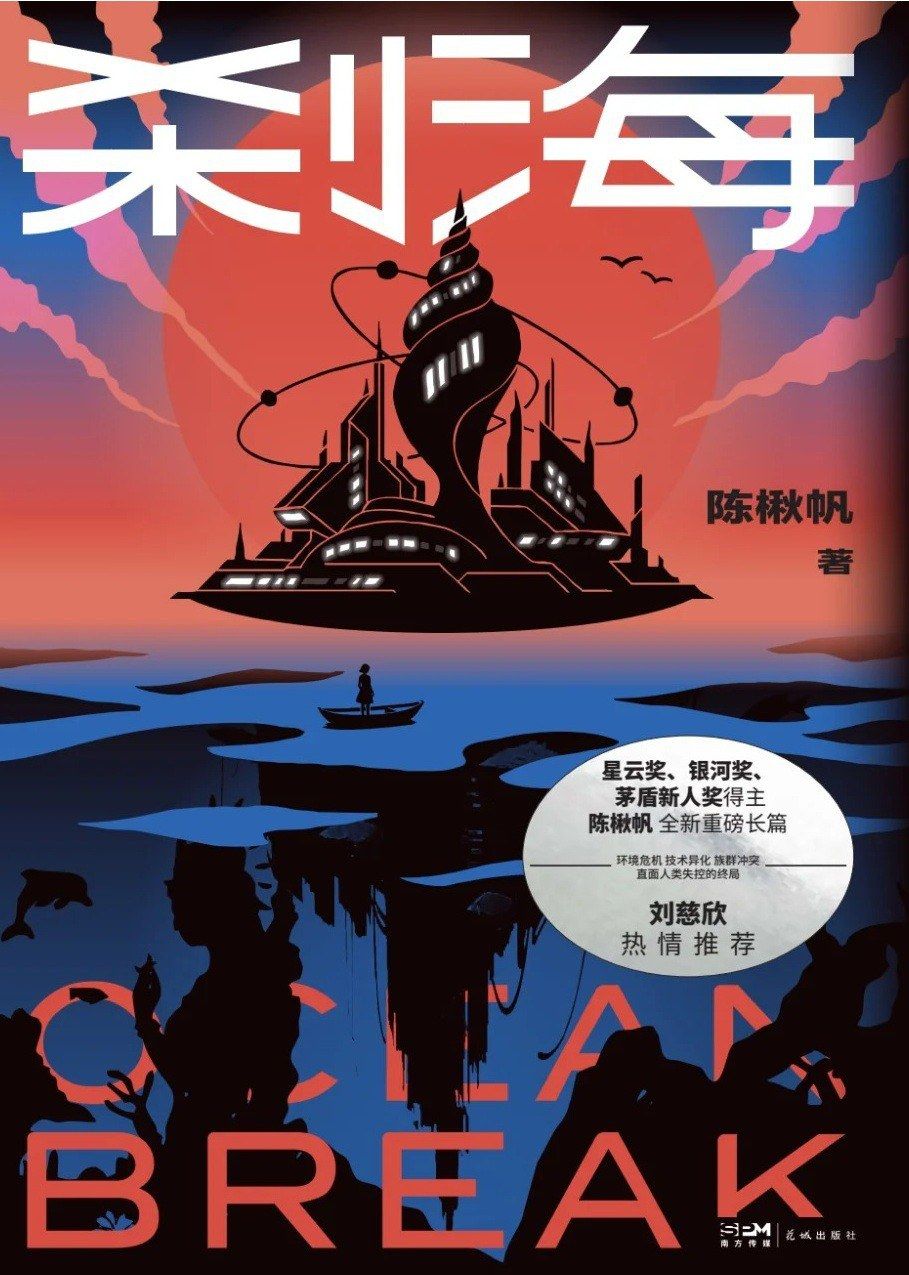
Ocean Break, 2025, Huacheng Publishing House
One of the most internationally visible voices in Chinese sci-fi, Chen Qiufan (Stanley Chan) rose to fame with his 2013 novel Waste Tide, drawing on the e-waste industry and culture of his hometown of Shantou, on Guangdong’s coast. The novel has been translated into more than a dozen languages. Its sequel, Ocean Break, came out in Chinese last September, continuing the environmental theme—this time on a fictional “Emerald Island” eco-utopia hosting a UN climate conference after rising seas have swallowed the Maldives. No English translation exists for now.
Chen’s work is rooted in technological reality more than speculative spectacle. His 2021 anthology AI 2041: Ten Visions for Our Future, co-authored with former Google China president Kai-Fu Lee, explored the opportunities and pitfalls of an AI future. He’s not pessimistic about the technology, often exploring how it can expand and alter human consciousness and intersect with spirituality. Chen also actively embraces AI in his writing. In “State of Trance,” a short story included in the 2020 anthology, The Book of Shanghai: A City in Short Fiction, the protagonist lives in a future society where the collapse of human consciousness is looming. He chooses to return a book to the Shanghai Library as his last proof of being a civilized human being. Chen trained a language model with his own works to write the delirious moments of the character.
To Chen, AI writing is not a threat but a force to push creators to tap into their unique human experience. “When technology outpaces imagination, and reality overtakes sci-fi within months, truly vital writing can only come from what AI can’t replicate,” Chen told the audience via Zoom at the March event. “Your memories, fears, cultural roots, and your anger and tenderness toward the world.” He also shared his latest work, a teen sci-fi series centered on the interstellar migration of the Teochew diaspora, and how they preserve and reconstruct their traditional culture along the way.
Here’s Chen’s 2021 short story “The Dark Room Problem,” translated by The World of Chinese.
Liang Ling 靓灵
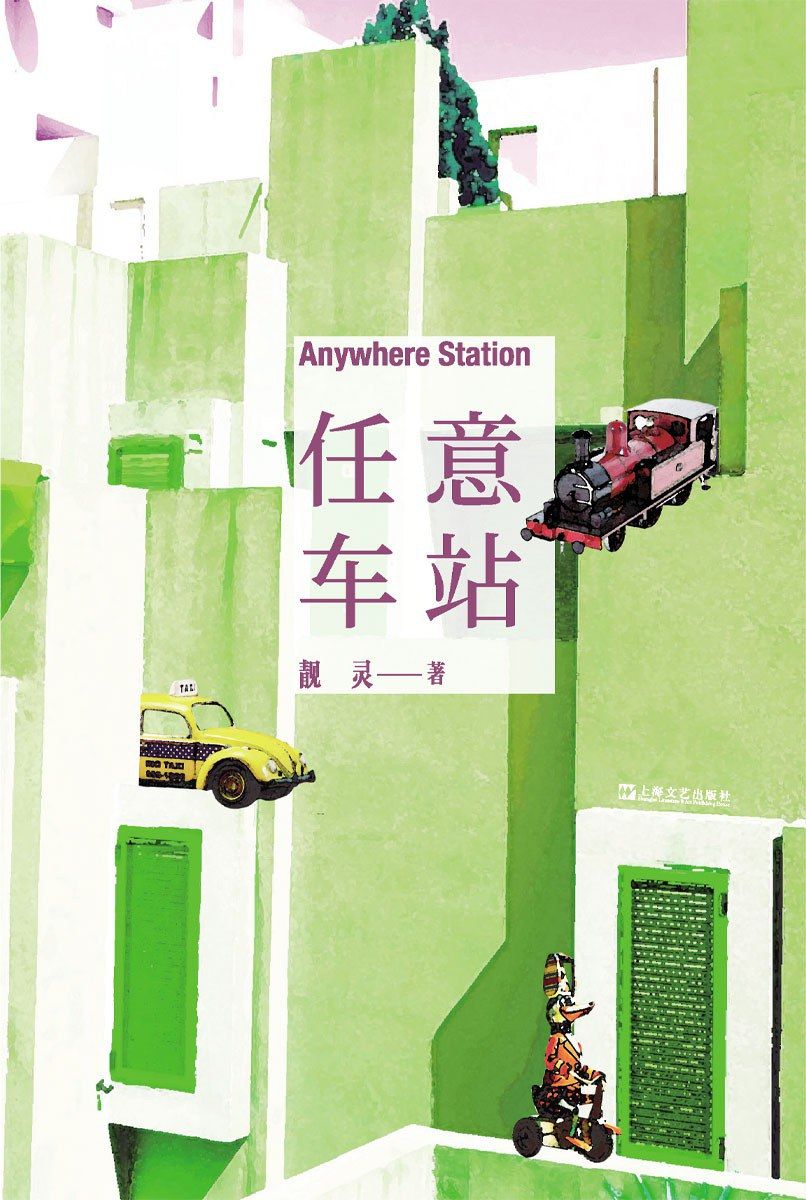
Anywhere Station, 2025, Shanghai Literature & Art Publishing House
Born in 1992, Liang Ling was a geology major in college and later worked as a product manager at a tech company before picking up sci-fi writing in 2018. She is known for her short stories, having published two collections Anywhere Station (2025) and Moon Bank (2021).
Female perspectives and independent women often sit at the center of her stories—but that wasn’t always the case. Liang didn’t grow up reading sci-fi, and when she began writing, she turned to classic works, mostly by men. In an interview with Eight Light Minutes, a sci-fi publishing company, this January, she noted that her early female characters were often defined as daughters, wives, or girlfriends. Since then, she has made a conscious shift to write women whose stories stand on their own, at times even downplaying gender altogether, as in “Feng’an,” a story about a young geologist collecting samples of an alien planet’s biodiversity before human settlement takes over.
Liang also takes on social issues. In “Documentary: The Sweetness of Speed,” included in Anywhere Station, she examines the systemic struggles of delivery workers through a mockumentary about a company that introduces “speed candy,” a product that doubles workers’ speed and income. The gains come at a cost: health damage, accelerated aging, and harm to their children, while the company conceals the risks. “I want to question our times,” Liang said at the March event. “In a society chasing ever greater speed and efficiency, do health, life, and dignity still matter?”
A recipient of the Chinese Nebula Awards and the Lenghu Science Fiction Literature Award, Liang now lives in Beijing with her three cats.
Liang Qingsan 梁清散
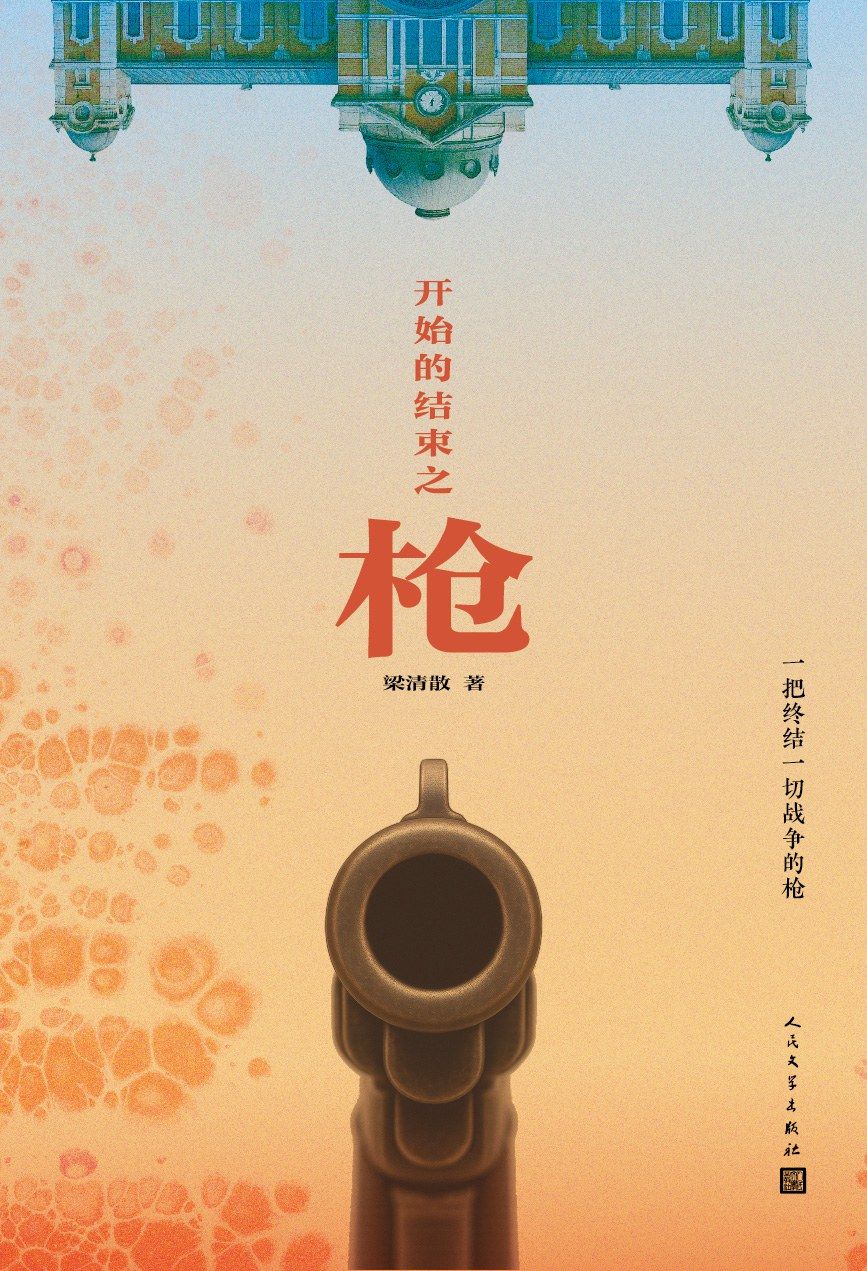
The Gun of the Beginning’s End, 2025, People’s Literature Publishing House
Liang Qingsan sets many of his sci-fi in eras of real turmoil, often centuries past. Known for a steampunk style, his work blends historical fantasy, detective fiction, and sci-fi. His latest novel, The Gun of the Beginning’s End, set during the Russo-Japanese War that took place in northeastern China and the Korean Peninsula, weaves an espionage tale among China, Japan, and Russia with plague-tinged mythic elements. “In today’s world, it’s ever more crucial for us to reflect on and contemplate the nature of war,” Liang said at the March event. “No matter which side claims victory, humanity as a whole ends up losing. So, who is the real enemy in a war? Who are you really trying to defeat? These are the questions I pose in my novel.”
An avid history fan, Liang, born in the 1980s, packs many historical “easter eggs” he found during research in his writing. In The Parallel Mountain Town of the Tang Empire, a 2023 novel set in the Tang dynasty (618 – 907) during the rule of China’s only female emperor Wu Zetian (武则天) , he spent over four months in archival materials before putting down the first word. He has won multiple Chinese Nebula Awards, and his work has been translated into English, Japanese, and Italian.
Wang Weilian 王威廉
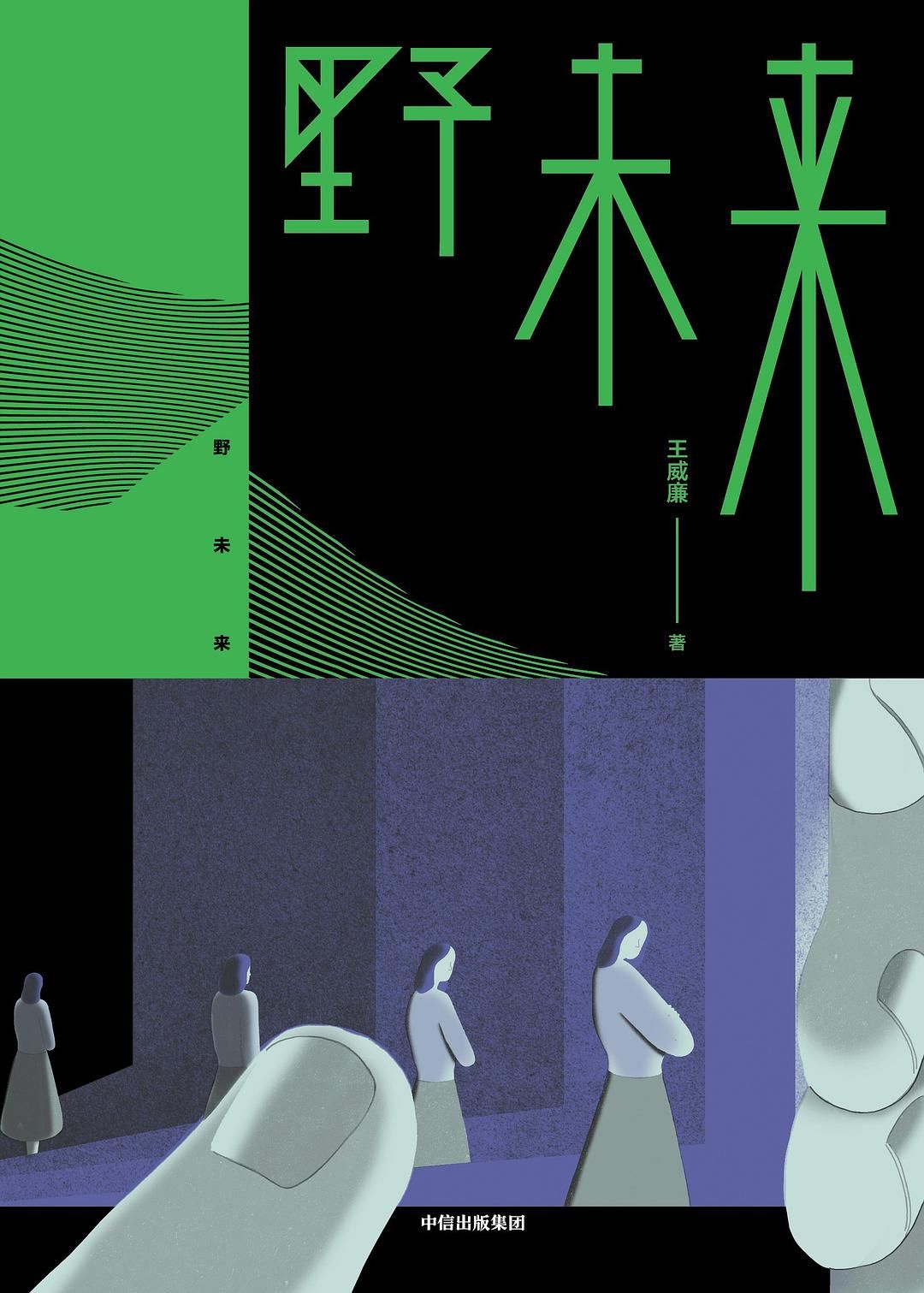
Wild Future, 2021, CITIC Press Corporation
Wang Weilian started as a realism writer chronicling people on society’s fringe, but the 44-year-old writer soon found that technology was central to their struggles. In his 2010 short story, “A Person Without Fingerprint,” for instance, Wang portrays a society where fingerprints-based technologies—workplace attendance, car unlocking, mobile payment, banking—are everywhere. The protagonist, born without fingerprints, finds himself nearly invisible, and eventually contemplates cutting off his hands and transplanting a pair from the dead to lead a normal life.
“Now such [technology-related] topics are not any prediction or allegory, but the realities we face every day… How can novelists ignore such significant changes?” Wang wrote in the afterward of his 2021 sci-fi anthology Wild Future. The collection comprises 11 short stories written since 2018, covering GPS, video surveillance, human cloning, consciousness chips, and extraterrestrial life. It has since been translated into Italian, Japanese, and Korean.
Wang has won the Huacheng Literature Prize (2017) and the Mao Dun New Writers Prize (2019). “Sci-fi writers in the past wrote stories to think about the distant future,” Wang told Nanfang Daily in August 2025. “I hope that science fiction [today] can offer modern readers more ways of seeing contemporary life and what it means to be alive.”
Here’s Wang’s short story “Prairie Whale,” winner of the 2020 Wansongpu Literary Prize, translated by The World of Chinese.
Shen Dacheng 沈大成
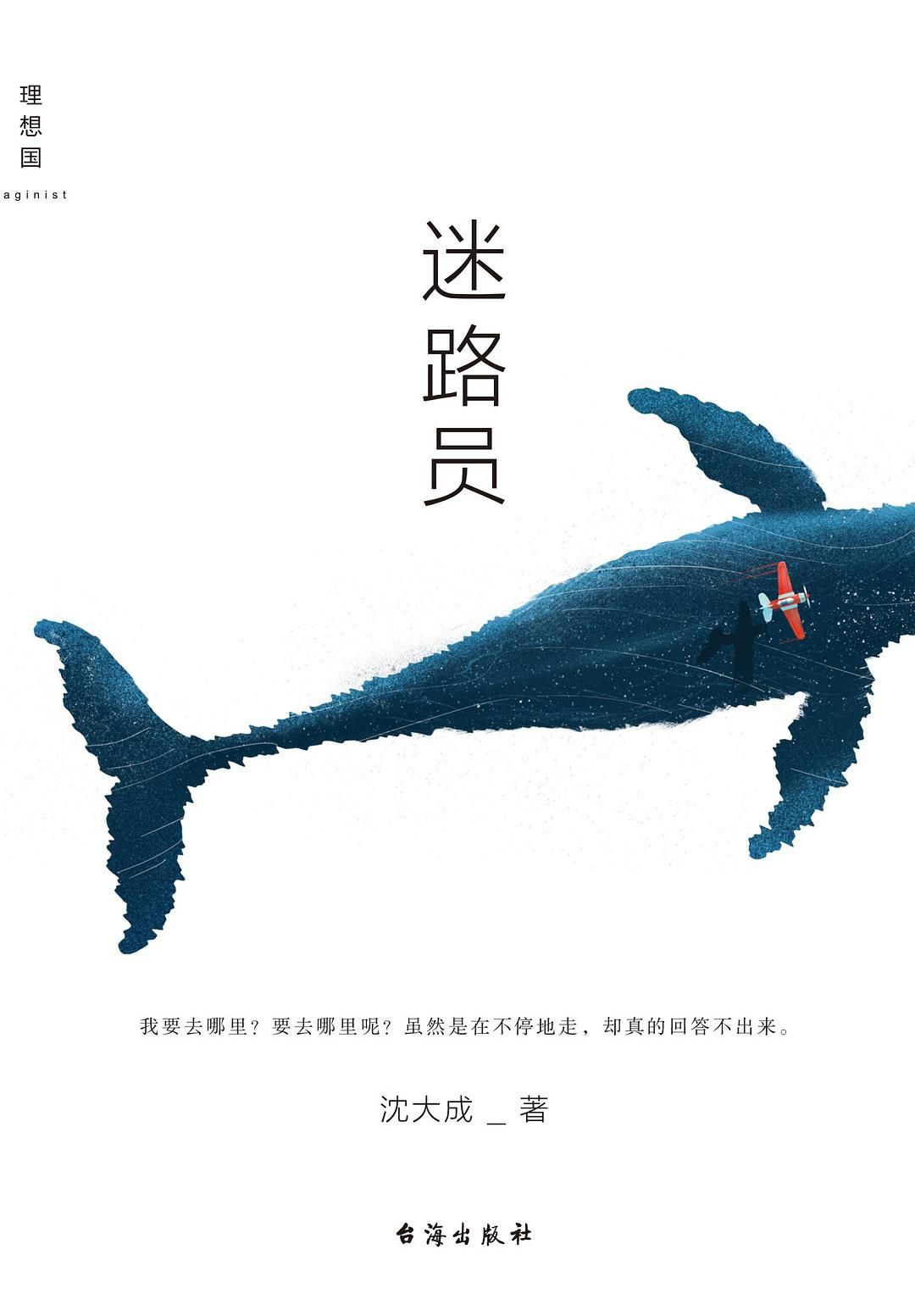
The Wayfinder, 2025, Taihai Publishing House
Under the pen name Shen Dacheng—borrowed from a popular Shanghai pastry brand and chosen for its gender-neutral tone—Xu Xiaoqian writes fiction that blurs the line between the uncanny and the real. Her stories resonate with office workers, who see their own lives reflected in her seemingly absurd scenarios. Her early story “The Dust of Time” centers on a hidden alleyway shop that sells “ashes” from different years, like perfumes—customers take them home and sense the texture of a particular era.
Her stories stay rooted in reality, populated by ordinary people, but the narratives take unexpected and surreal turns. In her 2019 anthology An Asteroid Falling in the Afternoon, an office worker becomes a “squid-man” at a busy subway station, spurting ink whenever he talks, while bachelors are recast as “secondary citizens,” applying for the chance to observe “normal” family life from the sidelines.
In The Wayfinder (2021), Shen brings together 15 stories about “cosmetic beings” who have lost their sense of direction, from an overpass stepping away from the road it was meant to serve, to a former employee hiding for years in an office garden. As the renowned writer Su Tong notes, its imagination is “relaxed, expansive, and boundless to the touch.”
Her forthcoming collection The Elliptical Afternoon continues this approach across 14 new stories, tracing urban life through “subtly weird” characters, including people with missing or extra organs, workers in mysterious industries, and those shaped by quirky habits.
Born in 1977, Shen is a recipient of the 2021 Shanghai Literature Awards and a 2020 Blancpain-Imaginist Literature Prize nominee. Her work has been translated into English, French, Japanese, and Korean.
Related Articles